
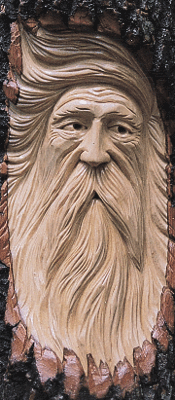


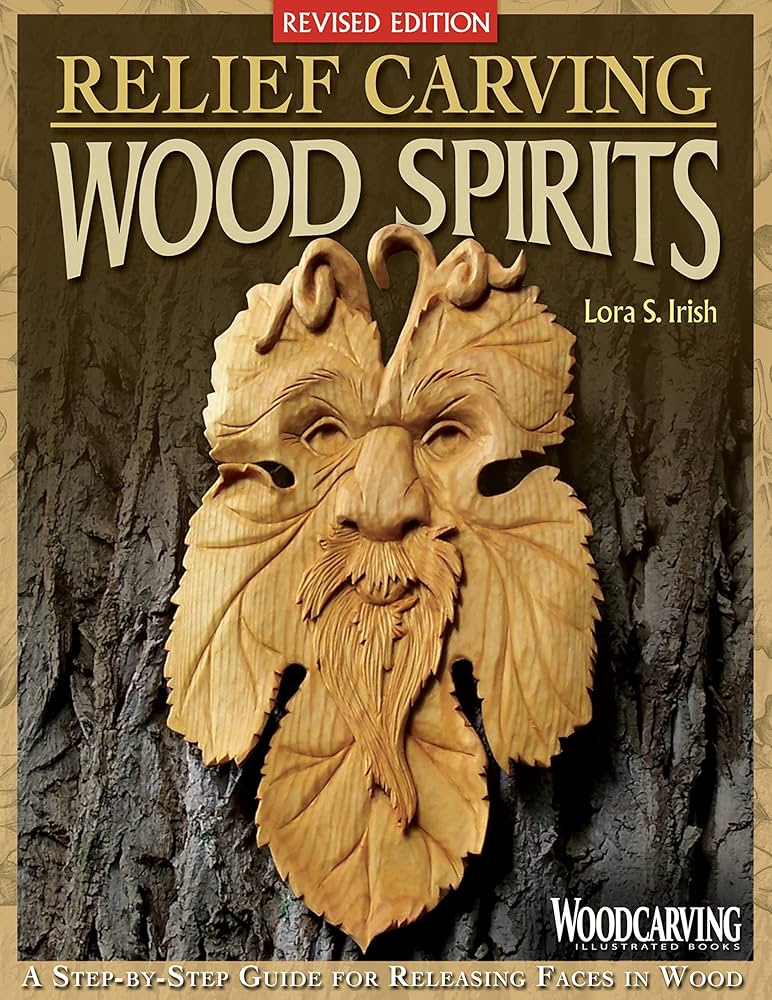
Wood spirit face carving sits at a beautiful crossroads between folklore, nature, and beginner-friendly woodcarving. These expressive faces, often imagined as guardians of forests or ancient trees, do not rely on perfect anatomy or polished realism. Instead, they thrive on suggestion, texture, and personality. This makes them one of the most forgiving and rewarding subjects for anyone new to carving.
For beginners, wood spirit faces are ideal because they encourage working with the grain rather than fighting it, accepting imperfections, and focusing on mood rather than precision. A crooked smile, uneven beard, or exaggerated nose does not ruin a wood spirit. It often improves it. This article explores eight simple wood spirit face carving ideas that are especially suitable for beginners, each designed to help you build skills while enjoying the process.
Before diving into the ideas, it helps to understand that most beginner wood spirits are best carved as shallow reliefs or low-profile faces on flat or gently curved wood. Basswood is the most commonly recommended wood because it is soft, predictable, and forgiving, but pine and butternut also work well if tools are sharp and cuts are light.
Understanding the Beginner Wood Spirit Style
Wood spirits are not portraits. They are impressions. Most beginner designs rely on three core elements: a strong nose ridge, deep eye sockets, and flowing textures for beards, hair, or bark. You do not need to carve perfect lips, symmetrical eyes, or smooth planes. In fact, rough transitions and tool marks often enhance the organic feel.
Many experienced carvers recommend thinking of the face as emerging from the wood rather than sitting on top of it. Let the grain lines suggest wrinkles, brows, or beard flow. This mindset removes pressure and allows beginners to relax into the carving.
1. The Simple Long-Beard Wood Spirit
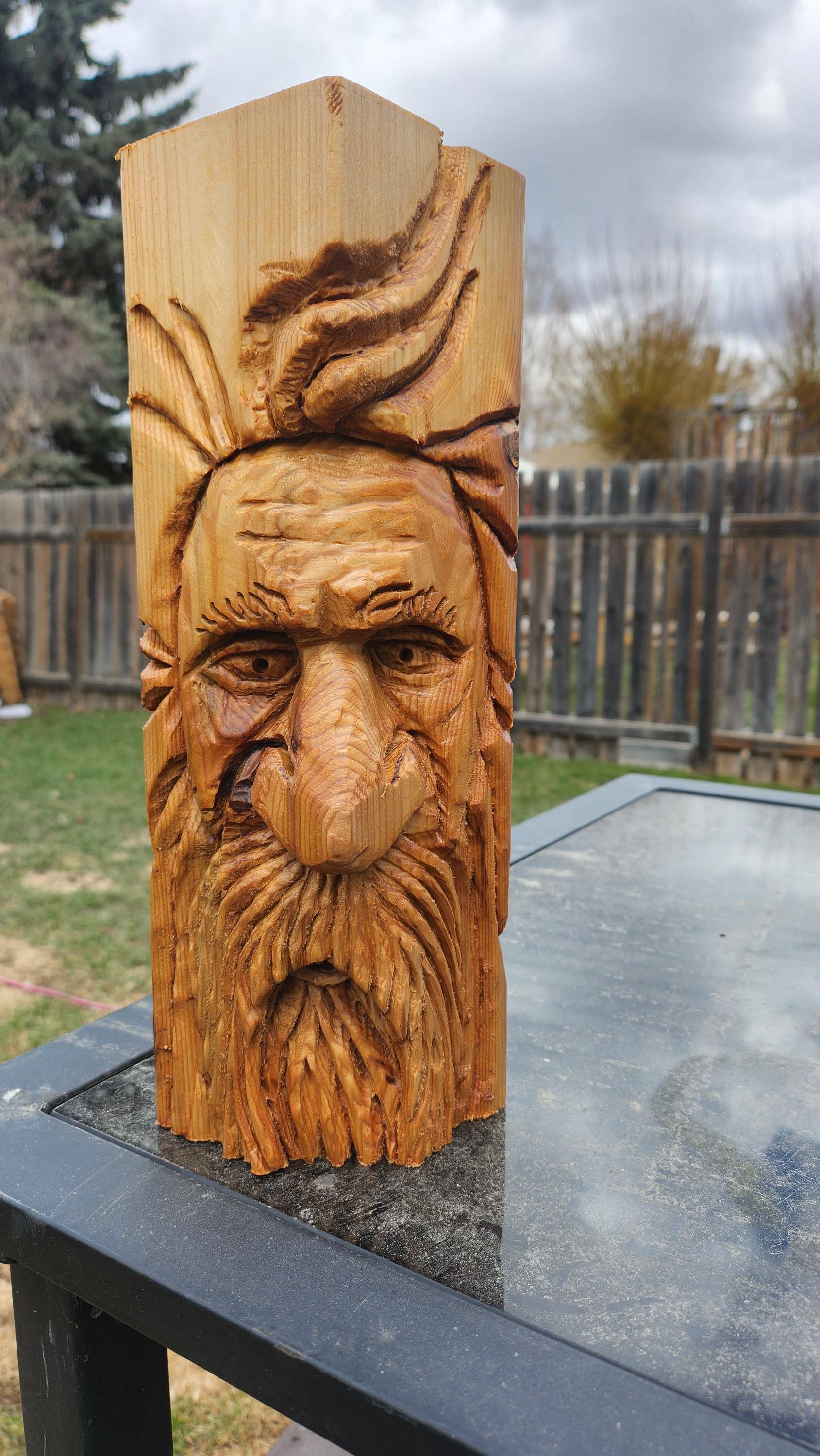
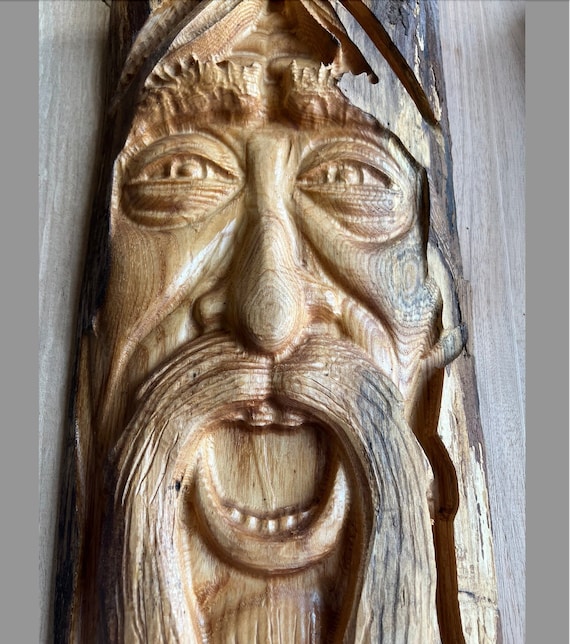

The long-beard wood spirit is the most common and beginner-friendly design. It focuses on one dominant feature: a flowing beard that extends downward from the nose. The beard does most of the visual work, allowing the facial features to remain simple.
In this design, the nose is carved as a strong triangular ridge. The eyes are deep-set shadows rather than detailed shapes. The mouth can be implied with a shallow V-cut or left almost invisible. The beard is created using long, shallow gouges or knife cuts that follow the grain downward.
This idea teaches beginners how to control depth without overcutting. Because the beard covers much of the lower face, mistakes blend easily into the texture. Even uneven lines add character. This design is ideal for wall plaques, walking stick toppers, or flat boards.
2. The Smiling Tree Spirit Face

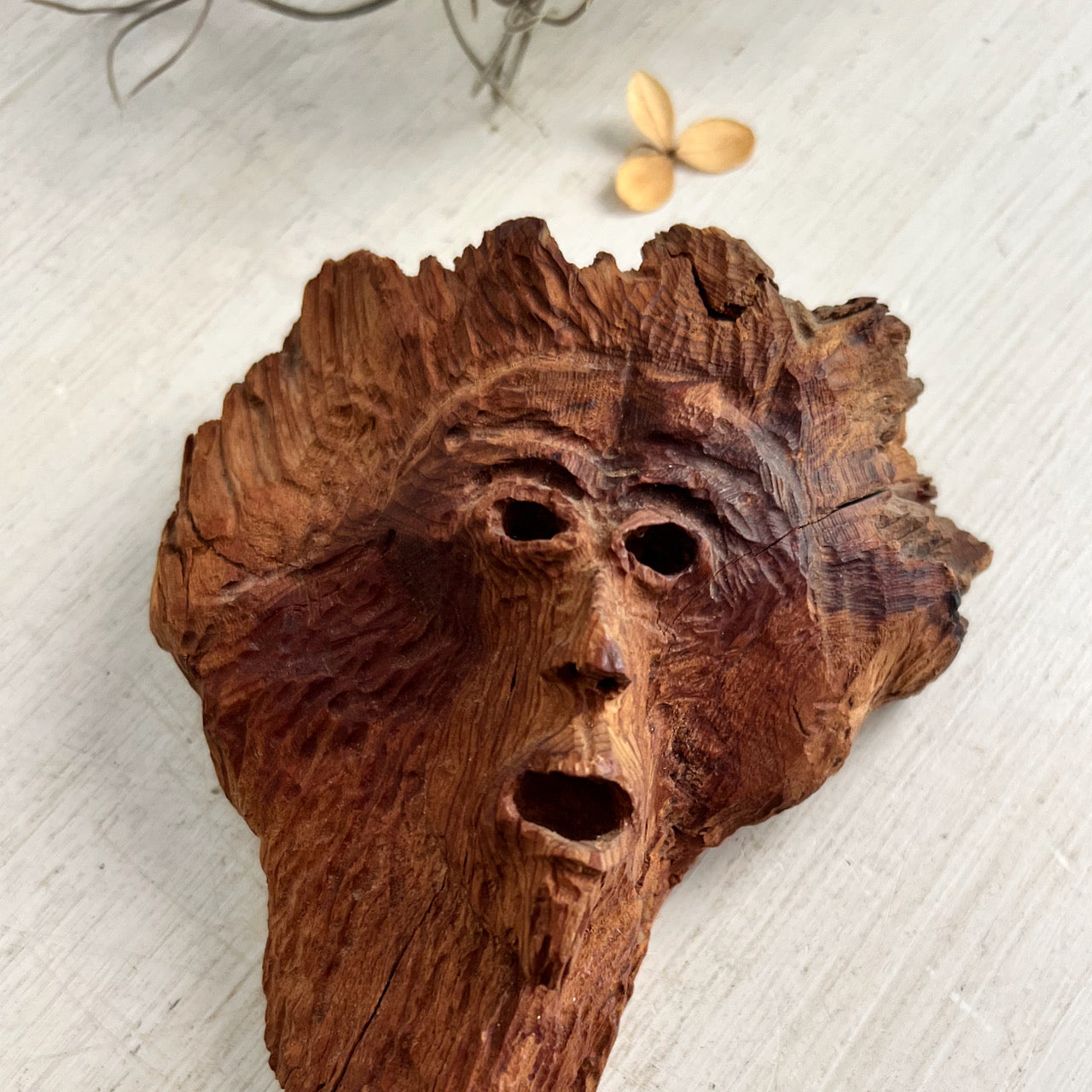
A smiling wood spirit introduces warmth and personality without requiring technical complexity. The smile does not need to be precise. A slight upward curve under the nose, paired with raised cheeks suggested by shallow cuts, is enough.
This design focuses on gentle expressions rather than dramatic features. The eyes can be simple crescent-shaped shadows or small hollows beneath heavy brows. The smile works best when the face feels slightly rounded rather than sharp.
Beginners learn how subtle changes in depth affect expression. Too deep, and the smile looks aggressive. Too shallow, and it disappears. Practicing this balance builds confidence and sensitivity to form.
3. The Bark-Faced Wood Spirit
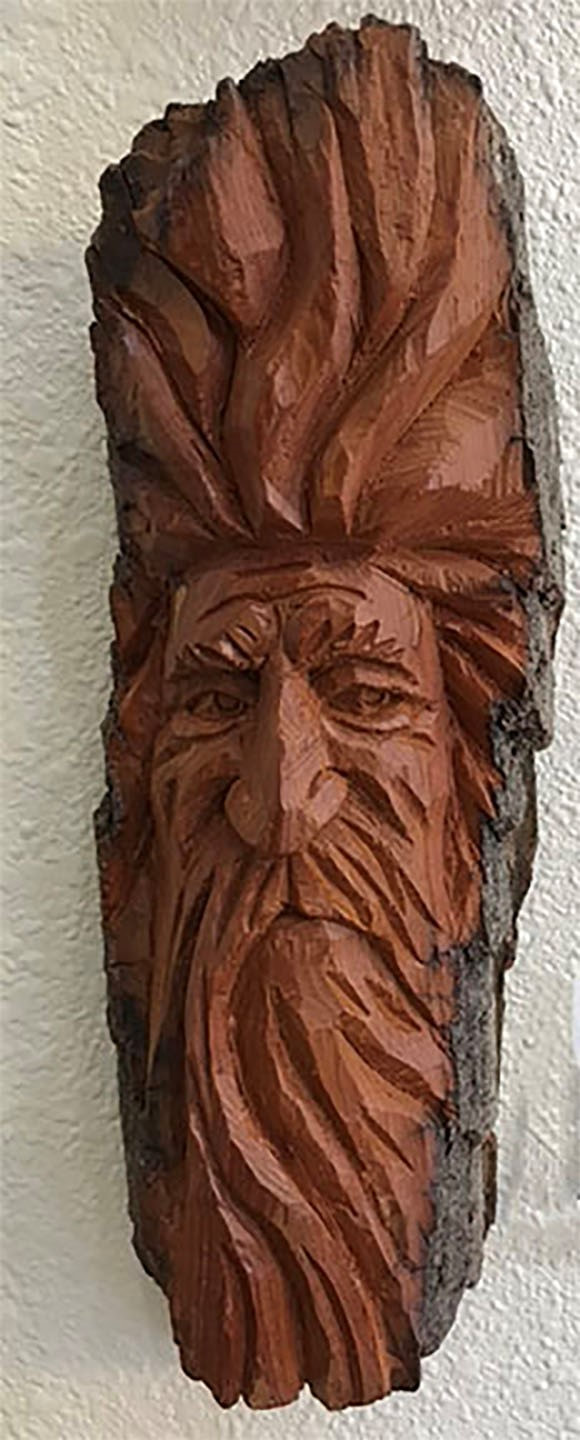
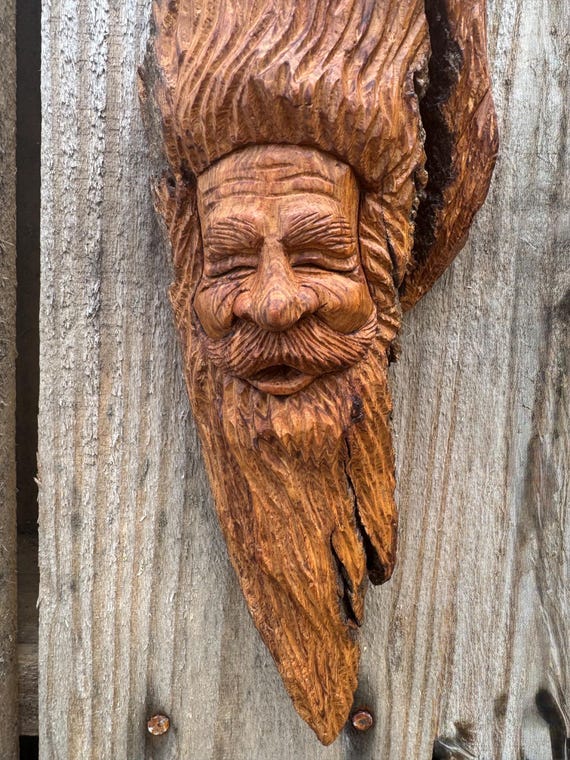
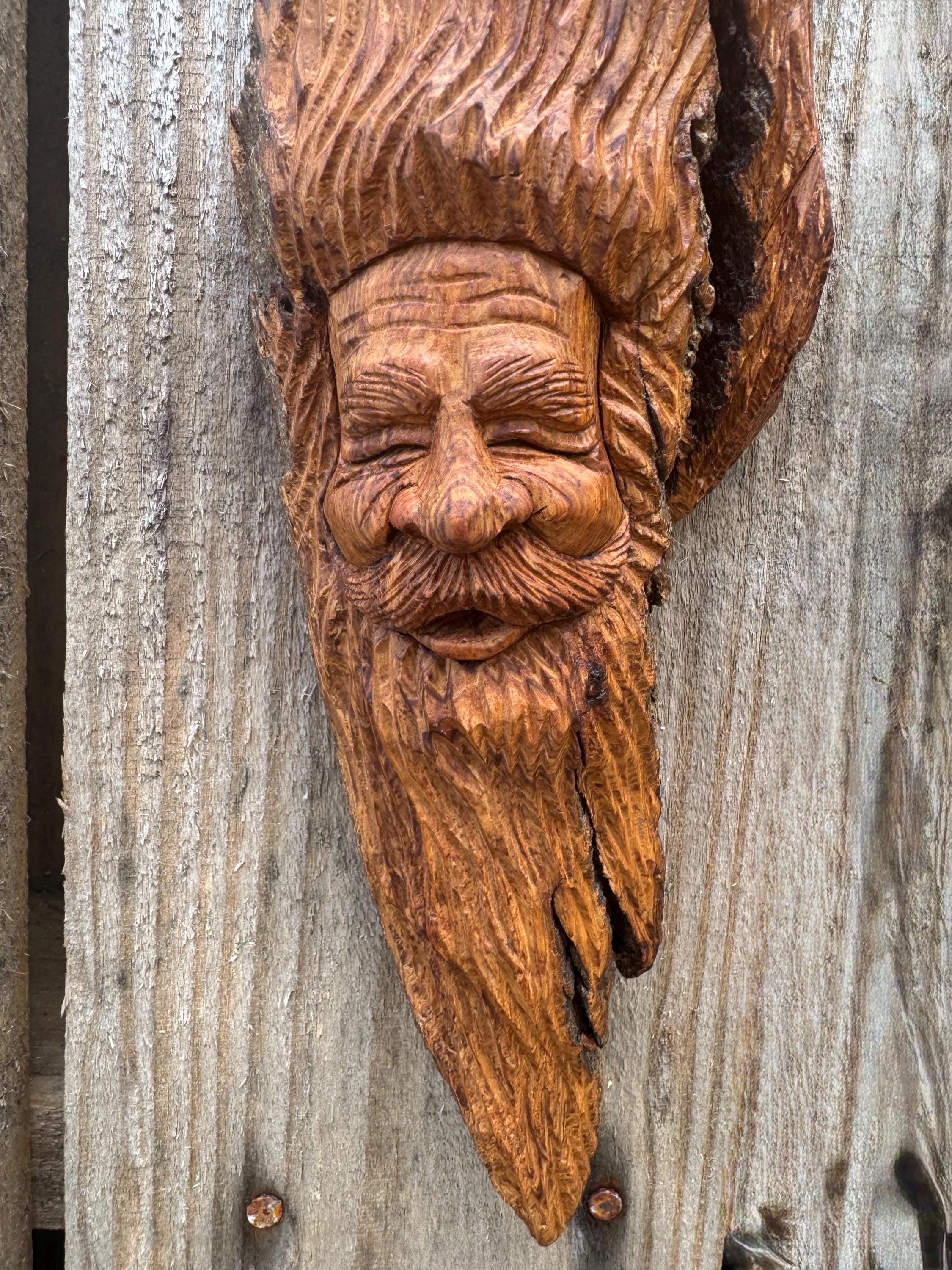
The bark-faced wood spirit leans heavily into texture. Instead of smooth skin, the entire face is broken up with vertical and diagonal cuts that mimic tree bark. Facial features are barely separated from the surrounding wood.
This design is excellent for beginners who struggle with smooth transitions. Roughness is not a flaw here. The eyes can be deep cracks. The mouth can be a split in the bark. The nose emerges naturally from intersecting grain lines.
Carving this style teaches tool control through repetition rather than precision. It also helps beginners stop sanding excessively. Tool marks are part of the design.
4. The Side-Profile Emerging Spirit
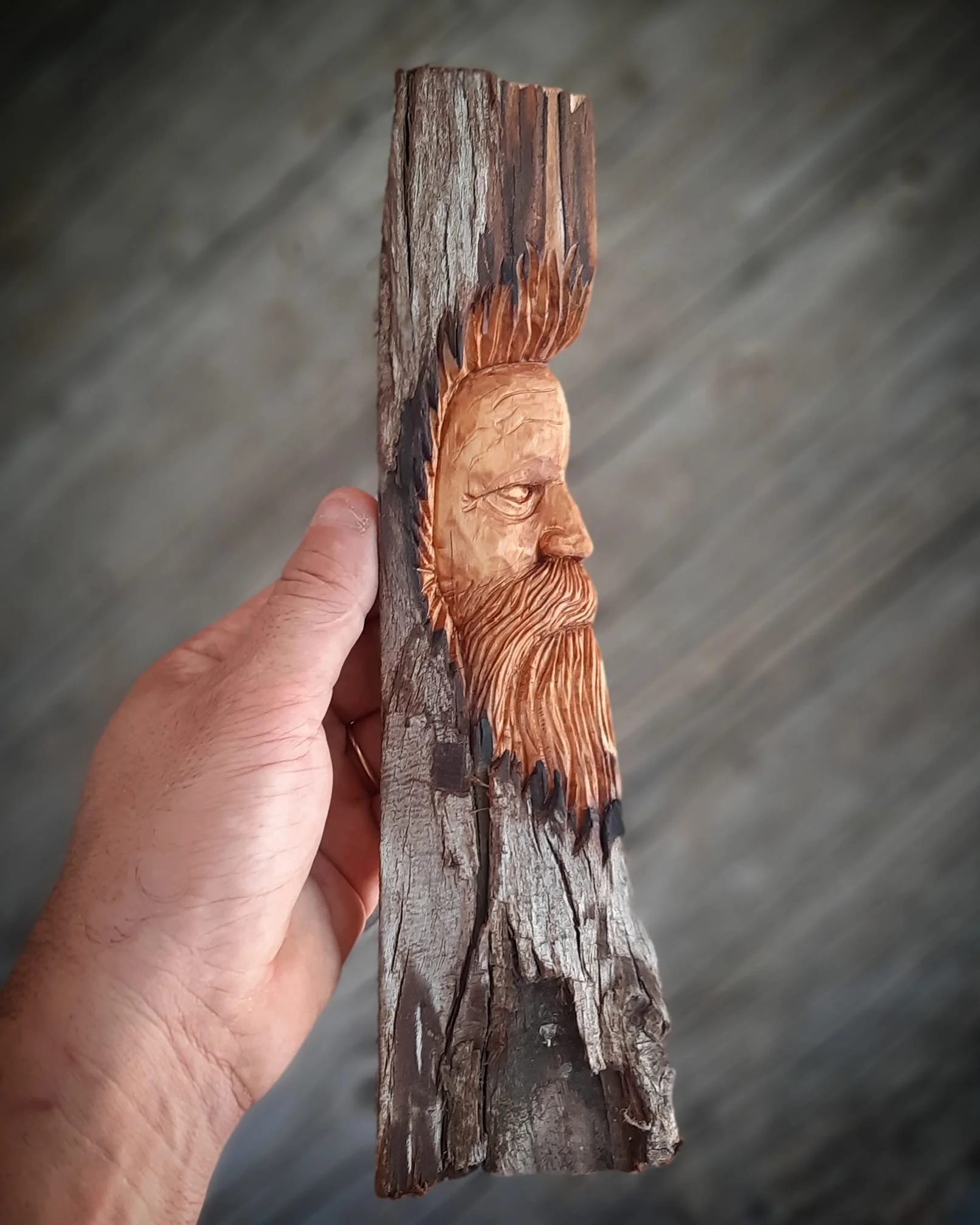
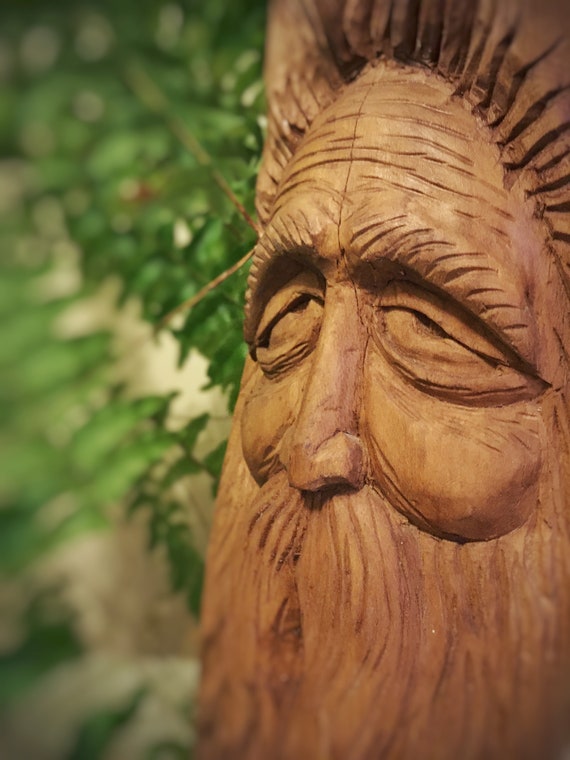
A side-profile wood spirit appears to be peeking out from the wood. Only half the face is fully visible, while the rest fades into the background. This approach reduces the number of features you need to carve while creating strong visual interest.
The nose becomes the anchor point, projecting outward from the surface. One eye is suggested with a deep shadow. The beard or bark texture flows diagonally across the surface, reinforcing the illusion of emergence.
This design teaches beginners how to use asymmetry effectively. It also introduces the concept of negative space, showing how leaving areas untouched can enhance the carving.
5. The Knothole-Inspired Wood Spirit
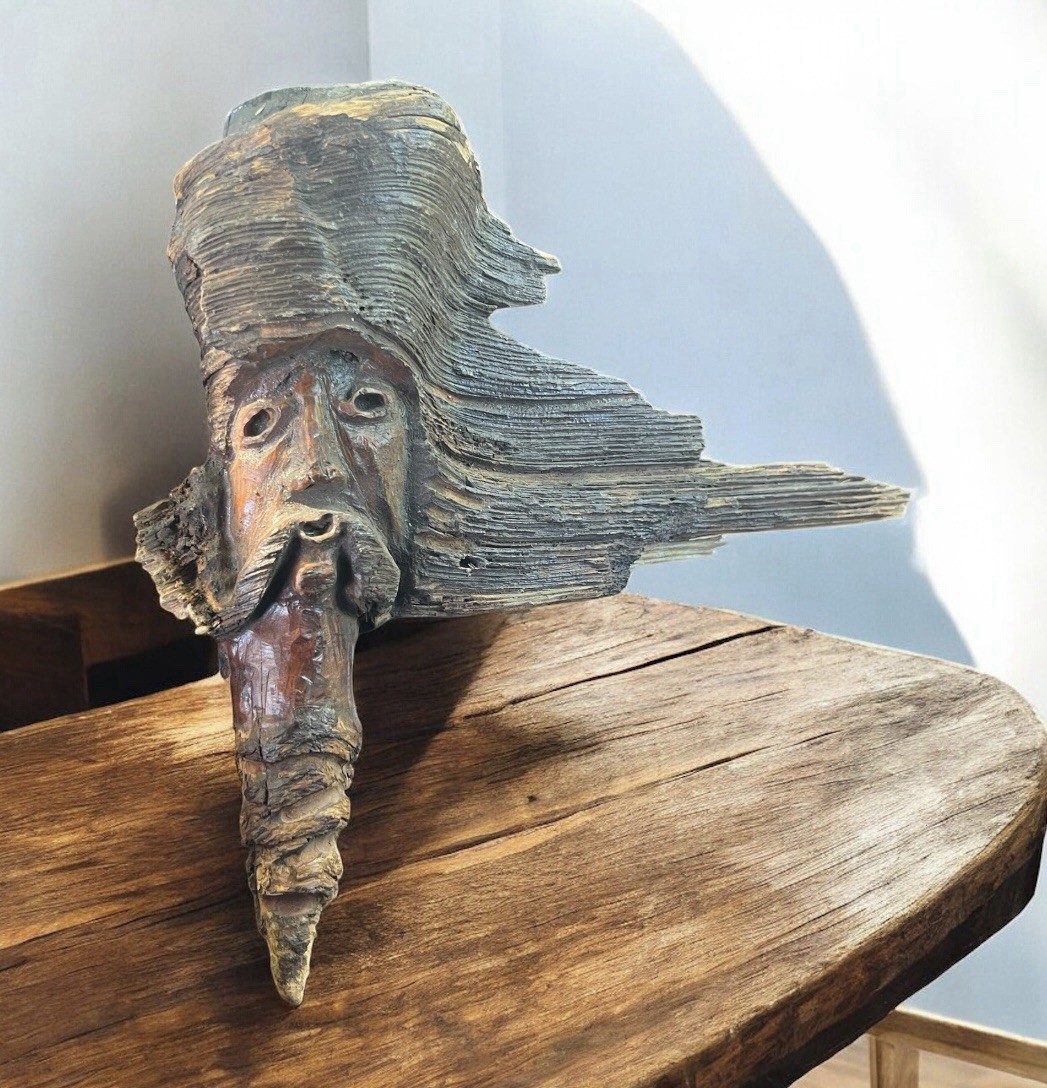

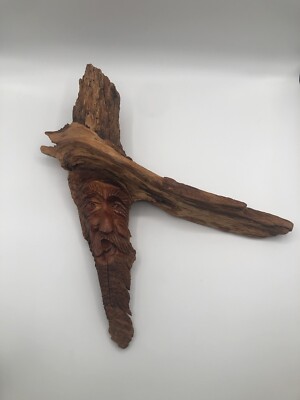
Some of the best wood spirit faces begin with a natural knot or defect in the wood. The knothole becomes an eye, mouth, or nose, reducing the amount of carving required while increasing character.
Beginners often fear knots, but this design encourages embracing them. The surrounding face is carved to complement the existing shape. Wrinkles, brows, or beard lines radiate outward from the knot.
This approach teaches adaptability and observation. Instead of forcing a pattern onto the wood, you respond to what is already there. This skill is essential for long-term growth in carving.
6. The Shallow Relief Forest Guardian

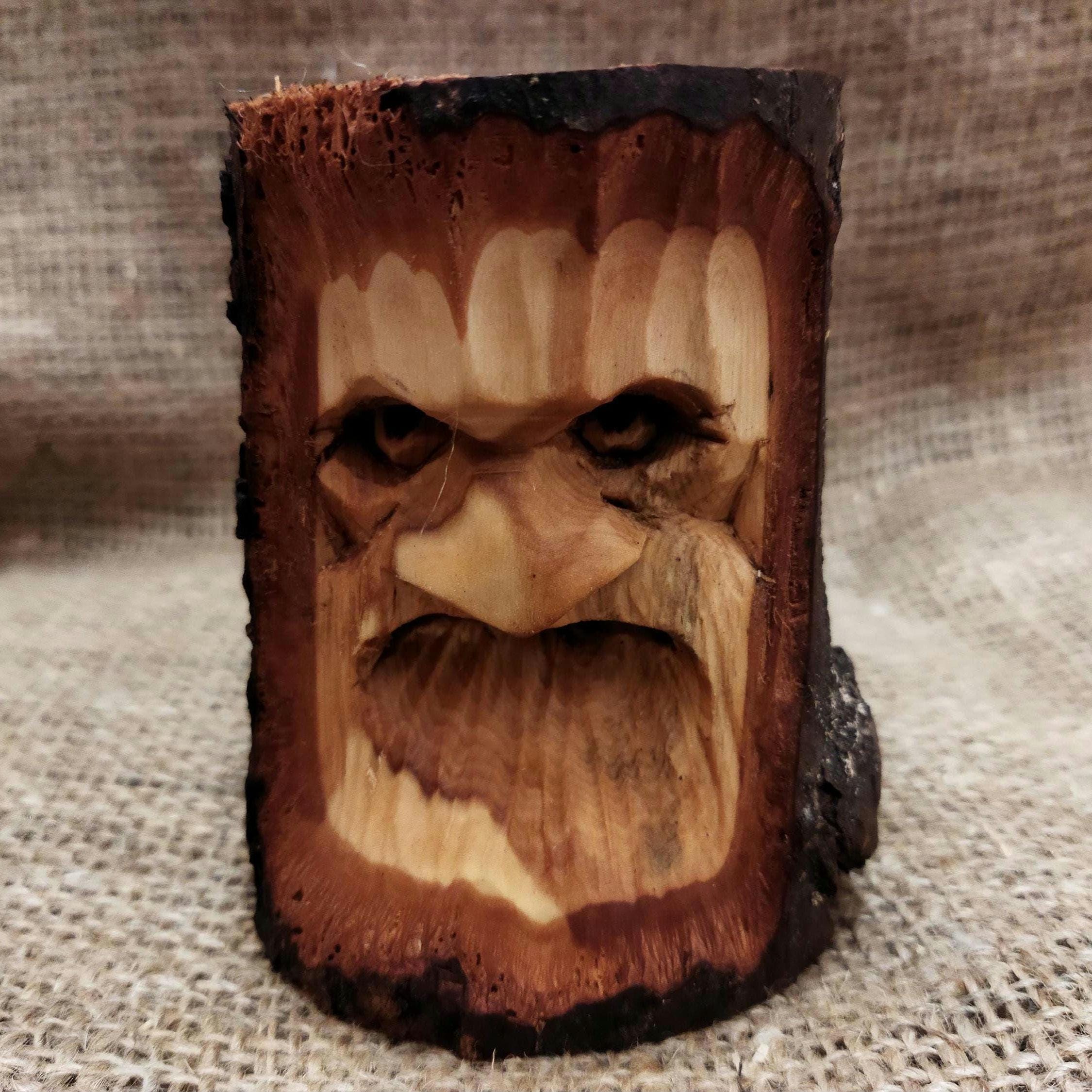
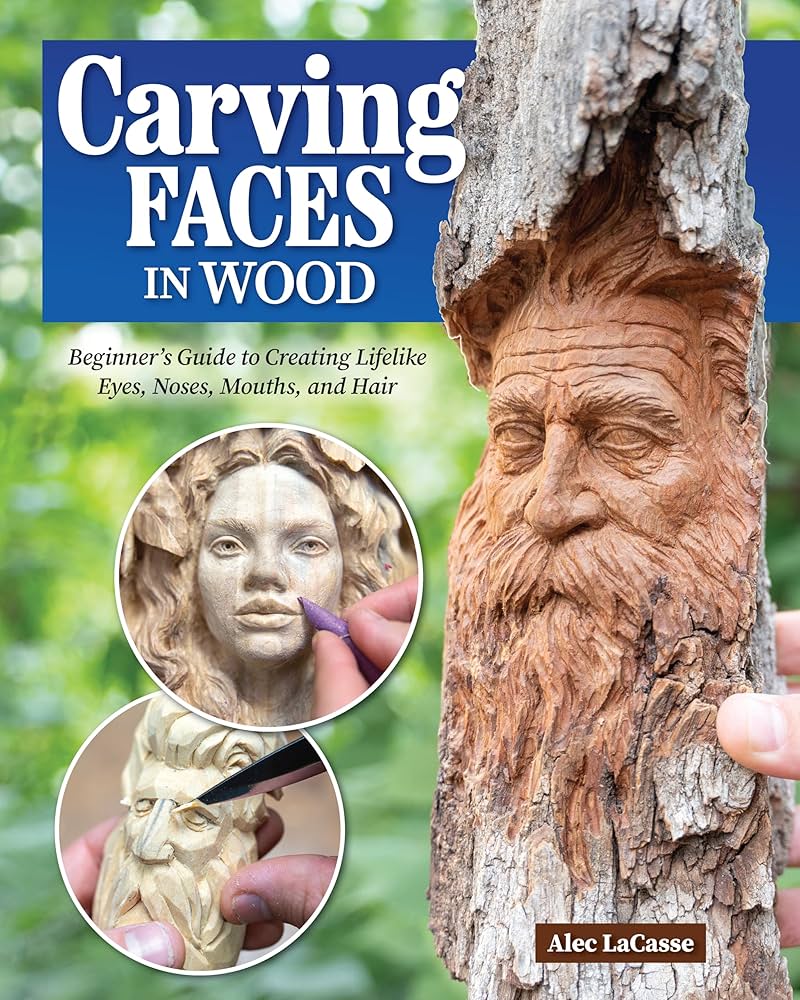
A shallow relief wood spirit is carved with minimal depth. The face barely rises from the surface, relying on shadows rather than strong contours. This makes it perfect for beginners who are nervous about removing too much material.
The eyes are deepened slightly, the nose is hinted rather than sculpted, and the beard is textured with light knife cuts. The background remains mostly untouched.
This design builds patience and restraint. Beginners learn that depth is not always necessary for impact. Subtlety can be powerful.
7. The Wild Eyebrow Wood Spirit
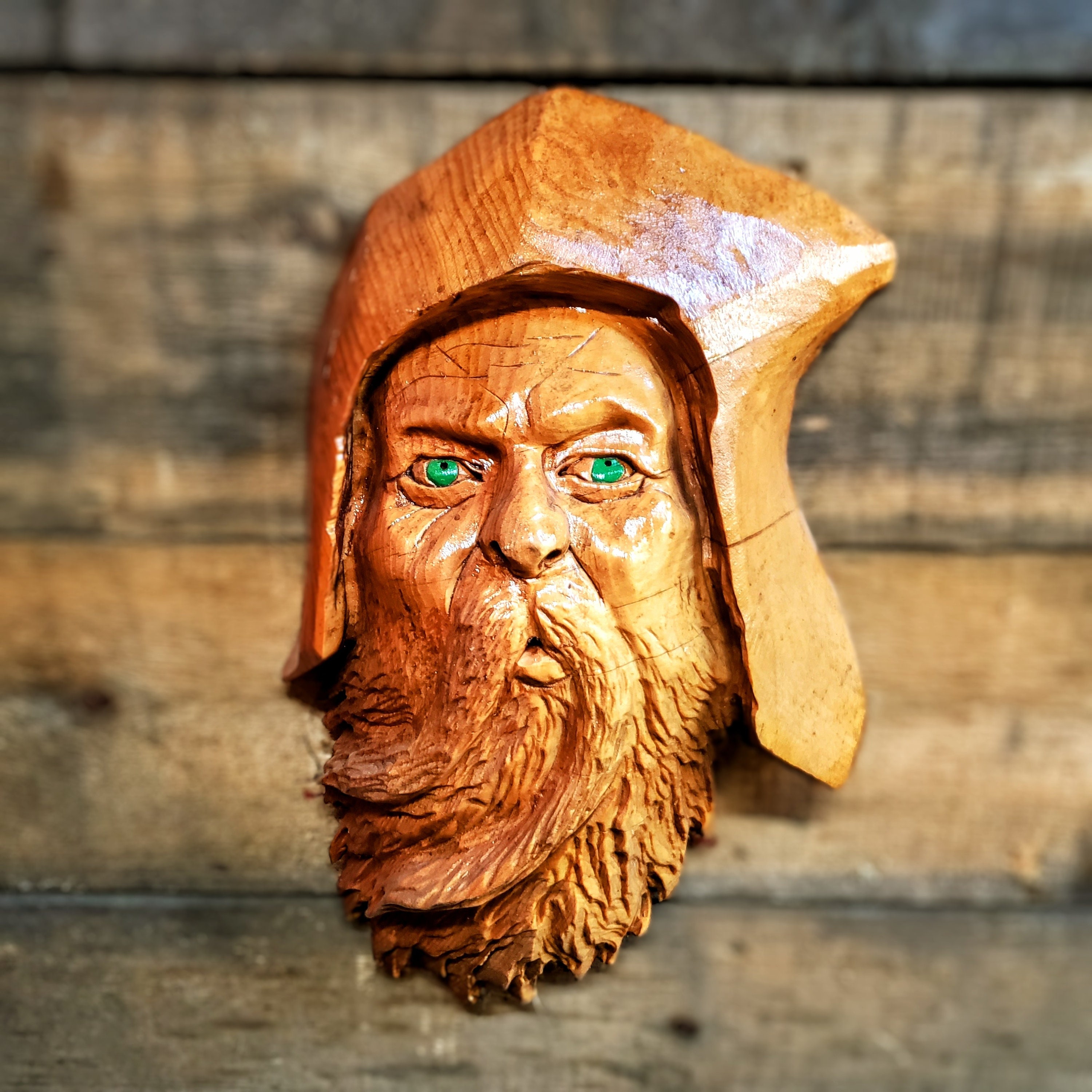
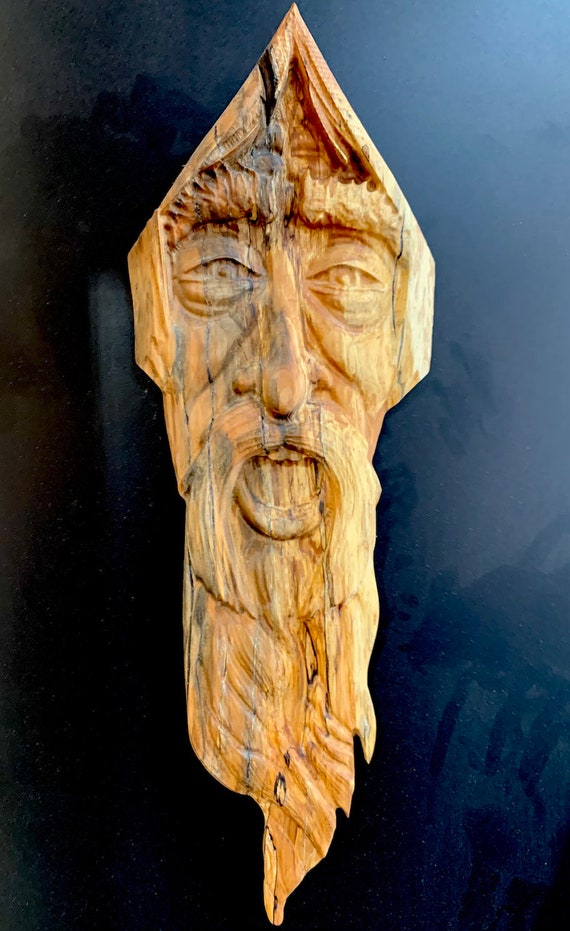

Wild eyebrows add instant expression. By exaggerating the brow ridge and carving deep shadows beneath it, you can create a mischievous, stern, or ancient look without refining the rest of the face.
This design focuses on carving bold overhangs safely. The eyebrows can merge into bark textures or hair flowing upward. The eyes themselves remain simple.
Beginners learn how overhangs affect shadow and mood. This design also introduces controlled stop cuts, an important skill for clean carving.
8. The Minimalist Nose-and-Eyes Spirit
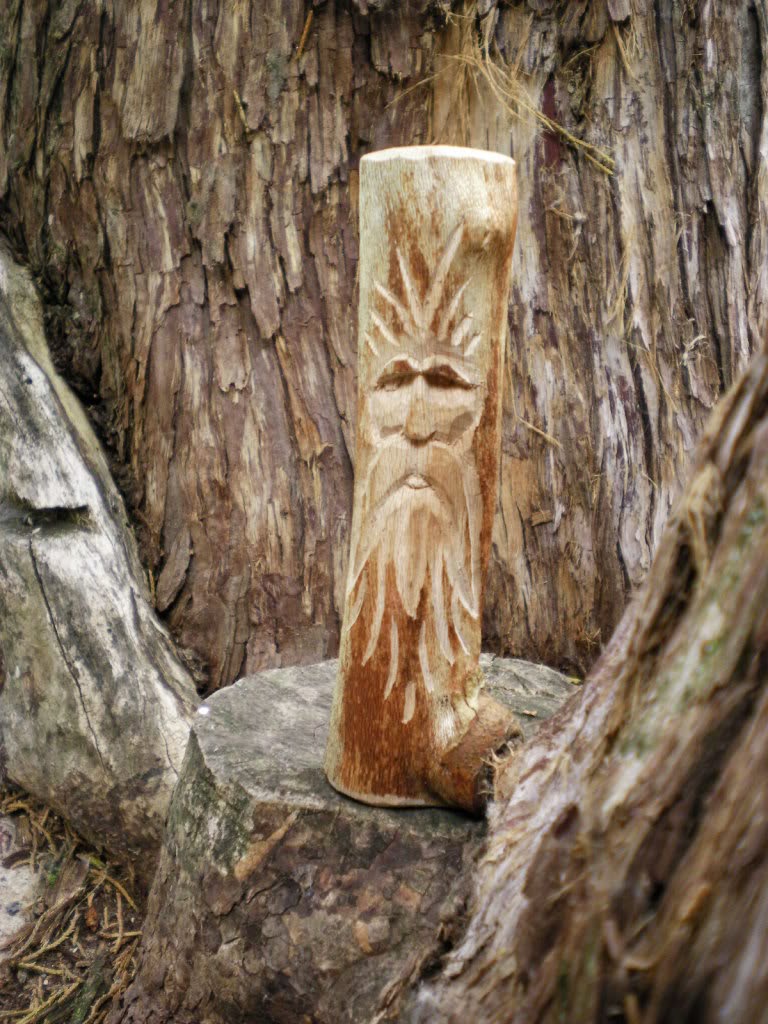
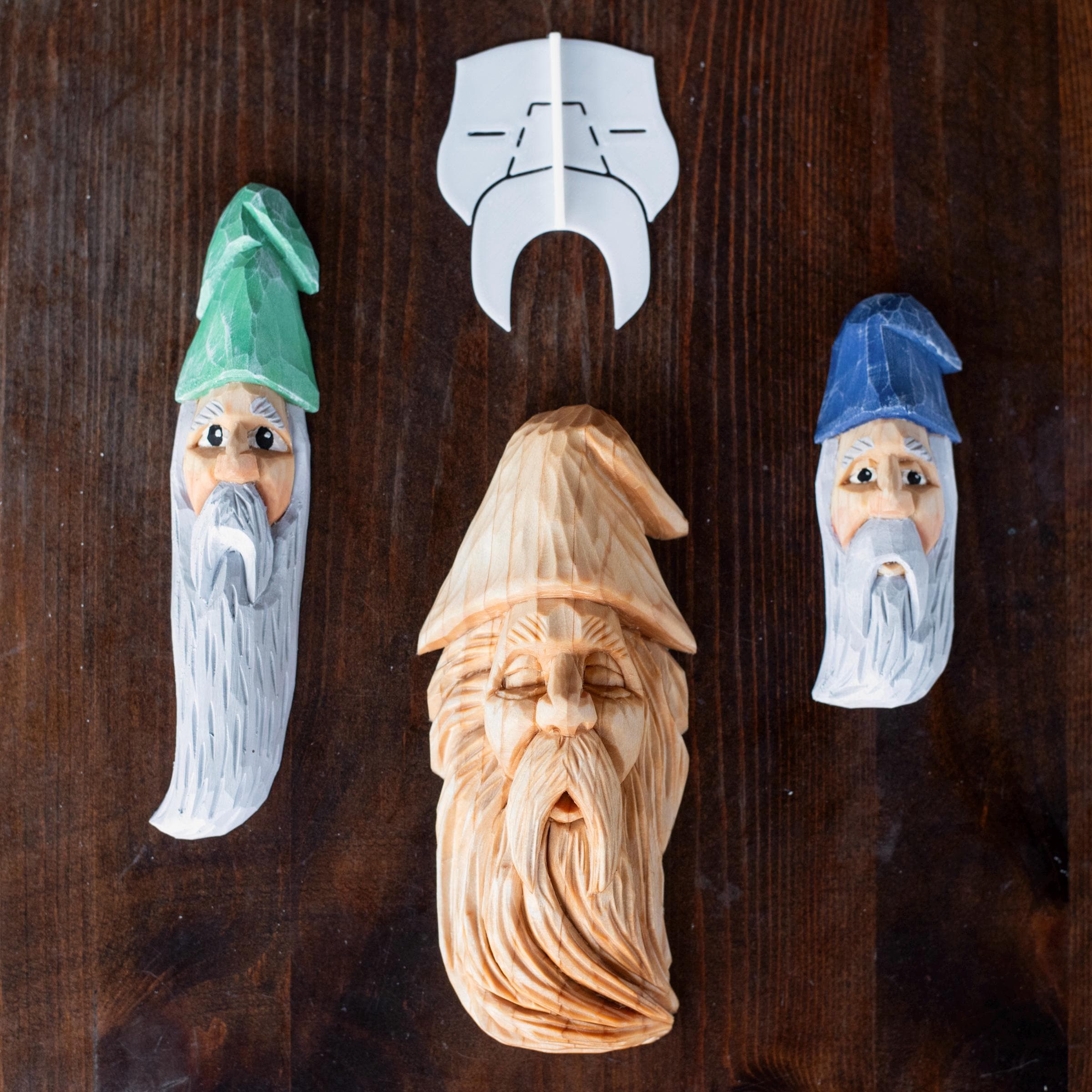
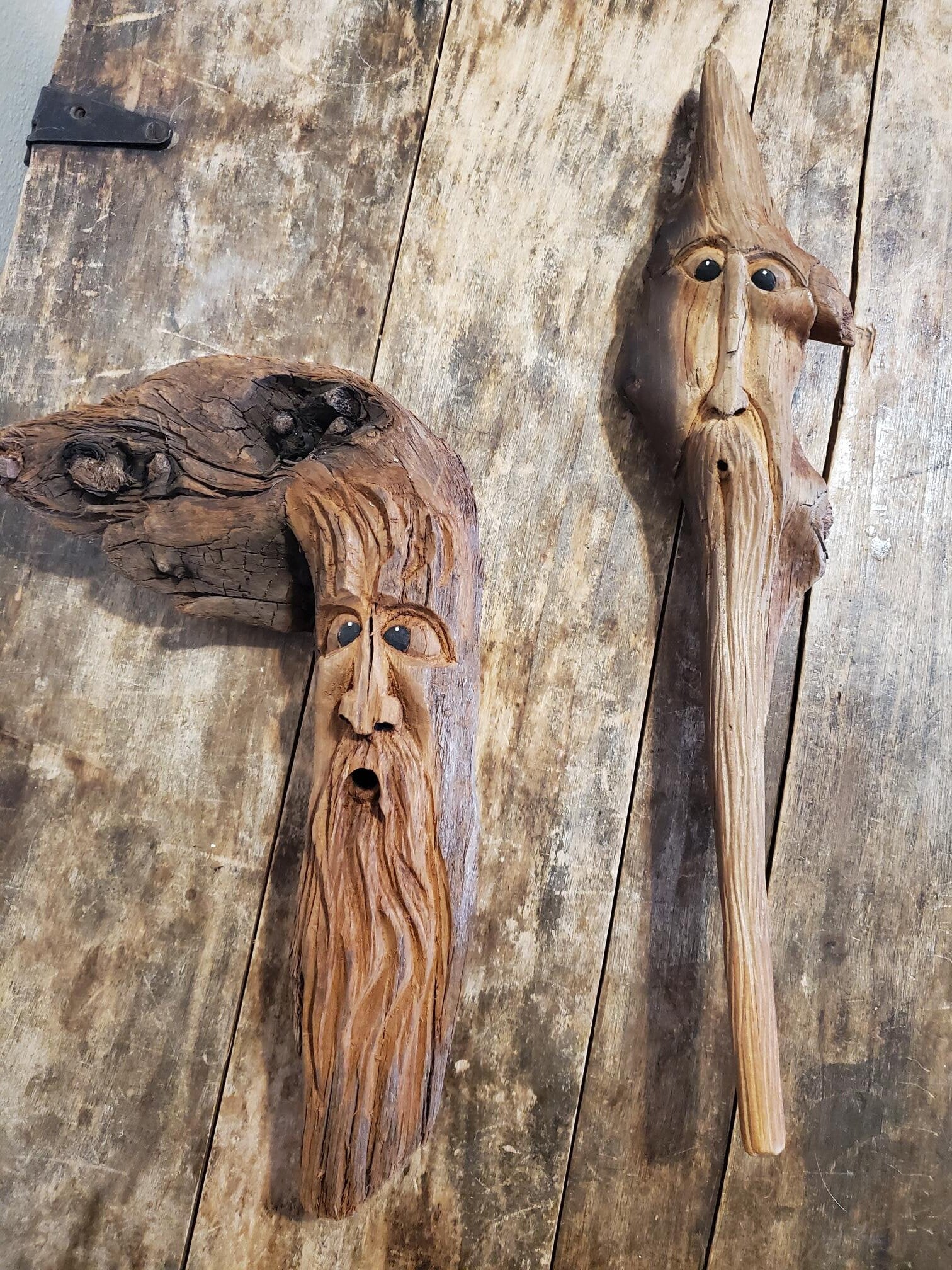
The minimalist wood spirit strips the design down to essentials. A strong nose ridge, two eye hollows, and light surface texture are enough. There may be no mouth at all.
This design is excellent for beginners who want to finish a project quickly while still achieving a compelling result. It encourages confidence in simple forms and teaches that suggestion often works better than detail.
Minimalist spirits also make excellent series projects. Carving several variations helps beginners see how small changes create different personalities.
Tool and Setup Tips for Beginners
Sharp tools matter more than tool quantity. A single sharp carving knife and a small gouge can produce all the designs in this article. Always carve away from your hand and use a carving glove for safety.
Lighting is critical. Strong side lighting helps you see shadows and depth, especially in shallow relief carvings. Work slowly, step back often, and rotate the piece to view it from different angles.
Avoid sanding too early. Many beginner wood spirits lose character when over-sanded. Let tool marks remain visible unless they distract from the overall form.
Why Wood Spirit Faces Are Perfect for Learning
Wood spirit carving teaches more than technique. It teaches patience, observation, and acceptance. Because there is no single correct outcome, beginners feel free to experiment. Every finished piece feels personal.
These carvings also grow with your skill level. A simple long-beard spirit carved today can be revisited later with deeper cuts, layered textures, or more complex expressions.
Most importantly, wood spirit faces remind beginners why they started carving in the first place. They reconnect the craft to storytelling, nature, and imagination.
If you continue practicing these eight ideas, you will quickly develop your own variations. Over time, your wood spirits will begin to look less like projects and more like characters waiting to be discovered inside the wood.