
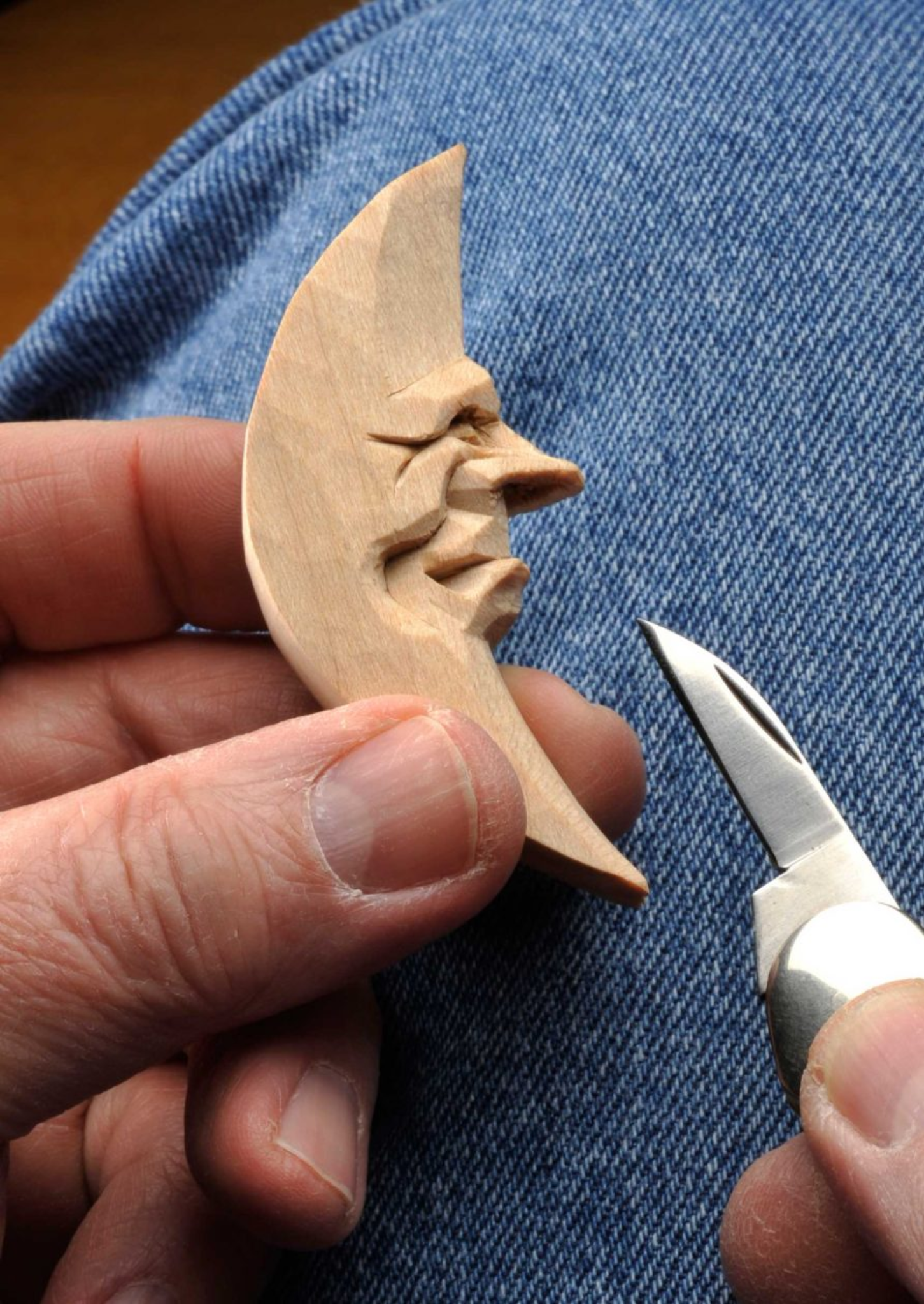
Moon carvings are one of the best places to start if you are new to wood carving. The shapes are forgiving, the symbolism is timeless, and even simple cuts can look intentional and beautiful. Whether you prefer smooth decorative forms or expressive folk-style faces, moon carvings allow you to practice core skills without the pressure of realism.
Here are nine beginner-friendly moon phase carving ideas, moving from simple shapes to slightly more detailed designs.
1. Folk-Style Crescent Moon Face
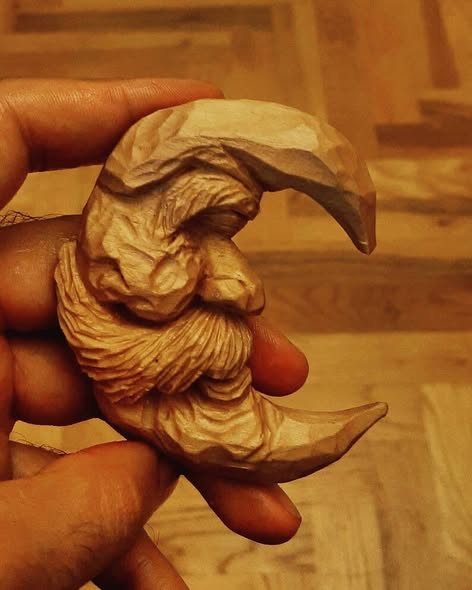
This classic crescent moon face leans heavily into folk art tradition. The exaggerated nose, closed eyes, and flowing beard lines give the carving personality without requiring anatomical accuracy. For beginners, this is ideal because small asymmetries actually add charm rather than detract from the piece.
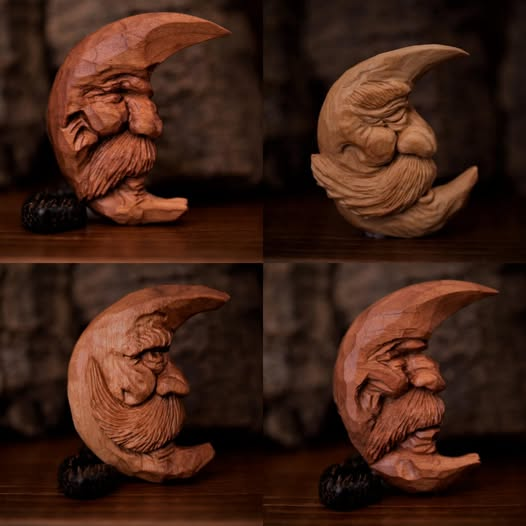
Start by defining the crescent shape cleanly. Once the outline feels right, block in the nose and brow as simple planes. Facial details should stay shallow, focusing more on suggestion than detail.
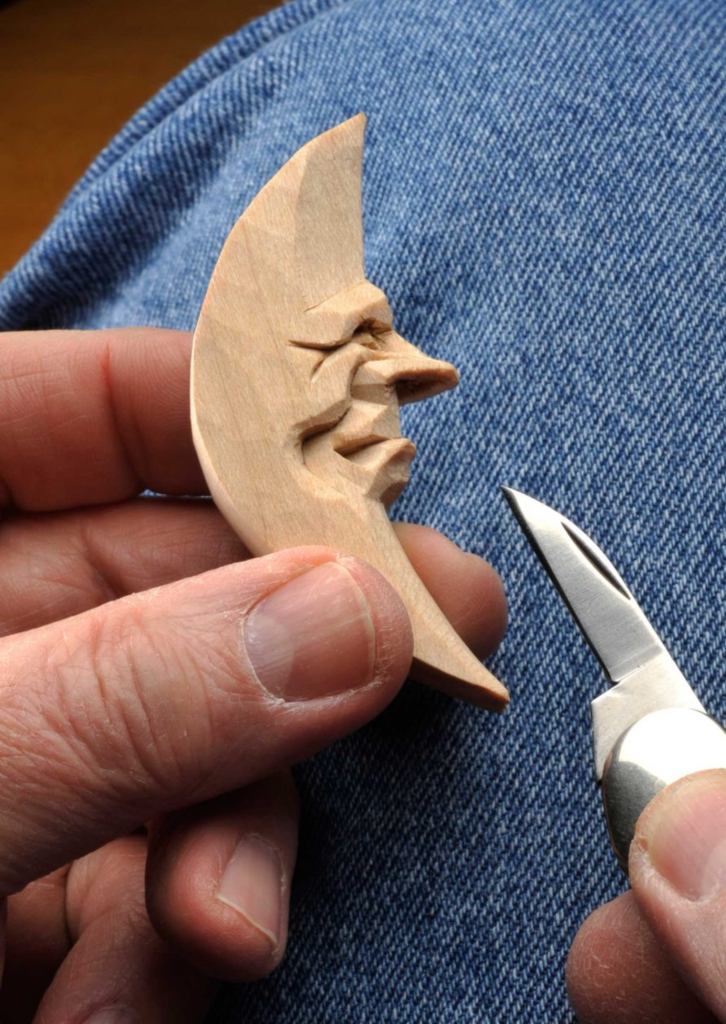
2. Pocket-Size Moon Face Carving
A small moon face carving is perfect for short practice sessions. The compact size forces you to slow down and use controlled knife cuts rather than force. This is especially useful for learning how sharp tools should do most of the work.
Keep everything simple. Shallow eye slits, a small nose ridge, and minimal mouth definition are enough to bring the face to life without weakening the thin crescent tips.
3. Sun and Moon Relief Combination
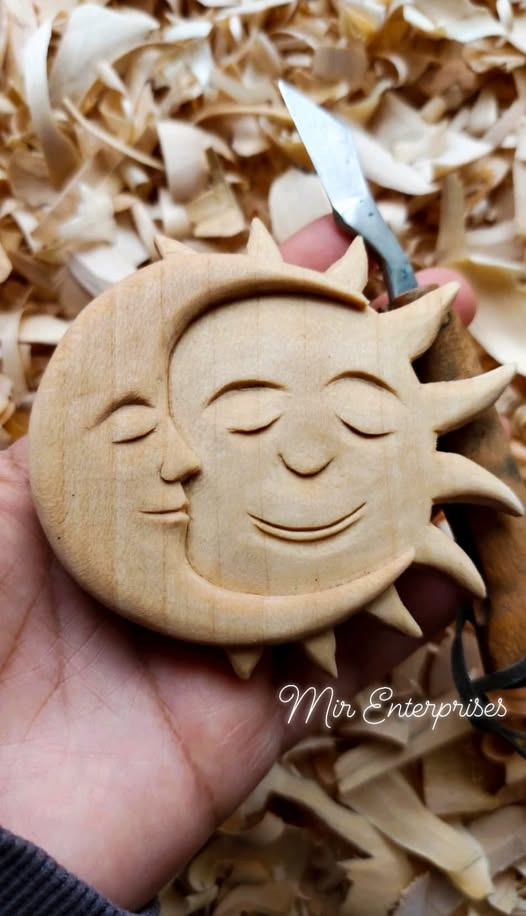
This flat relief design combines moon and sun imagery into a single balanced piece. Although it looks intricate, the carving itself relies more on clean outlines and smooth transitions than deep carving.
For beginners, the key is to keep the relief depth consistent across the piece. Avoid chasing detail early. Establish the main shapes first, then refine facial features only after the overall surface feels even and calm.
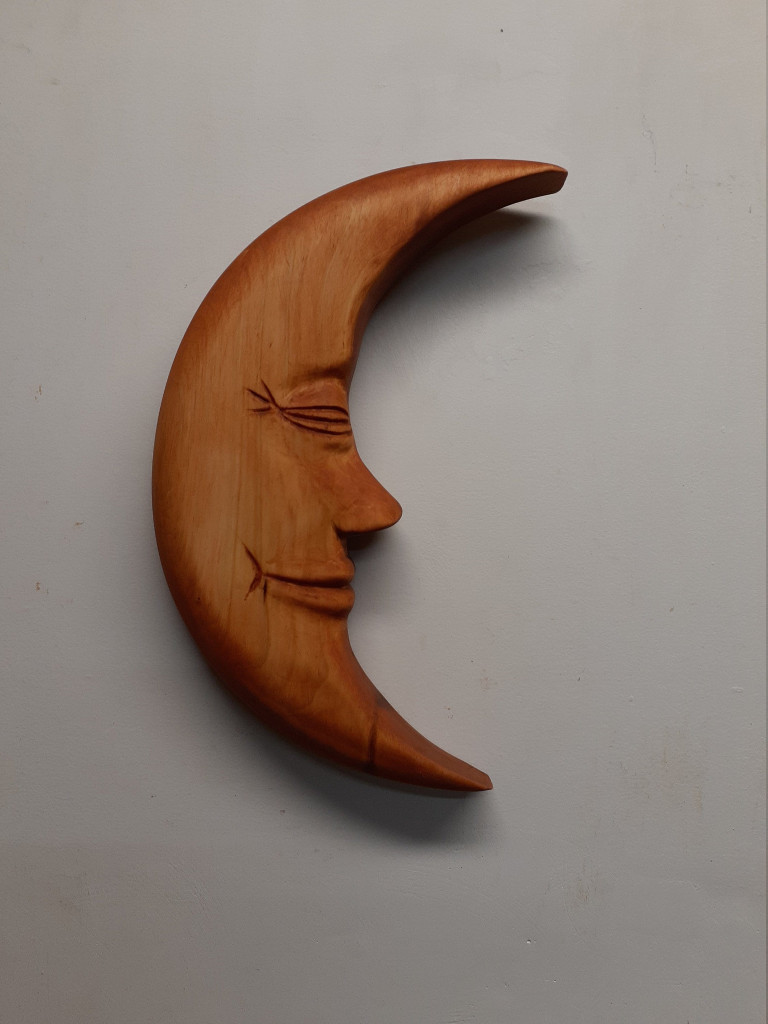
4. Minimal Crescent Moon Profile
A crescent moon profile like this is an excellent lesson in restraint. The carving works because of its silhouette, not because of heavy detail. This makes it perfect for beginners who want to practice stop cuts, clean curves, and smooth facial planes.
The face should be shallow and understated. One clean eye line and a gentle mouth curve are enough. Overworking this type of carving usually takes away from its strength.
5. Smooth Decorative Crescent Moon
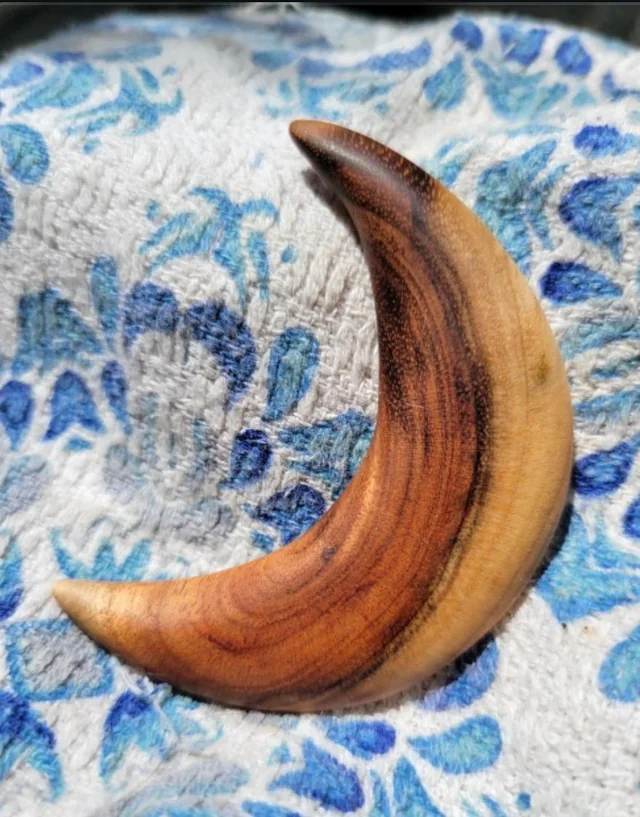
This is one of the best beginner moon projects you can carve. With no facial features at all, the entire focus is on form and finish. The goal is to create a crescent that feels smooth, balanced, and pleasant to hold or display.
This type of carving teaches patience. Take light cuts, follow the grain, and resist the urge to sand too early. A clean knife finish will always look better than aggressive sanding.
6. Openwork Tree and Moon Design
While this piece is more advanced, it works well as inspiration for beginners. The idea of combining the moon shape with organic elements like branches shows how flexible moon carvings can be.
Beginners should not attempt full openwork right away. Instead, carve the outer moon shape and sketch internal designs on the surface. This helps train your eye for composition without risking breakage.
7. Natural-Grain Crescent Moon
This crescent uses the wood’s natural grain as part of the design rather than fighting it. This approach is very beginner-friendly because minor tool marks blend naturally into the surface.
Let the grain guide your cuts and curves. Instead of forcing symmetry, allow the wood to influence the final shape. This often results in a more organic and satisfying carving.
8. Celtic-Style Crescent Pendant
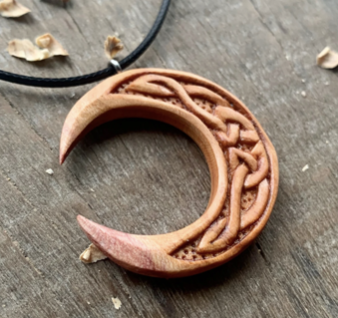
This crescent focuses on shallow decorative carving rather than deep relief. Repeating patterns, such as knotwork or flowing lines, help beginners develop rhythm and consistency with their cuts.
The key here is light pressure and repetition. Keep all pattern cuts shallow and even. It is better to under-carve and refine than to go too deep and lose definition.
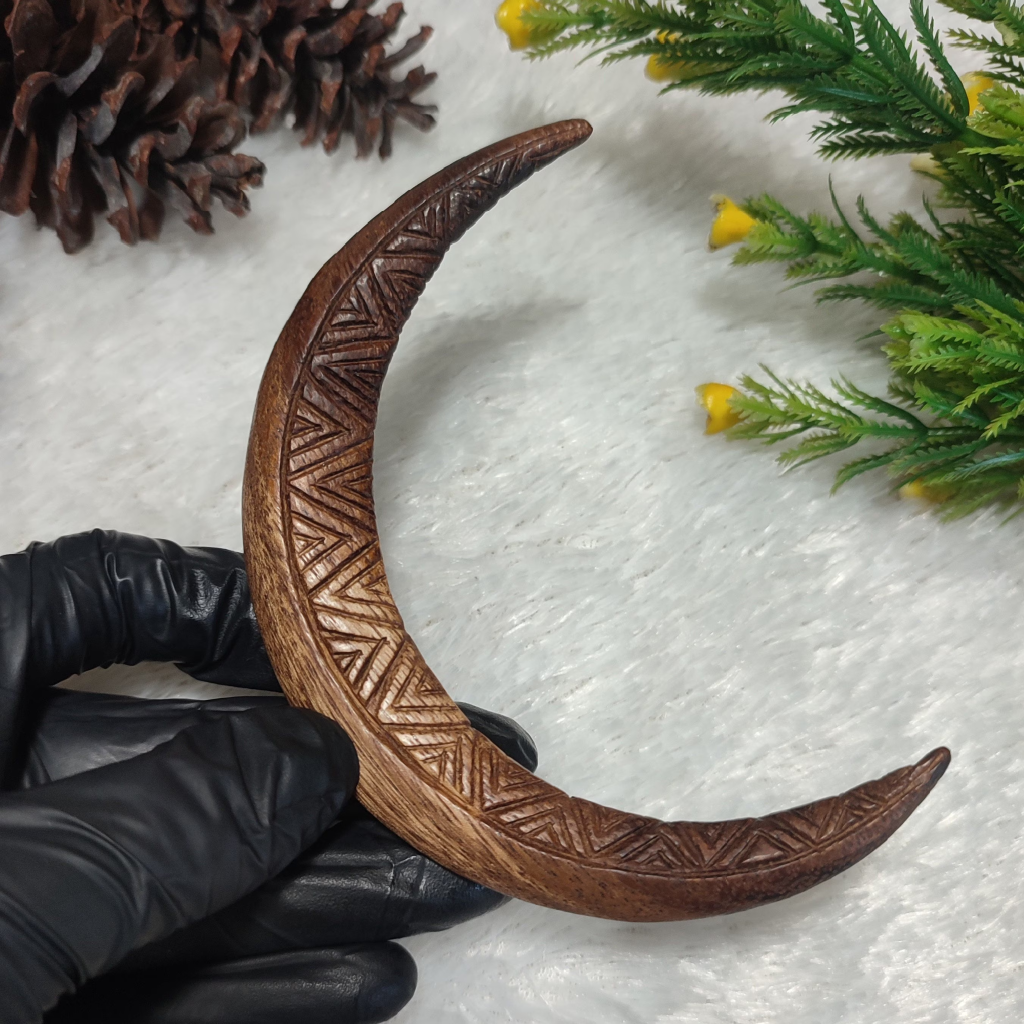
9. Textured Pattern Crescent Moon
Textured crescent moons use surface patterns like V-cuts or simple geometric lines to add visual interest. These designs are ideal for practicing control while keeping the overall form simple.
Focus on spacing and consistency rather than complexity. Clean, repeated cuts will always look more intentional than rushed detail.
Why Moon Carvings Are Ideal for Beginners
Moon carvings naturally hide small mistakes. The curved shape softens tool marks, and the symbolic nature of the moon allows for interpretation rather than strict realism. You can start with very simple forms and gradually add faces, textures, or patterns as your confidence grows.
If you are new to carving, moons are one of the fastest ways to build skill while still producing pieces you are proud to display or gift.