
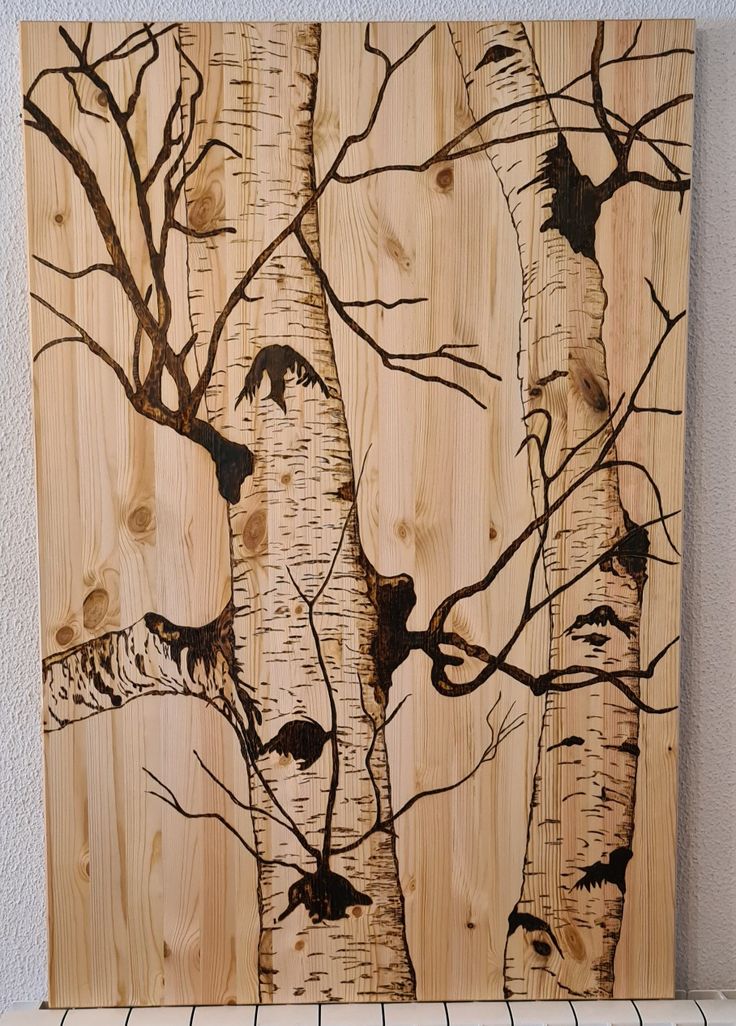
Combining the arts of woodburning and relief carving offers a multi-dimensional approach to capturing the natural beauty of trees. By integrating these two techniques, artists can achieve a level of depth and realism that neither medium provides alone. This “mixed-media” approach on wood allows for the structural definition of relief carving to meet the tonal richness and high contrast of woodburning.
The Synergy of Burned and Carved Textures
In this combined style, the tree silhouette serves as the foundational guide. Carving into the wood creates physical shadows and highlights, while woodburning allows for the addition of deep blacks, scorched gradients, and fine-line detailing on the trunk and branches. This method is ideal for creating “3D” forest scenes where the foreground elements are physically raised and the background elements are burned softly into the wood, resulting in a sophisticated, atmospheric piece of art.
The Woodburned Wildlife Vista

This project demonstrates a mixed-media approach by combining deep relief carving with fine woodburning (pyrography) to create an atmospheric wilderness scene. It is an excellent study in utilizing tonal contrast to establish a foreground-to-background relationship.
- Design Style: A vertical, live-edge plaque featuring a high-relief owl and branch in the foreground, contrasted against a delicate, woodburned mountain range and pine forest in the distance.
- Skill Practice: This piece focuses on texture layering. You will practice using a woodburning pen to render the intricate patterns of bird feathers and the “shaggy” appearance of distant evergreen needles.
- Key Detail: The atmospheric recession. By using deep carving for the owl and branch while keeping the background mountains as shallow, burnt lines, you create a powerful sense of physical distance on a single piece of wood.
- Recommended Tooling: A curved gouge for the rounded 3D form of the owl and a pyrography pen with various tips for the detailed background stippling and shading.
Mixed-Media Wildlife and High-Relief Landscapes

This section explores the integration of architectural precision and pyrography with traditional carving to create immersive wilderness narratives.
- Architectural Integration: Combining straight-edged mill or cabin structures with rugged, irregular cliffside textures requires high precision and planar layering.
- Mixed-Media Depth: Using a woodburning pen (pyrography) allows for intricate detailing of feathers and shaggy evergreen needles that contrast against deep-carved foreground elements.
- Atmospheric Recession: Strategic shading and shallow burning for distant peaks create a sense of vast distance on a single live-edge slab.
- Dynamic Water Textures: Vertical panels use long, vertical strokes to represent cascading waterfalls, set against a backdrop of horizontal stippling for the sky.
- Topographic Accuracy: Circular bases can be transformed into realistic geological models using multifaceted cuts to define sharp ridge lines and radial movement.
- Canopy Differentiation: Advanced forest studies contrast the sharp, V-cut needles of pines with rounded, “cloud-like” clusters for deciduous leaf canopies.
- Foreground Anchoring: The use of rounded boulders and tufts of grass at the base of the panel provides a stable visual anchor for vertical forest scenes.
Pyrography and Narrative Wildlife Landscapes

This final subtopic explores the integration of pyrography (woodburning) into mountain relief work to achieve intricate narrative details and atmospheric perspective that carving alone cannot provide.
- Mixed-Media Texture: Combining deep-relief carving for subjects like owls or tree branches with fine woodburning for distant peaks allows for extreme textural differentiation on a single wooden slab.
- Intricate Wildlife Detailing: Pyrography pens are essential for rendering high-fidelity biological details, such as the individual feathers of an owl or the complex bark patterns and foliage explored in bird studies.
- Atmospheric Recession: Strategic shading and shallow burning for background mountain ranges create a powerful sense of vast distance, making the deeply carved foreground elements appear closer to the viewer.
- Dynamic Forest Elements: Advanced techniques involve using various pyrography tips to create “shaggy” needle textures on evergreens, which can be framed within the natural borders of a live-edge piece.
- Structural and Natural Contrast: Projects often balance the rigid lines of architectural elements like historic mills with the organic, burnt textures of surrounding foliage and flowing water ripples.
- Geological Modeling: Relief work extends into functional circular objects, where multifaceted cuts define the sharp ridge lines and radial movement of realistic topographic models.
- Compositional Framing: Vertical panels often use interlocking canopies of carved trees to frame central features like waterfalls or distant summits, using horizontal stippling to texture the sky.
Pyrography and High-Relief Landscape Narrative

This final subtopic explores the integration of pyrography (woodburning) into mountain relief work to achieve intricate narrative details and atmospheric perspective.
- Mixed-Media Texturing: Combining high-relief carving for foreground elements like tree branches with fine woodburning for distant peaks creates a powerful sense of physical distance on a single wooden slab.
- Intricate Wildlife Detailing: Pyrography pens are essential for rendering biological details with high fidelity, such as individual feathers on a bird or the complex bark patterns and foliage explored in large-scale tree studies.
- Atmospheric Recession: Strategic shading and shallow burning for background mountain ranges make deeply carved subjects appear closer to the viewer, effectively establishing a foreground-to-background relationship.
- Geometric Structural Contrast: Projects often balance man-made architectural lines, such as those of a historic mill, with the organic, irregular textures of surrounding rock and flowing water.
- Topographic Precision: Advanced relief work can transform circular wooden bases into 3D topographic models, using multifaceted cuts to accurately represent sharp ridge lines and natural erosion patterns.
- Canopy Differentiation: Vertical forest studies utilize distinct tool marks to separate tree species, contrasting shaggy pine needles with rounded, cloud-like leaf clusters.
- Compositional Framing: Vertical panels frequently use interlocking tree canopies and foreground elements like boulders to frame a central scene, providing a stable visual anchor for the landscape.
Pyrography and Atmospheric Nature Narratives

This section examines the use of pyrography (woodburning) to enhance landscape carvings with high-fidelity textures and established atmospheric perspective.
- Mixed-Media Texture: Combining high-relief carving for foreground elements, such as thick tree branches, with delicate woodburning for background details like distant mountain ranges creates a strong sense of physical depth.
- Intricate Wildlife Detailing: Pyrography is essential for rendering realistic biological features, such as the individual feathers of a bird or the complex, shaggy bark and foliage of large-scale tree studies.
- Atmospheric Recession: Strategic shading and lighter, shallower burning for distant peaks effectively make deeply carved foreground subjects appear closer to the viewer.
- Structural and Organic Contrast: Many projects balance man-made architectural lines, like those of a historic mill or cabin, with the irregular, burnt textures of surrounding forest and flowing water.
- Topographic Precision: Specialized relief work can transform circular wooden bases into 3D topographic models, using multifaceted cuts to accurately represent sharp ridge lines and natural erosion patterns.
- Canopy Differentiation: Advanced forest scenes utilize distinct tool marks to separate tree species, contrasting the sharp V-cut needles of a pine with the rounded, “cloud-like” clusters of a deciduous canopy.
- Compositional Framing: Vertical panels frequently use interlocking tree canopies or live-edge borders to frame a central scene, such as a waterfall or a single majestic bonsai-style tree.
Pyrography and High-Relief Landscape Narratives

This final subtopic explores the integration of pyrography (woodburning) into mountain relief work to achieve intricate narrative details and atmospheric perspective.
- Mixed-Media Texturing: Combining high-relief carving for foreground elements like tree branches with fine woodburning for distant peaks creates a powerful sense of physical distance on a single wooden slab.
- Intricate Wildlife Detailing: Pyrography pens are essential for rendering biological details with high fidelity, such as individual feathers on a bird or the complex bark patterns and foliage explored in large-scale tree studies.
- Atmospheric Recession: Strategic shading and shallow burning for background mountain ranges make deeply carved subjects appear closer to the viewer, effectively establishing a foreground-to-background relationship.
- Geometric Structural Contrast: Projects often balance man-made architectural lines, such as those of a historic mill, with the organic, irregular textures of surrounding rock and flowing water.
- Topographic Precision: Advanced relief work can transform circular wooden bases into 3D topographic models, using multifaceted cuts to accurately represent sharp ridge lines and natural erosion patterns.
- Canopy Differentiation: Vertical forest studies utilize distinct tool marks to separate tree species, contrasting shaggy pine needles with rounded, cloud-like leaf clusters.
- Compositional Framing: Vertical panels frequently use interlocking tree canopies, foreground elements like boulders, or the natural frame of a live-edge slab to focus the viewer’s eye on a central wilderness scene.
Advanced Topography and Forest Textures

This section focuses on the high-precision detailing required for realistic 3D mapping and the differentiation of diverse botanical textures within a single relief.
- Topographic Precision: Specialized relief work can transform circular wooden bases into 3D topographic models, using multifaceted cuts to accurately represent sharp ridge lines and natural erosion patterns.
- Radial Geological Movement: Ridges spiral and descend from a central summit toward the edge of the circular base, requiring a deep understanding of geological forms to maintain realistic flow.
- Canopy Differentiation: Vertical forest studies utilize distinct tool marks to separate tree species, contrasting the sharp, downward V-cut needles of a pine with the rounded, “cloud-like” clusters of a deciduous tree.
- Interlocking Textures: Deeply textured canopies are carved to overlap, creating a sense of density that frames the distant, shallower peaks in the background.
- Foreground Anchoring: The inclusion of rounded boulders and tufts of grass at the base of the panel provides a stable visual “anchor” for tall forest scenes, preventing the trees from appearing “floating”.
Pyrography and Atmospheric Nature Narratives

This final subtopic explores the integration of pyrography (woodburning) with relief work to achieve high-fidelity biological details and a strong sense of atmospheric perspective.
- Mixed-Media Depth: Combining high-relief carving for foreground elements, such as thick tree branches, with delicate pyrography for distant peaks creates extreme physical depth on a single wooden slab.
- Intricate Wildlife and Foliage: Pyrography pens are essential for rendering realistic biological features, such as the fine feathers of an owl or the complex, shaggy bark and intricate needle patterns of large-scale tree studies.
- Atmospheric Recession: Strategic shading and lighter, shallower burning for background mountain ranges and forests make deeply carved foreground subjects appear significantly closer to the viewer.
- Structural and Organic Contrast: Many advanced projects balance the man-made, rigid lines of a historic mill or cabin with the organic, burnt textures of surrounding forest, boulders, and flowing water.
- Topographic Modeling: Specialized relief carving can transform circular wooden bases into 3D topographic models, using multifaceted cuts to accurately represent sharp ridge lines and radial geological movement.
- Canopy Differentiation: Advanced forest scenes utilize distinct tool marks and burning techniques to separate tree species, contrasting the sharp needles of a pine with the rounded, “cloud-like” clusters of a deciduous canopy.
- Compositional Framing: Vertical panels often use interlocking tree canopies, foreground elements like grass and rocks, or the natural frame of a live-edge slab to focus the viewer’s eye on a central wilderness scene.
Atmospheric Pyrography and Topographic Precision

This section explores the integration of pyrography (woodburning) into mountain relief work to achieve intricate narrative details and realistic geological models.
- Mixed-Media Depth: Combining high-relief carving for foreground elements with fine woodburning for distant peaks allows for extreme textural differentiation and physical distance on a single wooden slab.
- Intricate Wildlife and Foliage: Pyrography pens are essential for rendering biological details with high fidelity, such as the delicate feathers of a woodpecker or the complex, shaggy needle patterns of large-scale pine studies.
- Topographic Precision: Specialized carving transforms circular wooden bases into 3D topographic models, using multifaceted cuts to accurately represent sharp ridge lines and natural erosion patterns.
- Atmospheric Recession: Strategic shading and lighter, shallower burning for background mountain ranges make deeply carved foreground subjects appear significantly closer to the viewer.
- Geometric Structural Contrast: Many projects balance the man-made, rigid lines of a historic mill or cabin with the organic, irregular textures of surrounding forest and flowing water.
- Canopy Differentiation: Advanced forest scenes utilize distinct tool marks and burning techniques to separate tree species, contrasting the sharp needles of a pine with the rounded, “cloud-like” clusters of a deciduous canopy.
- Compositional Framing: Vertical panels frequently use interlocking tree canopies, foreground elements like boulders, or the natural frame of a live-edge slab to focus the viewer’s eye on a central wilderness scene.
Atmospheric Pyrography and Topographic Precision

This section explores the integration of pyrography (woodburning) into relief work to achieve intricate narrative details and realistic geological models.
- Mixed-Media Depth: Combining high-relief carving for foreground elements with fine woodburning for distant peaks allows for extreme textural differentiation and physical distance on a single wooden slab.
- Intricate Wildlife and Foliage Detailing: Pyrography pens are essential for rendering biological details with high fidelity, such as the delicate feathers of a woodpecker or the complex, shaggy needle patterns of large-scale pine studies.
- Large-Scale Botanical Studies: Expansive panels can be used to focus on the detailed textures of tree bark and interlocking branches, utilizing various burning tips to create high-contrast, organic patterns.
- Topographic Precision: Specialized carving transforms circular wooden bases into 3D topographic models, using multifaceted cuts to accurately represent sharp ridge lines and natural erosion patterns.
- Atmospheric Recession: Strategic shading and lighter, shallower burning for background mountain ranges make deeply carved foreground subjects appear significantly closer to the viewer.
- Geometric Structural Contrast: Many projects balance the man-made, rigid lines of a historic mill or cabin with the organic, irregular textures of surrounding forest and flowing water.
- Compositional Framing: Vertical panels frequently use interlocking tree canopies, foreground elements like boulders, or the natural frame of a live-edge slab to focus the viewer’s eye on a central wilderness scene.
The Synergy of Wood and Flame: Concluding the Mountain Series
Mountain relief carving and pyrography represent a sophisticated intersection of geological accuracy and artistic storytelling. By mastering the techniques explored in these projects, artisans can transform raw wood into dynamic, multi-dimensional landscapes that capture the essence of the wilderness.
Summary of Core Disciplines
- Geological Realism: High-precision topographic carving allows for the creation of 3D models that accurately reflect ridge lines and erosion patterns.
- Textural Mastery: Differentiation between tree species is achieved by contrasting sharp V-cut needles with rounded, cloud-like deciduous canopies.
- Mixed-Media Depth: Integrating pyrography with relief work establishes atmospheric perspective, using fine shading to push mountains into the distance while carved elements pop forward.
- Narrative Composition: Balancing rigid architectural lines with organic forest textures creates a compelling contrast between man-made structures and the natural world.
Final Perspective
The journey from simple geometric layering to complex, live-edge wildlife narratives demonstrates the versatility of wood as a medium. Whether focusing on the intricate feathers of a bird or the sweeping ridges of a mountain range, these skills allow for a deeply tactile connection to nature through craftsmanship.