
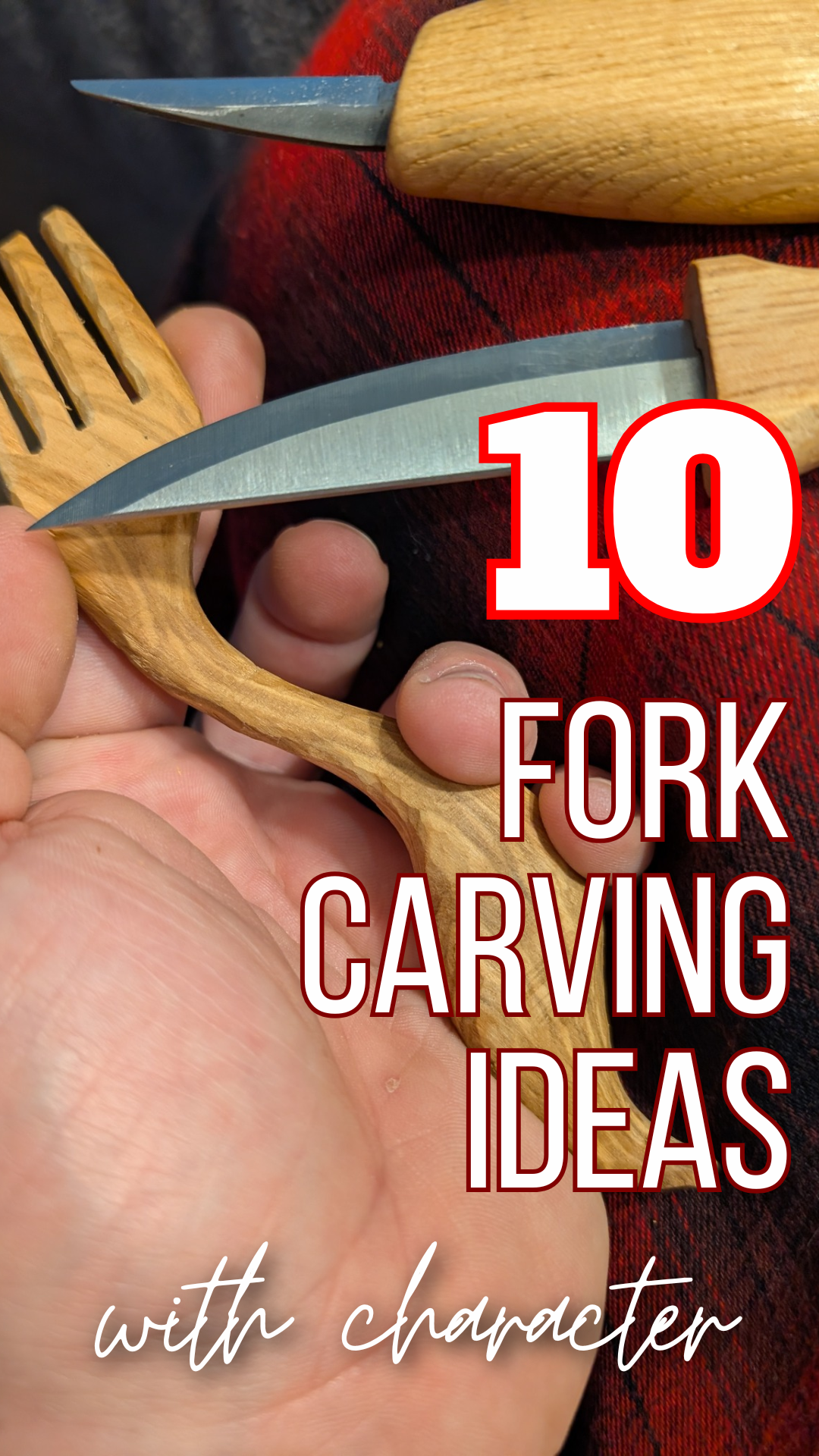
Creative lessons you can borrow directly from the pieces shown
Forks are honest objects. They do not hide mistakes. They do not allow shortcuts. Every curve, split, and surface shows exactly how you carved it. That is why they are such powerful teachers.
The forks in these images are not just utensils. They are studies in line, restraint, texture, and intention. If you are a carver looking for new perspectives, each one offers a lesson you can apply immediately.
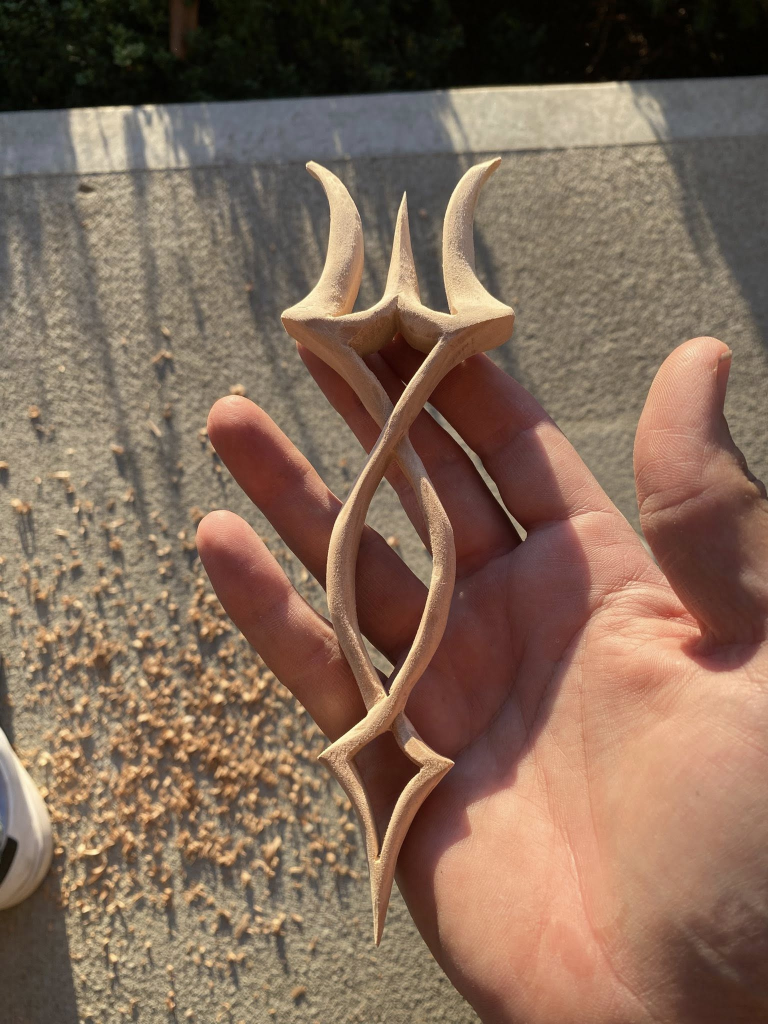
. The Sculptural Trident Fork
Thinking beyond use and letting form lead
The first fork abandons everyday function almost entirely. The tines stretch upward into long, horn-like points, forming a trident shape. The handle twists subtly, narrowing and widening as it moves downward, creating tension and flow.
What to borrow:
Use the fork format as a starting boundary, not a rule. Ask yourself what happens if the tines become symbolic rather than practical. This approach is ideal for wall pieces, altar objects, or experimental studies where balance and negative space matter more than eating.
2. The Process-Forward Fork
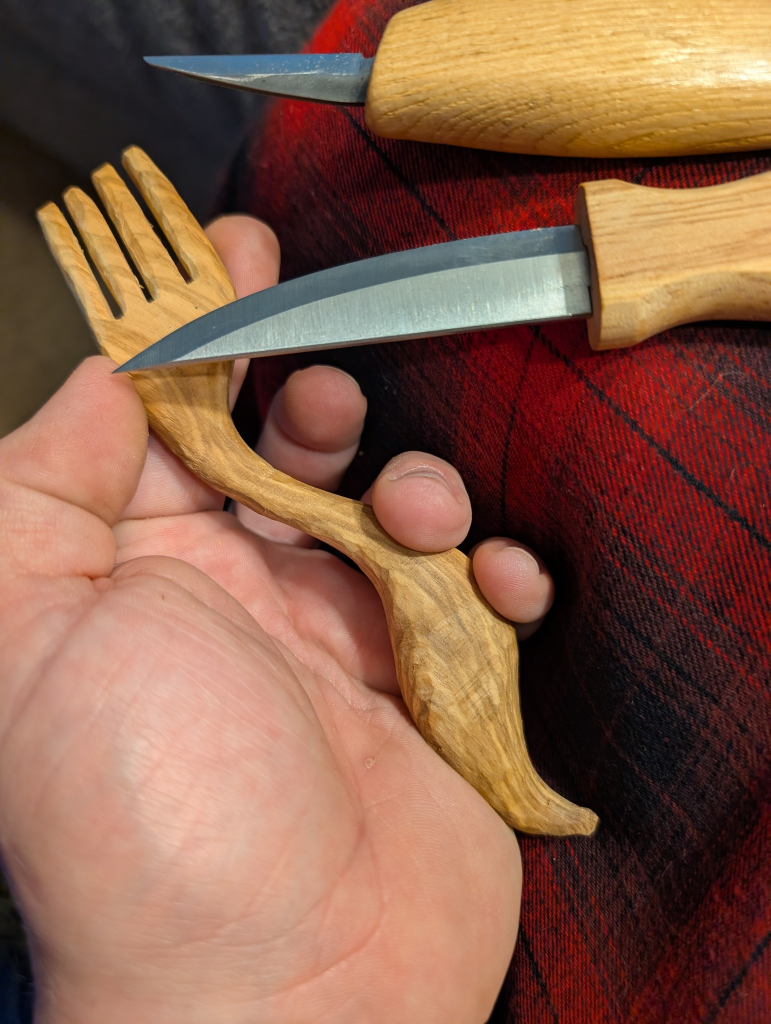
Letting tool marks become part of the story
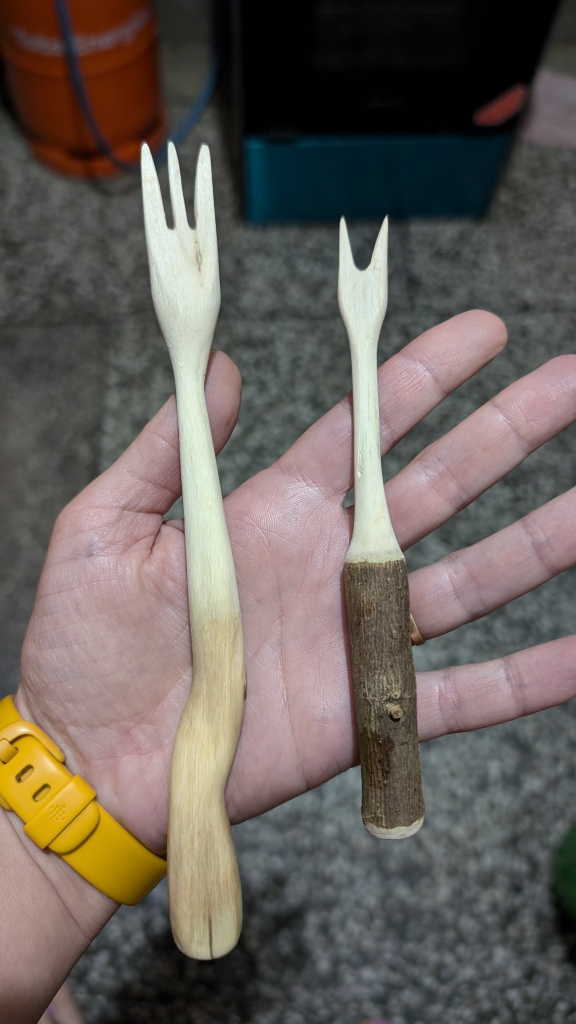
The surface is raw. Knife cuts are visible. The tines are uneven, and the handle follows the grain instead of fighting it.
What to borrow:
Stop sanding too early. Try leaving one fork intentionally unfinished. Let the knife rhythm show. This is a great exercise in confidence and honesty. Many carvers discover their style by seeing what their natural cuts already look like.
3. The Minimal, Clean Fork Blank
Exploring precision and restraint
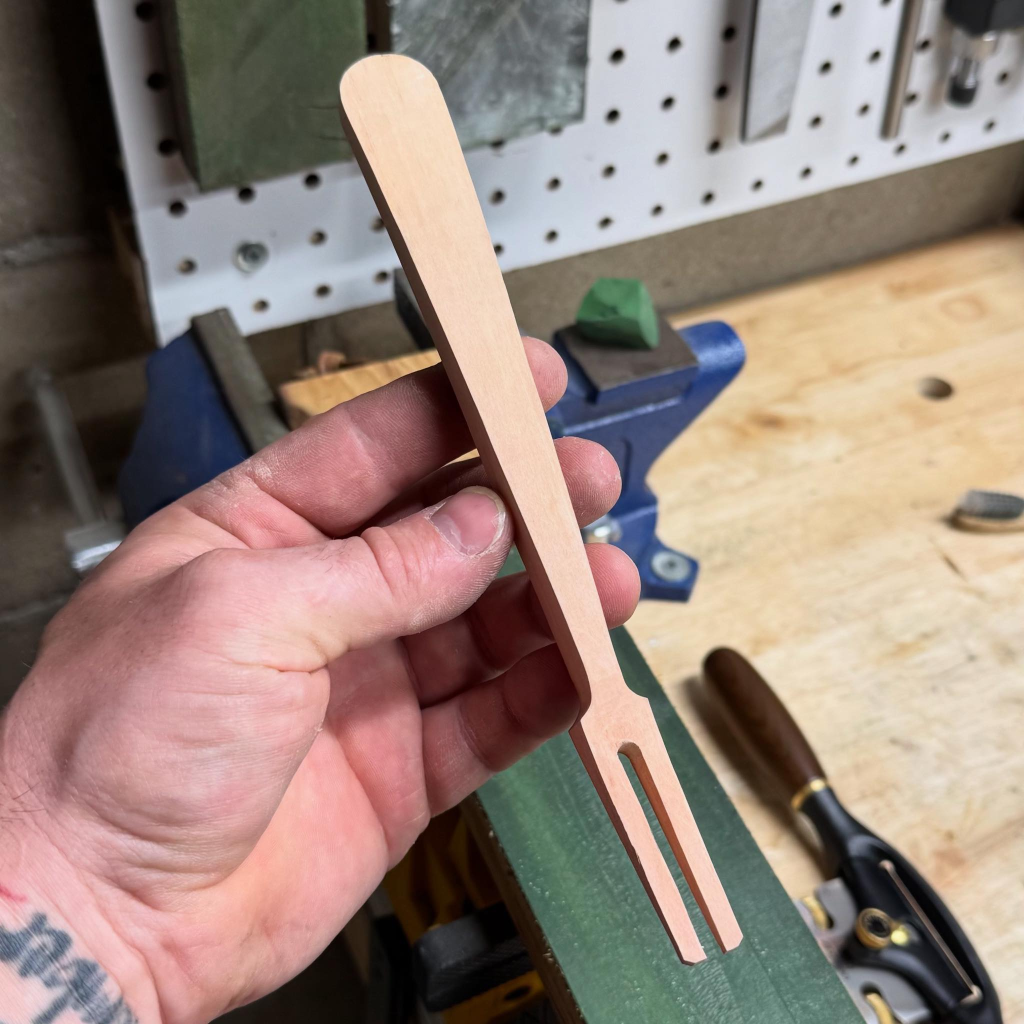
This fork is pale, smooth, and very controlled. The handle is straight and flat with softened edges. The tines are evenly spaced, narrow, and consistent. There is no decoration.
What to borrow:
Practice discipline. Try carving a fork where the goal is not expression but proportion. This teaches control, symmetry, and patience. Minimal forks reveal flaws instantly, which makes them excellent skill builders.
4. The Spoon-Fork Hybrid
Blending function without forcing novelty
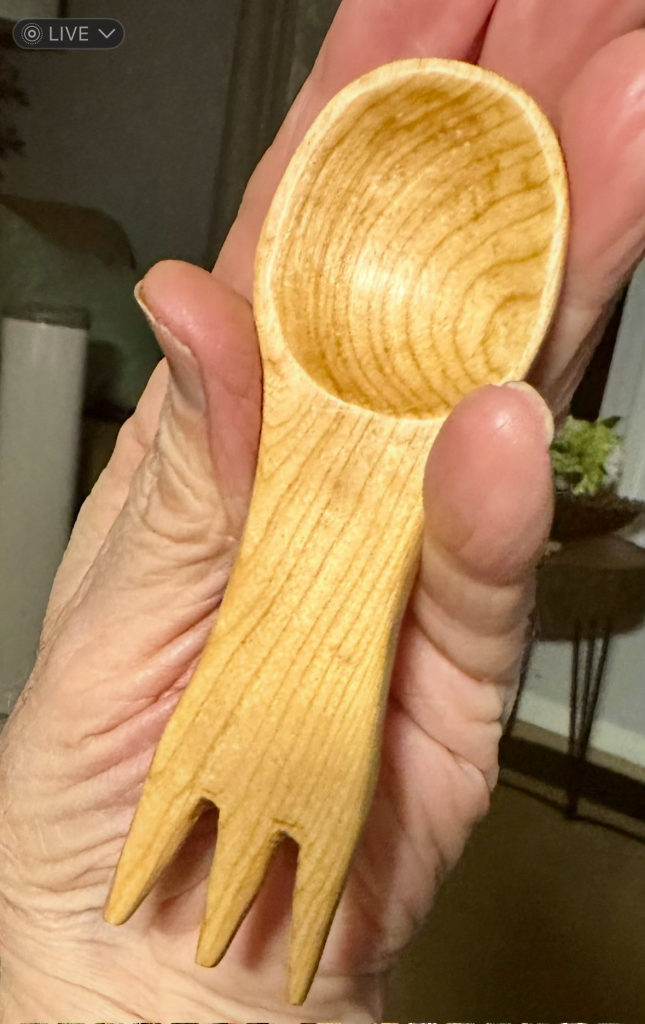
One piece clearly combines a fork and a spoon. The bowl is deep and rounded, showing beautiful grain lines, while the forked end remains gentle and subtle.
What to borrow:
Let function evolve naturally. Instead of forcing a hybrid design, start carving a spoon and let the idea of a fork emerge only if the wood suggests it. These hybrids are excellent everyday tools and teach smooth transitions between forms.
5. The Figurative Handle Fork
Turning a utensil into a character
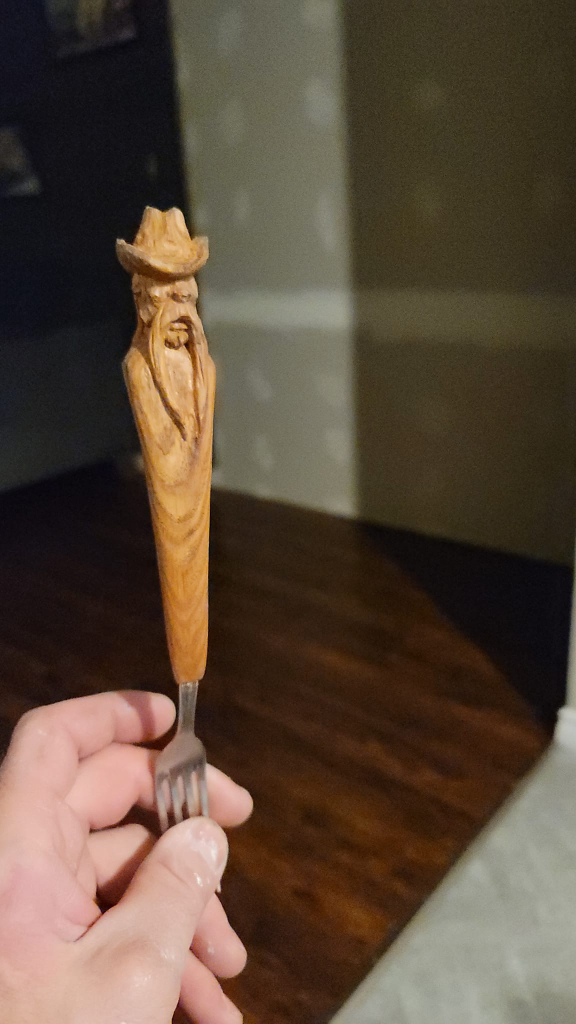
One fork includes a carved figure integrated into the handle. The face is simplified but expressive, transforming the object into something almost conversational.
What to borrow:
Try carving a face or figure as part of the handle rather than on top of it. Keep features simple. This approach works best when the figure feels like it belongs to the utensil, not added afterward.
6. The Rune-Marked Fork
Using surface carving to add meaning
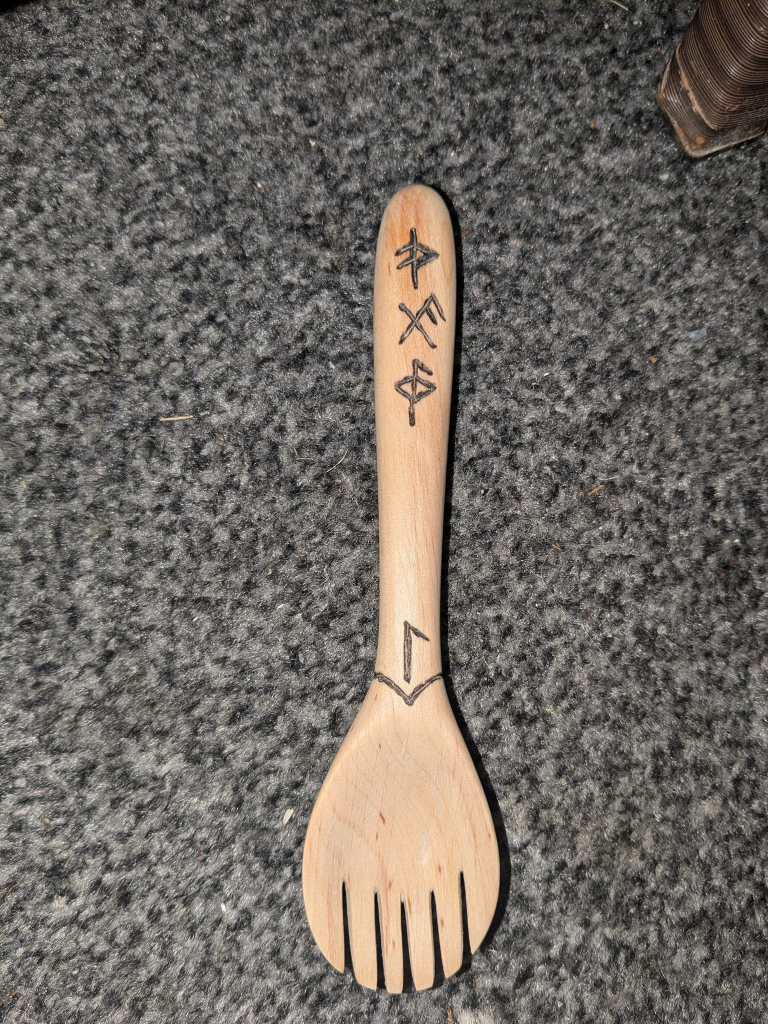
A fork with carved symbols running down the handle shows how shallow cuts can completely change the mood of a piece. The symbols are darkened, making them stand out against the lighter wood.
What to borrow:
Explore shallow relief carving. Runes, patterns, or personal symbols are perfect for forks because the surface area is small. This is a strong way to add identity without changing the overall shape.
7. The Textured Grip Fork
Letting touch guide design
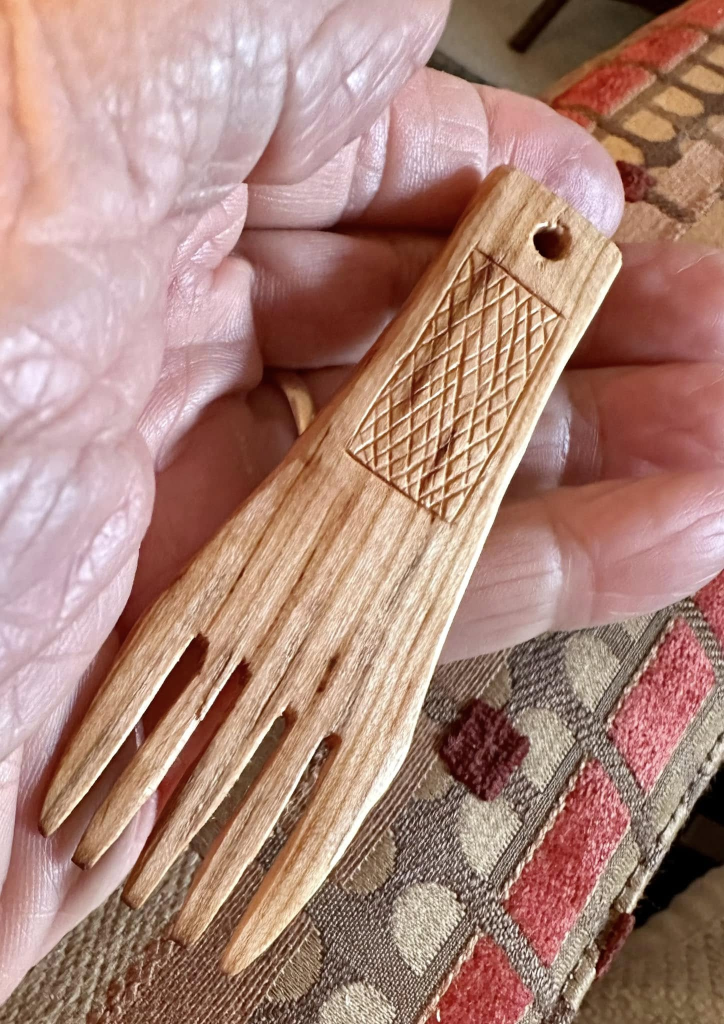
One fork features a crosshatched grip section near the handle, with a drilled hole at the top. The texture contrasts with the smooth lower portion.
What to borrow:
Design for the hand, not the eye. Add texture where fingers naturally rest. This kind of detail improves usability and adds visual interest. It also teaches controlled pattern carving on curved surfaces.
Why Forks Are Perfect Creative Exercises for Carvers
These images show that forks are not small projects. They are focused projects.
Forks force you to think about:
- Line and silhouette
- How wood meets the hand
- How much detail is enough
- When to stop
They reward intention more than ambition.
A Creative Way to Choose Your Next Fork Design
Instead of asking, “What fork should I carve?”, ask:
- What part of carving do I want to practice?
- Flow, texture, symbolism, restraint, or character?
Then let one of these pieces guide you.
Carve one fork for form.
One for function.
One for story.
You do not need a big block of wood to grow as a carver.
Sometimes, all you need is a fork and the courage to see it differently.