What these pieces teach you about shape, style, and creative perspective
Sharks are one of the best subjects a woodcarver can choose. They are instantly recognizable, forgiving in form, and flexible in style. The images you shared prove that there is no single “correct” way to carve a shark. Each piece takes a different creative angle, and that is exactly where the learning happens.
Below, each idea is inspired directly by what we see in the carvings shown, with a focus on what you can borrow, adapt, or experiment with in your own work.
1. The Pocket-Sized Shark
Simplified form with bold planes
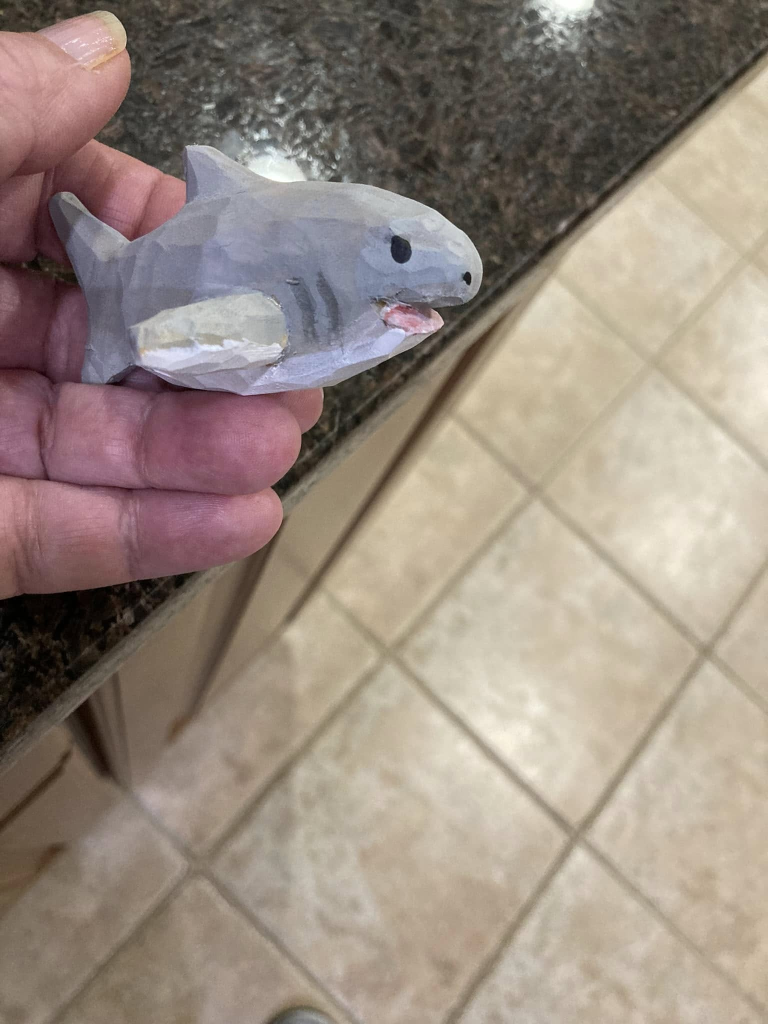
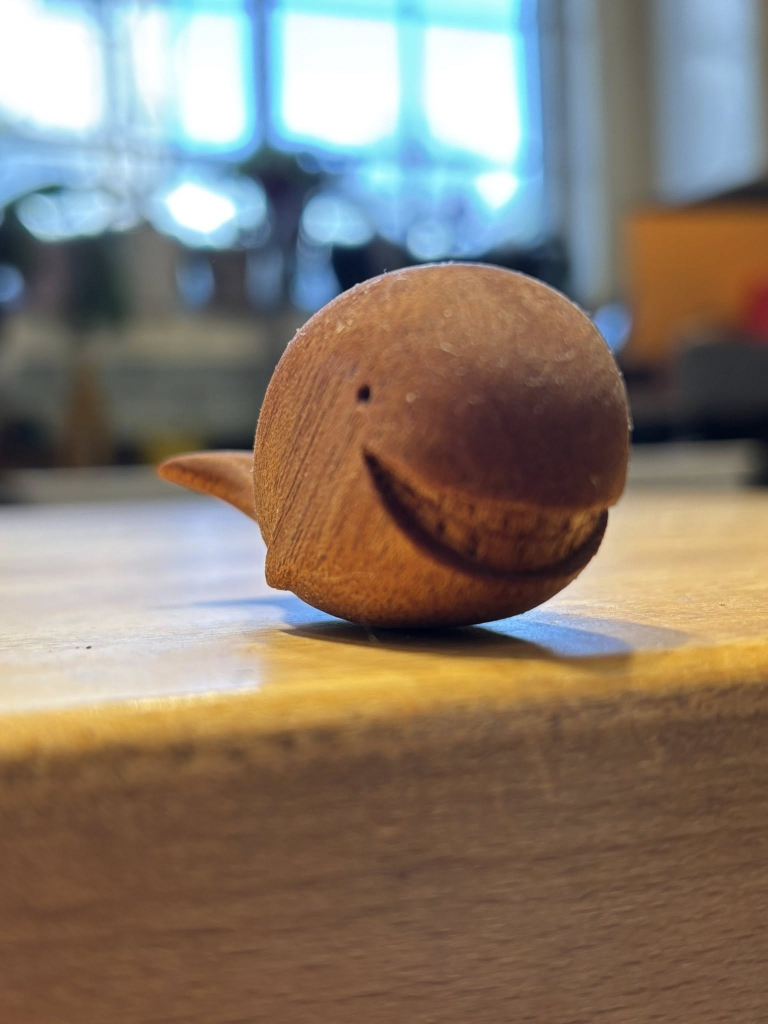
One of the sharks is small enough to sit in the palm of a hand. Its surface is faceted, not smooth, with visible knife planes across the body. The eye is a simple dark dot, and the mouth is slightly open with a hint of pink inside.
What to borrow:
This style works perfectly as a practice piece. Focus on silhouette first. Get the dorsal fin, tail sweep, and head shape right before worrying about details. Leaving flat knife facets gives the piece character and shows confidence. This is an excellent way to train your eye to see sharks as shapes, not anatomy charts.
2. The Flat Silhouette Shark
Strong outline over depth
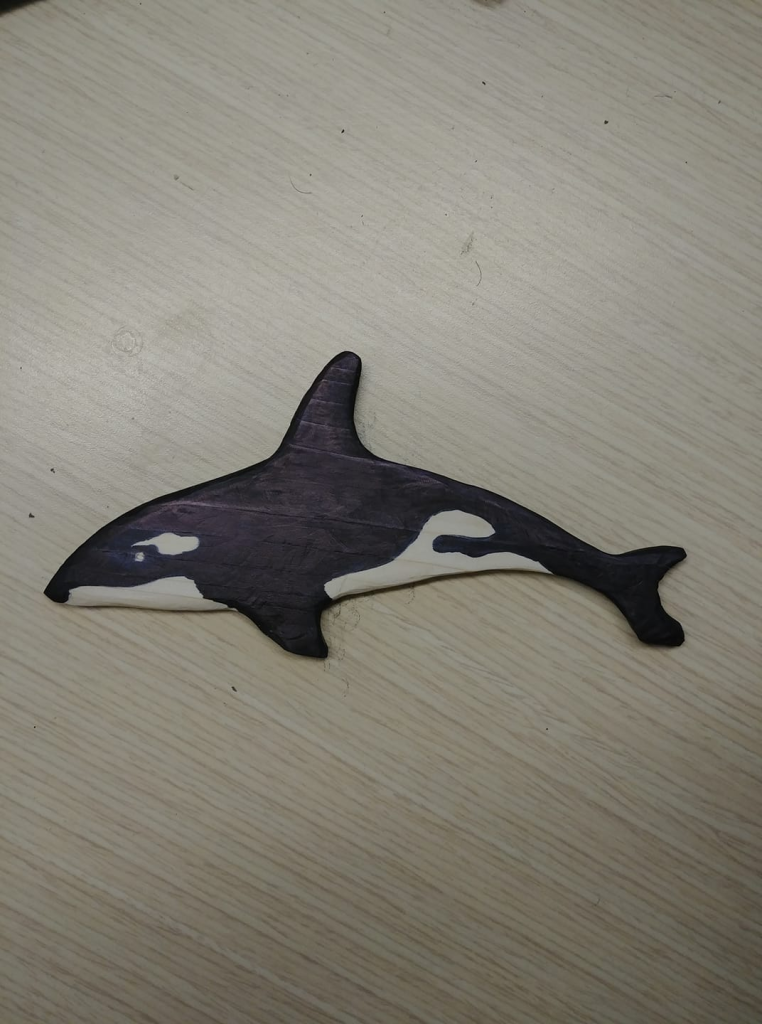
One image shows a shark carved almost like a cutout, lying flat on the surface. The black-and-white coloring echoes an orca pattern, and the carving relies heavily on its clean outline rather than thickness.
What to borrow:
Try carving a shark from thin stock and treat it like a drawing in wood. This approach sharpens your sense of proportion and flow. Flat carvings are great for wall pieces, shelf decor, or learning how much detail you can suggest without depth.
3. The Expressive Painted Sharks
Turning a predator into a character
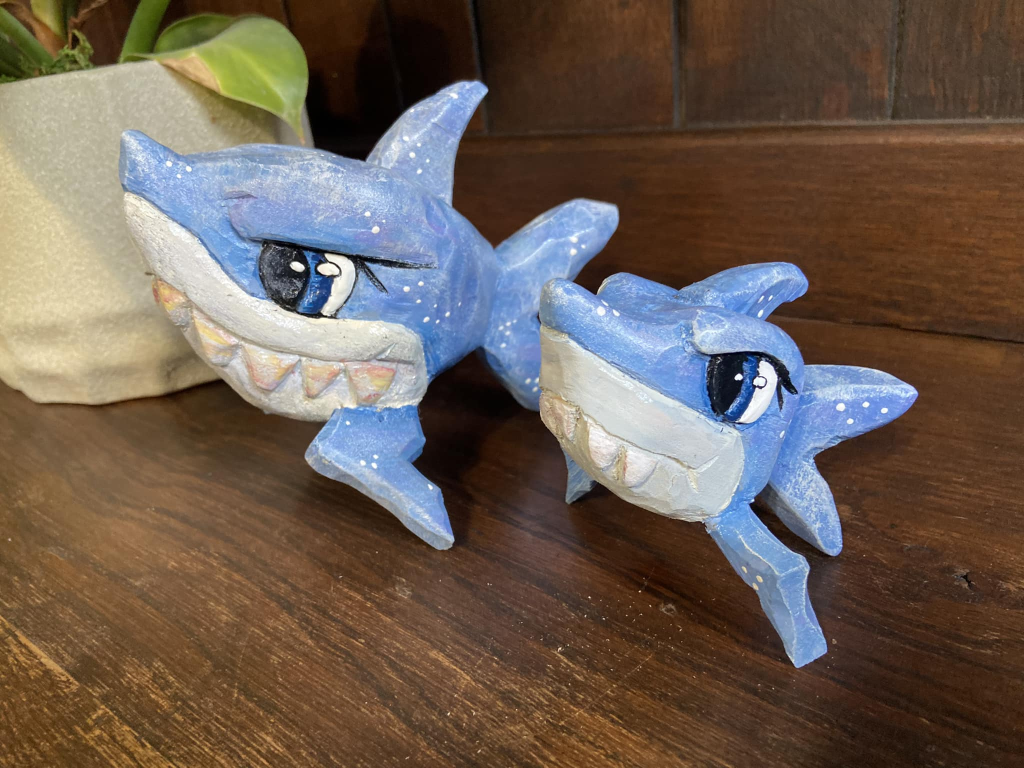
Two blue sharks appear side by side, both painted with exaggerated eyes, big teeth, and playful expressions. White speckles across the bodies add movement and texture, and the fins are slightly bent, giving them a lively stance.
What to borrow:
Do not be afraid to exaggerate. Oversized eyes, curved fins, and expressive mouths turn a shark into a character rather than a specimen. If you enjoy painting your carvings, this is a perfect direction to explore. Let the carving stay simple and allow paint to do the storytelling.
4. The Storytelling Scene Shark
Using a base to build a narrative
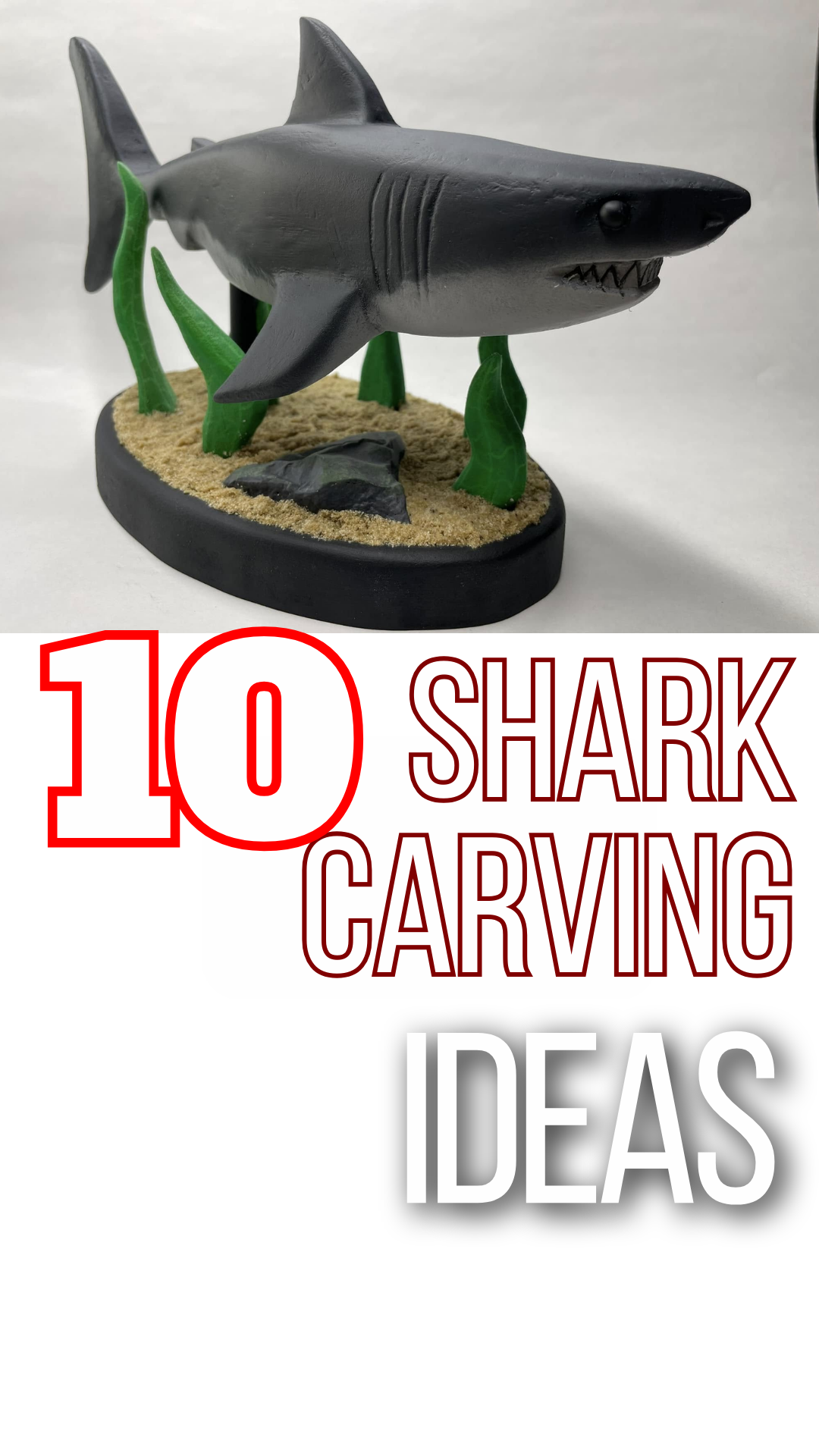
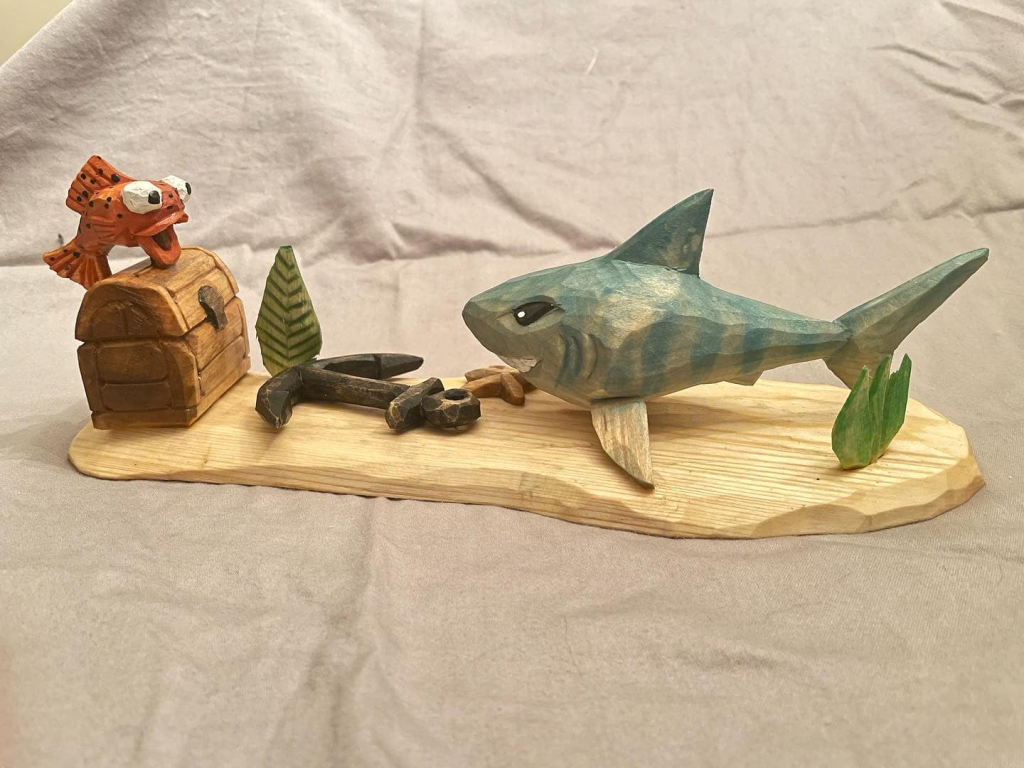
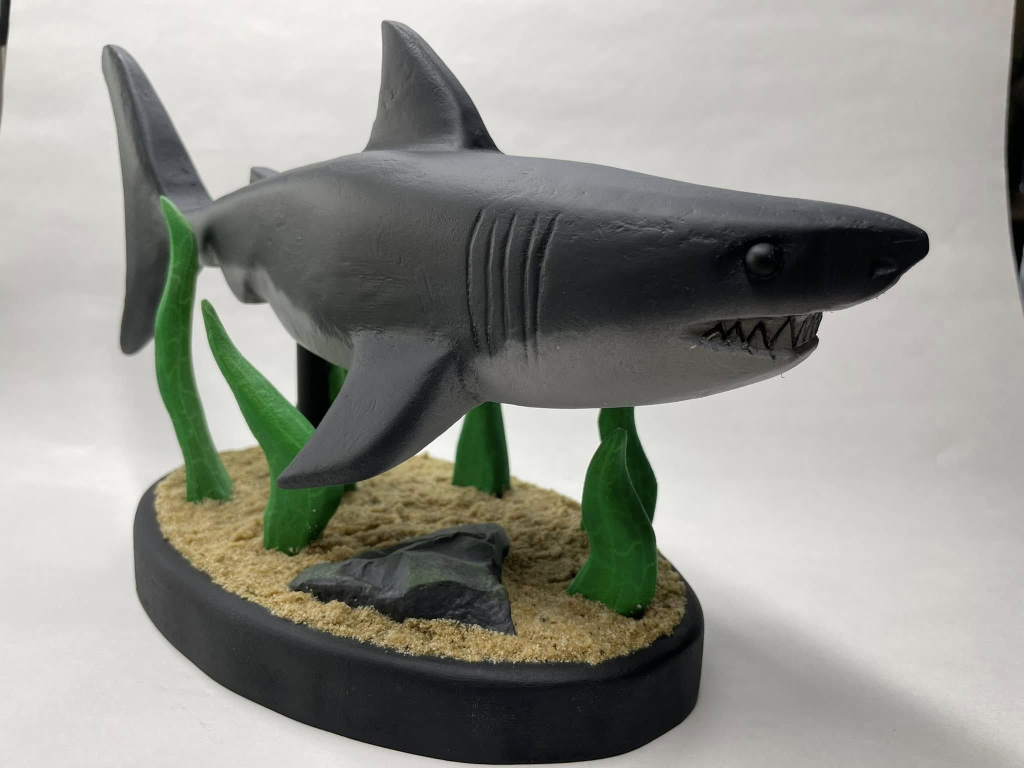
One carving shows a shark as part of a small scene, complete with a base, sea plants, and additional carved elements. The shark is no longer the whole story, but part of it.
What to borrow:
Think beyond the single figure. Adding a base gives you a chance to experiment with composition, balance, and scale. Even a simple plank with a few carved shapes can turn a shark into a moment rather than an object.
5. The Natural Wood Display Shark
Letting grain do the work
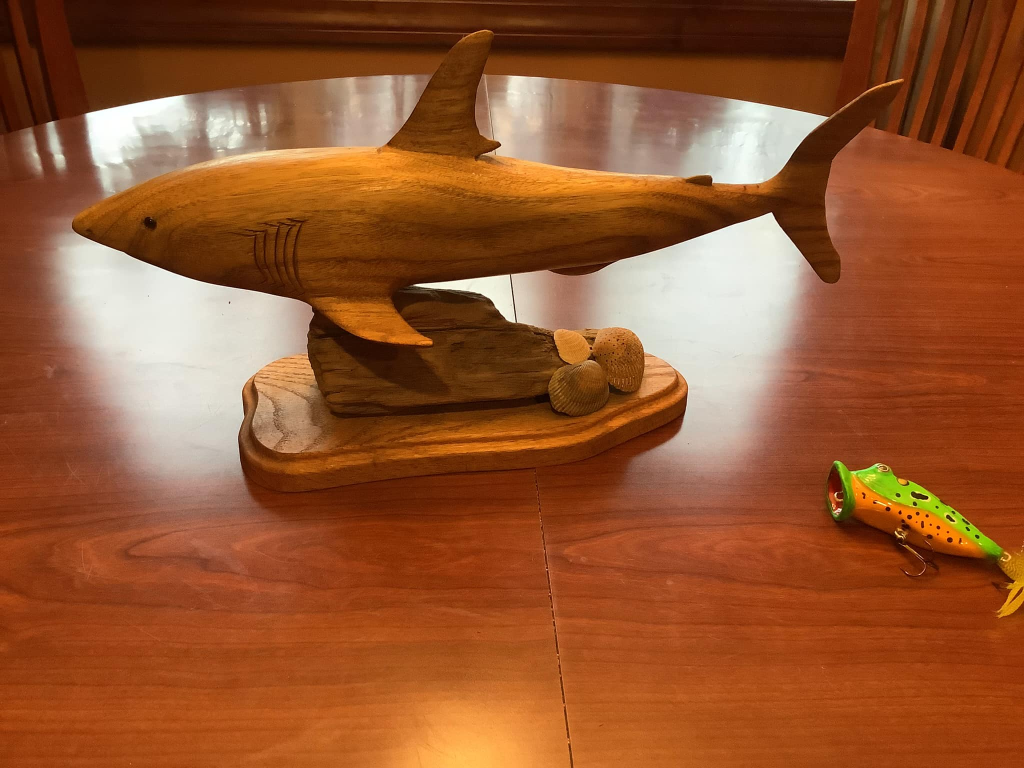
Another shark is carved larger, left unpainted, and mounted on a wooden base. The grain flows along the body, and carved gill lines are subtle but effective.
What to borrow:
This style rewards patience. Follow the grain direction when shaping the body. Keep details minimal so the wood itself becomes part of the design. This approach works especially well for gift pieces or display carvings where craftsmanship takes center stage.
6. The Folk-Art Shark With Personality
Playful concepts over realism
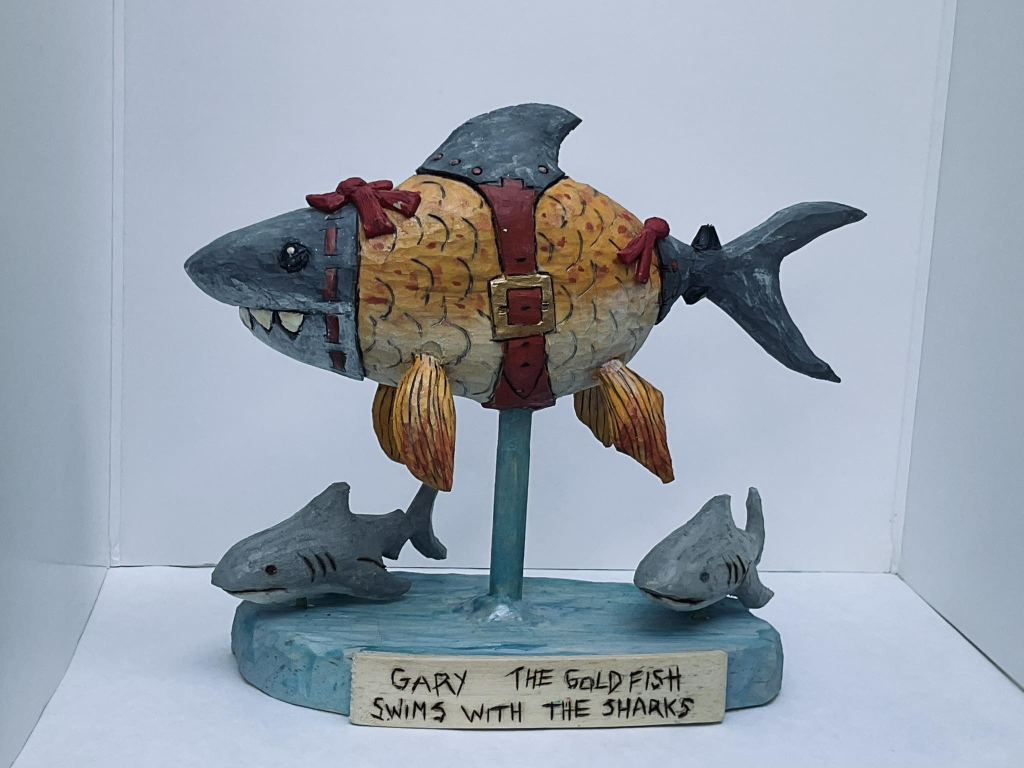
One standout piece shows a shark dressed or stylized in a humorous, almost storybook way, complete with painted textures and a sense of motion. It feels closer to folk art than wildlife carving.
What to borrow:
Give yourself permission to be strange. Sharks do not have to be serious. Adding unexpected elements or exaggerated features can unlock a whole new creative direction. This is where carving becomes storytelling rather than replication.
7. The Mounted Motion Shark
Capturing movement with minimal contact
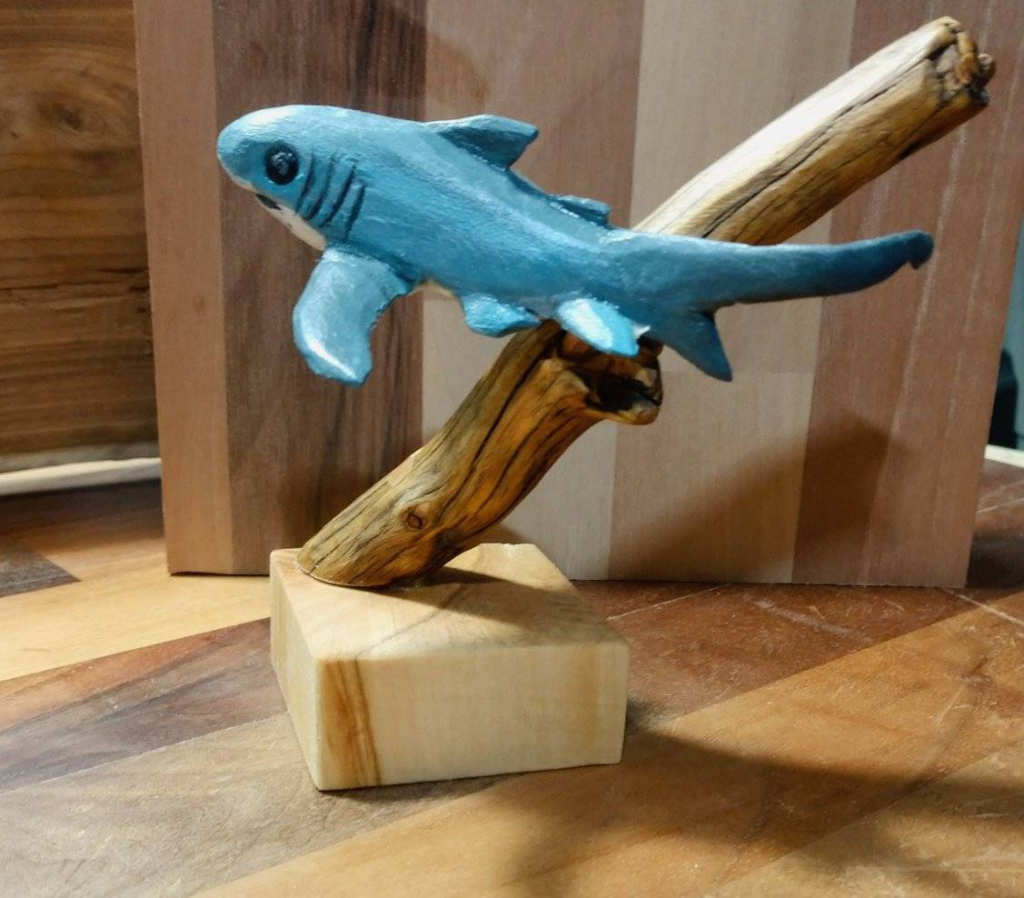
A painted blue shark appears mounted on a branch-like support, giving the illusion of swimming or leaping. The body is angled, and the fins are positioned to suggest motion.
What to borrow:
Experiment with how your shark connects to its base. A single support point can make the carving feel lighter and more dynamic. This teaches you how posture and angle alone can suggest movement, even in a static object.
8. The Work-in-Progress Shark
Trusting the rough stage
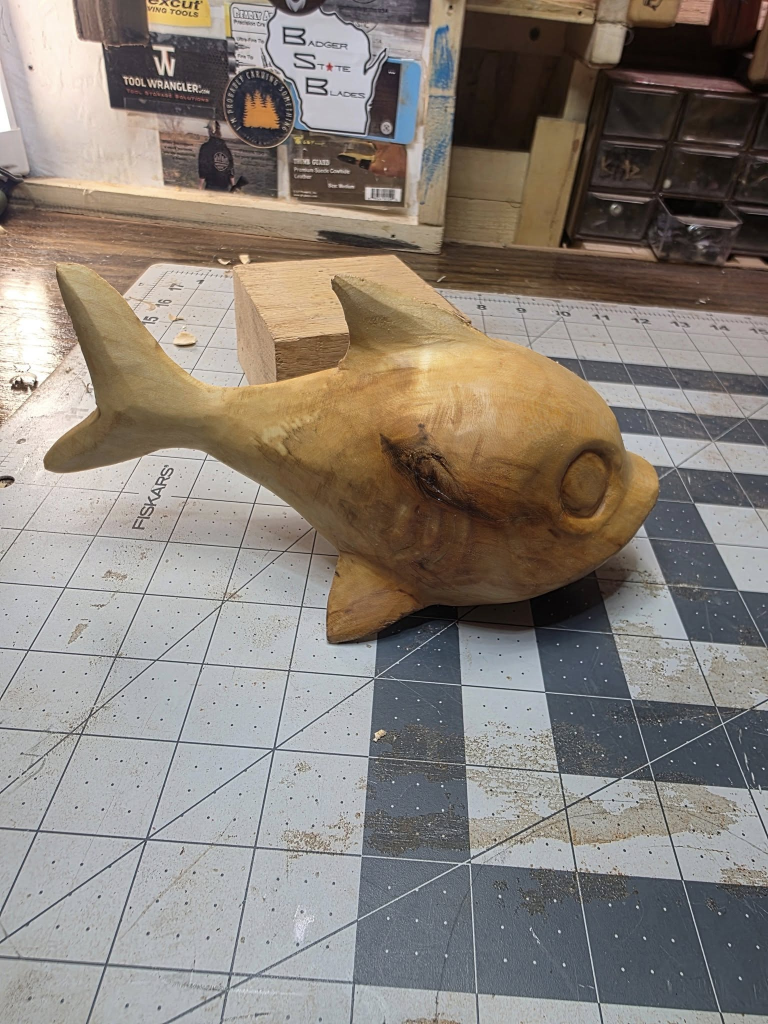
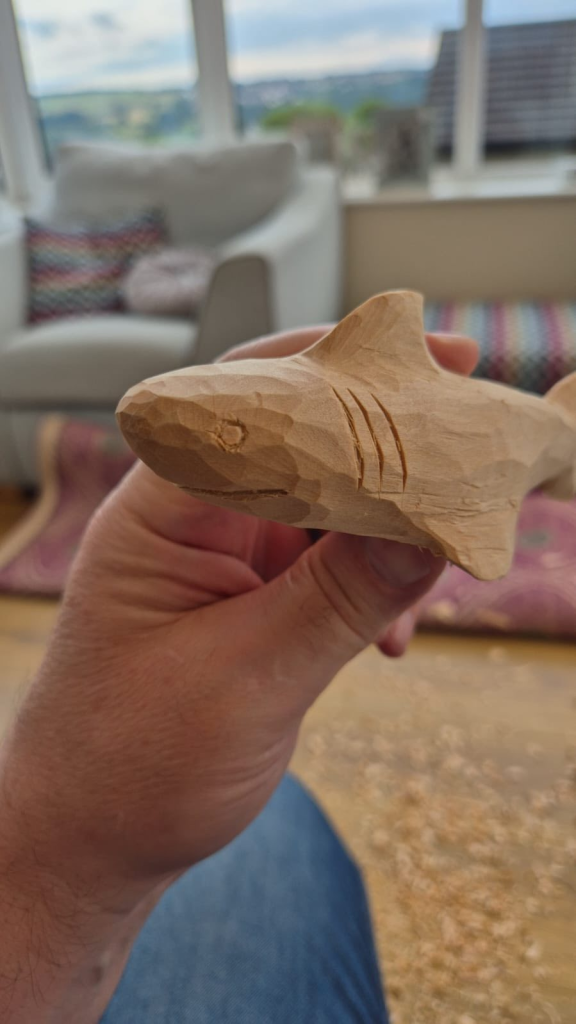
One image shows a shark still rough, unpainted, and sitting on a cutting mat. Tool marks are visible, and the form is still being refined.
What to borrow:
Do not rush this stage. The rough-out phase is where the character of the piece is decided. Spend time adjusting proportions before smoothing anything. Many strong carvings are made or broken right here.
9. The Totem-Style Vertical Shark
Breaking the expected orientation
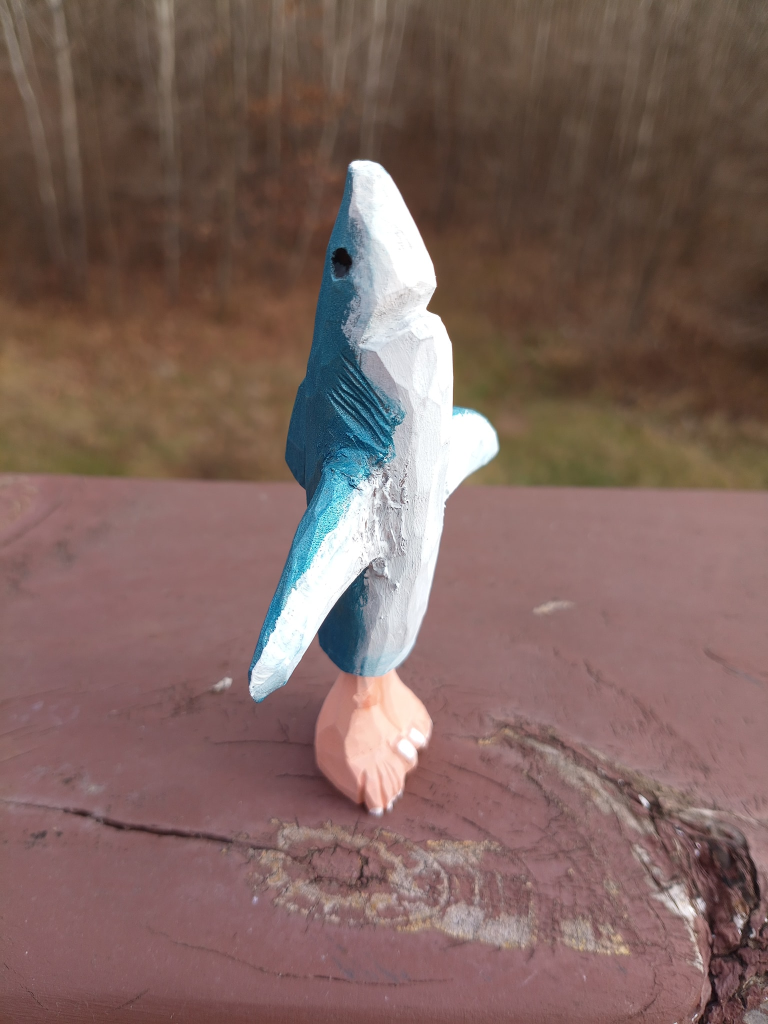
The final shark stands upright, balanced on a small base, almost like a totem or symbolic figure rather than a swimming animal.
What to borrow:
Change orientation. Turn the shark vertical. Carve it as a symbol instead of a creature. This kind of perspective shift can lead to completely new ideas and helps break habits you may not even realize you have.
What These Shark Carvings Really Teach
Taken together, these pieces show that shark carving is not about realism alone. It is about:
- Seeing sharks as shapes first
- Deciding when detail matters and when it does not
- Using paint, bases, and posture to tell different stories
- Allowing personality to emerge naturally
If you are stuck creatively, pick one rule to break.
Change the size.
Flatten the form.
Exaggerate the face.
Mount it differently.
Sharks are powerful teachers because they are familiar. Once the fear of “getting it right” disappears, the real carving begins.