
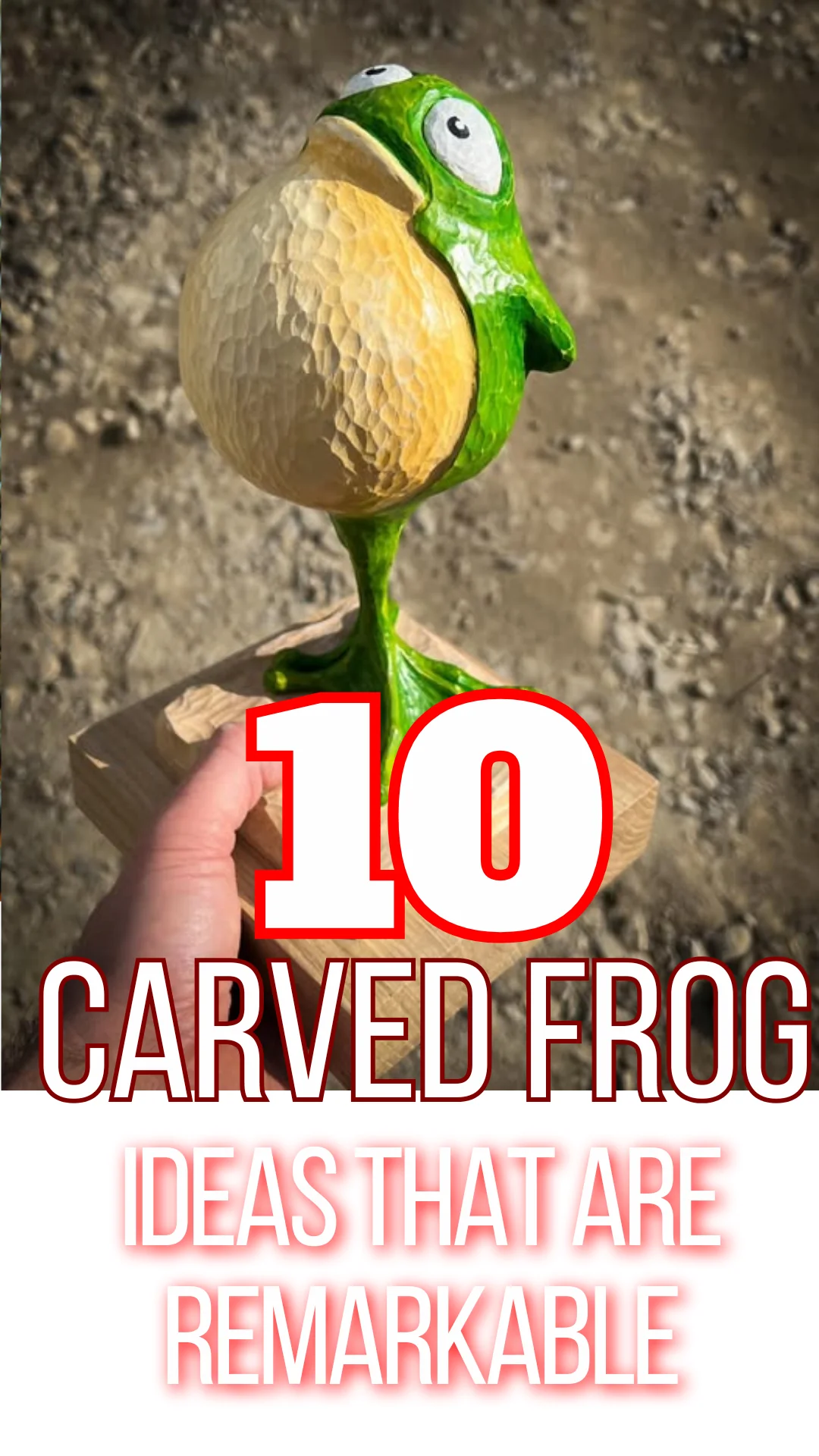
And the creative lessons every carver can steal from them
Frogs are one of those subjects that quietly reveal a carver’s instincts. They look simple, but they expose everything. Proportion, confidence, tool control, and taste all show up immediately. The frogs you’ve shared are not just well made. They are thoughtfully seen.
What makes them special is not polish alone. It is perspective. Each one chooses a different way to answer the same question. What makes a frog feel alive?
Below, I break down what each style is doing well and how you can apply the same thinking in your own whittling.
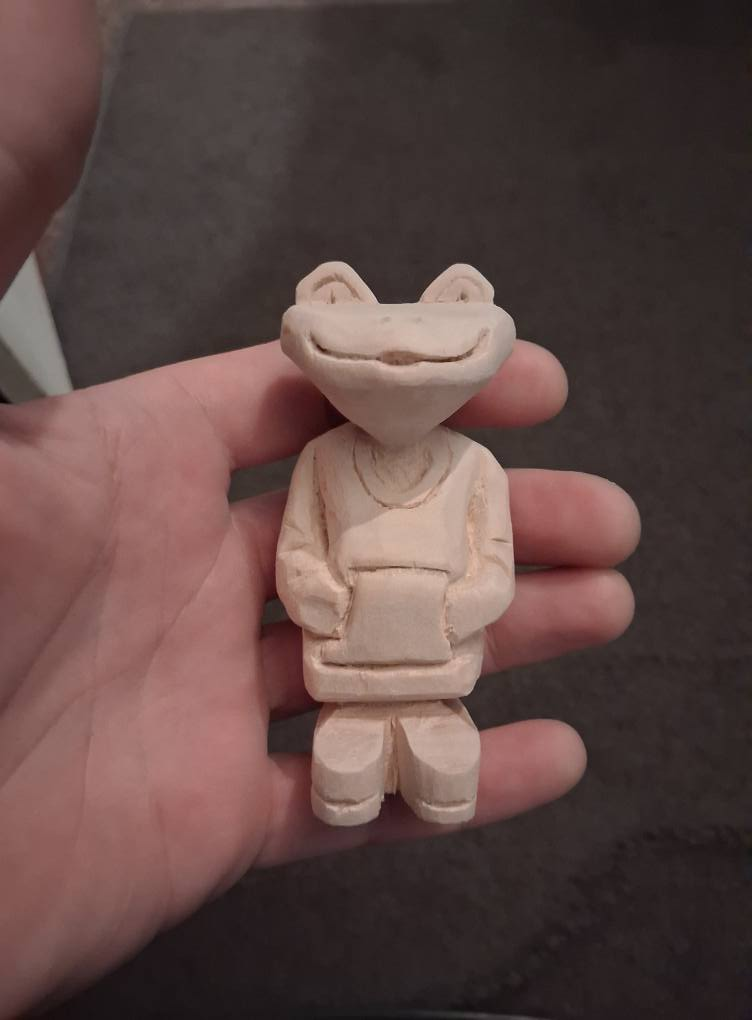
1. The Pocket Frog With a Smile
Carving expression with almost no detail
One frog sits comfortably in the palm of a hand. Pale wood. Minimal cuts. A wide, shallow smile and raised eye ridges do most of the emotional work. There is no heavy texturing, no paint, and no sharp contrast.
What to borrow:
This frog teaches restraint. You do not need carved pupils, toes, or skin texture to create personality. Focus on the mouth line and eye placement. A slight upward curve can change everything. This is a perfect study for beginners who want expressive results without complexity.
2. The Outdoor Frog in Context
Letting environment finish the carving
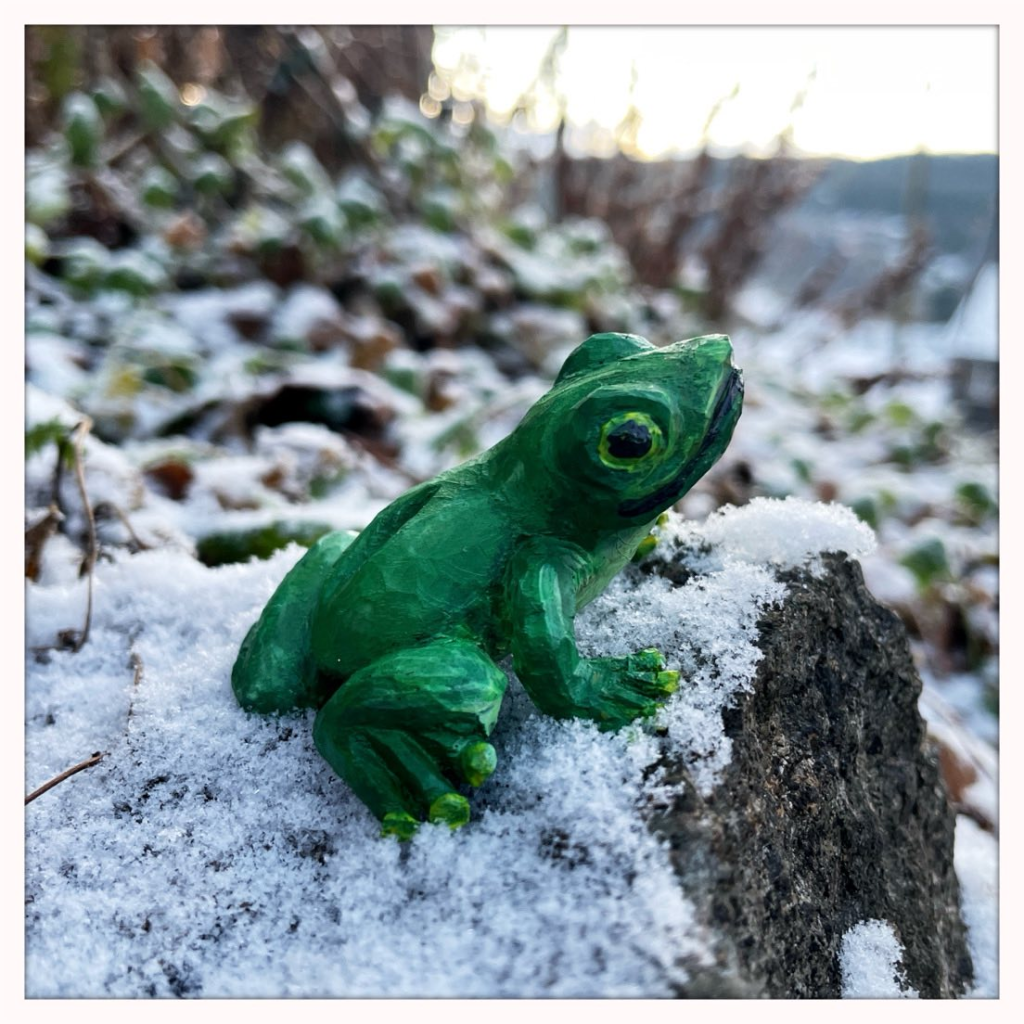
A green frog sits on a snowy rock, photographed outdoors. The carving itself is simple, but the setting amplifies it. The frog’s posture feels alert, almost cautious, as if responding to the cold environment.
What to borrow:
Think about how your carving will be seen. A simple frog becomes more powerful when its posture matches its environment. Even if you never photograph outdoors, carving with a “scene” in mind helps guide pose and angle.
3. The Geometric Frog Study
Breaking the frog into planes
One image shows three stages of a frog carved from square blocks. The early stage is marked with guide lines. The middle stage shows clean geometric planes. The final frog is painted but still faceted.
What to borrow:
This is a masterclass in structure. Start boxy. Embrace flat planes. Do not rush to round everything. Frogs hold up beautifully as geometric forms, and this approach trains you to see animals as shapes first, not details.

4. The Round-Bellied Standing Frog
Exaggeration as design
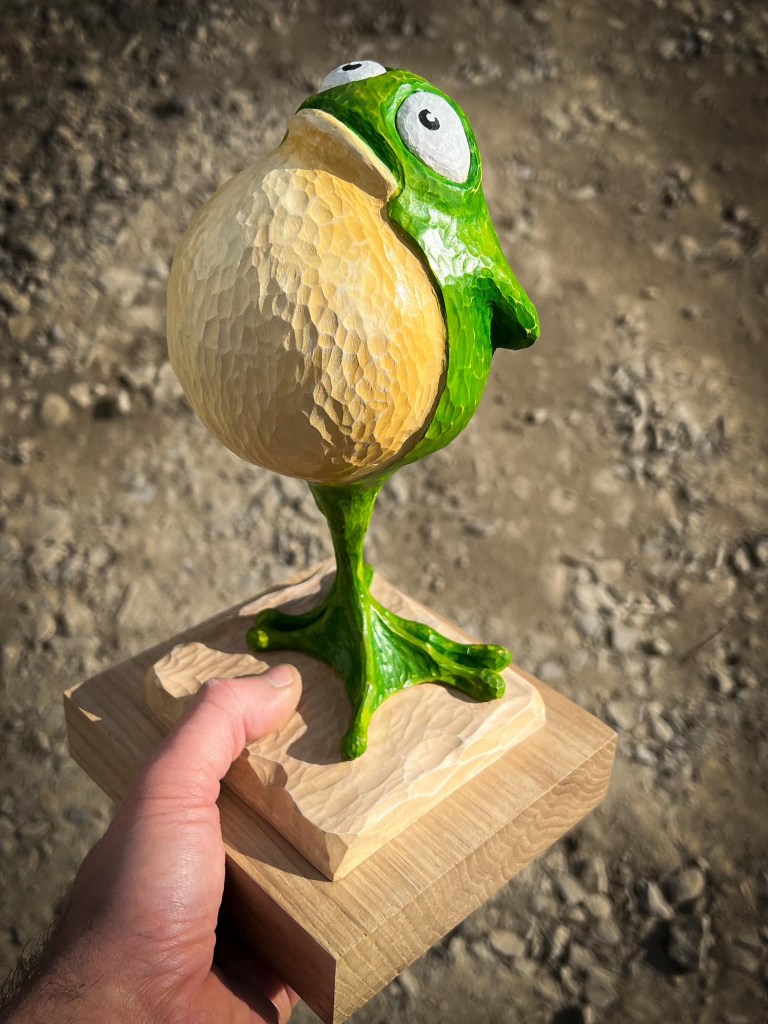
A tall frog stands upright on a base, with a large rounded belly and thin legs. The proportions are intentionally unrealistic. The eyes are wide, and the stance feels slightly awkward in a charming way.
What to borrow:
Push proportions until they almost feel wrong. Frogs are forgiving. Big bellies, long legs, or tiny heads can all work if the balance feels intentional. This kind of exaggeration is where style begins to emerge.
5. The Meditating Frog King
Turning a frog into a symbol
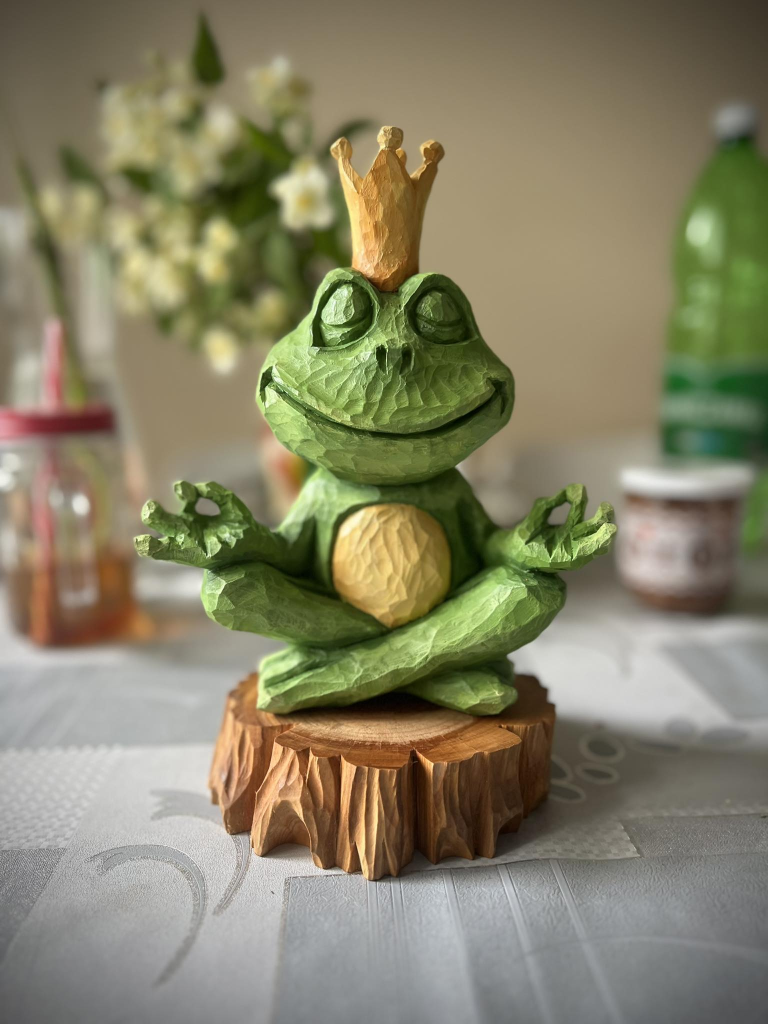
One frog sits cross-legged on a carved stump, eyes closed, wearing a small crown. Tool marks are visible, and the paint is matte and earthy.
What to borrow:
This is storytelling through posture. The frog is calm. Centered. Regal. You can do this without crowns or props. A closed-eye frog or relaxed hands instantly changes the emotional tone. Try carving mood instead of anatomy.
6. The Tiny Realistic Toad
Detail at miniature scale
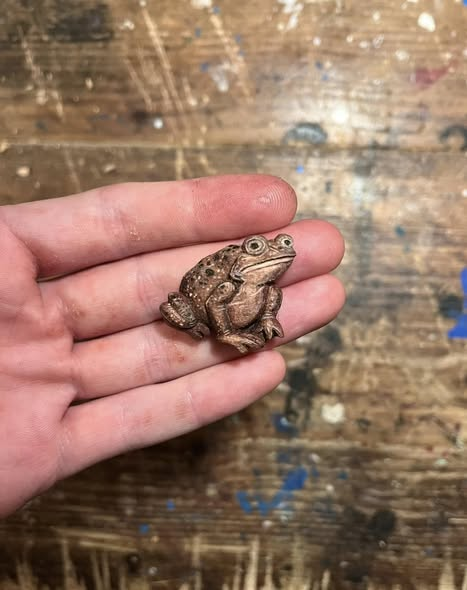
A very small frog or toad sits in the palm, carved with fine texture, subtle bumps, and realistic posture. The size alone demands precision.
What to borrow:
Miniatures force discipline. You cannot overwork them. Focus on silhouette and texture placement. Even two or three well-placed bumps can suggest realism without crowding the form.
7. The Vertical Balance Frog
Using pose to create tension
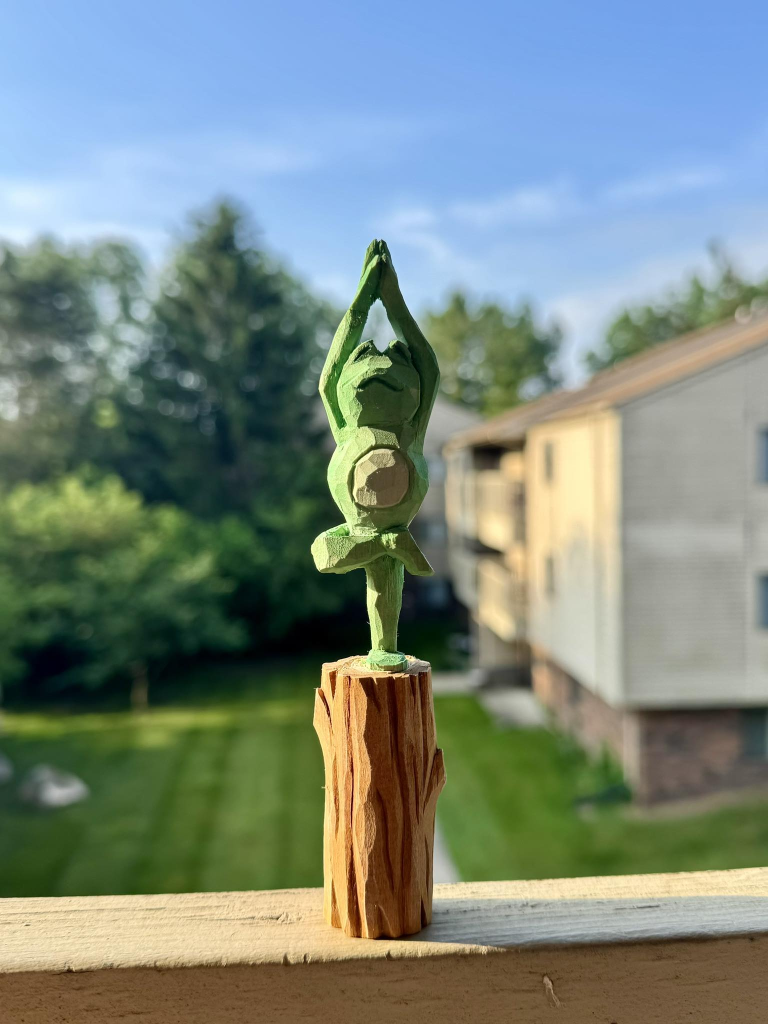
One frog balances vertically on a narrow base, arms raised overhead. The pose feels playful but also risky, which makes it engaging.
What to borrow:
Try a pose that challenges balance. Frogs are perfect for this because their bodies naturally support odd positions. A strong pose can carry a carving even if surface detail is minimal.
8. The Workshop Frog
Honest tool marks and warm wood
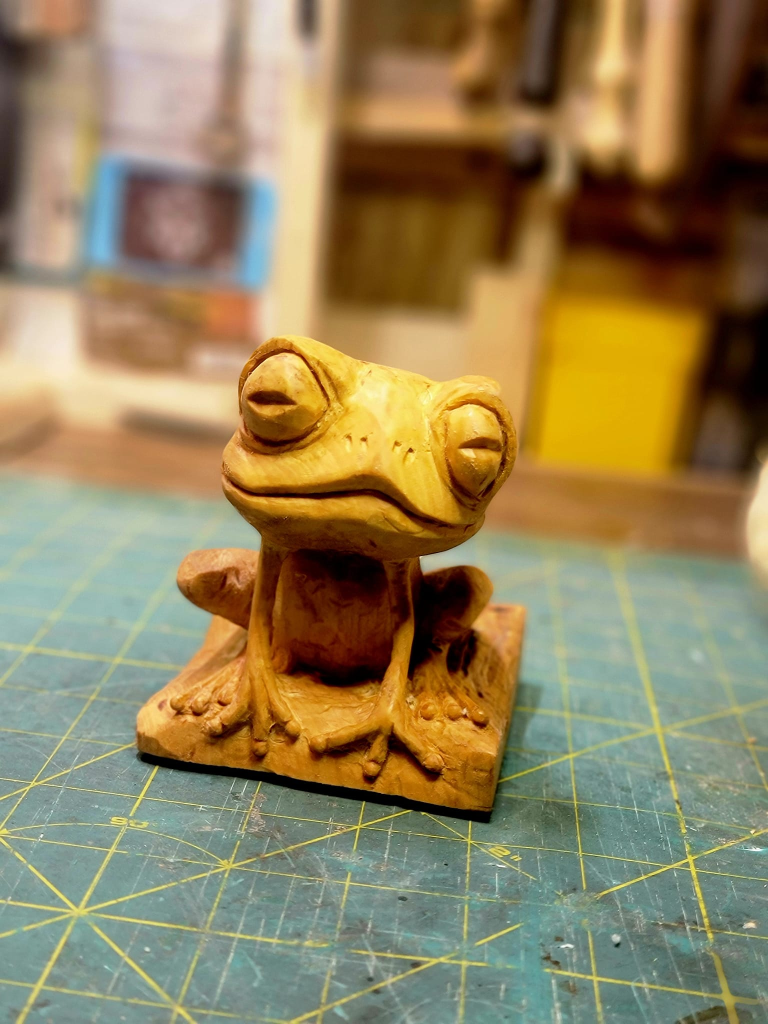
A frog carved in warm brown wood sits on a cutting mat. The knife marks are visible, especially around the eyes and feet. Nothing is hidden.
What to borrow:
Let some cuts stay. Not every frog needs to be smoothed. Visible tool marks add energy and authenticity. This approach works especially well for folk-art-style frogs.
9. The Leaf Frog Composition
Combining subject and base
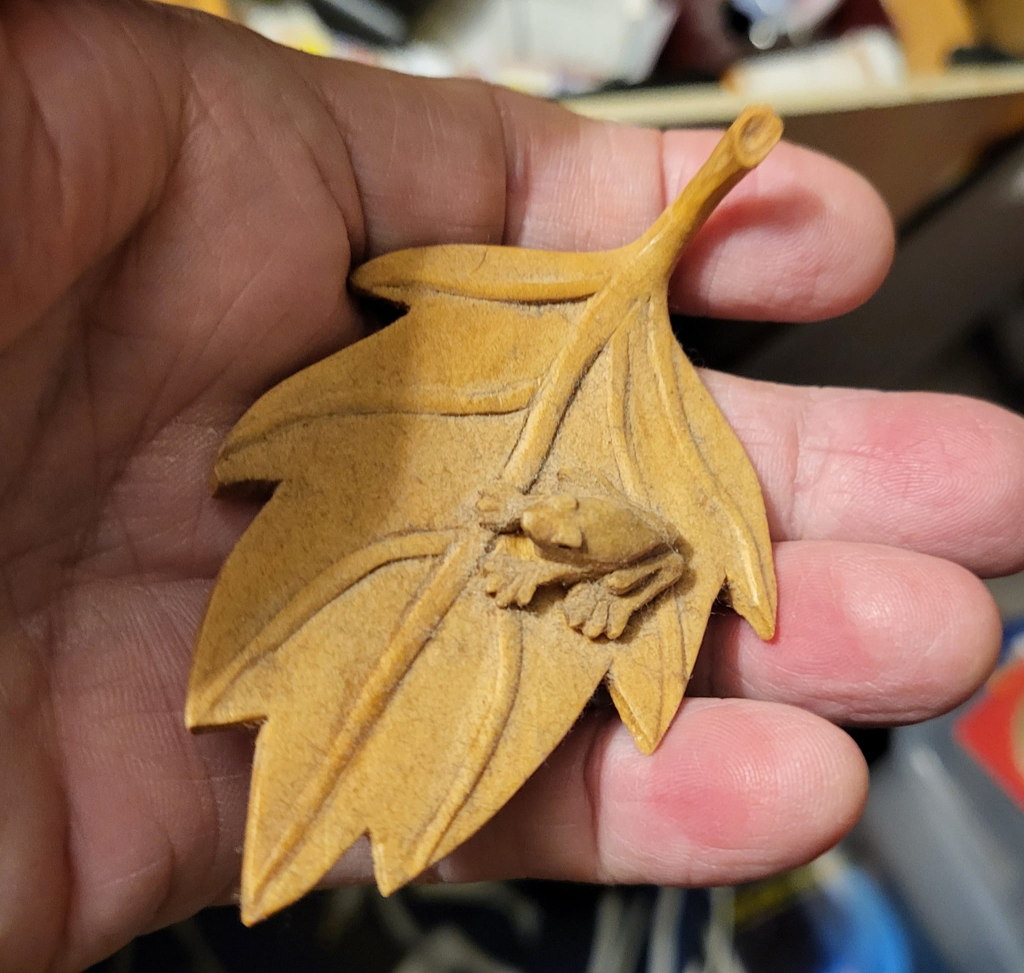
A frog carved directly onto a leaf uses the leaf veins to frame the frog’s body. The frog feels like part of the object, not placed on it.
What to borrow:
Merge subject and base. A frog on a leaf, stump, or rock gives you compositional guidance and storytelling without extra pieces. This is a great way to expand beyond single-figure carvings.
10. The Chunky Painted Frog
Confidence through simplicity
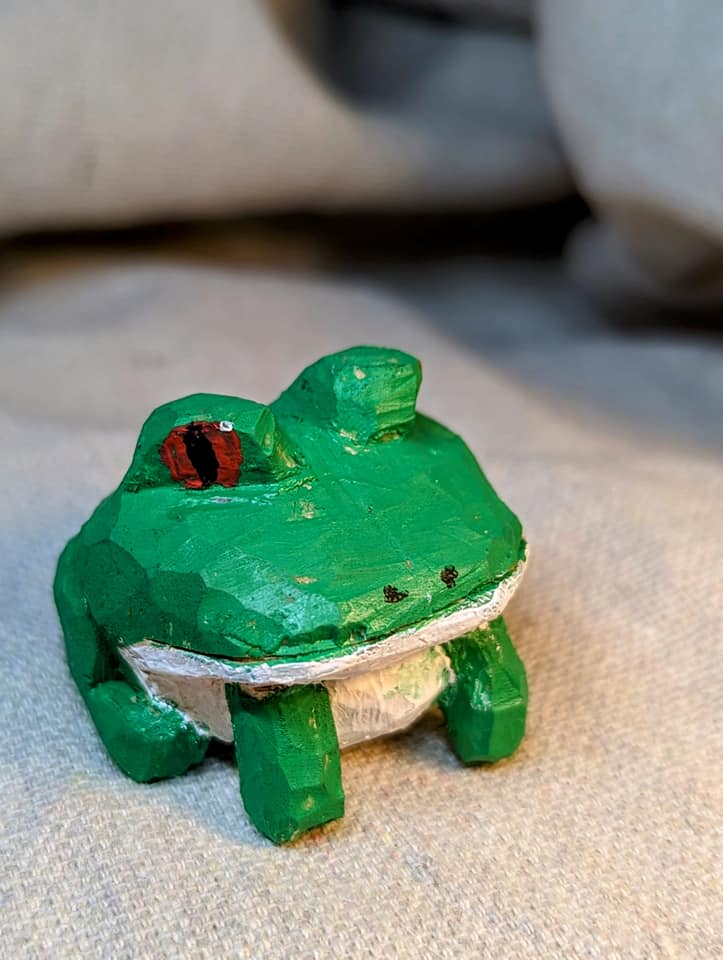
The final frog is blocky, bright green, and boldly painted. The shapes are simple. The expression is strong. It does not try to be realistic, and that is its strength.
What to borrow:
Commit to your style. If you go simple, go all in. Chunky forms with confident paint can be more memorable than delicate realism. Frogs thrive in this space.
What These Frogs Teach Us
Taken together, these carvings show that great frog whittling is not about copying nature. It is about choosing a perspective.
You can focus on:
- Expression
- Shape
- Story
- Texture
- Balance
- Mood
Pick one and let the rest stay quiet.
If you ever feel stuck, carve another frog. Change just one rule. Make it taller. Flatter. Smaller. Calmer. Stranger.
Frogs forgive experimentation, and that is exactly why they make such powerful teachers for any carver willing to look a little differently.