
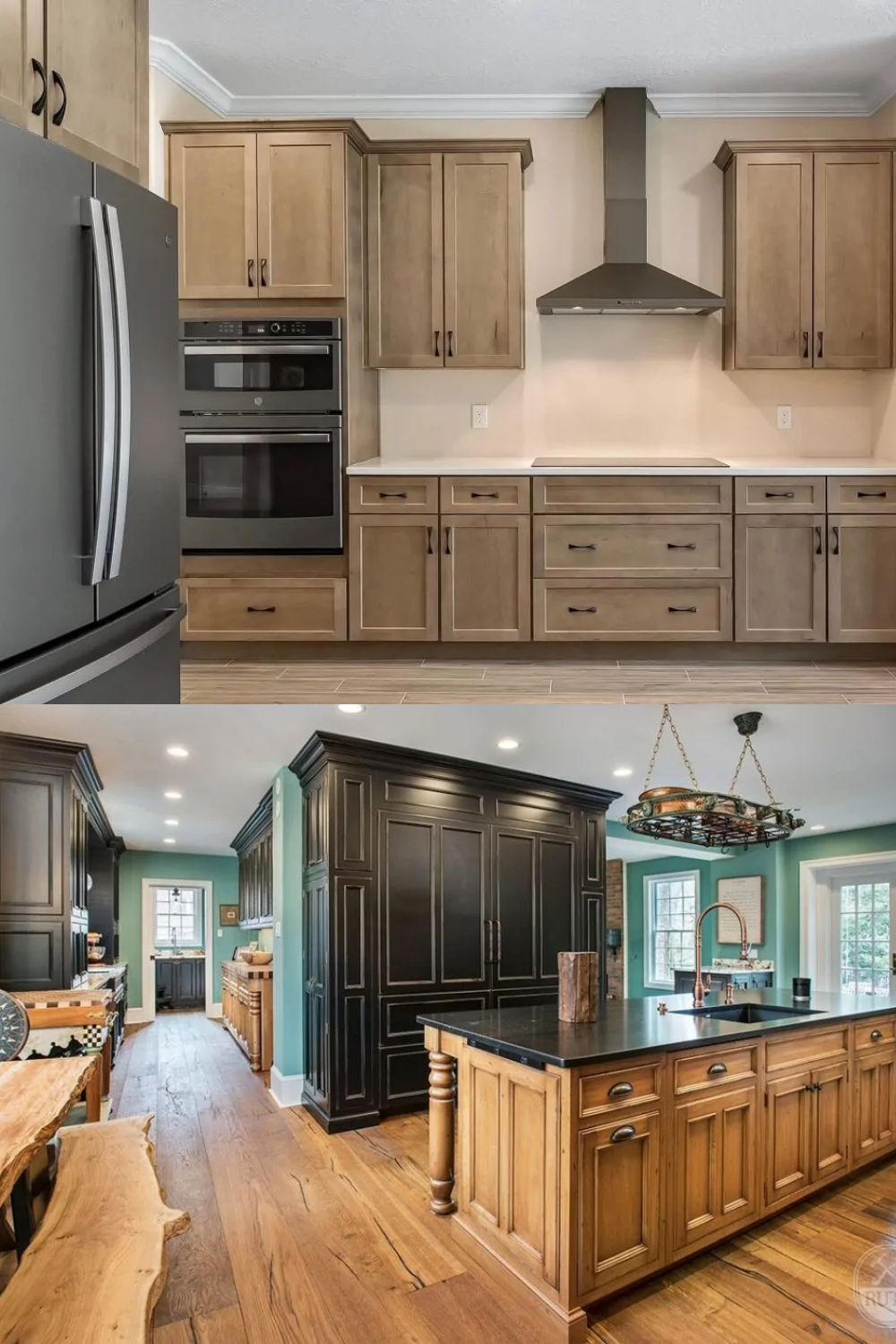
Maple kitchen cabinets have long been celebrated for their natural beauty, durability, and versatility. Whether you’re designing a cozy rustic space or a sleek modern kitchen, maple cabinets provide the perfect foundation. But investing in such a timeless choice requires thoughtful consideration. From selecting the right colors and flooring to understanding the benefits and challenges, this guide has you covered. We’ll walk you through styling tips, trends, and essential factors to know before investing in maple kitchen cabinets, ensuring your kitchen is not only beautiful but also functional and future-proof. Ready to explore the possibilities? Let’s dive in.
Things to Know Before Investing in Maple Kitchen Cabinets
Maple cabinets are a significant investment, and it’s wise to know what you’re getting into before making the leap. Here are key factors to consider:
- Cost vs. Value: Maple cabinets are more affordable than exotic hardwoods but still provide excellent durability and a premium look. Budget accordingly and consider them a long-term investment.
- Maintenance Requirements: Maple is a low-maintenance material, but it’s important to clean up spills promptly to prevent staining. Use mild cleaners to protect the finish.
- Customization Options: Maple takes stains and paints exceptionally well, allowing you to customize the look to suit your style. From natural finishes to bold colors, the possibilities are endless.
- Impact on Home Value: Kitchens with quality maple cabinets are appealing to potential buyers, making them a smart choice if you’re planning to sell your home in the future.
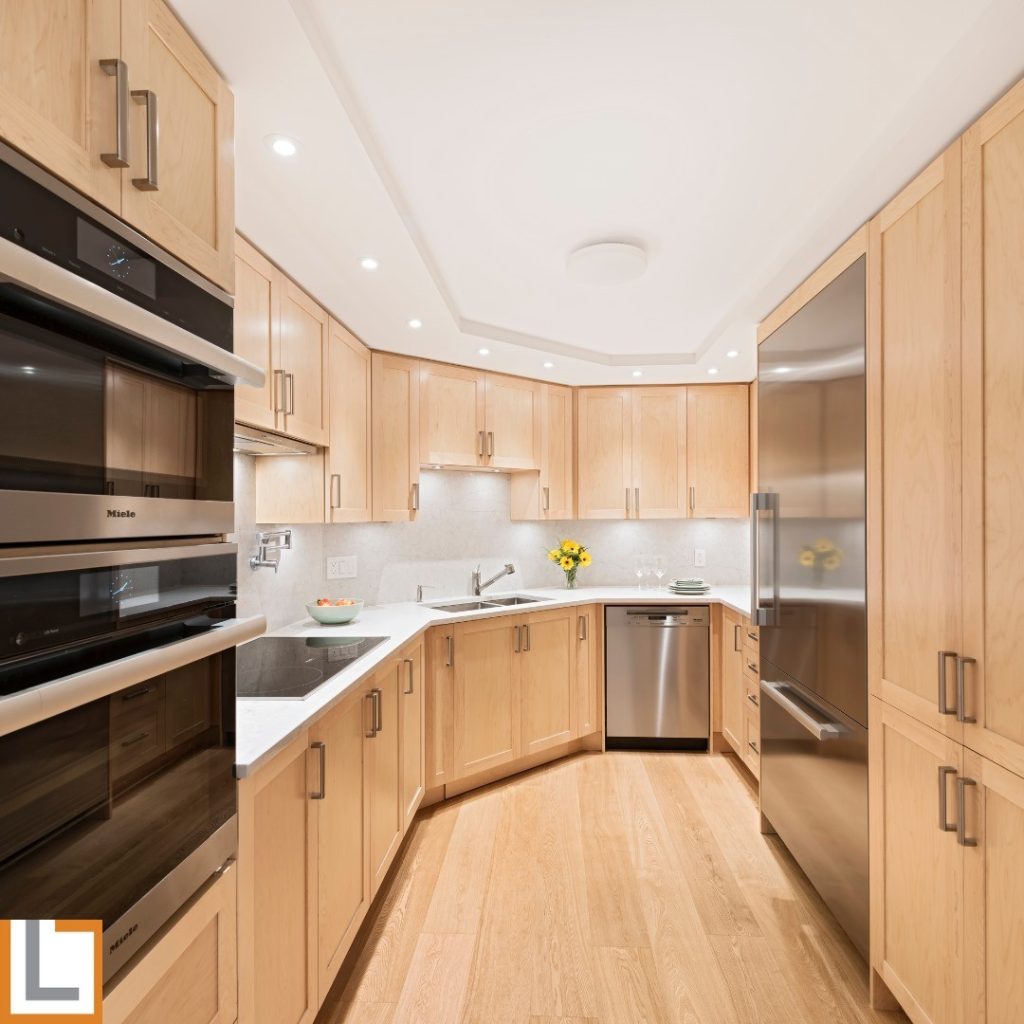
How to Style Maple Cabinets for a Cohesive Look
Styling your maple cabinets ensures they don’t feel outdated or mismatched. Here are some quick tips:
- Choose the Right Hardware: Brushed nickel or black handles add a modern touch, while brass or bronze complements a traditional look.
- Incorporate Lighting: Under-cabinet lighting highlights the beauty of the wood grain and adds warmth to the space.
- Mix Materials: Pair maple cabinets with sleek stone countertops or stainless-steel appliances for a balanced look.
- Accessorize Smartly: Add pops of color with kitchen decor, such as patterned dish towels, vibrant backsplash tiles, or potted plants.
Pros and Cons of Maple Kitchen Cabinets
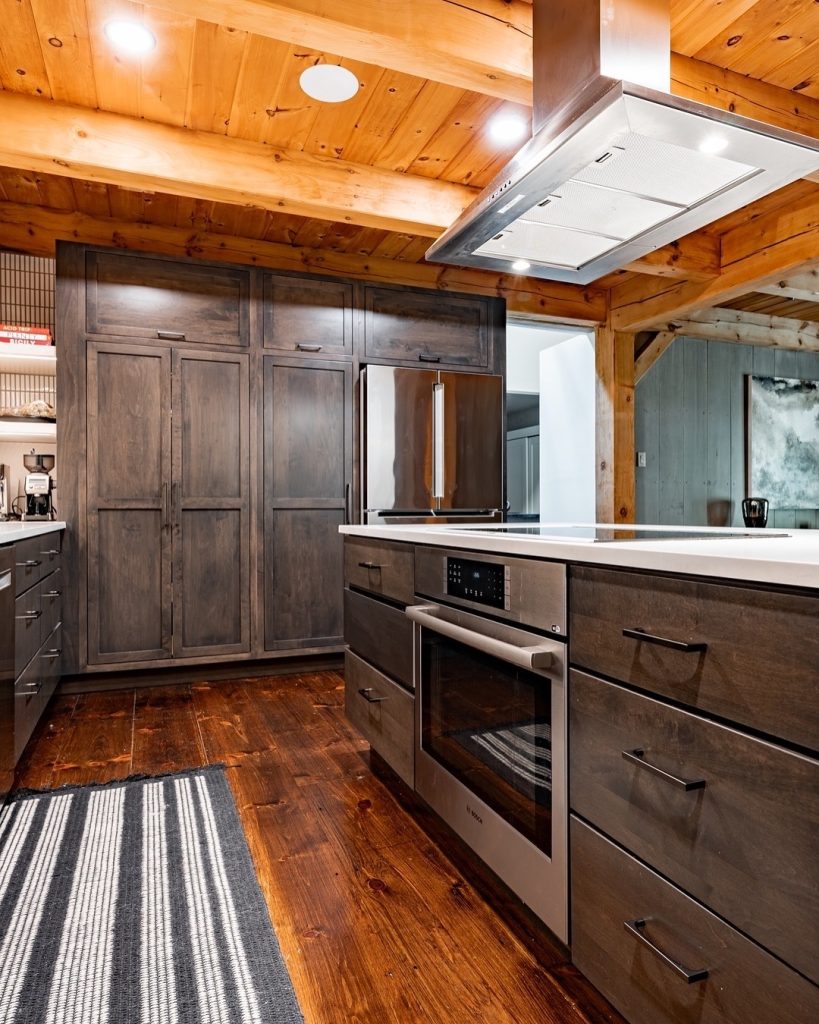
Pros:
- Durable and long-lasting
- Versatile for various styles
- Affordable compared to other hardwoods
- Easy to customize with stains or paint
Cons:
- Requires proper care to maintain its appearance
- Prone to yellowing over time if exposed to sunlight
- Can be less scratch-resistant than some harder woods
Trends in Maple Kitchen Cabinetry
- Two-Tone Cabinets: Combine natural maple with a bold, painted island for a trendy look.
- Open Shelving Pairings: Use open shelves alongside maple cabinets for an airy, modern vibe.
- Matte Finishes: Swap traditional glossy finishes for matte ones to align with current design trends.
- Eco-Friendly Options: Maple is a sustainable wood choice, but you can enhance your kitchen’s eco-friendliness by opting for cabinets made from reclaimed or responsibly sourced maple.
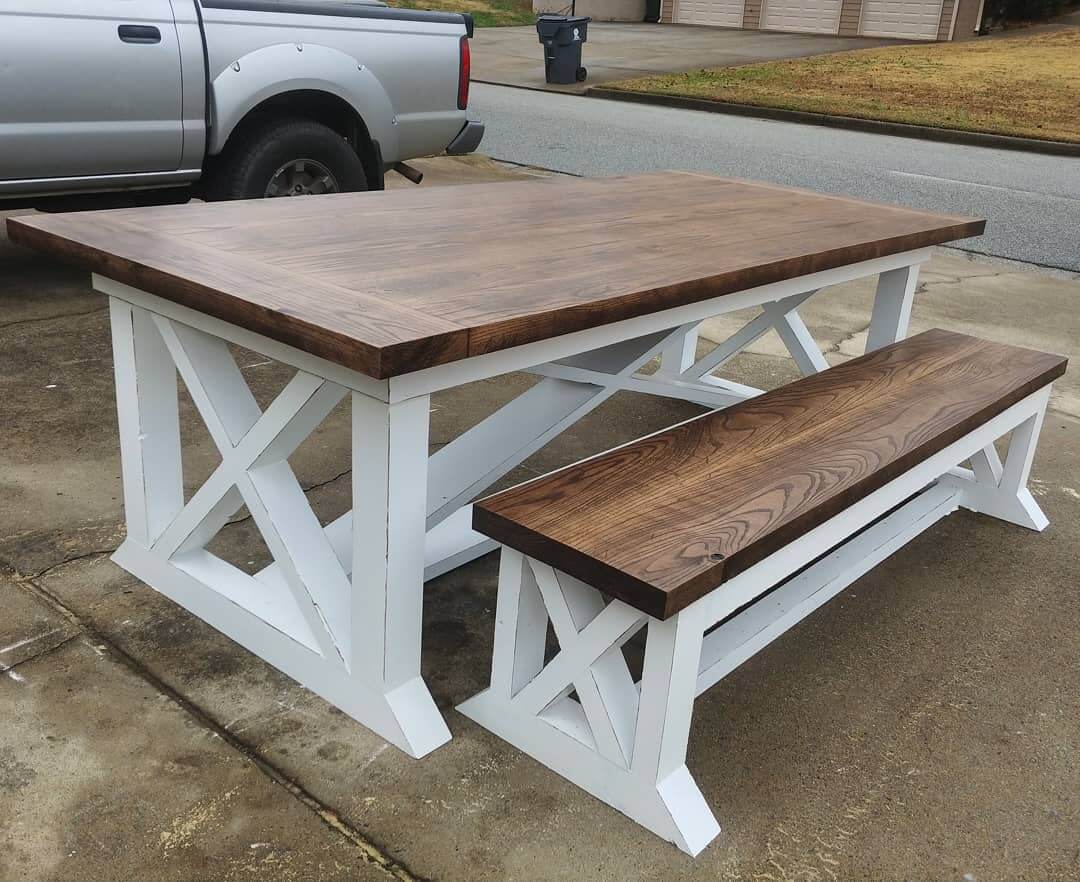
How to Pair Maple Cabinets with Countertops
- Quartz: Offers a sleek, modern look and is available in a wide range of colors to suit maple’s tones.
- Granite: Adds texture and depth, especially with speckled or veined designs.
- Marble: Provides a luxurious contrast, particularly with lighter maple finishes.
- Butcher Block: Creates a cohesive and natural aesthetic, especially for rustic or farmhouse-style kitchens.
What Color Goes Well with Maple Cabinets?
Maple’s natural tones pair beautifully with a wide range of colors as you shall see in the designs we will share on this article. Soft neutrals like cream, beige, and taupe highlight its warmth, while cool grays and blues add a modern contrast. If you’re feeling bold, deep greens or navy can create a striking look against maple’s subtle grain.
Are Maple Kitchen Cabinets Still in Style?
Absolutely! Maple cabinets are a classic that transcends trends. Their versatility makes them perfect for modern, traditional, or transitional kitchens. By pairing them with updated hardware or bold countertops, you can easily bring a fresh, contemporary twist to this beloved classic.
Is Maple a Good Choice for Kitchen Cabinets?
Yes, maple is an excellent choice! It’s a hardwood known for its durability and resistance to wear and tear, making it ideal for high-traffic kitchens. Maple’s natural beauty shines through with or without stains, ensuring a timeless appeal.
What Floor Looks Best with Maple Cabinets?
The best flooring complements your cabinet’s tone while adding visual balance. Light maple cabinets pair well with dark hardwood, slate, or tile flooring for contrast. If your cabinets are darker, light-toned flooring like oak or whitewashed wood creates a bright, airy feel. For a cohesive look, consider flooring with similar undertones as your maple cabinets.
Continue Exploring Beautiful Kitchen Inspiration
- Warm farmhouse designs featuring natural wood finishes
- Hickory cabinet inspiration for a rustic-meets-modern look
- Blue kitchen concepts that bring a serene, stylish feel
- Fresh kitchen wall ideas to elevate your cooking space
- Trending kitchen remodel designs for a modern makeover
15 Maple Kitchen Cabinets ideas: A Warm Touch for Modern Homes
1. Traditional Warmth with a Modern Twist
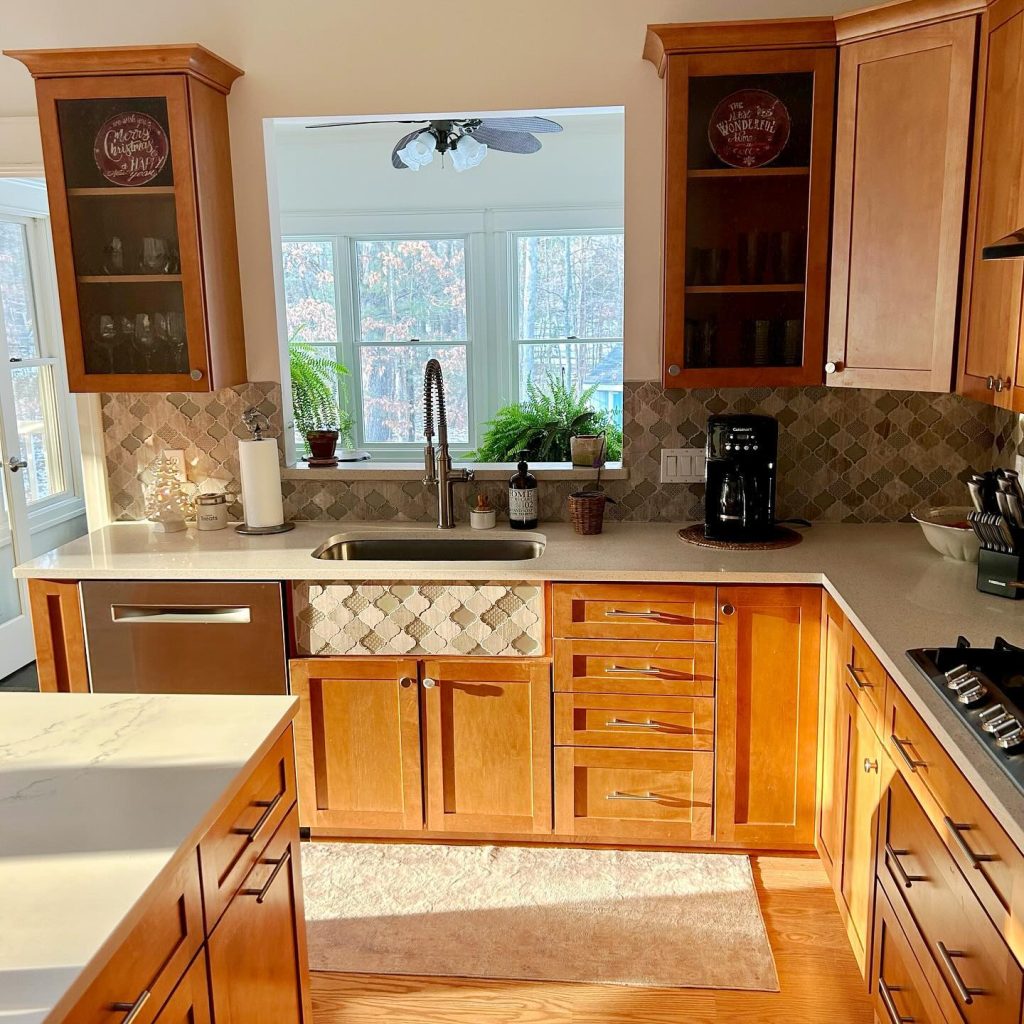
Design Style: Transitional Traditional
Expert Analysis: This kitchen showcases the classic “Honey” maple tone. Because of maple’s smooth surface, this warm stain appears consistent and glowing.
The Mix: Modernized with a flat-edge quartz countertop and a scalloped tile accent.
Credit: @designby_racheld
2. The Sophisticated Two-Tone Contrast
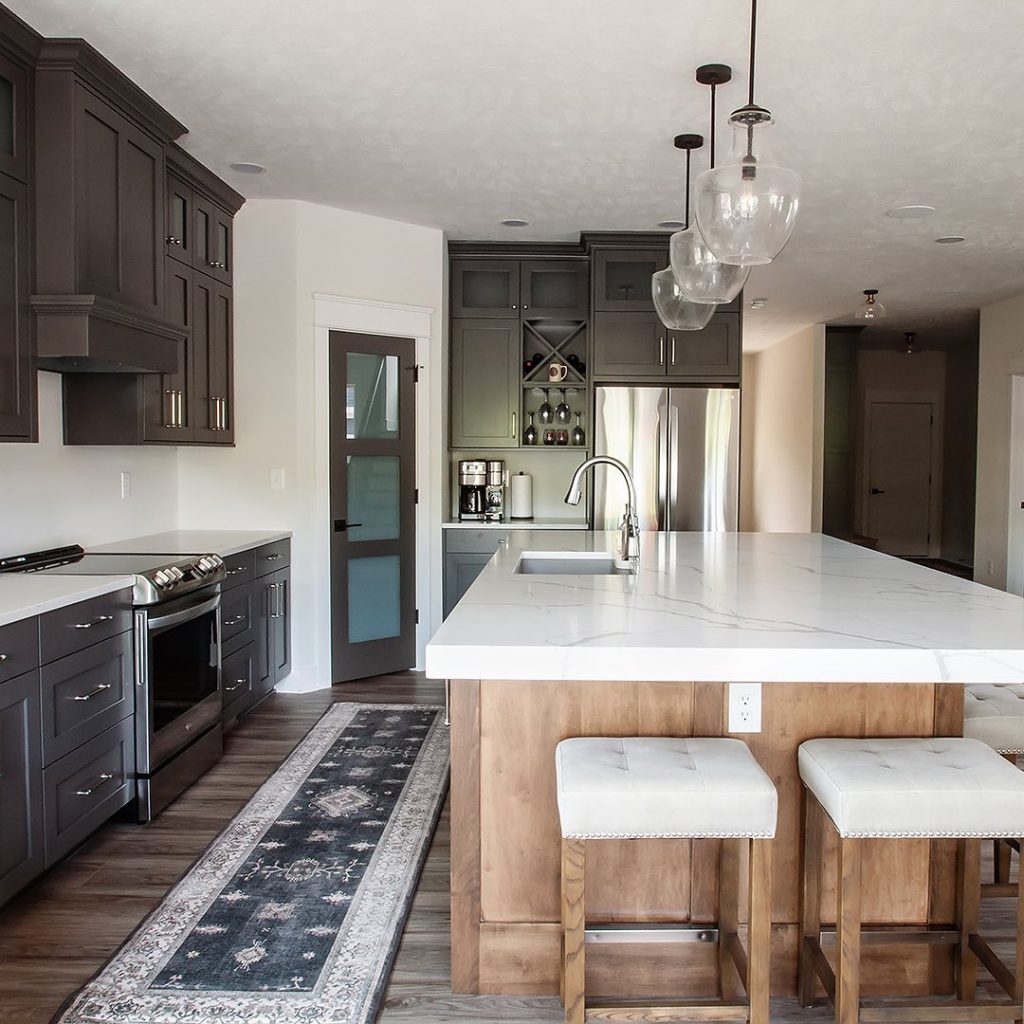
- Design Style: Modern Transitional
- Why it Works: This is a masterclass in using Maple as a neutral foundation. Pairing a natural-stained maple island with an Urbane Bronze perimeter creates a high-end, grounded look.
- Credit: @hastewoodcraft
3. Scandinavian Minimalism (Japandi)
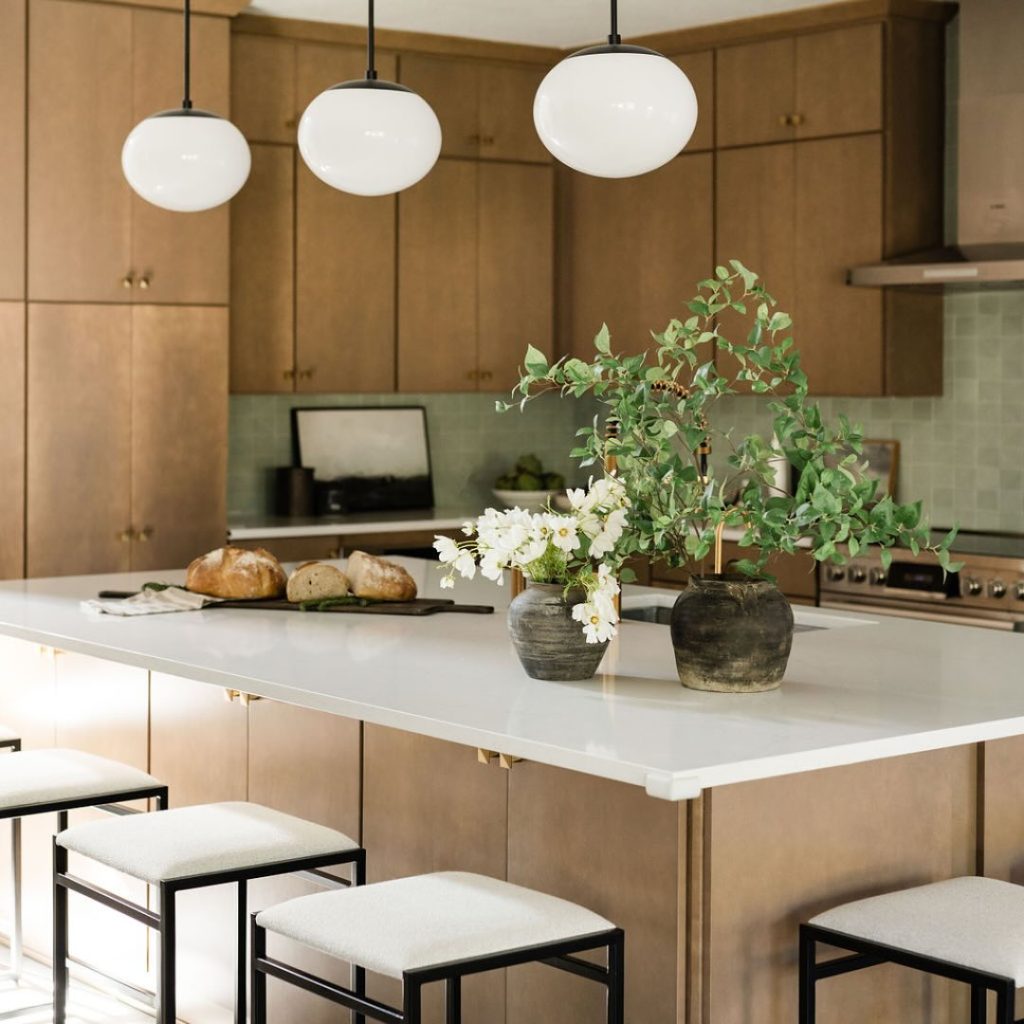
- Style: Modern / Minimalist
- Expert Analysis: Maple is the “hero” of the Japandi trend. These flat-panel “Slab” doors show off the wood’s natural ivory-to-gold spectrum without distracting grain patterns.
- Credit: @dwellify
4. The “River Run” Modern Shaker
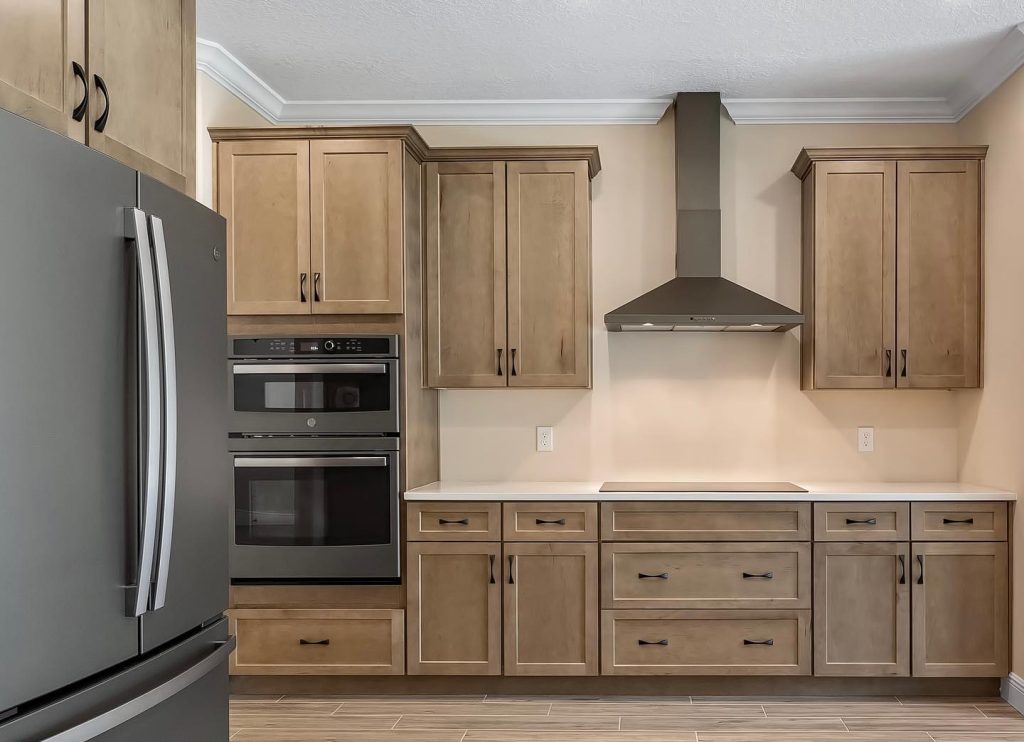
- Design Style: Contemporary Transitional
- Expert Analysis: This uses a translucent grey-brown stain to shift maple away from yellow tones into a sophisticated “weathered” palette.
- Credit: @leadingedgebuilders.fl
5. Architectural Textures & The Fluted Island
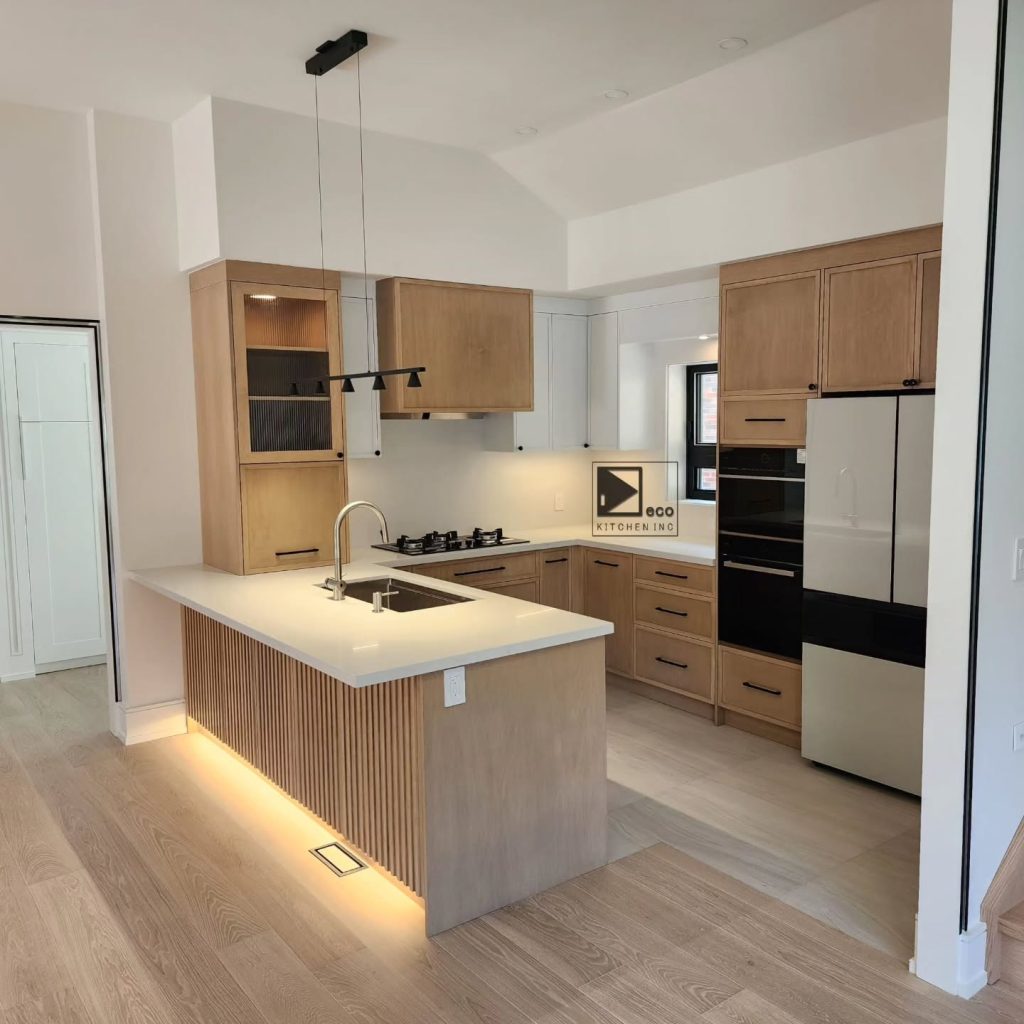
- Design Style: Modern / Japandi
- Trend Alert: Features a “Skinny Shaker” profile and a stunning fluted maple peninsula. Maple is the preferred wood for fluting because its fine texture doesn’t splinter during intricate milling.
- Credit: @decokitchen.inc
6. The Cozy Coffee-Stained Farmhouse
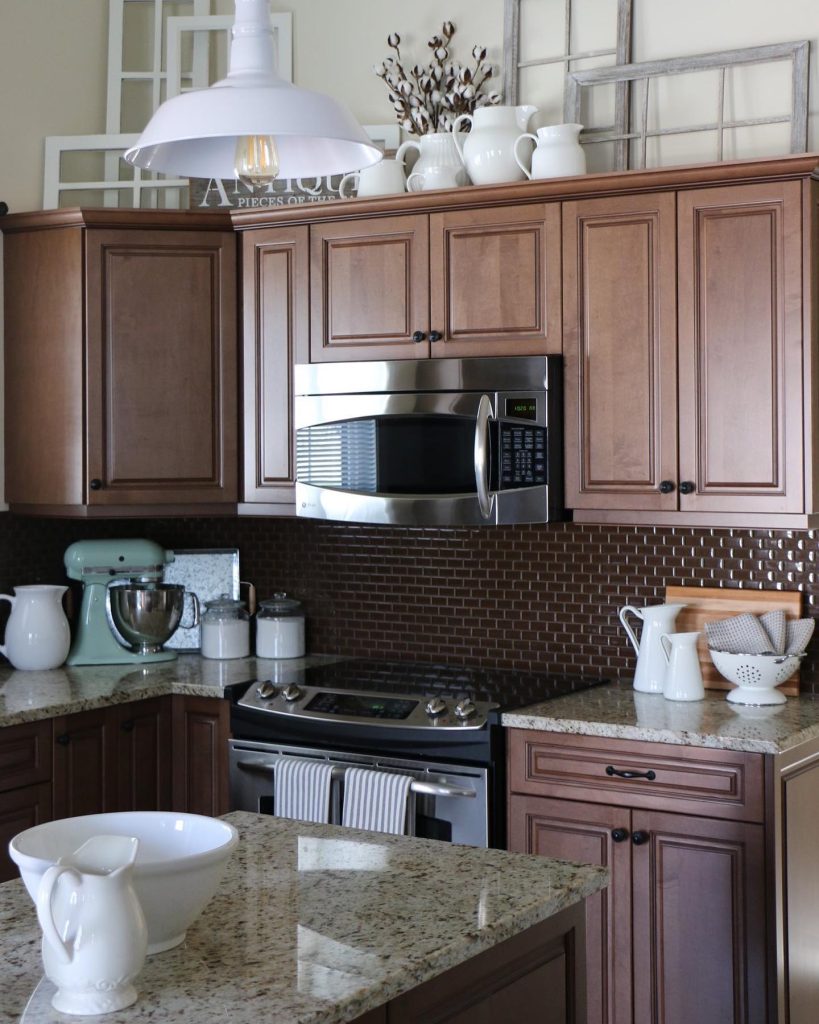
Design Style: Rustic Farmhouse Expert Analysis: This design proves that maple can mimic the depth of Cherry or Walnut when the right stain is applied. This mid-dark coffee stain brings out the tighter grain patterns while providing a warm, inviting atmosphere.
- The Contrast: To keep a dark-stained kitchen from feeling like a “cave,” the designer used a high-contrast speckled granite and a dark chocolate backsplash tile.
- Woodworking Insight: Maple is a very dense hardwood; when applying dark stains like this, a pre-stain conditioner is a must to prevent “blotchiness”—a common issue for DIYers working with maple.
7. The Integrated Chef’s Pantry
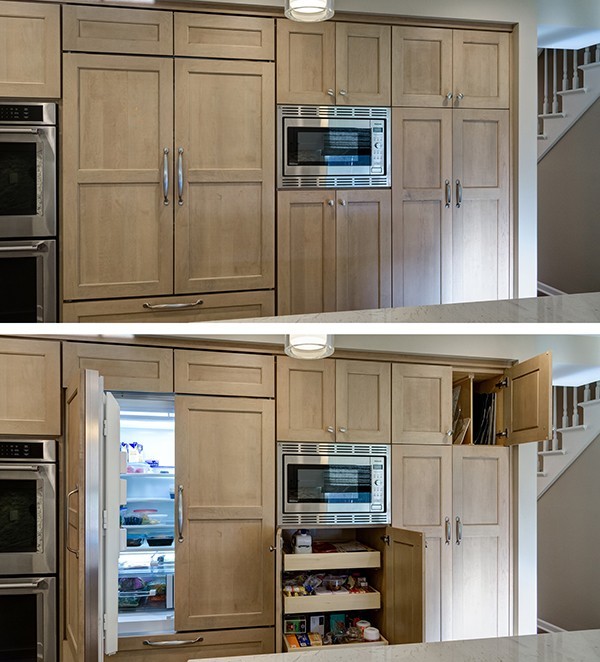
Design Style: Custom Luxury / Classic Shaker Expert Analysis: This image shows how maple’s stability makes it perfect for integrated appliance panels and heavy-duty storage. Notice how the refrigerator and microwave are “hidden” within the woodwork, creating a seamless furniture-like wall.
- The Woodwork: The pull-out pantry drawers (seen in the bottom half of the split photo) demonstrate maple’s strength. It is a dense hardwood that can support the weight of heavy canned goods and appliances without sagging over time.
- Pro-Tip: Using maple for interior drawer boxes (the “dovetail” look) is a mark of high-end craftsmanship because it resists the wear and tear of daily sliding better than softer woods.
8. The Modern White & Maple Hybrid
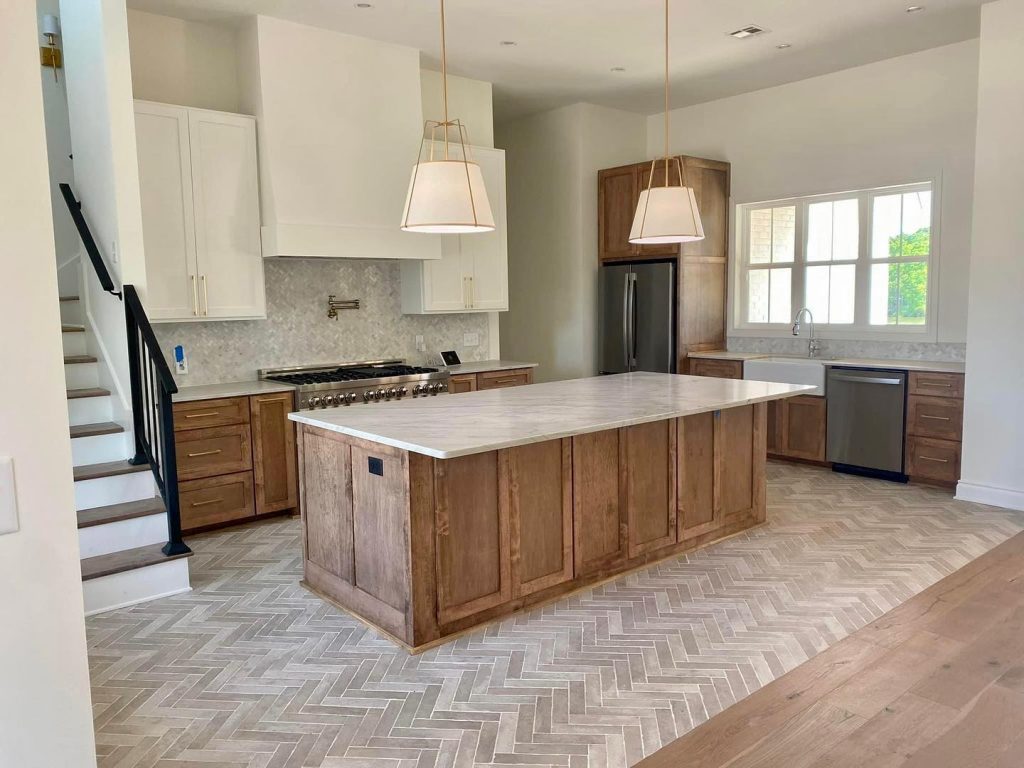
Design Style: Modern Farmhouse / Transitional Expert Analysis: This is a stunning example of using White Painted uppers to contrast a Natural Maple island and lowers. This “bottom-heavy” color scheme makes the kitchen feel grounded and warm without losing the bright, airy feeling of a white kitchen.
- Why it Works: The herringbone tile floor ties the two cabinet colors together. Maple’s tight grain ensures that the island doesn’t feel too “rustic” or busy, allowing the patterns in the floor and the marble-look island to take center stage.
- Design Note: Pairing maple with a white range hood is a top 2026 design trend that breaks up the traditional “wall of cabinets” look.
9. Taupe-Wash Maple & Fluted Curves
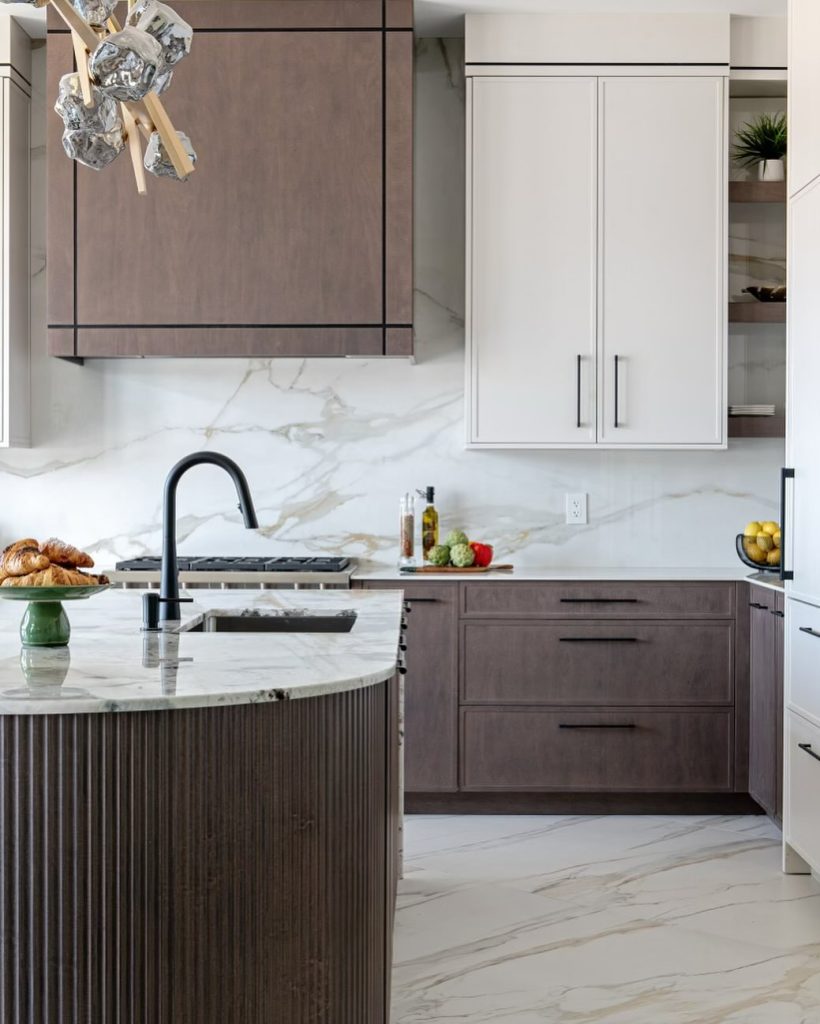
Design Style: Contemporary Chic / Organic Modern Expert Analysis: This image showcases the “Modern Maple” at its finest. The wood has been treated with a taupe or “driftwood” wash that highlights the grain while giving it a sophisticated, muted gray-brown tone.
- The Standout Feature: The curved, fluted island in the foreground. Because maple is easy to mill and sand to a smooth finish, it is the preferred wood for these intricate vertical textures and rounded corners.
- The Countertop: Pairing this muted wood with a bold-veined Calacatta marble creates a high-contrast, luxury aesthetic that feels very contemporary.
10. The Timeless Family Kitchen
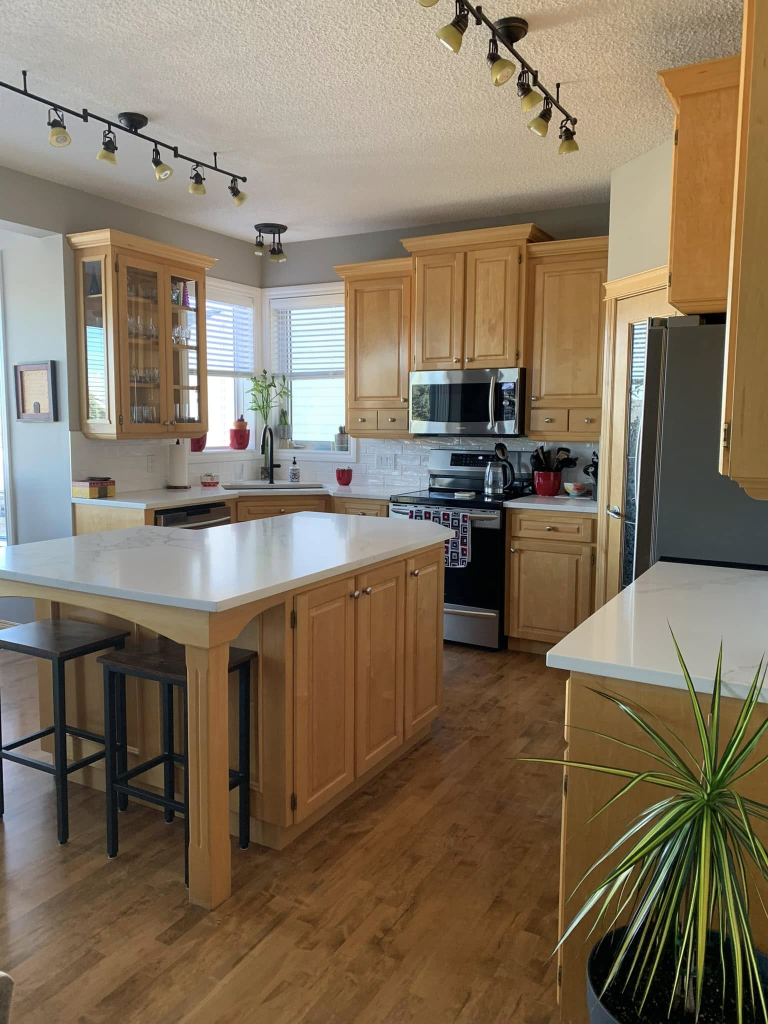
Design Style: Classic Transitional Expert Analysis: This is the “Goldilocks” of maple kitchens—not too modern, not too rustic. It uses a Natural Maple Shaker cabinet that emphasizes the wood’s inherent light-to-medium tones.
- The Woodwork: Notice the glass-front upper cabinets near the sink. Because maple has such a clean, pale interior, it’s the perfect wood to show off with interior cabinet lighting and glassware.
- Pro-Tip: To keep this look from feeling dated, the designer used a white quartz countertop with a subtle marble vein, which bridges the gap between the warm wood and the stainless steel appliances.
11. Rustic Character & Bold Stains
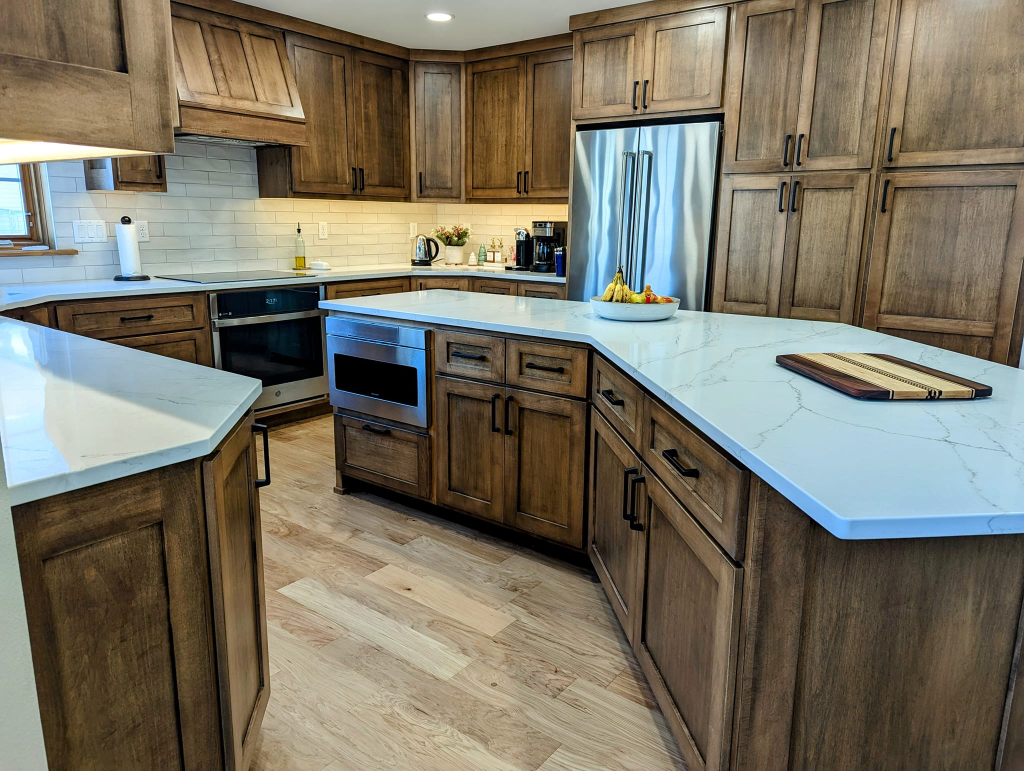
Design Style: Modern Rustic / Craftsman Expert Analysis: This version uses “Character Grade” maple, which intentionally includes natural mineral streaks and color variations. Why it Works: The darker stain highlights these variations, giving the kitchen a “soulful” feel. Woodworking Insight: Maple is chosen for these high-use rustic kitchens because its surface is much more “closed” and sanitary than other woods, making it easier to wipe down and maintain over years of cooking.
12. Bespoke Luxury & Black-Wash Contrast
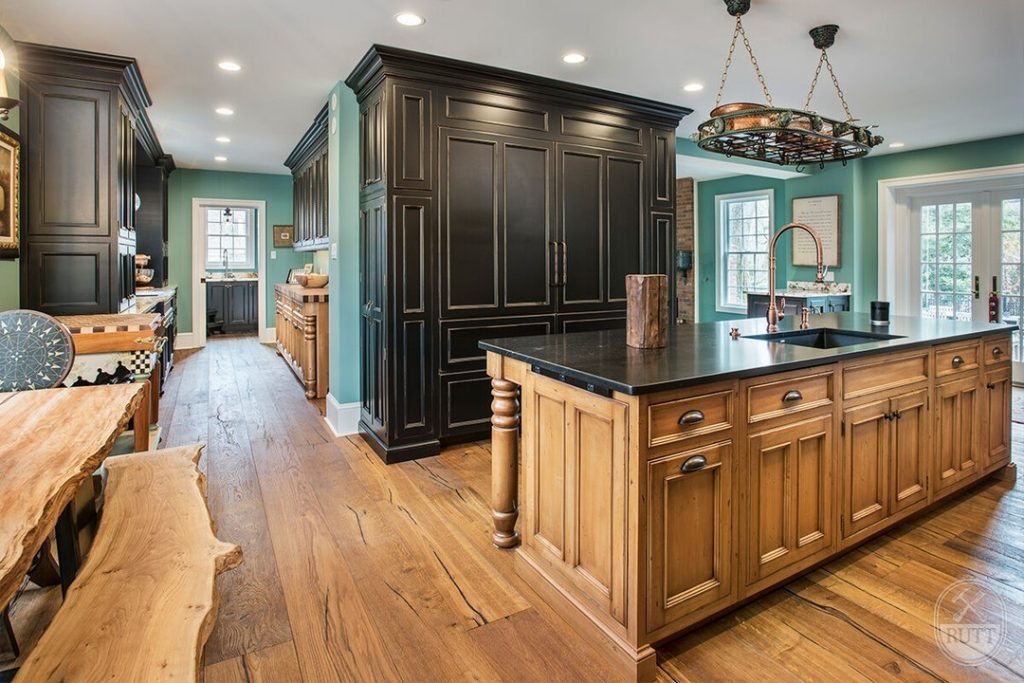
Design Style: Old World Luxury / High-End Custom Expert Analysis: A breathtaking example of Furniture-Grade Maple. The island features intricate turned-leg detailing—a task specifically suited for maple because it is hard enough to hold sharp, crisp carvings without chipping. The Design Secret: The floor-to-ceiling pantry is actually maple finished in an “ebonized” black. This allows you to have the strength of maple with a high-contrast, modern aesthetic.
13. The Clean & Bright Contemporary
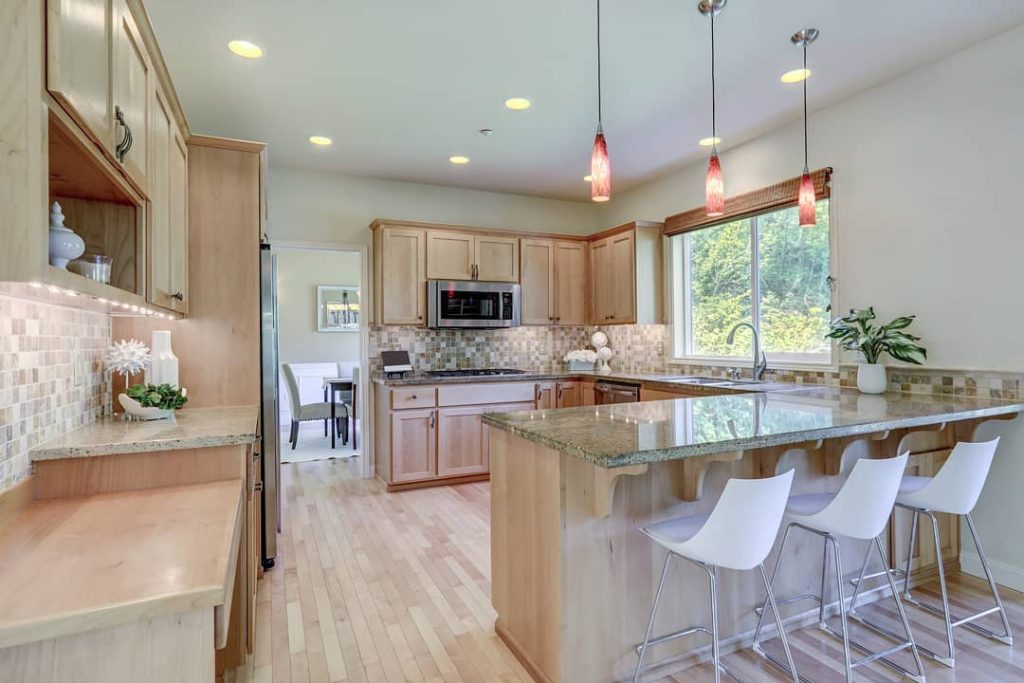
Design Style: Modern Contemporary Expert Analysis: For smaller kitchens, Natural-Finish Maple is a secret weapon. Its light-reflective properties brighten the space and make it feel more expansive. Flooring Pairing: This “monochromatic” look—pairing maple cabinets with a similarly toned hardwood floor—is a hallmark of 2026 contemporary design, creating a seamless, zen-like flow.
14. Refined Amber Maple
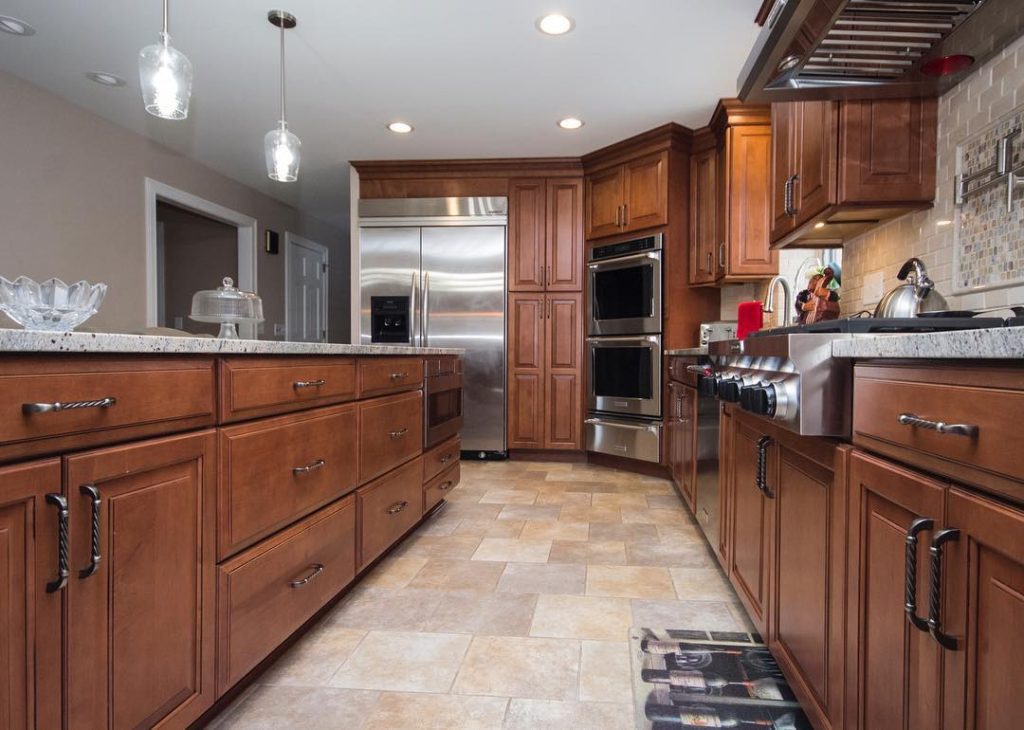
- Design Style: Classic Craftsman / Warm Traditional Expert Analysis: This kitchen uses a medium-amber stain on maple to achieve a traditional, glowing look with a refined, smooth finish.
- The Woodwork: The recessed-panel “Cope and Stick” construction provides a substantial architectural detail.
- Lighting Tip: When working with amber-stained maple, use 3000K (Warm White) bulbs to keep the wood looking rich and vibrant rather than flat or dull.
15. The “Full-Wall” Minimalist
16. The Warm Honey & Sage Retreat
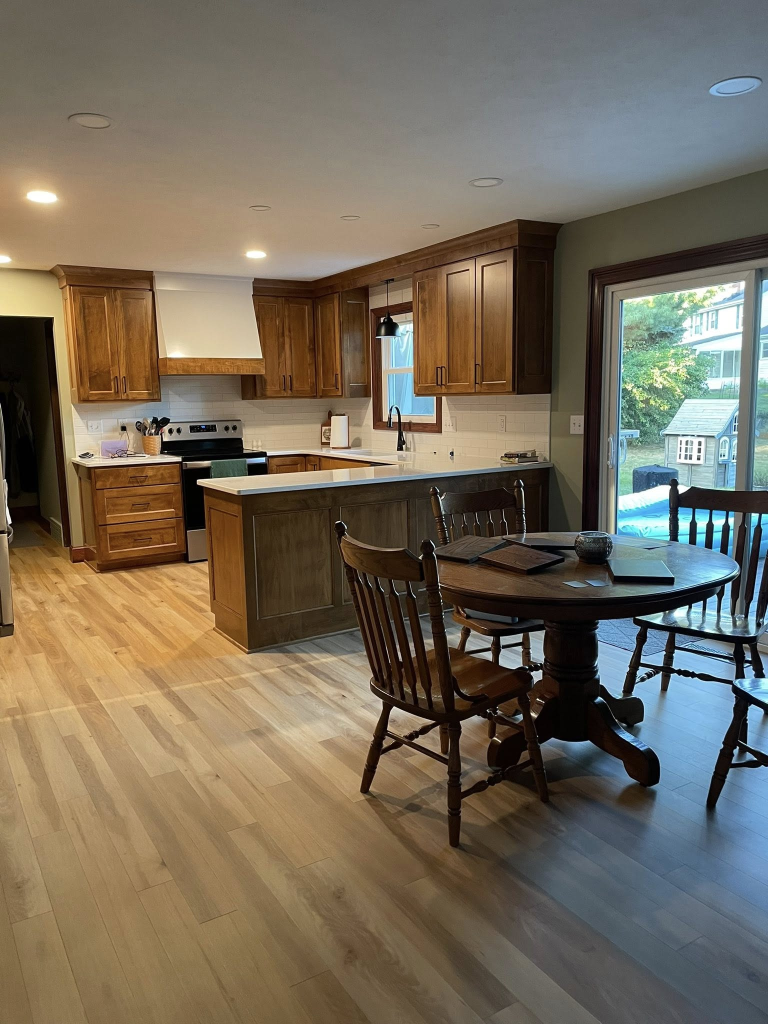
Credit: Carol Yund Mills
Design Style: Modern Craftsman Expert Analysis: This design showcases the “Traditional Glow” that maple is famous for. The cabinets are finished in a warm amber stain that highlights the wood’s density and smooth texture.
- The Design Secret: Pairing warm maple with Sage Green walls and a white range hood is a classic design trick. The cool green tones neutralize the natural orange/yellow undertones of the maple, making the whole kitchen feel fresh and deliberate rather than dated.
- Hardware Choice: The slim, dark hardware pulls add a contemporary “line” to the traditional recessed-panel doors, bridging the gap between old-world charm and modern convenience.
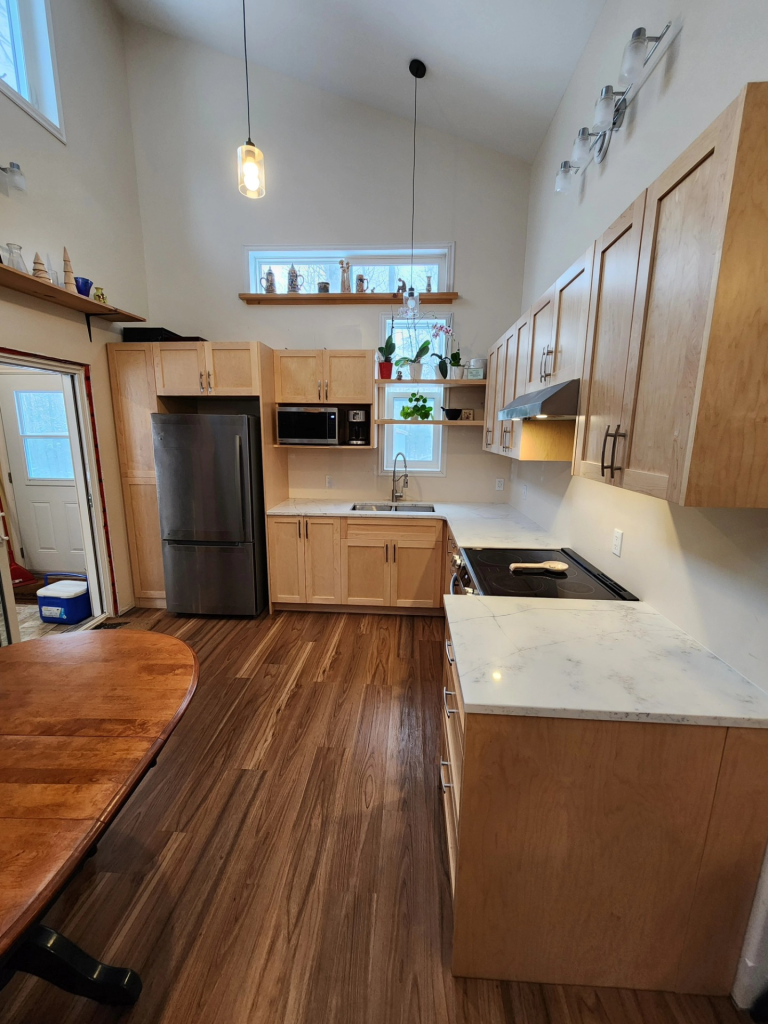
Style: Modern Architecture Expert Analysis: Our 15th idea focuses on the Seamless Maple Wall. By using floor-to-ceiling maple cabinetry with hidden hardware, the wood becomes the “wallpaper” of the room. Its subtle grain prevents the large surface area from feeling overwhelming, resulting in a serene, high-end aesthetic.
17. The “Modern Barn” Maple Island
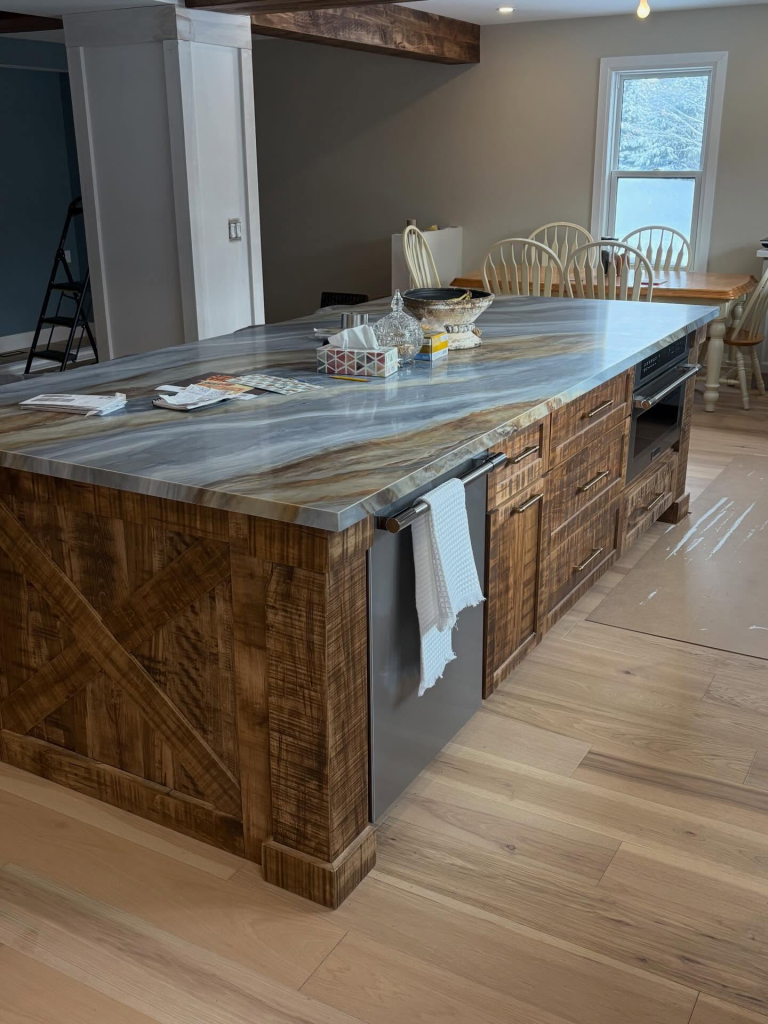
Credit: Beeton Barn Boards
Design Style: Rustic Industrial / Modern Farmhouse Expert Analysis: This island is a masterclass in using Reclaimed or Distressed Maple to create a focal point. While we usually see maple in smooth, contemporary settings, this “X-brace” barn-style construction highlights the wood’s structural versatility.
- The Standout Feature: The swirling, dramatic Blue Quartzite countertop. Because maple has a subtle, non-competing grain, it is the perfect anchor for a “statement” stone like this. The cool blues and greys of the stone contrast beautifully with the warm, deep-honey stain of the wood.
- Pro-Tip: Notice the integration of the stainless steel dishwasher and built-in microwave. Maple’s density makes it the ideal choice for these high-traffic islands, as it can be milled precisely to house heavy appliances without losing structural integrity.
18. The Painted Maple & Custom Cherry Hybrid
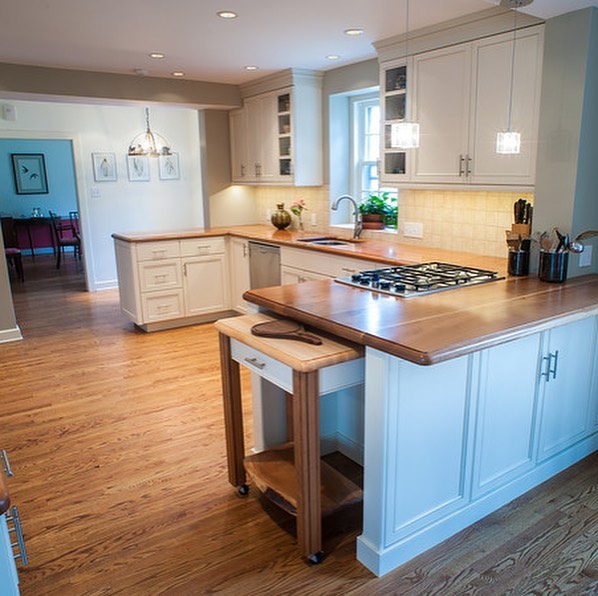
Credit: @doyledesignphilly
Design Style: Classic Upscale / Heirloom Traditional Expert Analysis: This stunning kitchen in Chestnut Hill showcases the versatility of Paint-Grade Maple. While we’ve seen plenty of natural maple, this project uses maple’s dense, pore-free surface to achieve a flawless, creamy white painted finish.
- The Woodwork: The inset cabinetry (where doors sit flush inside the frame) requires extreme precision. Maple is the “gold standard” here because it is incredibly stable and won’t expand or contract as much as other woods, preventing the doors from sticking.
- The Custom Touch: A rare pairing of white-painted maple cabinets with a solid Cherry countertop. This creates a warm, high-contrast “cap” for the cabinetry, adding a touch of natural history to a clean, modern-traditional space.
- Woodworking Insight: Using maple for the cabinet boxes and doors ensures that the paint will never show “grain-popping” or texture over time, keeping that luxurious, smooth appearance for decades
19. The Architectural Heirloom
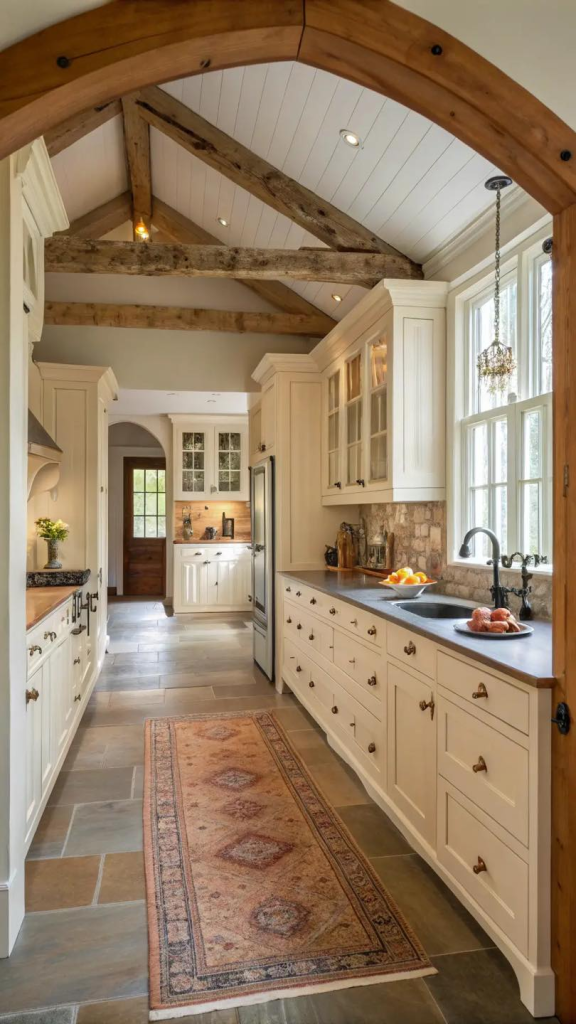
Credit: Avana Home
Design Style: English Country / Luxury Transitional Expert Analysis: This breathtaking space uses Cream-Painted Maple to anchor a room filled with heavy architectural elements like exposed timber beams and stone backsplashes.
- The Smooth Factor: Maple’s non-porous, fine-grained surface is what allows this specific “Off-White” paint to look soft and organic rather than like plastic. In a room with so much raw texture (stone, old wood), the silk-smooth finish of the maple cabinetry provides the necessary visual balance.
- Structural Excellence: Notice the floor-to-ceiling cabinetry and integrated pantry. Because Maple is dimensionally stable and incredibly dense, it can handle the weight of these oversized doors without warping—a critical requirement for high-end inset cabinetry.
- The “Light” Effect: As mentioned by Avana Home, Maple’s light, creamy base color ensures that even when painted, the cabinetry retains a certain “inner warmth” that cooler woods lack.
20. The Industrial-Modern Trio
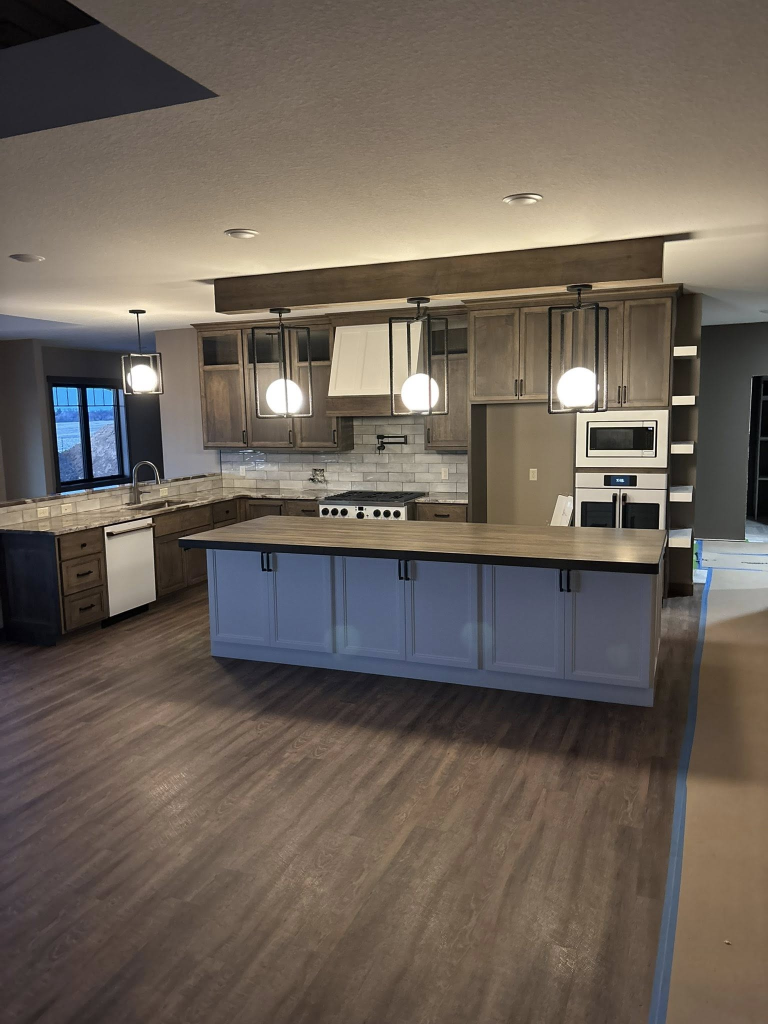
Credit: Harder’s Fine Woodwork
Design Style: Modern Industrial / Transitional Expert Analysis: This project perfectly illustrates the “Three-Layer” approach to maple cabinetry. It combines a grey-washed maple perimeter, a crisp white painted maple island, and a natural-toned wood countertop.
- The Smooth Factor: Maple’s tight, closed grain is what allows the grey wash on the upper cabinets to look “smoky” and sophisticated rather than grainy or rustic. It provides a modern, metallic-like sheen that pairs perfectly with the industrial pendant lighting.
- Structural Durability: Notice the thick, dark wood countertop on the island. Because the island base is made of maple, it can easily support the massive weight of that heavy slab without any structural bowing or joint separation.
- The Design Tip: Using a white range hood to break up a run of dark-stained cabinets (as seen here) is a pro move that prevents a large kitchen from feeling too dark, while the maple’s natural warmth keeps the space feeling inviting.
The Ultimate Maple Review
To help your readers make their final decision, we’ve summarized the essential technical data into a scannable, expert-led format.
Why Maple Wins for 2026 Kitchens
| Feature | Technical Reality | Benefit to the Homeowner |
| Durability | 1,450 Janka Hardness | Resists dents from dropped pots, pans, and high-traffic family life. |
| Finish | Closed-Grain Structure | Provides the absolute best surface for a glass-smooth paint finish or a modern smoky wash. |
| Stability | High Dimensional Stability | Maple is less prone to “movement,” meaning doors are unlikely to warp or show gaps in humid environments. |
| Value | Domestic & Abundant | Offers a “Premium Hardwood” look and feel at a more accessible price point than Walnut or Cherry. |
🏁 How to Use This Article
This guide now covers 20 unique maple kitchen ideas, spanning every major design trend. When publishing to ImproveWood, consider these three final polish tips:
- Anchor with Expertise: Place the technical sections (like the Janka scale and grain structure) near the top of the post. Establishing your site’s authority early builds trust before the reader gets to the gallery.
- Scannability is Key: Use the “Pro-Tips” and “Why it Works” callouts as bold sidebars. This helps mobile readers—who often skim—catch the highest value points quickly.
- Engage the Community: Your inclusion of real-world credits (like Carol Yund Mills and Avana Home) makes this a community-driven piece. Explicitly invite readers to submit their own photos to be featured as Idea #21!
Wrap Up
Maple kitchen cabinets are more than just a design choice—they’re a statement of quality, warmth, and enduring style. By understanding the ins and outs of maple cabinetry, you can make a confident decision that complements your home and lifestyle. Whether you’re drawn to their classic charm or eager to incorporate modern trends, maple cabinets adapt beautifully to any vision. With proper care and thoughtful design, they can transform your kitchen into a space that feels fresh, inviting, and truly yours. Start planning your dream kitchen today—maple cabinets are waiting to bring your vision to life.