

Finding the right bob haircuts for round faces comes down to one simple principle: add length, subtract width. A round face has equal width and height, with soft, curved edges. The goal of a good bob is to create the illusion of length and structure.
I have seen too many women with round faces walk out of salons with cuts that make their faces look wider. A chin-length blunt bob? Wrong. A rounded bob that follows the curve of the jaw? Also wrong. The right bob uses angles, asymmetry, and length to break up the circle and add vertical lines.
Here are seventeen bob haircuts that do exactly that. No fluff. No trends that will disappear next month. Just cuts that work.
1. The Long Layered Bob
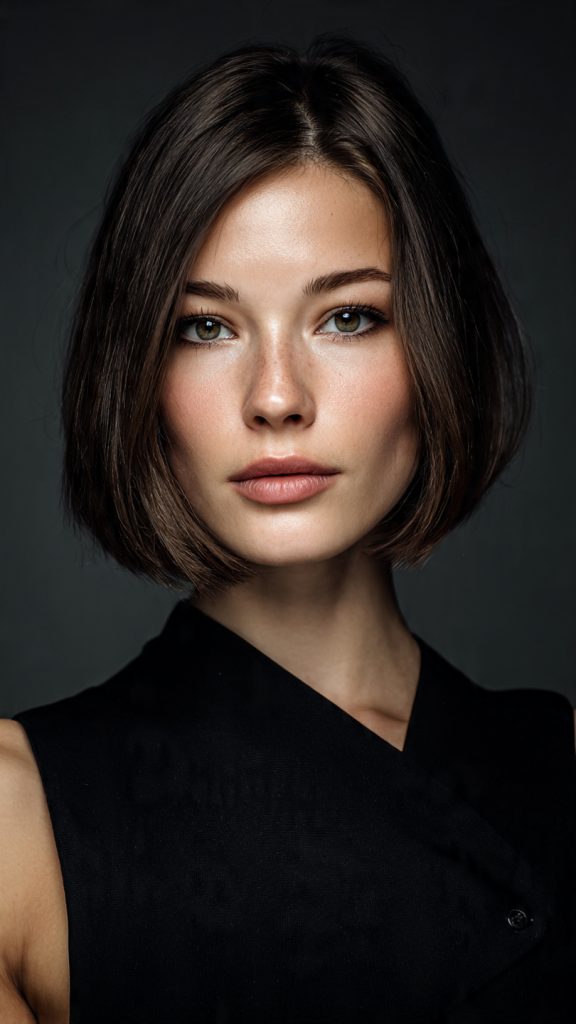
The long layered bob hits between your chin and collarbone. The length alone elongates a round face. The layers add movement and prevent the cut from looking heavy.
Keep the layers long — nothing shorter than your chin. Short layers add width, which you do not want. Long layers add movement without expanding the silhouette.
This is a solid choice if you want to keep some length but need help creating shape.
Styling time: Eight minutes with a round brush.
2. The Asymmetrical Bob
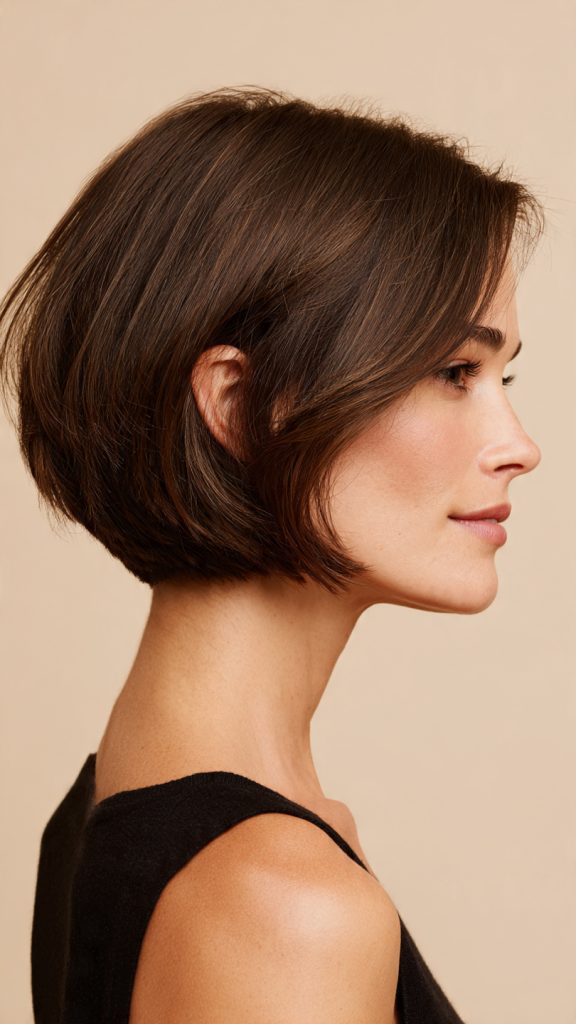
An asymmetrical bob is one of the most effective cuts for a round face. One side is longer than the other — typically by one to two inches. That diagonal line breaks up the circle and draws the eye diagonally across your face.
The shorter side is often tucked behind your ear. The longer side sweeps forward toward your collarbone. The asymmetry creates visual interest and adds length where you need it.
This cut works best on straight or slightly wavy hair.
Styling time: Seven minutes. Flat iron the ends to define the difference.
3. The Angled Bob
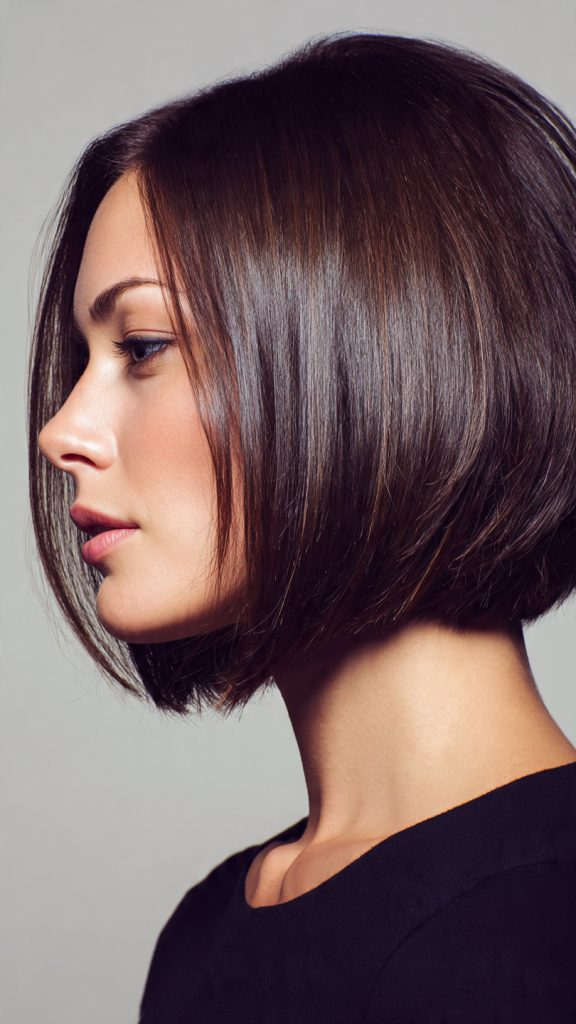
The angled bob is shorter in the back and longer in the front. The front pieces reach your chin or collarbone. The back sits at your nape or mid-neck.
That angle — shorter back, longer front — creates a diagonal line that adds length to a round face. The stacked back also adds volume at the crown, which lifts your whole face.
The angled bob requires regular maintenance. The stacked back grows out every six weeks. But the volume payoff is worth it.
Styling time: Seven minutes. Blow-dry the back upward with a round brush.
4. The Long Bob (Lob) with Center Part
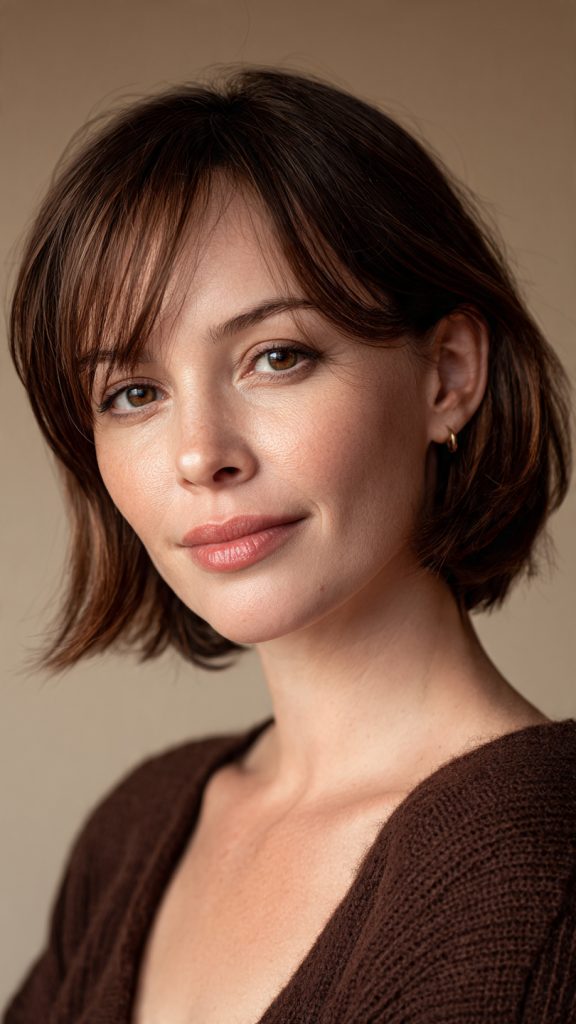
The long bob — lob — hits at your collarbone. Worn with a precise center part, it creates a vertical line that runs down the middle of your face. That line adds length and symmetry.
The center part works because it draws the eye straight down. No horizontal lines. No width. Just clean, vertical length.
This cut works best on straight hair. Curly or wavy textures may not hold a clean center part.
Styling time: Six minutes. Flat iron smooth, then create a sharp center part with a tail comb.
5. The Deep Side Part Lob
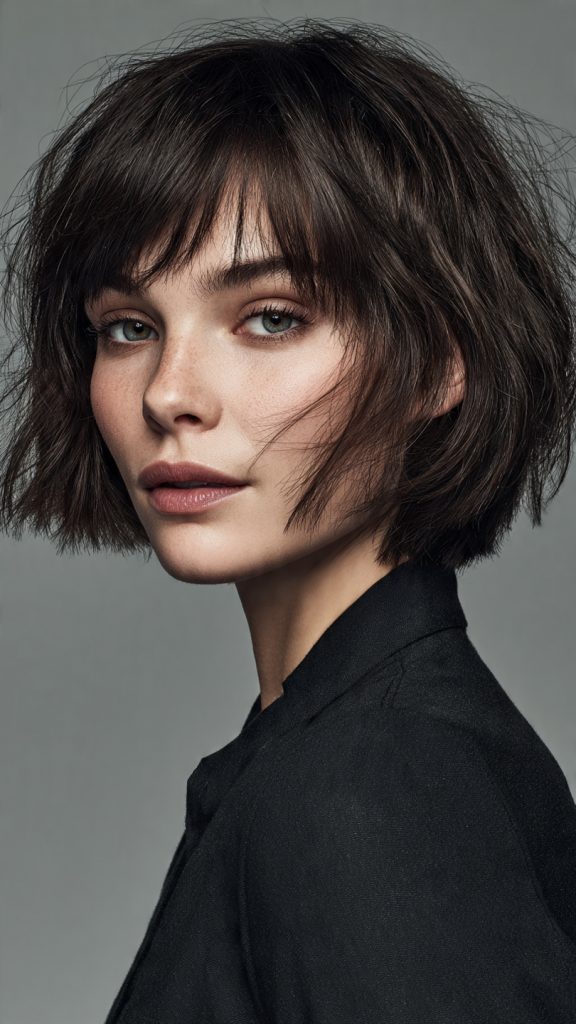
The deep side part lob is the opposite of the center part. Instead of a vertical line down the middle, you get a diagonal line across your face. That diagonal breaks up the circle and adds length.
Push your hair to one side. The lighter side stands up at the roots, adding volume. The heavier side sweeps across your forehead, softening the roundness.
This is one of the simplest fixes for a round face. No new cut required — just change your part.
Styling time: Three minutes. Create the deep side part with a tail comb.
6. The Textured Bob with Face-Framing Pieces
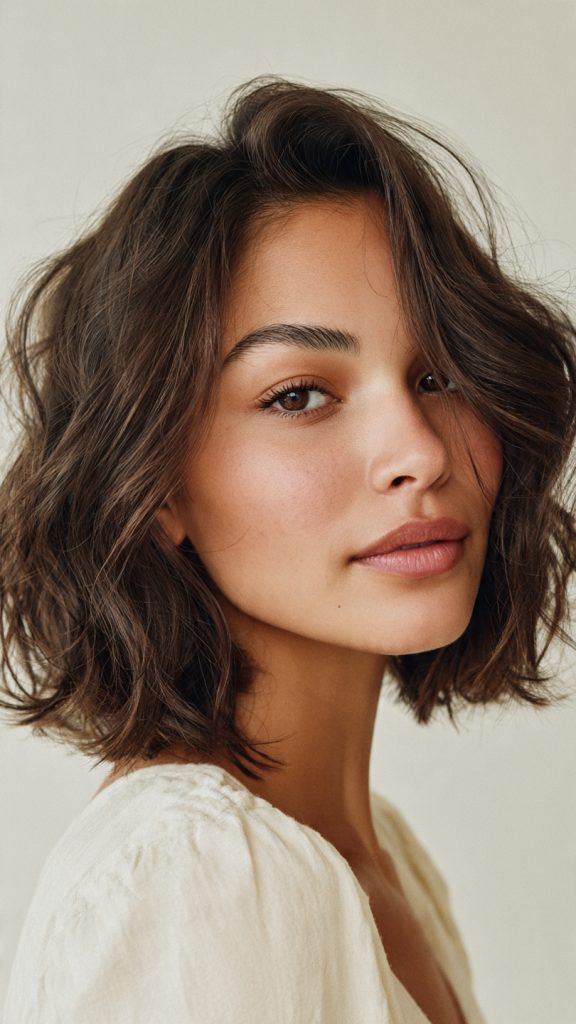
A textured bob keeps the length at your chin or below. The texture comes from point cutting — snipping vertically into the ends — which creates soft separation.
The face-framing pieces are cut slightly shorter than the rest, hitting around your cheekbones. Those pieces break up the width of a round face and add softness around your jaw.
The texture also creates the illusion of density, which is helpful if you have fine hair.
Styling time: Five minutes. Rub texture paste between palms and rake through.
7. The Blunt Lob
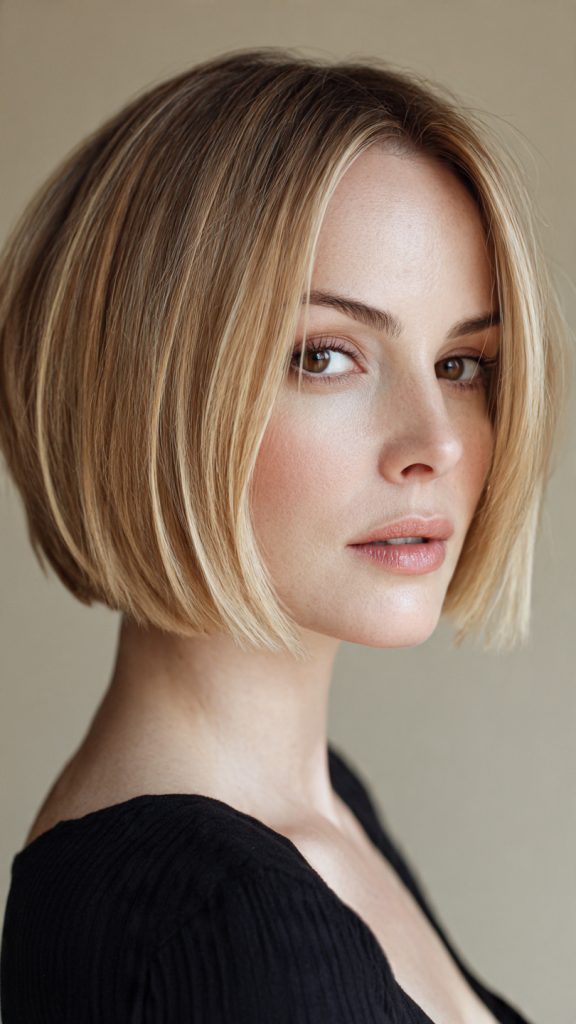
A blunt lob cuts straight across at your collarbone. No layers. No texture. Just a clean, solid line.
The blunt lob works for round faces because of the length. Collarbone length adds vertical line. The blunt perimeter adds weight at the bottom, which balances a wider top.
This cut is low-maintenance. Air dry for a sleek finish or add a soft bend with a flat iron. Just keep it blunt — no internal layers.
Styling time: Five minutes for air drying, ten for flat ironing.
8. The Inverted Bob
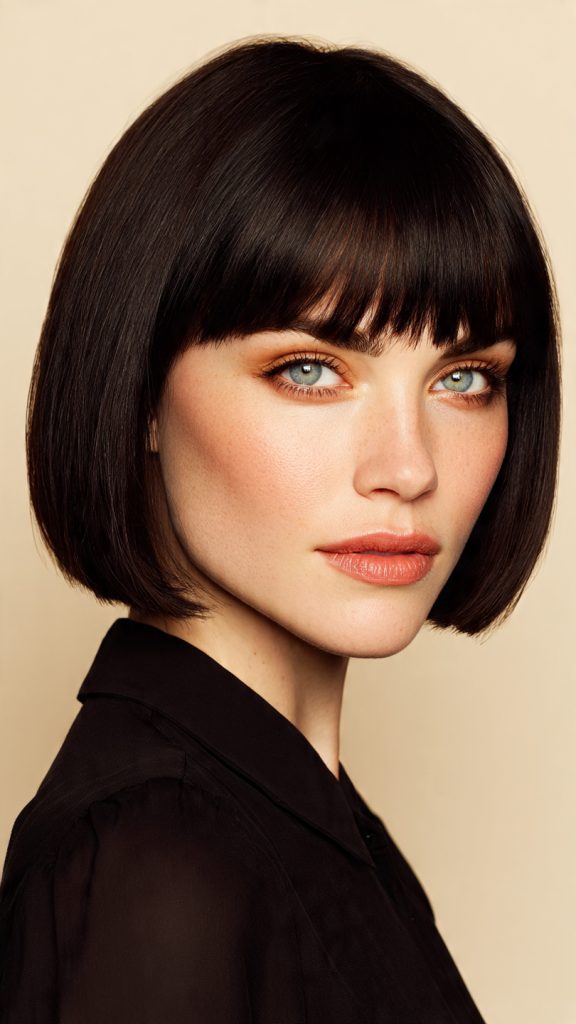
The inverted bob is shorter in the back and longer in the front, but with more stacking than a standard angled bob. The back is stacked and graduated, creating significant volume at the crown.
That crown volume lifts your face upward, adding length. The longer front pieces sweep forward, breaking up the roundness.
The inverted bob requires frequent trims — every five to six weeks — but the volume is unmatched.
Styling time: Seven minutes. Blow-dry the stacked back upward with a round brush.
9. The A-Line Bob
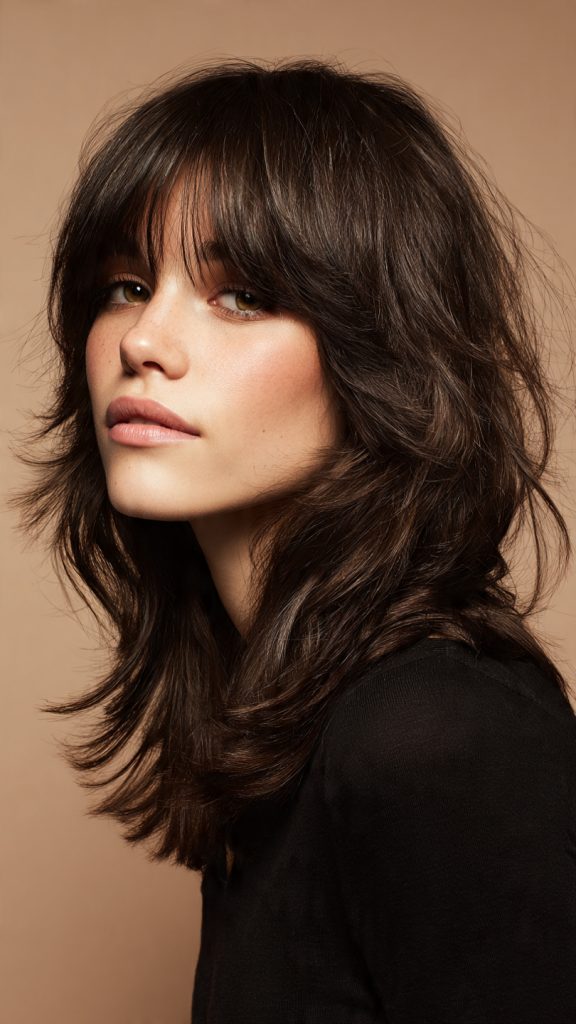
The A-line bob is a specific type of angled bob where the front pieces are significantly longer than the back. The line from back to front is sharp and deliberate.
The sharp angle creates a strong diagonal line that cuts across the roundness of your face. The longer front pieces hit your chin or collarbone, adding vertical length.
This cut works best on straight hair. The sharp angle is most visible when the hair is smooth.
Styling time: Eight minutes. Flat iron to define the A-line shape.
10. The Layered Bob with Side Swept Bangs
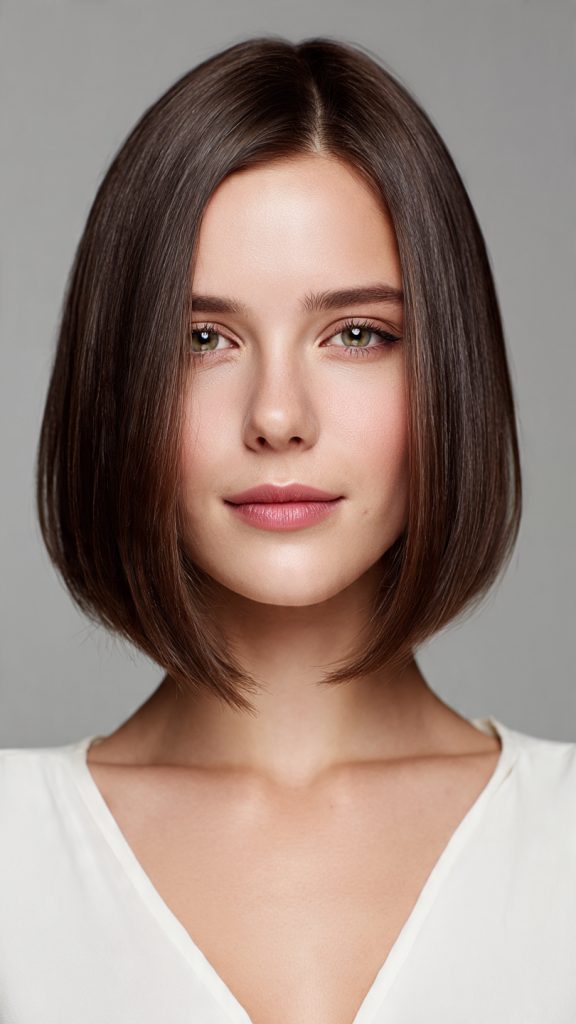
Adding side swept bangs to a layered bob softens the cut and adds another diagonal line. The bangs sweep across your forehead from a deep side part, ending around your eyebrow or cheekbone.
The side swept bangs break up the width of a round face at the forehead. The layered bob adds length at the bottom. Together, they create a balanced, elongated shape.
This cut is particularly flattering if you have a high forehead or want to soften facial lines.
Styling time: Six minutes, including bang styling.
11. The Choppy Bob
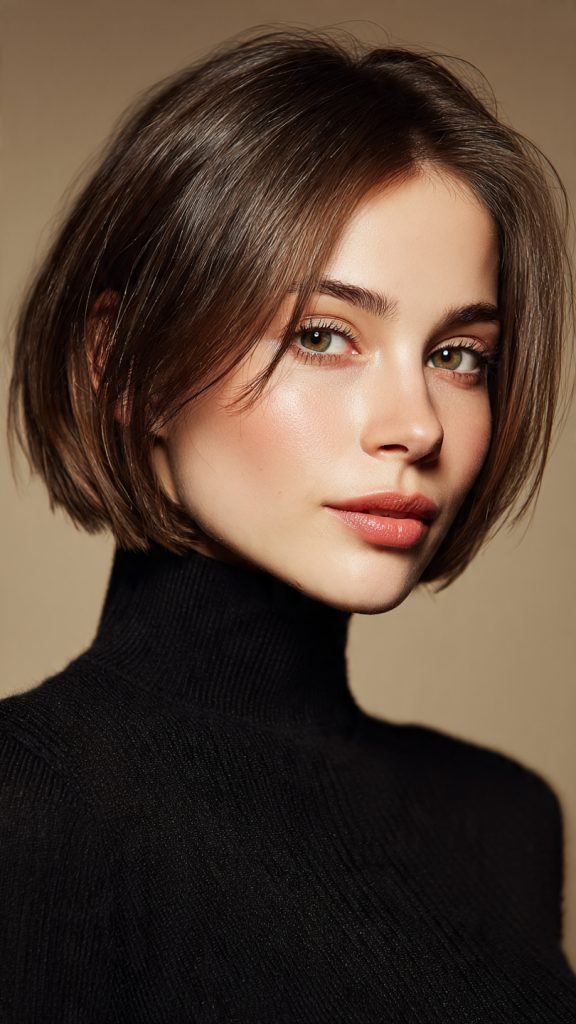
The choppy bob features uneven, textured pieces throughout. The ends are cut at different angles, creating a broken, piece-y effect.
That irregularity catches light differently across your head, which tricks the eye. The choppiness also adds vertical interest, which distracts from the roundness of your face.
The key is finding a stylist who understands round faces. Choppy layers should add length, not width. Keep the overall length at your chin or below.
Styling time: Five minutes. Rub texture paste between palms and rake through dry hair.
12. The Wavy Bob
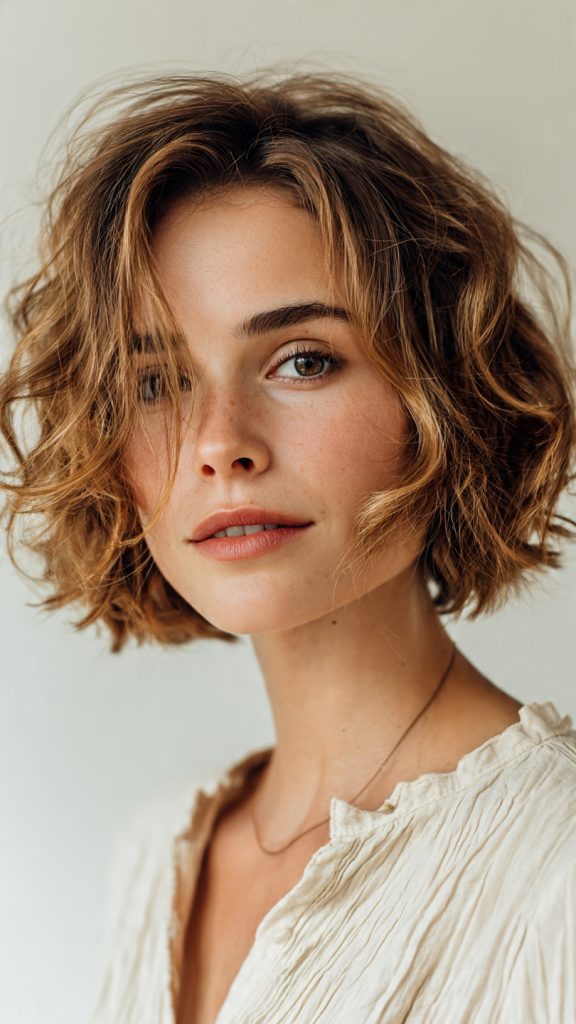
If you have natural waves, a wavy bob is a solid choice. The waves add texture and movement, which breaks up the smooth curve of a round face.
Keep the length at your collarbone. Waves that start at your chin and continue to your ends add vertical line. Avoid curls that puff out at the sides — that adds width.
To style, scrunch a lightweight mousse into damp hair and air dry or diffuse on low heat.
Styling time: Five minutes of scrunching, then air dry.
13. The Graduated Bob
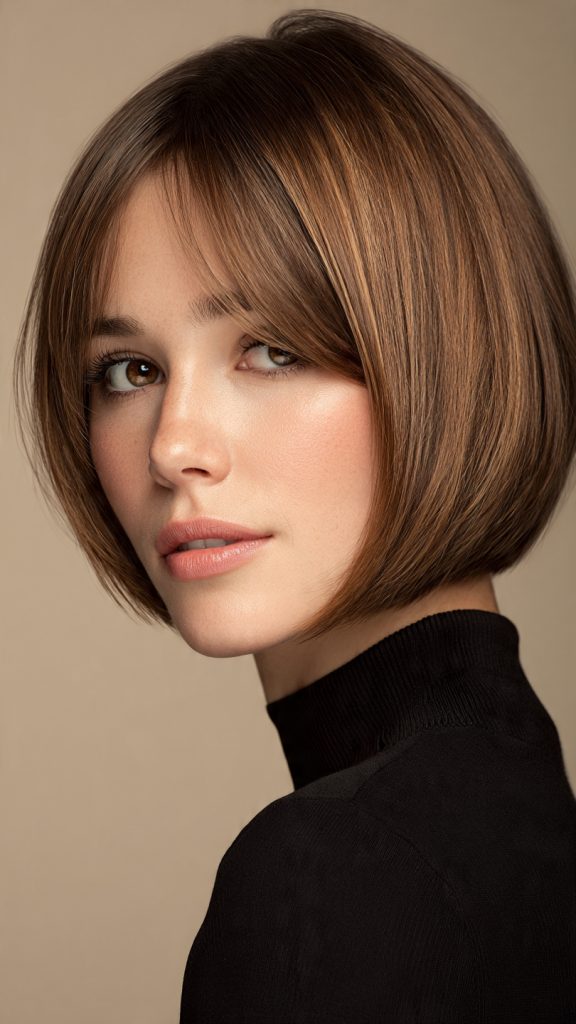
The graduated bob is similar to the inverted bob but with softer stacking. The back is graduated — layers build upon each other — but the transition to the front is smoother.
The graduated bob adds volume at the crown without the sharp angle of an A-line. That crown volume lifts your face and adds length. The softer transition makes this cut more versatile for different hair types.
This cut requires regular maintenance every six weeks.
Styling time: Seven minutes. Blow-dry the crown upward with a round brush.
14. The One-Length Bob with Micro Bangs
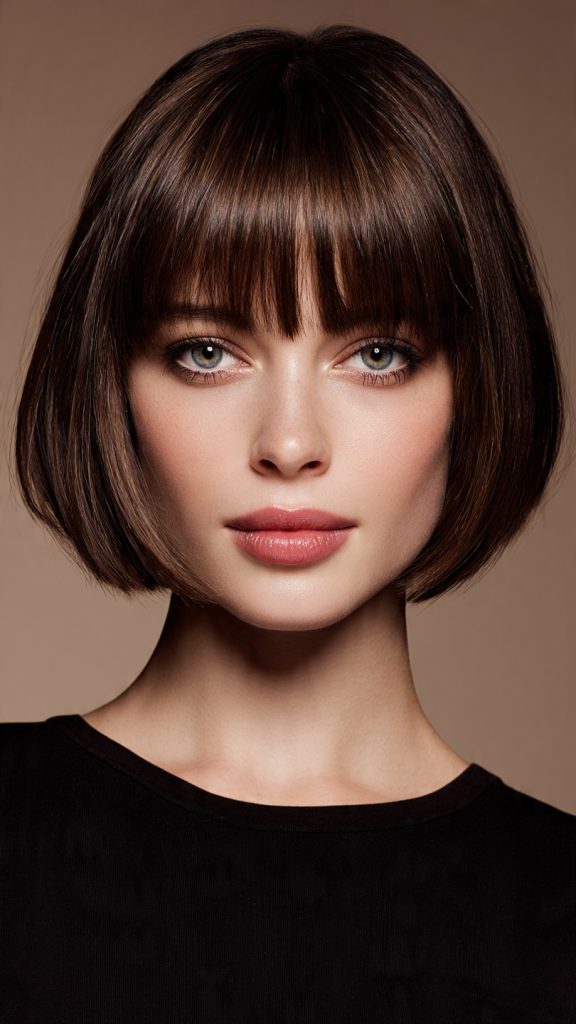
A one-length bob cuts straight across at your chin or below. Adding micro bangs — cut well above your eyebrows — transforms the cut.
The micro bangs draw the eye upward, adding vertical interest. The one-length bob adds weight at the bottom, balancing the width of a round face.
Micro bangs require a trim every two to three weeks, but they dry in seconds. This cut works best on straight hair.
Styling time: Six minutes (one minute for bangs, five for the rest).
15. The Shoulder-Length Shag

The shag has elongated layers throughout, plus a soft fringe. The layers are cut using point cutting, which creates soft, wispy edges.
The shoulder-length shag works for round faces because the layers add vertical movement. The fringe adds a horizontal line across your forehead, which breaks up the roundness.
This cut works best on hair that has a little natural wave. Straight hair may need texture spray to hold the shag shape.
Styling time: Four minutes. Flip head upside down, blast with warm air, flip back, and finger-comb.
16. The Sleek Straight Bob
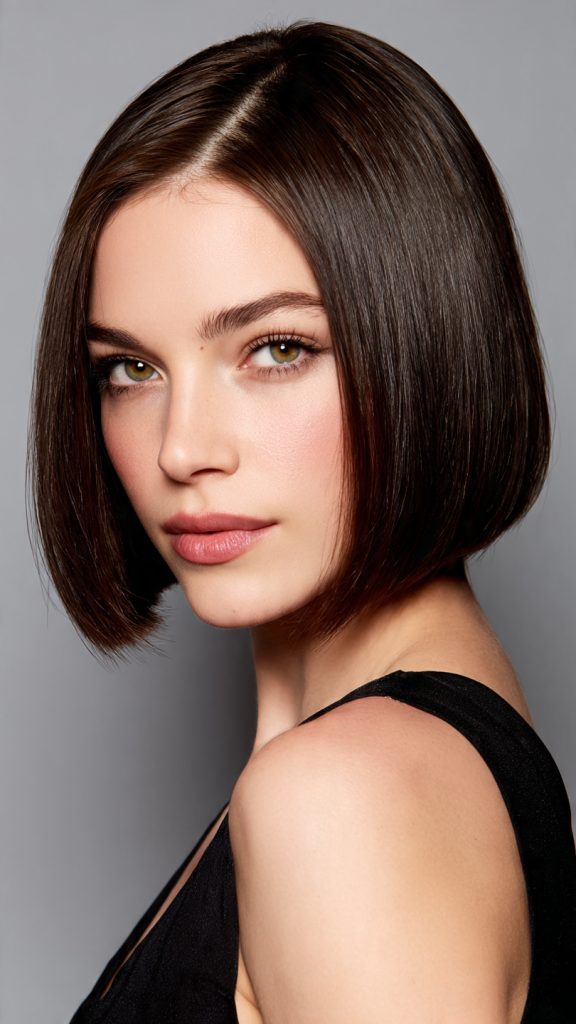
Sometimes simplicity wins. The sleek straight bob is cut to your chin or collarbone with no layers, no texture, no waves. Just mirror-smooth, glass-like hair.
The sleekness adds vertical line. The absence of layers keeps the perimeter clean and solid. That solid line draws the eye straight down, adding length to a round face.
This cut requires a high-quality flat iron and a heat protectant. Section your hair and flat iron in small subsections.
Styling time: Twelve to fifteen minutes for flat ironing.
17. The Tucked Under Bob
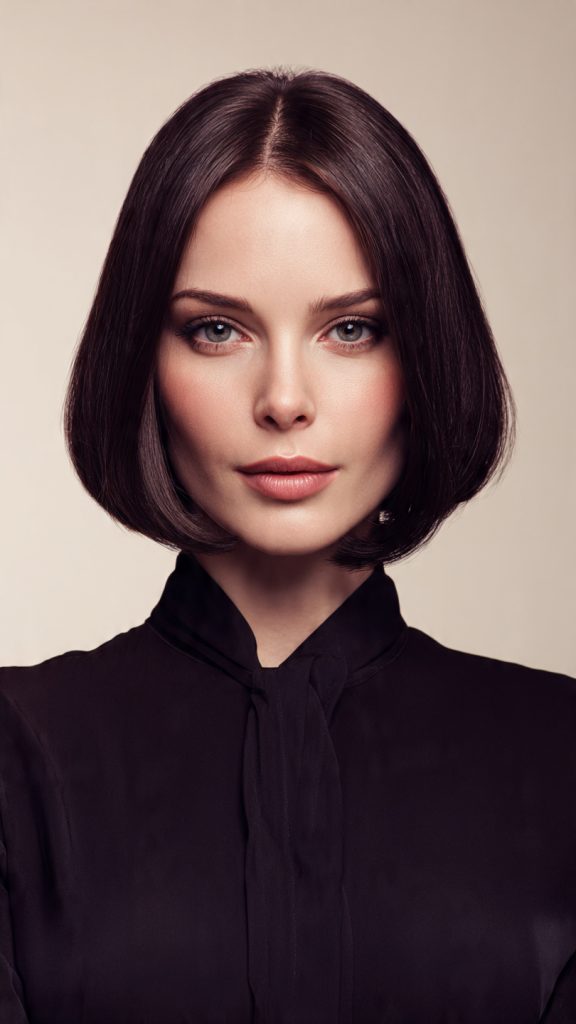
The tucked under bob is less about the cut and more about the styling technique. You need a blunt bob with no layers.
Flat iron your hair completely smooth. Tuck the ends under on both sides, creating a soft inward roll. Secure the tucked sections with small clear elastics or bobby pins hidden beneath the top layer.
The tucked under style creates a clean, polished shape that adds vertical line. It also keeps hair off your neck.
Styling time: Ten minutes for flat ironing plus two minutes for tucking.
Final Thoughts
A round face does not limit your haircut options. It just gives you a clear goal: add length, subtract width. The seventeen bobs above all follow that rule.
Bring pictures to your stylist. Be clear about what you want. And remember — the right cut works with your face shape, not against it.