A walking stick is never just a stick. In the hands of a carver, a length of seasoned wood becomes a statement — of skill, of spirit, of hours spent listening to the grain. The works gathered here span a remarkable range: from the flowing mysticism of the Green Man tradition to the ergonomic precision of streamlined animal grips, from a single expressive face to an entire staff sheathed in Indonesian filigree. What unites them is the conviction that every journey deserves a companion worthy of the road
Naturalistic Faces and Flowing Hair

The Wise Man motif — sometimes called the Green Man variation — is among the oldest and most resonant traditions in stick carving. It capitalises on the natural curvature and grain of the wood to produce deeply spiritual characters that seem not so much carved as revealed, as if the face were always there, waiting inside the wood.
The technique centres on a realistic or stylised face positioned near the top of the stick, where the existing bark texture lends itself naturally to a weathered forehead. From there, the beard and hair are allowed to cascade downward in long, sculpted waves that taper into the shaft itself, dissolving the boundary between figure and timber.
What separates a competent Green Man from a memorable one is the quality of the undercuts. Deep, decisive cuts define the flowing hair and create shadows that shift as the light changes; sharp lines around the eyes give a sense of watchful intelligence. The result is less a carving than a presence: the ancient guardian spirit of the forest, now walking beside you
Realistic Animal Wraps
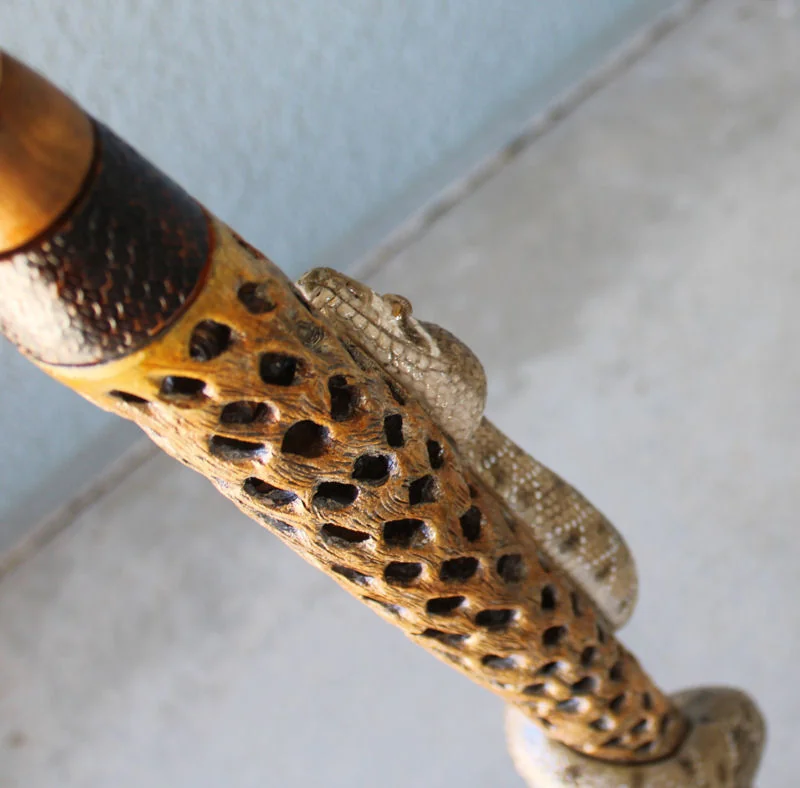
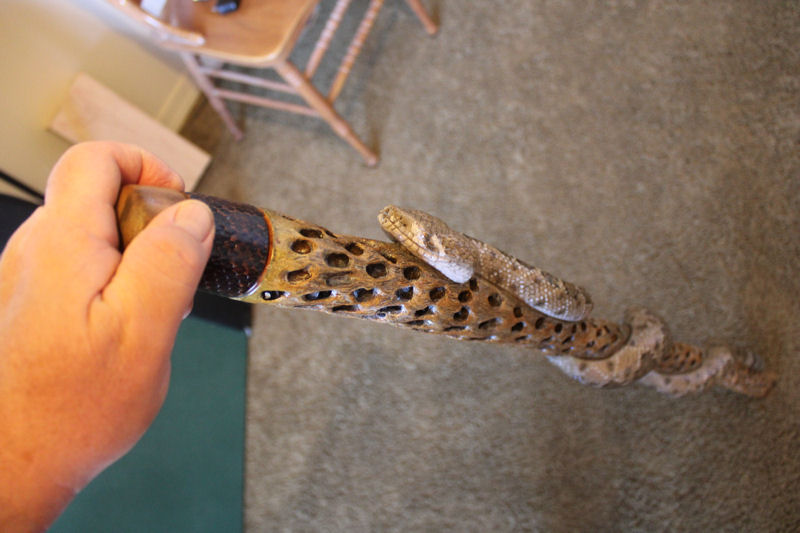
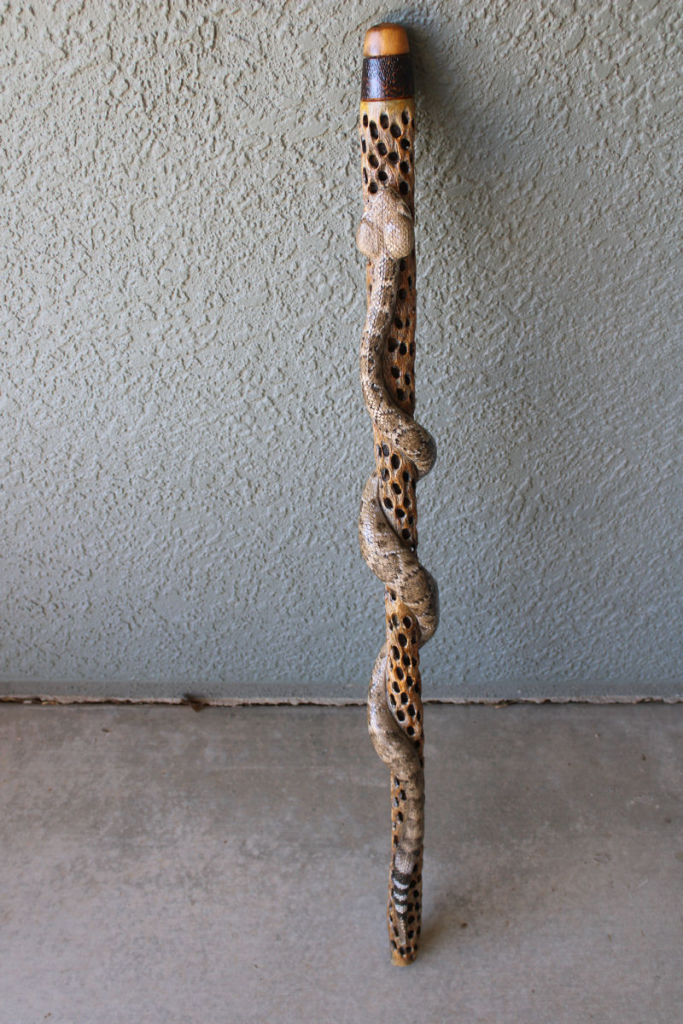
Carving a coiling serpent around the shaft of a walking stick introduces genuine drama — a sense that the stick is alive, that something primal has chosen to travel with you. Unlike a handle carving, which concentrates the eye at one end, the wrapped-animal technique distributes interest along the entire length, rewarding the viewer who takes time to turn the staff slowly in their hands.
The serpent's body must appear to grip the shaft with muscular tension. This requires carefully varying the depth of the cut: shallow where the coils recede behind the stick, deep where they emerge and cast a shadow. Scale texture — achieved with a small gouge or a V-tool dragged in short, overlapping arcs — is essential; without it, the form reads as decorative rope rather than living creature.
A contrasting finish greatly amplifies the illusion. A speckled, lighter-toned serpent winding against a darker, stained shaft makes the creature appear to float free of the wood. The head, positioned at the top for maximum impact, sets the tone for the entire piece: alert, purposeful, protective.
Depth and Character Expression
For carvers who prioritize portraiture and character study, focusing on a deeply carved, high-relief face near the handle allows for maximum expressiveness and technical showcase. This style emphasizes intricate details such as wrinkles, pronounced cheekbones, furrowed brows, and meticulously layered beards to bring a specific personality to life, often with the top of the stick functioning as a simple cap or hat for the figure . The smooth, light-toned wood in this approach contrasts sharply with the deep undercuts and shadows, amplifying the dramatic, almost stern expression of the carved figure. Unlike the flowing Green Man motif, this method isolates the face as a distinct, three-dimensional sculpture, highlighting the mastery of human anatomy and emotion in wood.
Minimalist Carving and Handle Definition
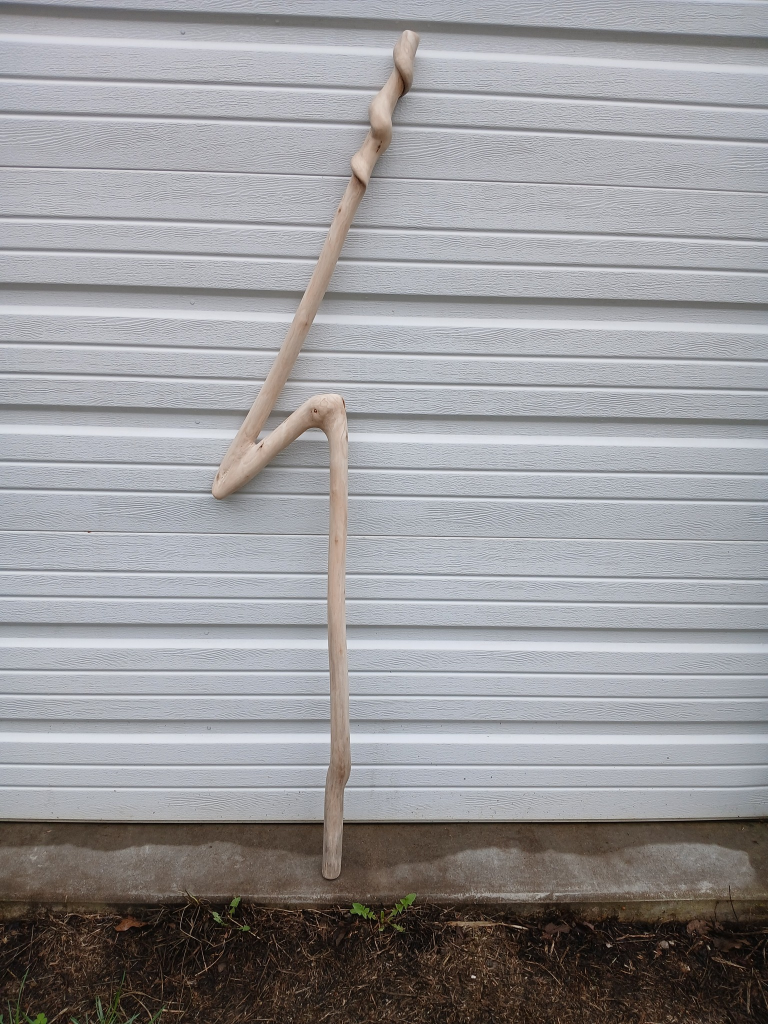
A compelling carving idea is to emphasize the natural shape and texture of the wood itself, requiring only minimalist modifications to transform a found branch into a functional piece . This approach highlights the inherent beauty of the wood, such as existing spiral twists, knots, or natural bends, which are simply cleaned, smoothed, and finished. The carving effort is then focused almost exclusively on the handle area: defining a comfortable, naturally occurring grip, or, as shown, exploiting a sharp, right-angle branch for a classic shepherd's crook shape. The resulting staff possesses an organic, rustic aesthetic, where the story of its growth remains visible, appealing to those who value simplicity and the wood's inherent character over intricate detail.
The Anthropomorphic Explorer
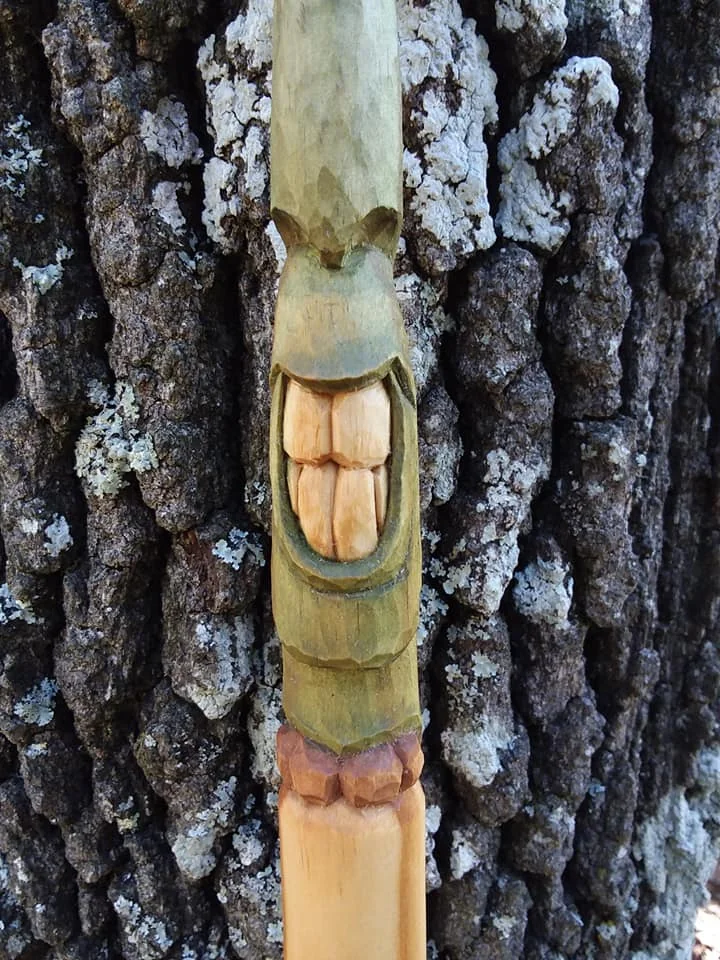
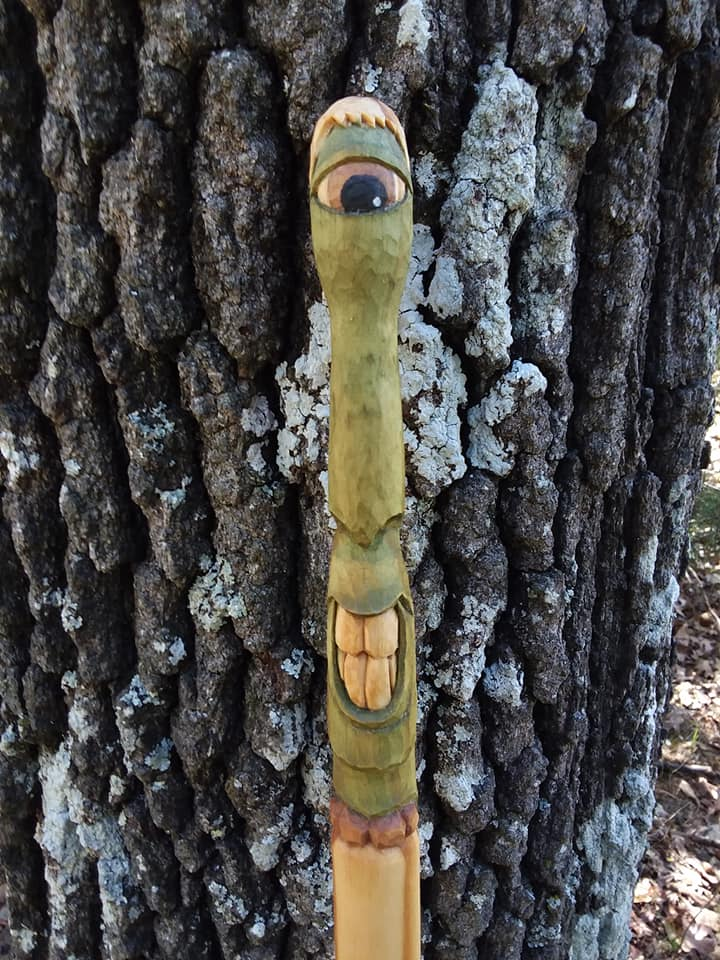
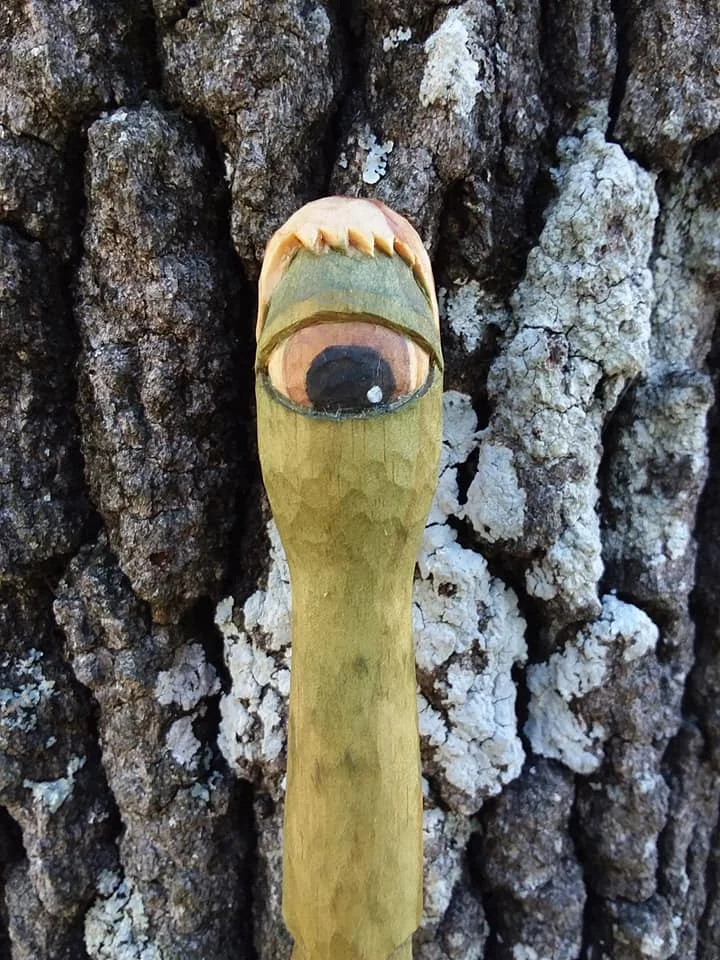
These three shots capture the same stick at progressively tighter angles, each one pulling the viewer closer into one of the more theatrical faces in the folk-carving tradition. The carver has abandoned realism entirely in favour of maximum expression: a single enormous round eye dominates the upper face, a wide mouth opens to reveal a neat row of individually defined teeth, and the nose is broad and flat — features compressed into a bold, almost amphibian configuration that reads instantly from a distance.
The construction is deliberately geometric. The eye is a deep hemisphere with a sharply painted pupil; the teeth are squared and evenly spaced, each separated by a clean vertical groove. A selective green stain applied to the brow ridge, the recesses around the eye, and the gaps between the teeth adds a faintly unsettling depth that the natural wood tone alone would not achieve.
This is carving as spectacle rather than portraiture — its closest relatives are the gargoyle and the carnival mask. For a walking stick, that energy works surprisingly well: the piece commands attention from across a room, and rewards anyone who looks closely enough to notice the careful, methodical geometry beneath the apparent wildness of the expressio
The Clean Shave vs. Flowing Beards
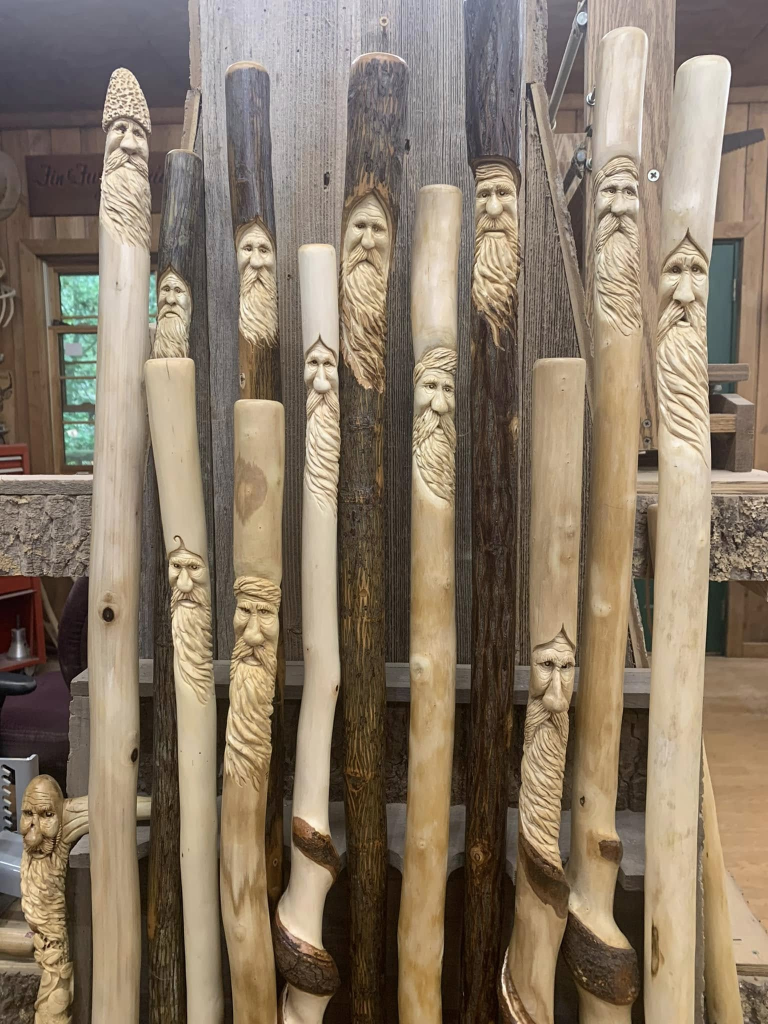
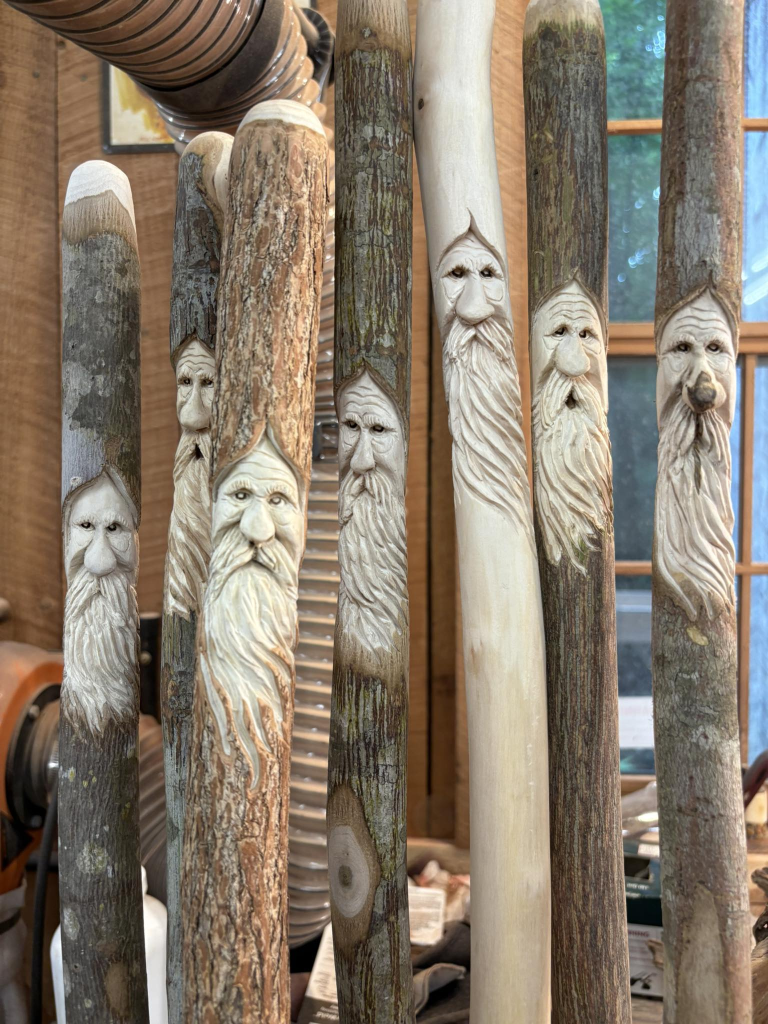
What this workshop photograph truly illustrates is the impact of a single material decision: how much bark to leave on the stick. Every face here carries a long flowing beard, but the sticks divide clearly into two camps. Some have been fully peeled, their pale, smooth, cream-coloured wood exposed from top to bottom — the faces on these blanks appear bright and clean, the carved detail crisp and high-contrast against the light surface. Others retain patches or full sections of their original dark bark, which wraps around the shaft like a natural cloak, making the carved face appear to emerge from something older and more weathered.
The effect on the character of each carving is striking. On the fully peeled sticks, the eye travels immediately to the carving — nothing competes with it, and the expression reads with total clarity. On the bark-on sticks, the dark, textured surface frames the face and beard differently: the pale carved wood of the cheeks and beard stands out in sharp relief against the rough bark, giving those figures a more dramatic, almost chiaroscuro quality — as though the face is pushing through the surface of the wood rather than sitting on top of it.
Together the two approaches show that the choice of how much bark to retain is not cosmetic but compositional. It changes the mood, the contrast, and the relationship between carver and material — and this rack, with both treatments side by s
Traditional Indonesian Motifs and Mixed Media
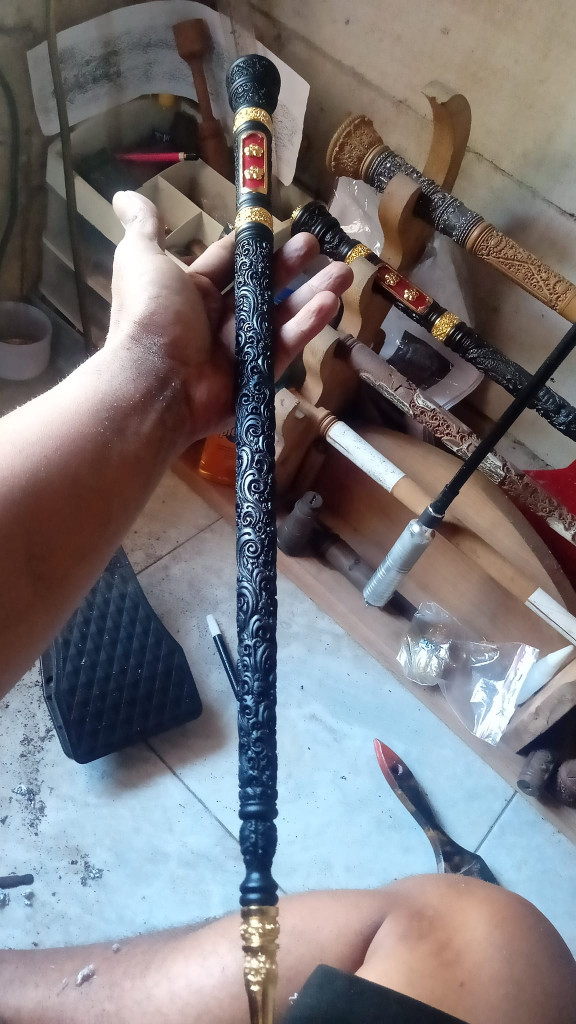
For a truly ceremonial or highly decorative stick, the carving can extend the entire length of the shaft, utilizing complex, high-density filigree patterns, often inspired by traditional Indonesian, Malaysian, or tribal designs . This approach relies on meticulous, repetitive carving—typically a low-relief vine or swirling floral motif—that provides constant tactile interest along the grip. Furthermore, this style integrates mixed media, using materials like brass or gold-toned metal bands to segment the carving and add luxurious contrast, while the application of a dark stain or black paint makes the fine filigree details stand out dramatically against the metallic highlights.
Natural Twist and Bark-On Beauty
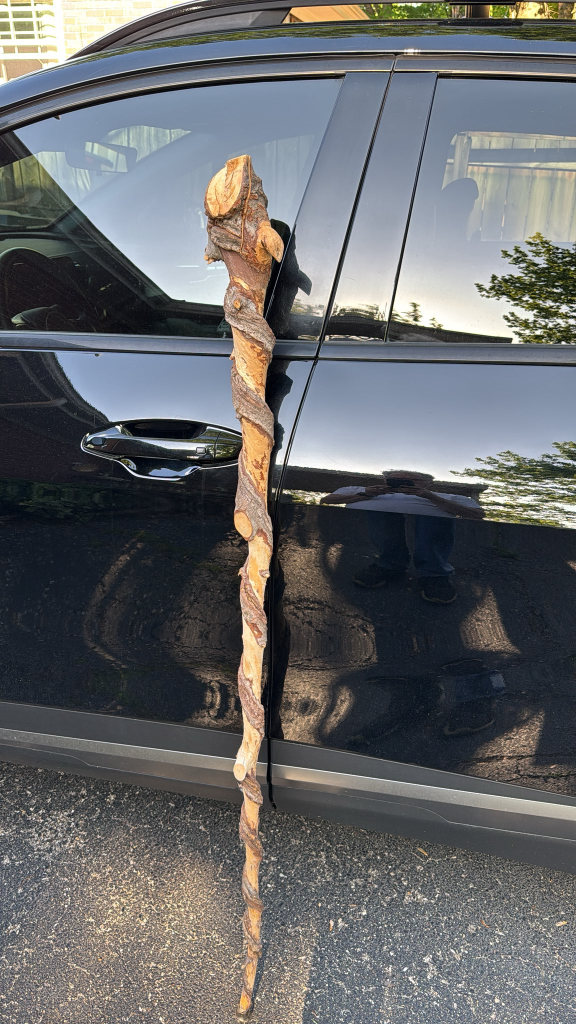
This stick has barely been touched by a tool, and that restraint is precisely the point. The shaft retains its full bark — a rich, multi-toned surface of amber, rust, and deep brown that has cracked and furrowed naturally as the wood dried, creating a texture no carving knife could convincingly replicate. Running the entire length of the stick is a pronounced natural spiral twist, the legacy of a climbing vine that coiled around the growing branch for years and left its signature permanently written into the wood's structure.
At the top, a cluster of natural knots and branch stubs has been left largely intact, cleaned up just enough to remove loose material while preserving the organic mass that gives the stick its character at the handle end. There is no carved face, no animal, no decorative motif — the wood itself is the sculpture, and the carver's job was simply to recognise that and get out of the way.
Photographed against the glossy black door of a vehicle, the warm tones of the bark glow with particular intensity, and the full length of the spiral twist is visible from tip to handle in a single glance. It is a stick that asks the question every natural-material carver eventually faces: at what point does intervention improve on what is already there — and when is the wisest cut no cut at all.
Three Sticks, Three Takes on the Animal Wrap
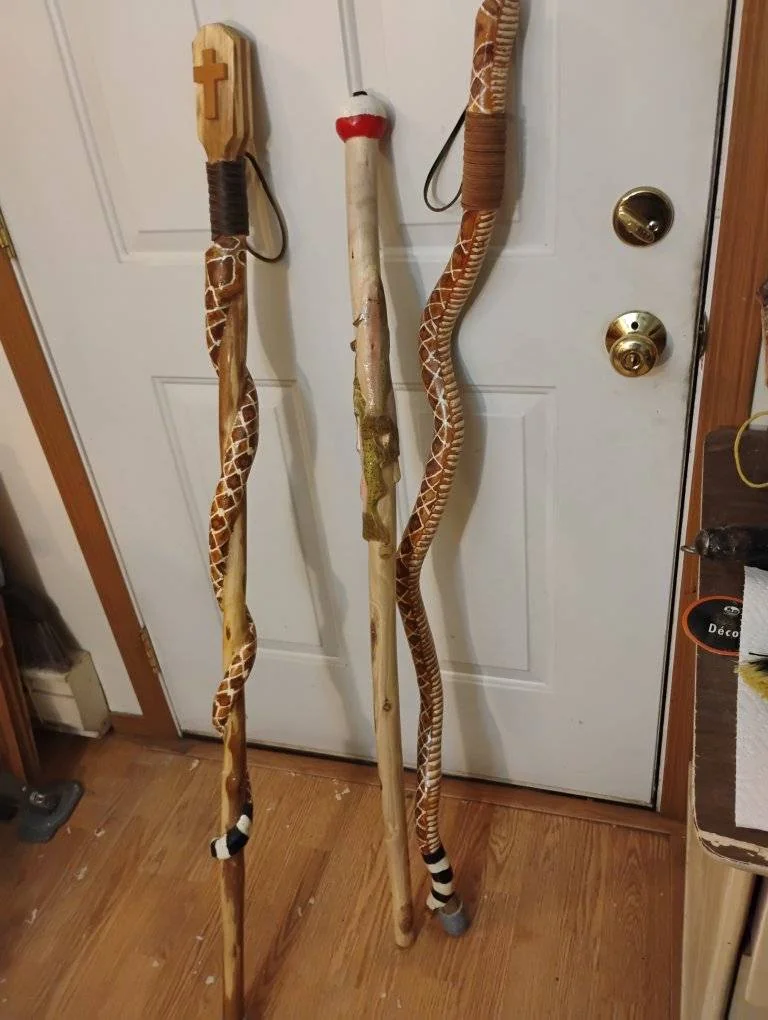
This photograph places three very different walking sticks side by side, and the comparison is instructive. All three feature animal-wrap decoration running the length of the shaft, but the interpretation of that idea differs significantly from one to the next.
The left stick is the most elaborate. A giraffe-patterned design — warm amber patches outlined in darker brown — spirals up the full length of the shaft, painted rather than carved to achieve the realism of the animal's distinctive coat. At the top, a flat carved panel bears a cross in relief, and the handle area is wrapped in dark cord for grip. Black-and-white striped detail at the base adds a final decorative note, possibly suggesting the hooves or legs of the animal.
The centre stick takes a more naturalistic approach. The shaft itself is pale and lightly textured, and a lizard or small reptile is carved in relief partway up — a subtle figurative element on an otherwise understated blank. The top is finished with a simple round knob painted red and white, and a wrist loop completes the practical details.
The right stick is the boldest of the three. A snake winds continuously from tip to handle in high relief, its body rendered with repeating scale texture carved into the wood and finished in warm tan and brown tones. The serpent is thick and muscular in appearance, dominating the shaft completely — there is no competing element, just the single creature and the wood it grips.
The Open Spiral: Lattice Carving and Mixed Media
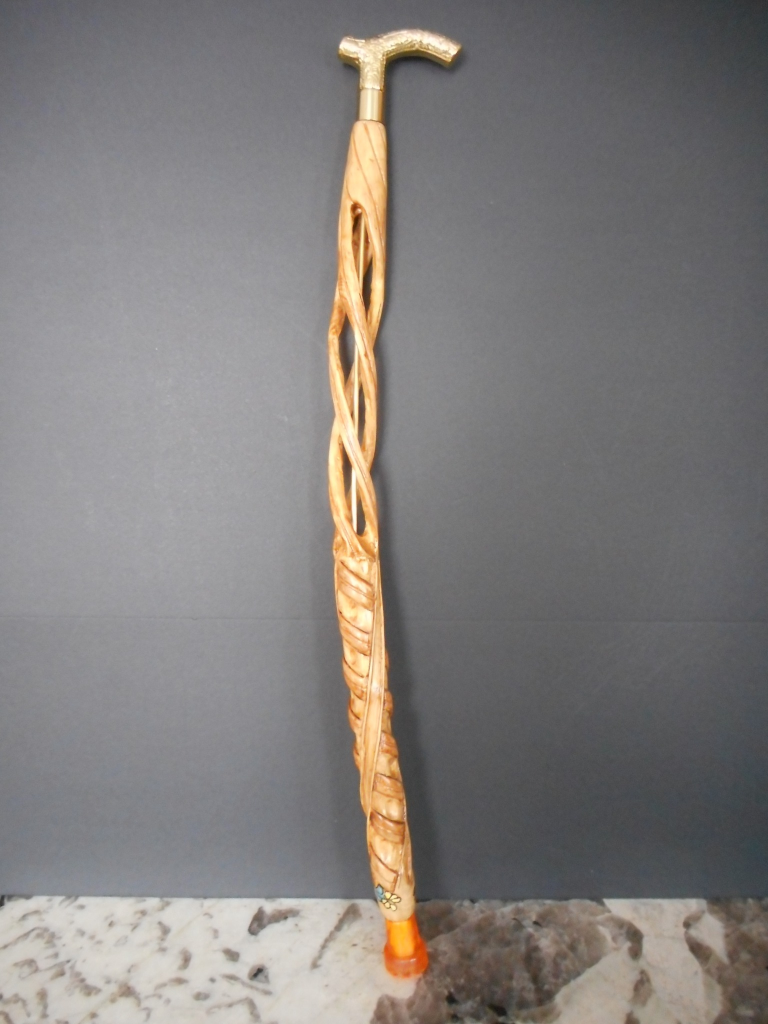
This stick represents one of the most technically demanding techniques in walking stick carving: the open spiral, sometimes called lattice or cage carving. Rather than decorating the surface of the shaft, the carver has removed material from the interior, cutting through the wood to create a series of interlocking helical strands that twist around a hollow centre. The result is a shaft that is simultaneously structural and skeletal — strong enough to bear weight yet visually open, the eye passing straight through the wood from one side to the other.
The carving transitions partway down the shaft from a fully open lattice at the top to a tighter, more closed spiral toward the base, where the strands merge back into solid wood. This graduation is both practical — preserving strength at the ferrule end where stress is greatest — and compositional, giving the piece a sense of visual movement that builds from dense at the bottom to airy at the top.
The mixed-media finishing completes the piece decisively. A polished brass T-bar handle sits at the top, its warm gold tone contrasting cleanly with the pale honey colour of the carved wood. At the base, a bright orange rubber ferrule provides grip and protection, and a small decorative flower detail in green and yellow adds an unexpected touch of colour just above it. The combination of intricate woodwork, metal hardware, and coloured accents places this stick firmly in the tradition of the decorative dress cane — an object as concerned with elegance as with function.
The Serpentine Shaft: Wavy Walking Sticks
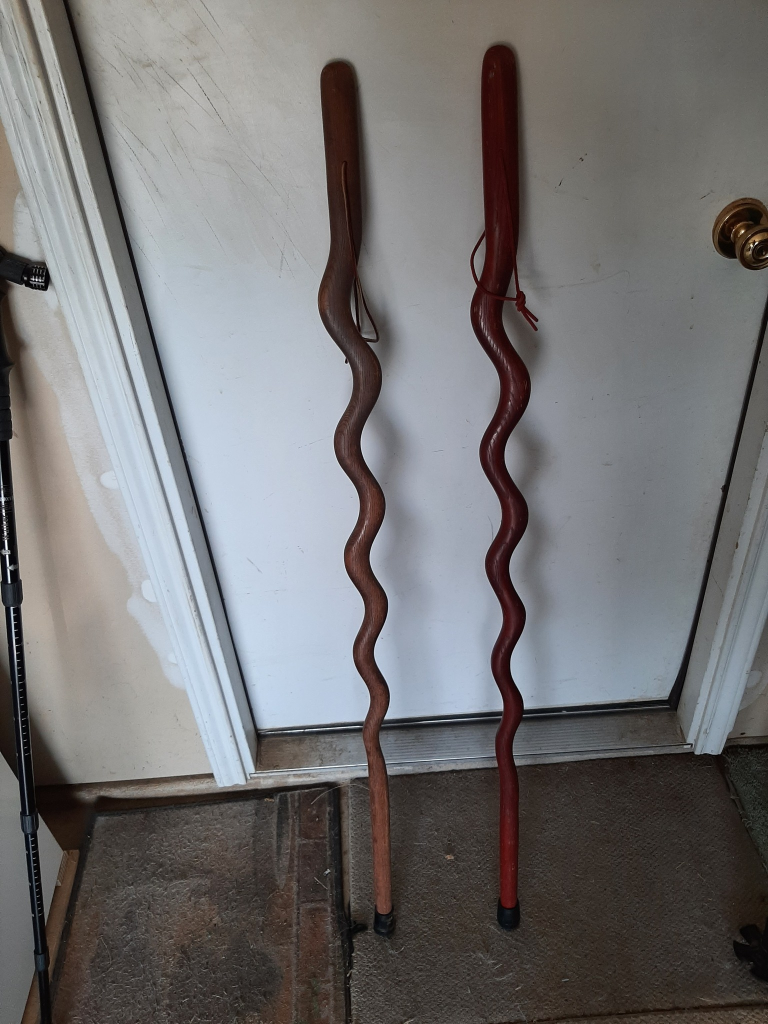
These two sticks share the same fundamental idea executed in the same wood species — both are turned from what appears to be red cedar or a similarly reddish-hardwood — yet side by side they reveal how much variation exists within a single concept.
Both shafts travel in a continuous lateral wave from tip to handle, the wood bending left and right in smooth, even oscillations rather than following the straight line of a conventional walking stick. This is not a carved decoration applied to the surface — the entire shaft has been shaped this way, either by selecting a branch that grew in this form naturally or by steam-bending and shaping the wood. The wave is the stick.
The left example is slightly lighter in tone, its natural wood colour showing through a clear or lightly tinted finish, and the wave is somewhat more relaxed — the curves broader and more gradual. The right stick is finished in a deeper, richer red-brown stain that intensifies the wood's natural colour, and its wave is tighter and more frequent, giving it a livelier, more energetic silhouette. Both have smooth, uncarved paddle-shaped handles at the top and rubber ferrules at the base — the decoration is entirely in the form of the shaft itself, with nothing added to compete with it.
Together they make the point quietly but clearly: sometimes the most powerful carving decision is the one that works with the wood's own movement rather than imposing something new upon it.
The Turbaned Elder: A Face-Top Crook Stick
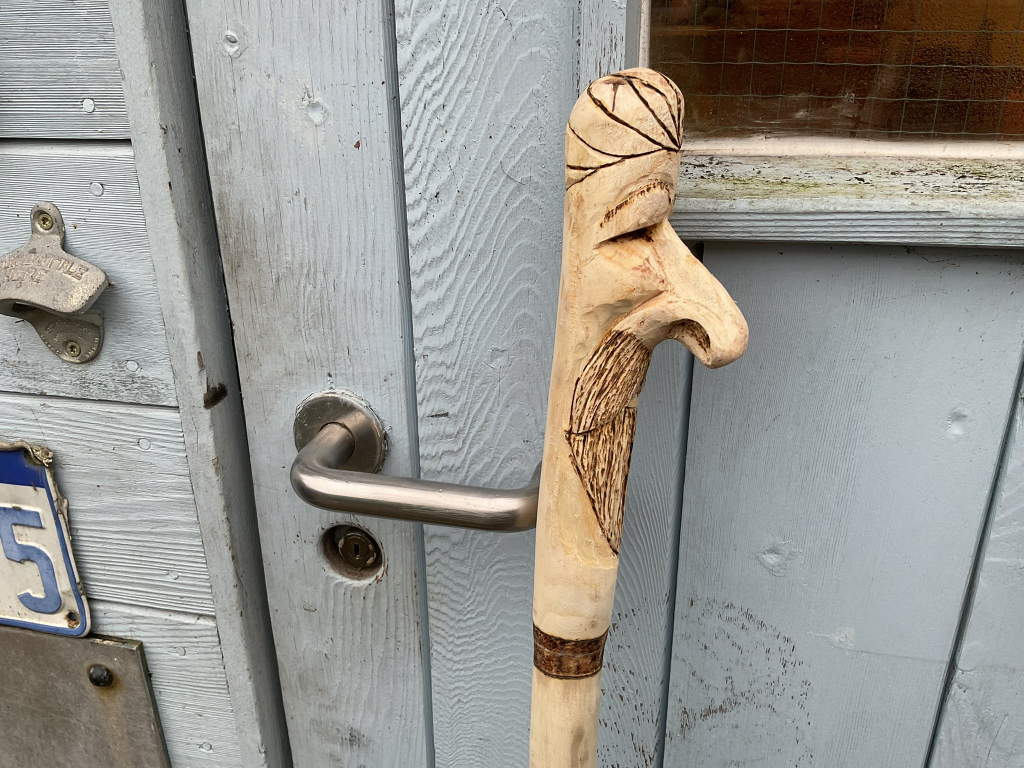
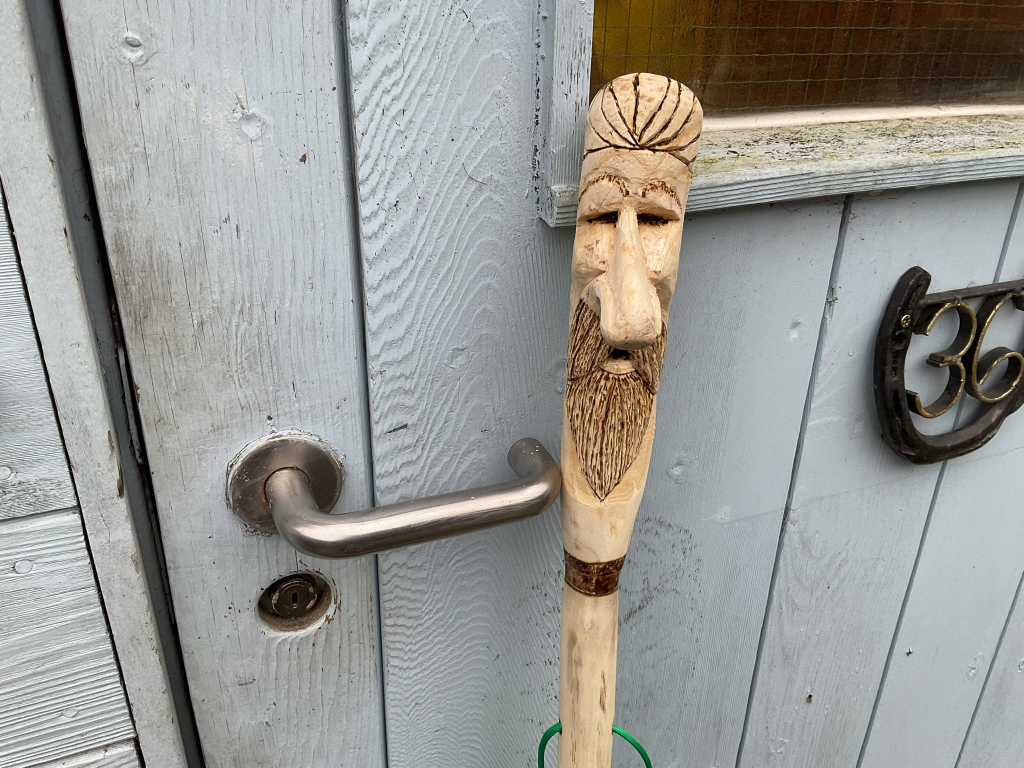
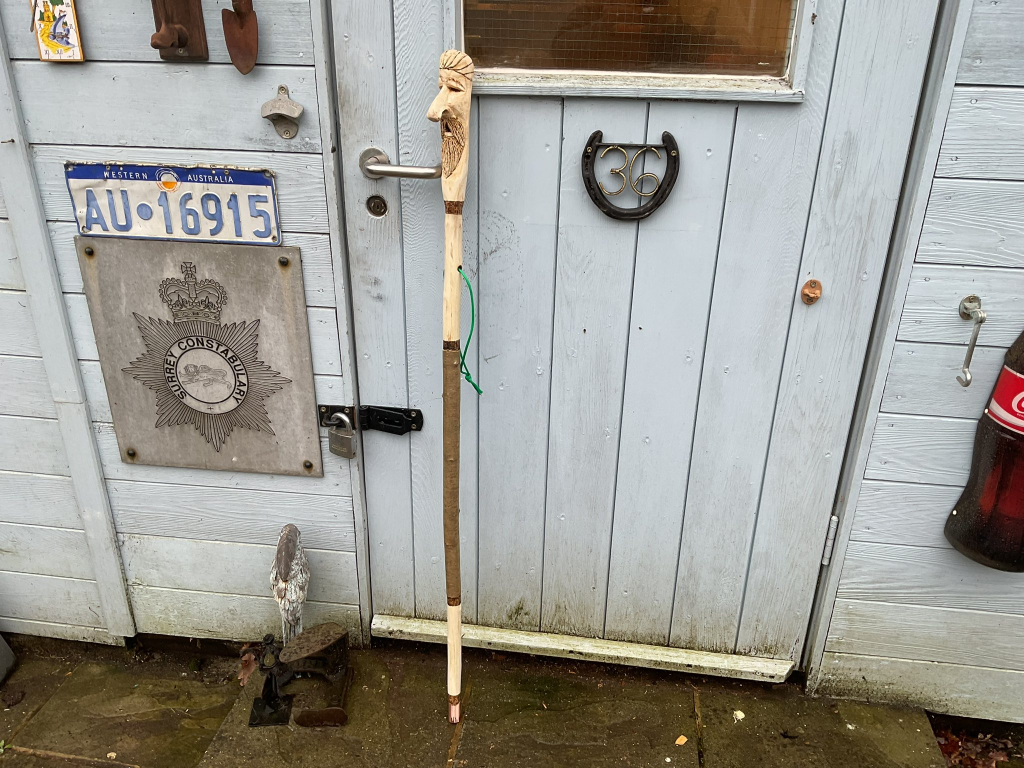
Three photographs of the same stick — two close-up detail shots from slightly different angles, and one full-length view — together build a complete picture of a crook-handled walking stick topped with a carved human face.
The face itself is the defining feature. A tightly wrapped turban sits at the crown, its fabric suggested by a series of parallel grooves that circle the head and are accentuated with wood burning rather than paint, giving the detail a warm, dark outline against the pale carved wood. Below it, the face is long and angular — a prominent hooked nose, a neatly trimmed moustache curving down to a short pointed beard, and deeply set eyes that give the figure a composed, watchful expression. The style is precise and deliberate, favouring sharp lines over soft modelling, which suits the angular character of the face perfectly.
The two close-up shots reveal how the composition changes with viewpoint. From the front the turban and face read together as a coherent portrait; from the side the hooked nose becomes the dominant element, projecting boldly beyond the crook of the handle and giving the stick a strong, almost heraldic silhouette.
The full-length photograph, taken against a weathered blue door beside an Australian police constabulary badge and a Western Australia number plate, shows the stick in its full context — a slim, pale shaft of consistent diameter, the carved head sitting neatly at the handle crook, the whole piece elegant and understated in proportion.
A Horse or Hound in the Handle
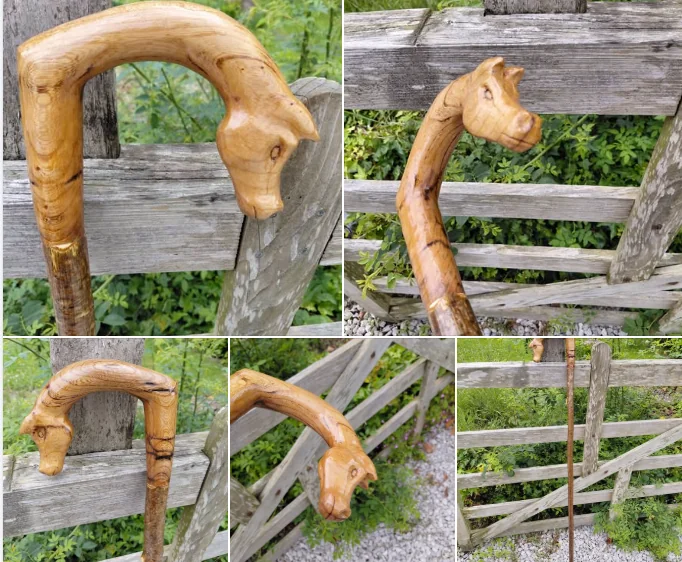
Leaning against a weathered country fence with a garden behind it, this stick looks entirely at home in its setting — and that ease is no accident. The shaft is dark, aged wood, its surface worn smooth and stained a deep reddish-brown that speaks of years of outdoor use rather than fresh finishing. It is a stick that has actually been walked with.
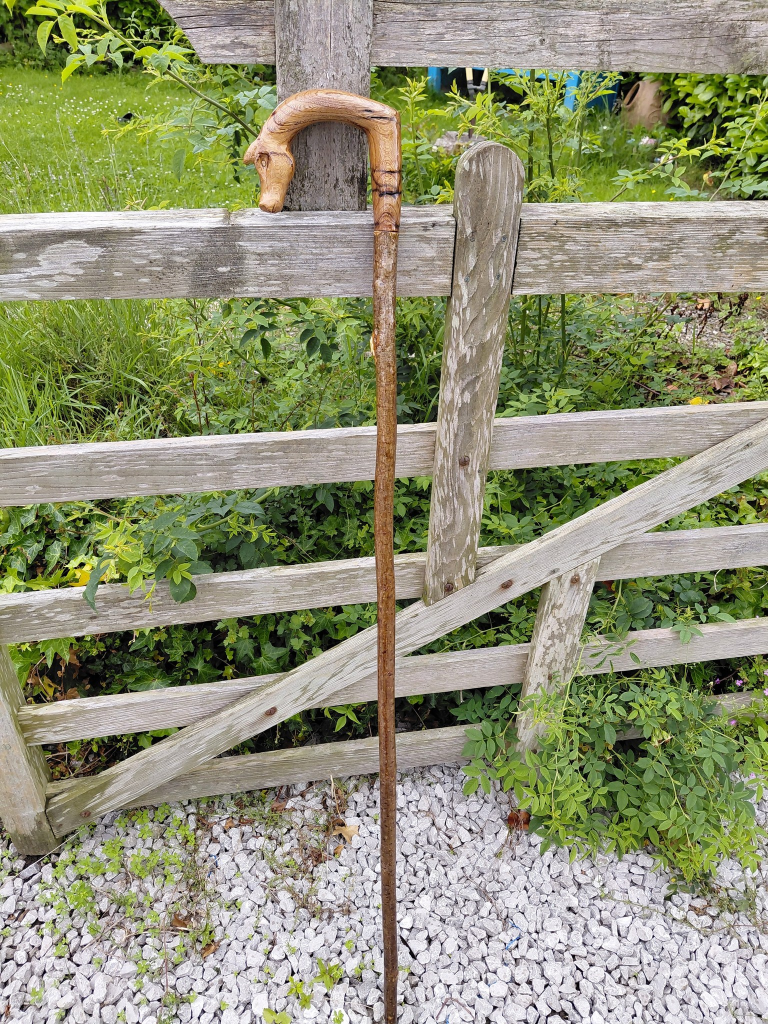
The handle is where the maker's hand is most visible. Carved in the round at the top of a natural crook, an animal head — most likely a horse or a hound, the snout slightly elongated and the brow gently furrowed — sits at the curve of the grip. The carving is not highly detailed but it does not need to be: the silhouette is clear and confident, and the form follows the natural arc of the wood so organically that it is difficult to tell where the branch ends and the sculpture begins. A few turns of cord or wire wrap the neck of the figure just below the head, both reinforcing the join and adding a practical detail that suits the working character of the piece.
The full-length view against the fence gives a sense of proper scale — this is a full walking stick, built for use, not display. The dark shaft and pale carved handle create a quiet contrast that draws the eye upward without demanding it, and the overall impression is of a piece made by someone who walks regularly and wanted a companion for the road that was worth looking at.
A Closer Look: Custom Handles
The handle is where hand meets wood — where the conversation between carver and walker begins
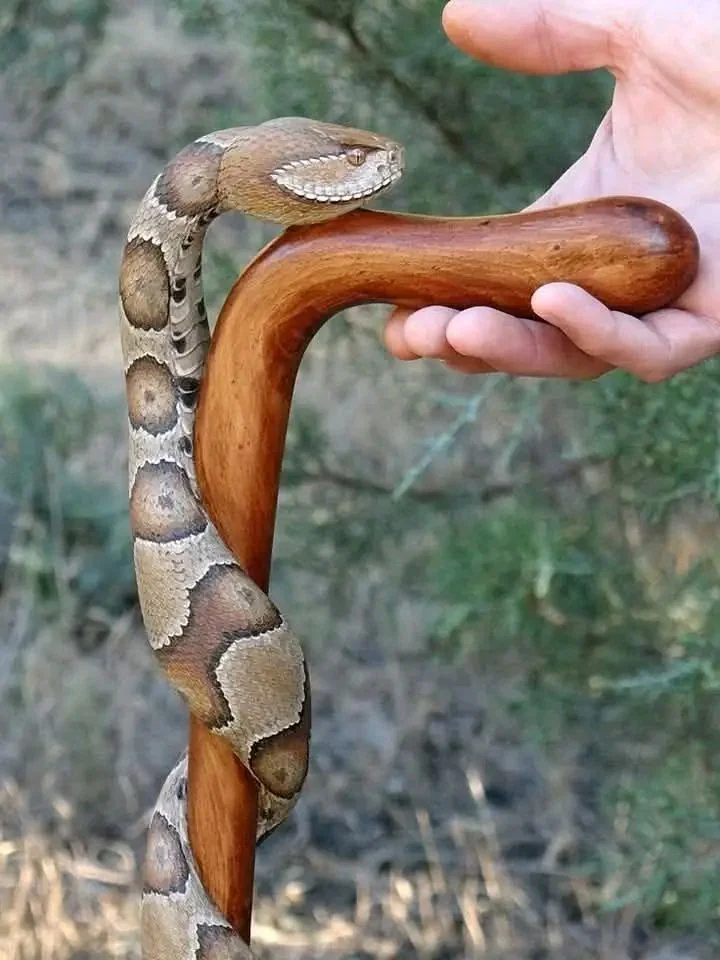
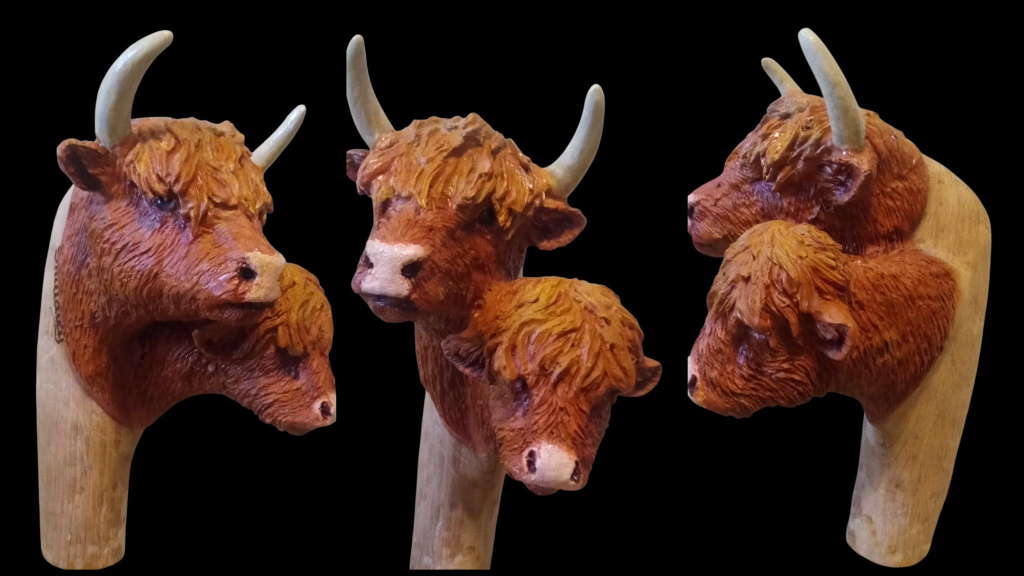
The handles gathered here range from the intimately personal to the frankly spectacular. What they share is the decision to treat the top of the stick as a canvas in its own right — a place where the maker's ambitions are concentrated into a few inches of carefully shaped wood.
The first pair of images sets the register immediately. A rattlesnake-wrap crook handle — the serpent's patterned body forming the arc of the grip, its head resting where the thumb naturally falls — demonstrates how the animal-wrap idea translates from shaft to handle without losing any of its tension. Beside it, two Highland cattle heads on bare pale blanks show a very different ambition: the complete sculptural rendering of a specific breed, complete with swept horns, shaggy forelocks, and individually modelled facial features. The contrast between the two — organic and functional versus formal and representational — captures the breadth of the handle-carving tradition in a single page.
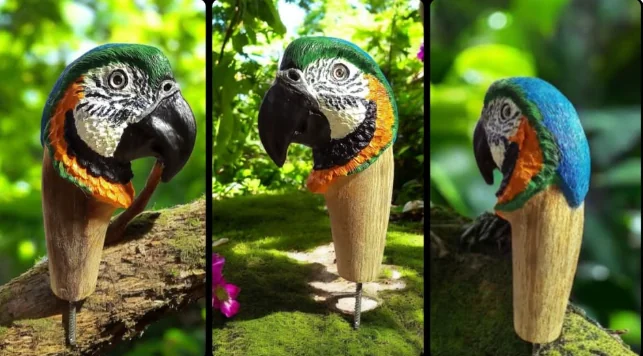
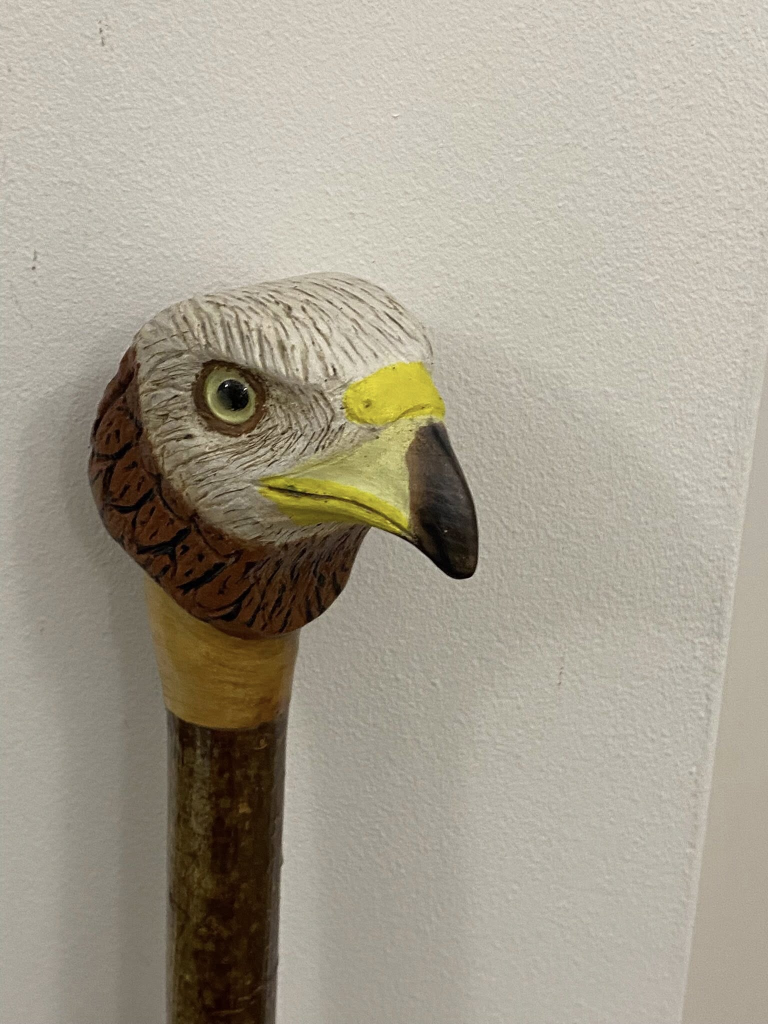
The second row opens with two vivid macaw parrot heads, painted in full colour with carefully observed eye detail, mounted on what appear to be antler or bone-pale wood bases. The dramatic green, orange, and black plumage is rendered not just in paint but in the underlying carving, which captures the curve of the beak and the slight backward tilt of the skull that gives parrots their alert, questioning expression. The central image shows an elephant emerging from the top of a dark, bark-on shaft — head, trunk, and ear all carved in the round, the rough bark of the shaft forming a natural savannah-coloured base. The eagle head beside it, painted in naturalistic brown and white with a vivid yellow beak and glass-set eye, is perhaps the most polished piece in the collection: the feather layering on the crown is carved in low relief and then painted individually, producing a depth that paint alone could not achieve.
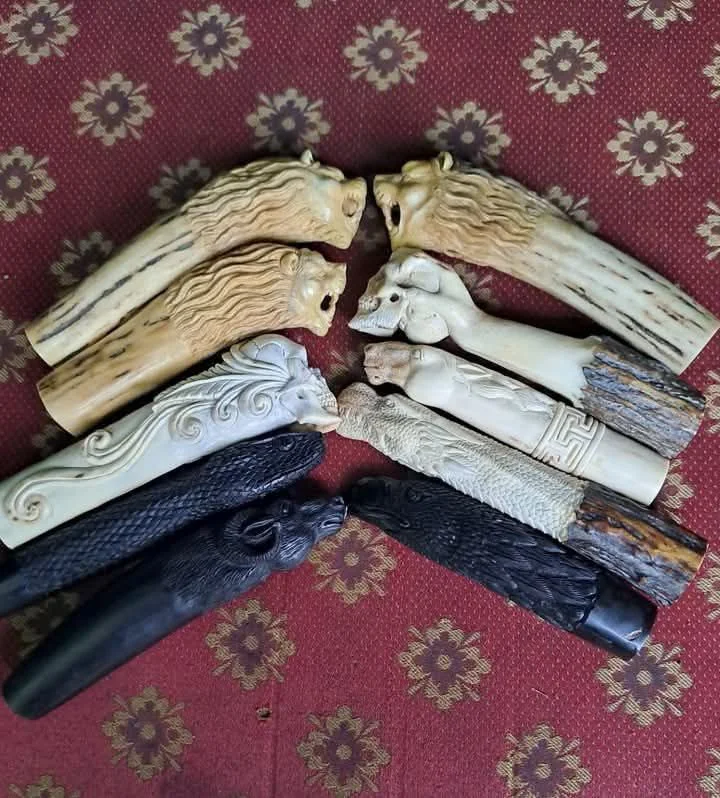
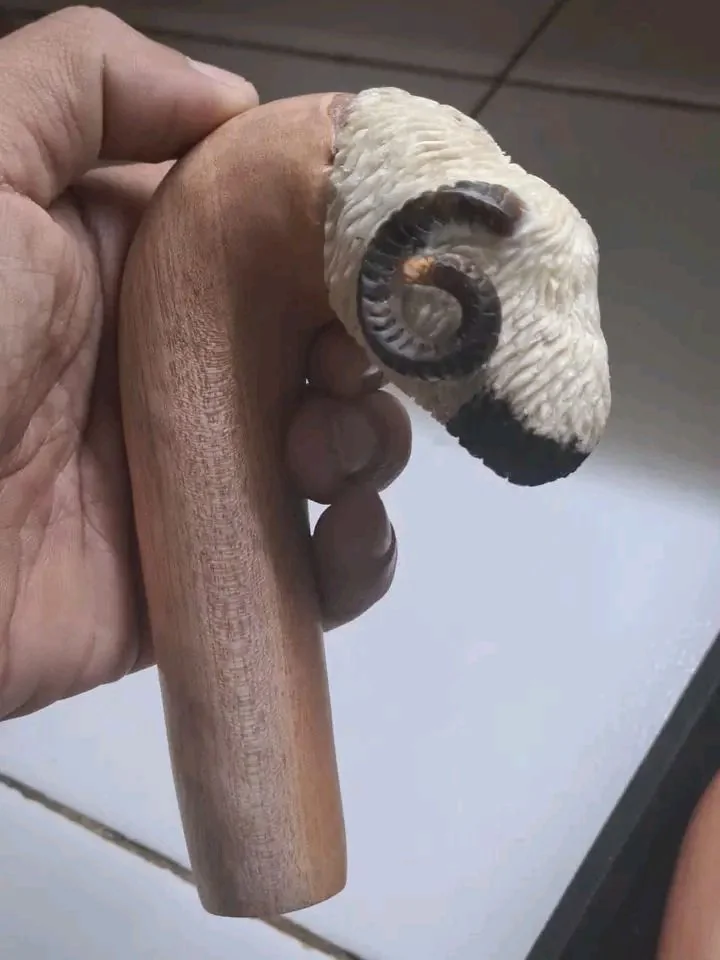
The bottom row introduces a different aesthetic entirely. The fan of pale handle blanks laid on a patterned textile shows the raw material of the craft — each piece a carved but unfinished form, some recognisably animal, others still ambiguous, all demonstrating the intermediate stage between roughed-out shape and finished sculpture. The four-image panel of horse-head crook handles at different stages and angles is a study in how the same subject can be interpreted at varying levels of detail: from a suggestion of a muzzle and ear to a fully resolved portrait with individual hair texture carved into the forelock. The final image — a ram's-horn handle held in the hand — closes the collection with the most ergonomic form of all: the natural spiral of the horn itself, which requires almost no modification to become a grip, and whose form has guided shepherds' staffs for thousands of years.
a