
There's a quiet fear that comes with thin, fine hair and a pair of scissors: What if bangs make everything worse? What if they fall flat, look sparse, or expose a delicate hairline you'd rather not draw attention to?
It's a reasonable worry. But it's also based on a misunderstanding. Bangs don't fail fine hair because fine hair is incapable of carrying them. They fail because the wrong cut was chosen—heavy, blunt, and unforgiving—for hair that needed lightness, movement, and a little strategic engineering.
Cut correctly, bangs can be the single most transformative thing you do for thin hair. They add volume where it's needed most, frame the face, and create the impression of density without requiring thick strands to pull it off. The secret lies in choosing styles that work with your hair's natural texture rather than against it.
Below, you'll find 10 of the most flattering bang styles for thin, fine hair—along with guidance on choosing the right one, styling it for maximum lift, and maintaining it between salon visits.
How to Choose the Right Bangs for Thin, Fine Hair
Before you settle on a style, consider these five factors. They'll determine whether your bangs look effortless or simply fall flat.
1. Know the Difference Between Fine and Thin
Fine hair refers to the diameter of each individual strand. Thin hair refers to how much of it you have. If your hair is fine but dense, you have more freedom than you think. If it's both fine and thin, avoid heavy, solid bangs and lean toward feathery, see-through styles.
2. Study Your Hairline
A delicate or uneven hairline is better served by wispy, see-through, or side-swept bangs. These create coverage without exposing gaps. A strong, even hairline can carry more weight and structure.
3. Consider Your Face Shape
- Round faces: Side-swept or curtain bangs elongate and slim.
- Long faces: Wispy or blunt bangs restore balance.
- Square faces: Soft, layered bangs soften a strong jawline.
- Heart-shaped faces: Curtain bangs highlight cheekbones beautifully.
4. Be Honest About Your Routine
Micro bangs and blunt bangs demand daily styling. Curtain, side-swept, and wispy bangs are far more forgiving. Choose the style that matches the effort you're actually willing to put in—not the one you aspire to.
5. Respect Your Growth Patterns
Cowlicks, swirls, and natural partings will dictate how bangs fall. A skilled stylist works with them rather than fighting them—and so should you.
10 Bangs for Thin, Fine Hair
1. Wispy Bangs
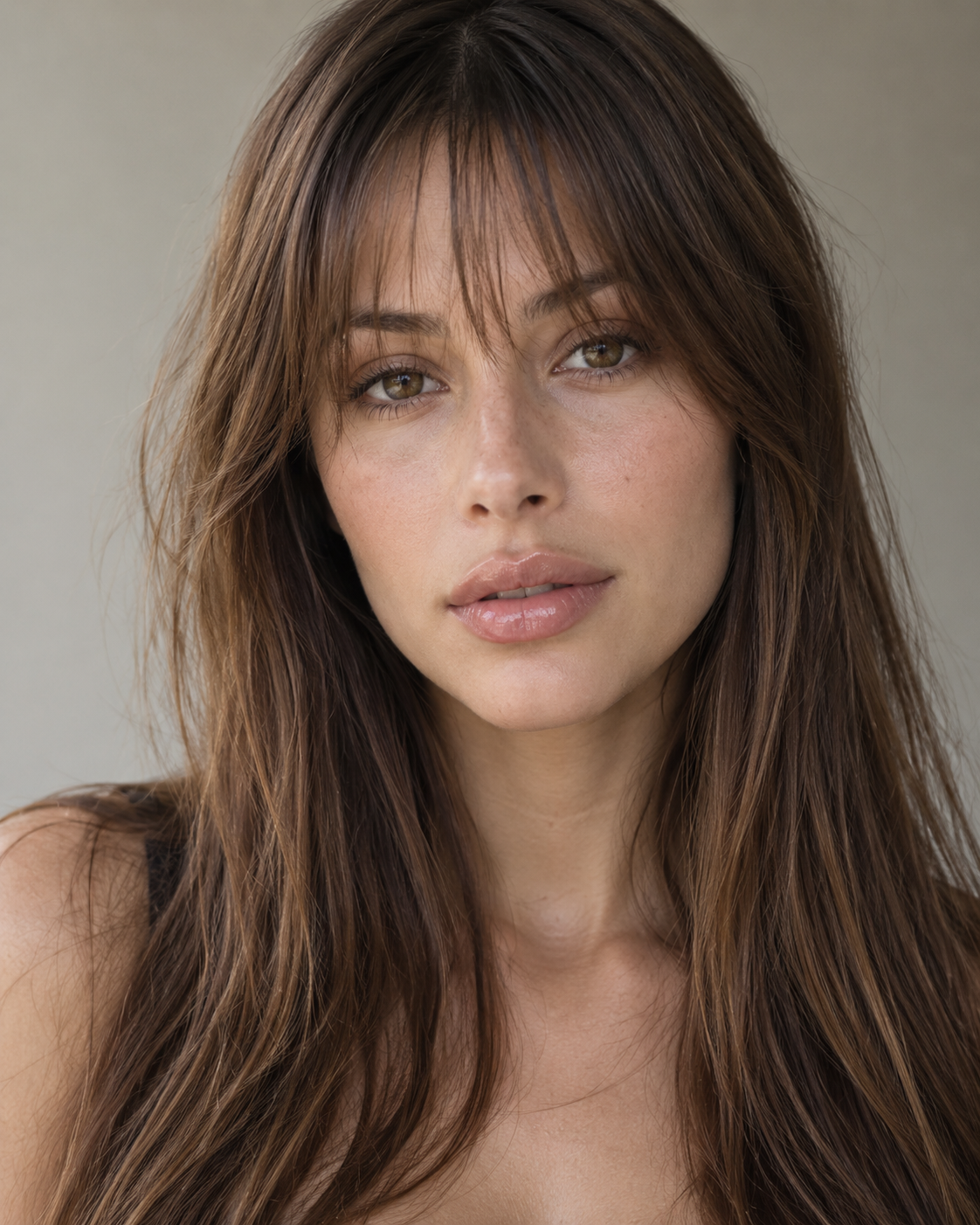
Wispy bangs are the gold standard for fine hair. Rather than cutting a solid, heavy line, your stylist uses a point-cutting technique to create soft, feathery strands that gently frame the face. Because the ends are intentionally thin and see-through, they don't require a dense hairline to look full—in fact, the gaps are part of the aesthetic. This style is particularly forgiving for those new to bangs because it blends seamlessly into the rest of your haircut.
2. Curtain Bangs
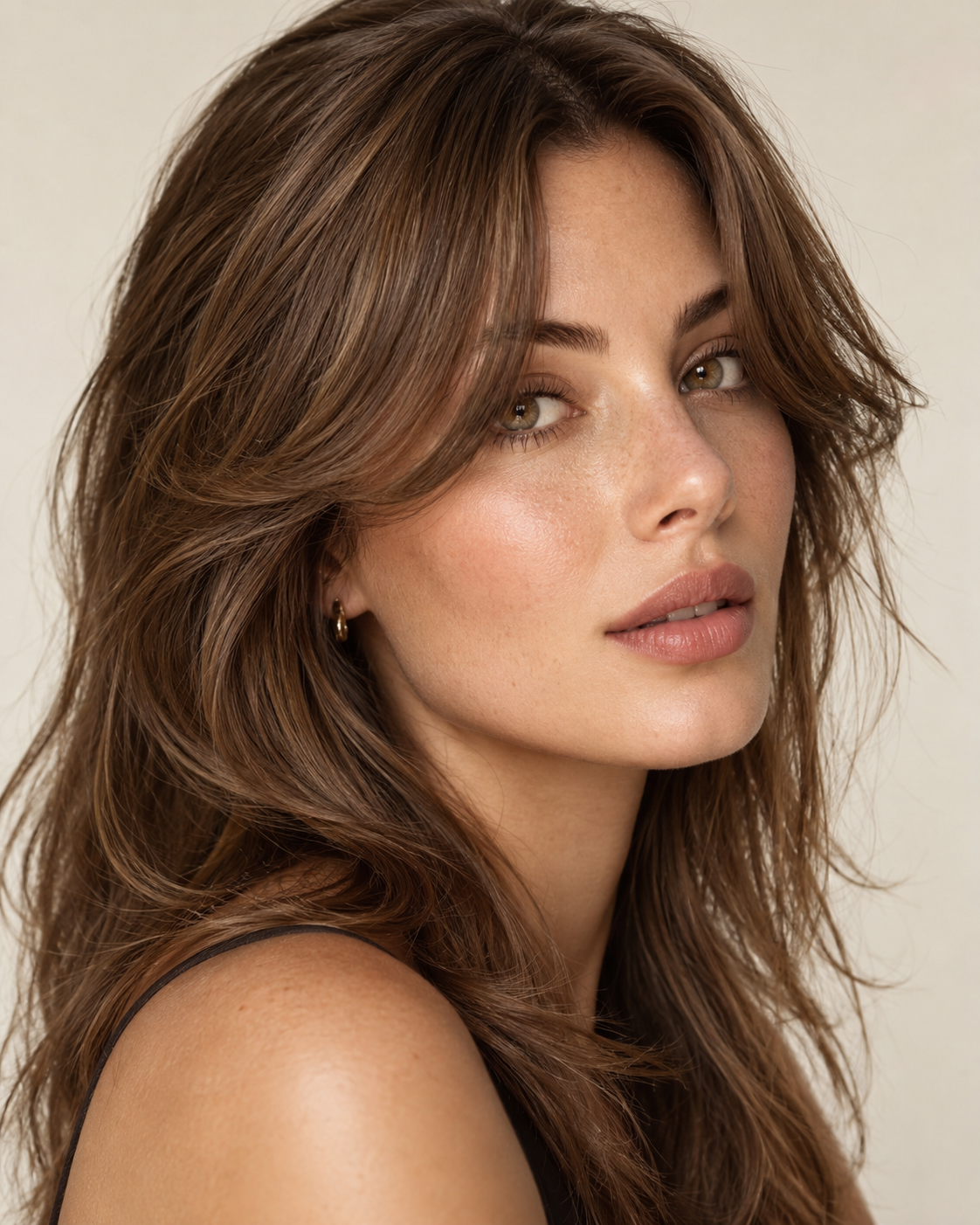
Curtain bangs part in the center and sweep outward toward the temples, falling somewhere between the cheekbone and jaw. For fine hair, this is a strategic choice: the style creates softness and movement while maintaining density at the sides, where hair is often fuller. They're also low-commitment because they grow out gracefully into face-framing layers. Just be prepared to use a volumizing product—fine curtain bangs can fall flat without a little lift.
3. Bottleneck Bangs
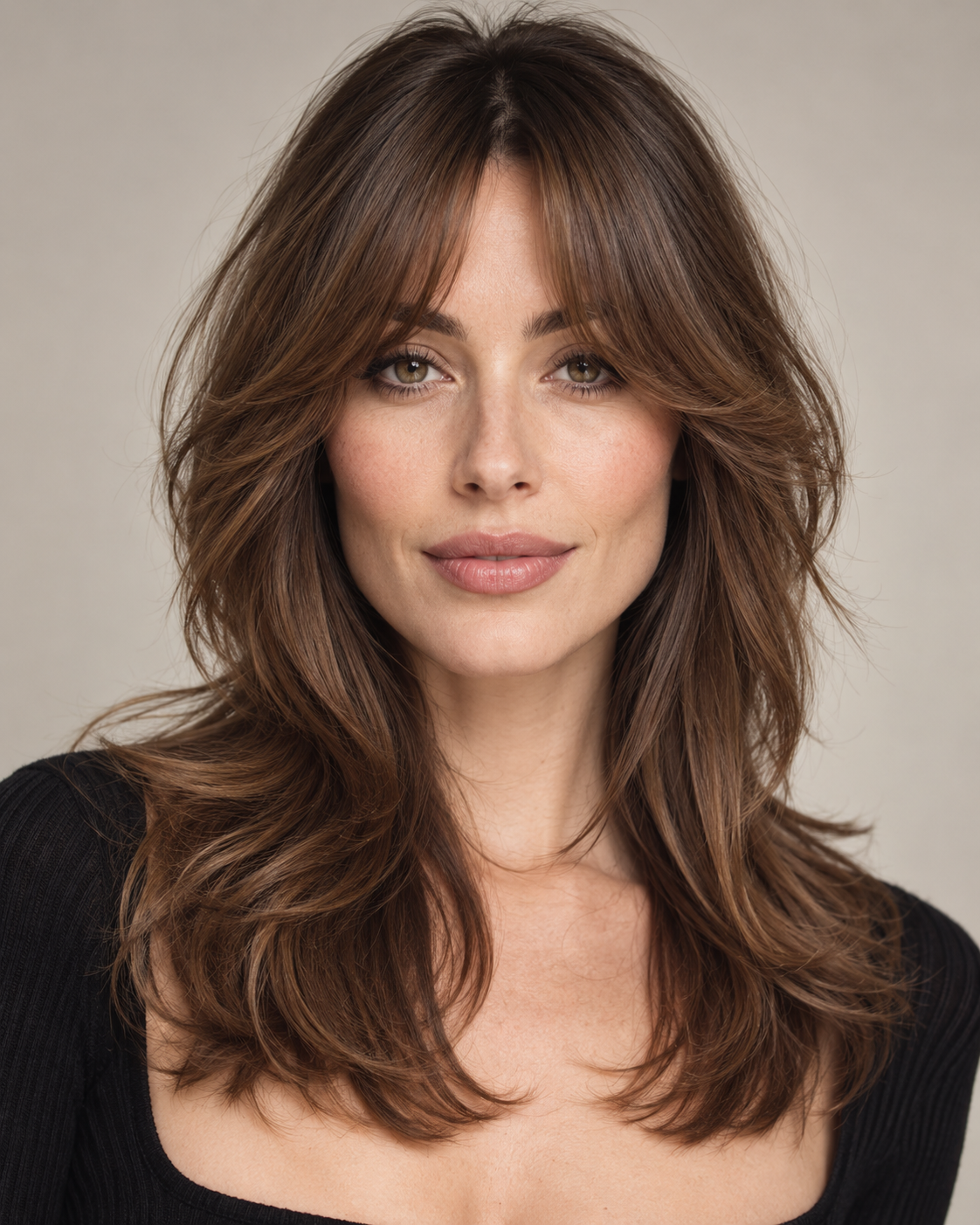
Also called "Bardot" bangs, this style is narrow at the top and widens through the cheekbones before tapering back in. It's essentially a more sculpted version of curtain bangs, with a shorter center and longer sides that hug the face. For fine hair, the benefit is structure without weight: the shape creates lift at the front while the tapered ends keep the look airy and light. Celebrity stylists often recommend this as a transitional cut for anyone testing the bang waters.
4. Side-Swept Bangs
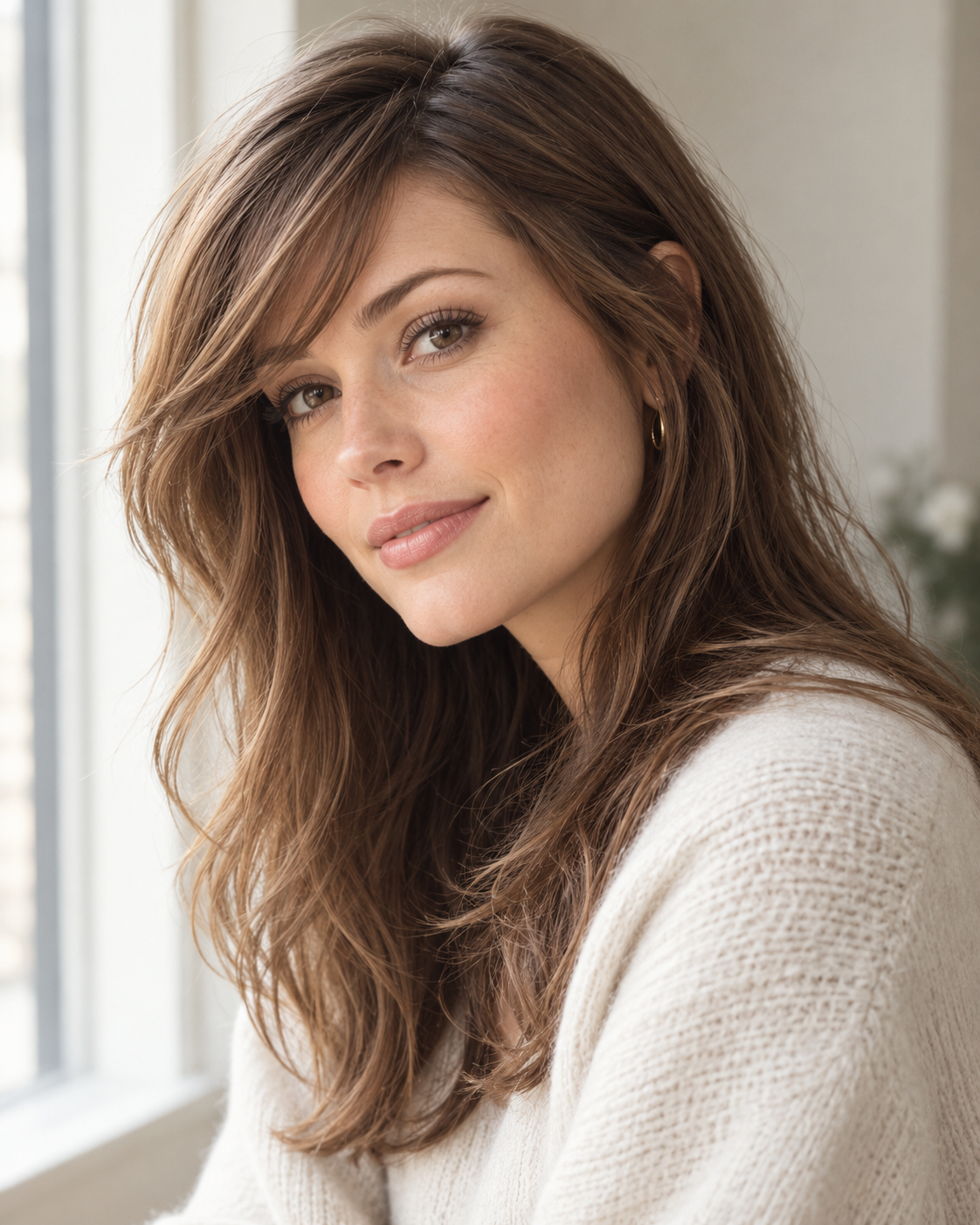
Side-swept bangs fall diagonally across the forehead, starting from a side part and blending into the rest of your hair. Hairstylist Jay Scott Jackson calls this the single best bang style for thin hair. The diagonal line creates movement and subtle lift at the front, and adjusting the direction can help disguise thinning at the hairline or temples. They're also universally flattering for most face shapes, particularly round or square faces, because they elongate the features.
5. Choppy Bangs
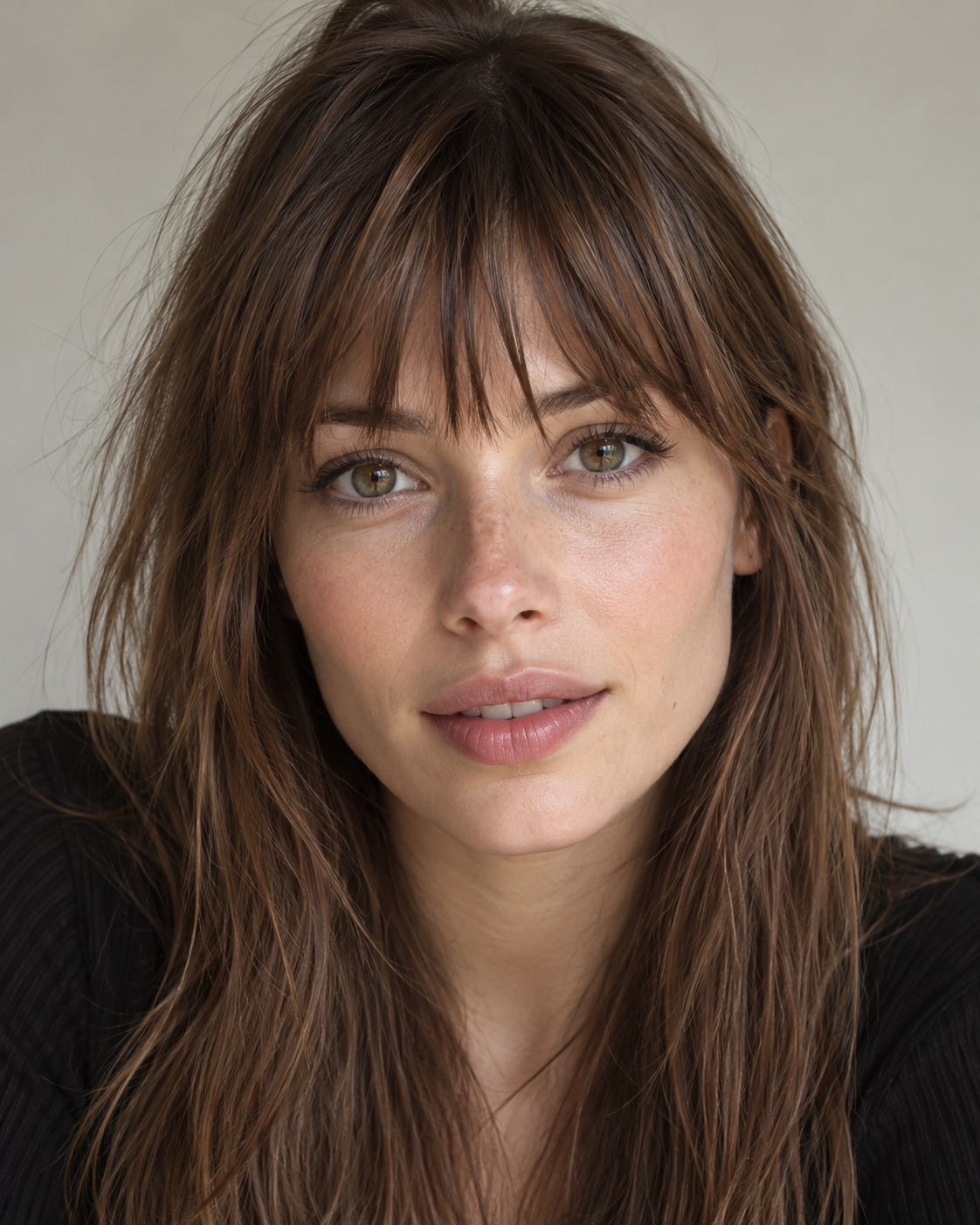
Choppy bangs rely on textured, intentionally uneven ends to create the illusion of volume. The technique isn't about removing hair but about releasing the ends in a way that creates dimension. For fine hair, this means the fringe looks fuller and more dynamic without requiring extra density. If you like an undone, rock-and-roll aesthetic, this is a strong choice—just make sure your stylist knows to focus on texture rather than thinning.
6. See-Through Bangs
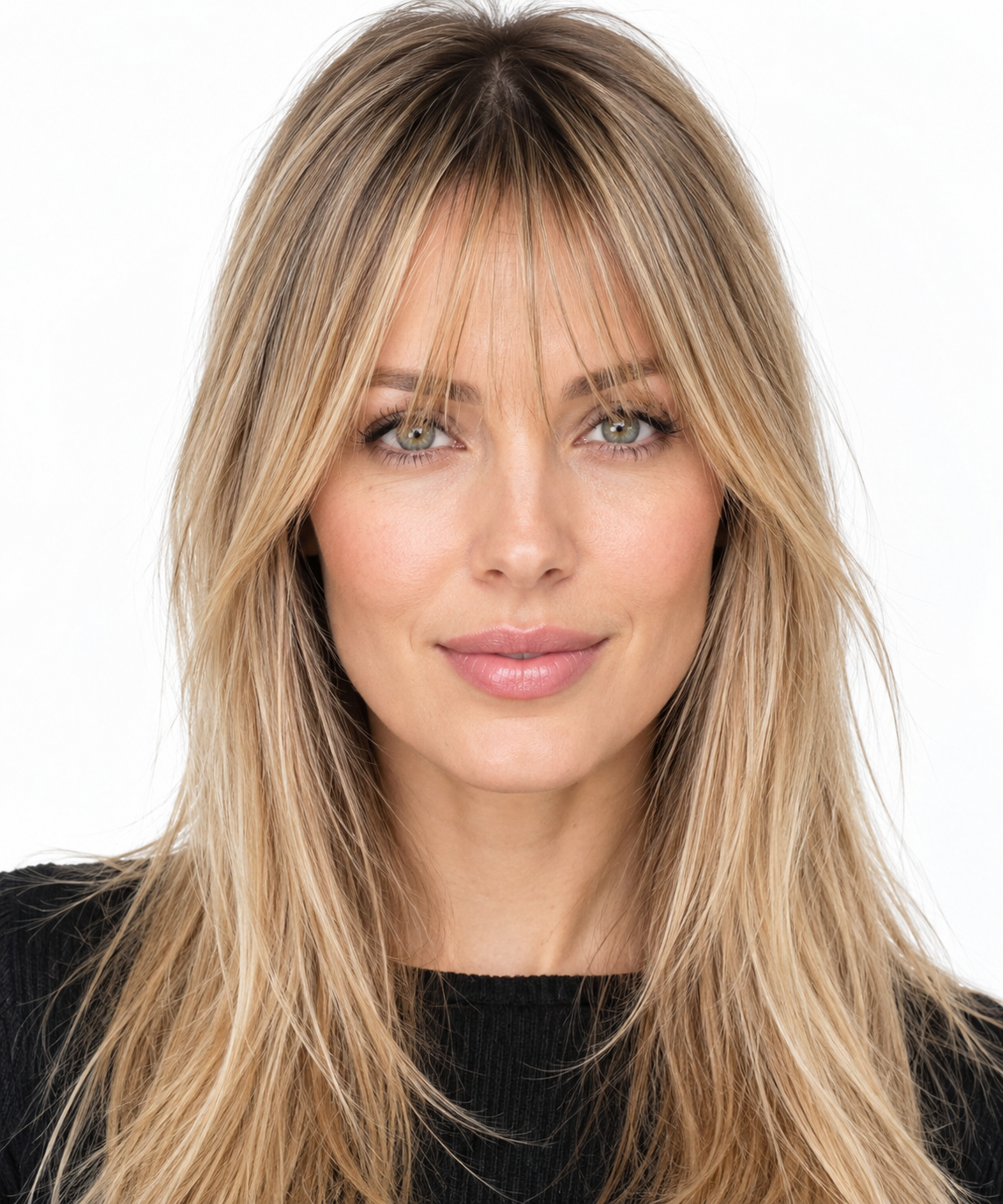
See-through bangs are exactly what they sound like: light, airy strands that allow the forehead to peek through. They maintain slight density at the hairline while allowing separation through the ends, which creates movement without heaviness. This style is similar to wispy bangs but often slightly more deliberate in its spacing. It's a smart option if your hairline is delicate but you still want the framing effect of a fringe.
7. Layered Bangs
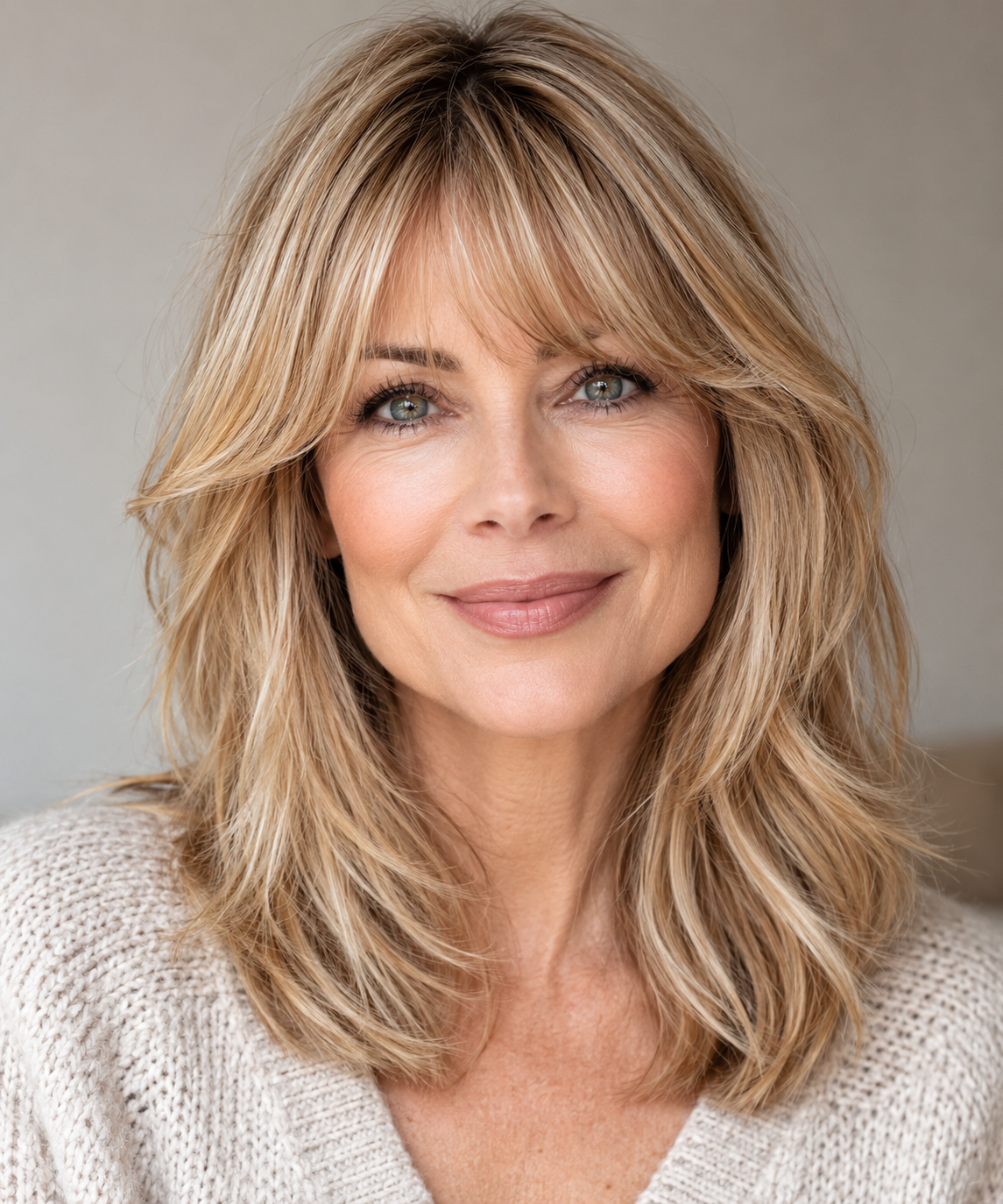
Layered bangs add texture and dimension to the fringe, helping it avoid the flat, stuck-to-the-forehead look that fine hair is prone to. The layers create subtle depth, so the bangs don't fall as a single, thin sheet. The key is subtlety: too much layering can make fine hair look wispy and sparse, so your stylist should use a light hand.
8. Blunt Bangs (with Caution)
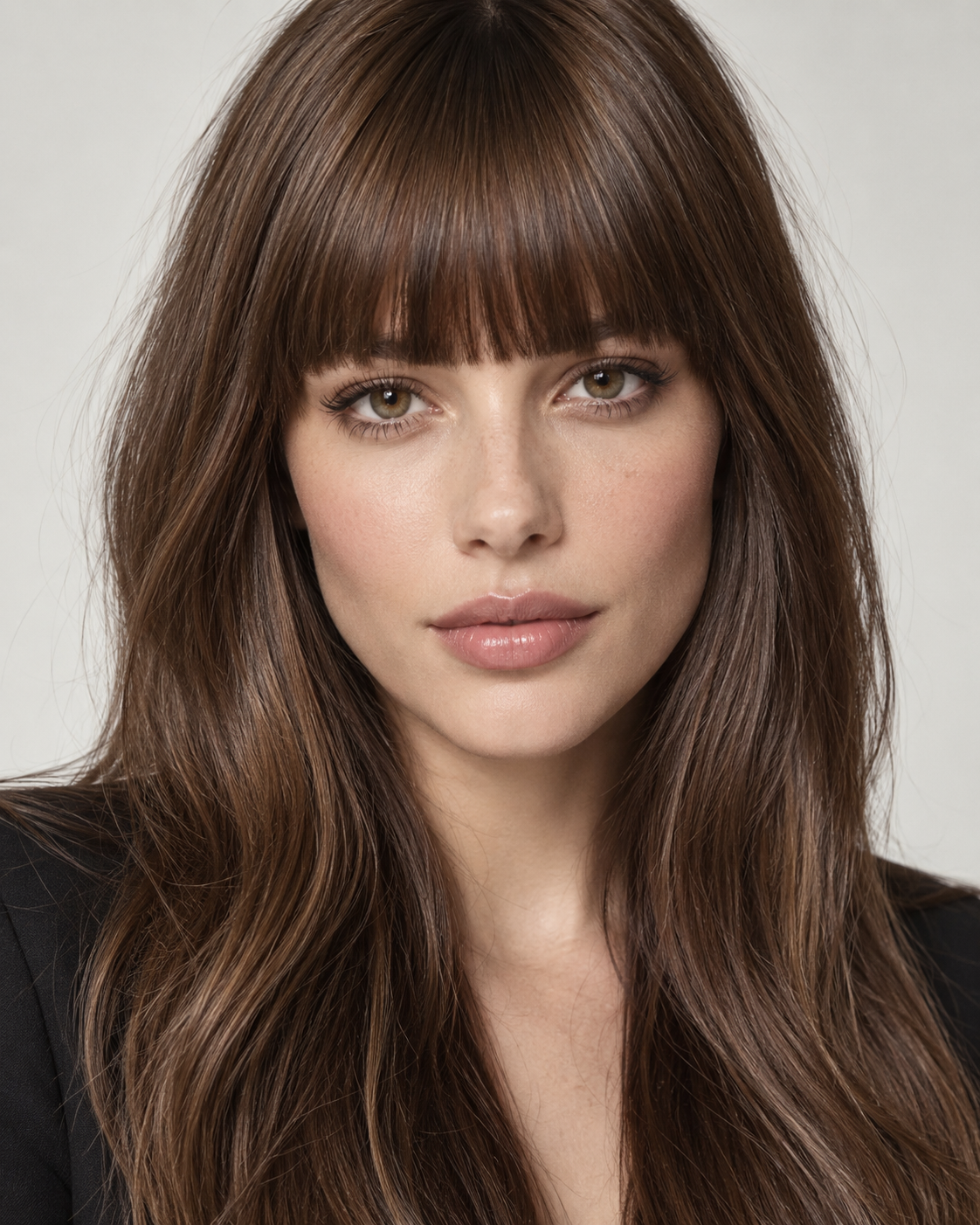
This one comes with a caveat. Blunt bangs—a solid, straight-across line—can work beautifully on fine hair if you have enough density at the hairline to support the shape. A clean, solid line adds instant visual density and balances the haircut. However, if your hair is genuinely thin rather than just fine, blunt bangs will expose gaps and make the fringe look sparse. Ask your stylist to assess your density honestly before committing.
9. Curly Bangs
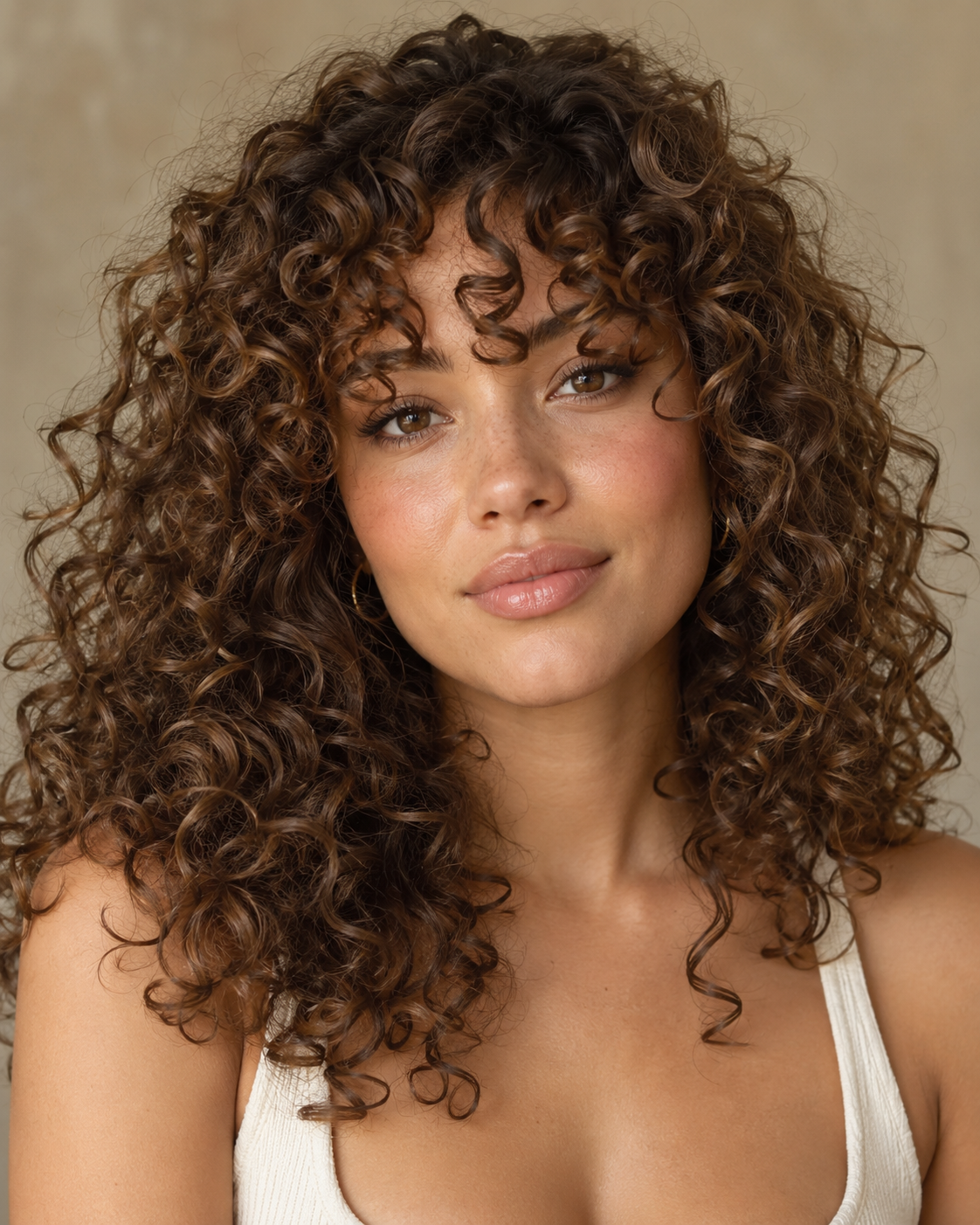
If you have natural texture, curly bangs can enhance volume at the front and crown when cut to work with your pattern rather than against it. The focus should be on shaping the curl, not controlling it into submission. This style adds fullness because the curl itself creates lift and body, which is exactly what fine hair needs.
10. Micro Bangs
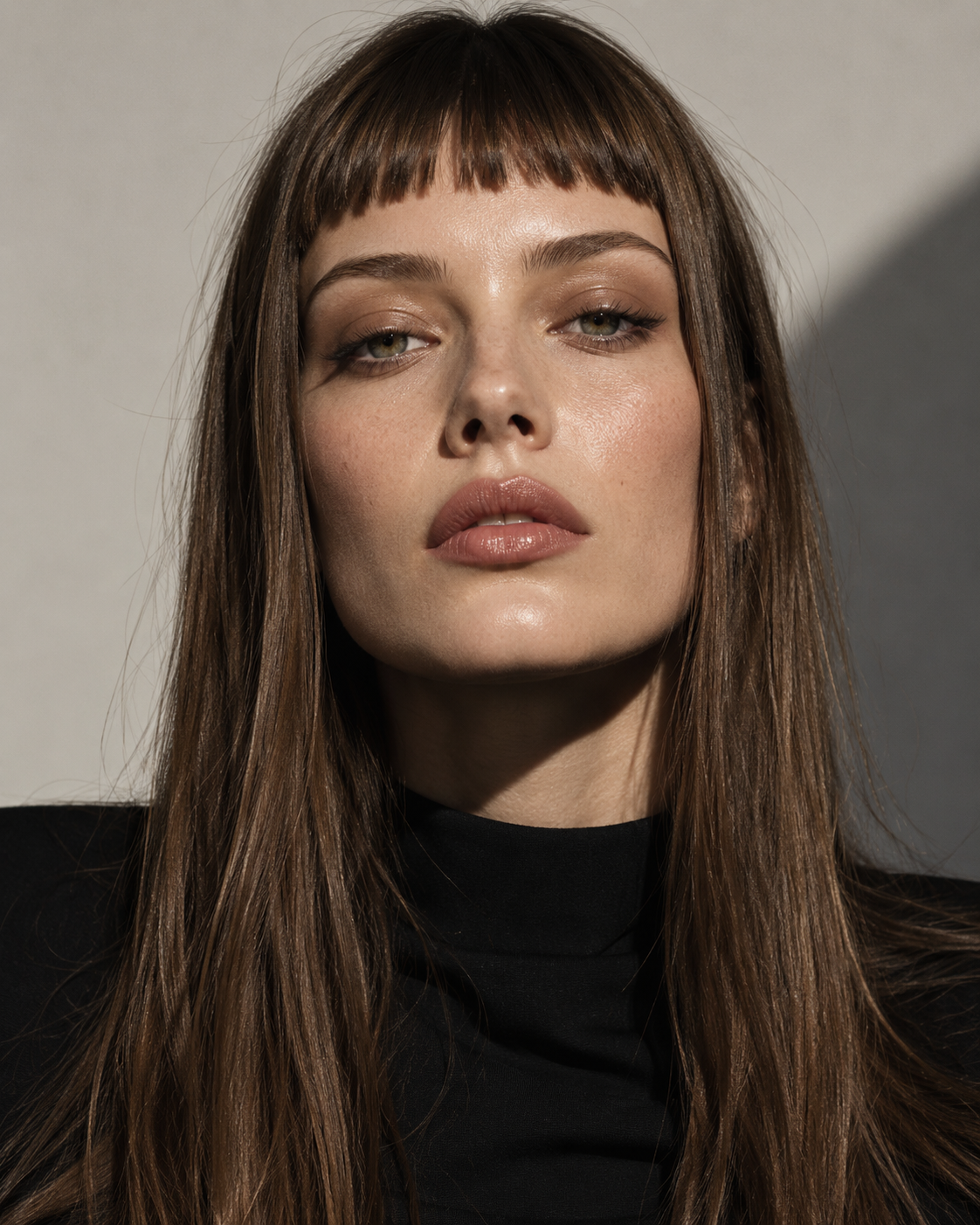
Micro bangs—cut above the brow or even mid-forehead—are a bold choice that can work on fine, straight hair. They frame the face dramatically and draw attention upward. Be warned: this is the highest-maintenance option on this list. Micro bangs must be styled daily, and they work best on straight or slightly wavy textures that cooperate with blow-drying. If your hairline is delicate, a slightly longer "midi" bang can offer a similar effect with more forgiveness
Styling Tips for Fine Hair Bangs
Fine bangs need a little help to look full and lively. These tips make a measurable difference:
- Start with damp hair. Apply a lightweight volumizing mousse at the roots before styling.
- Blow-dry with intention. Use a round brush and lift the bangs upward and outward to build volume.
- Try velcro rollers. They add lift without heat damage—ideal for fine hair.
- Keep dry shampoo within reach. It absorbs oil and adds grip and texture at the roots.
- Use texture spray sparingly. Focus on mid-lengths and ends, never the roots.
- Skip heavy oils, serums, and waxes. They weigh fine hair down and make it look sparser than it is.
- Refresh between washes. A spritz of water and a quick blow-dry revives flat bangs in under a minute.
Maintenance and Care
Bangs grow quickly, and fine hair reveals every extra millimeter. To keep them looking sharp:
- Trim every three to four weeks. Regular trims prevent bangs from losing their shape.
- Wash or refresh bangs daily. They absorb oil from your forehead faster than the rest of your hair.
- Sleep on silk. A silk pillowcase reduces friction and helps bangs hold their shape overnight.
- Clip bangs back at night. This prevents creases and flattening.
- Always use heat protectant. Fine hair is more vulnerable to heat damage than thicker strands.
- Be patient when growing them out. Curtain and side-swept styles transition gracefully into face-framing layers.
Common Mistakes to Avoid
- Requesting heavy, blunt bangs when your hair is very thin. They expose gaps and look sparse.
- Over-thinning the ends. Too much thinning makes fine hair look stringy, not lighter.
- Overloading on product. Heavy creams and oils flatten bangs on contact.
- Cutting bangs too short. Micro bangs are bold but deeply unforgiving on fine hair.
- Ignoring your natural growth pattern. Cowlicks and swirls must be worked with, not forced into submission.
Conclusion
Thin, fine hair doesn't have to mean giving up on bangs. It means choosing them wisely.
The most flattering styles—wispy, curtain, side-swept, see-through, and choppy—share a common principle: they add movement, softness, and the illusion of density without weighing hair down. Blunt and micro bangs can work too, but only with the right density and a willingness to style them daily.
The single most important step is an honest consultation with a stylist who understands fine hair. They can assess your density, hairline, and face shape to create a fringe that feels fresh, modern, and genuinely easy to manage. With lightweight products, regular trims, and a few minutes of daily styling, bangs can become your best beauty decision—not a regret.
Fine hair may be delicate. But the right bangs make it look fuller, more stylish, and effortlessly put together.
FAQ
Will bangs make my hair look thinner?
Not if they're cut correctly. Wispy, see-through, and side-swept bangs create the illusion of volume. Heavy, blunt bangs can make thin hair look sparser.
What are the best bangs for very thin hair?
Wispy bangs, see-through bangs, side-swept bangs, and curtain bangs are the safest and most flattering choices.
Can I wear blunt bangs with fine hair?
Yes—but only if you have enough density at the hairline. If your hair is genuinely thin, blunt bangs may expose gaps.
How often should I trim my bangs?
Every three to four weeks to maintain shape and prevent them from looking overgrown.
How do I stop my bangs from falling flat?
Use a lightweight volumizing mousse, blow-dry with a round brush, and keep dry shampoo on hand for quick refreshes.



Leave a Reply
You must be logged in to post a comment.