
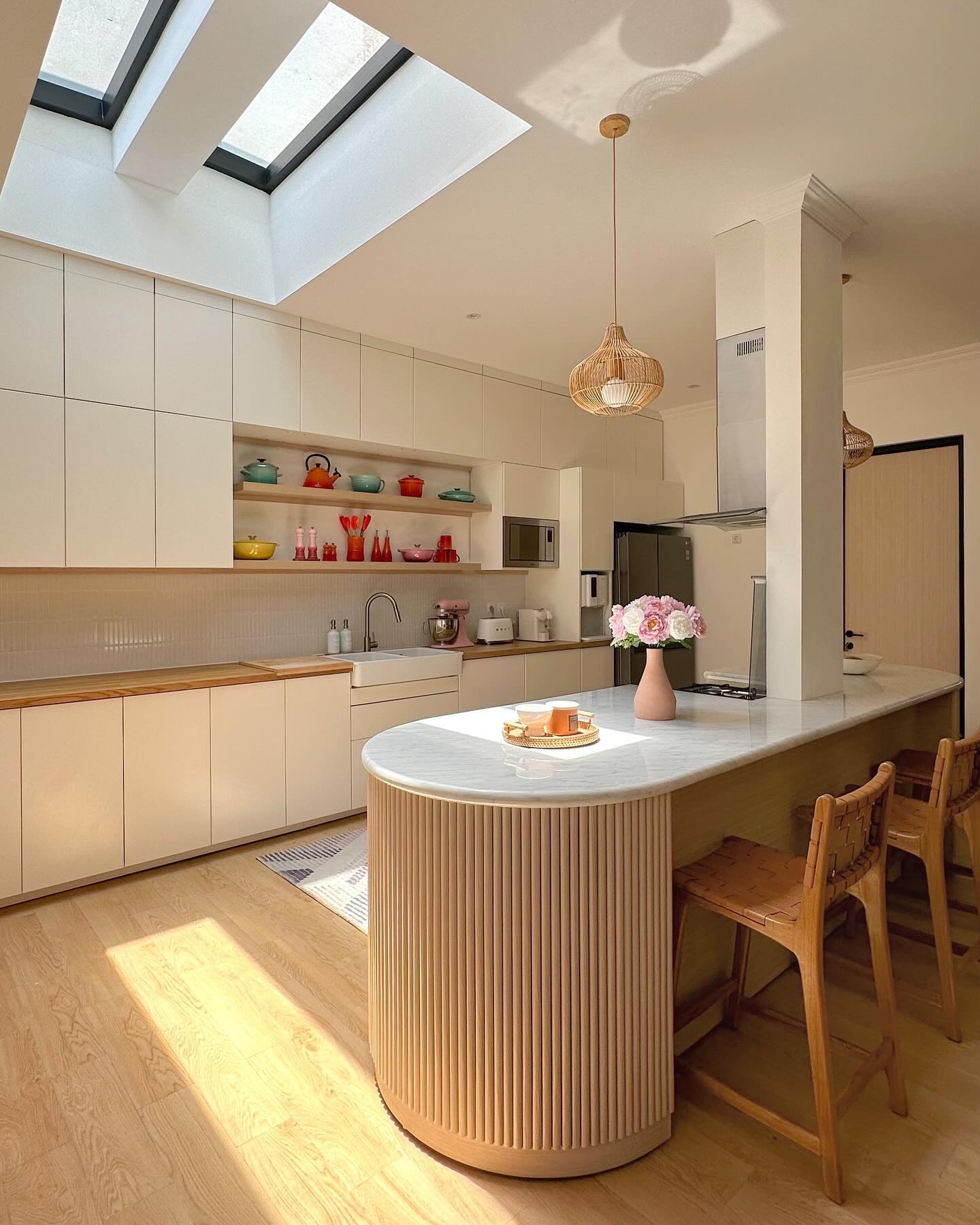
A kitchen island isn’t just a piece of furniture — it’s the hardest-working surface in your home. Done right, it becomes the place where you prep dinner, pour morning coffee, help with homework, and gather friends around a bottle of wine. Done wrong, it blocks traffic, kills your work triangle, and makes a large kitchen feel cramped and chaotic.
The good news: designing a genius kitchen island doesn’t require a huge budget. It requires understanding a handful of professional principles — the same ones kitchen designers have relied on for decades. We’ve pulled together 30 of the most inspiring ideas of 2026 and grounded them in real design rules, so you don’t just see what looks beautiful, but understand exactly why it works.
What Every Island Kitchen Needs to Get Right First
Before diving into the inspiration, here are the professional rules that separate a functional island from an expensive mistake:
- Minimum room size: You need at least 12 feet of open floor space to justify a center island. That allows a 3-foot-wide island with a 36-inch aisle on each side — the bare minimum for comfortable movement. A 42-inch clearance is better, especially if your island faces a cooking appliance.
- The work triangle still matters: A well-designed island should shorten the distance between your three core zones: refrigerator, cooktop, and sink. Ideally, no leg of this triangle should exceed 9 feet or be shorter than 4 feet. If your island breaks or blocks this triangle, it will frustrate rather than help.
- Island cooktops need serious ventilation: If you’re installing a cooktop in the island, don’t underestimate the ventilation requirement. A ceiling-mounted hood above an island cooktop typically needs to move 900 CFM of air — considerably more than a wall-mounted range. Budget for this before you fall in love with the layout.
- Snack bar overhangs have limits: An island overhang for knee space and seating should be a minimum of 12 inches. Beyond 16–18 inches, you need a support bracket or leg, or the countertop edge risks cracking over time.
- Seating height depends on design: Counter-height islands (36 inches) pair with counter stools. If you want a more casual, table-style seating experience, drop the island surface to 28–30 inches.
Statement Islands: When the Island Is the Room
These are the islands that stop guests in their tracks. They succeed because every design decision — the material, color, and proportion — is intentional and bold.
1. The Dark Statement Island with Pendant Lighting
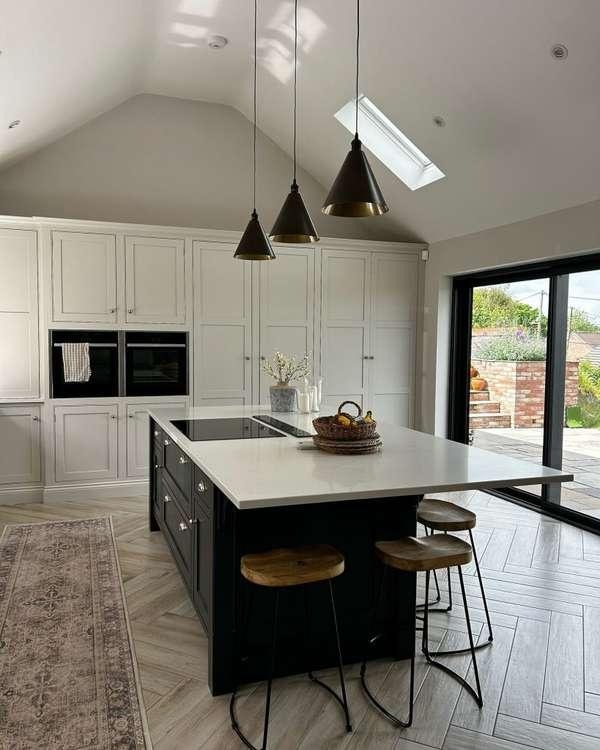
Photo: @home_on_thehill
A dark navy or charcoal island surrounded by light, neutral cabinetry creates an instant focal point in an open-plan kitchen. What makes this design work is the triple pendant drop directly above the island — pendants hung 30–36 inches above the counter surface both light the workspace and signal to the eye exactly where the room’s center of gravity is. The contrast between the deep island base and white stone top keeps the look sophisticated rather than heavy.
2. The Marble Top Island with Timber Seating
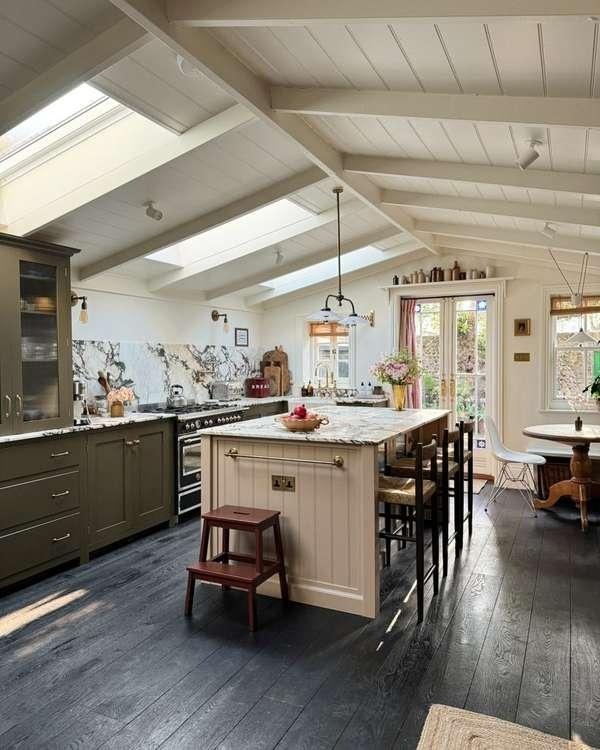
Photo: @the_flint_house
Natural marble brings movement and depth that no engineered stone fully replicates. This design pairs a heavily veined marble slab with a dark stained island base and warm oak dining chairs for a combination that reads as both classic and contemporary. The generous seating overhang — at least 15 inches for comfortable knee clearance — turns the island into a full dining destination. Specify honed rather than polished marble on a working island; it hides the inevitable daily wear far better.
3. The Fluted Wood Island Front
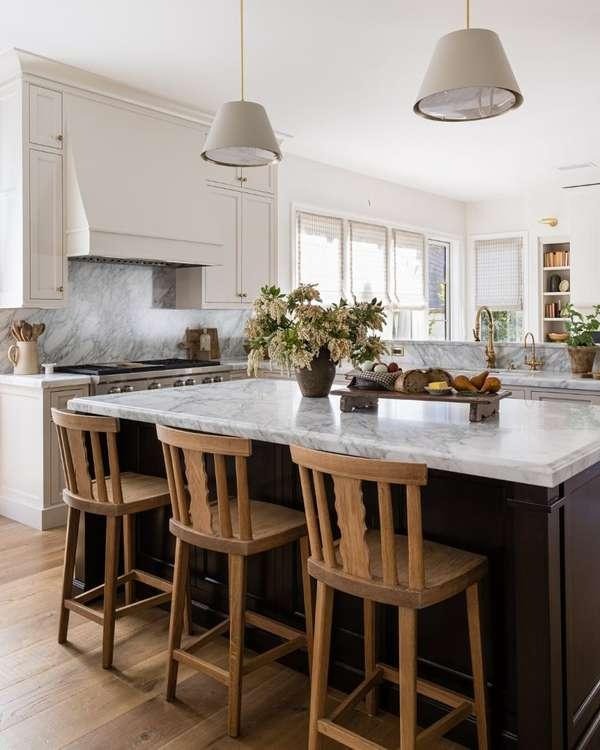
Photo: @mindygayerdesign
Vertical ribbed fluting on the island front catches light and shadow to create rich texture from a flat surface — no additional decoration required. This detail transforms a standard Shaker-door island into something with genuine architectural character. Tight fluting reads more masculine and precise; wider, rounder flutes feel softer and more organic. Either direction, no other update delivers this much visual impact for the effort involved.
4. The Navy Shaker Island with Brass Hardware
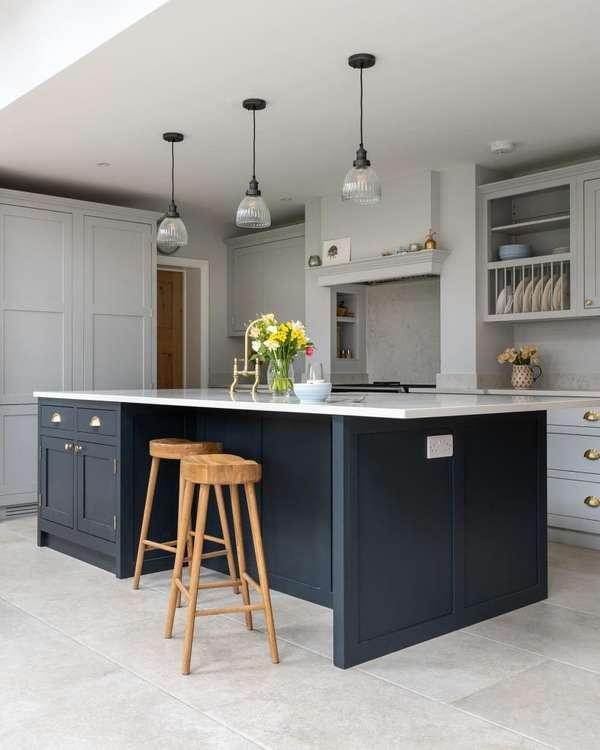
Photo: @theshakerworkshop
Deep navy on a Shaker-door island base with unlacquered brass cup pulls is one of the most enduring combinations in kitchen design — and for good reason. The cool depth of navy anchors the room, the warm brass lifts it, and the Shaker panel sits quietly between them. When specifying painted cabinetry at this scale, MDF doors take paint more uniformly than solid wood because they have no grain telegraphing through the finish — a small but important technical detail for a flawless result.
5. The Oversized Prep and Seating Island
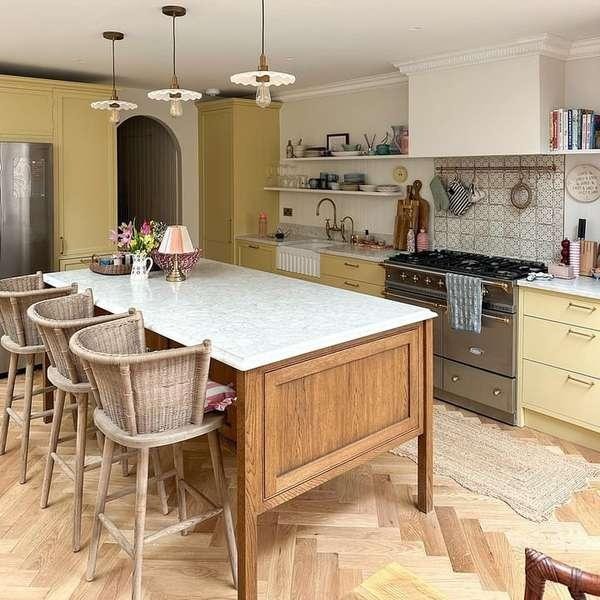
Photo: @treemarkkitchens
In kitchens over 17 feet in at least one direction, a large central island anchors the space rather than disappearing into it. This design dedicates distinct zones to food prep and casual seating on the same surface — a seamless stone top unified by the overhang on the dining side. Even in a big room, 36 inches of clearance on all sides is the professional minimum; 42 inches is the standard to aim for, especially on the side that faces appliances or a traffic route.
Kitchen Islands with Seating: The Gathering Hub
The best island seating designs are about more than adding stools. They’re about creating a genuinely comfortable place where people want to sit while you cook.
6. The Shaker Island with Open Cookbook Shelf
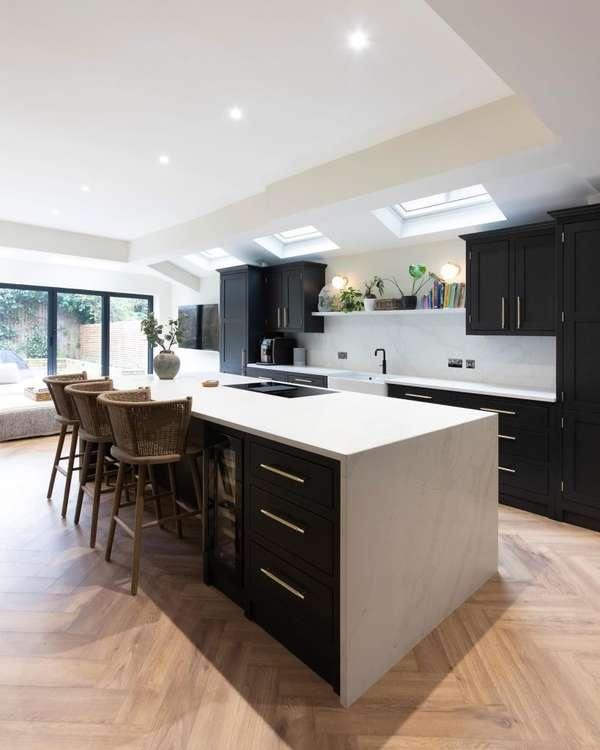
Photo: @theshakerworkshop
Building open shelving into one end of the island creates a cookbook nook or display zone that personalizes the space while adding storage without a door in sight. Keep open shelves on the side of the island facing the room or dining area — not the cooking side, where they’d collect grease. Style with books at varying heights, a small plant, and one or two objects to prevent the shelf reading as an afterthought.
7. The Round-Ended Island for Traffic Flow
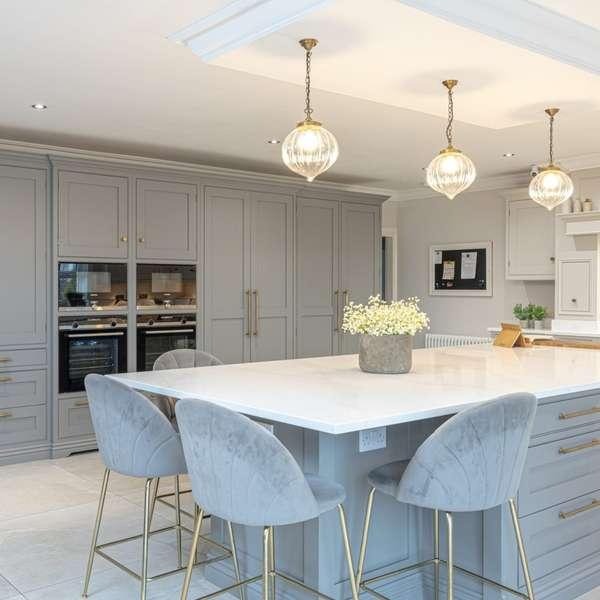
Photo: @thomasjamesbespoke
Curved or bullnose-ended islands solve a specific functional problem: square corners force people to step back and navigate around them. A rounded end keeps circulation smooth, is safer in households with young children, and looks substantially more custom and tailored than a box. In smaller kitchens, an oval or round-ended island maximises surface area while occupying less perceived visual space than a rectangular equivalent at the same size.
8. The Six-Seat Dining Island
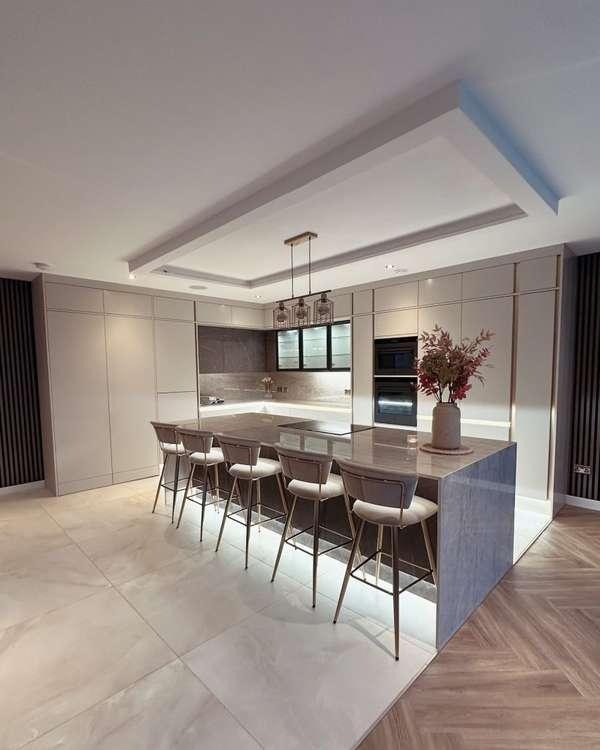
Photo: @home_at_threefourfive
When the kitchen becomes the dining room, the island steps up. A six-seat island requires at least 7 feet of linear overhang space — allow 24 inches per person minimum, 27 inches for comfort. Plan the seating side carefully: the overhang edge should be at least 24 inches from the nearest opposing cabinet or appliance, and never positioned where an oven door swings open into a seated guest.
9. The Split-Level Island (Prep + Dining)
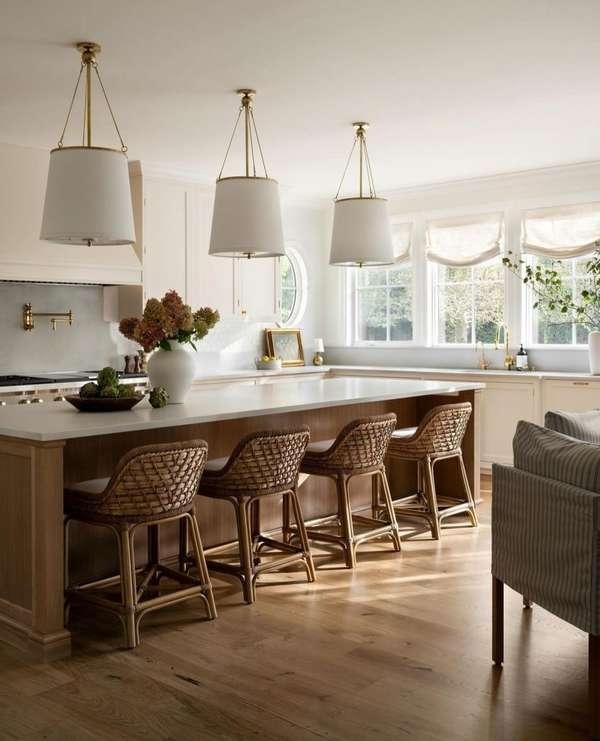
Photo: @settingforfour
One of the cleverest island configurations separates the work surface (36 inches) from the seating surface (28–30 inches) on a single island. The lower dining section provides a natural social zone without bar-height stools, and it hides the mess of food prep from seated guests. This is especially useful when the cooking area faces an open-plan living space — the raised counter section acts as a partial visual screen.
10. The Island Sink with Pendant Bar
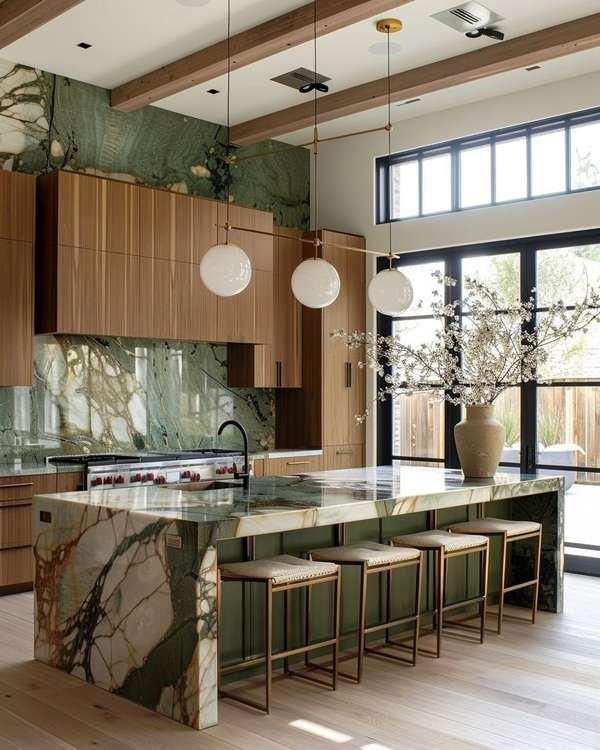
Photo: @kitchens_of_insta
A sink in the island positions cleanup at the centre of social activity rather than tucked against a wall. It works best when the dishwasher is integrated directly beside it — plan for the dishwasher door swing so it doesn’t conflict with someone standing at the sink. From a layout perspective, a sink island works best when the refrigerator is on the same wall within 6 feet, keeping the food storage-to-prep path short and efficient.
Hardworking Islands: Functionality Without Compromise
The most admired islands earn their beauty through usefulness. These designs pack serious function into the island form.
11. The Warm-Toned Statement Island
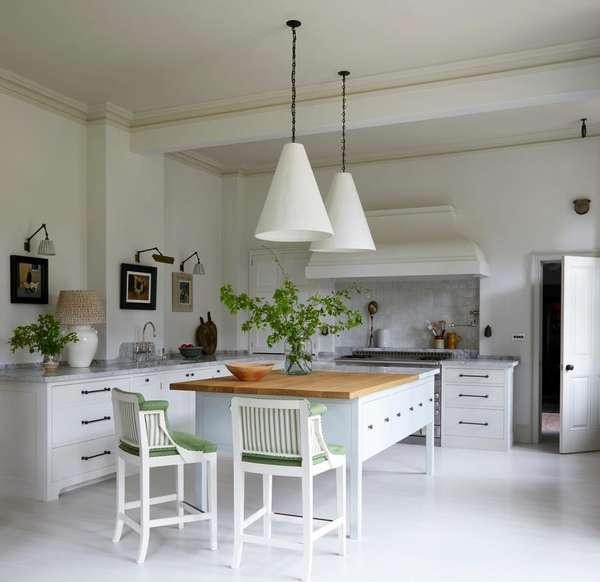
Photo: @nicolahardingandco
Earthy, saturated island colors — terracotta, warm sage, deep olive — give a kitchen a grounded, lived-in personality that cooler neutrals can’t match. The professional principle: keep one color warm and rich on the island, keep the perimeter cabinetry neutral, and let the stone or countertop bridge the two. Hardware finish matters here more than anywhere; unlacquered brass or antique bronze warms up the palette immediately.
12. The Drawer-Heavy Storage Island
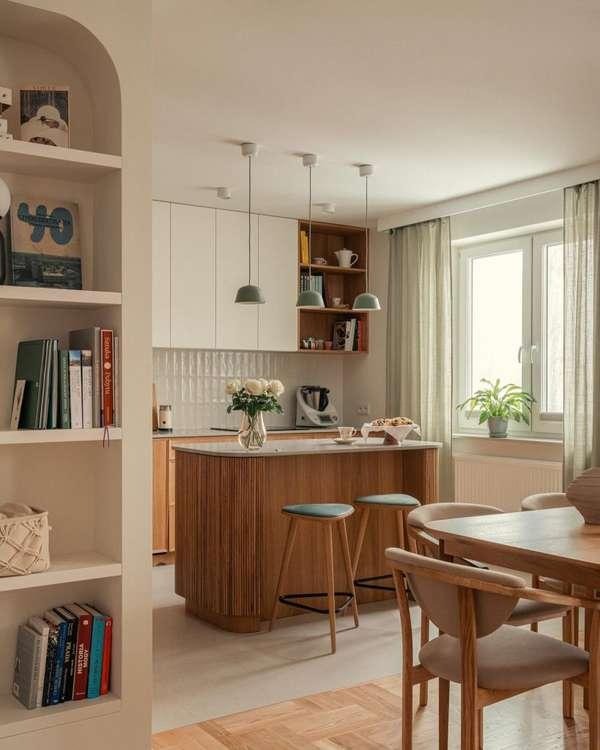
Photo: @kroniki
Deep drawers are more functional than base cabinet doors for almost everything except large pots: utensils, cutting boards, baking sheets, mixing bowls, small appliances. A drawer-heavy island base gives you full visual and physical access to everything without kneeling and reaching. Use vertical dividers inside drawers to keep baking sheets and cutting boards upright and organised. Soft-close drawer hardware is the standard to specify — it extends the life of the cabinetry and keeps the kitchen quiet.
13. The Under-Island Appliance Zone
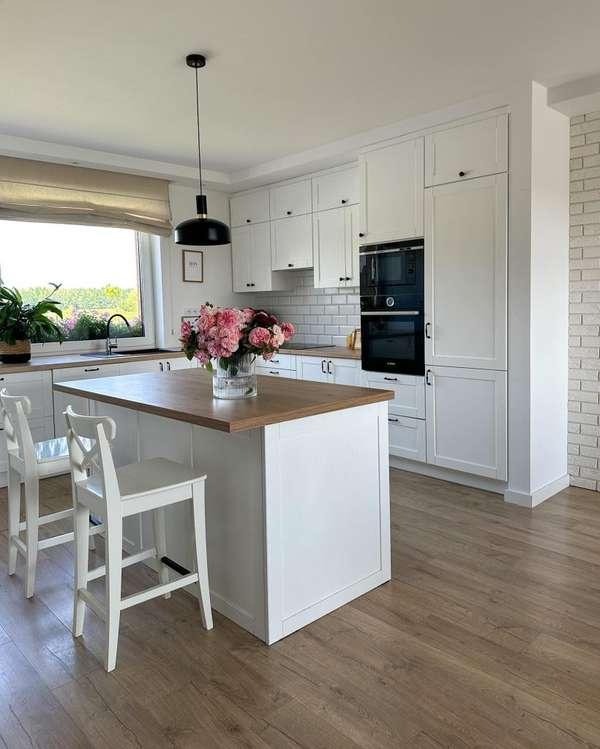
Photo: @domnaroztoczu
Pocket doors or open niches built into the island base can conceal a microwave, wine fridge, or coffee station at counter level or below. This is the cleanest solution to appliances on the counter — everything is accessible but invisible when not in use. Plan for dedicated electrical circuits in the island from the outset; retrofitting power later means cutting the floor slab or running exposed conduit, neither of which is acceptable in a finished kitchen.
14. The Mixed-Material Island (Stone + Wood)
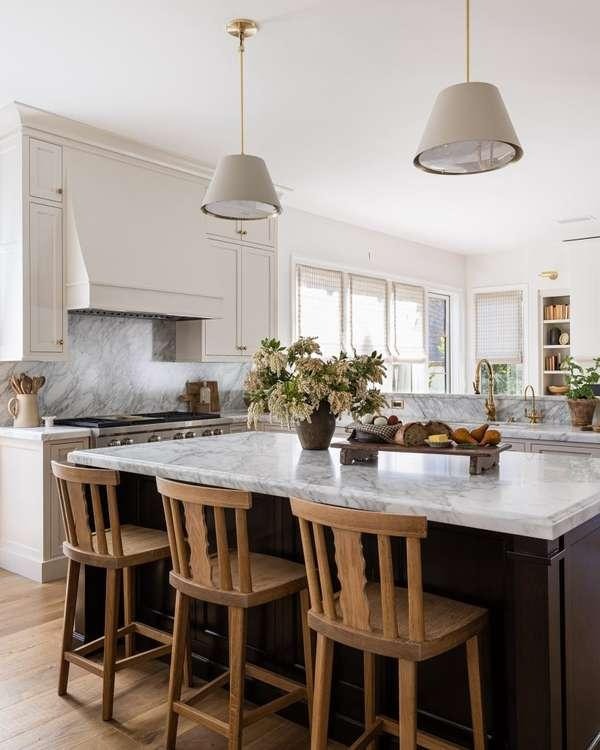
Photo: @mindygayerdesign
Combining a stone countertop with a warm wood base is one of those combinations that works regardless of kitchen style — it reads as both modern and organic. The wood introduces warmth that all-stone or all-painted islands often lack, giving the island a furniture-quality appearance. From a durability standpoint, the base takes no direct impact from cooking, so wood is a practical choice there; reserve stone or quartz for the actual work surface where heat and scratch resistance matter.
Compact & Clever: Island Ideas for Smaller Kitchens
A smaller kitchen can absolutely have an island — but it demands more careful planning, not less. An island as small as 24 inches square can earn its place when it’s designed with intention.
15. The Angled Island for Tight Spaces
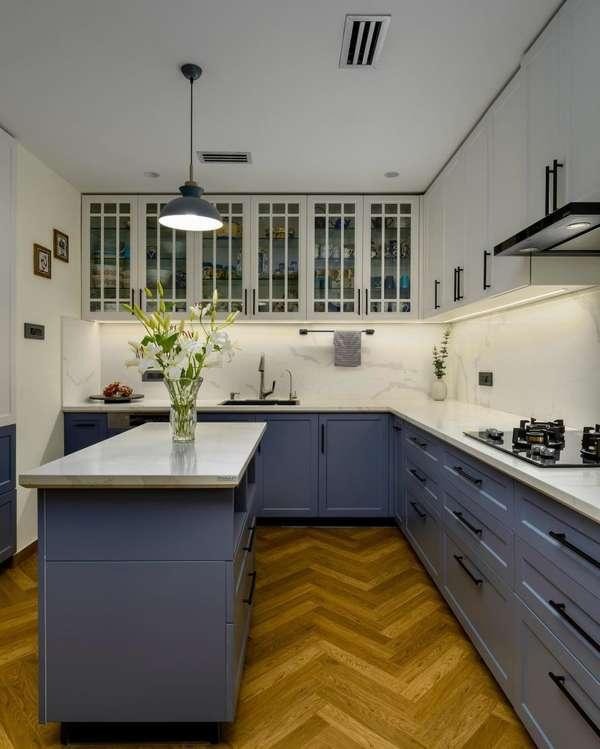
Photo: @alkovedesign
When a standard rectangular island leaves insufficient clearance in one direction, placing it at a precise diagonal angle can solve the problem. By angling the island, sufficient clearance can be achieved on all sides even when a parallel placement would block a doorway or appliance. The corners should be eased to rounded or beveled profiles to prevent collision points in tighter aisles. A custom solution — but worth it when the layout demands it.
16. The Scandi Narrow Prep Island
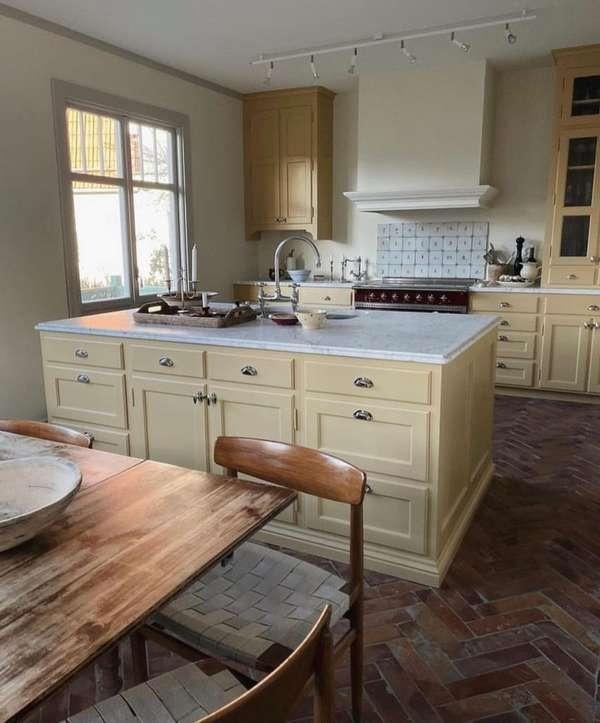
Photo: @kulladalkitchens
A narrow 24-inch-deep island adds meaningful prep space and storage in kitchens that can’t accommodate a full-width island. At this depth it’s best suited purely for prep and storage — no cooktop, no sink — and works beautifully as an opposite-wall anchor in a galley configuration, turning a two-wall layout into something closer to a U-shape. The Scandinavian approach pairs this with clean-lined cabinetry and warm wood accents for a result that feels effortlessly composed.
17. The Butcher Block Prep Island
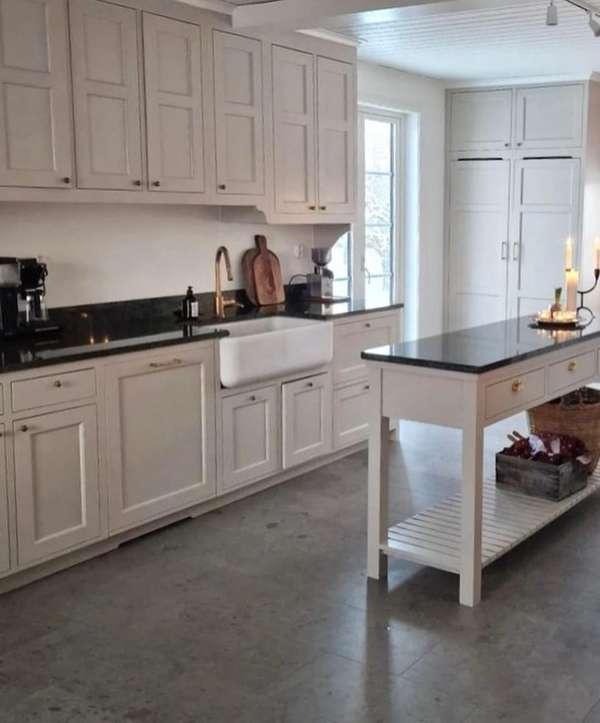
Photo: @kulladalkitchens
Hard maple and end-grain oak butcher block are the most practical surfaces for a dedicated prep island: gentle on knife edges, self-healing with regular oiling, warm in appearance, and repairable if scarred. A butcher block island surface in a kitchen with stone perimeter counters creates a smart material contrast that serves a genuine functional purpose — one surface for chopping and rolling dough, the other for hot pans and general work. Allow 1.5 to 4 inches of thickness for a top that lasts decades.
18. The Freestanding Wood Island
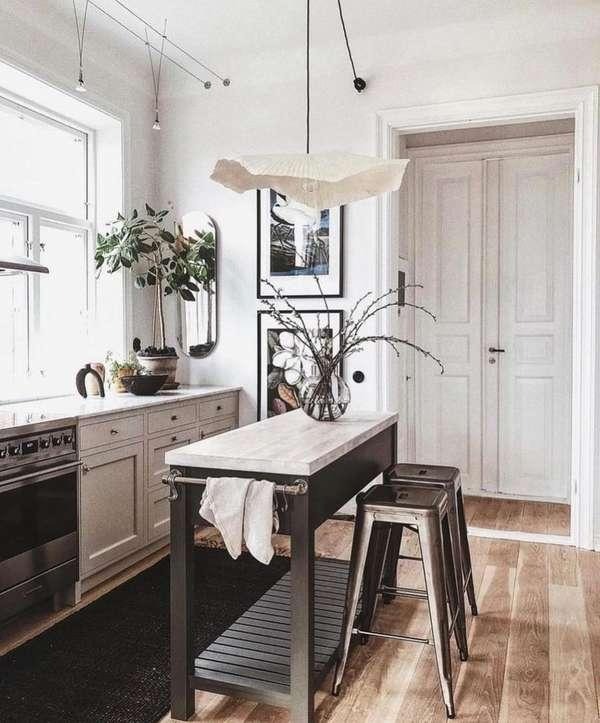
Photo: @kulladalkitchens
A freestanding island that reads as a piece of furniture — turned legs, a shelf below, a warm wood or painted finish — brings warmth and flexibility that a built-in island can’t match. In rental homes, open-plan spaces without defined kitchen zones, or kitchens being phased over time, a freestanding island bridges the gap beautifully. At minimum, choose a construction with solid, wobble-free joinery and a top surface at least 36 by 24 inches to be genuinely useful.
19. The Rolling Kitchen Island
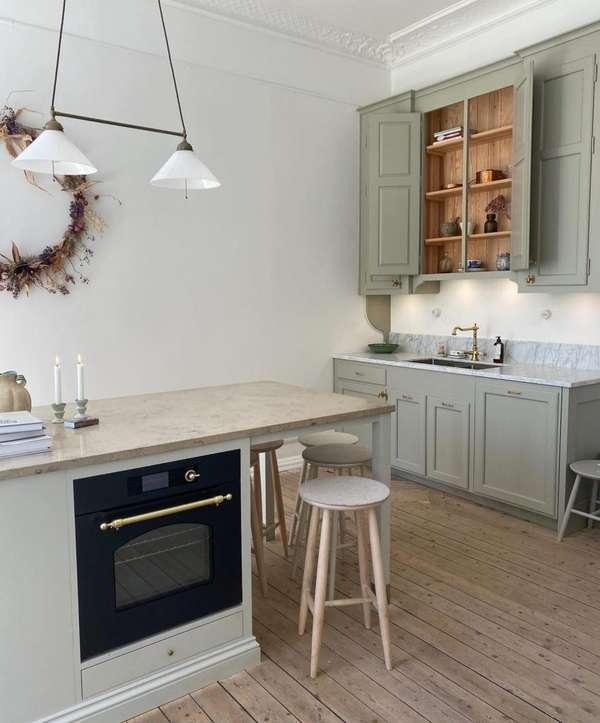
Photo: @kulladalkitchens
A compact island on lockable casters gives smaller or rented kitchens the flexibility a fixed island can’t offer: roll it to the cooking zone during prep, tuck it away when you need floor space, or wheel it to the dining area for serving. The best rolling islands are indistinguishable from furniture when stationary — invest in solid construction, a practical top surface, and lockable wheels that don’t mark floors.
Materials & Finishes That Define 2026
The material you choose for your island countertop is the single most impactful decision you’ll make. Here’s how the professionals think about it.
20. The Quartz Countertop Island
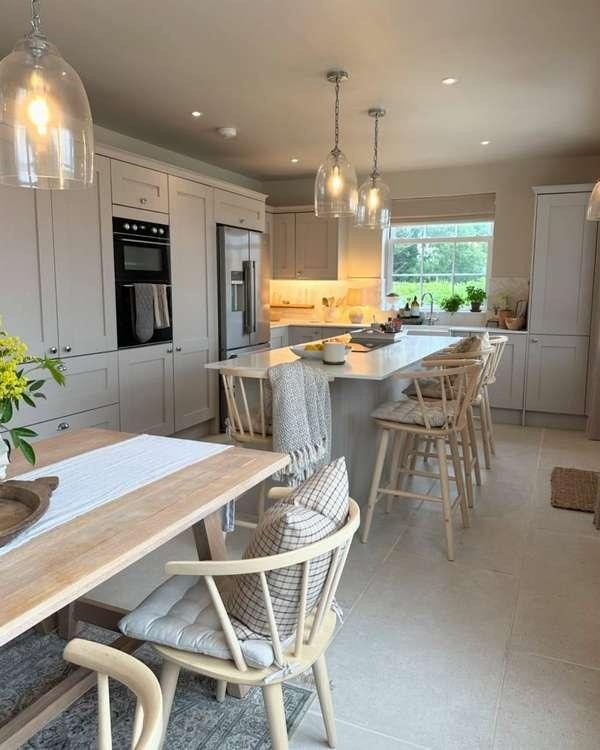
Photo: @chloe_countryhomerenovation
Engineered quartz is the most practical island surface for busy households: non-porous so it never needs sealing, highly resistant to stains and scratches, and consistent in appearance. It mimics the look of marble, concrete, and quartzite with none of their maintenance demands. The one weakness: quartz cannot handle extreme direct heat, so always use trivets. In 2026, the most requested quartz finishes are soft matte whites with subtle veining — far more forgiving in daily use than high-gloss versions that show every fingerprint.
21. The Marble Island
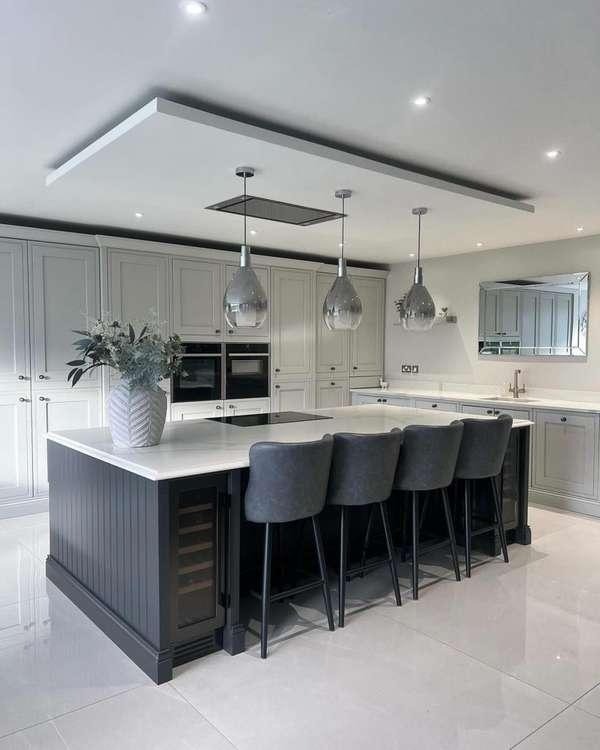
Photo: @1909kitchens
Natural marble is porous, will etch if acidic liquids are left on it, and will patina with use. Every designer knows this. And yet marble remains the aspirational surface for kitchen islands because nothing else has its depth, movement, and visual presence. If you choose marble, seal it annually and embrace the patina — the aged look is part of the material’s character. Calacatta and Statuario varieties with bold grey veining are the most photographed. Honed finishes hide wear better than polished.
22. The Painted Shaker Island with Brass Hardware
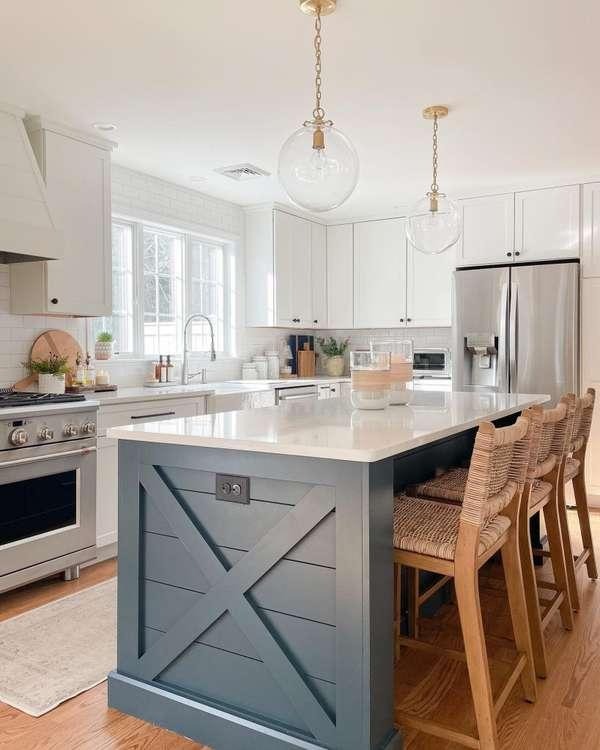
Photo: @sherricalnanhome
The Shaker door style remains the most versatile cabinet door in kitchen design: its recessed-panel simplicity works in contemporary, transitional, and traditional settings equally well. Painted in a deep, saturated colour — deep teal, forest green, warm terracotta, or soft black — with unlacquered or aged brass hardware, a Shaker island becomes a showpiece. From a painting standpoint, MDF doors take paint more uniformly than solid wood, delivering a flawless result that solid timber rarely matches.
23. The Flat-Front Minimalist Island
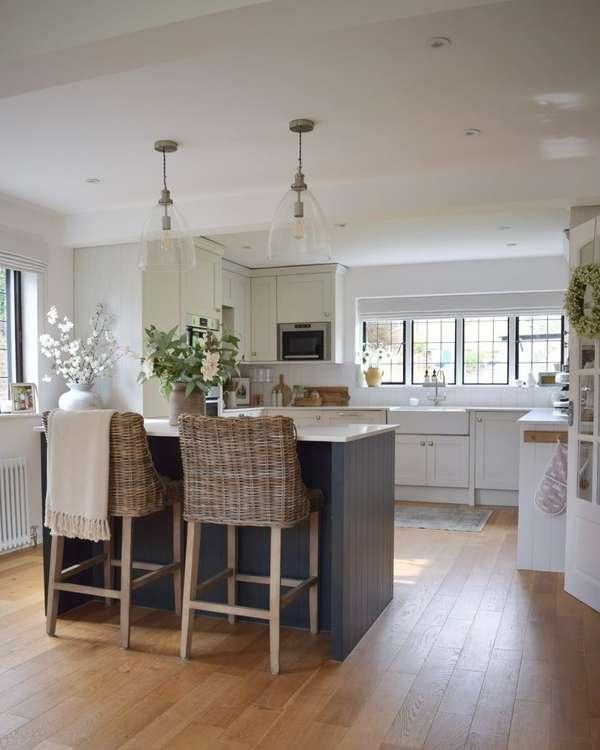
Photo: @high_street_house_
For kitchens that lean contemporary or Scandinavian, a flat-front slab-door island base with no visible hardware creates the cleanest possible silhouette. Push-to-open mechanisms or integrated handle recesses keep the façade uninterrupted. The material matters here more than in any other style — a flat front in a beautiful wood veneer or lacquered finish is extraordinary; a flat front in a cheap thermofoil finish just looks blank. Invest in the material if you choose this direction.
24. The Warm Wood Veneer Island
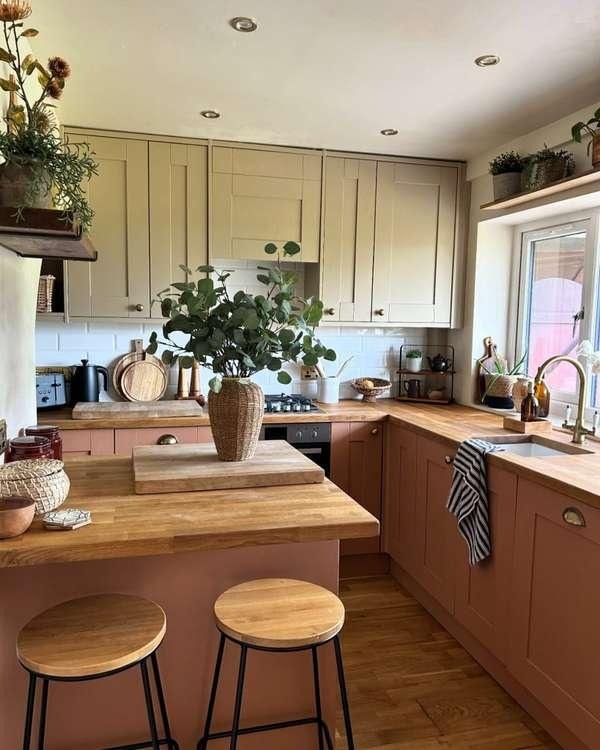
Photo: @casacrank
White oak, walnut, and European oak veneer are all having a sustained moment in 2026, and the island is often the right place to feature them. A wood-veneer island base with a stone or concrete countertop bridges the warmth of natural material with the practicality of a hard-wearing top. Consider grain direction: horizontal grain on a flat-front island reads more relaxed and furniture-like; vertical grain reads more architectural. Neither is wrong — it’s a deliberate choice, not a default.
Lighting, Color & Personality
An island without the right light above it is only half-finished. And the colour you choose tells the room what to feel.
25. The Pendant Lighting Moment
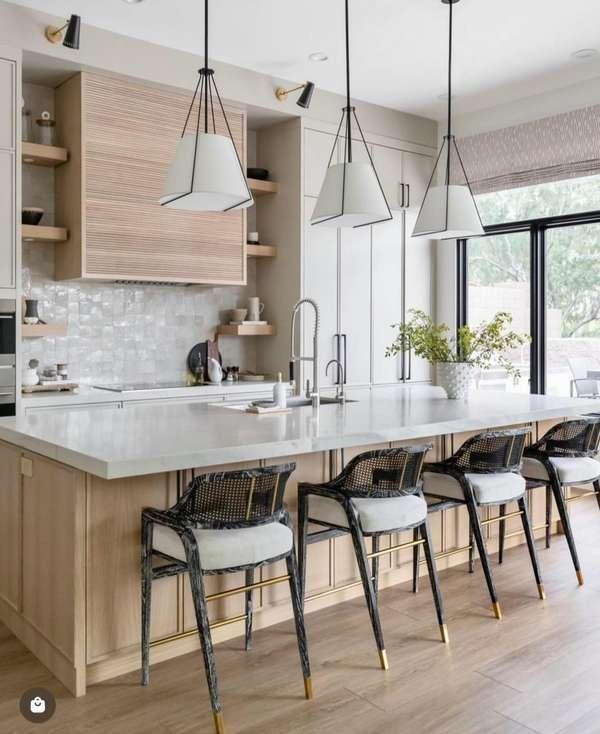
Photo: @lighting_design_company
Pendants above an island do two things simultaneously: provide task lighting directly where you work, and introduce a sculptural element at eye level that the room was missing. The rules: hang pendants 30–36 inches above the countertop surface, space them 24–30 inches apart, and use an odd number over a long island (three over 5–6 feet, five over 8+ feet). Always wire pendants on a dimmer for full control between bright task light during cooking and warm ambient light during dinner.
26. The Bold Colour Island in a Neutral Kitchen
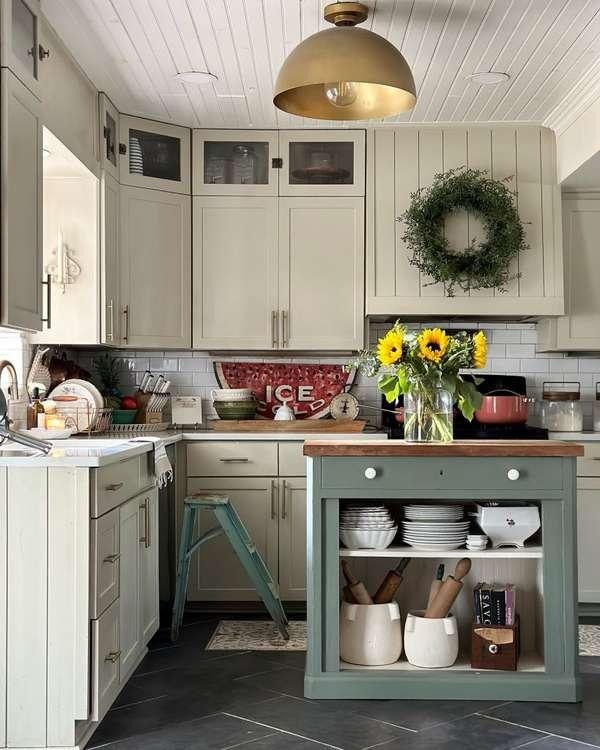
Photo: @cozycrazing
An island in a saturated, confident colour — moody blue, sage green, deep burgundy, warm terracotta — surrounded by neutral white or greige cabinetry creates the kind of visual contrast that photographs beautifully and lives even better. Keep the palette to three colours maximum, always include a neutral as one of them, and make sure your island colour relates to the tile, flooring, or accent colours elsewhere in the room. An island that clashes with the backsplash will irritate you every single day.
27. The All-Dark Moody Island Kitchen
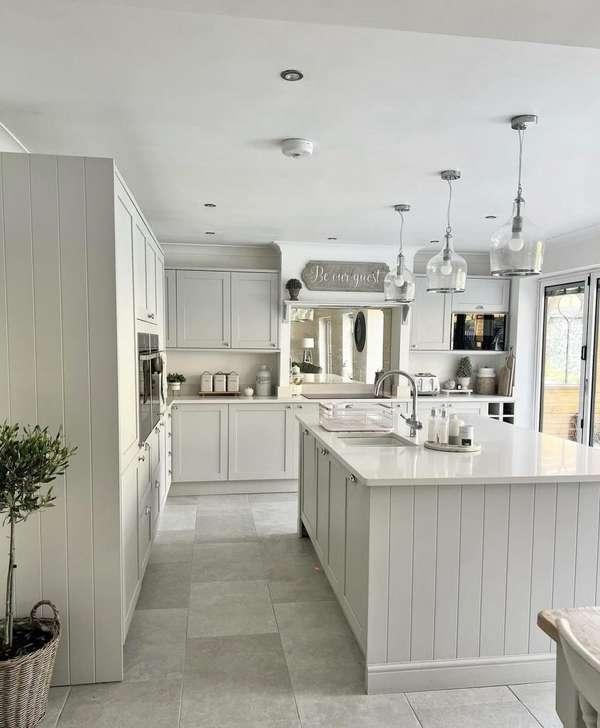
Photo: @my_cosy_pretty_home
All-dark kitchens — charcoal, near-black, deep forest — feel surprisingly livable when the lighting is right. The island in a dark kitchen needs to earn its presence through material richness: a heavily veined stone top, a lacquered finish with depth, or a contrasting metal accent. Under-cabinet LED lighting becomes non-negotiable rather than optional in dark kitchens, making the countertop glow against the surrounding cabinetry. Specify warm white (2700–3000K) LEDs to avoid a cold, clinical feel.
28. The Scandi White Minimalist Island
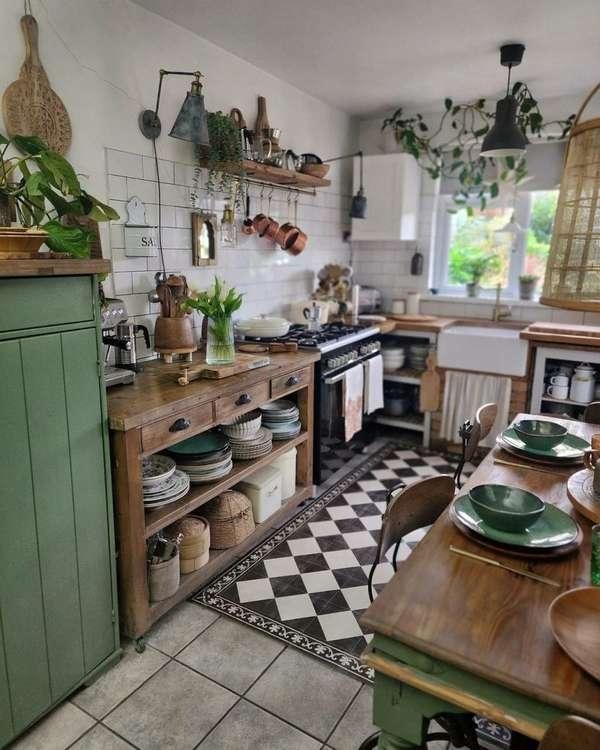
Photo: @hippietribex
The all-white or near-white kitchen remains one of the most timeless and universally livable approaches to kitchen design. In 2026 the update is in the texture: white-on-white works when surfaces have varying sheens and tactile qualities. A matte-painted island base, a honed white marble top, and a brushed nickel faucet create three whites that read as sophisticated rather than sterile. Avoid high-gloss white doors in daily-use kitchens — they show every fingerprint, and matte or satin finishes age far more gracefully.
29. The Antique-Modern Mixed Island
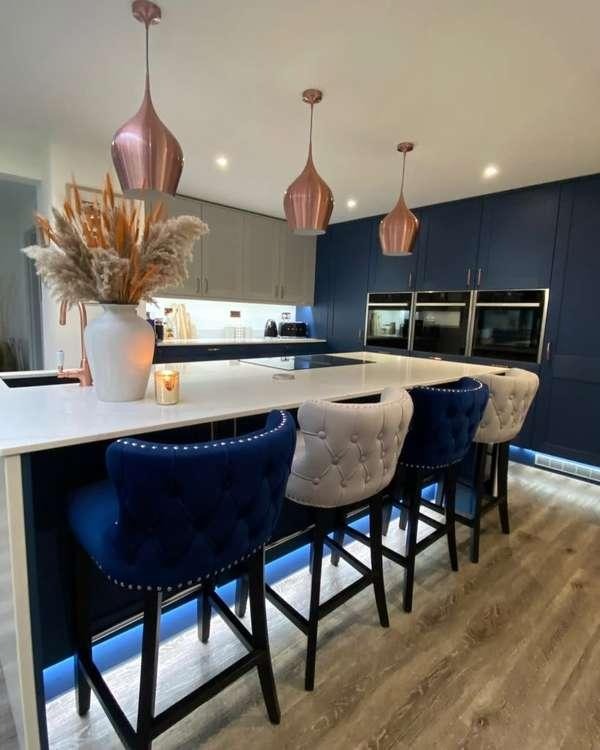
Photo: @1_just_got_bigger_
Antique minimalism — mixing old-world character with modern restraint — is one of the most compelling aesthetic directions for kitchens right now. Think a reclaimed wood island base with a sleek concrete or stone top, vintage-style unlacquered brass hardware on flat-front doors, or a farmhouse sink dropped into an island with otherwise contemporary lines. The key is balance: one vintage element works beautifully; too many compete and the result reads as costume rather than character.
Luxury Islands: When Budget Is Not the Limit
30. The Bespoke Island with Integrated Wine Storage
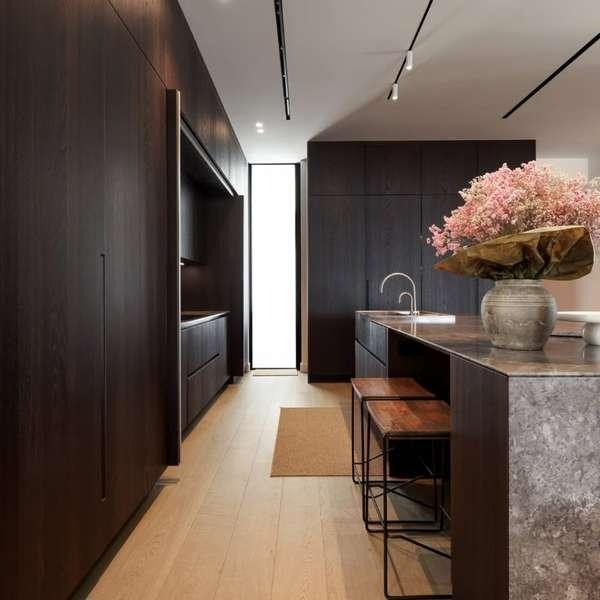
Photo: @cesarkitchens
A bespoke island with integrated wine storage — either a temperature-controlled wine fridge or open wine rack built into one end — signals a kitchen designed around hospitality rather than mere function. Position the wine storage at the end of the island nearest to the dining area so bottles are accessible without traffic crossing the cook’s workspace. A wine-fridge integration requires a dedicated electrical circuit, proper ventilation clearance at the front grille, and precise frameless cabinet construction to accommodate the appliance opening exactly.
Read Next: More Kitchen Inspiration
Enjoyed this article? Here are more kitchen ideas from improvewood.com to keep your creativity flowing:
| 🪑 Kitchen Island Ideas with SeatingTransform your space with 15 island designs built around comfortable, social seating. |
| 🎨 30 Kitchen Color Schemes to TryFresh color palettes from timeless neutrals to bold contrasts — find your kitchen’s perfect tone. |
| 🚪 65 Innovative Kitchen Cabinet IdeasClassic to contemporary — a full gallery of cabinet designs to inspire your next remodel. |
| 🔨 10 Trendy Kitchen Remodel IdeasModern makeover inspiration for every budget — the looks designers are putting in every project. |
| 💙 20 Stunning Blue Kitchen IdeasCalm, timeless, and endlessly versatile — see how blue transforms kitchens of every size. |
| ✨ 30 Must-See Kitchen Ideas 2025Multifunctional islands, bold palettes, and smart storage — the year’s best kitchen concepts. |
| 🌿 Green Kitchen Trend 2025Sage, emerald, forest — discover why green is the must-have kitchen color right now. |
| 🎭 30 Two-Tone Kitchen Cabinet CombinationsBold pairings and subtle contrasts — the art of two-tone cabinetry done beautifully. |
| 🪵 20 Hickory Kitchen Cabinet DesignsRustic warmth meets modern functionality in these stunning hickory cabinet ideas. |
| 🏠 30 Hardwood Flooring IdeasThe floor makes the room — transform any space with these hardwood flooring inspirations. |
The Biggest Kitchen Island Trends in 2026
Before you commit to a direction, here are the trends professional kitchen designers are building into every project right now:
- Oversized, multi-functional islands: The era of the small prep island is giving way to large 4–6 foot islands that combine cooking, dining, storage, and socialising in one anchoring piece of furniture.
- Integrated smart features: Pop-up USB and power outlets, hidden charging pads, and retractable device stands are becoming standard requests, particularly on islands used for homework and working from home.
- Curved and round-ended designs: Straight-cornered islands are being replaced by softened bullnose or fully rounded ends that improve traffic flow and create a more welcoming, furniture-like presence.
- Mixed countertop materials: Stone on the prep section, wood on the dining overhang, or two stone varieties side by side. The single-surface island is being challenged by surfaces that serve specific functional zones.
- Waterfall edges: Countertops that flow over the island sides remain one of the most requested premium details, especially in veined stone where the continuous pattern wraps the island in drama.
- Matte finishes over gloss: Across both painted cabinet doors and stone countertops, matte and honed finishes are preferred for their forgiving, less fingerprint-prone surfaces.
Frequently Asked Questions
What is the minimum kitchen size for an island?
You need at least 12 feet of open floor space in the direction the island runs to accommodate a 3-foot island with 36-inch aisles on both sides. For smaller kitchens (under 150 sq ft), consider a narrow rolling island instead of a built-in.
What is the best countertop material for a kitchen island?
Engineered quartz is the most practical choice for families: non-porous, no sealing required, highly durable. Natural marble is the most beautiful but requires annual sealing and develops a patina with use. Butcher block is ideal for dedicated prep zones. Many designers now combine two materials on a single island — stone for prep, wood for the seating overhang.
Can you put a cooktop in a kitchen island?
Yes — and it’s one of the best layouts for open-plan kitchens. But it requires planning: a ceiling-mounted hood rated for at least 900 CFM, utility lines run through the floor or ceiling before any slab pours, and counter space on both sides of the cooktop. Never position the cooktop at the very end of the island where there’s clearance on only one side.
How high should kitchen island pendants be hung?
Hang pendants 30–36 inches above the countertop surface. Space them 24–30 inches apart. Use an odd number for visual balance over a long island. Always wire them on a dimmer switch for flexibility between task lighting and ambient dining light.
How big should a kitchen island seating overhang be?
A minimum 12-inch overhang accommodates seating but feels tight. 15 inches is comfortable for most people. Beyond 18 inches, the overhang needs a support bracket or decorative leg to prevent the countertop from cracking under weight over time — especially important in heavier stone materials like quartzite or thick marble.
What is the kitchen work triangle and does an island affect it?
The kitchen work triangle connects the three primary stations: refrigerator, cooktop, and sink. Each leg should be between 4 and 9 feet for an efficient kitchen. A well-placed island can create a second, shorter work triangle — for example between a prep sink, island cooktop, and refrigerator. A poorly placed island can interrupt the main triangle and make the kitchen frustrating to work in every day.
Ready to Design Your Island?
The best kitchen island isn’t necessarily the biggest, most expensive, or most photographed. It’s the one designed around how you actually cook, gather, and live. Start with the professional fundamentals: get your clearances right, keep your work triangle intact, and plan your utilities before you plan your aesthetics.
From there, the creative decisions are yours. Whether you’re drawn to the drama of a marble waterfall island, the practicality of a deep-drawer prep station, or the warmth of a painted Shaker island with brass hardware, the ideas above prove that function and beauty aren’t competing values — they’re the same goal.