
The floor is the first thing you feel when you walk into a room and the last thing most people think about when planning a farmhouse home. Get it right, and every piece of furniture, every wall treatment, and every fixture looks like it belongs. Get it wrong, and even the most carefully chosen décor fights the room.
Farmhouse flooring has one defining quality: it should look like it has a history, or could develop one. Whether that’s the genuine patina of reclaimed barn wood, the worn charm of painted wide planks, or the honest texture of brick laid in a herringbone mudroom, the best farmhouse floors feel like they were always there.
These 30 ideas cover every material, every budget, and every room — from the character-rich to the practical, from the timeless to the trend-forward.
Classic Wood Floors: The Heart of Farmhouse Style
Wood is the foundation of farmhouse flooring. Species, width, finish, and treatment all shape how the room feels. Here’s how to make each wood option work.
1. Wide plank hardwood
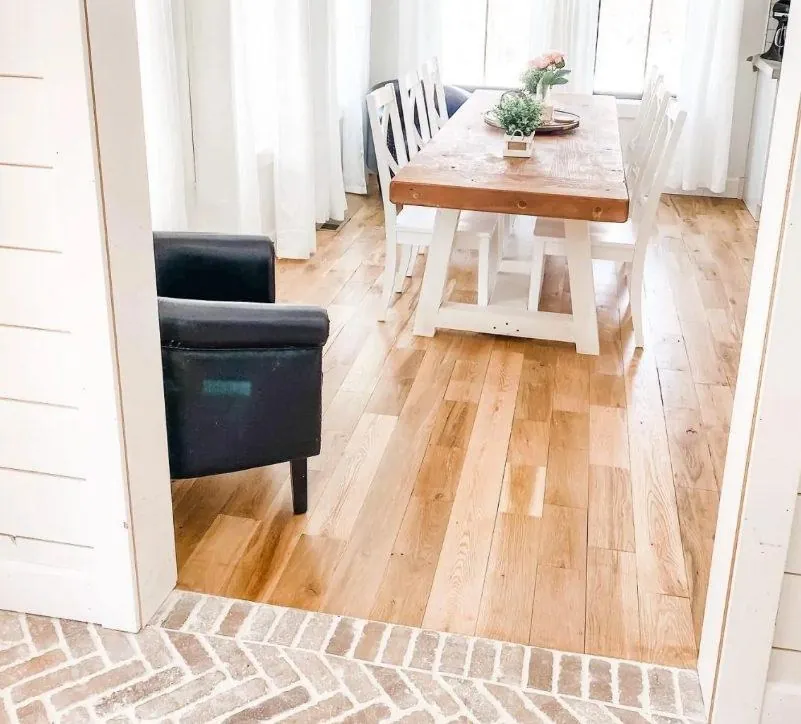
“Wide plank” means anything over 5 inches — and the wider the board, the more farmhouse character it carries. Planks of 7 to 10 inches show more natural grain variation, more knots, and more of the wood’s story. White oak is the most popular species right now for its warm golden tone and tight grain. For a true farmhouse floor, choose a matte or satin finish rather than high-gloss polyurethane, which strips wide planks of everything that makes them beautiful.
2. Reclaimed barn wood
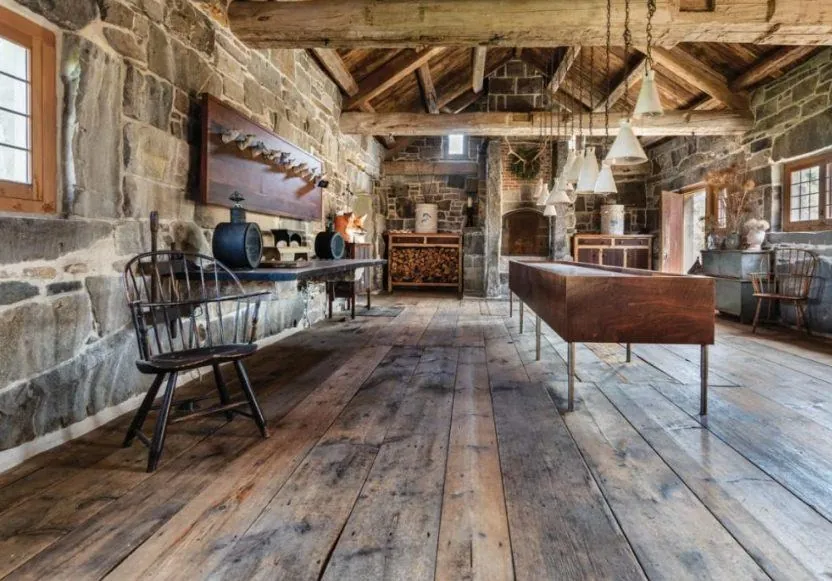
Reclaimed wood is farmhouse flooring at its most authentic: genuine age, genuine patina, genuine history. Boards salvaged from old barns or factories carry saw marks, nail holes, and colour variation that no manufacturing process can replicate. The trade-off is cost — typically $8–15 per square foot — and the need for a skilled installer who can sort and fit boards without jarring transitions.
3. Reclaimed wide plank (living areas)
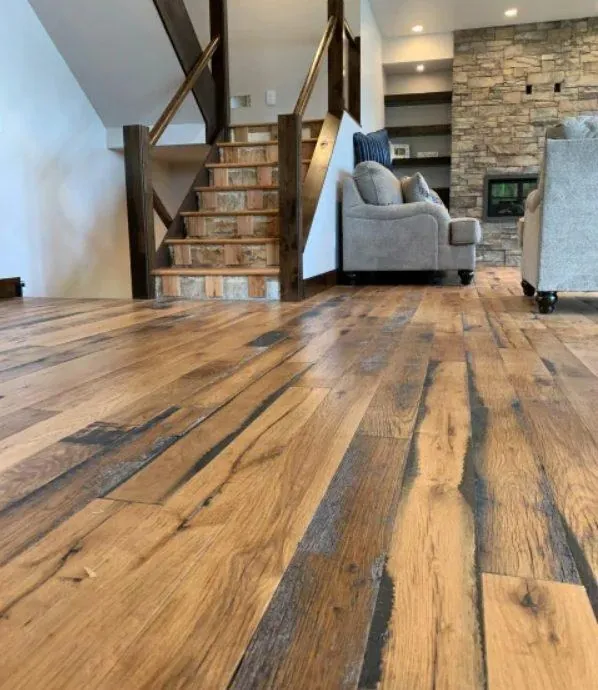
Wider reclaimed planks — 8 to 12 inches — in a living space create an immediate sense of age and solidity. The variation in tone between boards, from honey amber to deep walnut, comes from decades of sun exposure and wear rather than stain. Pair with wide baseboards, painted shiplap, and simple iron hardware for a fully considered farmhouse aesthetic.
4. Reclaimed wood in the kitchen
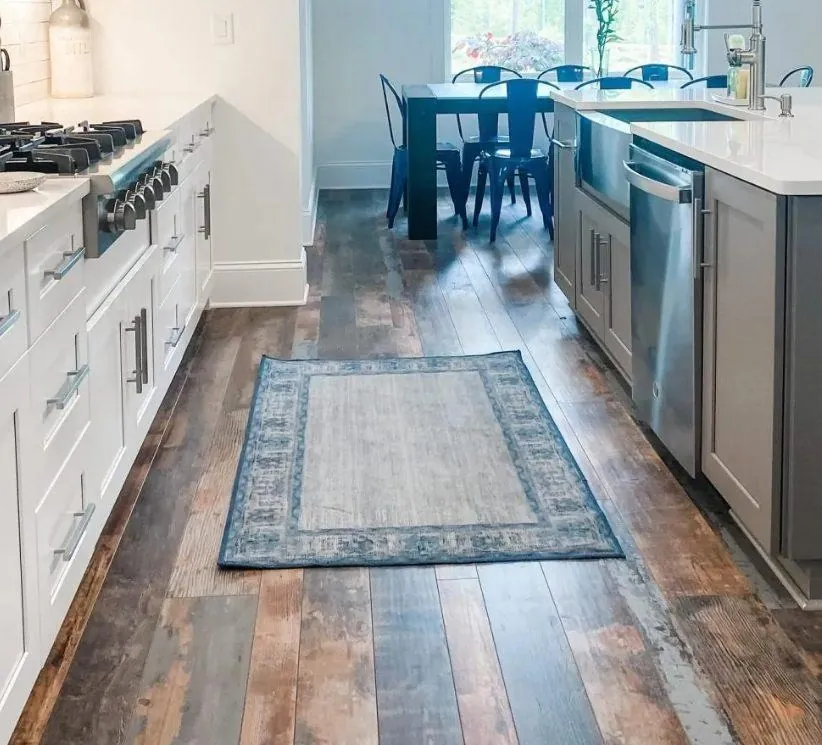
Wood in a kitchen divides designers, but sealed hardwood performs well provided spills are wiped quickly. Reclaimed or hand-scraped wood is particularly practical in kitchens because its existing texture means scratches and everyday wear add to the patina rather than damaging a pristine surface. Use penetrating oil finishes for the most durable and repairable result.
5. Dark walnut stain
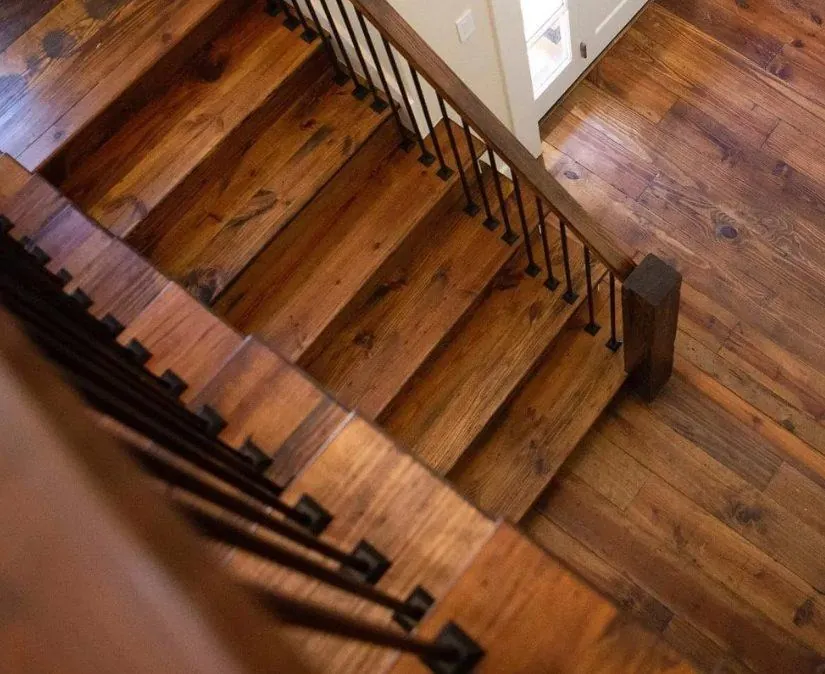
A dark walnut stain on oak or pine brings drama and depth — particularly on staircases where the contrast with white painted risers and iron balusters is striking. Dark floors make rooms feel more anchored and intimate, which suits formal dining rooms and master bedrooms. The practical consideration: dark floors show dust and pet hair far more than medium tones. A warm mid-brown stain is more forgiving for family homes.
6. Mixed width planks
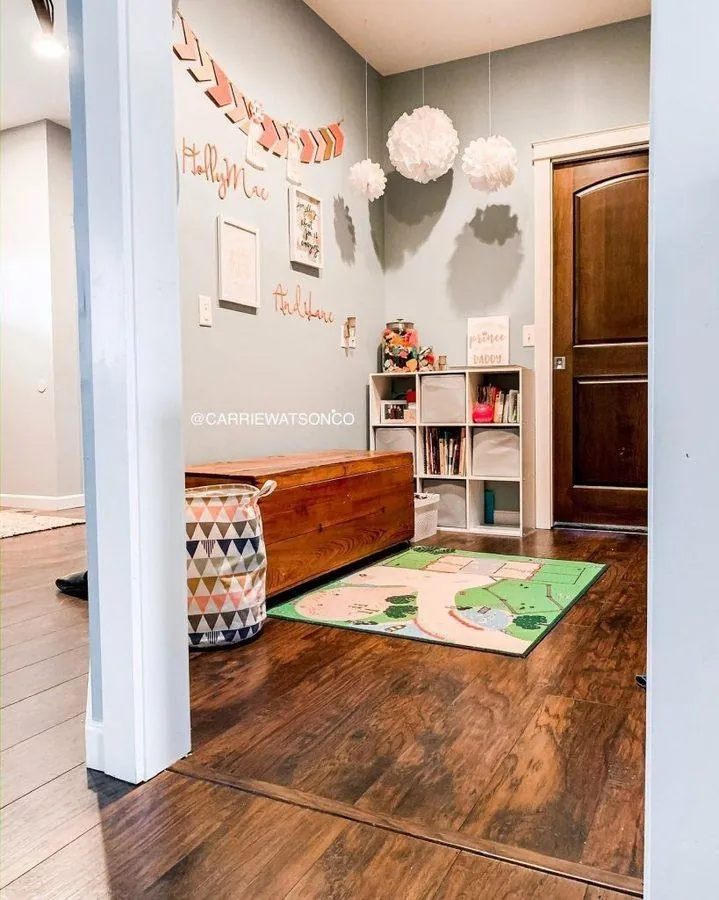
Varying the plank width — alternating between 3-inch, 5-inch, and 7-inch boards in a random or set pattern — is a hallmark of authentic old farmhouse floors. Before milling technology standardised board widths, floors were laid with whatever the timber yielded, creating natural organic variation. Modern mixed-width floors recreate this deliberately. The installation rule: stagger the width pattern so the same width never appears side by side across more than 2–3 boards.
7. Whitewashed pine floors
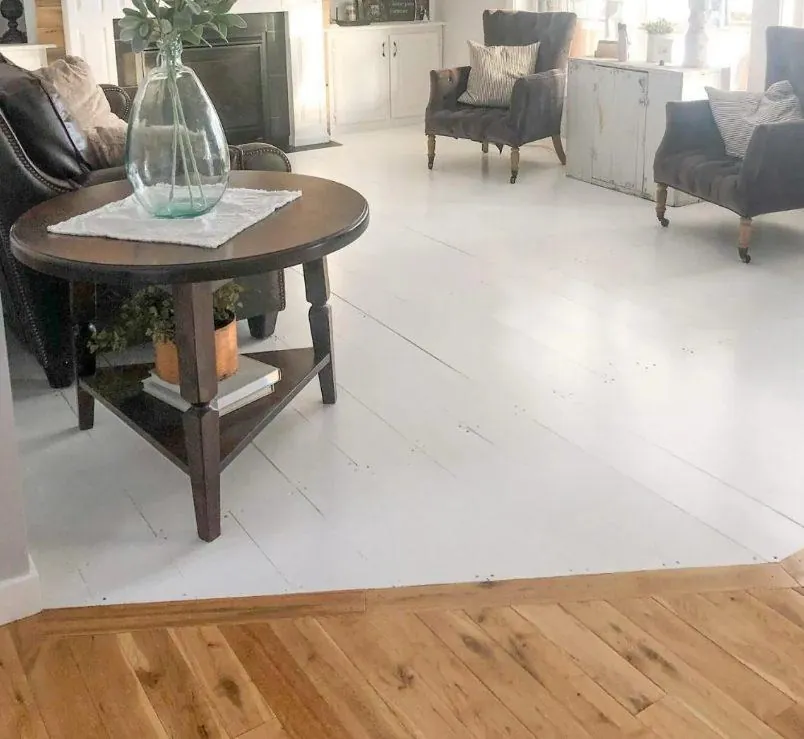
Whitewashing floods the grain with a milky finish that lightens rooms dramatically. The technique applies thinned white or grey paint, lets it penetrate the grain, then wipes the surface so colour settles in the deeper texture. The result is brighter than bare pine but warmer than white paint. Pine is a softwood — it dents more readily than oak — so whitewashed pine floors work best in lower-traffic spaces: bedrooms, studies, and formal sitting rooms.
8. Painted white floors (living room)
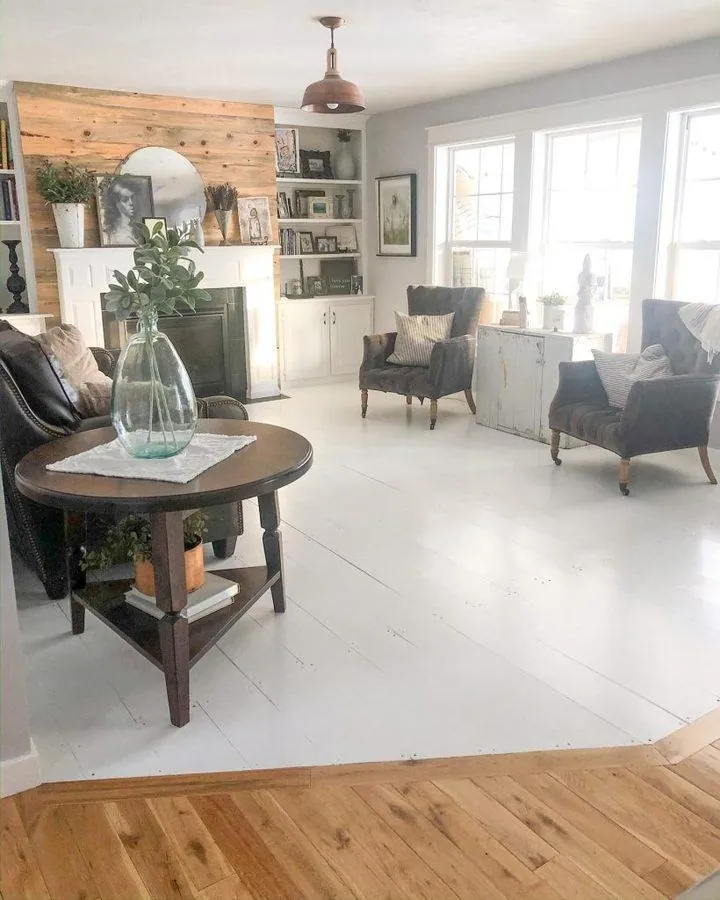
A fully painted white floor makes small rooms feel dramatically larger and provides a clean canvas for layering rugs, furniture, and wall colour. White painted floors require a hard-wearing porch-and-floor enamel and will show scuffs in high-traffic areas — but the Scandinavian farmhouse tradition treats this as part of their character, touching up annually as a seasonal ritual rather than fighting inevitable wear.
9. Painted white floors (bedroom)
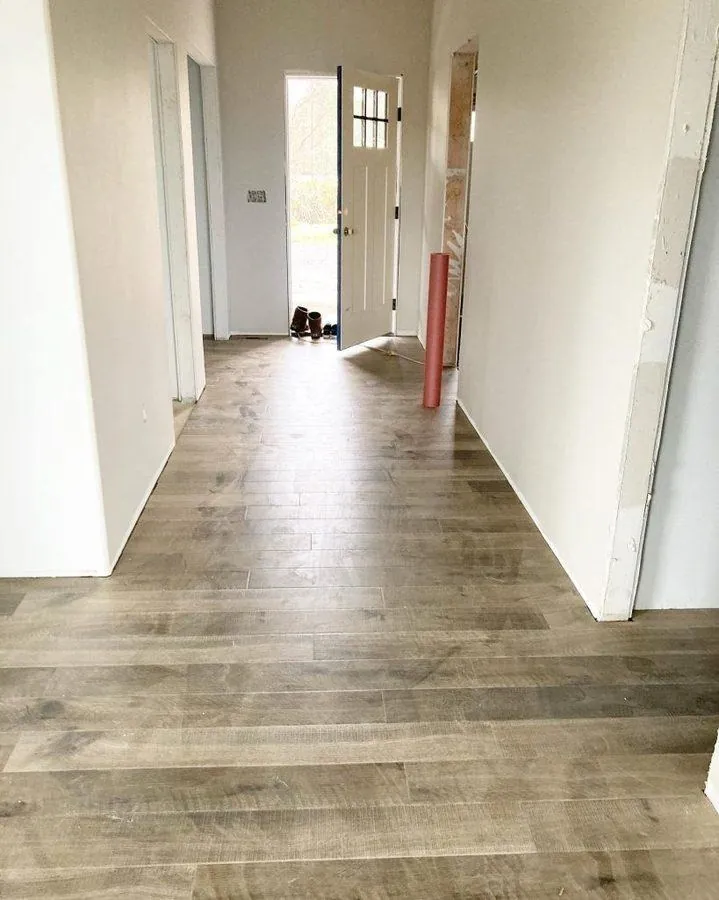
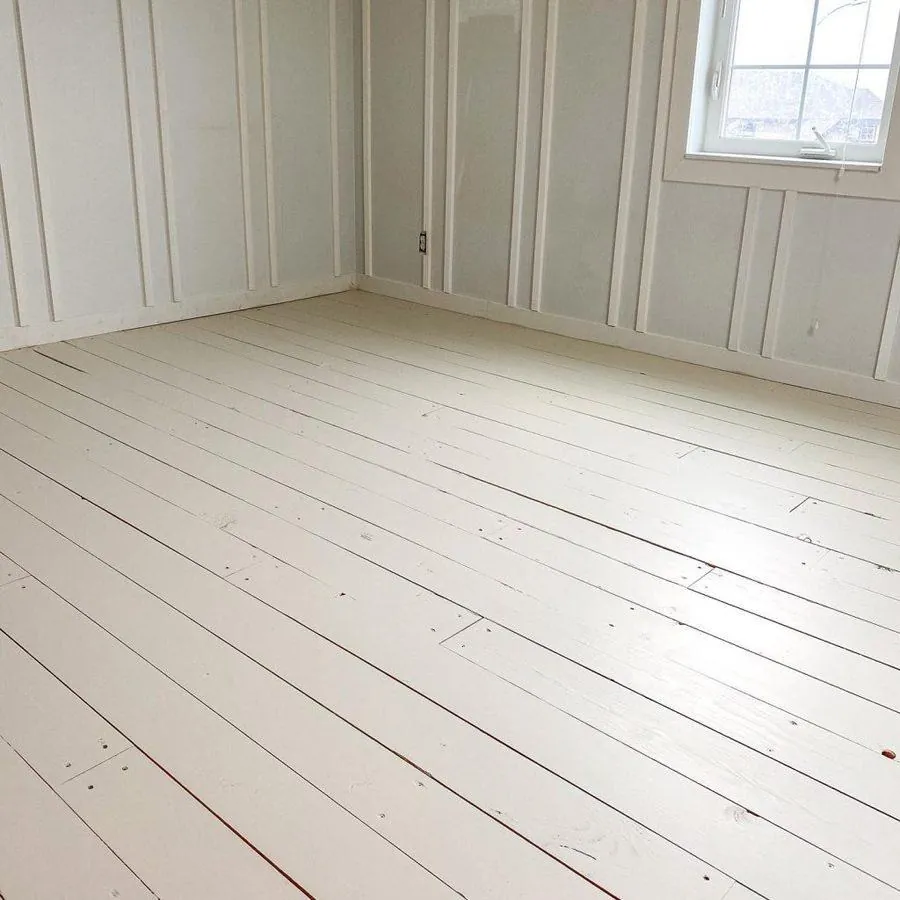
Painted floors in a bedroom create a fresh, clean backdrop that works equally with linen-toned walls, soft blue-greens, and all-white palettes. The board and batten wall treatment shown here is the ideal companion: both bring texture and handcraft quality without competing. Use semi-gloss floor paint rather than matte — it cleans more easily and resists furniture scuffing.
Brick & Stone Floors: Rustic Character That Lasts Generations
Brick and stone floors are the oldest flooring tradition in farmhouse design. Where wood brings warmth, masonry brings permanence, texture, and a connection to the building itself.
10. Brick herringbone (mudroom)
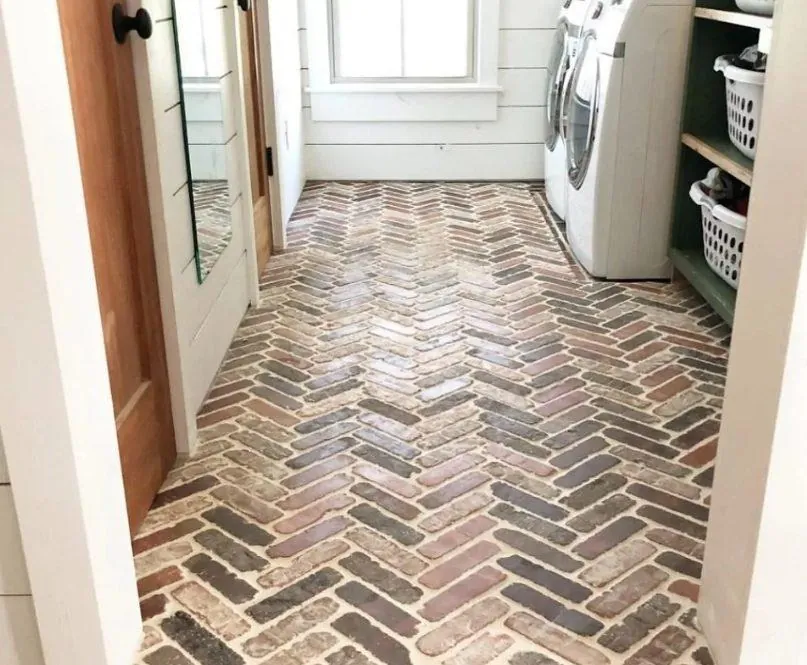
Brick laid in a herringbone pattern is one of the most photographed farmhouse flooring choices: it combines the warmth of fired clay with the geometric interest of one of architecture’s oldest patterns. Thin brick veneer (½ to ¾ inch) makes it practical without requiring structural depth. Herringbone is particularly effective in mudrooms where the directional V-shape draws the eye and makes narrow spaces feel wider. Seal with a penetrating masonry sealer to prevent staining.
11. Brick running bond (kitchen)
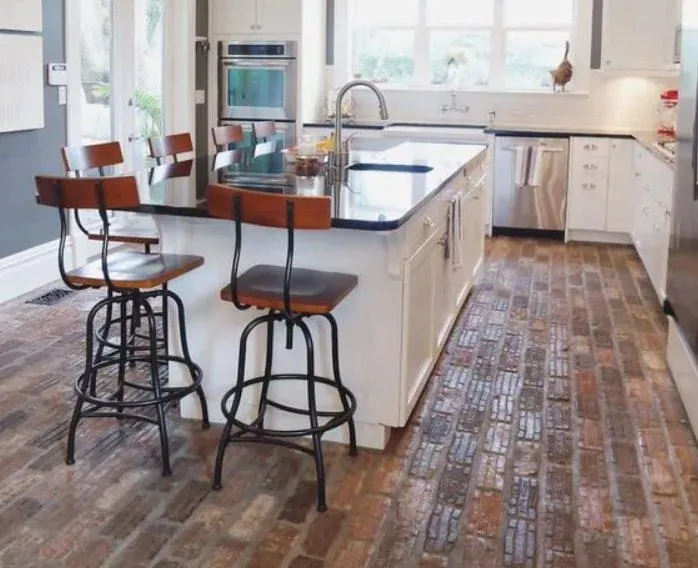
A running bond brick floor — standard offset horizontal rows — suits open kitchen and dining spaces where you want texture without strong directional pull. Reclaimed brick carries colour variation from cream to deep rust that gives farmhouse kitchens an aged, collected quality no tile can replicate. Grout colour makes a major difference: buff or natural grey lets the brick breathe; bright white grout tends to dominate the whole surface.
12. Brick herringbone (close-up)
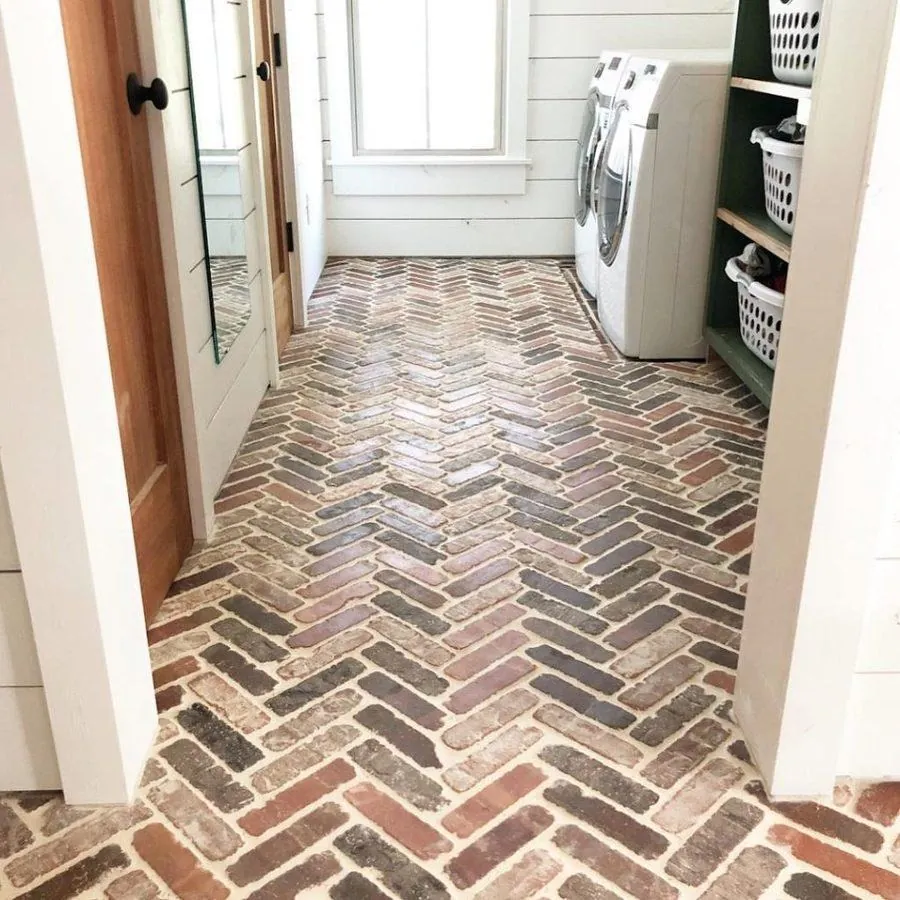
The mudroom is the ideal space for brick flooring: it handles wet boots, tracked mud, and heavy traffic with ease. Pairing brick floors with shiplap walls and painted wood cabinetry creates the layered, material-rich entry that defines modern farmhouse design. For mudrooms specifically, choose tumbled brick for its rounded edges — sharper-edged brick collects grime in the corners and is harder to clean daily.
13. Terracotta tiles
Terracotta — fired red clay tile — brings warmth with a smoother, more refined surface than brick. Terracotta floors evoke Provençal farmhouses and Mediterranean country homes: spaces where age and sun-warmed materials are the whole point. For the most authentic farmhouse look, choose hand-cut or tumbled tiles in a warm orange-red with minimal grout lines laid on the diagonal. Seal annually with a terracotta-specific penetrating sealer — unsealed terracotta stains easily from cooking oils and wine.
14. Penny tile (farmhouse bathroom)
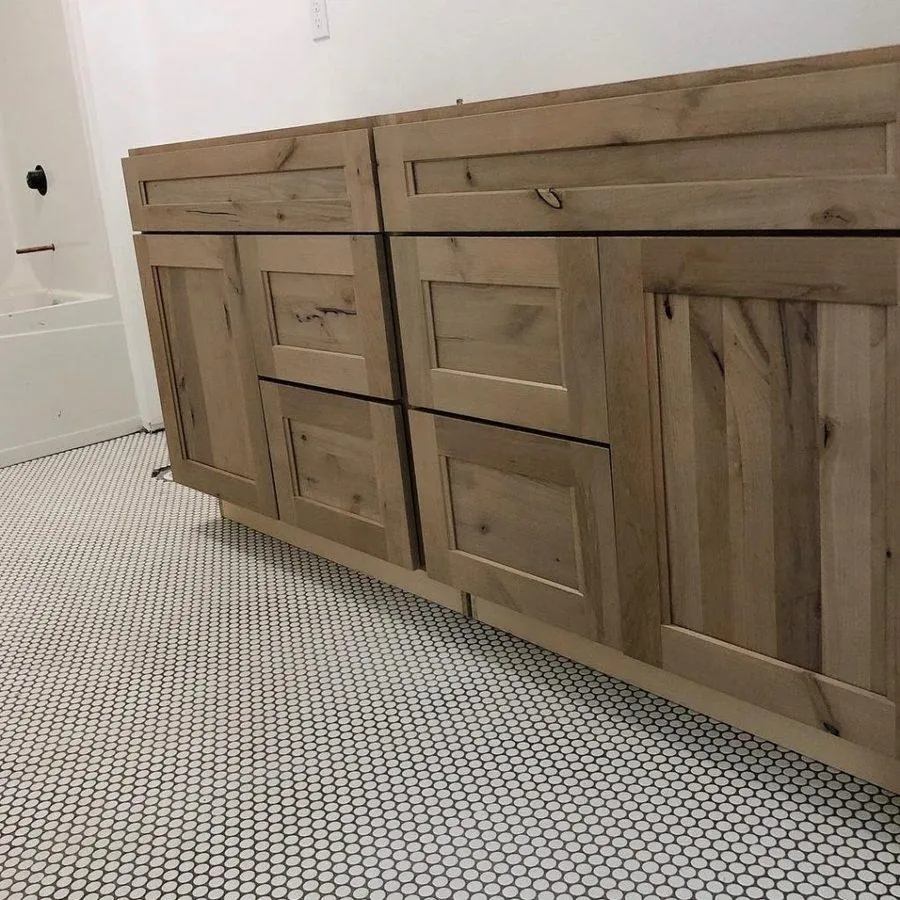
White penny tile references early 20th century American plumbing aesthetics and pairs naturally with the Shaker cabinetry and exposed wood that define farmhouse bathrooms. Penny tile on the floor with subway tile on the walls is one of the most reliable bathroom combinations: clean, timeless, and compatible with both rustic and modern elements. Grout colour is the key decision — white-on-white is crisp; dark grey grout emphasises the mosaic pattern and hides discolouration over time.
Budget-Friendly Farmhouse Floors: Great Look, Practical Price
Modern luxury vinyl plank (LVP) has become so convincing that even experienced eyes struggle to identify it on sight. These options deliver farmhouse aesthetics at a fraction of the cost of solid wood.
15. Gray-washed vinyl plank
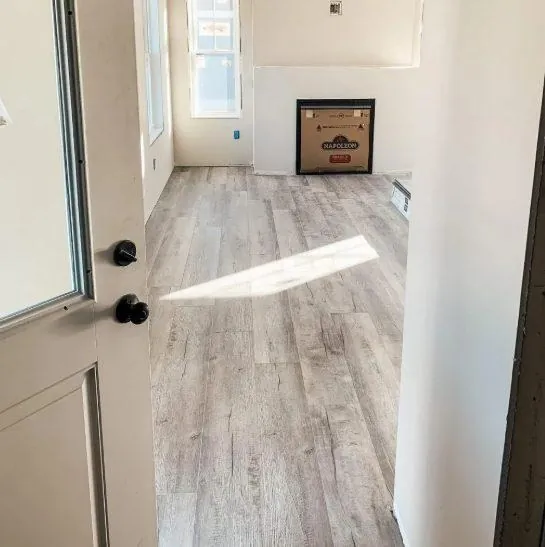
Luxury vinyl plank is the most practical farmhouse flooring material available: 100% waterproof, scratch-resistant, comfortable underfoot, and installable as a DIY floating floor. In gray-washed tones it delivers the modern farmhouse aesthetic at $2–6 per square foot versus $8–15 for solid hardwood. The specification that matters most: wear layer thickness. 12 mil is residential standard; 20 mil is recommended for families and pets.
16. Dark vinyl plank (shiplap hallway)
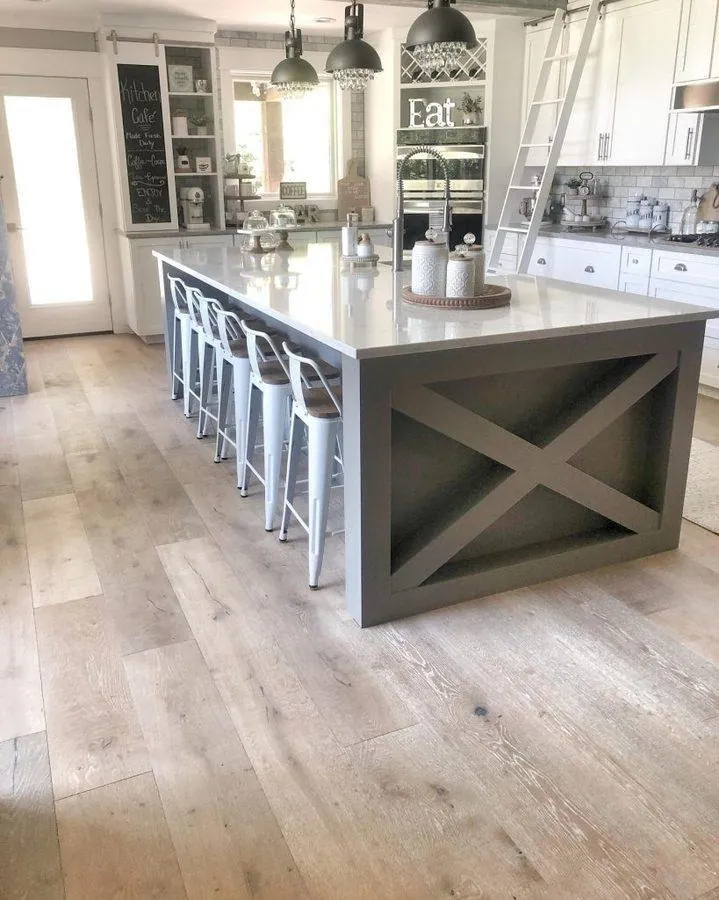
Dark-toned vinyl plank with white shiplap walls creates a high-contrast combination that feels bold and deliberately designed. The shiplap brings texture and brightness at eye level; the dark floor anchors the space. Dark vinyl in hallways works best with an embossed surface texture mimicking hand-scraped wood — smooth-faced vinyl in a dark tone can look flat and artificial.
17. Gray vinyl plank (wide open plan)
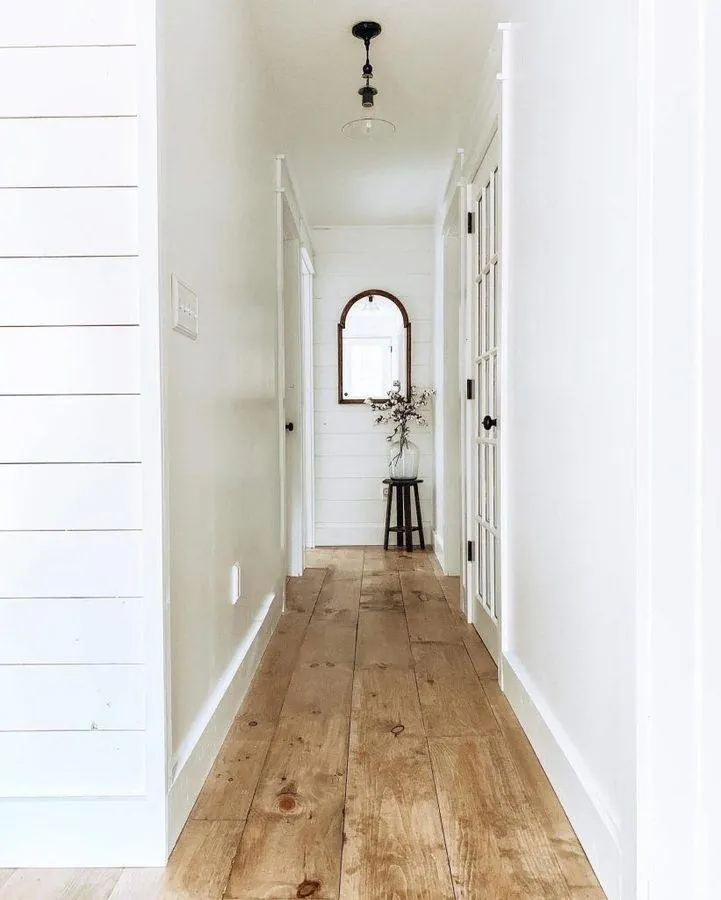
Neutral gray vinyl plank throughout an open-plan farmhouse creates continuity between rooms — one of the key advantages of a floating floor system that can run through multiple spaces without transition strips. Gray works particularly well in modern farmhouse builds where the palette leans towards whites, cool neutrals, and black iron hardware. The installation advantage over hardwood: vinyl handles moisture variation and subfloor imperfections, making it ideal for slab-on-grade construction.
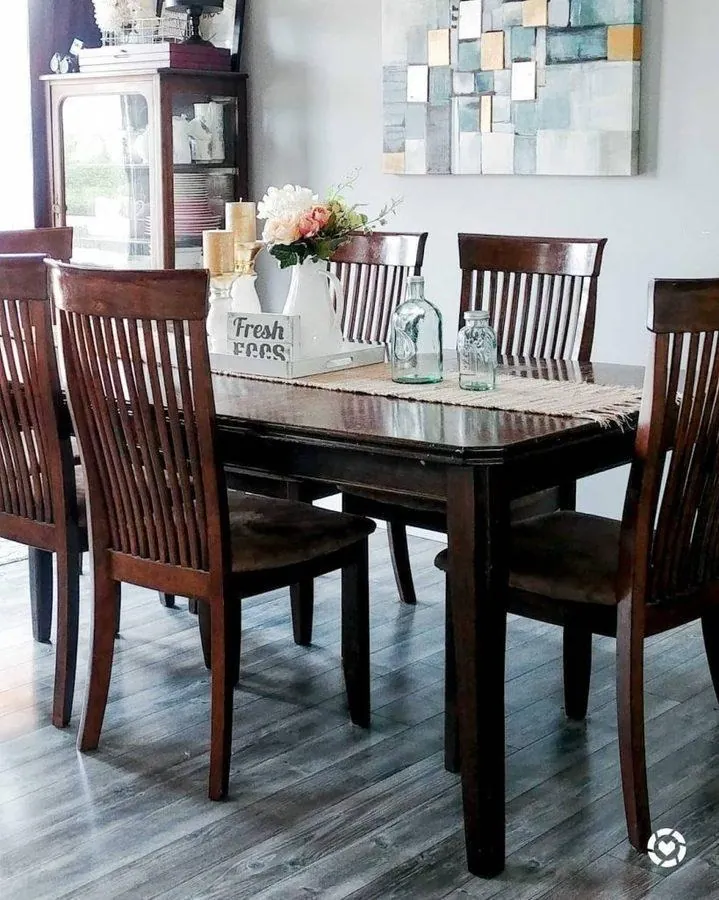
18. Gray-washed laminate (dining room)
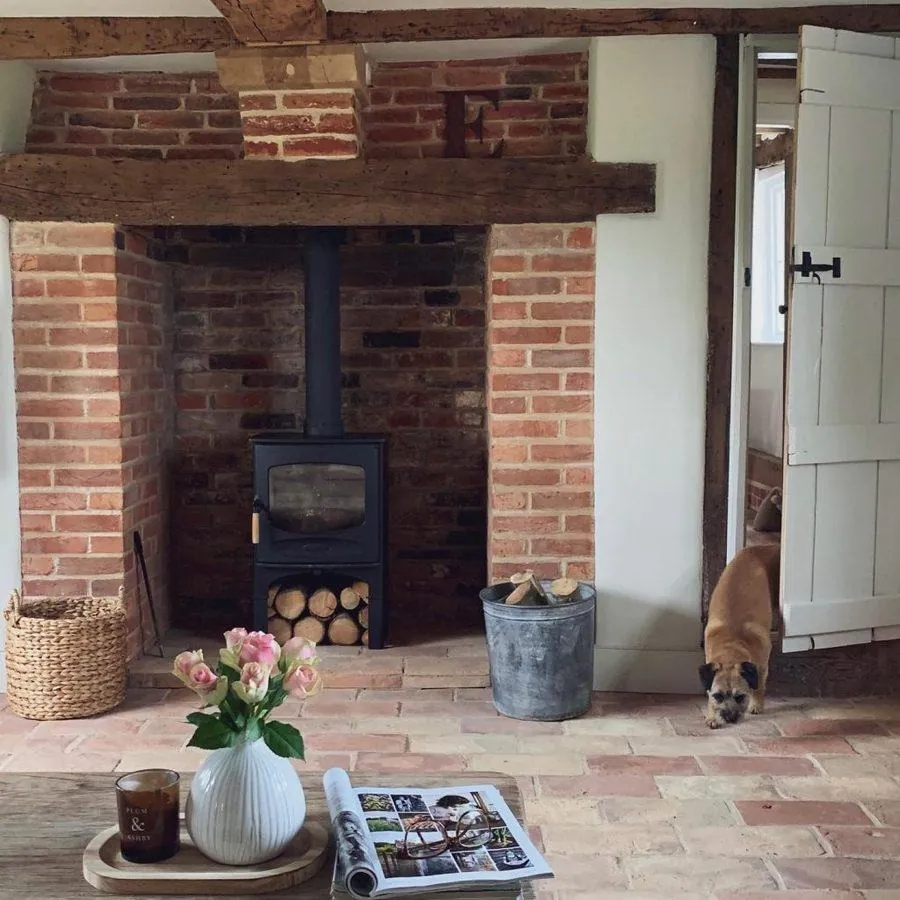
The grey-washed laminate here illustrates how convincing modern laminate has become at replicating the weathered, sun-bleached character of aged oak. Against dark wood furniture, the grey floor creates a contrast that makes both surfaces read more richly. Laminate runs $1–4 per square foot — the most affordable way to cover large areas consistently. The practical limitation: laminate cannot get wet. Use LVP instead in bathrooms, mudrooms, or kitchens.
19. Dark walnut vinyl (kids’ room)
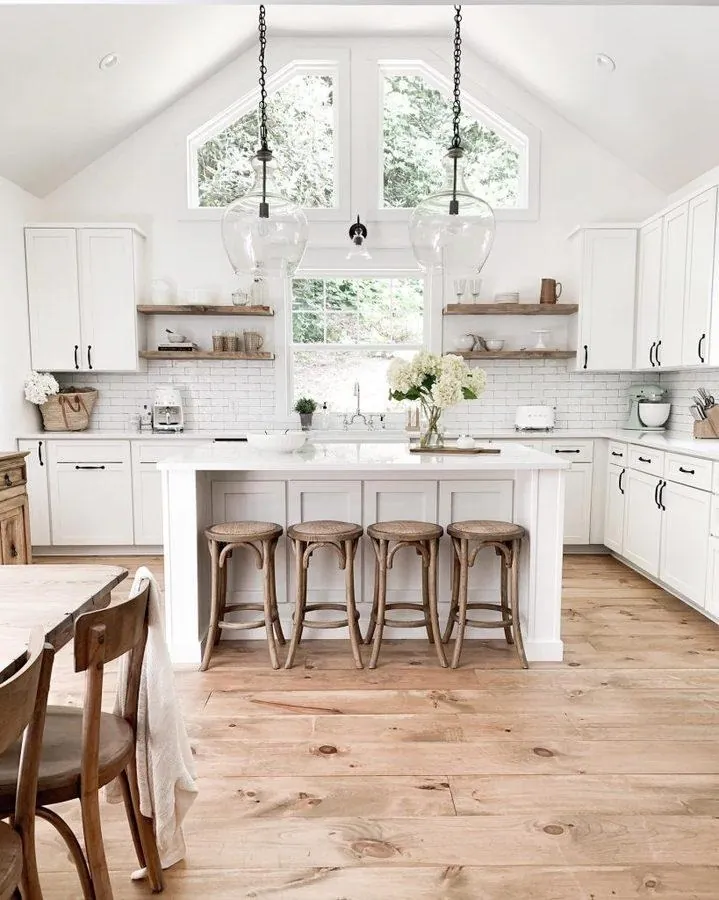
Dark vinyl plank in a child’s room handles the scuffing, toy-dragging, and craft-session spills that would mark genuine hardwood. The shiplap walls in this design demonstrate how strongly horizontal texture reads against a dark floor — each element enhances the other. Vinyl plank is also warm and resilient underfoot compared to tile or laminate, which matters in spaces where children spend time on the floor.
20. Gray-washed wide plank vinyl (farmhouse kitchen)
A wide-format gray vinyl plank (8–12 inches) in a farmhouse kitchen achieves the light, airy modern farmhouse floor that defines new builds and renovations. The plank width is critical — narrow 3-inch strips look like older strip flooring; wide planks read as contemporary farmhouse. Paired with grey island cabinetry and white perimeter cabinets, the floor creates a cohesive neutral palette that works across different room sizes and light conditions.
21. Wide plank vinyl (white kitchen)
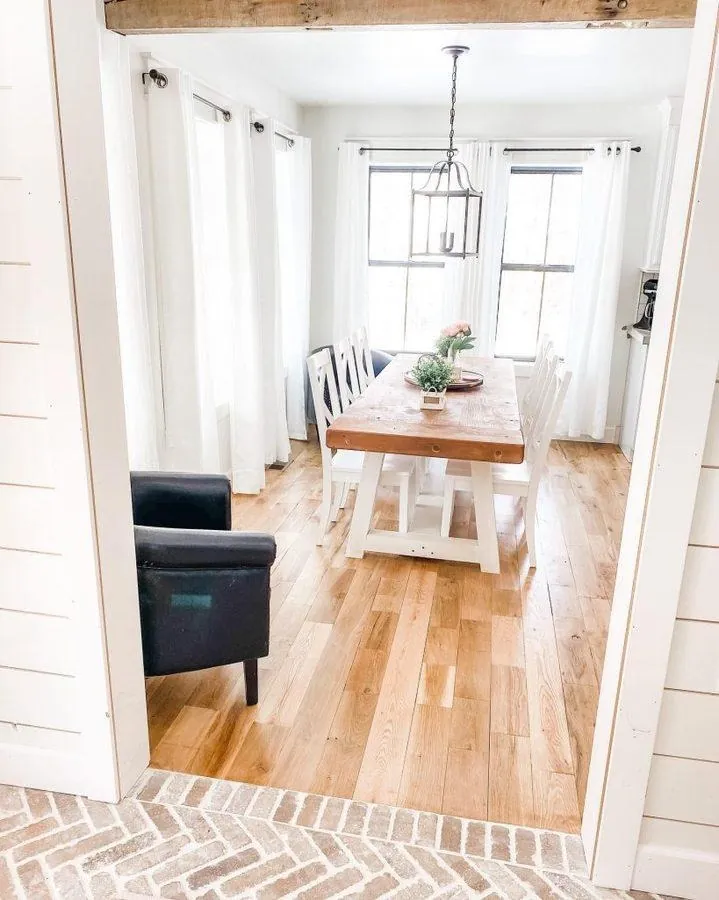
The lightest end of the vinyl spectrum — natural oak or blonde tones — in an all-white farmhouse kitchen creates a bright space that feels expansive. The warm undertone of the floor prevents an all-white kitchen from reading as clinical. White painted Shaker cabinets, white countertops, white subway tile, and a warm light-wood floor: this combination is essentially the modern farmhouse kitchen formula, and it works consistently.
22. Wide plank vinyl (modern farmhouse kitchen)
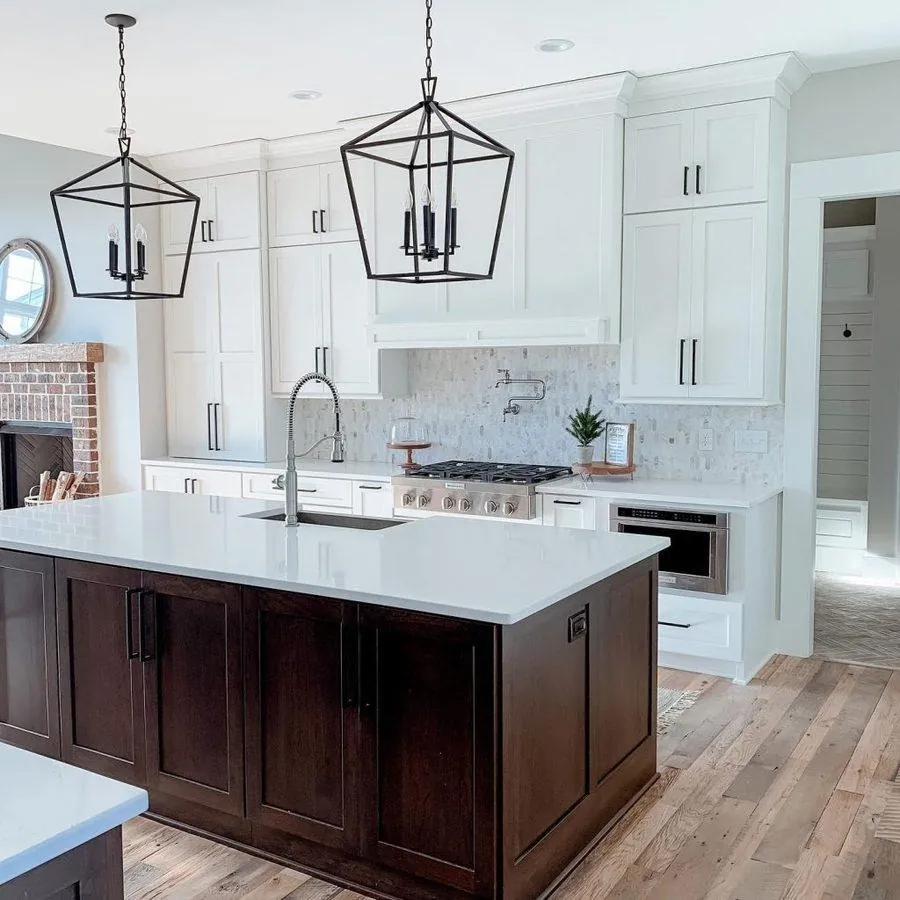
The same light wide-plank floor in a kitchen with darker elements — a near-black island, black cage pendant lights — shows how versatile the light wood floor is as a neutral. It doesn’t compete with bold design choices; it supports them. Choose a wire-brushed or lightly hand-scraped surface texture rather than a smooth face — the texture prevents the floor from looking artificial and helps conceal fine scratches that accumulate in a working kitchen.
Specialty Floors & Pattern Ideas
Beyond material, the layout pattern and surface treatment transform even basic flooring into something genuinely interesting.
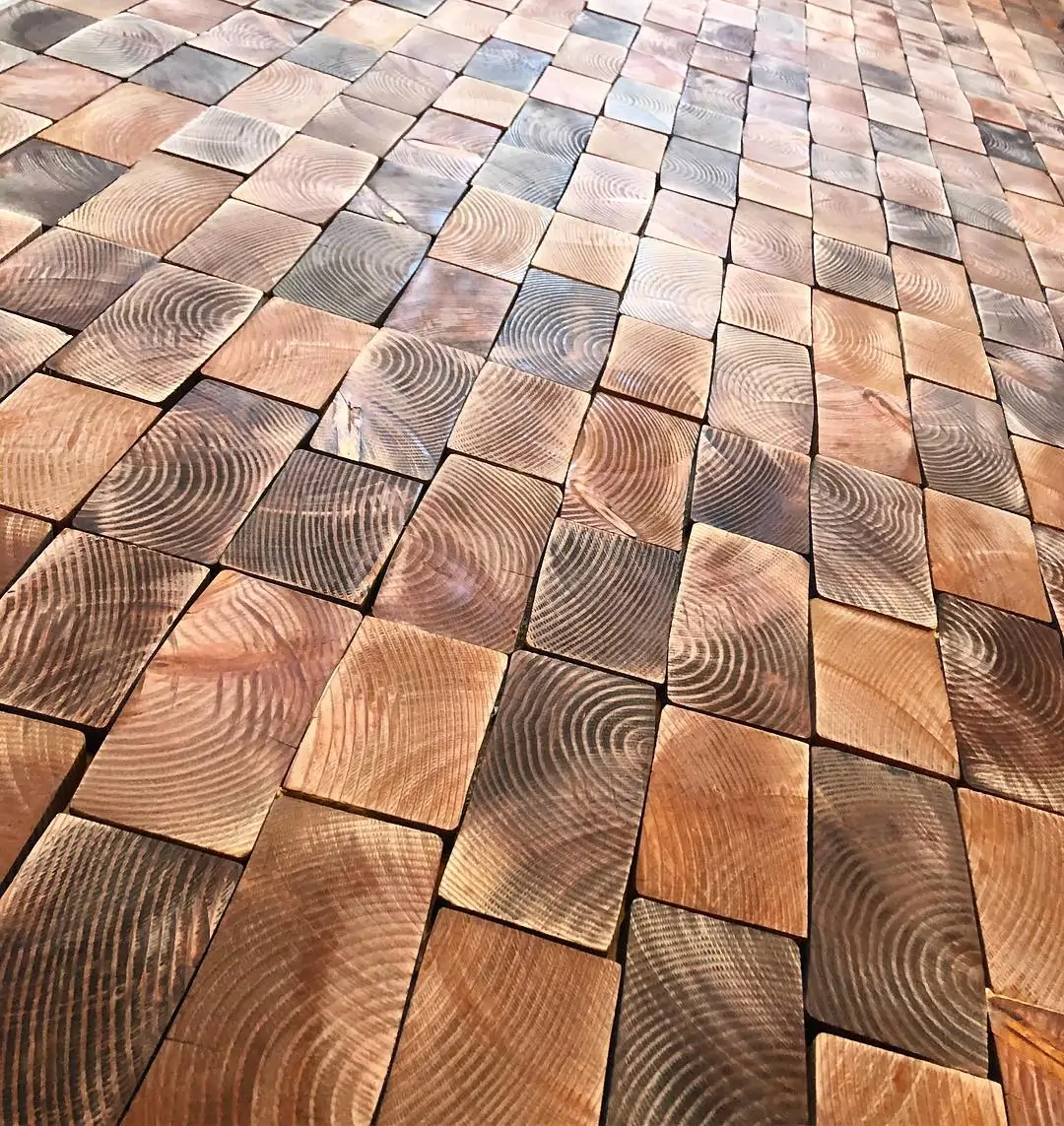
23. End grain wood block floors
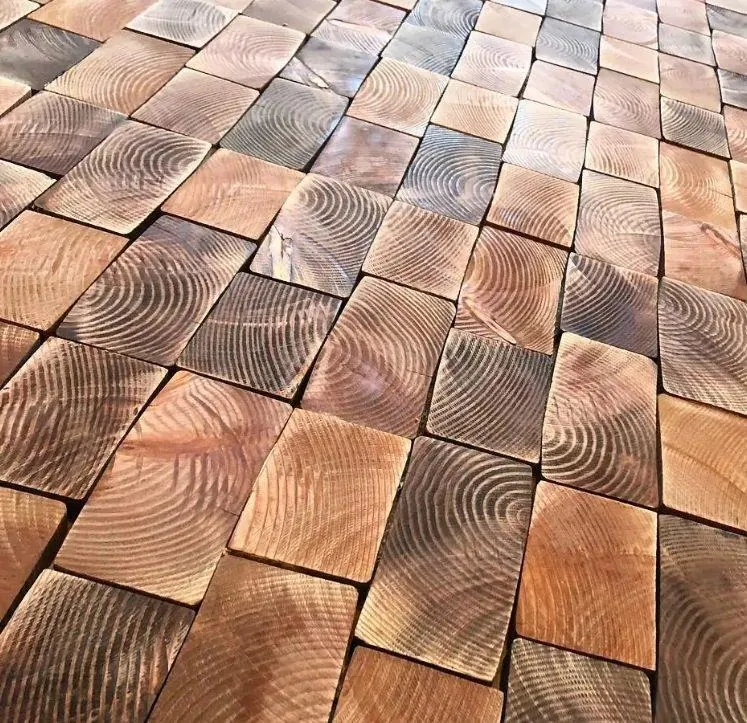
End grain flooring — where blocks are oriented so you’re looking at the cut end of the timber — is one of the most tactile and visually extraordinary farmhouse options. The concentric ring patterns of each block are completely unique; no two square inches look the same. Historically used in industrial settings for exceptional durability, end grain works beautifully as a feature in entrances, kitchens, or studies. It requires thorough sealing on installation and periodic oiling to prevent the blocks from drying and separating.
24. Herringbone wood pattern
The herringbone pattern in a warm oak or walnut floor transforms any room it’s in. The 45-degree interlocking V-pattern is one of the oldest decorative floor layouts in European architecture, found in French châteaux and English manor houses. In a farmhouse context it elevates the floor from background to feature, making even a modest-sized room feel considered and designed. Herringbone requires approximately 15–20% more material due to cutting waste at the borders and longer installation time.
25. Chevron pattern
Chevron differs from herringbone in one key way: where herringbone creates a broken zigzag, chevron creates a continuous V because each plank is cut at an angle so the points meet precisely in the centre. The result is sharper and slightly more contemporary. In a farmhouse home, chevron works best in a natural or lightly stained wood — the pattern itself provides more than enough visual interest without a heavily tinted floor competing with it.
26. Checkerboard tile pattern
Black-and-white checkerboard flooring in a kitchen or entrance hall is one of the most reliably striking farmhouse choices. Its vintage American farmhouse character recalls the linoleum floors of 1920s–1950s homes while working equally well as a deliberate contemporary statement. Use large format tiles (12×12 or 18×18 inches) for modern proportions; small tiles read more Victorian than farmhouse.
27. Weathered gray hardwood
A weathered or driftwood gray stain on oak creates a modern farmhouse floor that reads cooler and more contemporary than traditional warm wood tones. It works well in open-plan spaces where the floor needs to read as neutral and connect different areas. The grey comes either from a chemical fuming process, a grey-tinted water-based stain, or a wire-brushed finish that opens the grain and emphasises the cooler tones in the wood.
28. Bamboo flooring
Strand-woven bamboo is harder than most hardwoods (Janka hardness of approximately 3,000 lbf versus 1,290 for red oak) with a fine-grained texture that suits modern farmhouse aesthetics. Its sustainability story is genuine — bamboo reaches harvestable maturity in 3–5 years versus 20–80 years for hardwood timber. Natural bamboo tones are light and warm; carbonised bamboo is steam-treated to create a deeper caramel colour that works particularly well in farmhouse kitchens.
29. Natural cork flooring
Cork is harvested from the bark of cork oak trees without felling them — making it one of the most genuinely sustainable flooring options available. Its cellular structure makes it warm, quiet, and resilient underfoot: it compresses under foot traffic and springs back, making it exceptionally comfortable for kitchens and laundry rooms where you stand for long periods. Natural cork in a warm amber tone reads as distinctly organic and farmhouse-appropriate. Seal it properly and it handles normal household moisture well.
30. Mix-and-match materials
The most characterful farmhouse floors often aren’t one material throughout. Using different flooring in different zones — wide plank wood in the living area, brick or terracotta in the kitchen, penny tile in the bathroom, painted wood in the bedrooms — creates a home that feels accumulated and lived-in rather than designed from a single blueprint. The key is managing transitions between materials: a solid wood or metal threshold at a doorway or natural architectural boundary keeps the look intentional rather than unfinished.
Frequently Asked Questions
What is the most popular farmhouse flooring?
Wide plank hardwood in white oak or pine remains the most popular farmhouse flooring for main living areas. In kitchens and utility spaces, brick herringbone and luxury vinyl plank are equally popular choices. For bathrooms, penny tile and terracotta are the classic farmhouse options.
What colour floor is best for a farmhouse home?
Medium-warm tones — honey oak, natural pine, and warm brown — are the most forgiving and versatile. They show less dust and pet hair than very dark floors, don’t show scuffs like very light floors, and complement both cool white walls and warm wood accents equally well. Gray-washed floors work well in modern farmhouse builds where the palette leans cooler.
Is vinyl plank flooring good for farmhouse style?
Yes — luxury vinyl plank has become the most practical farmhouse flooring choice for most households. Modern LVP in wide-plank formats with wire-brushed or hand-scraped textures is visually convincing, completely waterproof, and significantly cheaper than solid hardwood. The trade-off: buyers typically perceive hardwood as a premium, so for high-value homes solid or engineered hardwood remains the better long-term investment.
Can you put hardwood floors in a farmhouse kitchen?
Yes, with proper sealing and maintenance. Sealed hardwood performs well in kitchens provided small spills are wiped quickly and the floor is refinished every 7–10 years. Reclaimed or hand-scraped wood is particularly practical because everyday wear adds to the patina. For households with young children or large dogs, tough-wearing engineered hardwood or luxury vinyl plank is more forgiving.
What floor goes best with shiplap walls?
Wide plank light oak or natural pine with white shiplap is the most popular combination — warm wood against a bright white background creates the essential farmhouse contrast. Dark floors with white shiplap create a more dramatic version of the same idea. Brick floors also pair beautifully with shiplap, particularly in mudrooms and kitchens where both materials can withstand heavy use.
How do you make a farmhouse floor look authentic?
Authenticity comes from texture and finish, not just material. A smooth high-gloss polyurethane on any wood will look manufactured. For an authentic farmhouse floor: choose a matte or satin oil finish, select a hand-scraped or wire-brushed surface texture, and use wide planks (5 inches or more) in varying widths. If using vinyl, choose a product with deep embossing that genuinely mimics wood grain rather than a smooth face.
The Right Farmhouse Floor for Every Room
The best farmhouse floor is the one that suits how the room actually lives. Wide plank hardwood belongs in living rooms and bedrooms where its warmth can be appreciated without excessive punishment. Brick and terracotta belong in kitchens, mudrooms, and entries where durability and texture matter most. Vinyl plank and laminate belong wherever practicality must win without sacrificing aesthetics — which is most places in a family home.
What unifies all 30 ideas is a commitment to material honesty: farmhouse floors look like they’re made of something real. The texture, tone, and finish should all tell the same story — a home built to be lived in, not just admired.
Read Next
More ideas at improvewood.com