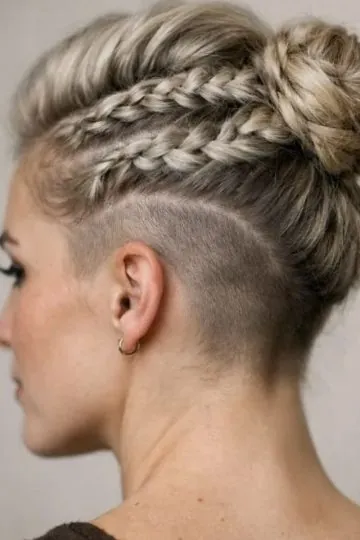
The 14 long shag cuts in this guide prove that the shag is not just for short hair. The long shag keeps your length while adding the choppy, disconnected layers, texture, and attitude that make the shag a timeless classic. With face-framing pieces, crown volume, and piece-y ends, the long shag works for every hair type—straight, wavy, curly, fine, or thick. It is the perfect cut for anyone who wants movement, edge, and a style that looks better the messier it gets. In this guide, we will explore fourteen long shag cuts, complete with why each works, how to style it, best face shapes, and maintenance needs.
What Makes a Long Shag Different from Regular Layers
A traditional layered cut has smooth, blended transitions between layers. A shag has disconnected, choppy layers that create intentional texture and separation. The long shag features:
- Shorter layers at the crown for volume
- Longer, piece-y ends that keep your length
- Face-framing pieces often with bangs or curtain bangs
- A lived-in, messy finish that looks intentional
The 14 Long Shag Cuts
1. Classic Long Shag with Curtain Bangs
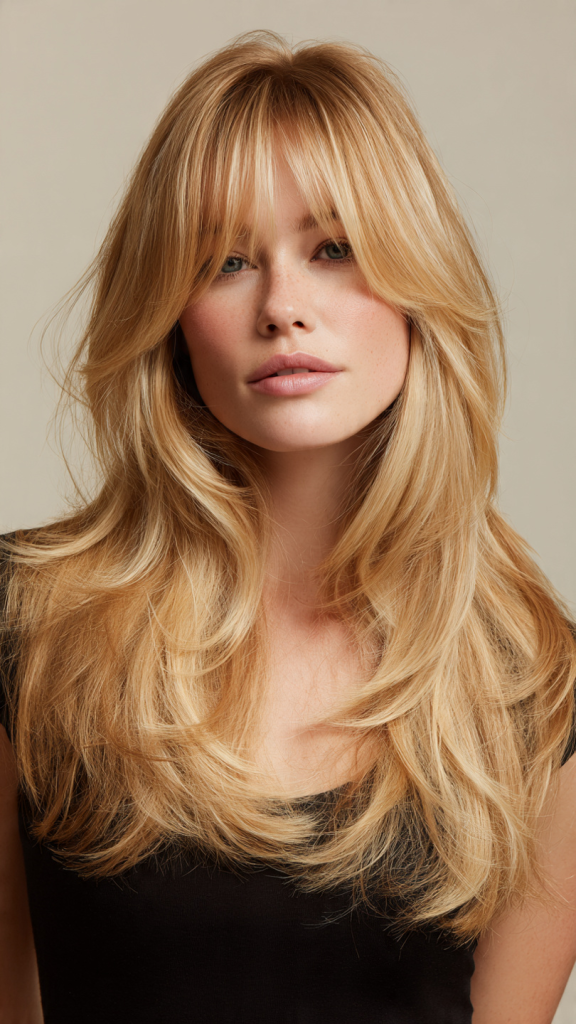
This is the blueprint for the long shag. Choppy layers throughout, curtain bangs parted down the middle, and piece-y ends that keep your length.
Why it works: The curtain bangs soften the face while the choppy layers add volume at the crown. The long length stays intact for versatility.
How to style it: Apply texturizing spray to damp hair. Scrunch as you blow-dry with a diffuser, or let air-dry. Define the curtain bangs by brushing left to left and right to right.
Best face shapes: Oval, round, heart. The curtain bangs elongate round faces.
Maintenance needs: Trim every 8–10 weeks. The shag looks better grown out.
2. Long Shaggy Layers for Fine Hair

This version uses softer, more blended choppy layers to add volume to fine hair without creating visible gaps.
Why it works: Fine hair cannot handle harsh disconnected layers. This shag uses micro-layers at the crown and wispy ends to create the illusion of density.
How to style it: Use root-lifting spray on damp hair. Blow-dry upside down for volume. Finish with dry shampoo at the roots. Avoid heavy products.
Best face shapes: Oval, oblong, heart. Crown volume balances longer faces.
Maintenance needs: Trim every 6–8 weeks. Fine hair shows growth faster.
3. Long Curly Shag

For women with natural curls or waves, the long curly shag removes weight and allows curls to spring up with definition.
Why it works: Curly hair gets heavy and triangle-shaped without layers. The shag's choppy layers add bounce and prevent bulk at the bottom.
How to style it: On soaking wet hair, apply leave-in conditioner and curl cream. Scrunch upward. Diffuse or air-dry. Never brush.
Best face shapes: All face shapes. Curls can be customized with or without bangs.
Maintenance needs: Trim every 8–10 weeks. Deep condition weekly.
4. Long Shag with Wispy Bangs

Soft, wispy bangs replace traditional curtain bangs. The bangs are thin, piece-y, and graze the eyebrows.
Why it works: Wispy bangs soften forehead lines without hiding your face. They add a romantic, feminine touch to the edgy shag.
How to style it: Blow-dry the wispy bangs using a small round brush, keeping them soft and separated. The rest of the shag stays textured.
Best face shapes: Oval, heart, round. The softness flatters all.
Maintenance needs: Bangs every 3–4 weeks. Rest of hair every 8–10 weeks.
5. Long Shag with Bottleneck Bangs

Bottleneck bangs are narrow at the center and widen toward the cheekbones—a hybrid of curtain bangs and face-framing layers.
Why it works: The widening effect at the cheekbones balances a pointed chin, making this ideal for heart-shaped faces.
How to style it: Blow-dry the bangs forward and then to each side. The widest part should hit at your cheekbones.
Best face shapes: Heart, oval, round. Ideal for heart-shaped faces.
Maintenance needs: Bangs every 4–5 weeks. Rest of hair every 8–10 weeks.
6. Long Shag with Heavy Crown Volume

This cut concentrates the shortest layers at the crown, creating maximum lift and height.
Why it works: Crown volume lifts the entire face. This is especially flattering for round faces and for women with thinning hair at the crown.
How to style it: Use volumizing powder or backcombing at the crown. Diffuse upside down for maximum lift.
Best face shapes: Round, oval, heart. The height elongates round faces.
Maintenance needs: Trim every 8–10 weeks. Crown layers need refreshing.
7. Long Shag with Choppy Face-Framing
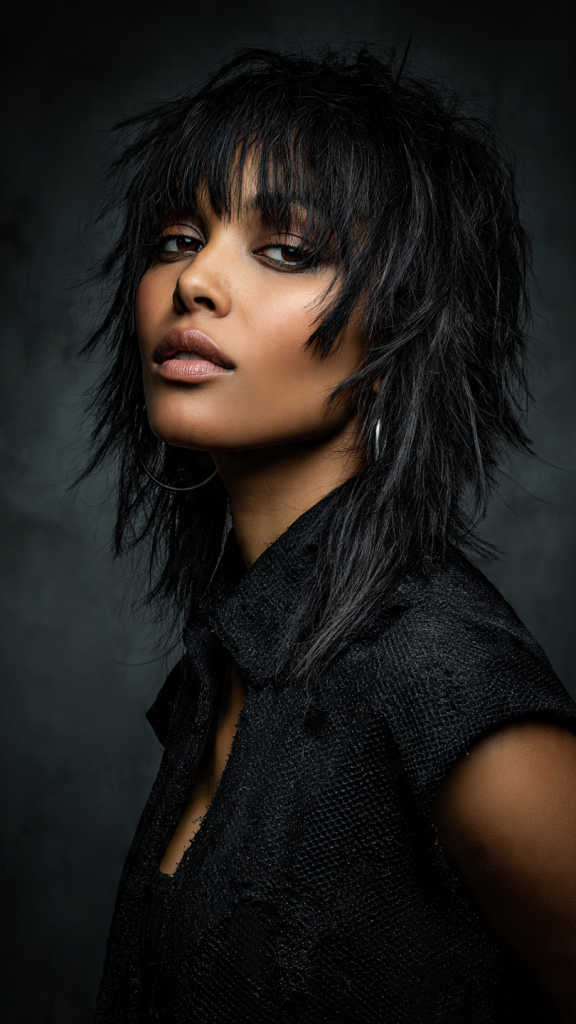
The face-framing pieces are cut with extra choppy, disconnected texture, while the rest of the shag is softer.
Why it works: The contrast between the edgy face-framing pieces and the longer lengths adds visual interest. The choppiness draws attention to your eyes.
How to style it: Define the choppy face-framing pieces separately with texturizing paste. Style the rest as usual.
Best face shapes: Oval, heart, square. The edge flatters angular faces.
Maintenance needs: Trim every 8–10 weeks.
8. Long Shag with Micro Bangs

Micro bangs sit 1–2 inches above the eyebrows. Paired with long shag layers, this is a bold, editorial look.
Why it works: The shortness of the bangs contrasts dramatically with the long shag layers. It is high-fashion and confident.
How to style it: Keep micro bangs pin-straight or slightly piece-y with a dab of paste. Do not curl them.
Best face shapes: Oval, heart, diamond. Avoid if you have a round face.
Maintenance needs: Bangs every 2–3 weeks. Rest of hair every 8–10 weeks.
9. Long Shag with Feathered Ends
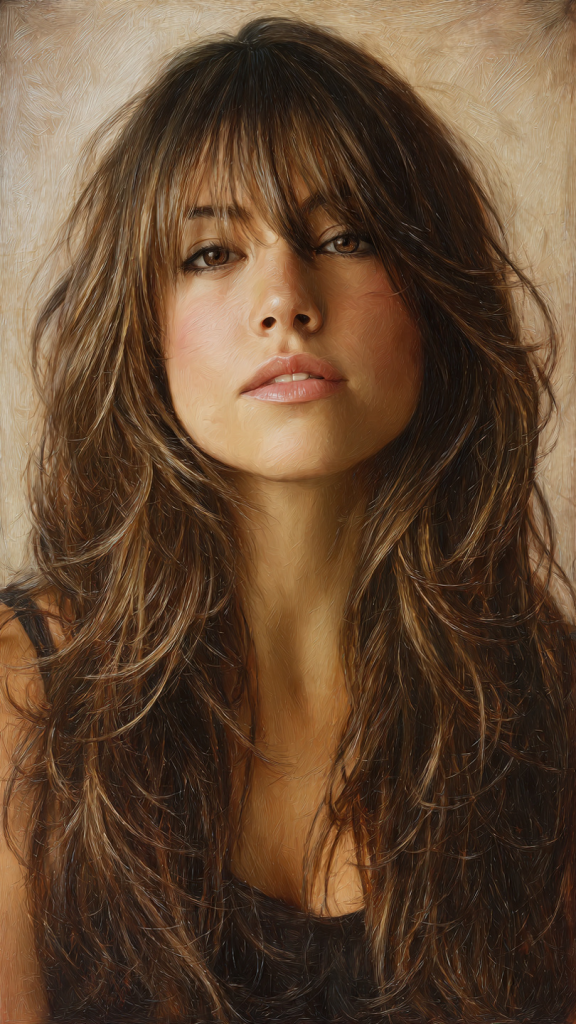
The ends of the shag are heavily point-cut to create a feathered, wispy finish rather than blunt or piece-y ends.
Why it works: Feathered ends are lighter and softer than traditional shag ends. This version is more romantic and feminine.
How to style it: Blow-dry using a round brush, flicking the ends outward slightly. A light texturizing spray adds separation.
Best face shapes: Oval, heart, round. The softness flatters all.
Maintenance needs: Trim every 8–10 weeks. Feathered ends need refreshing.
10. Long Shag with Side-Swept Bangs

Side-swept bangs sweep diagonally across the forehead, blending into the choppy layers.
Why it works: The diagonal line creates a slimming effect. Side-swept bangs are universally flattering and very low-maintenance.
How to style it: Blow-dry the bangs using a round brush, sweeping them across your forehead to the opposite side.
Best face shapes: Round, square, heart. The diagonal line flatters round faces.
Maintenance needs: Bangs every 3–4 weeks. Rest of hair every 8–10 weeks.
11. Long Shag for Thick Hair
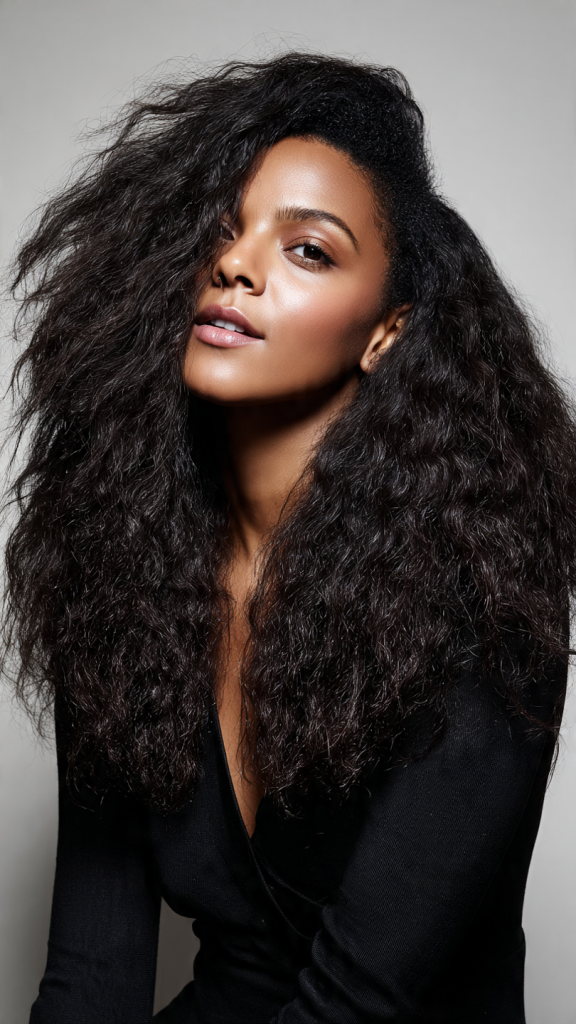
Thick hair needs dramatic weight removal. This shag uses disconnected layers throughout to remove bulk and prevent triangle shape.
Why it works: Thick hair can feel heavy and unmanageable. The shag's choppy layers lighten the load while keeping your length.
How to style it: Use lightweight mousse. Blow-dry with a round brush or air-dry for texture. Avoid heavy creams.
Best face shapes: Oval, square, heart. The volume is balanced.
Maintenance needs: Trim every 6–8 weeks. Thick hair regains bulk quickly.
12. Long Shag with Blunt Ends

This contradicts the traditional shag. The ends are kept blunt while the internal layers are choppy. The perimeter stays full.
Why it works: Blunt ends give the illusion of thick, healthy hair. The internal shag layers add movement without sacrificing density.
How to style it: Blow-dry smooth using a paddle brush to emphasize the blunt line. The internal layers will create natural movement.
Best face shapes: Oval, square, oblong. The blunt line adds width to longer faces.
Maintenance needs: Trim every 6–8 weeks. Blunt lines show uneven growth.
13. Long Shag with Razor Layers

Razor cutting creates softer, more blended shag layers than shears. The ends are wispy and delicate.
Why it works: Razor cutting removes weight gradually, creating a softer shag that works well for fine or medium hair. It also enhances wave patterns.
How to style it: Apply texturizing spray. Air-dry or diffuse. The razor-cut ends will naturally separate.
Best face shapes: All face shapes. The softness flatters everyone.
Maintenance needs: Trim every 8–10 weeks.
14. Low-Maintenance Long Shag

This shag is cut so that air-drying looks intentional. The layers are placed to work with your natural texture, not against it.
Why it works: Not every woman wants to diffuse or style for hours. This cut respects your time while still delivering shag volume and texture.
How to style it: Wash and condition. Apply leave-in conditioner and sea salt spray. Scrunch. Air-dry. That is it.
Best face shapes: All face shapes. The effortless approach flatters everyone.
Maintenance needs: Trim every 10–12 weeks. This cut looks better slightly grown out.
How to Style a Long Shag
For maximum texture and volume (10 minutes):
- Apply texturizing spray or sea salt spray to damp hair
- Blow-dry using a diffuser, scrunching as you go
- Focus on lifting the roots at the crown
- Once dry, use your fingers to separate and piece out the ends
- Add a small amount of dry shampoo at the roots for lift
- Finish with a light texture spray
For air-dried effortlessness:
- Apply leave-in conditioner and sea salt spray to wet hair
- Scrunch upward with your fingers
- Let air-dry completely
- Do not brush—use fingers only to fluff
For fine hair:
- Use root-lifting spray before drying
- Blow-dry upside down for 2–3 minutes
- Avoid heavy creams and oils
- Dry shampoo is your best friend
Quick Maintenance Cheat Sheet
| Cut Type | Trim Frequency | Special Notes |
| Classic long shag with curtain bangs | 8–10 weeks | Looks better grown out |
| Long shaggy layers for fine hair | 6–8 weeks | Volume fades faster |
| Long curly shag | 8–10 weeks | Deep condition weekly |
| With wispy bangs | Bangs: 3–4 weeks / Rest: 8–10 weeks | Bangs need attention |
| With bottleneck bangs | Bangs: 4–5 weeks / Rest: 8–10 weeks | Shape needs upkeep |
| With heavy crown volume | 8–10 weeks | Crown needs refreshing |
| With choppy face-framing | 8–10 weeks | Choppiness fades |
| With micro bangs | Bangs: 2–3 weeks / Rest: 8–10 weeks | Most high-maintenance |
| With feathered ends | 8–10 weeks | Ends need refreshing |
| With side-swept bangs | Bangs: 3–4 weeks / Rest: 8–10 weeks | Bangs need upkeep |
| For thick hair | 6–8 weeks | Bulk returns quickly |
| With blunt ends | 6–8 weeks | Blunt line shows growth |
| With razor layers | 8–10 weeks | Razor edges need refreshing |
| Low-maintenance long shag | 10–12 weeks | Looks better grown out |
Final Thoughts
The long shag is proof that you do not have to sacrifice length to have volume, texture, and edge. Whether you have fine hair that needs lift, thick hair that needs weight removal, or curly hair that needs bounce, the long shag delivers. The key is embracing the messiness—this cut is not meant to look perfect. Bring photos from this guide to your stylist. Ask for disconnected layers, piece-y ends, and the bang style that suits your face. And get ready to love hair that moves, shakes, and looks effortlessly cool.