The Haircut That Plays Both Sides
You want short hair. But you are not ready to give up length completely. You want something edgy. But you also want something you can soften up when the mood strikes.
The undercut pixie with long bangs is your answer.
Shaved underneath gives you that cool, unexpected detail. Long bangs on top give you something to sweep, tuck, or play with. It is the haircut that works for the office and the weekend. For dressed up and dressed down. For showing off your neck and hiding behind your fringe.
I have cut this style on straight hair, wavy hair, and curly hair. On fine texture that needed volume and thick texture that needed weight removed. The formula is always the same: close on the bottom, length on the top, and bangs that make a statement.
Here are 15 ways to wear an undercut pixie with long bangs.
Before You Commit: Understanding the Undercut
The undercut part means the hair on your nape and above your ears is cut very short or shaved. How short depends on your comfort level.
- Bald undercut: Skin showing. Maximum edge. Requires maintenance every 1-2 weeks.
- Clipped undercut: #2 or #3 guard. Soft shadow of hair. Maintenance every 3-4 weeks.
- Tapered undercut: Gradual shortening instead of a hard line. Softer look. Maintenance every 4-5 weeks.
The long bangs part means the hair at your forehead is kept long — anywhere from your eyebrows to your cheekbones. This length gives you styling options the standard pixie does not have.
Now let us get into the 15 styles.
The 15 Undercut Pixie with Long Bangs Styles
1. The Deep Side Sweep
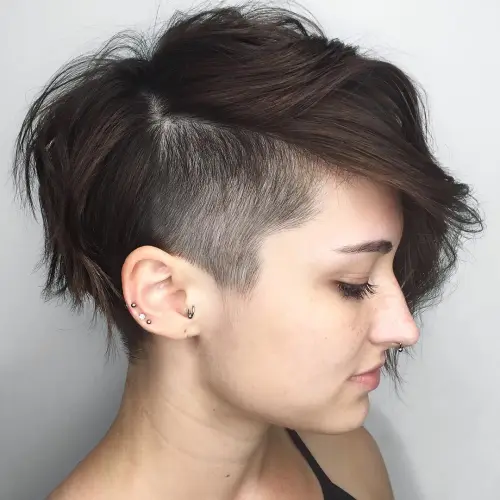
Shaved undercut on both sides and the back. The top is longer, swept dramatically to one side. The bangs hit your opposite eyebrow or cheekbone.
The right approach: Ask for an undercut with a #3 guard. The top should be long enough to reach your opposite cheekbone when swept.
How to describe it: "I want an undercut pixie with a deep side sweep. Undercut on both sides. Top swept to my right. Bangs long enough to hit my left cheekbone."
What to skip: Bangs that are too short to reach across. If they do not sweep, they are just side hair.
2. The Textured Fringe Forward
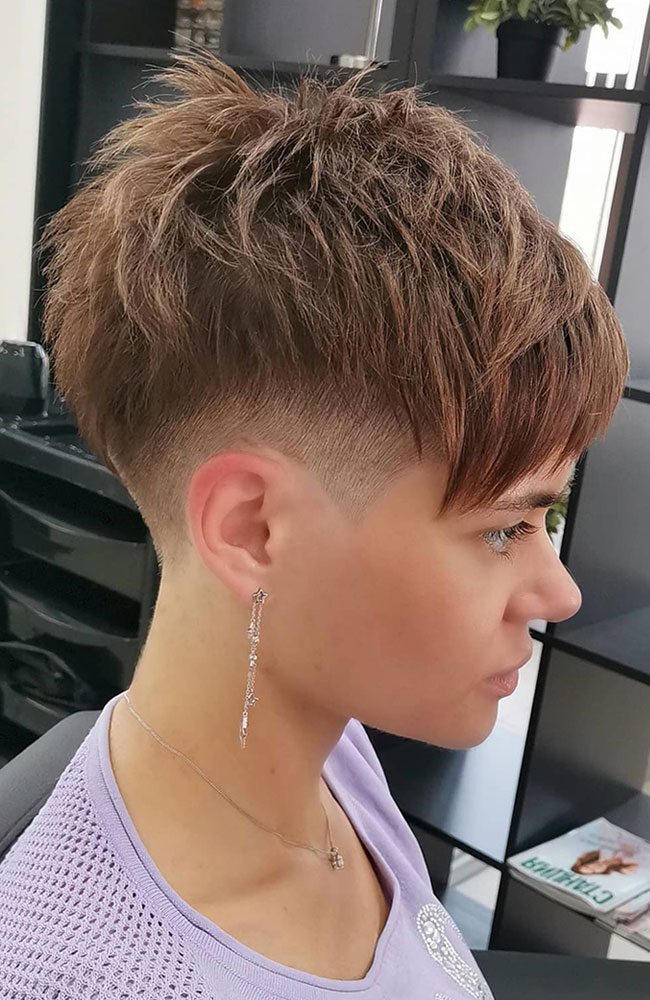
Shaved undercut. The top is cut with choppy, piece-y texture. The bangs fall forward onto your forehead, stopping just above your eyebrows.
The right approach: Ask for point-cut texture throughout the top. The fringe should sit above your brows, not in your eyes.
How to describe it: "I want a textured undercut with fringe forward. Choppy top. Bangs falling onto my forehead. Just above my eyebrows."
What to skip: Heavy, blunt bangs. They will look like a shelf, not a fringe.
3. The Asymmetrical Undercut
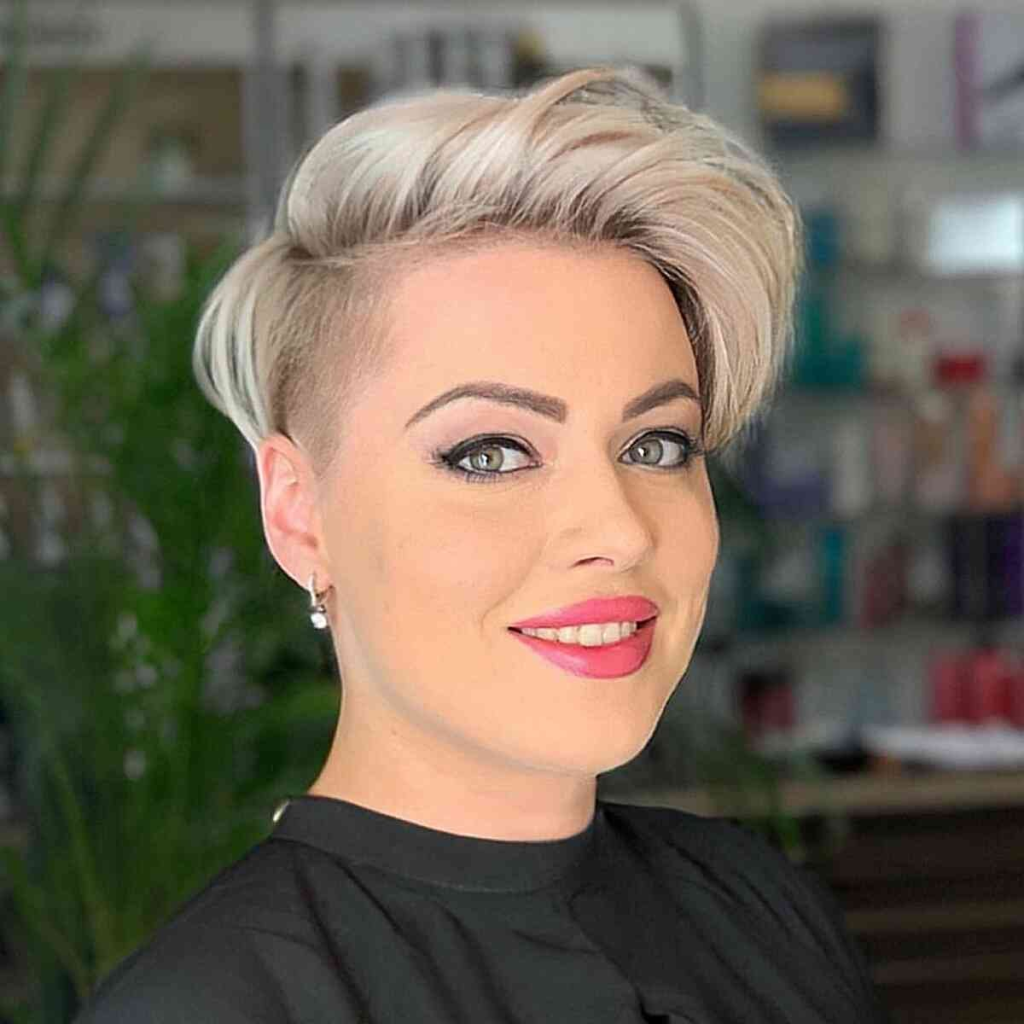
One side is shaved. The other side is left longer. The long bangs sweep from the longer side across to the shaved side.
The right approach: Ask for a clean undercut on one side only. The longer side should have enough length to reach your opposite temple.
How to describe it: "I want an asymmetrical undercut. Shaved on my left. Long on my right. Bangs sweep from right to left across my forehead."
What to skip: An undercut that is too high on the shaved side. Keep it low and balanced.
4. The Curly Long Bang Undercut
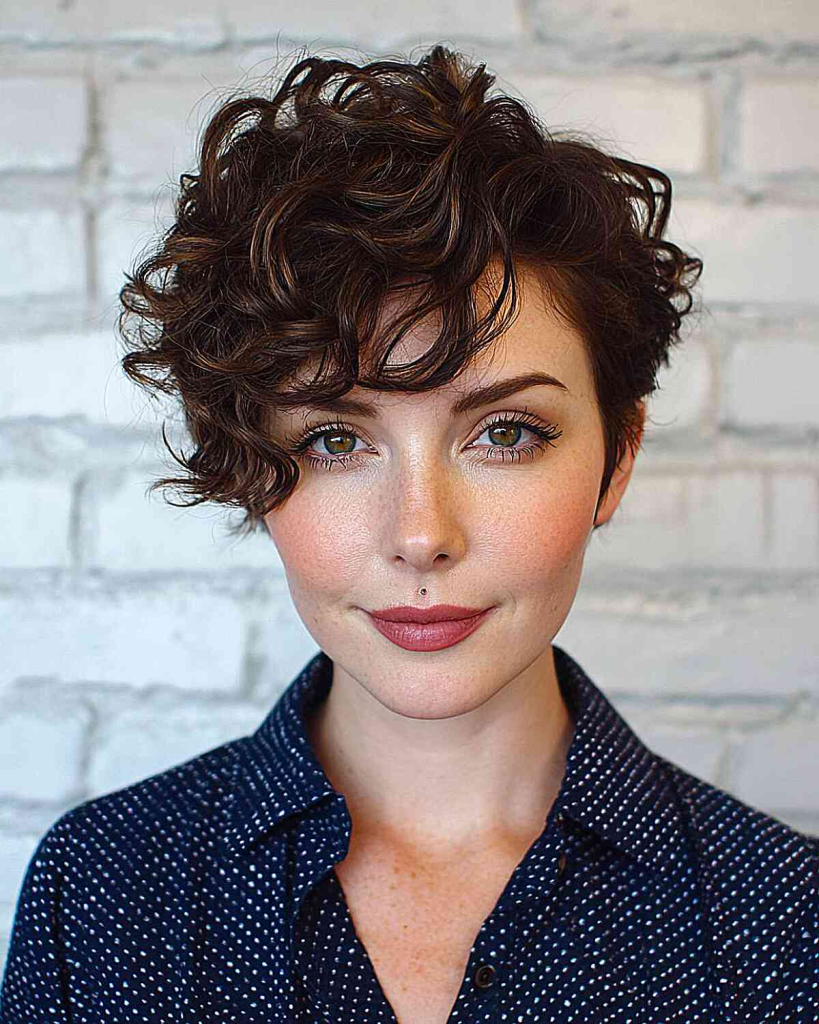
For wavy or curly hair. The undercut removes bulk from the sides and back. The top and bangs are left longer to show off your curl pattern.
The right approach: Ask for an undercut with a #4 guard (curly hair needs more length to avoid looking bald). The top should be stretched length to your nose.
How to describe it: "I want a curly undercut pixie. Undercut on the sides and back. Leave the top long enough for my curls to form. Bangs to my eyebrows when dry."
What to skip: Cutting curls wet. Always cut curly hair dry so you see the true shape.
5. The Long Layered Top
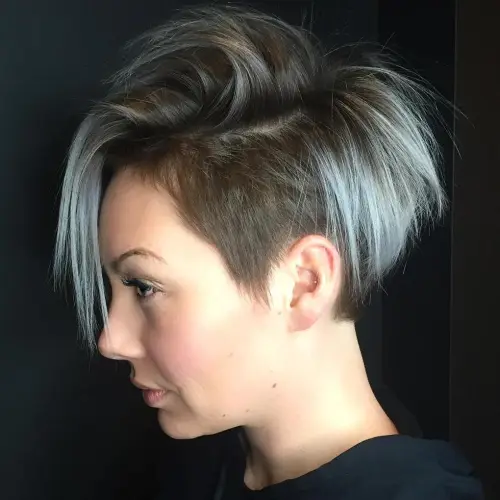
The undercut is close on the sides and back. The top is longer and layered, not one length. The bangs blend into the layers.
The right approach: Ask for layers that start at your crown. The bangs should graduate from shorter at the center to longer at the sides.
How to describe it: "I want a layered top undercut. Undercut sides and back. Layers throughout the top. Bangs that blend in, not a separate piece."
What to skip: A top that is too heavy. Layers are essential to keep it from flopping over.
6. The Slicked-Back Top with Long Bangs
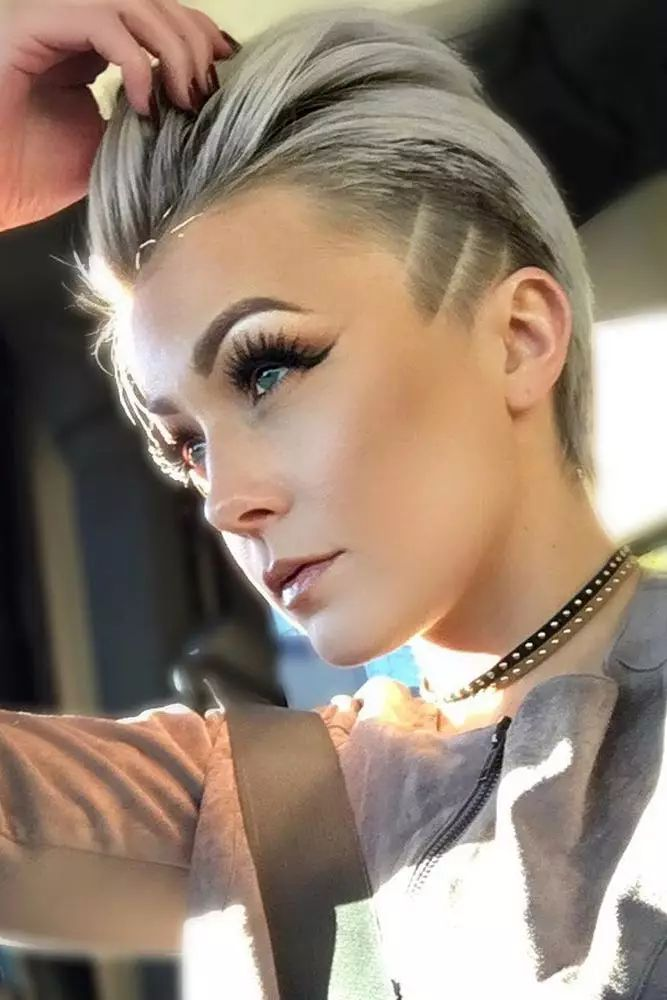
The undercut is shaved. The top is long and slicked away from your face. The long bangs are incorporated into the slicked-back shape.
The right approach: Ask for top length that reaches your crown when pulled back. A water-based pomade gives hold without grease.
How to describe it: "I want a slicked-back undercut. Undercut sides and back. Top long enough to slick back smoothly. Bangs swept back with the rest."
What to skip: An oil-based product. It will look greasy and weigh your hair down.
7. The Messy Bedhead Pixie
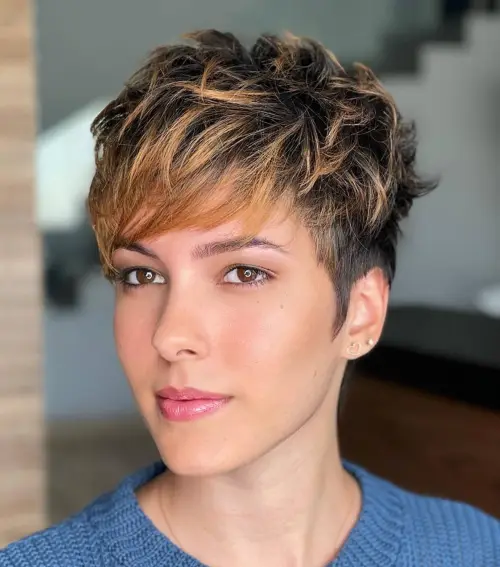
Shaved undercut. The top is cut with maximum texture. The bangs fall messily onto your forehead. The whole style looks intentionally undone.
The right approach: Ask for point-cut texture everywhere. A texturizing powder or sea salt spray gives grip without stiffness.
How to describe it: "I want a messy undercut pixie. Maximum texture. Bangs falling on my forehead. Intentional bedhead vibes."
What to skip: A mess that looks like you actually forgot to brush your hair. There is a fine line.
8. The Nape Undercut Only
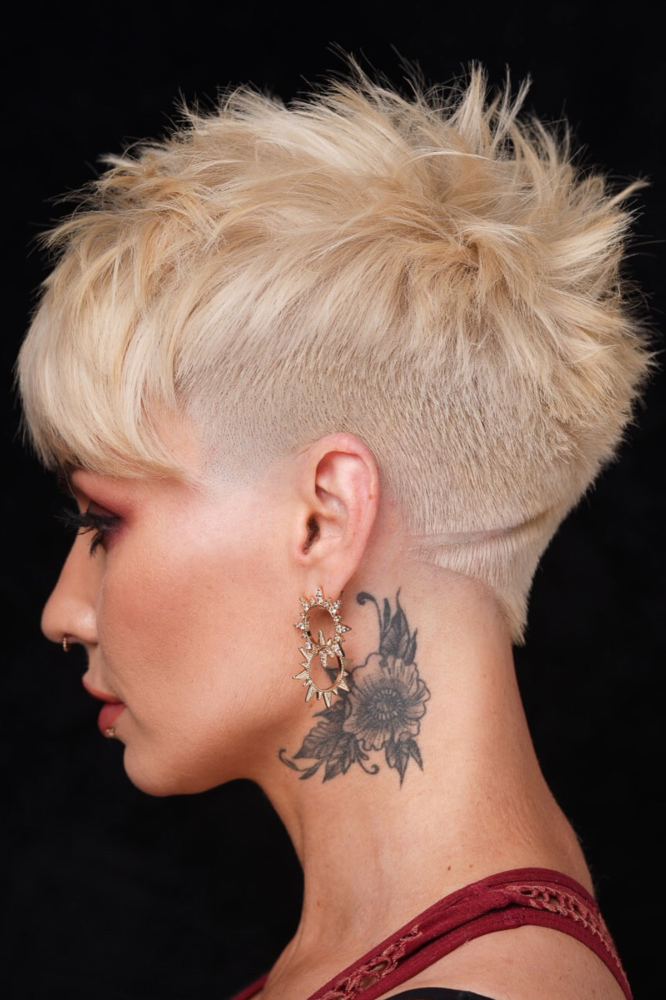
The undercut is only at the nape (back of the head). The sides are left longer. The top and bangs are long and sweeping.
The right approach: Ask for an undercut that starts at your hairline and goes up about two inches. The sides should blend into the top.
How to describe it: "I want a nape undercut only. Undercut at the back. Sides left longer. Top and bangs long and sweeping forward."
What to skip: An undercut that creeps up too high. Keep it low and hidden unless you flip your head.
9. The Short Sides, Long Bangs (No Bald Undercut)
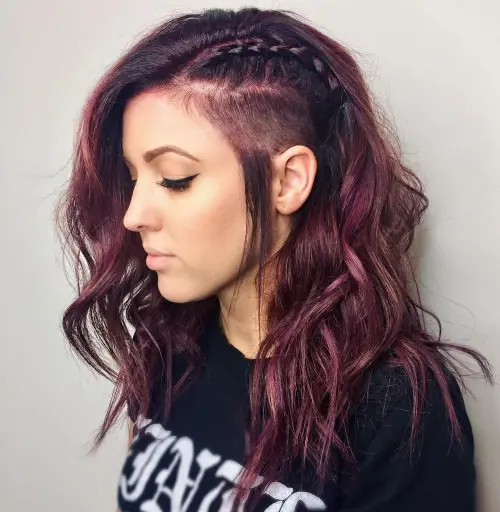
Instead of a shaved undercut, the sides are cut short but not bald. A #4 or #5 guard. The top is long. The bangs are long.
The right approach: Ask for sides cut with a #4 guard. The top should be at least three inches long. A matte clay gives texture.
How to describe it: "I want short sides with long bangs. Sides at a #4 guard — not bald. Top long. Bangs long. Soft contrast."
What to skip: Sides that are too long. If they blend into the top, you lose the undercut effect.
10. The Faux Hawk with Long Bangs
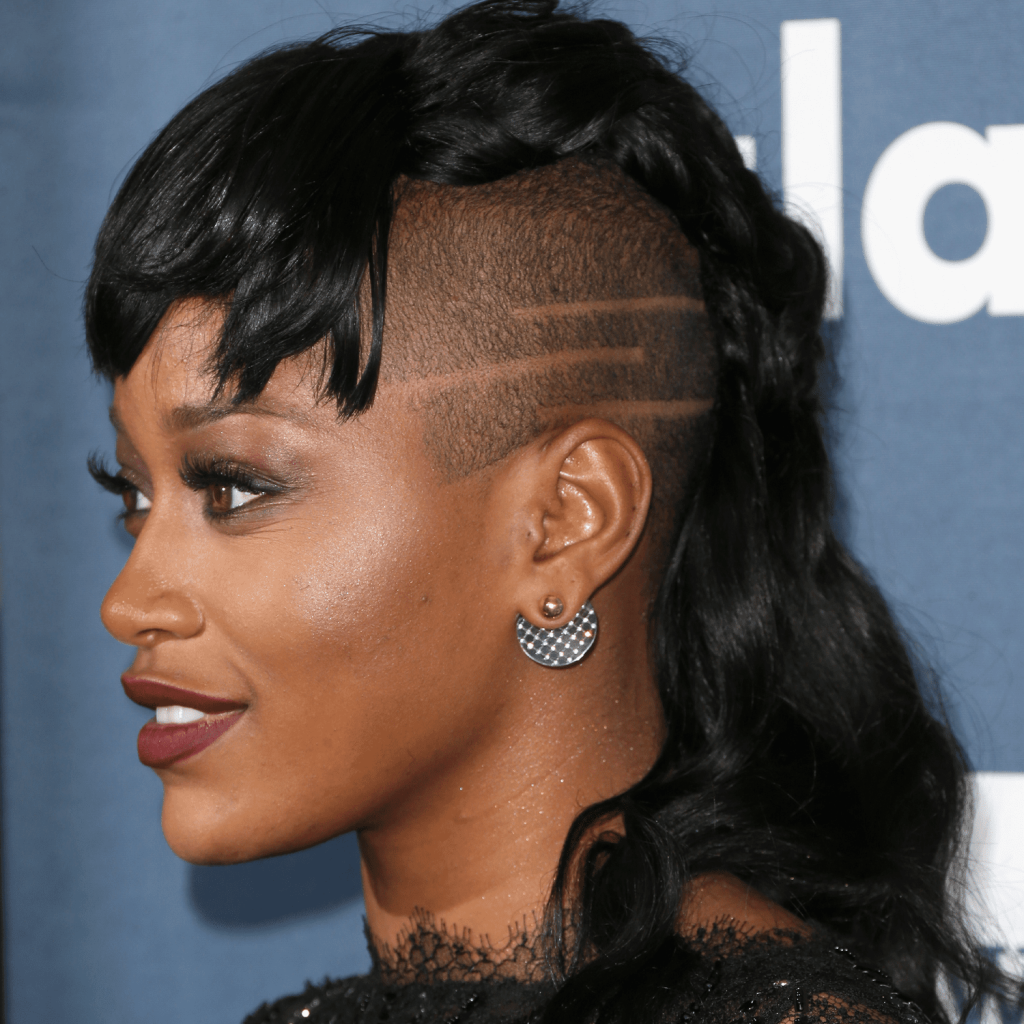
The top is longer and styled upward in the center, like a mohawk but softer. The sides are shaved or closely clipped. The long bangs blend into the front.
The right approach: Ask for a strip of longer hair down the center of your head. The sides should be shaved with a #2 guard.
How to describe it: "I want a faux hawk undercut with long bangs. Shaved sides. Center strip styled up. Bangs blending into the front."
What to skip: A faux hawk that is too tall. Keep it subtle, not rooster-like.
11. The Soft Taper with Wispy Bangs
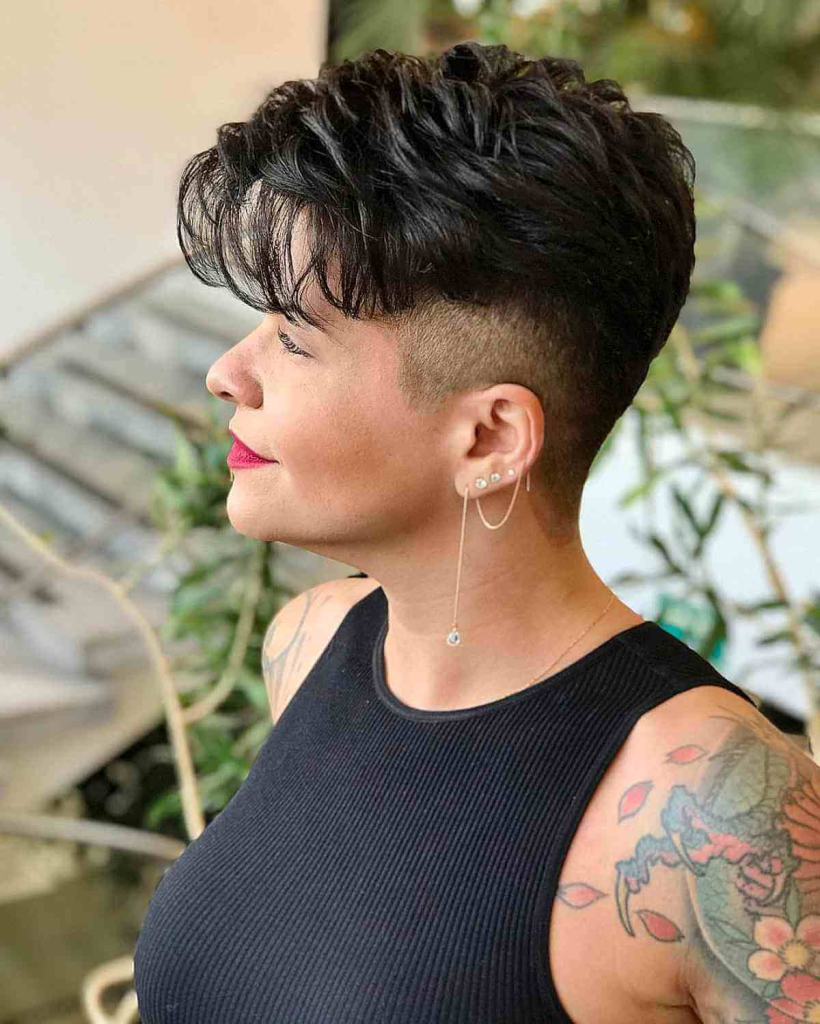
Instead of a harsh undercut, the sides are tapered gradually from short to long. The top is soft. The bangs are wispy and light.
The right approach: Ask for a smooth taper on the sides with no hard line. The bangs should be point-cut and feathery.
How to describe it: "I want a soft taper with wispy bangs. Tapered sides, not shaved. Light, feathery bangs that barely touch my forehead."
What to skip: Bangs that are too heavy. Wispy means light and airy.
12. The Grown-Out Undercut
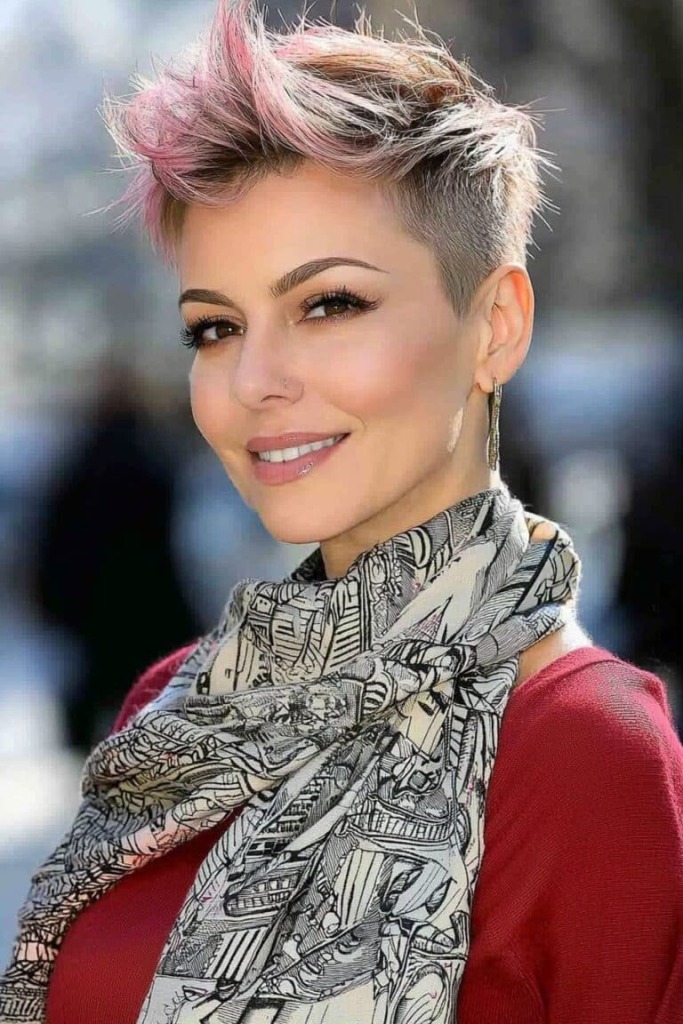
The undercut is there but grown out just enough to be soft. The top is long. The bangs are long. The whole style has a lived-in feel.
The right approach: Ask for an undercut that was cut 4-6 weeks ago (or ask your barber to leave it softer). The top should be past your eyes.
How to describe it: "I want a grown-out undercut. Undercut but soft — not freshly shaved. Top and bangs long. Lived-in vibes."
What to skip: An undercut that is too grown out. If the sides are as long as the top, you no longer have an undercut.
13. The Side-Swept with Hidden Design
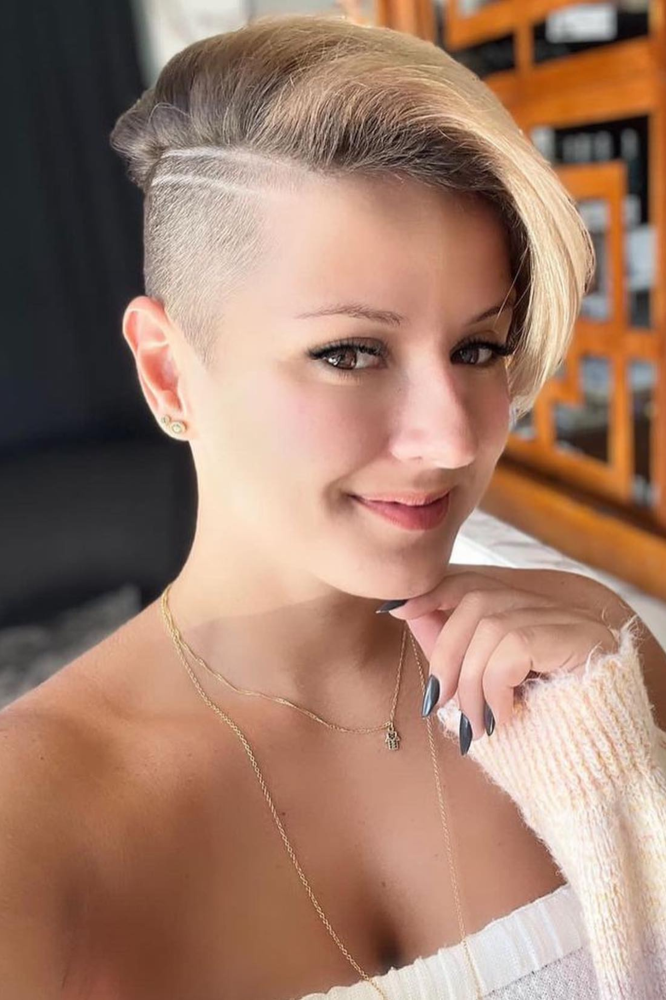
Same as the deep side sweep, but with a small design shaved into the undercut. A line. A zigzag. A small shape.
The right approach: Ask for a simple design in the undercut area. The bangs should be long enough to cover it when your hair is down.
How to describe it: "I want a side-swept undercut with a hidden design. Shaved design on the undercut. Bangs long enough to cover it when I want."
What to skip: A design that is too complex. Simple shapes look cleaner and grow out better.
14. The Curtain Bang Undercut
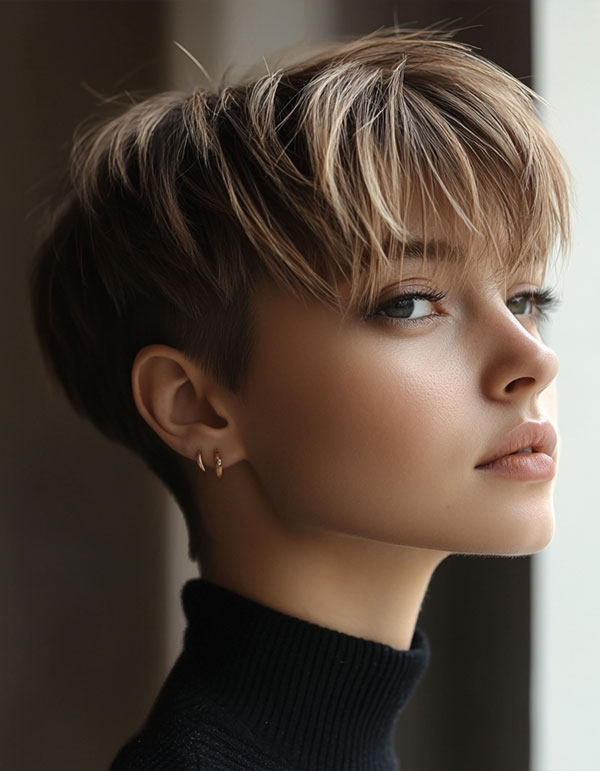
The undercut is shaved on the sides and back. The top is parted in the middle. The bangs fall to both sides like curtains.
The right approach: Ask for a center part. The bangs should be long enough to reach your cheekbones on each side.
How to describe it: "I want a curtain bang undercut. Center part. Bangs falling to both sides like curtains. Undercut underneath."
What to skip: A part that is not natural to your hair. Train your part before committing to the cut.
15. The Piece-y Pixie with Long Bangs
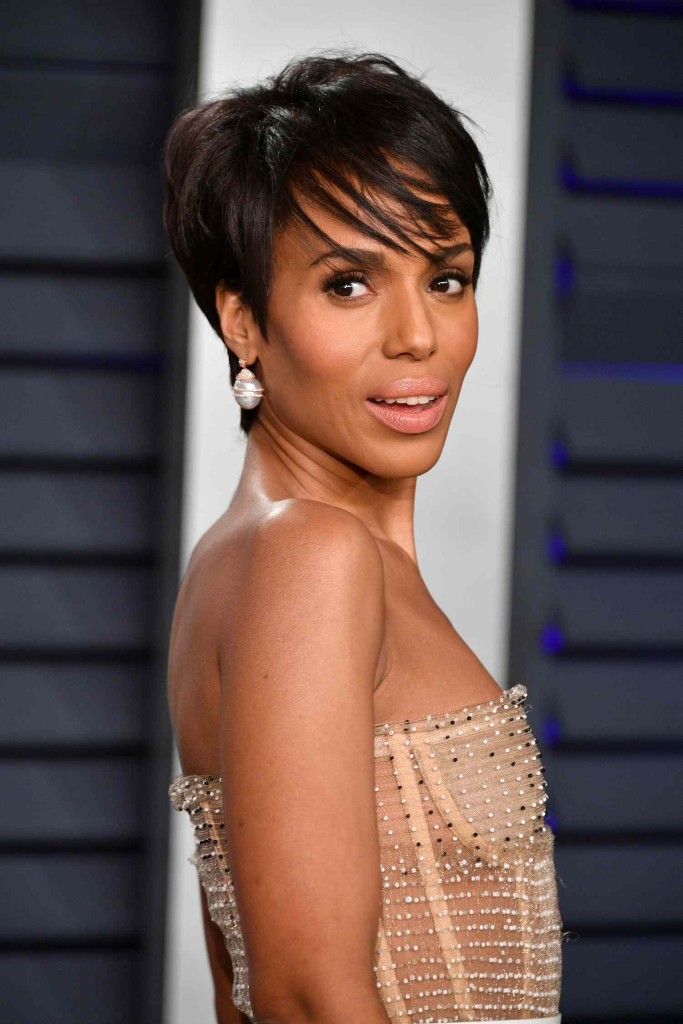
The entire top is cut into distinct, separated pieces. No blending. No smooth lines. The bangs are part of the piece-y texture.
The right approach: Ask for chunkier, visible sections. The bangs should be cut as individual pieces, not a solid block.
How to describe it: "I want a piece-y pixie with long bangs. The top should look separated and chunky. Bangs cut as individual pieces."
What to skip: Over-texturing that makes your hair look shredded. There is a difference between piece-y and damaged.
What to Tell Your Stylist
Bring a photo from the 15 above. Say: "I want an undercut pixie with long bangs. The undercut should be [bald / #3 guard / nape only]. The bangs should hit [my eyebrows / my cheekbone / my opposite ear]."
Be specific about the undercut. How short? How high up your head? One side or both? The more detail you give, the happier you will be.
Styling Your Undercut Pixie with Long Bangs
For volume: Mousse at the roots. Blow-dry upside down. Texture spray to finish.
For texture: Sea salt spray on damp hair. Air-dry. Rough up with your fingers.
For a sleek look: A tiny bit of lightweight pomade. Smooth the top and bangs. Leave the undercut alone.
For showing off the undercut: Flip your head. Tuck your bangs behind your ear. Own the contrast.
Maintenance Schedule
Undercut: Every 2-4 weeks depending on how short you went. Bald undercuts need more frequent touch-ups.
Bangs: Every 4-6 weeks. Long bangs grow out faster than they seem.
Full cut: Every 6-8 weeks to keep the shape.
The Final Word
An undercut pixie with long bangs is not a compromise. It is the best of both worlds. Shaved underneath for edge. Long on top for softness. Bangs that give you options.
Fifteen versions. One of them is yours.