
Updated: June 2026 · by ImproveWood · This post may contain affiliate links
Leave wood outside and the weather goes to work on it. Sun bleaches it grey, rain swells and splits it, and mildew creeps into every crack. Paint will hide all of that — but it also hides the very thing that made you choose wood in the first place: the grain. That is where an outdoor oil finish earns its place. It soaks into the timber, protects from the inside, and leaves a soft, natural look you can actually feel.
This guide is a full refresh for 2026. We have dropped the dated picks, brought in the modern one-coat and plant-based oils that have taken over workshops and decks over the last couple of years, and kept the old reliables that still hold up. Below are seven outdoor oil finishes worth your money, each matched to the job it does best — plus a buyer's guide, a step-by-step on applying them, and answers to the questions readers ask us most. For the bigger picture on prepping bare timber first, our guide on how to treat wood for outdoor use is a good companion read.
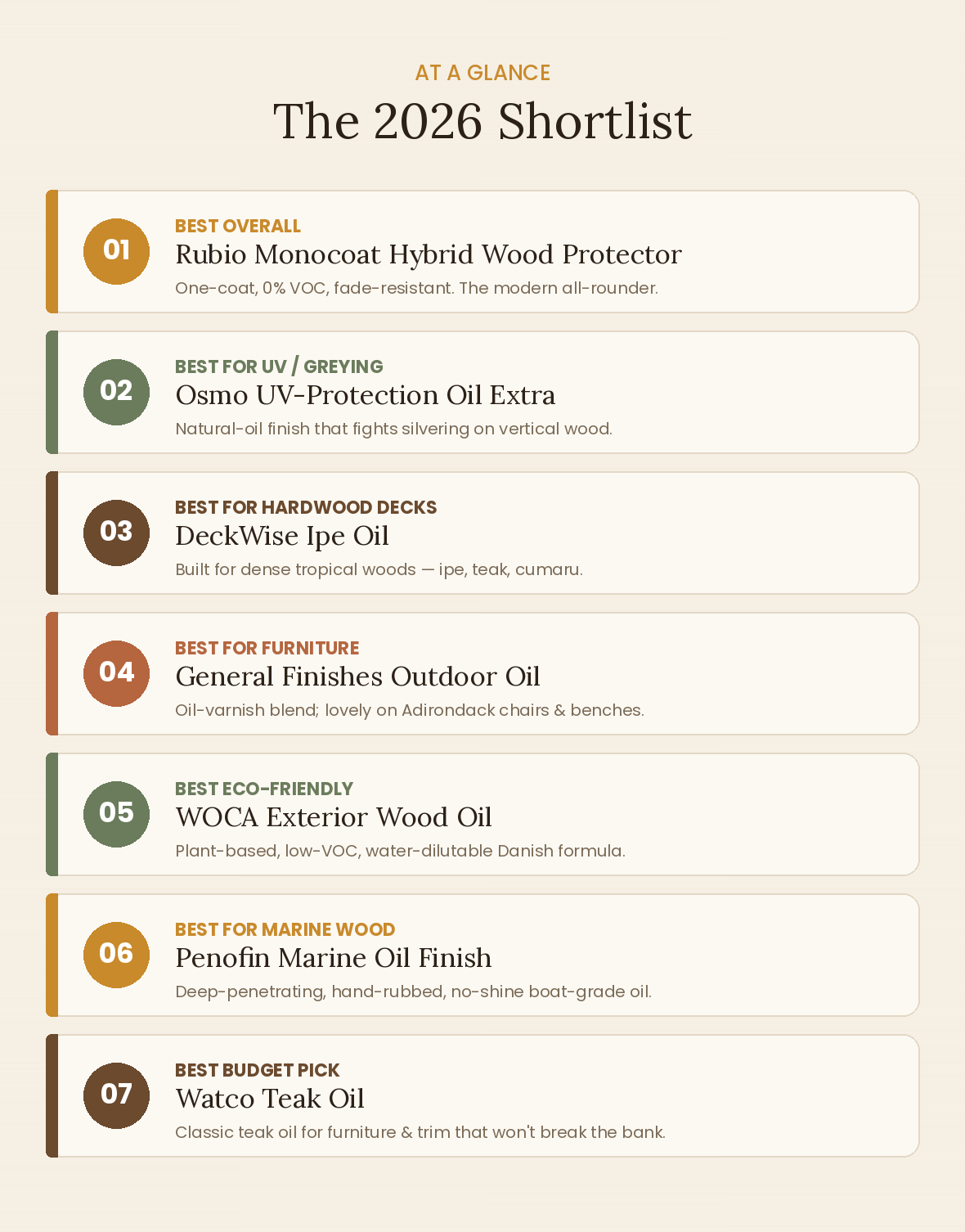
The 2026 outdoor oil finishes at a glance
Short on time? Here is the whole shortlist side by side. Scroll down for the full review of each one.
| Oil finish | Best for | Type | VOC level | Re-coat |
|---|---|---|---|---|
| Rubio Monocoat Hybrid | Best overall | Hybrid oil | 0% VOC | 2–3 yrs |
| Osmo UV-Protection Oil Extra | UV / greying | Natural oil | Low | 2–3 yrs |
| DeckWise Ipe Oil | Hardwood decks | Penetrating | Low (250) | 1 yr |
| General Finishes Outdoor Oil | Furniture | Oil/varnish | Medium | 1 yr |
| WOCA Exterior Wood Oil | Eco-friendly | Plant oil | Low | 1–2 yrs |
| Penofin Marine Oil | Marine / boats | Penetrating | Medium | yearly |
| Watco Teak Oil | Budget | Teak oil | Medium | yearly |
Re-coat intervals are typical guidance for full-sun exposure; covered or shaded wood lasts longer. VOC and coverage vary by colour and formula — always check the current label.
1. Rubio Monocoat Hybrid Wood Protector
BEST OVERALL
If one product sums up where outdoor oils have gone in 2026, it is this one. Rubio Monocoat's Hybrid Wood Protector is a true monocoat — you colour and protect bare wood in a single layer, no primer, no second coat for vertical surfaces. It bonds molecularly to the wood fibres rather than sitting on top, which is why it never forms a film that can peel or flake.
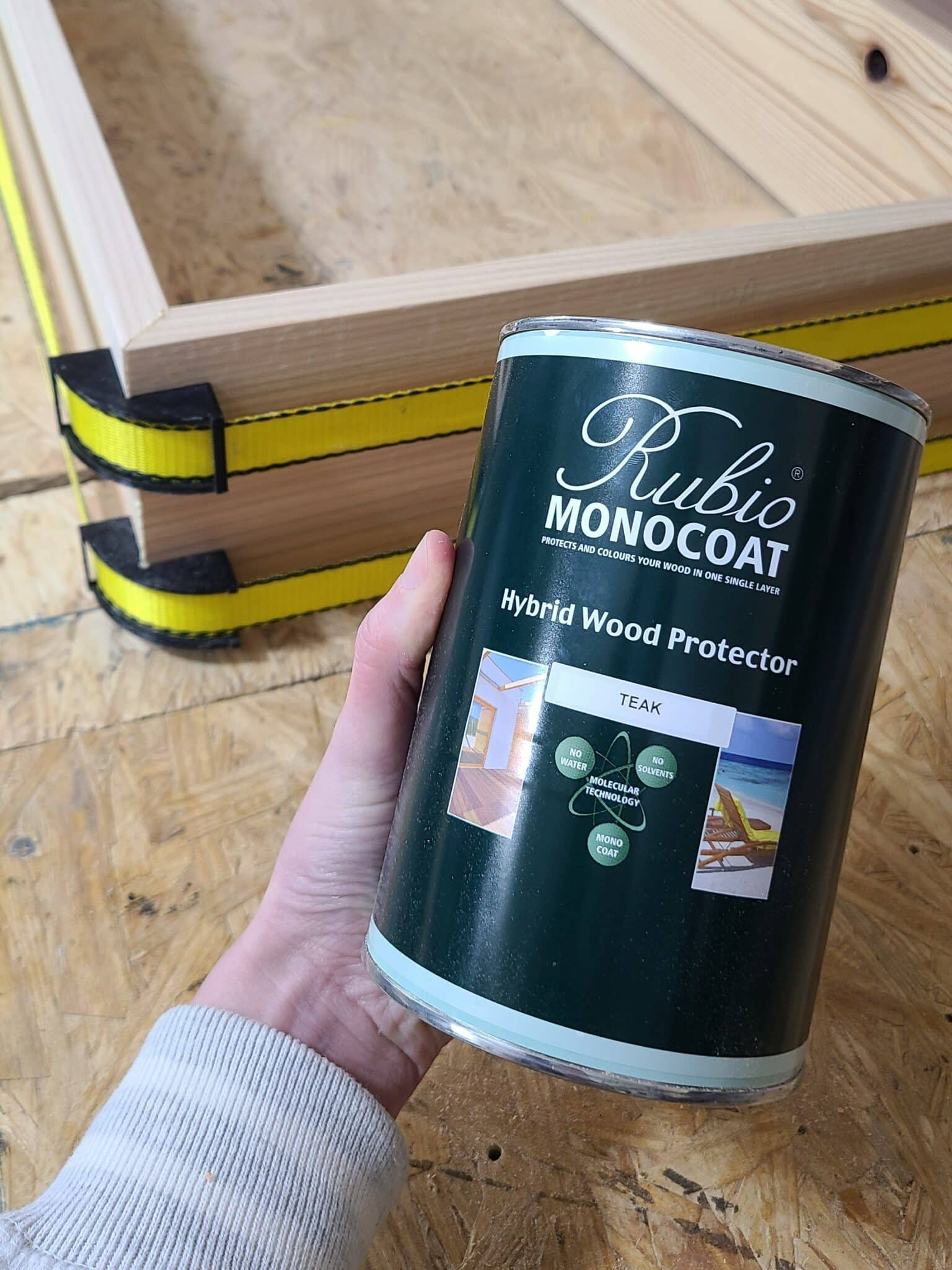
“Colour and protection in one wipe-on layer, 0% VOC, and nothing to peel — it is the easiest premium oil to live with.”
It is 0% VOC with no water or solvents, comes in more than 20 semi-transparent colours (including a UV-stabilised “Natural”), and is touch-dry in about 24 hours. For decks and other horizontal, walk-on surfaces you mix in roughly 10% of the brand's Part B accelerator to boost durability. Maintenance is refreshingly simple: clean and re-apply the same product, no sanding back. It is the priciest oil here per litre, but a little covers a lot and the finish is genuinely beautiful on everything from pine to exotic hardwoods.
| PROS✓ One coat colours and protects bare wood✓ 0% VOC, no solvents — safe to use around the home✓ Non-film-forming, so it can't peel or flake✓ Huge colour range with built-in UV stabiliser✓ Re-coat without sanding | CONS✕ Highest up-front cost of the group✕ Needs Part B added for decks and walk-on surfaces✕ Careful surface prep matters for an even result |
We earn a commission if you buy, at no extra cost to you.
2. Osmo UV-Protection Oil Extra
BEST FOR UV PROTECTION & GREYING
Osmo is the name German joiners reach for, and the UV-Protection Oil Extra is its outdoor workhorse. It is a natural oil blend of sunflower, soybean and linseed oils that soaks in, stays microporous so the wood can breathe, and — crucially — carries UV filters that slow the silvering you get on sun-exposed timber. The “Extra” in the name means added biocides that fight mould, algae and fungal growth in the finish.
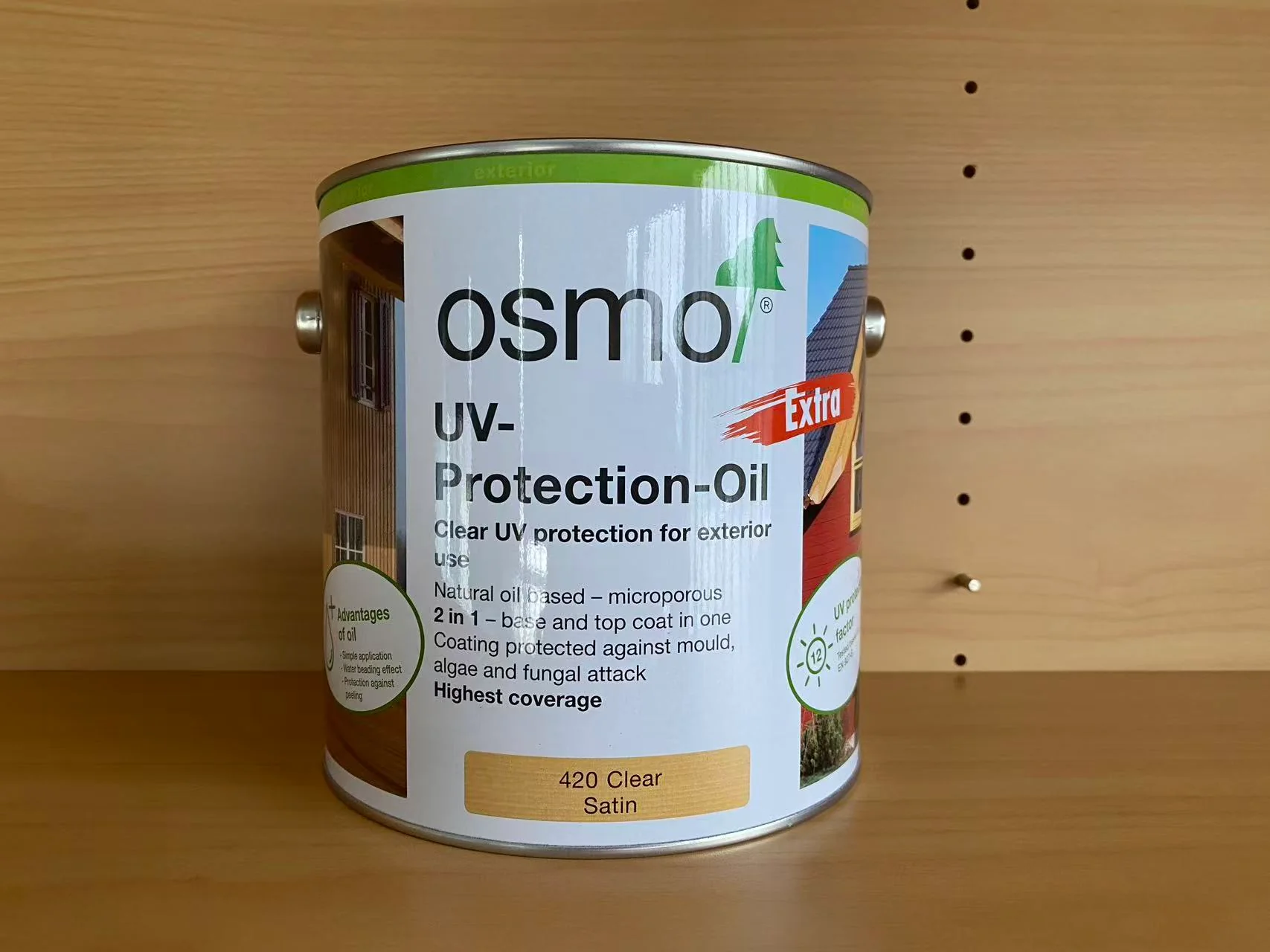
One thing to know up front: this oil is formulated for vertical and dimensionally-stable surfaces — doors, window frames, cladding, fences, pergolas and garden furniture — not flat decks where water pools (Osmo makes a separate Decking Oil for that). Two thin coats give a UV-protection factor of around 12 versus bare wood. It does not crack, peel or flake; it simply weathers thin over the years and you wipe on a fresh maintenance coat. For fences specifically, pair it with our fencing project guides.
| PROS✓ Excellent UV defence — fights greying on sun-baked wood✓ Microporous and breathable; won't peel or blister✓ Added biocides resist mould and algae✓ Re-coat without stripping or sanding✓ Beautiful on cladding, doors and furniture | CONS✕ Not for flat decks or walk-on surfaces✕ Two coats needed for full UV rating✕ Hardwoods need weathering first for good penetration |
We earn a commission if you buy, at no extra cost to you.
3. DeckWise Ipe Oil
BEST FOR DENSE HARDWOOD DECKS
Dense tropical hardwoods — ipe, cumaru, garapa, teak — are gorgeous and almost indestructible, but they are notoriously hard to finish. Their tight, oily grain rejects most products. DeckWise Ipe Oil is purpose-built for exactly these woods. It is a low-VOC (around 250 g/L) penetrating oil that soaks deep into hardwood pores and feeds them from within, with a UV barrier the brand rates up to 15% longer-lasting than its standard formula.
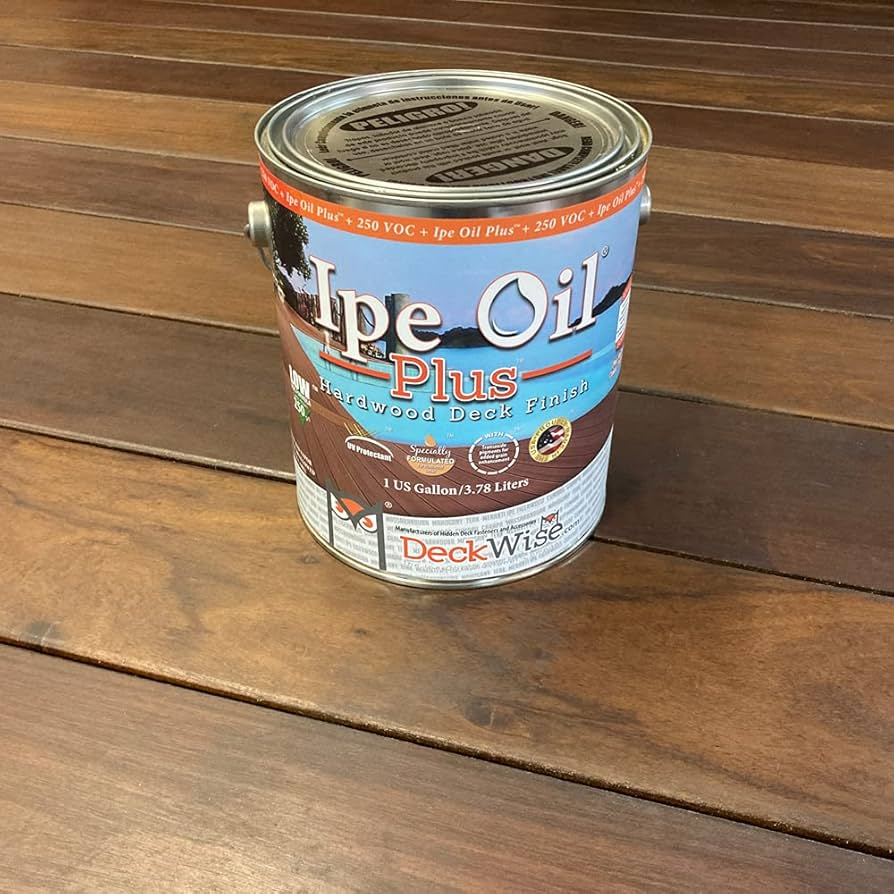
It goes on in a single thin coat, dries without a surface film, and won't crack, bubble or peel because there is nothing sitting on top to fail. The trade-off with any oil on a hot, exposed hardwood deck is that the colour fades and needs refreshing — usually once a year in full sun — but reapplication is easy with no sanding. If your deck has seen better days before you start, read our take on the best approach for tired boards in our guide to a good deck sealer for old decks.
| PROS✓ Made specifically for dense tropical hardwoods✓ One thin coat, no surface film to crack or peel✓ Enhanced UV barrier holds colour longer✓ Feeds the wood's natural oils✓ Easy to refresh — no sanding | CONS✕ Annual re-coat on full-sun decks✕ Apply carefully to avoid puddling on flat boards✕ Pricier than general-purpose oils |
We earn a commission if you buy, at no extra cost to you.
4. General Finishes Outdoor Oil
BEST FOR OUTDOOR FURNITURE
For Adirondack chairs, benches, planters and tabletops, General Finishes Outdoor Oil is the sweet spot. It is an oil-and-varnish blend, which means it penetrates like an oil but leaves a touch more in-the-wood protection than a pure penetrating oil. It seals against moisture, dries quickly, wipes on easily, and brings out a warm, natural depth in the grain that suits furniture beautifully.
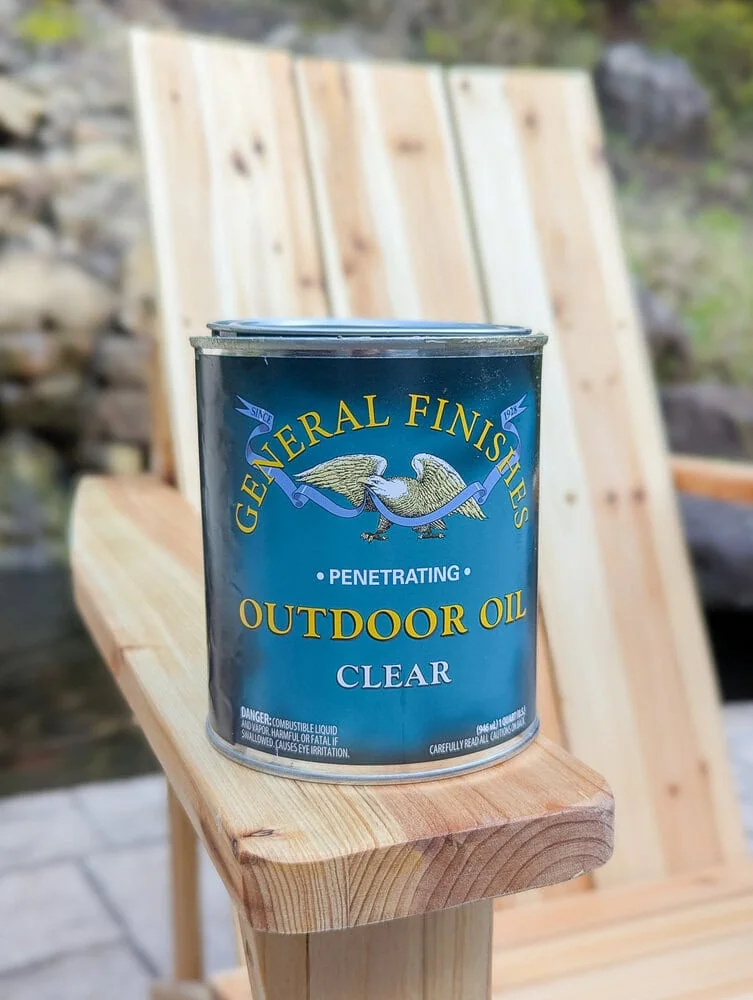
It is forgiving for DIYers — a clean surface and the manufacturer's directions are all you need — and you can build extra coats for more protection. Give it around 36 hours before putting furniture back into heavy use so the oil fully penetrates. Like all true oils it is a yearly-refresh product in tough conditions, but that maintenance is a five-minute wipe-down rather than a weekend of stripping.
| PROS✓ Oil/varnish blend — great balance for furniture✓ Easy, forgiving wipe-on application✓ Dries fast; build coats for more protection✓ Rich, natural look on chairs and tables✓ Can go over some existing finishes | CONS✕ Yearly re-coat in harsh exposure✕ Can be fussy curing on very oily exotic woods✕ Wait ~36 hours before heavy use |
We earn a commission if you buy, at no extra cost to you.
5. WOCA Exterior Wood Oil
BEST ECO-FRIENDLY CHOICE
WOCA is a Danish brand with a strong green credential, and its Exterior Wood Oil is the pick here if low-VOC and plant-based matters to you. The premium plant-oil formula is water-dilutable and low in VOCs, yet it still penetrates deeply to seal the wood from the inside out — creating a water-repellent finish that won't peel or chip the way film stains and resins eventually do.
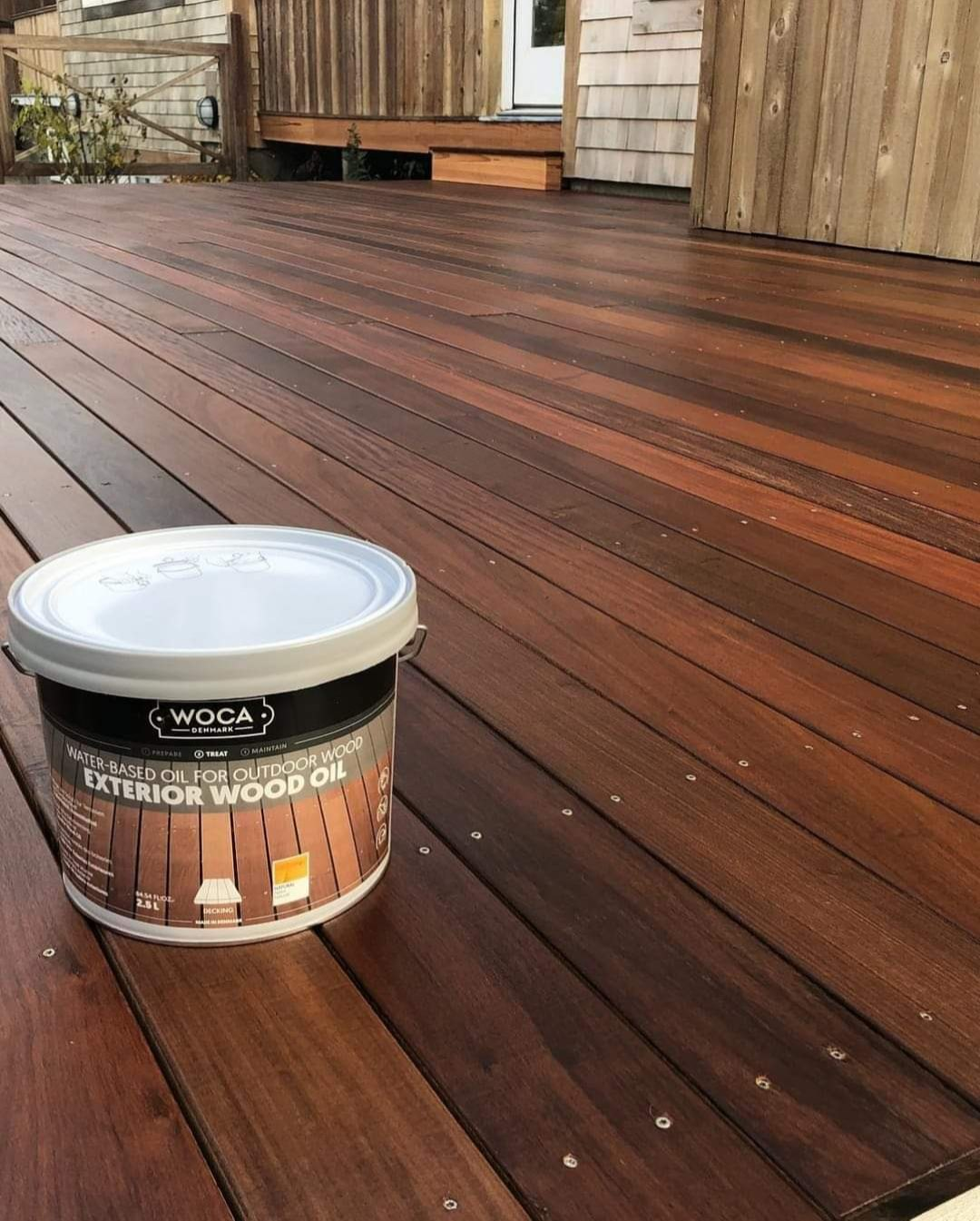
A little goes a long way; the oil absorbs fast, so even a small can covers a surprising area (very dry wood will drink up more). It works on exterior surfaces and on hardwood floors, and stays looking its best with the brand's matching Cleaner and Refresher. If you are oiling acacia garden furniture, our dedicated guide on how to treat acacia wood for outdoor furniture pairs well with this oil.
| PROS✓ Plant-based, low-VOC, water-dilutable✓ Penetrates deep for a water-repellent seal✓ Won't peel or chip like film finishes✓ Works on furniture, decking and hardwood floors✓ Efficient coverage — a little goes far | CONS✕ Small can sizes; very dry wood needs more✕ Best results need the matching maintenance products✕ Not ideal for every wood type or finish |
We earn a commission if you buy, at no extra cost to you.
6. Penofin Marine Oil Finish
BEST FOR MARINE & BOAT WOOD
Penofin has been a go-to for boat owners and waterfront homeowners for decades, and the Marine Oil Finish is built for the harshest exposure of all — salt, spray and relentless sun. It penetrates deep into the wood and dries to a hand-rubbed, no-shine finish that looks natural rather than plastic, which is exactly what you want on teak and mahogany boat trim, docks and beams.
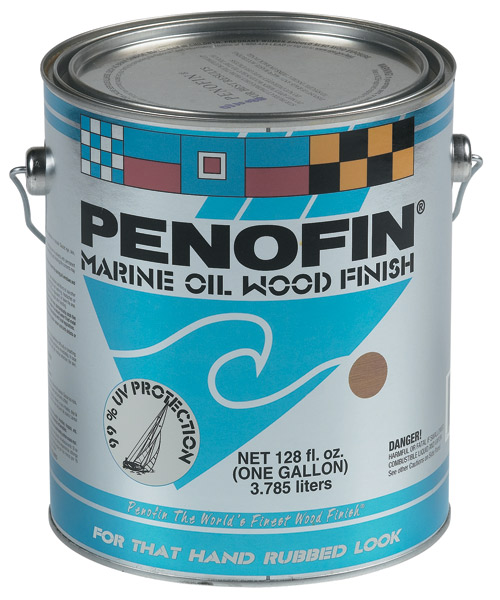
It is specially formulated to nourish and stabilise dense hardwoods while letting them breathe, so it suits exotic species that other finishes struggle with. The honest catch with marine oils is upkeep: in brutal conditions you may be reapplying every few months, and the wood needs proper sanding and cleaning before you start. But for that genuine, oiled-teak look near water, few things match it.
| PROS✓ Marine-grade — handles salt, spray and sun✓ Deep penetration; hand-rubbed, no-shine look✓ Stabilises and nourishes dense hardwoods✓ Lets exotic woods breathe✓ Trusted by boat owners for 20+ years | CONS✕ Frequent re-coats in harsh marine exposure✕ Needs thorough sanding and prep first✕ Can darken some woods |
We earn a commission if you buy, at no extra cost to you.
7. Watco Teak Oil
BEST BUDGET PICK
Sometimes you just want a proven teak oil that does the job without costing the earth, and Watco Teak Oil has been that product for fine woodworkers and weekend DIYers alike for years. It is specially formulated for dense woods — teak, rosewood, mahogany — and penetrates deep to create the warm, hand-rubbed glow oiled wood is loved for, with solid UV and moisture resistance for marine use above the water line.
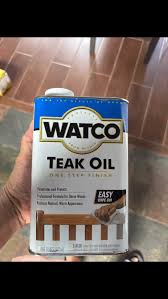
Application could not be simpler: brush or wipe on, let it soak for 15 to 30 minutes, wipe off the excess, and let it dry. It protects from within and won't chip, peel or wear away. As a true teak oil it is a maintenance finish you top up periodically, but at its price that is an easy trade — and it is widely stocked, so refills are never far away.
| PROS✓ Excellent value — proven, affordable teak oil✓ Dead-simple wipe-on, wipe-off application✓ Warm, hand-rubbed glow on dense woods✓ Good UV and moisture resistance✓ Widely available for easy refills | CONS✕ Periodic topping-up needed✕ Best on dense/oily woods, not softwood decks✕ Above-the-waterline only for marine use |
We earn a commission if you buy, at no extra cost to you.
How outdoor oil finishes actually work
Every outdoor wood finish falls into one of two camps, and understanding the difference is the single most useful thing you can know before buying.
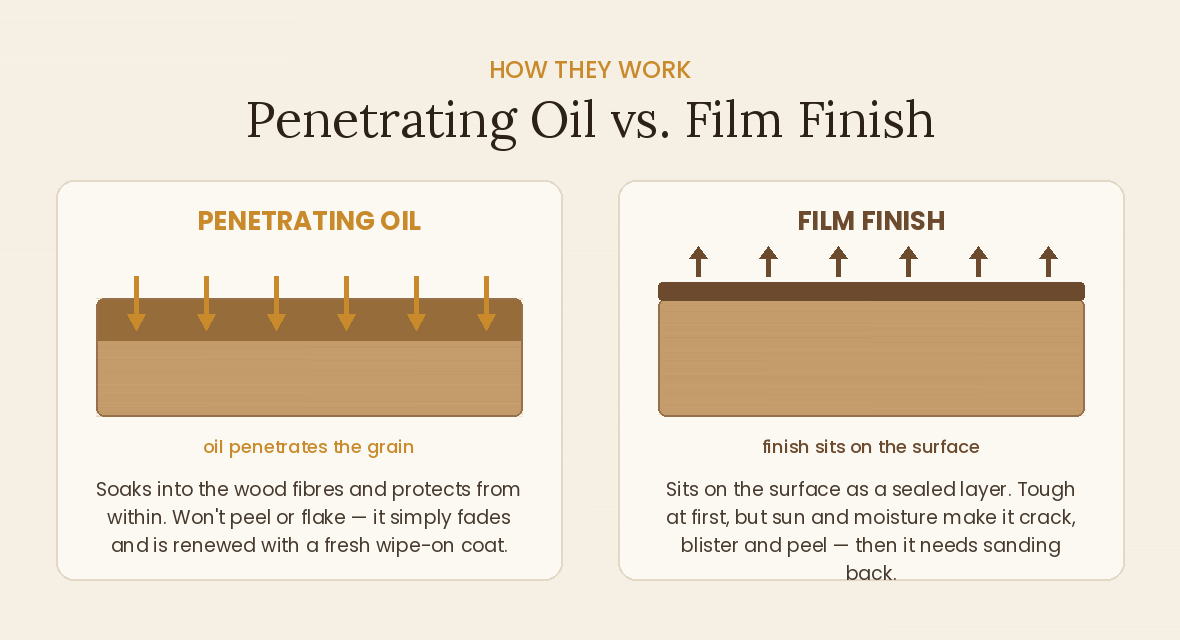
Penetrating oils soak into the wood fibres and protect from within. Because there is no coating sitting on the surface, they physically cannot peel, crack or blister — they just slowly weather thin and get topped up. The look is natural and matte, and repairs are as easy as cleaning and re-oiling. The trade-off is that they offer less abrasion resistance and need refreshing more often than a film.
Film finishes (spar varnish, exterior polyurethane, deck paint) build a sealed layer on top of the wood. They are tougher and more water-resistant at first, but sun and moisture eventually break that film down, and when it fails it cracks and peels — meaning a full sand-back before you can refinish. Every oil in this guide is a penetrating or hybrid oil, chosen precisely to avoid that peeling-film headache.
Types of outdoor oil finish, explained
Penetrating / hardwood oils
Pure soak-in oils such as DeckWise Ipe Oil and Penofin. They feed dense grain and protect from inside, with no film at all. Best for hardwood decks, marine wood and exotic species.
Hybrid & hardwax oils
Modern oils such as Rubio Monocoat that bond to the fibres and add a thin, durable, non-film layer of protection in one coat. The best all-round balance of looks, durability and ease.
Oil / varnish blends
Products like General Finishes Outdoor Oil mix penetrating oil with a little varnish for extra in-the-wood toughness. Ideal for furniture that gets handled.
Teak oils
Blends (often oil plus resins and driers) designed for dense, oily woods like teak and mahogany. Watco is the classic budget example. Great glow, regular upkeep.
Natural oils — tung & linseed
Pure tung oil and boiled linseed oil are the traditional, food-safe-ish options. They are cheap and renewable but slow-drying and offer modest weather protection on their own — best for low-exposure pieces or as part of a homemade oil/varnish mix.
How to choose: a quick buyer's guide
The “best” oil is the one that matches your wood, your climate and how much maintenance you are willing to do. Weigh these six factors before you buy.

- Wood type. Dense hardwoods (ipe, teak) need hardwood-specific oils that can penetrate tight grain; softwoods like cedar and pine drink up far more product.
- UV protection. Pigment and UV stabilisers are what slow the grey. Crystal-clear oils protect the least against sun, so on exposed wood lean toward a tinted or UV-rated formula.
- Where it lives. Walk-on decks need oils rated for horizontal, foot-traffic surfaces; furniture, fences and cladding can use lighter vertical-surface formulas.
- VOC & safety. Plant-based, low- or zero-VOC oils (WOCA, Rubio) are kinder to use around the home, kids and pets.
- Coverage & coats. Check square feet per can and how many coats the job needs — thin coats stretch much further than you expect.
- Maintenance appetite. All oils need refreshing, but that is their strength: clean and re-coat, with no stripping or sanding.
How to apply an outdoor oil finish
Oils are the most beginner-friendly outdoor finish there is. The whole job comes down to good prep and thin coats.
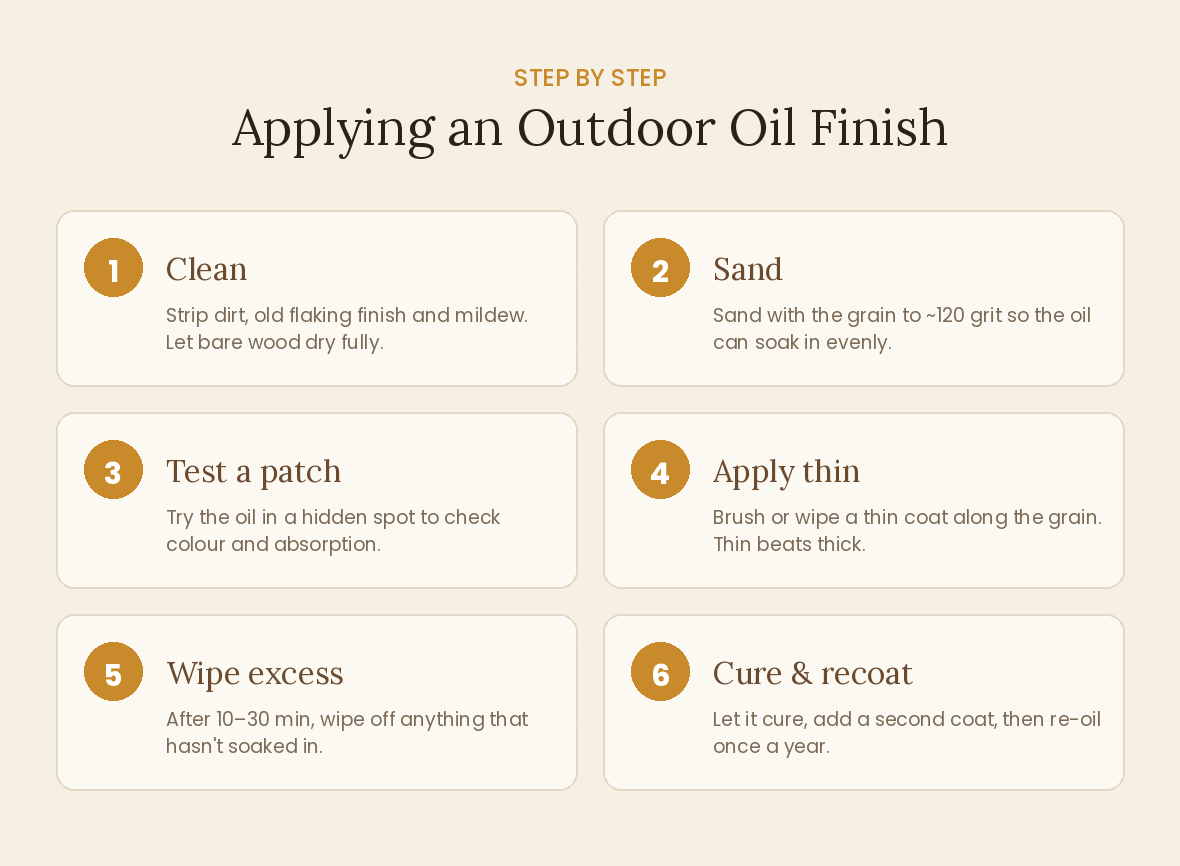
- Clean. Remove dirt, mildew and any old flaking finish. Let bare or washed wood dry fully — a pressure-washed surface may need days to dry out.
- Sand. Sand with the grain to around 120 grit so the oil can soak in evenly. Don't go too fine, or you close the pores.
- Test a patch. Try the oil in a hidden spot to check the colour and how thirstily the wood drinks it.
- Apply thin. Brush or wipe on a thin coat along the grain. With oils, thin always beats thick.
- Wipe off the excess. After 10–30 minutes, wipe away anything that hasn't soaked in, or it will stay tacky.
- Cure & recoat. Let it cure, add a second thin coat if the wood is still thirsty, then plan to re-oil roughly once a year.
| ⚠ Safety first: oily rags can self-igniteRags soaked in linseed, tung, teak or Danish oil can spontaneously combust as the oil cures and gives off heat. Never ball them up in a bin. Lay them flat outdoors to dry completely, or submerge them in a sealed metal container of water before disposal. This is the one genuinely dangerous part of oiling wood — take it seriously. |
How often do you need to re-oil?
It depends almost entirely on exposure. As a rough rule for full-sun, fully-exposed wood, plan on re-coating penetrating oils and teak oils once a year, while hybrid oils like Rubio and UV-rated oils like Osmo can stretch to two or three. Covered porches, shaded furniture and pieces you bring in over winter last considerably longer. The good news is that re-oiling is never a big job: a quick clean, let it dry, and wipe on a fresh thin coat — no stripping, no sanding, no peeling to deal with.
| Editor's quick verdictBest overall: Rubio Monocoat Hybrid Wood Protector — one coat, zero VOC, nothing to peel.Best value: Watco Teak Oil — a proven classic that won't dent your wallet.Best for a hardwood deck: DeckWise Ipe Oil — purpose-built for ipe, teak and cumaru. |
Outdoor oil finish FAQ
Does oiling wood actually waterproof it?
Not completely — oils are water-repellent rather than fully waterproof. They dramatically slow moisture absorption and stop the swelling, splitting and rot that ruin outdoor wood, but on a flat deck that pools water you are managing moisture, not eliminating it. That is also why oils need periodic refreshing.
Oil or stain — what's the difference?
A lot of overlap, honestly. Many “stains” are pigmented penetrating oils. The practical distinction: clear and lightly-tinted oils show the most natural grain but protect least against UV, while heavier-pigmented stains hide more grain but resist greying longer. Choose based on how much you want to see the wood versus how much sun it takes.
What's the best oil for teak furniture?
For dense teak, a dedicated teak oil (Watco on a budget) or a hardwood-specific penetrating oil works best, because ordinary oils struggle to penetrate teak's tight, naturally-oily grain. Some people prefer to let teak weather to a silver-grey and skip oil entirely — both are valid.
Can I oil pressure-treated wood?
Yes, but timing matters. Fresh pressure-treated lumber holds a lot of moisture and won't absorb oil well. Wait until it is dry — the classic test is to sprinkle water on it; if it soaks in rather than beading, the wood is ready to oil.
How long before I can use the furniture?
Most oils are touch-dry within a day, but give them longer to cure before heavy use — around 36 hours for furniture, and up to a week for full cure with products like Rubio Monocoat.
Key takeaways
- Outdoor wood needs protection from UV, moisture and mildew — and oil finishes deliver it while keeping the natural grain on show.
- Penetrating and hybrid oils soak in and never peel, unlike film finishes such as varnish and exterior poly.
- Rubio Monocoat is the standout all-rounder for 2026; Watco Teak Oil is the budget hero; DeckWise Ipe Oil is the hardwood-deck specialist.
- Match the oil to the surface: vertical wood, walk-on decks, furniture and marine wood each have a best-fit pick above.
- Prep well, apply thin, wipe off excess, and dispose of oily rags safely — they can self-ignite.
Read next on ImproveWood
- How to Treat Wood for Outdoor Use
- How to Treat Cedar for Outdoor Use
- How to Treat Acacia Wood for Outdoor Furniture
- How to Treat Plywood for Outdoor Use
- Best Deck Sealer for Old Decks
- Best Below-Ground Wood Preservative (UK)
- More Oil Finish guides
PRODUCTION NOTES (not for publishing)
AI image prompts
Documentary / candid aesthetic, natural light, real wood texture, no text overlays. Generate and insert these into the WordPress post in place of the grey-screen embeds. Suggested aspect: 16:9 for the hero, 4:3 for in-context shots.
Hero
A weathered cedar deck and matching garden bench on a sunny afternoon, one half visibly freshly oiled and glowing amber, the other half dry and greying — candid documentary photo, soft natural backlight, shallow depth of field.
Rubio Monocoat
Close-up of a hand wiping a single coat of natural-tone oil onto a smooth oak tabletop with a cloth, rich grain coming alive, workshop in soft focus behind, realistic candid lighting.
Osmo UV Oil
A timber-clad house exterior and wooden front door being brushed with clear oil, bright daylight, focus on the brush and grain, honest documentary feel.
DeckWise Ipe
A dark, dense ipe hardwood deck mid-application, oil deepening the chocolate-brown colour on finished boards versus dull grey unfinished boards, overhead candid shot.
General Finishes
An Adirondack chair on a porch being wiped with oil, warm evening light, natural grain glowing, lifestyle documentary style.
WOCA
Eco-styled scene: plant-based wood oil tin, natural bristle brush and acacia garden furniture on a patio with greenery, soft daylight, candid.
Penofin Marine
Teak boat trim and a wooden dock by the water at golden hour, freshly oiled and gleaming, water droplets beading, realistic marine documentary photo.
Watco Teak Oil
Hands rubbing teak oil into a mahogany side table with a cloth, warm hand-rubbed glow, simple home workshop, candid natural light.
Pinterest pin package
Three ready-made pins are embedded below (1000×1500). Suggested titles, descriptions and boards follow each. Drop links into the description only after the first 2–3 weeks of native warm-up.
Title: Best Outdoor Oil Finishes for 2026 (7 Tested Picks)
Description: The 7 best outdoor wood oils for 2026 — protect your deck, furniture and fences while keeping the natural grain. Includes a full buyer's guide, how-to-apply steps and the best pick for every surface. #woodworking #deckcare #outdoorfurniture #diyhome #woodfinishing
Boards: Woodworking Tips · Deck & Patio Ideas · DIY Home Projects · Outdoor Living
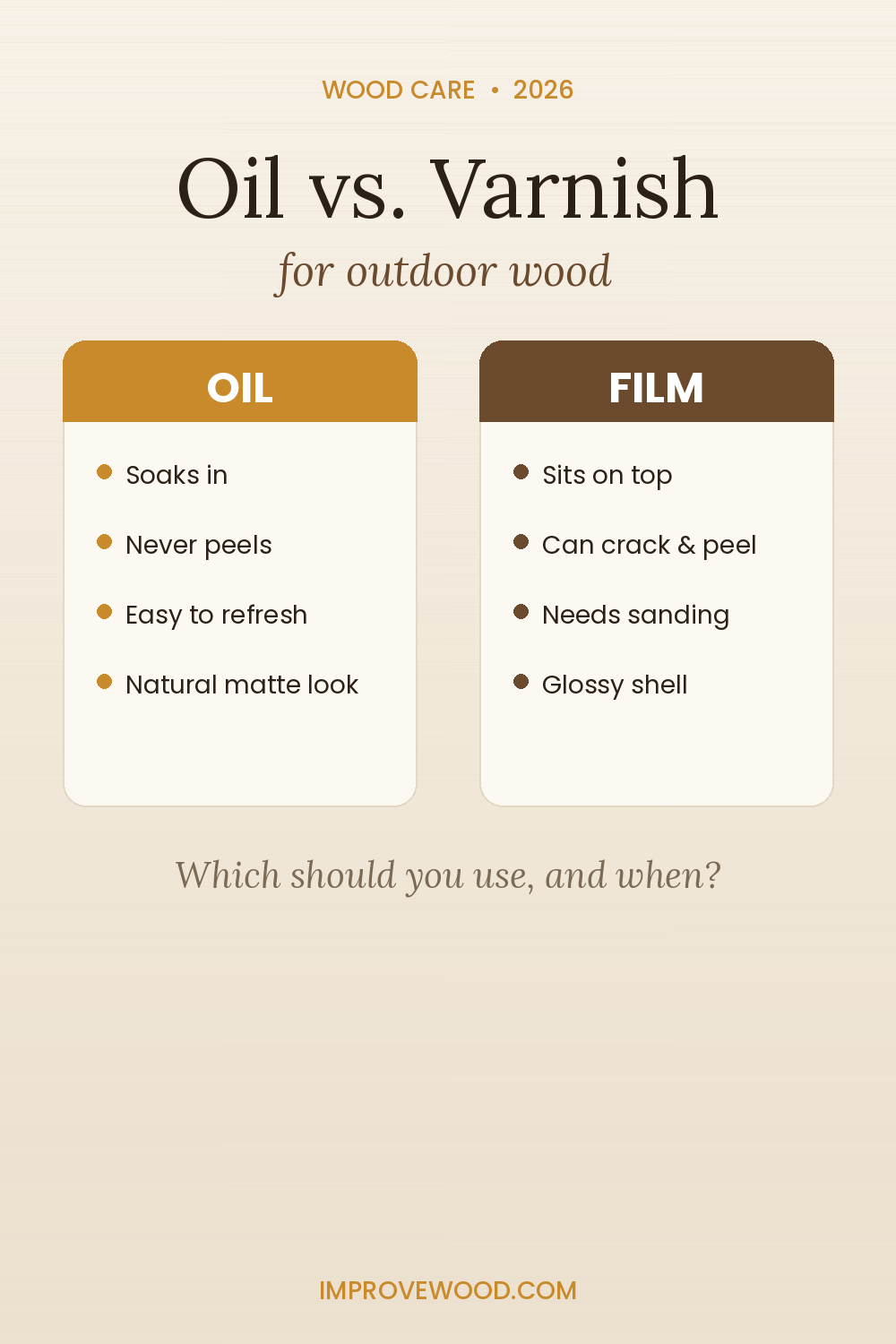
Title: Oil vs. Varnish for Outdoor Wood — Which Should You Use?
Description: Penetrating oil or film finish? Here's the simple difference that decides whether your outdoor wood peels or just needs a quick wipe-on refresh. #woodfinishing #diytips #deckmaintenance #homeimprovement #woodcare
Boards: Woodworking Tips · DIY Home Projects · Home Maintenance
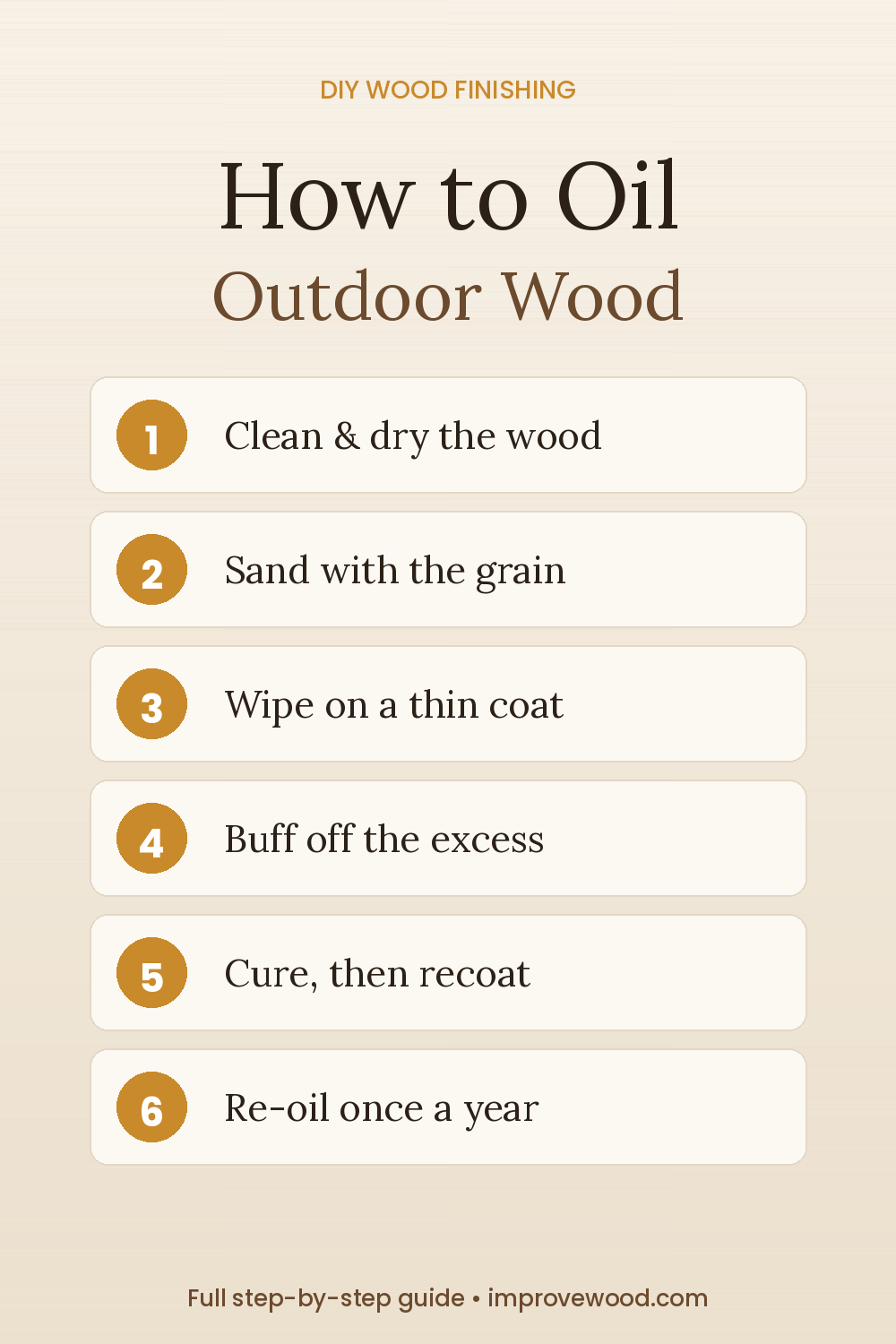
Title: How to Oil Outdoor Wood — 6 Easy Steps
Description: Oiling a deck, fence or garden furniture is the most beginner-friendly finish there is. Follow these 6 simple steps for a glowing, weather-protected finish that never peels. #diy #woodworking #deckcare #outdoorprojects #homediy
Boards: DIY Home Projects · Woodworking Tips · Outdoor Living · Weekend Projects