The Comeback Nobody Saw Coming
Let me take you back to 1999. Frosted tips. Way too much gel. Hair that could double as a weapon. That version of spiky hair died a well-deserved death.
But spikes are back. Just not those spikes.
The modern spiky hairstyle is softer. More textured. Less aggressive. Think bedhead with direction. Think pieces that stick up but still move when you touch them. Think product that looks like nothing, not like you dipped your head in a bucket of glue.
I have cut spiky hair on straight hair, wavy hair, and even loose curls. I have seen it work with suits, with t-shirts, with beards, and with clean-shaven faces. The key is knowing which spikes to ask for and which products to use.
Here are 15 modern spiky hairstyles for men.
Before You Start: What Makes Spikes Modern
The old way: Hard gel. Stiff spikes. Every hair frozen in place. No movement. No texture. Just helmet head.
The new way: Matte product. Separated pieces. Spikes that move when you touch them. Texture that looks natural, not manufactured.
The right products: Matte clay, texture powder, sea salt spray, matte paste.
The wrong products: Hard gel, wet-look pomade, anything shiny.
Now let us get into the 15 styles.
The 15 Spiky Hairstyles for Men
1. The Classic Short Spike
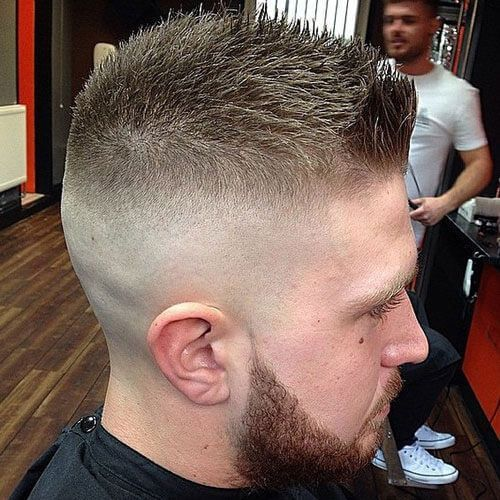
Short on the sides (faded or tapered). Short to medium on top. The top is styled into soft, upright spikes that have movement.
The right approach: Ask for a #2 or #3 fade on the sides. Top length of 1-2 inches. A matte clay gives hold without shine.
How to describe it: "I want a classic short spike. Faded sides. Top about two inches. Soft spikes that move, not stiff spikes."
What to skip: Too much product. Your hair should not look wet.
2. The Textured Crop Spike
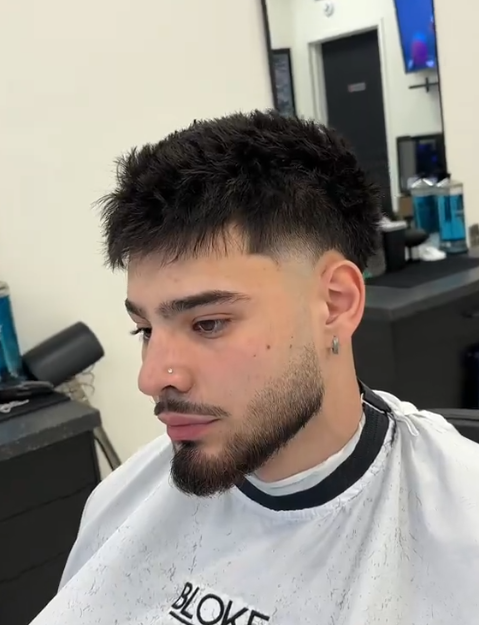
A textured crop with spikes concentrated at the front. The top is choppy and piece-y. The front pieces spike upward or forward.
The right approach: Ask for point-cut texture throughout the top. A fringe that hits your eyebrows when styled down. Texture powder for grip.
How to describe it: "I want a textured crop spike. Choppy top. Front pieces spiking up and forward. Messy, not neat."
What to skip: A crop that looks like a bowl cut. Texture is non-negotiable.
3. The Faux Hawk Spike
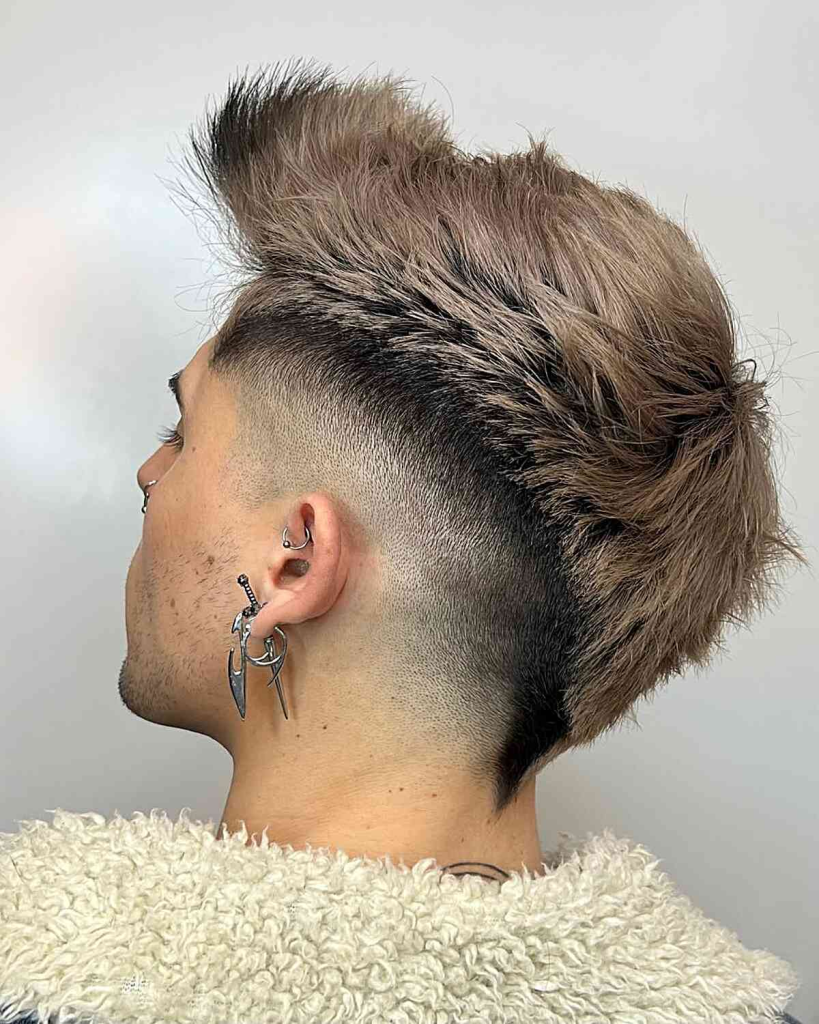
The classic faux hawk shape — shorter on the sides, longer in the center — styled into spikes. The center ridge is textured and piece-y.
The right approach: Ask for a fade or undercut on the sides. A center strip of hair that is 2-3 inches long. A strong hold matte product.
How to describe it: "I want a faux hawk spike. Faded sides. Longer center strip. Soft spikes along the ridge."
What to skip: A faux hawk that is too tall. Keep it subtle, not rooster-like.
4. The Messy Bedhead Spike
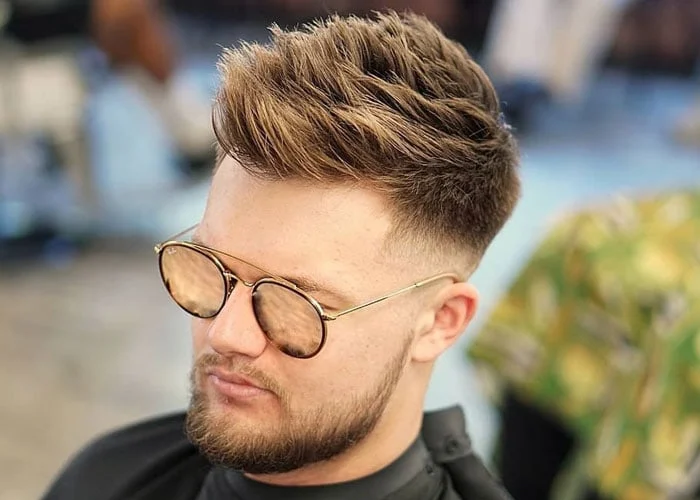
The most relaxed spike on the list. Hair is cut with lots of texture. The spikes are soft, separated, and slightly chaotic.
The right approach: Ask for point-cut texture everywhere. Length of 2-3 inches on top. Sea salt spray for grip and movement.
How to describe it: "I want a messy bedhead spike. Lots of texture. Soft spikes that look intentional but not stiff."
What to skip: A mess that looks like you forgot to brush. There is a line between styled and sloppy.
5. The Short Fade with Spiky Top
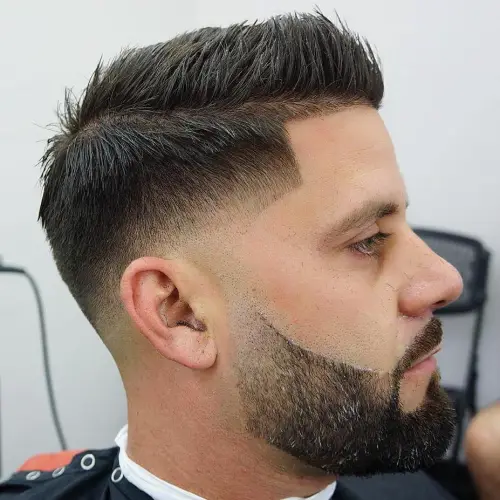
A high or mid fade on the sides and back. The top is left short (1-2 inches) and styled into upright spikes.
The right approach: Ask for a clean fade (skin to #2 or #3). Top length of 1-2 inches. A matte paste for texture.
How to describe it: "I want a short fade with a spiky top. High fade on the sides. Top about an inch long. Soft spikes."
What to skip: A fade that is too high. It should leave enough top to balance the look.
6. The Long Top Spike
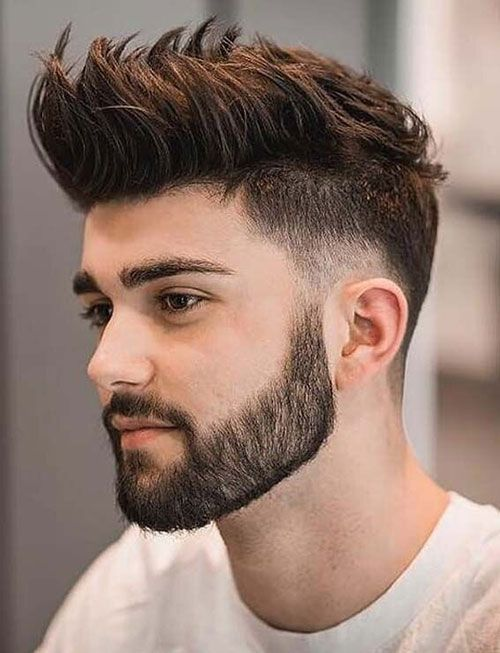
Longer on top (3-4 inches), shorter on the sides. The longer top is styled into spikes that have height and movement.
The right approach: Ask for faded or tapered sides. Top length that reaches your forehead or nose when pulled down. A strong hold matte product.
How to describe it: "I want a long top spike. Faded sides. Top about three inches. Spikes with height that still move."
What to skip: A top that is too heavy. Product should support the spikes, not weigh them down.
7. The Curly Spike
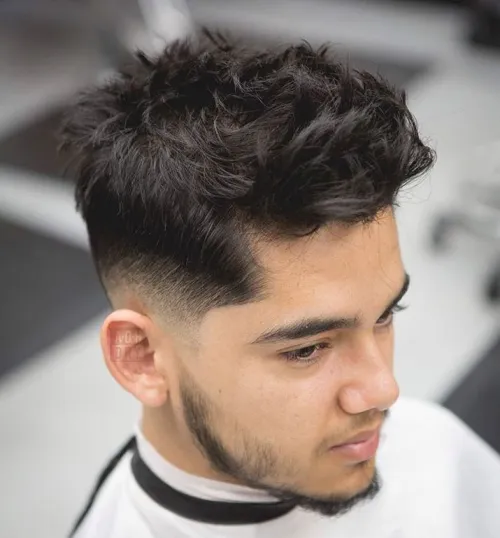
For wavy or loose curly hair. The curls are styled into soft, separated spikes instead of smooth waves.
The right approach: Ask for a curly cut with texture. A curl cream or lightweight gel. Diffusing or air-drying maintains the curl pattern.
How to describe it: "I want a curly spike. Work with my natural texture. Soft spikes that still look like curls."
What to skip: Brushing out curls. That creates frizz, not spikes.
8. The Undercut Spike
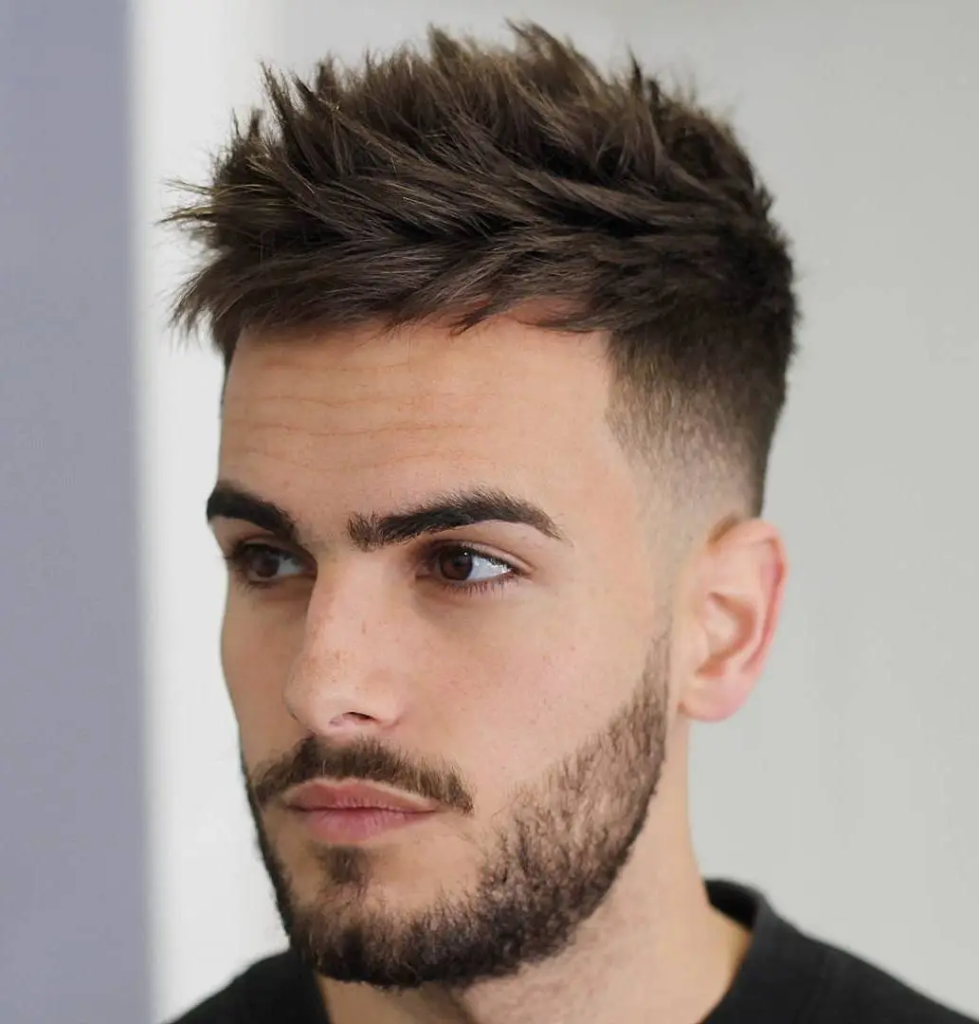
Sides and back are shaved or closely clipped. The top is longer and styled into spikes. Maximum contrast between shaved and spiky.
The right approach: Ask for a #2 or #3 undercut (or bald). Top length of 2-4 inches. A matte clay for texture.
How to describe it: "I want an undercut spike. Shaved sides. Top long and spiky. Clean contrast between the sections."
What to skip: A crooked disconnect line. The line between shaved and long should be sharp.
9. The Low-Profile Spike
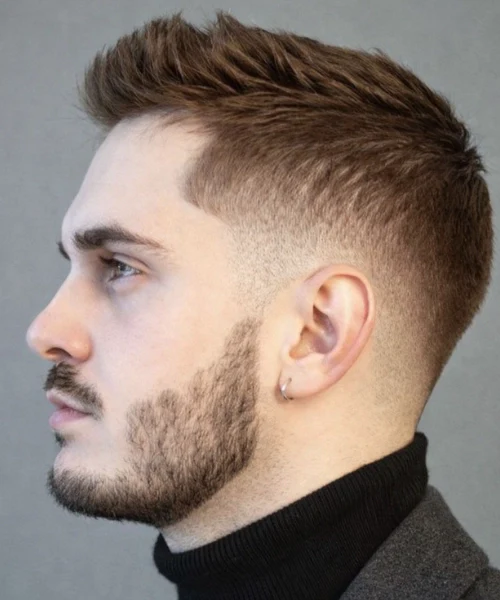
Subtle spikes. The hair has height and texture but no dramatic points. More of a textured upright shape than actual spikes.
The right approach: Ask for a textured cut throughout. Top length of 1-2 inches. A small amount of matte product.
How to describe it: "I want a low-profile spike. Subtle texture. Not dramatic. Just enough height to look styled."
What to skip: Too much product. On low-profile spikes, less is definitely more.
10. The Side-Swept Spike
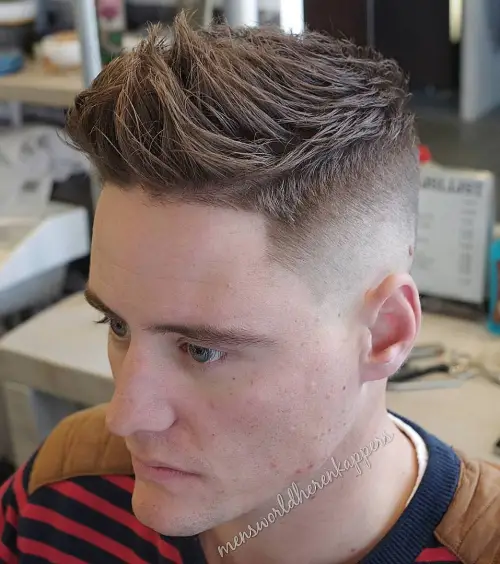
Spikes that lean to one side instead of standing straight up. The hair is textured and piece-y but directed sideways.
The right approach: Ask for a deep side part. Top length of 2-3 inches. Apply product and comb to one side, then lift slightly.
How to describe it: "I want a side-swept spike. Deep side part. Spikes leaning to my right. Soft and textured."
What to skip: Spikes that are too upright. The side-swept direction is the whole point.
11. The Spiky Fringe
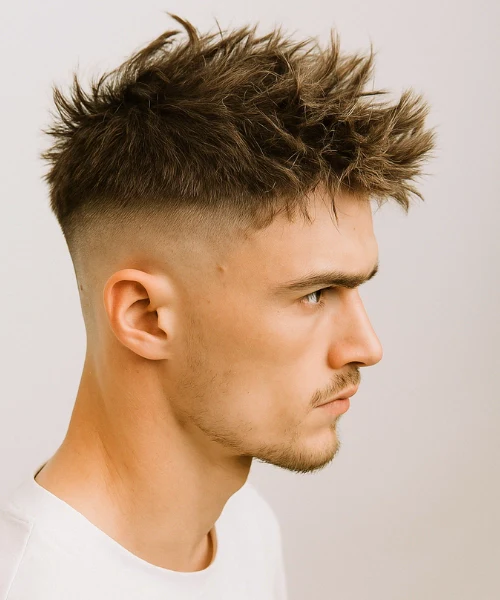
The front of the hair is longer and styled into spikes that fall forward onto your forehead. The rest of the top is shorter.
The right approach: Ask for a textured top. A fringe that hits your eyebrows when styled down. A matte clay or texture powder.
How to describe it: "I want a spiky fringe. Longer in the front — to my eyebrows. Spikes falling forward. Shorter everywhere else."
What to skip: A fringe that is too heavy. It should spike, not sit like a helmet.
12. The Textured Quiff Spike
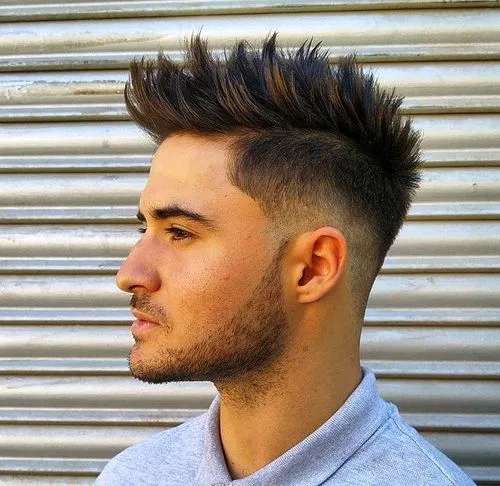
A quiff (volume at the front) that is broken up into spikes instead of a smooth wave. Height and texture combined.
The right approach: Ask for length at the front to reach your nose. A blow dryer and round brush build the height. A matte product applied after.
How to describe it: "I want a textured quiff spike. Volume at the front broken into spikes. Not smooth. Height with texture."
What to skip: A quiff that is too smooth. Spikes mean separation, not sleekness.
13. The Short and Soft Spike
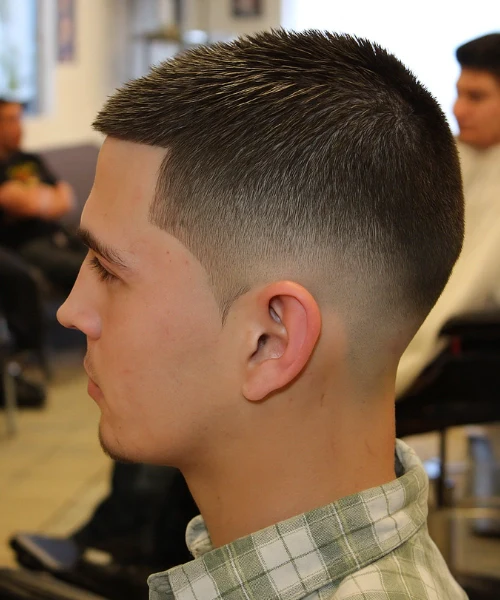
Very short on top (1 inch or less). Soft, subtle spikes. Almost more of a texture than a spike.
The right approach: Ask for a #4 or #5 guard on top. A small amount of matte paste. Spikes that are barely there.
How to describe it: "I want a short and soft spike. Very short on top — about an inch. Soft texture, not dramatic spikes."
What to skip: A cut that is too long for the spike style. This only works on very short hair.
14. The Spiky Pompadour
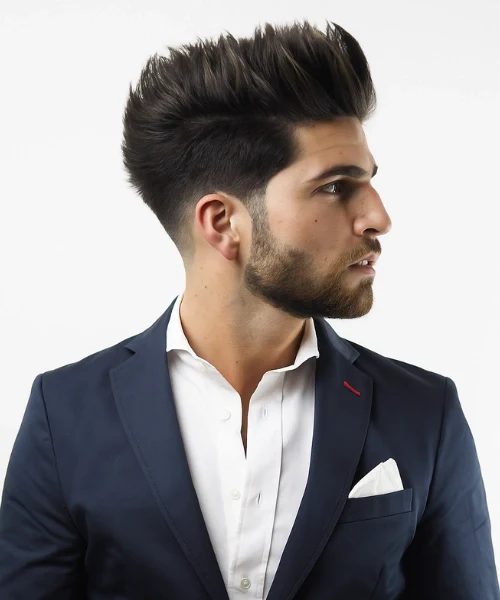
A pompadour shape (volume at the front, swept back) but broken into spikes instead of a smooth wave. Classic shape, modern texture.
The right approach: Ask for length at the front to reach your nose. The sides should be tapered. A blow dryer builds volume. A matte product breaks it into spikes.
How to describe it: "I want a spiky pompadour. Volume at the front swept back. But broken into spikes, not smooth. Classic shape, modern texture."
What to skip: A smooth pompadour. That is a different look entirely.
15. The Liberty Spike (Soft Version)
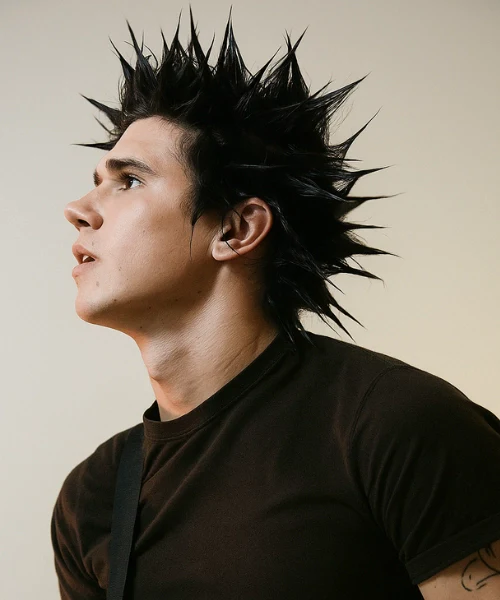
Liberty spikes are traditionally extreme — long, stiff, and dramatic. The soft version keeps the direction but loses the stiffness. Spikes point outward in multiple directions but still move.
The right approach: Ask for a cut with texture throughout. Length of 2-3 inches. Apply product and twist small sections outward.
How to describe it: "I want soft liberty spikes. Spikes pointing in different directions. Soft, not stiff. Movement over structure."
What to skip: Hard gel. The soft version requires flexible hold.
What to Tell Your Barber
Bring a photo from the 15 above. Say: "I want spikes, but modern. No hard gel. No wet look. Soft and textured."
Be specific about your product preference. If you want to use matte clay, say so. If you prefer sea salt spray for texture, mention it.
Styling Spiky Hair (The Right Way)
For short spikes (1-2 inches): Apply a pea-sized amount of matte clay to dry hair. Rub between your palms. Run through your hair. Lift at the roots with your fingers.
For longer spikes (2-4 inches): Start with damp hair. Blow-dry while lifting at the roots. Apply matte paste. Shape with your fingers, not a comb.
For texture without spikes: Use sea salt spray on damp hair. Air-dry. Rough up with your hands.
The golden rule: Less product is more. You can always add. You cannot remove.
Maintenance Schedule
Short spikes: Every 3-4 weeks. Short styles show growth quickly.
Longer spikes: Every 5-6 weeks. More forgiving but needs shape maintenance.
Undercut spikes: Every 2-3 weeks for the undercut. The top can go longer.
The Final Word
Spiky hair is not a relic of the 90s. It is a texture. A shape. A way of styling that has been updated for now.
Short spikes. Long spikes. Curly spikes. Side-swept spikes. Faux hawk spikes. Soft liberty spikes. Fifteen versions. One of them is yours.
Put down the hard gel. Step away from the wet look. Your spikes should move.