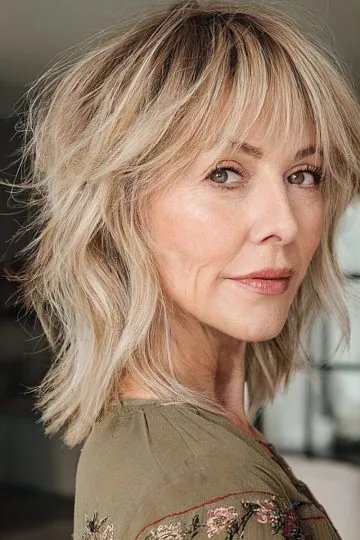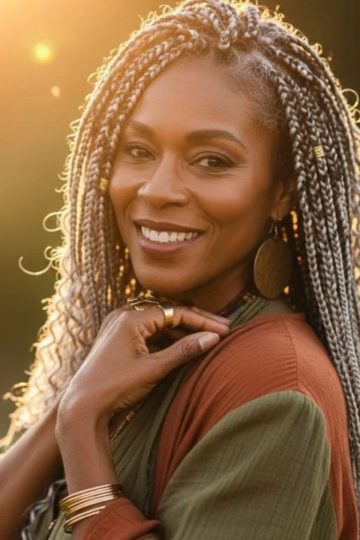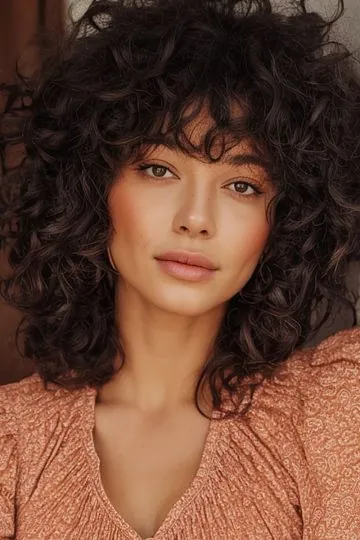
There is a reason curtain bangs have taken over salons and social media feeds. They are flattering on virtually everyone. And yes, that includes women over 50. In fact, curtain bangs for women over 50 might be even more transformative than they are for younger women. Why? Because curtain bangs soften forehead lines, draw attention to your eyes, and hide the areas where hair often thins first — the temples and hairline. They blend seamlessly into longer layers, grow out beautifully, and require almost no daily styling. This guide walks you through ten versions of curtain bangs specifically chosen for women over 50, plus exactly how to style them and what to tell your stylist.
Why Curtain Bangs Work So Well After 50
Curtain bangs are parted down the middle or slightly off-center, with the lengths curving to each side like — you guessed it — curtains. Unlike blunt bangs that sit straight across your forehead, curtain bangs are open in the middle. This openness serves several purposes for women over 50. First, it softens the appearance of forehead lines without trying to hide them completely. Second, it frames your eyes and cheekbones, drawing attention to your best features. Third, it conceals thinning at the temples, an area where many women lose density with age. Fourth, curtain bangs grow out gracefully. There is no awkward in-between stage where you are constantly pushing hair out of your eyes. They simply become face-framing layers.
The ten styles below range from soft and wispy to bold and full. Each includes why it works, how to style it, best face shapes, and maintenance needs.
1. The Soft Wispy Curtain Bangs
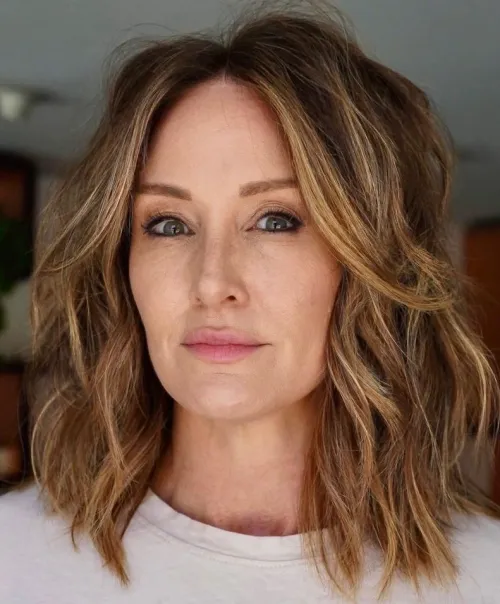
Why it works: Wispy bangs are light, airy, and barely there. They are cut with point-cutting or razor techniques to create soft, feathery ends. For women over 50, wispy curtain bangs are the most forgiving option because they blend easily into the rest of your hair and require almost no maintenance.
How to style: Apply a lightweight mousse or styling cream to damp hair. Blow-dry the bangs using a round brush, sweeping them to each side. The wispy ends should look soft and separated. A tiny amount of dry texture spray adds volume without weight.
Best face shapes: Oval, heart, and oblong. The softness flatters thinner faces.
Maintenance: Trim every 5 to 6 weeks. Wispy bangs hide grow-out better than blunt bangs.
For more bang styles that work beautifully on thinner hair, explore these: short hairstyles for thin fine hair 15 Short Hairstyles for Thin Fine Hair: Density-Boosting Cuts That Create the Illusion of Fullness— many of the same principles apply.
2. The Curtain Bangs with Face-Framing Layers
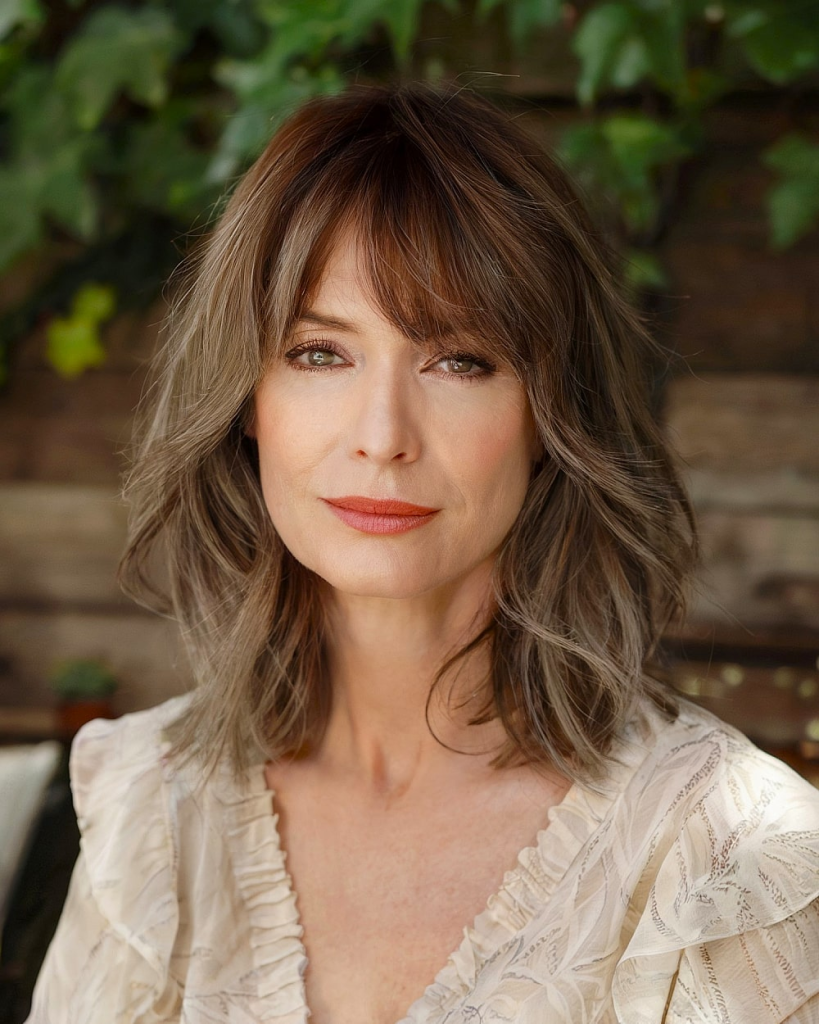
Why it works: This version pairs curtain bangs with layers that start at the cheekbones and continue down. The combination frames your face from forehead to chin. The layers add movement and volume, which is especially helpful if your hair has lost some of its former density.
How to style: Apply a volumizing mousse to damp hair. Blow-dry using a round brush, directing the bangs to each side and the layers away from your face. The layers will naturally fall into place. A light hairspray keeps everything in position.
Best face shapes: Oval, round, and square. The layers soften jawlines and add length.
Maintenance: Trim every 6 to 7 weeks.
3. The Long Curtain Bangs (Brow-Grazing)
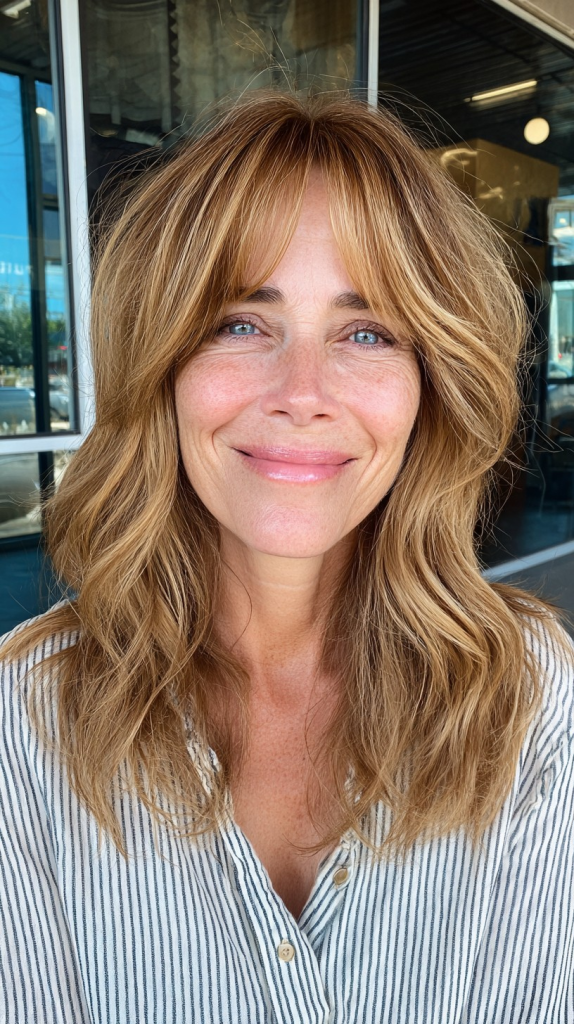
Why it works: Long curtain bangs hit at or just below the eyebrows. They are less dramatic than shorter versions and blend almost seamlessly into shoulder-length or longer hair. For women over 50 who are not ready for a major change, long curtain bangs are an excellent entry point.
How to style: Apply a smoothing cream to damp hair. Blow-dry the bangs using a flat brush, sweeping them to each side. The length means you can also tuck them behind your ears when you want your forehead fully exposed.
Best face shapes: Oval, round, and heart. The longer length balances rounder faces.
Maintenance: Trim every 6 to 8 weeks.
4. The Curtain Bangs with Mid-Length Hair
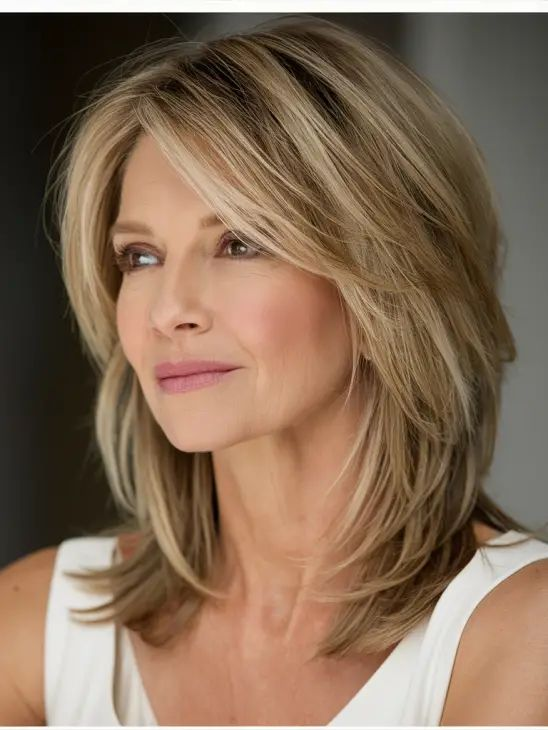
Why it works: Curtain bangs paired with a mid-length cut — think collarbone to shoulder — create a cohesive, polished look. The bangs blend into the layers throughout the cut, so nothing looks突兀 or disconnected. This combination is particularly flattering for women over 50 with fine or medium hair.
How to style: Apply a leave-in conditioner and a light mousse. Blow-dry using a round brush, directing the bangs to each side and adding a slight bend to the ends of your hair. The mid-length cut gives you enough hair to style but not so much that it becomes heavy.
Best face shapes: Oval, round, and square. The mid-length balances wider faces.
Maintenance: Trim every 6 to 8 weeks.
If you love the mid-length look, check out these: medium-length hairstyles for women over 50 — they pair perfectly with curtain bangs.
5. The Curtain Bangs with a Pixie Cut
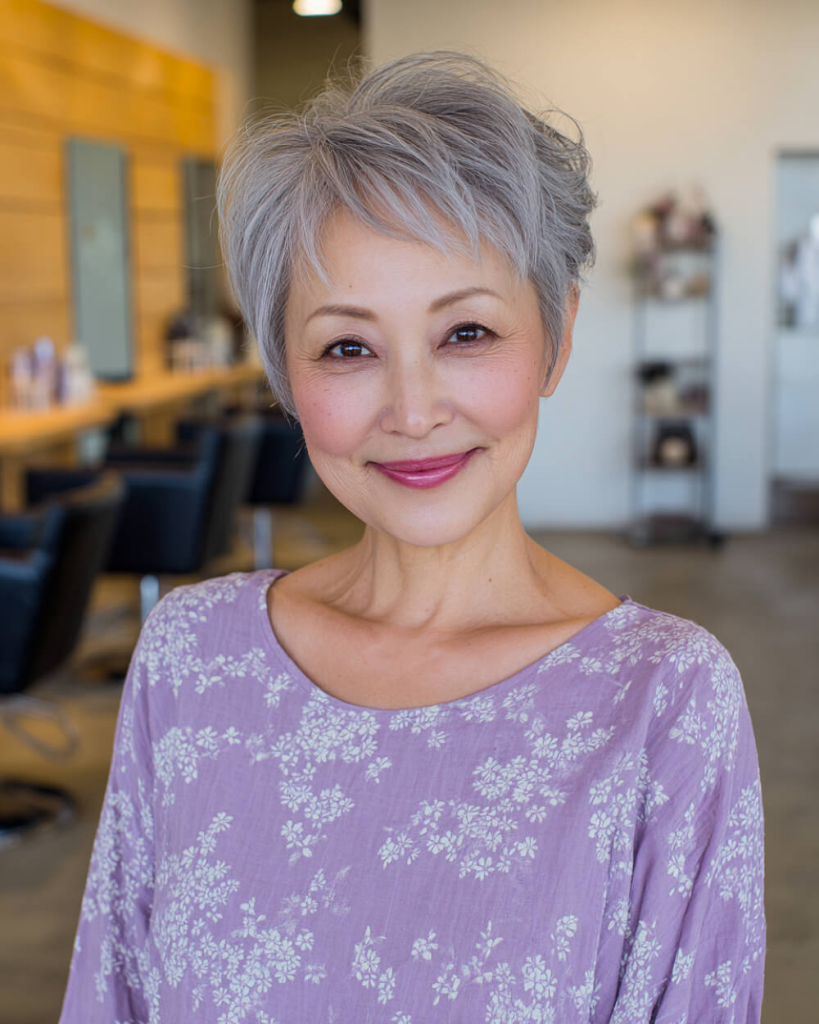
Why it works: Yes, curtain bangs work on pixie cuts. The bangs are cut longer than the rest of the pixie and swept to each side. This softens the pixie considerably, making it more approachable and romantic. For women over 50 who love their short hair but want a change, adding curtain bangs is the answer.
How to style: Apply a styling cream or wax to dry hair. Use your fingers to sweep the bangs to each side. The rest of the pixie can be styled smooth or textured. The contrast between the longer bangs and the short back is modern and fresh.
Best face shapes: Oval, heart, and diamond. The softness of the bangs balances angular features.
Maintenance: The pixie needs trimming every 4 to 5 weeks. The bangs can go slightly longer between trims.
6. The Full Curtain Bangs

Why it works: Full curtain bangs are cut with more density and weight. They are not wispy or feathery — they are substantial. This version works best on women with medium to thick hair. The fullness creates a dramatic frame around your face and adds the illusion of thicker hair at the front.
How to style: Apply a smoothing cream or lightweight gel to damp hair. Blow-dry using a round brush, sweeping the bangs to each side. The full bangs will hold their shape all day. A light hairspray keeps flyaways in check.
Best face shapes: Oval and heart. Full bangs can overwhelm round or square faces.
Maintenance: Trim every 4 to 5 weeks. Full bangs show grow-out more quickly than wispy bangs.
7. The Curtain Bangs for Curly Hair
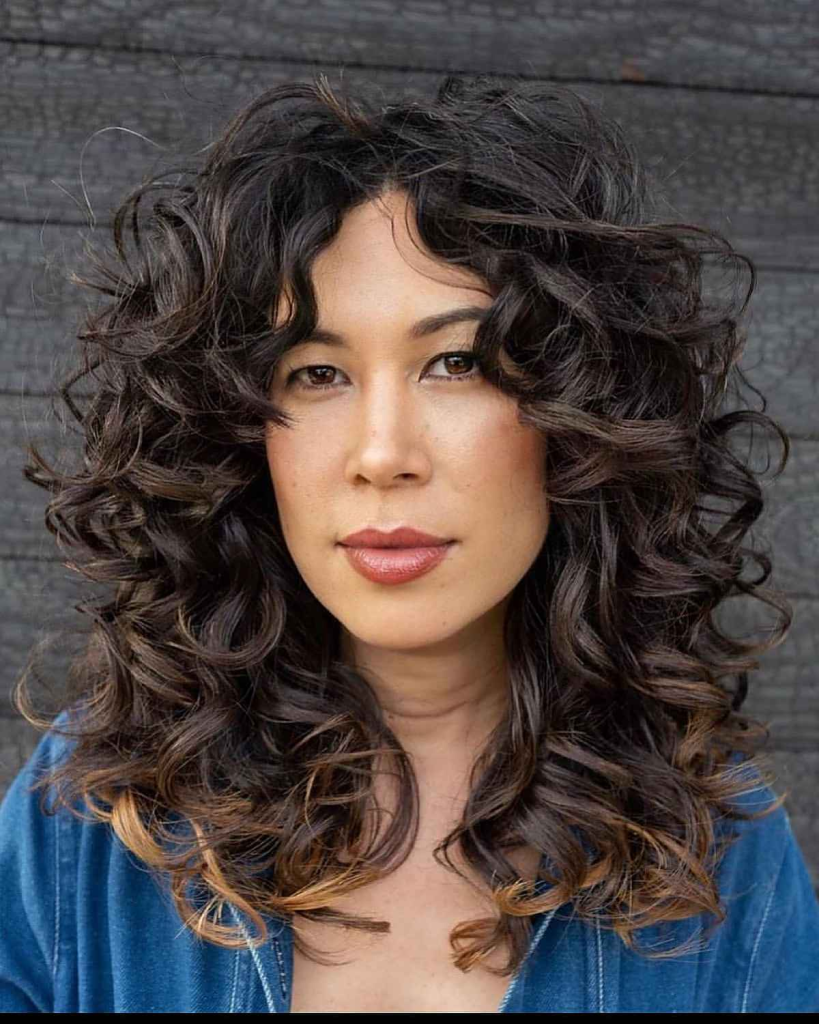
Why it works: Curly curtain bangs are having a moment, and for good reason. Your natural curl pattern gives the bangs volume and texture that straight bangs cannot match. The key is cutting them dry so your stylist can see exactly where each curl falls.
How to style: Apply a curl cream to soaking wet hair. Use your fingers to define the bangs separately from the rest of your curls. Let air-dry or diffuse. Do not brush. The curls will naturally part in the middle or slightly off-center. Embrace the imperfection.
Best face shapes: Oval, heart, and round. The volume of curly bangs softens all face shapes.
Maintenance: Trim every 6 to 8 weeks. Curly bangs hide grow-out very well.
For more curly styles that work beautifully on women over 50, explore these: hairstyles for naturally curly hair women over 30 — the techniques transfer perfectly.
8. The Curtain Bangs with a Bob
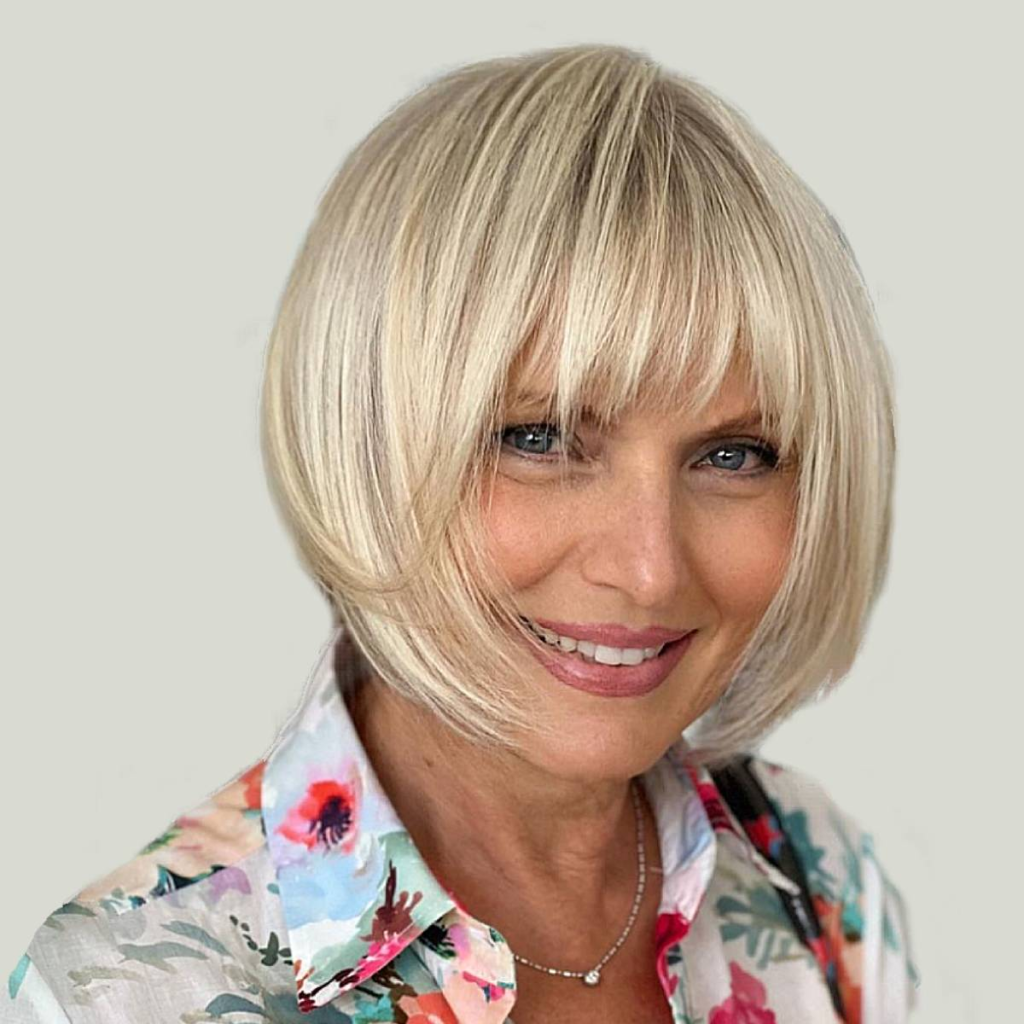
Why it works: A bob and curtain bangs are a match made in hairstyle heaven. The bangs blend into the bob's face-framing layers, creating a continuous line from forehead to chin. This combination is chic, sophisticated, and surprisingly low-maintenance.
How to style: Apply a volumizing mousse to damp hair. Blow-dry using a round brush, directing the bangs to each side and turning the ends of the bob under slightly. The result is polished but not fussy.
Best face shapes: Oval, round, and square. The bob length softens jawlines while the bangs open up the forehead.
Maintenance: Trim every 5 to 6 weeks.
9. The Textured Curtain Bangs
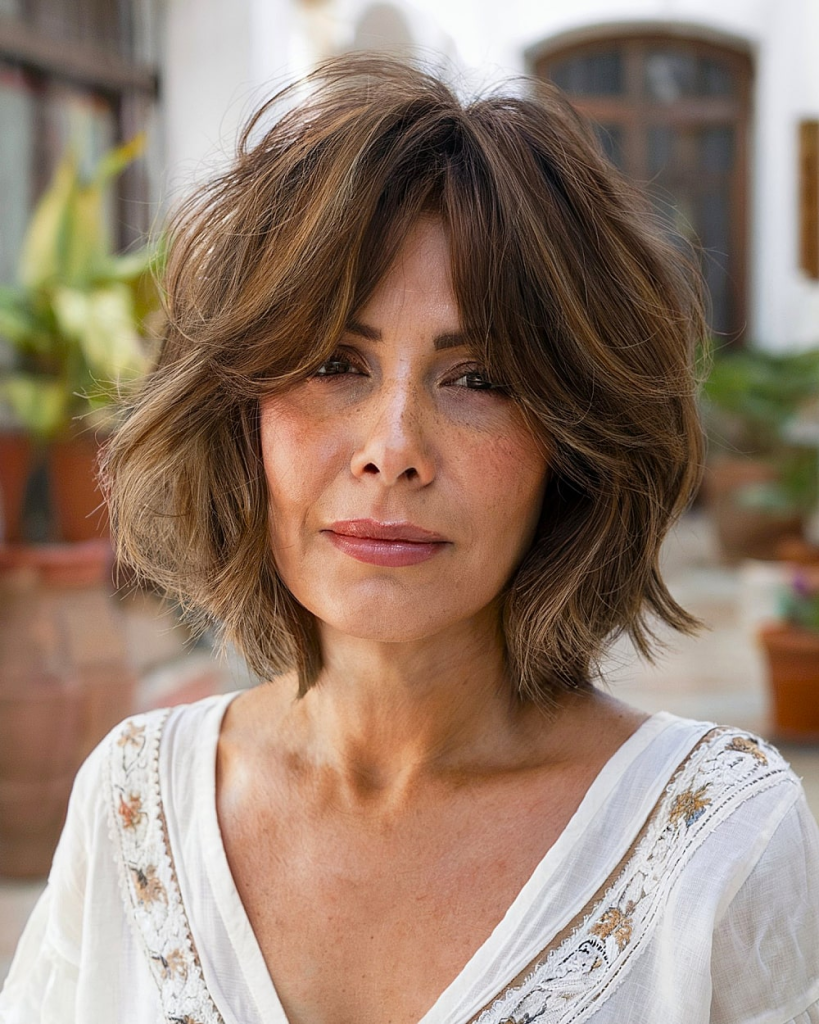
Why it works: Textured bangs are cut with point-cutting or razor techniques to create movement and separation. Unlike smooth bangs that lie flat against the forehead, textured bangs have piece-y ends that stand slightly apart. This version is ideal for women with fine hair because the texture creates the illusion of density.
How to style: Apply a texturizing spray or sea salt spray to damp bangs. Blow-dry using your fingers or a small round brush, but do not over-smooth. The texture should remain visible. A dry texture spray adds instant grit and volume.
Best face shapes: Oval, heart, and oblong. The texture softens angular features.
Maintenance: Trim every 5 to 6 weeks. Textured bangs hide grow-out well.
10. The Curtain Bangs with Gray or Silver Hair
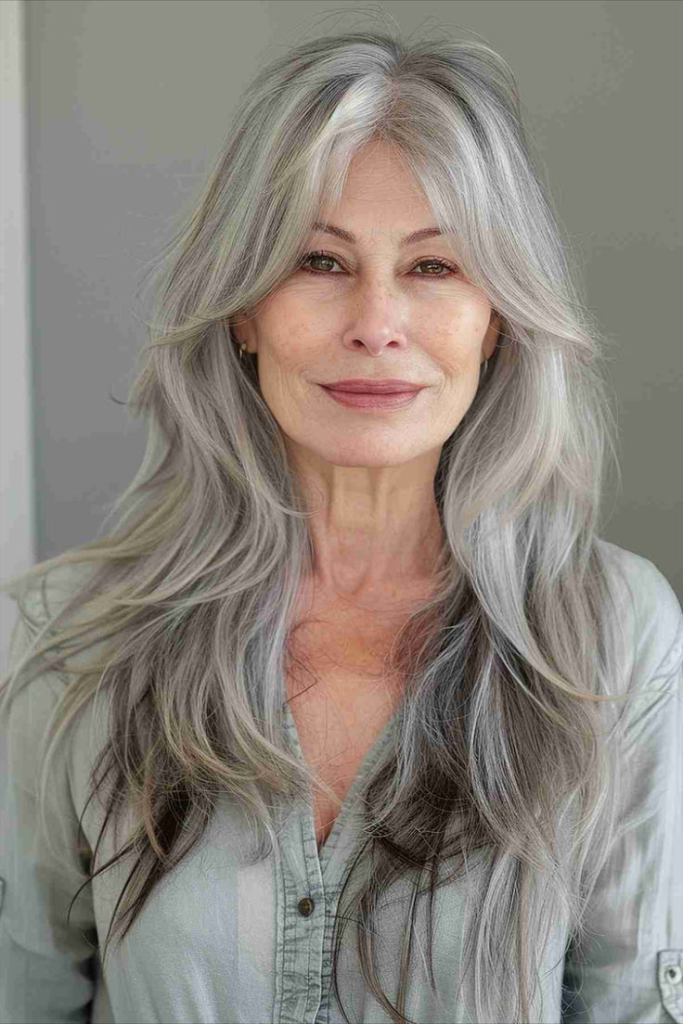
Why it works: Gray and silver hair have a different texture than pigmented hair — often coarser, sometimes drier, but always beautiful. Curtain bangs on gray hair catch the light differently than the rest of your hair, creating natural highlights and dimension. The bangs also soften the contrast between your hair and your face.
How to style: Apply a purple shampoo once a week to keep silver bright and prevent brassiness. Use a moisturizing conditioner because gray hair tends to be drier. Style the bangs as usual with a round brush. A shine spray enhances the silver tones.
Best face shapes: All face shapes. The brightness of silver hair draws attention upward.
Maintenance: Trim every 5 to 6 weeks. Use products designed for gray or silver hair to maintain color and moisture.
How to Choose the Right Curtain Bangs for You
Ask yourself these three questions before booking your appointment:
1. How much forehead do you want to cover?
- Minimal coverage (open forehead): Wispy curtain bangs, long curtain bangs
- Moderate coverage (partial forehead): Curtain bangs with face-framing layers, textured curtain bangs
- Maximum coverage (most of forehead): Full curtain bangs, curly curtain bangs
2. What is your hair texture?
- Fine or thin: Wispy curtain bangs, textured curtain bangs, long curtain bangs
- Medium: Curtain bangs with mid-length hair, curtain bangs with a bob
- Thick: Full curtain bangs, curtain bangs with face-framing layers
- Curly: Curtain bangs for curly hair
- Gray or silver: Curtain bangs with gray or silver hair
3. How much daily styling time do you want?
- Under 3 minutes: Wispy curtain bangs, long curtain bangs, curly curtain bangs
- 3 to 5 minutes: Textured curtain bangs, curtain bangs with pixie
- 5 to 7 minutes: Curtain bangs with face-framing layers, curtain bangs with a bob
- 7 to 10 minutes: Full curtain bangs
What to Tell Your Stylist
Bring a photo of two or three styles from this guide. Then say this exactly:
*"I want curtain bangs for women over 50 that soften my face and work with my hair texture. My hair is [fine / medium / thick / curly / straight / gray]. I want the bangs to hit [at my eyebrows / below my eyebrows / at my cheekbones]. Please cut them so they blend into the rest of my hair — I do not want a harsh line. I want them to be [wispy / full / textured]."*
If you have a cowlick or a strong natural part, add: "Please cut my bangs to work with my cowlick, not against it."
How to Style Curtain Bangs Daily
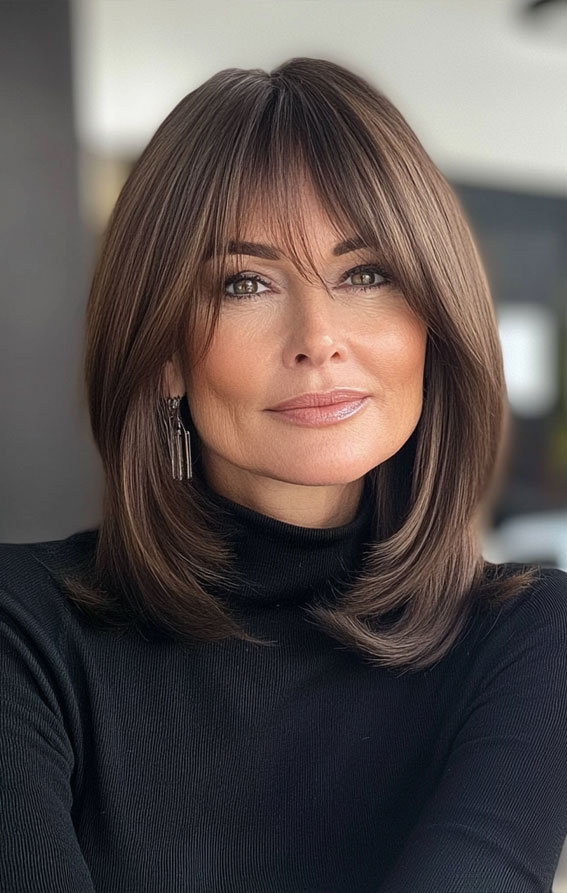
You will need:
- A small round brush (1 to 2 inches in diameter)
- A hairdryer with a concentrator nozzle
- Lightweight mousse or styling cream
- Optional: Velcro rollers for extra volume
Step-by-step:
- Start with damp, towel-dried hair.
- Apply a pea-sized amount of mousse or styling cream to the bangs only.
- Using the round brush, lift the bangs at the roots and blow-dry, directing the hair to each side.
- For the left side, brush to the left. For the right side, brush to the right.
- Once dry, let the bangs cool for 30 seconds before touching them.
- Use your fingers to separate and adjust. Do not over-brush.
For second-day bangs:
Spritz with a water bottle until slightly damp. Blow-dry using the same technique. Dry shampoo at the roots absorbs oil and adds volume.
Common Mistakes to Avoid
Mistake 1: Cutting bangs too short. Curtain bangs should hit at or below your eyebrows when dry. Remember that curly hair springs up when dry, so curly bangs need to be cut longer.
Mistake 2: Cutting bangs too thick. Thick bangs on fine hair can look heavy and overwhelm your face. Start with wispy bangs. You can always add more density later.
Mistake 3: Skipping the blow-dry. Curtain bangs rarely look good air-dried unless you have curly hair. The blow-dry with a round brush takes two minutes and makes all the difference.
Mistake 4: Forgetting to blend. Curtain bangs should blend into the layers around your face. If there is a visible line where the bangs end, your stylist cut them too bluntly.
The Truth About Forehead Lines and Bangs
Many women over 50 worry that bangs will draw attention to forehead lines. Here is the truth: curtain bangs do the opposite. The open center of curtain bangs softens the appearance of lines without trying to hide them. Blunt bangs that sit directly on forehead lines can actually accentuate them because the straight line creates contrast. Curtain bangs avoid this entirely by leaving the center of your forehead visible while framing the sides. No hiding. No contrast. Just softness.
Final Thoughts
Curtain bangs are not just for twenty-somethings on Instagram. They are for women over 50 who want to soften their features, frame their eyes, and try something new without a dramatic commitment. The ten versions above range from wispy and barely there to full and dramatic. The soft wispy curtain bangs are the most forgiving. The curtain bangs with face-framing layers add volume. The curly curtain bangs celebrate natural texture. The curtain bangs for gray hair catch the light beautifully. Pick the one that matches your hair type, your face shape, and your comfort level. Book that appointment. And enjoy the way your new bangs make you feel — lighter, fresher, and just a little bit younger.
Which of these ten curtain bangs for women over 50 will you try at your next salon visit? Drop a comment below and let us know. And if this guide helped you, share it with a friend who has been thinking about bangs but needed a little push.