The kitchen is the heart of the home, but the kitchen backsplash is its armor. Often overlooked as a mere functional strip, the backsplash has evolved into the single most impactful design feature in modern kitchens. It protects your walls from grease, water, and sauce splatters, but more importantly, it sets the visual rhythm for your cabinets, countertops, and flooring.
Whether you are renovating on a budget or building a dream culinary space, selecting the right backsplash tile or material can be overwhelming. With thousands of colors, shapes, and finishes available, where do you start?
We have curated 30 distinct kitchen backsplash ideas, ranging from classic subway tile to raw stone slabs and even high-end painted finishes. Beyond the designs, this guide will walk you through color theory, material finishes, cleaning protocols, and the "why" behind this essential kitchen layer.
Why Does the Kitchen Have a Backsplash?
Before diving into aesthetics, it is crucial to understand the functional roots of the backsplash.
- Wall Protection: The primary job is to shield drywall or plaster from moisture. Without it, steam from boiling pasta and splashing from the sink would lead to mold and peeling paint.
- Hygiene & Easy Cleaning: Grease splatters from frying pans and tomato sauce stains are inevitable. A non-porous backsplash can be wiped down with a sponge and degreaser in seconds, whereas painted drywall would stain permanently.
- Fire Safety: While not fireproof, materials like ceramic tile, stone, and glass act as a heat shield behind gas stoves or cooktops, preventing wall damage.
- Defining a Focal Point: From a design perspective, the vertical space between the counter and the upper cabinets is prime real estate. This is where you inject personality.
How to Choose a Backsplash (Key Factors)
When browsing kitchen backsplash ideas, keep these technical and aesthetic filters in mind:
- Grout Lines: More grout means more maintenance. Large-format tiles have fewer lines to scrub. Epoxy grout resists stains better than cement grout.
- Material Durability: Natural stone (marble, travertine) requires sealing. Porcelain and ceramic are low-maintenance. Glass is easy to clean but shows water spots.
- Countertop Continuity: Do you match the counter, contrast it, or blend it? A general rule: If your counter is busy (granite with heavy veining), choose a simple backsplash. If your counter is solid (white quartz), go wild with pattern.
- Cabinetry Color: Your backsplash should bridge the gap between lower cabinets (often dark or wood-toned) and upper cabinets (often white or light).
30 Kitchen Backsplash Designs
Tile Options (Ceramic, Porcelain & Mosaic)
1. Classic White Subway Tile (3x6)
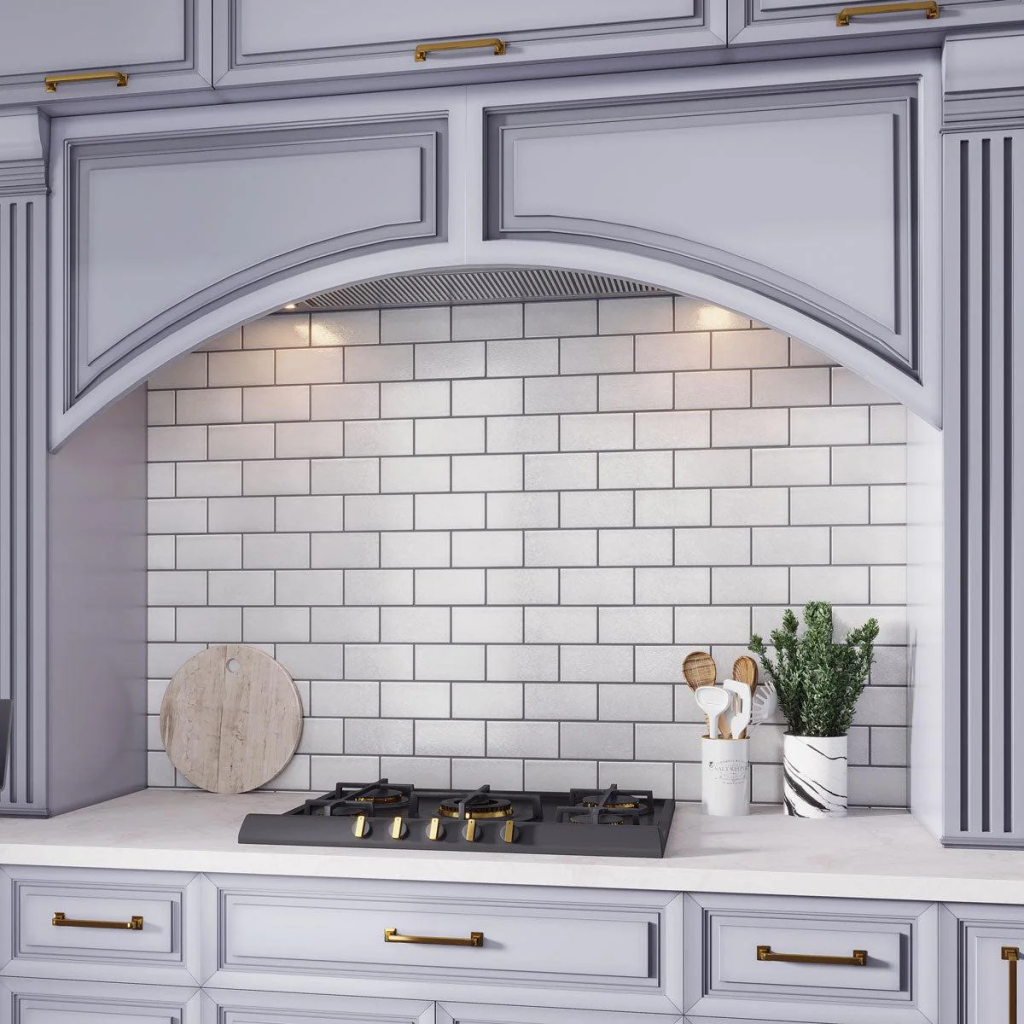
The "little black dress" of kitchens. Offset stacked horizontally, it works with farmhouse, modern, and traditional styles. Use dark grout for a high-contrast industrial look or white grout for seamless blending.
2. Vertical Stacked Brick
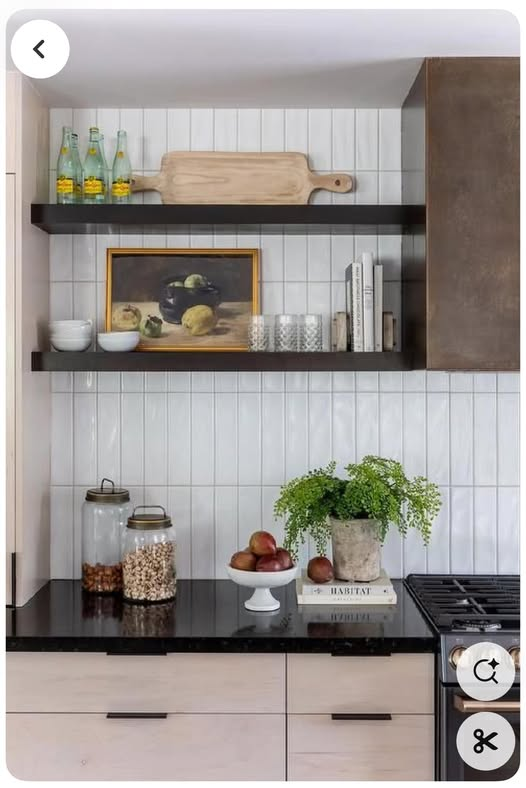
Take the standard subway and rotate it 90 degrees. Vertical stacking draws the eye upward, making low ceilings appear taller. Perfect for narrow galley kitchens.
3. Herringbone Pattern
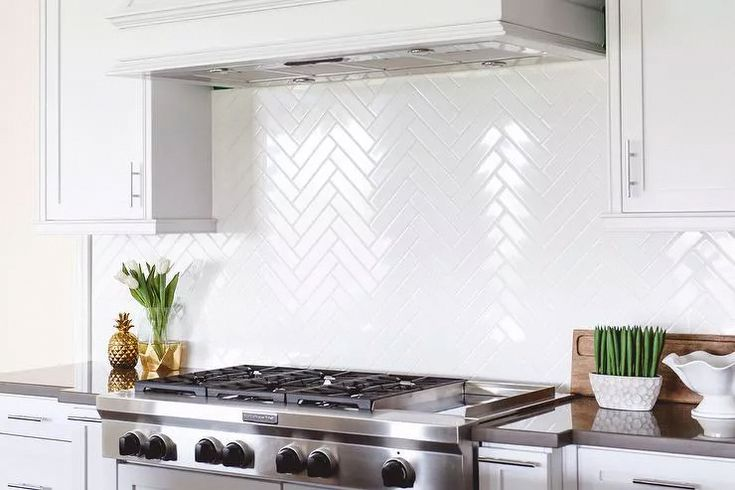
A timeless wood-floor pattern applied to backsplash tile. Usually done with 2x6 or 3x6 tiles. It adds dynamic movement and texture. Best in a neutral color (beige, grey, white) to avoid visual chaos.
4. Chevron Tile
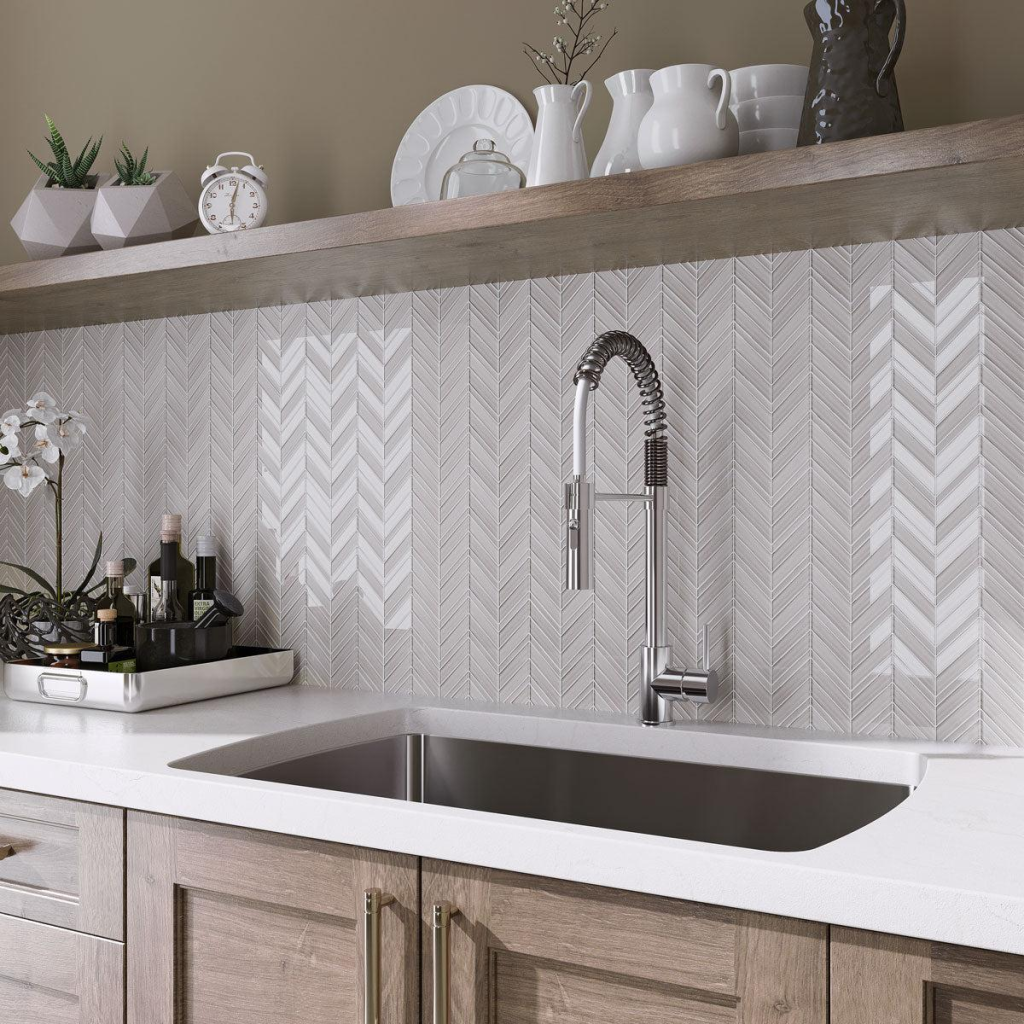
Similar to herringbone but with mitered edges (the tiles meet at perfect points). It is sharper, more formal, and incredibly chic in matte black or glossy white.
5. Hexagon (Honeycomb)
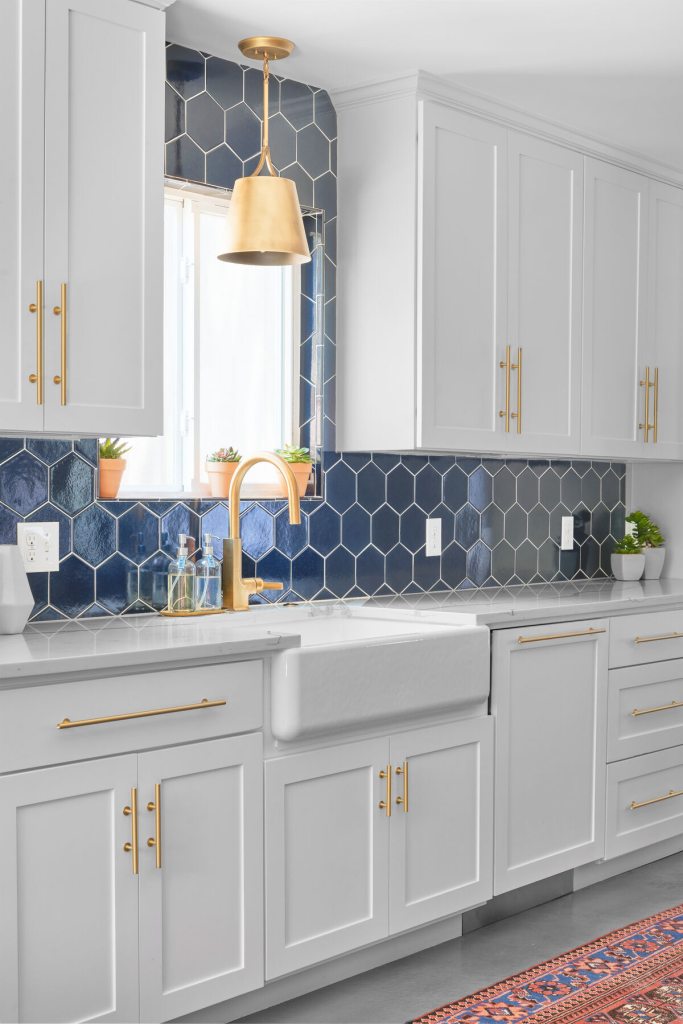
Six-sided tiles break the monotony of rectangles. Small hex mosaics are great for curved walls; large 4-inch or 6-inch hexagons look very contemporary. Try black hexagons on a white floor for a 1920s revival.
6. Penny Round (Mosaic)
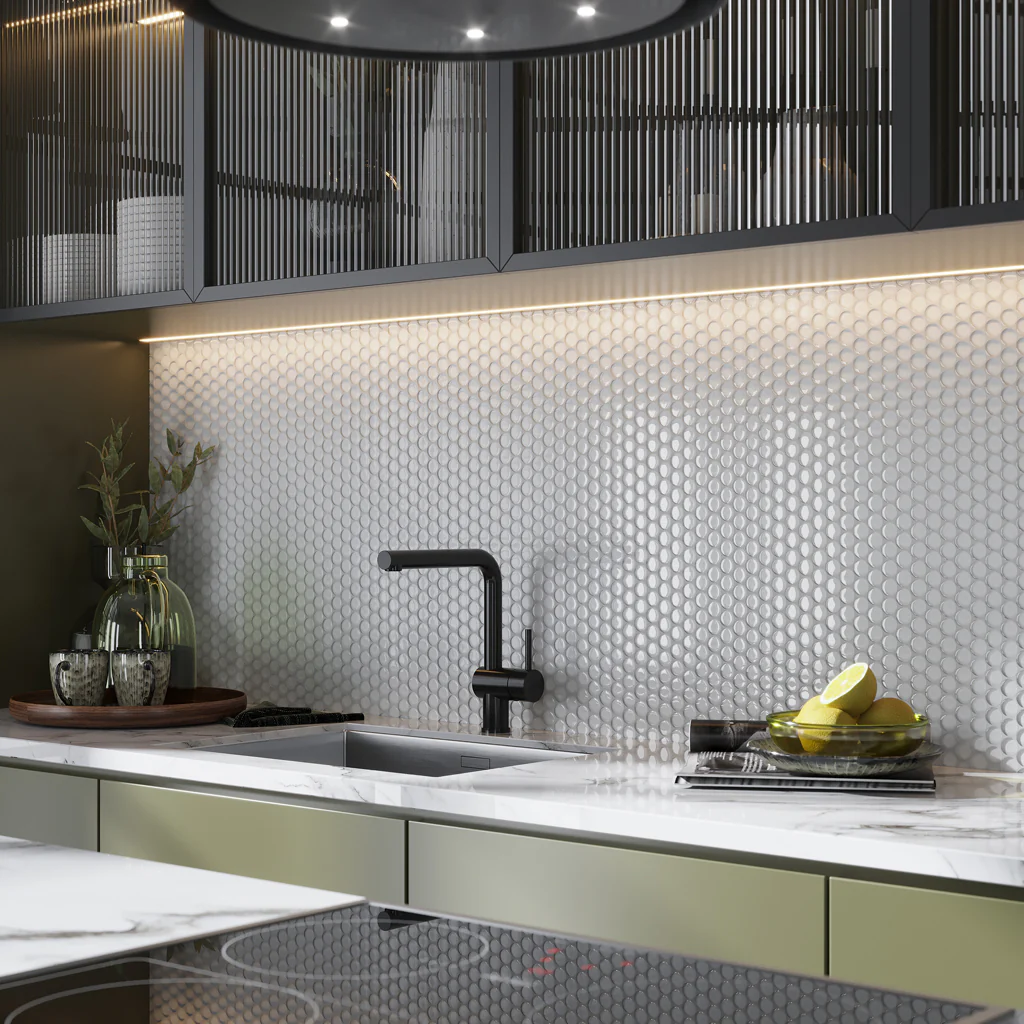
Tiny circular tiles (like old pennies) mounted on mesh sheets. They are tactile and vintage. Use a single color (sage green or navy) to keep it sophisticated rather than chaotic.
7. Pickett (Staggered Brick)
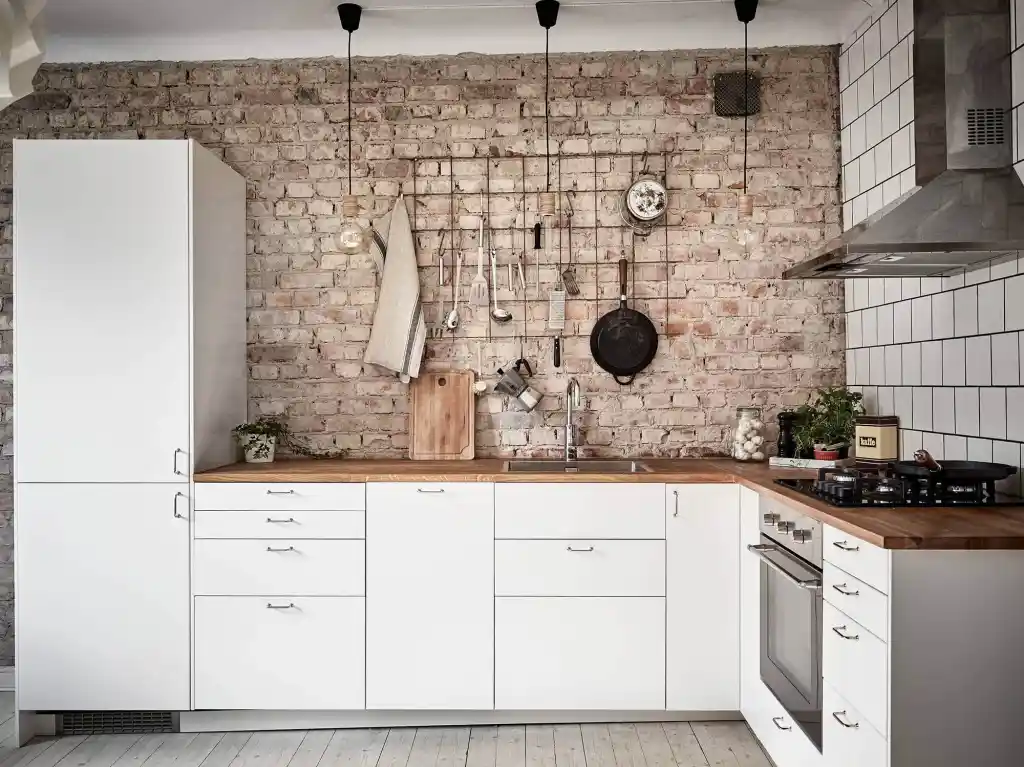
Elongated tiles that look like wooden planks or thin bricks. Laid in a running bond, they add a subtle, organic texture. Excellent for transitional kitchens.
8. Zellige Tile
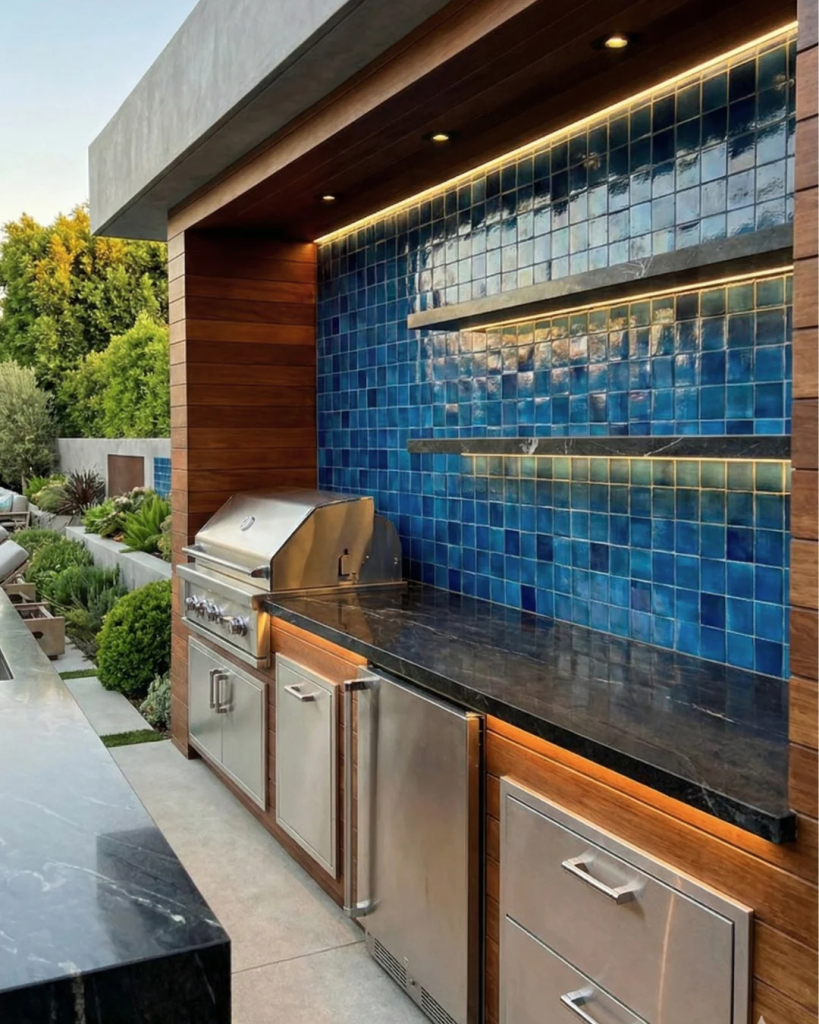
Handmade Moroccan clay tiles with slight variations in color, texture, and sheen. They are deliberately imperfect. The light plays differently on each tile, creating a living, breathing wall. Expensive but stunning.
9. Arabesque (Lily Pad)
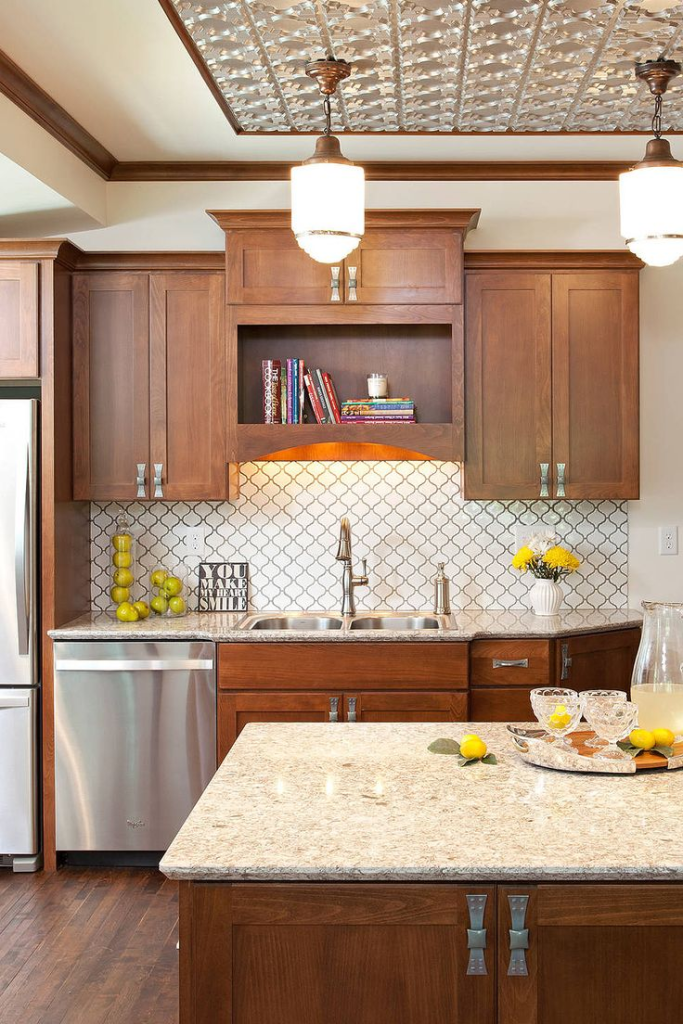
A decorative tile shape resembling a flower petal or teardrop. Usually used as an accent strip behind a range hood or a full focal wall. Pair with very simple, flat-front cabinets.
10. Fish Scale (Mermaid)
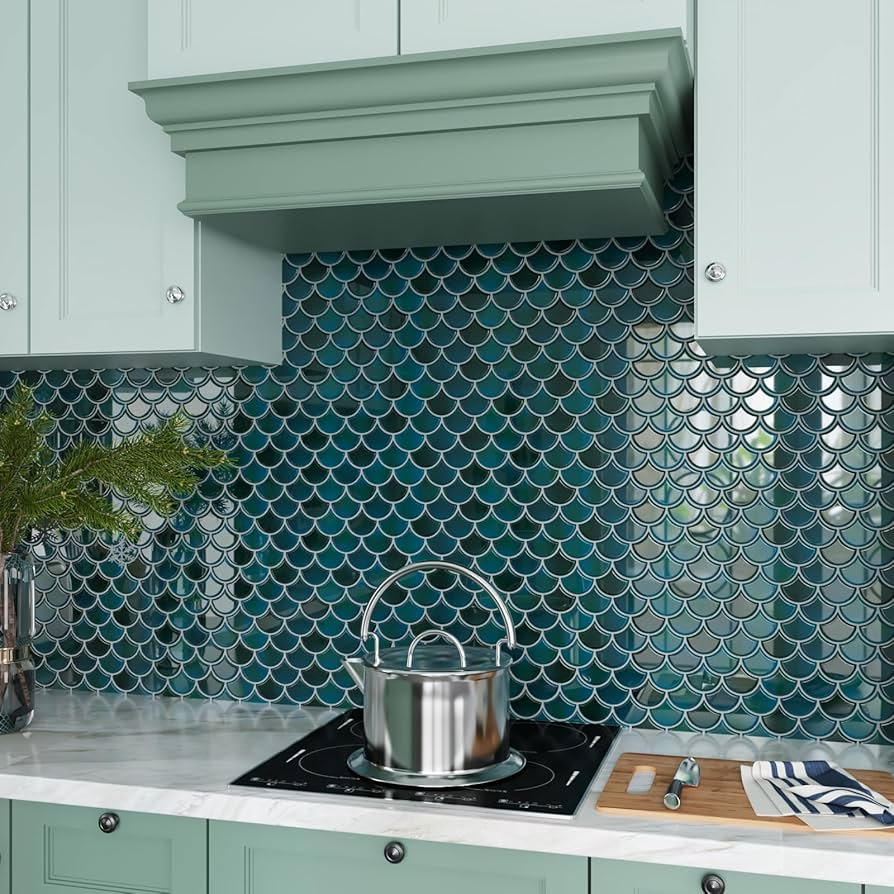
Overlapping scalloped tiles. They look incredible in deep blues, emerald greens, or iridescent glass. Best reserved for a single run (like behind the sink) rather than the entire kitchen.
11. Cement Tile (Encáustica)
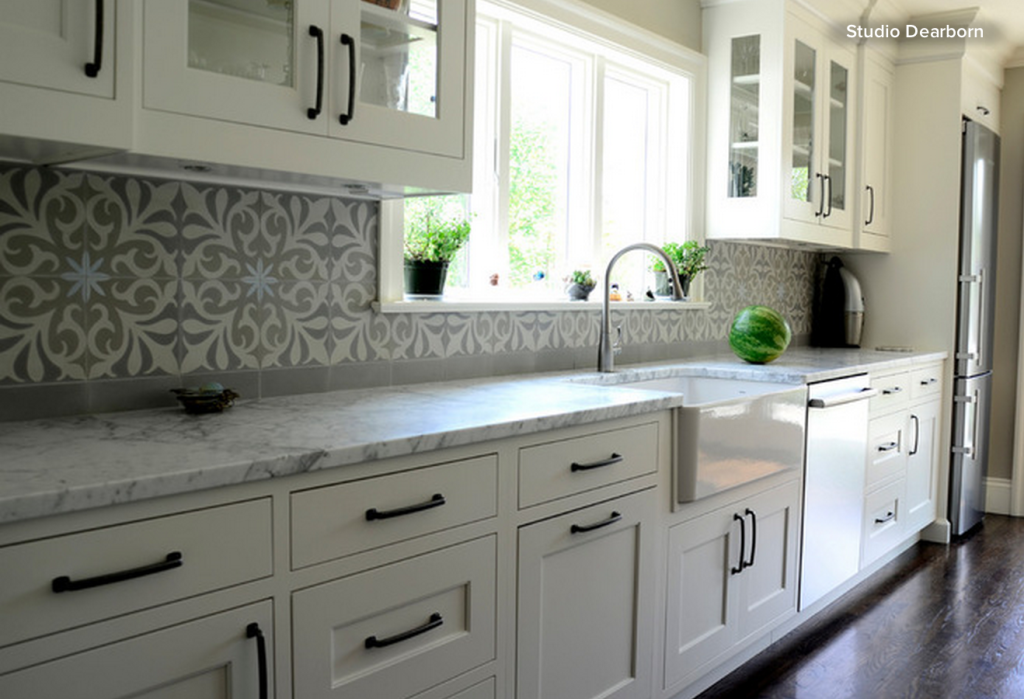
Not fired; dried under pressure. It has incredibly vibrant, geometric patterns. Warning: Cement is porous. You must seal it annually, and it stains easily with oil. Use it on a seldom-used prep area.
12. Large Format Slab (24x48 inches)
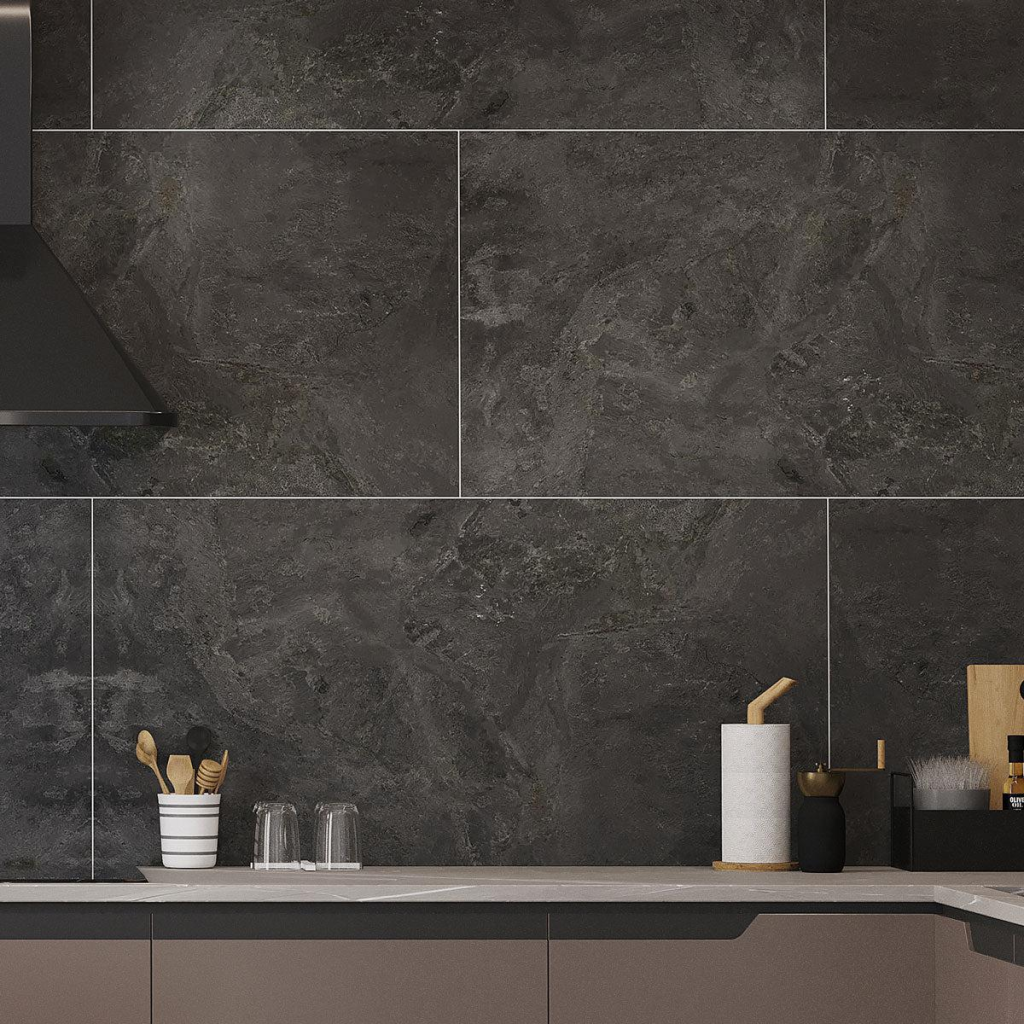
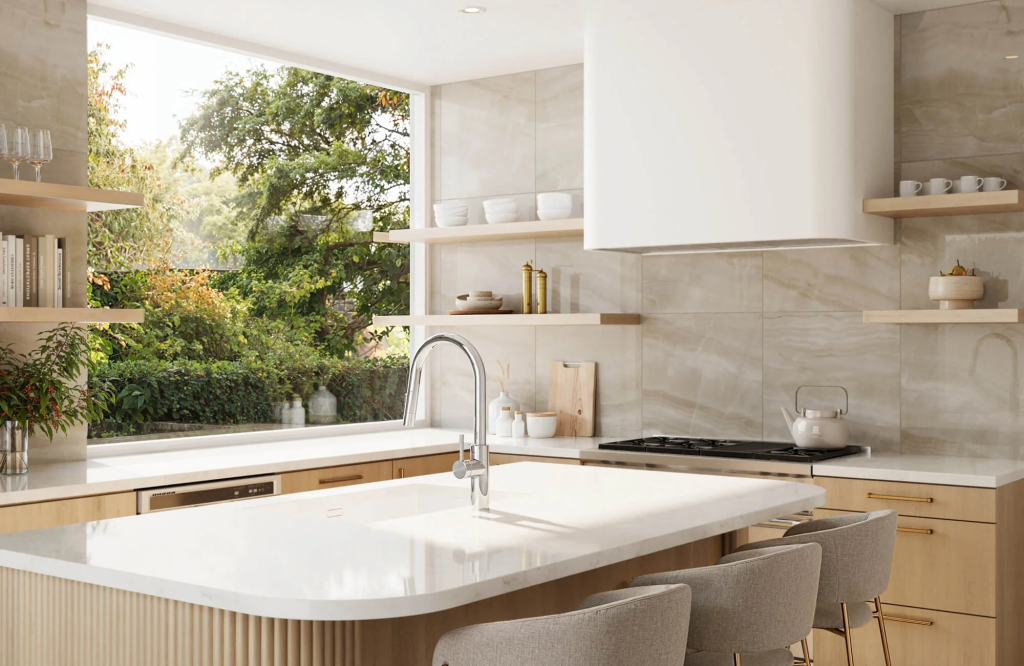
Minimalist dream. One or two massive porcelain slabs replace 100 small tiles. Zero grout lines. Looks like solid surface. Requires a professional installer and is very heavy.
13. 3D Fluted Tile
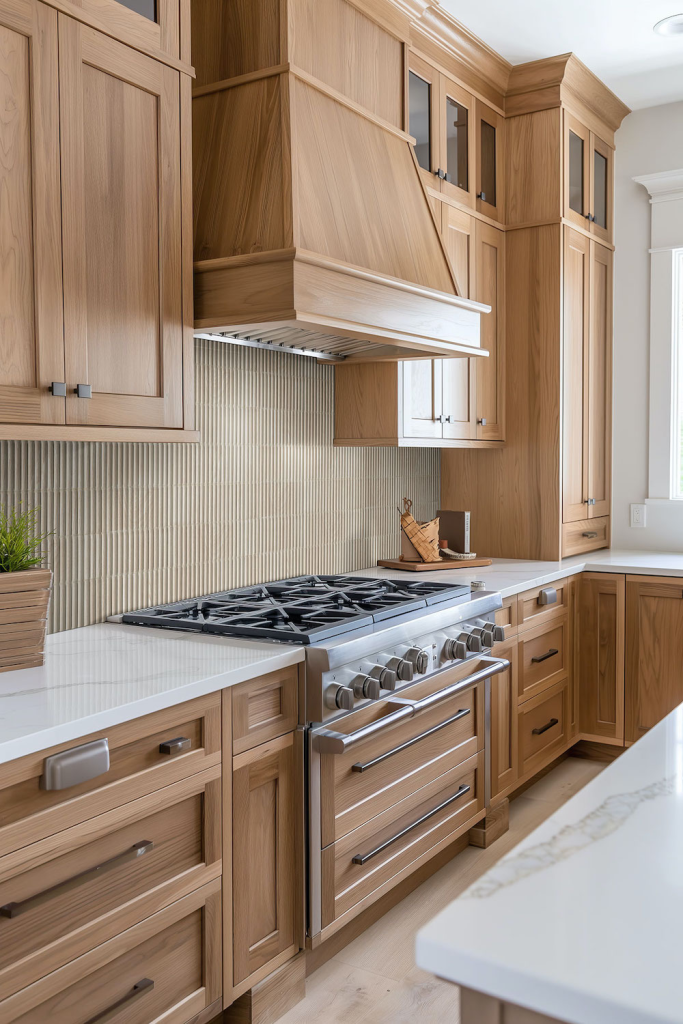
Ribbed, wavy, or scalloped 3D tiles. They cast dramatic shadows under under-cabinet lighting. Difficult to clean (dust settles in crevices), so avoid placing directly behind a frying pan.
14. Terrazzo
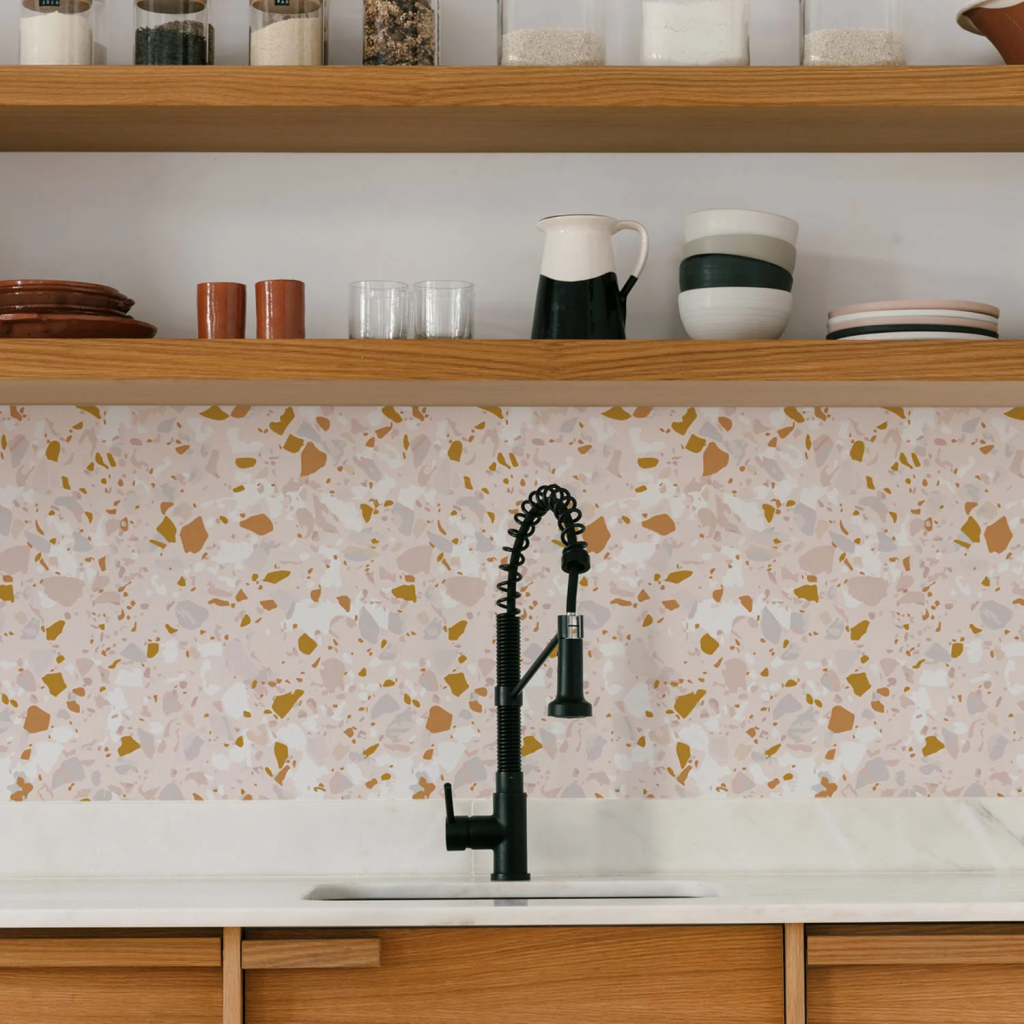
The Venetian classic is back. Chips of marble, quartz, and glass set in cement or resin. Looks like speckled candy. Choose a large-scale chip for retro vibes or fine-chip for a subtle, modern look.
15. Brick Slips (Real Thin Brick)
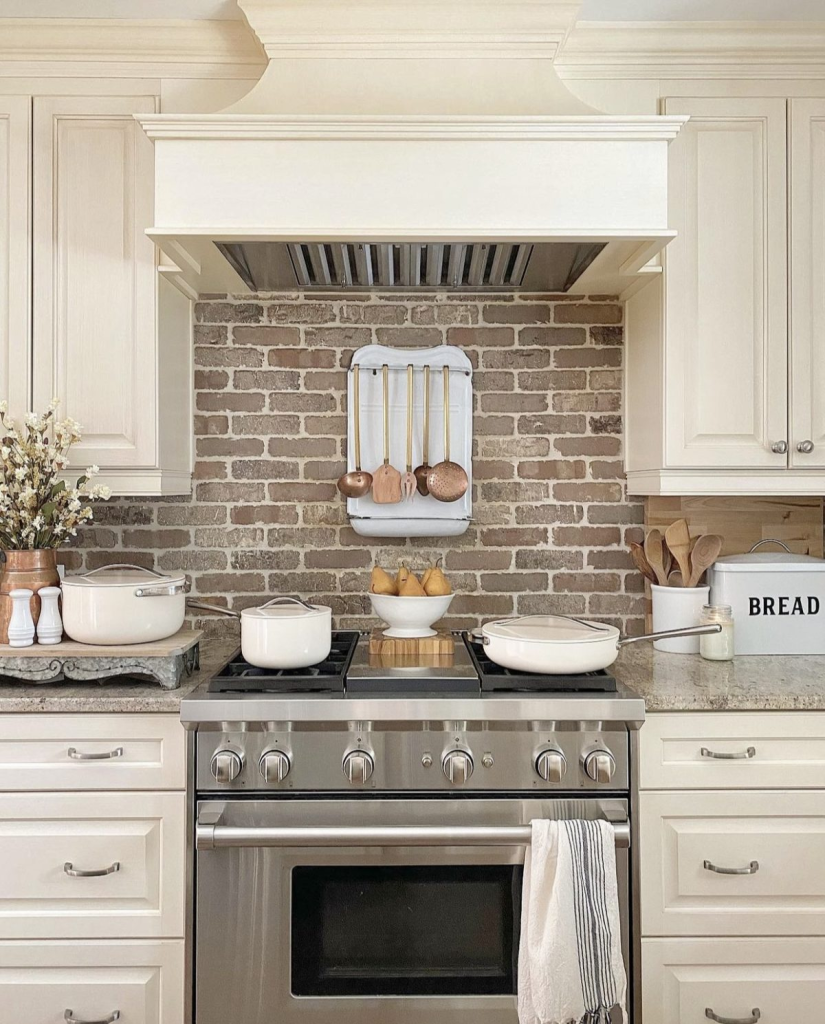
Actual sliced clay bricks, ½ inch thick. They bring an industrial loft or pizza-oven aesthetic. Seal them well, or they will absorb grease like a sponge.
Stone & Natural Materials
16. Marble (Subway or Hex)
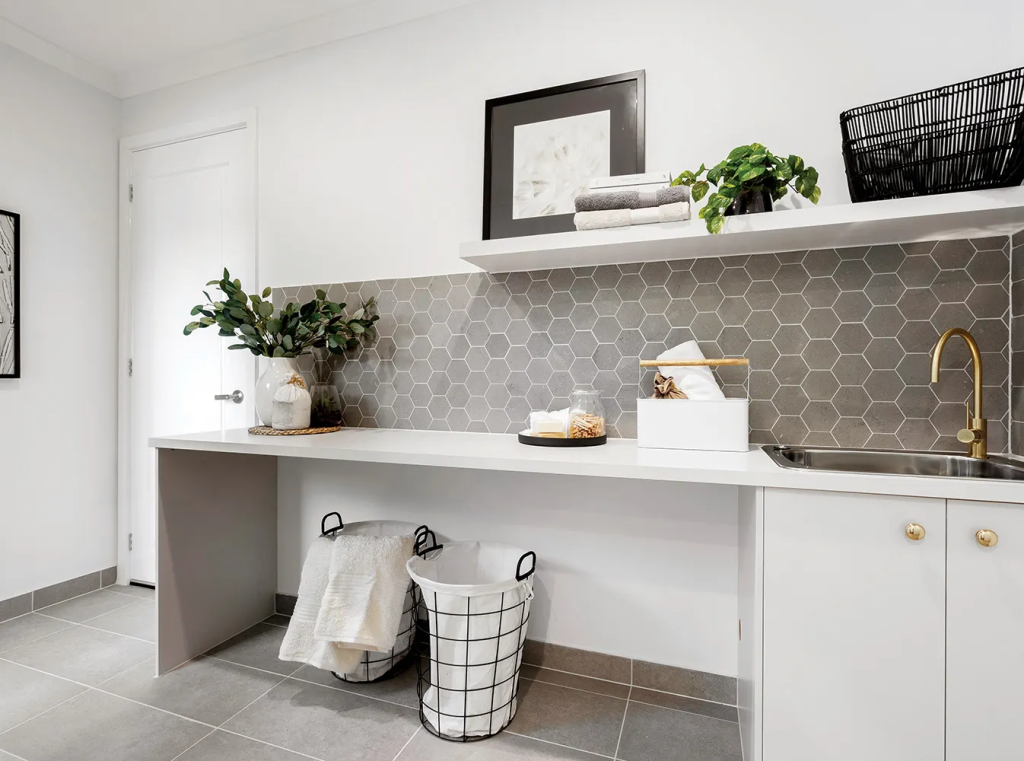
Calacatta or Carrara marble is the luxury standard. It veining adds art. Reality check: Marble etches (acid stains from lemon juice) and scratches easily. Use it only if you embrace "patina."
17. Quartz Slab Backsplash
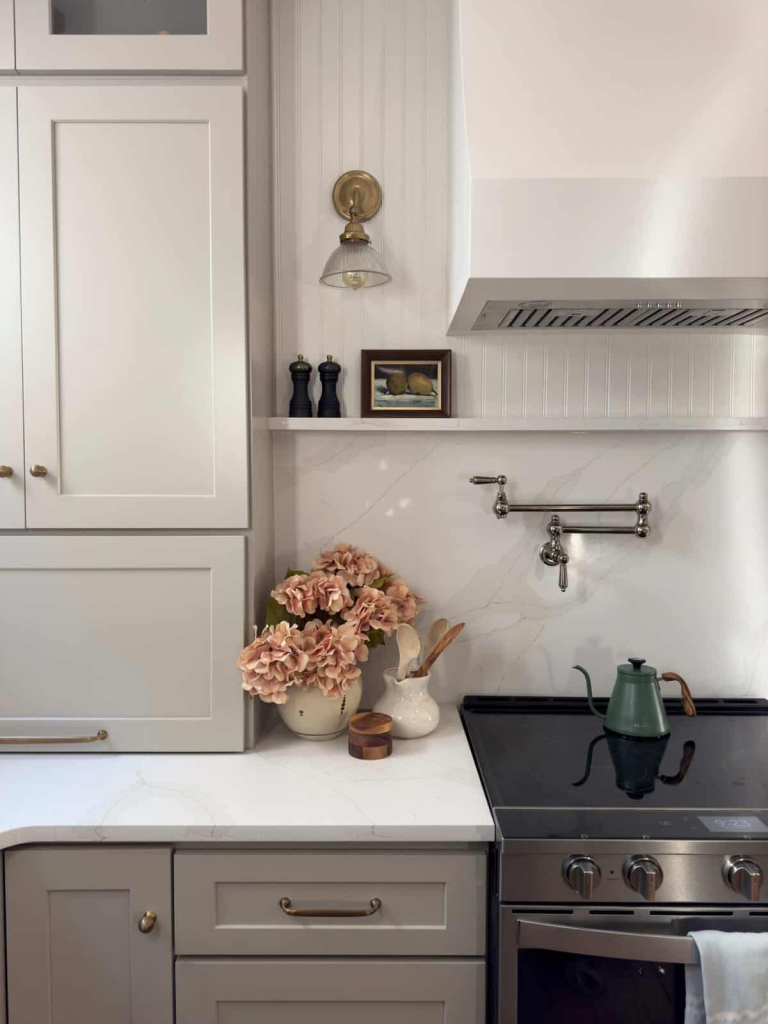
Match your quartz countertop exactly by running the slab up the wall. This creates a monolithic, ultra-modern look. No grout to clean. Expensive (you buy an extra half-slab).
18. Slate Stacked Stone
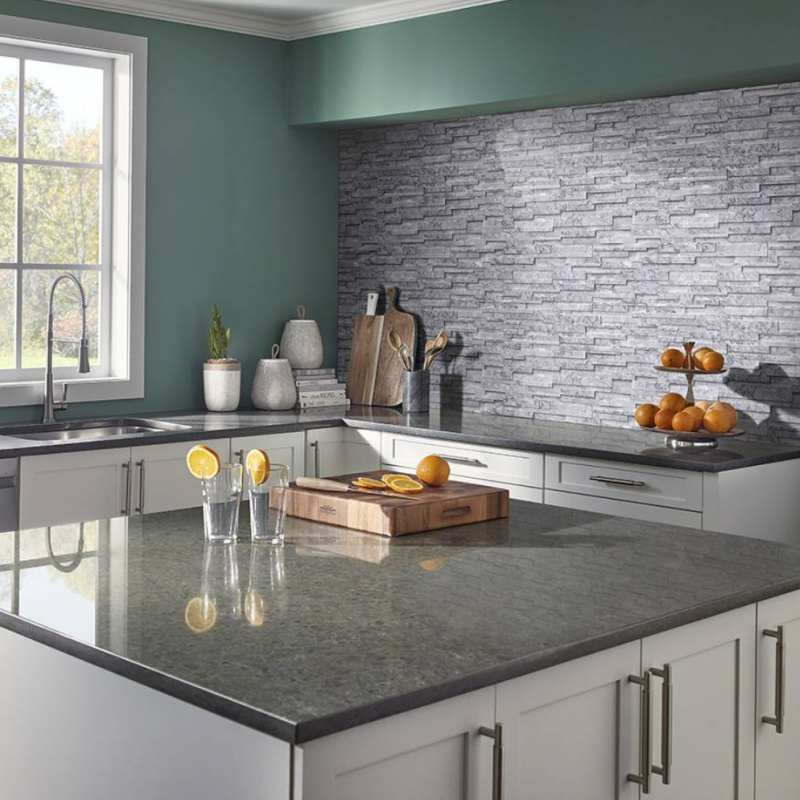
Thin strips of natural slate stacked irregularly. Very rustic, cabin-core, or English pub style. Dark grey/charcoal hides grease well. It is rough, so you cannot easily wipe sticky spills.
19. Travertine (Tumbled)
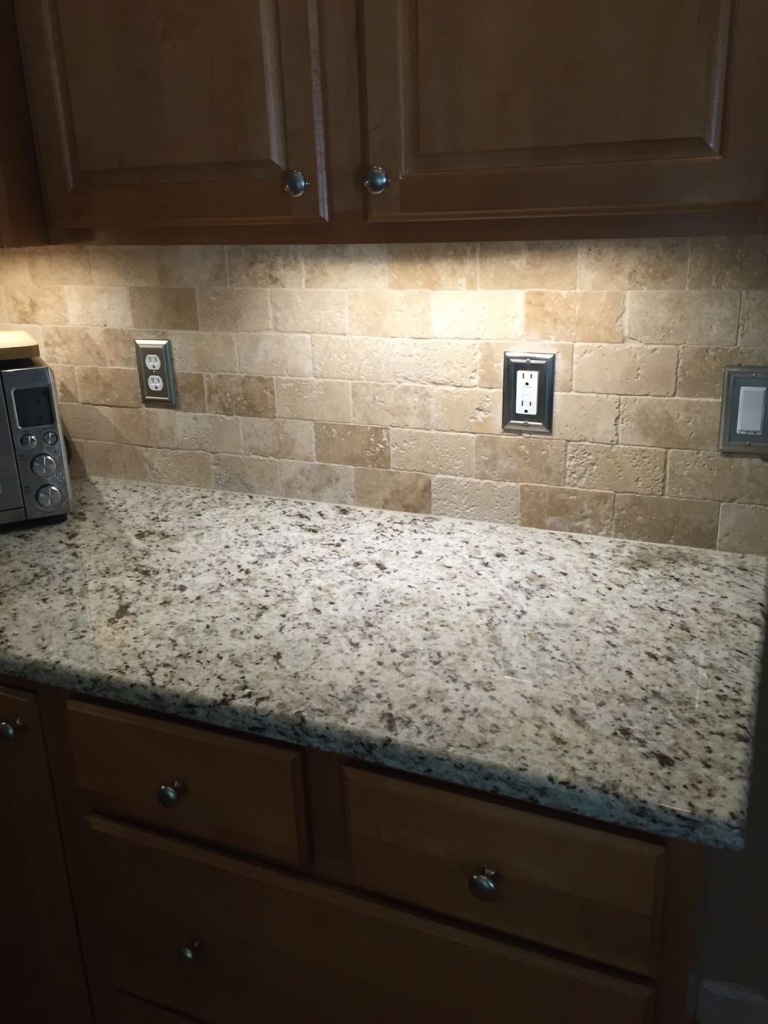
Soft, beige, pitted limestone. It has a Roman spa feel. Because it is full of holes, you must fill and seal it. It stains easily with red wine or coffee.
20. Pebble Mosaic
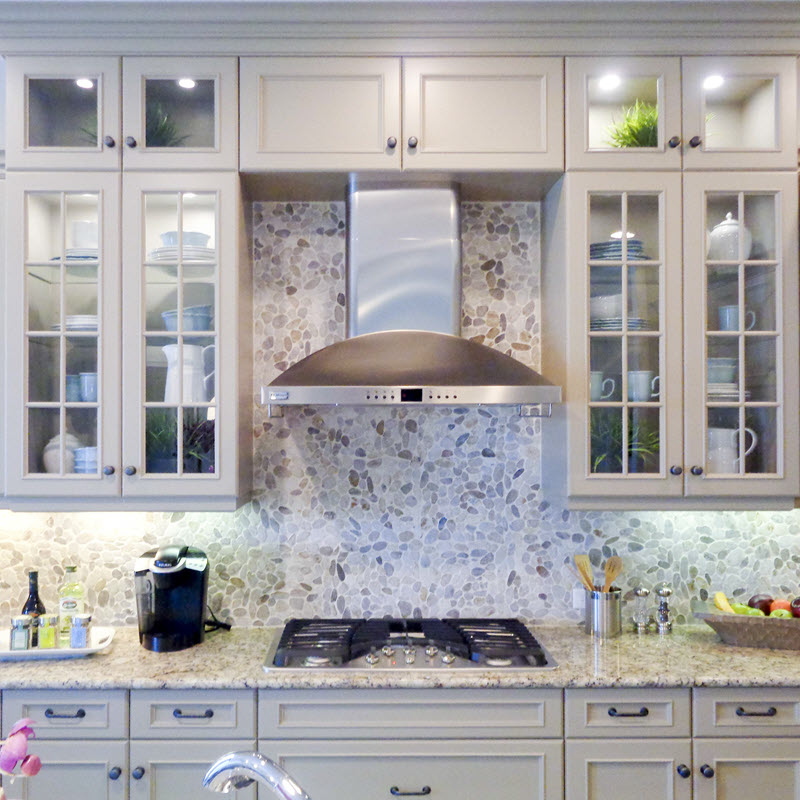
Small river rocks glued to mesh. Usually grey, brown, and cream. Looks great in an outdoor kitchen or a sunroom. Terrible for a main cooking area (impossible to clean between pebbles).
21. Onyx (Backlit)
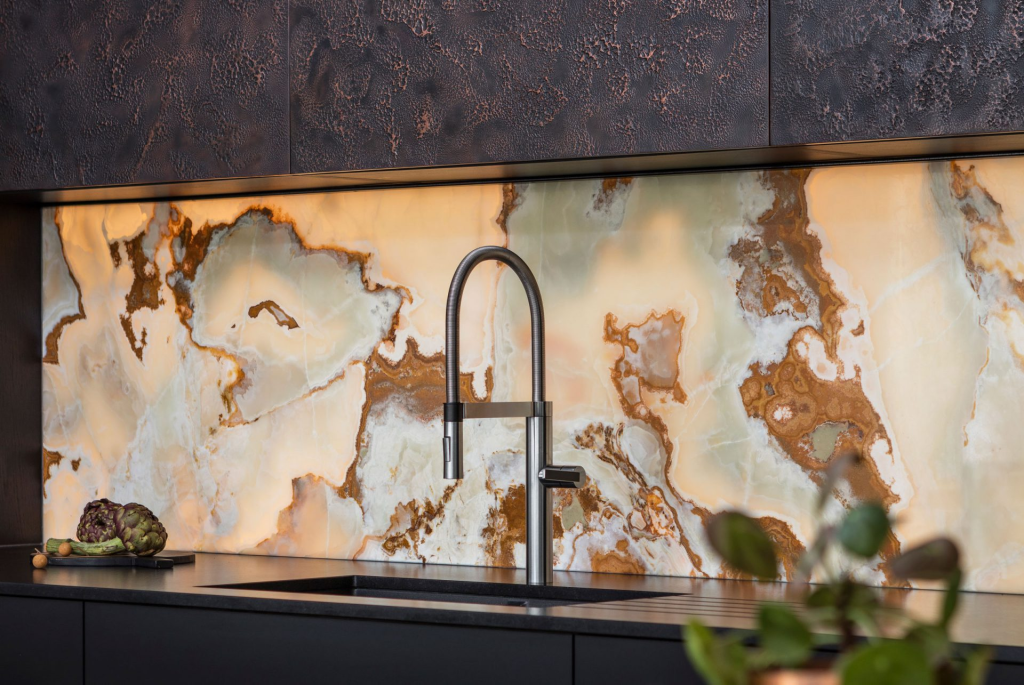
Translucent stone. If you install LED strip lighting behind a thin slice of onyx, the stone glows from within—amber, honey, or green hues. This is a $200/sq ft luxury feature.
22. Soapstone
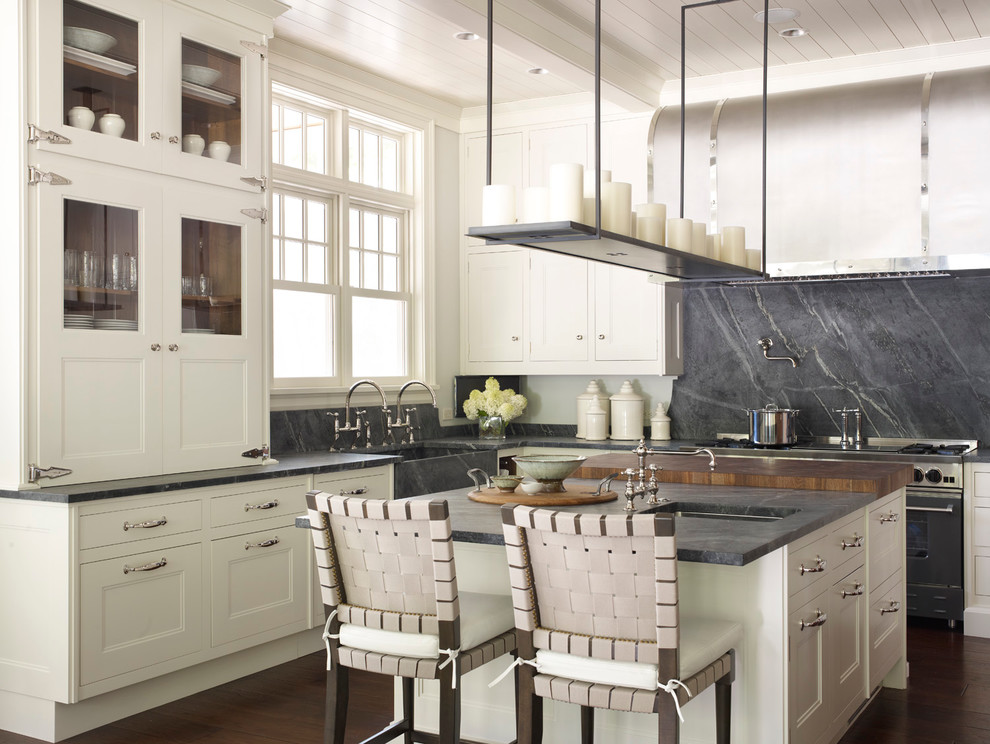
A dense, dark grey, talc-rich stone. It feels smooth like a bar of soap. It does not stain or etch (acid resistant). It does scratch, but scratches can be sanded out. Perfect for serious home cooks.
23.
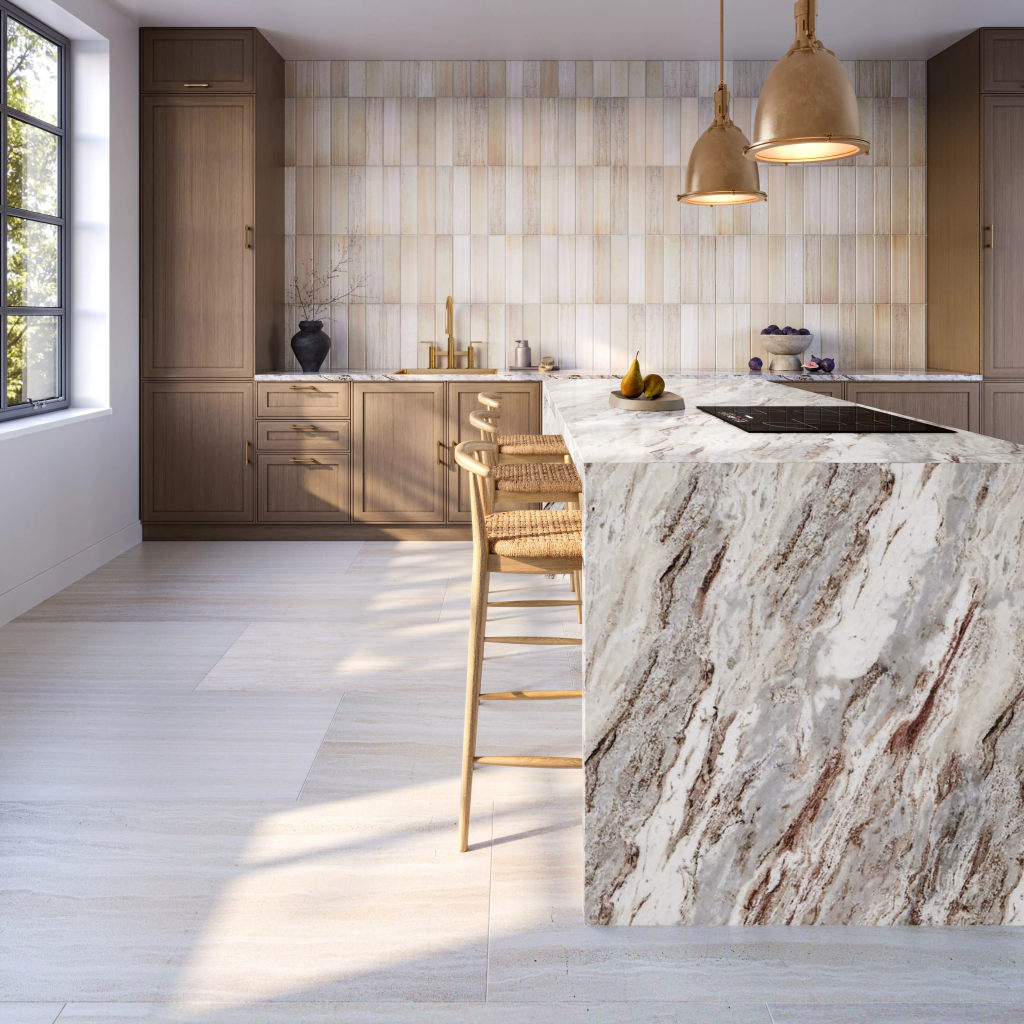
Matte, velvety, pale cream. Very soft stone. Looks amazing in French country kitchens. Use it only on a "dry zone" wall, not behind the stove.
Painted & Alternative Finishes
24. High-Gloss Marine Paint (On Plaster)
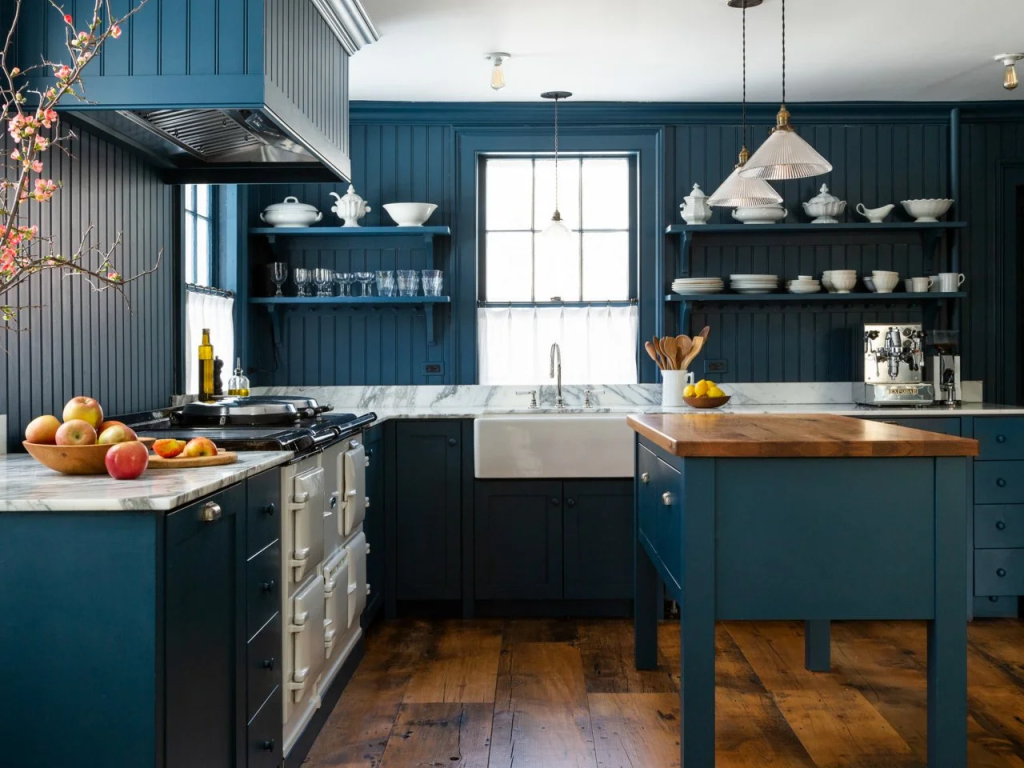
If you have perfectly smooth drywall or plaster, you can skip tile. Use marine-grade enamel (like Benjamin Moore's Command). It is washable and moisture-resistant. Sand between coats for a glass-like finish. Cost: $50 vs. $1000 for tile.
25. Chalkboard Paint (Accent Strip)
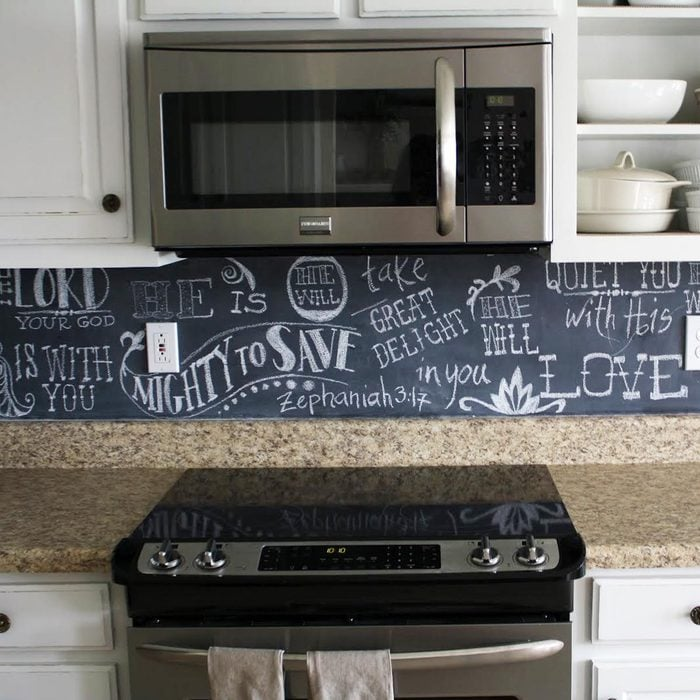
Paint a 12-inch high strip of chalkboard paint behind the stove. You can write grocery lists or recipes directly on the wall. Wipe off flour and splatters with a wet rag.
26. Stainless Steel (Commercial Grade)
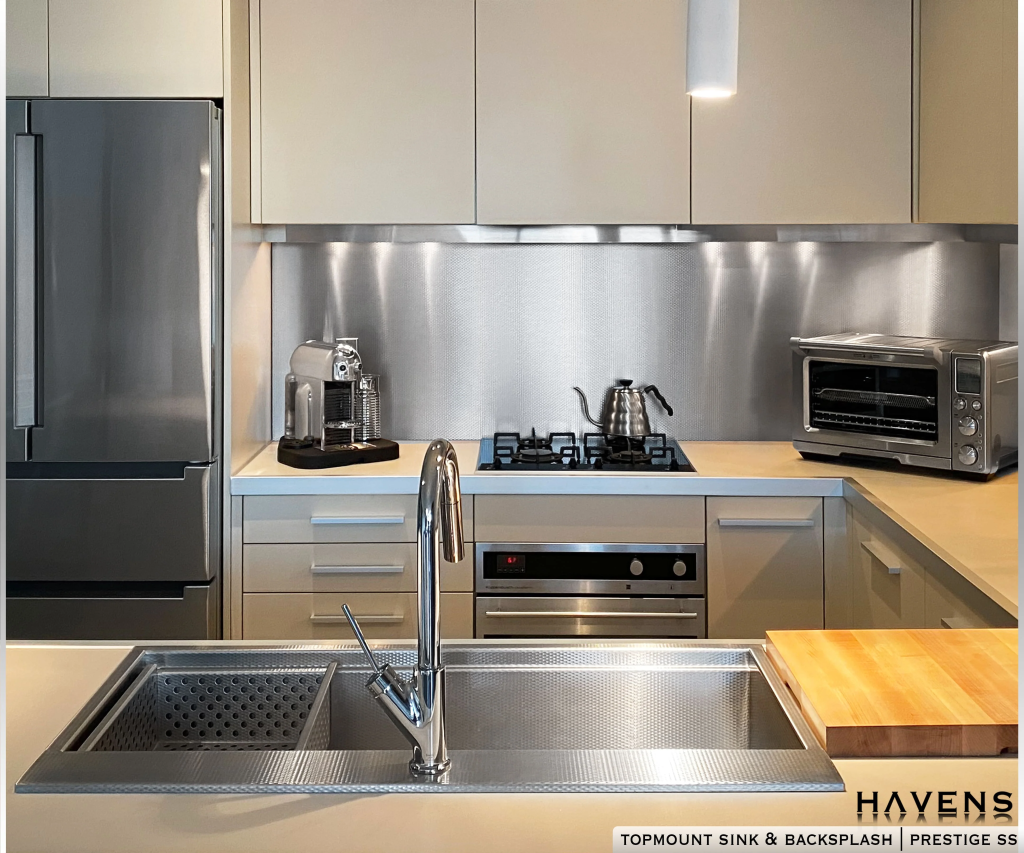
Thin sheets of brushed steel glued to the wall. Looks like a restaurant kitchen. It is magnetic (stick spice tins), heat-proof, and sanitizable. Downsides: Shows every fingerprint and dent.
27. Copper Sheet (Antiqued)
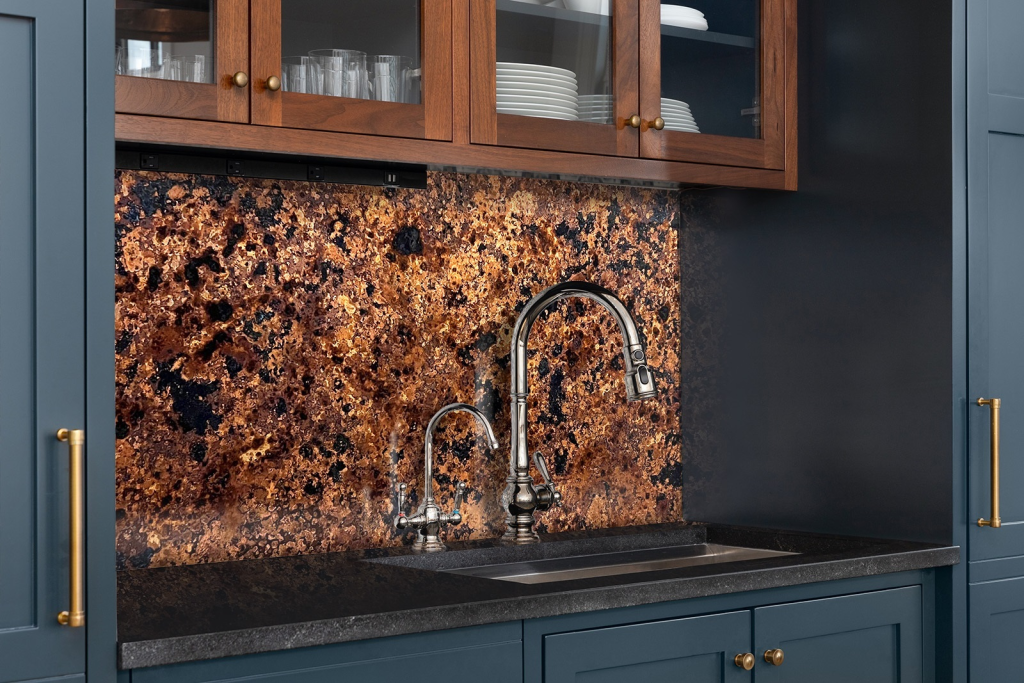
Real copper that patinas over time. Use a clear lacquer to lock the shine or let it turn green/black naturally. Works beautifully with dark green cabinets. Electrical warning: Keep away from outlets (copper conducts).
28. Tin Ceiling Tiles (Pressed Metal)
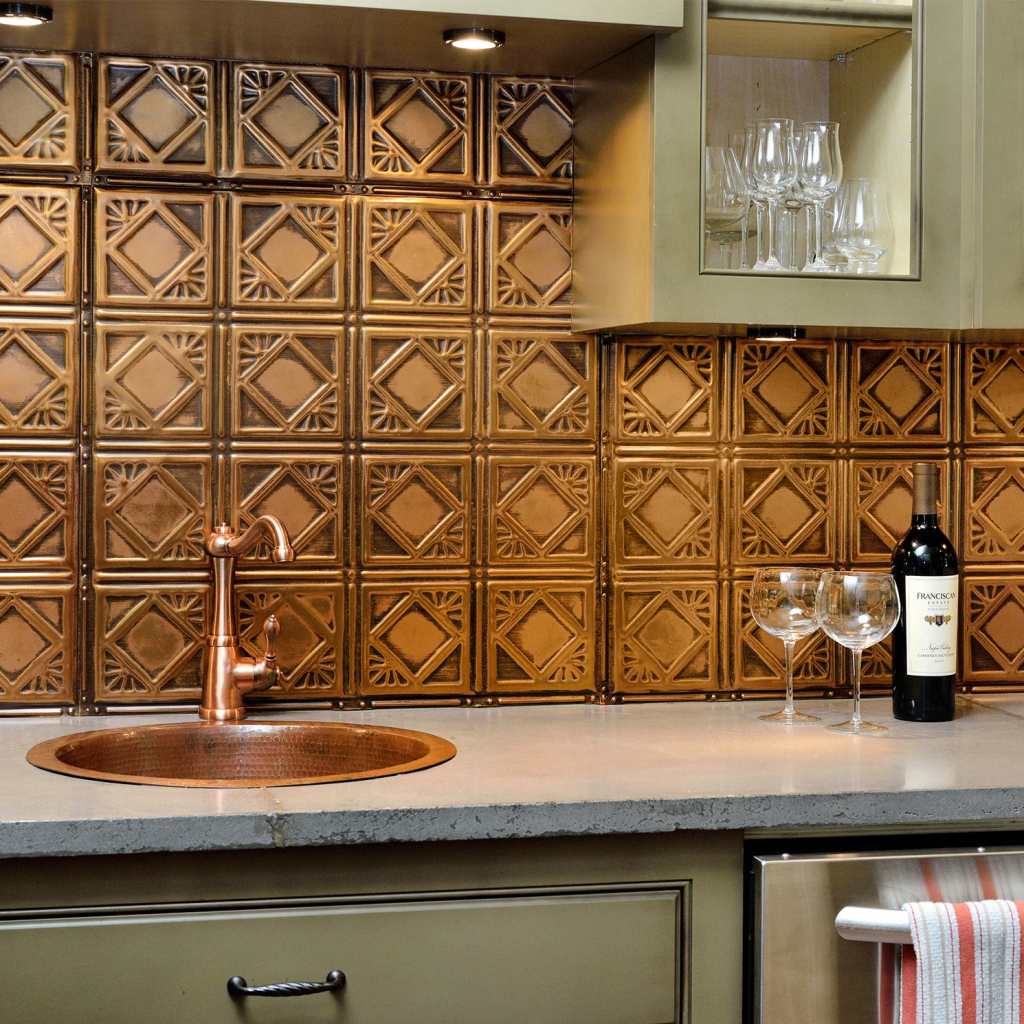
Vintage-style embossed tin (usually painted white or silver). Nail them over a plywood backer. They add Victorian or New Orleans charm. Cheap and lightweight.
29. Reclaimed Wood (Horizontal Shiplap)
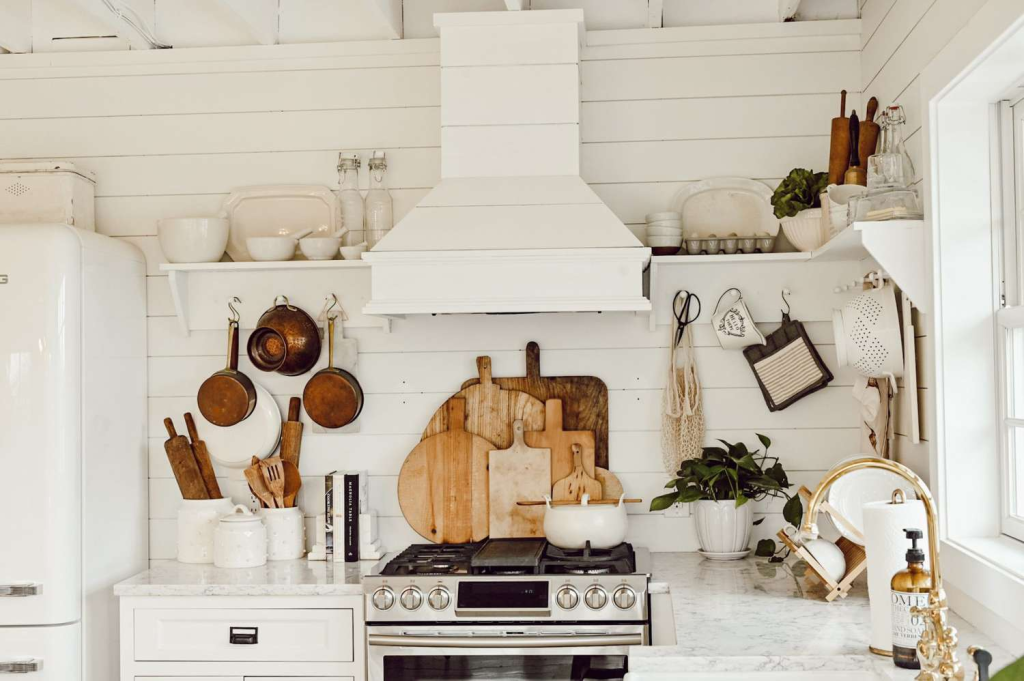
Thin boards of weathered barn wood installed horizontally. Seal with polyurethane to make it waterproof. Great for farmhouse or coastal cottages. Risk: Wood expands with heat from the oven.
30. Venetian Plaster (Polished)
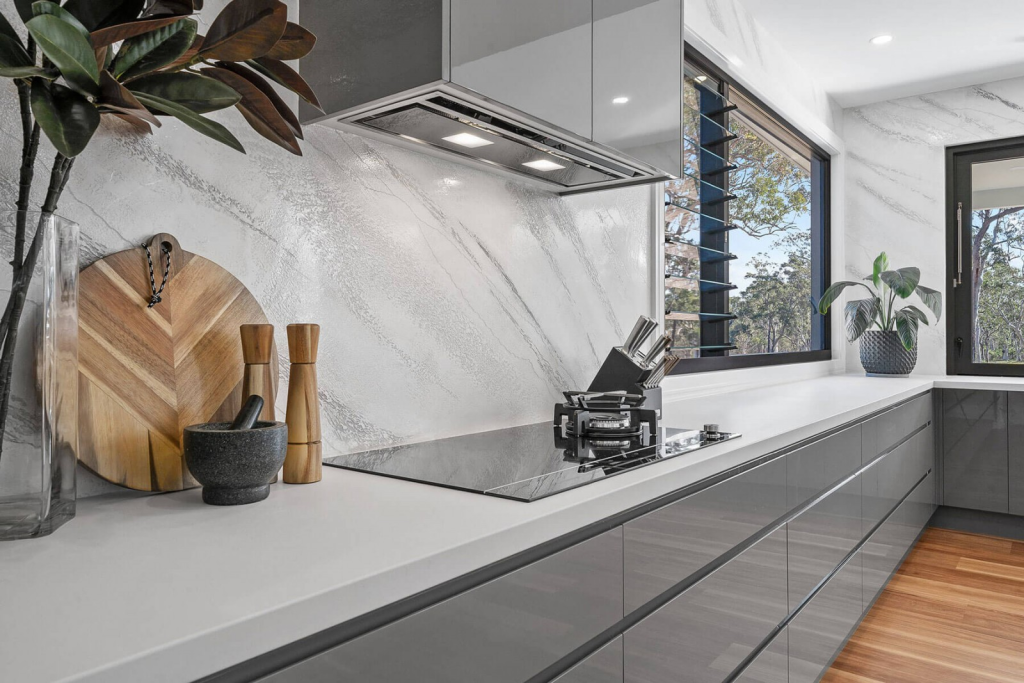
Lime putty and marble dust troweled onto walls and burnished to a high shine. It looks like solid marble but feels warm to the touch. It is waterproof and breathable. Very high-end artisan finish.
Part 4: Color Options for Kitchen Backsplashes
Color is emotional. Here is how to leverage it:
- White: Reflects light, makes small kitchens feel huge, matches everything. Use with wood or black cabinets.
- Black (Matte): Dramatic, hides stains, but shows dust and lint. Best as a waterfall effect on a large island wall.
- Navy Blue: The most popular "pop of color." Pairs with brass hardware and white quartz. Use glossy ceramic for easy cleaning.
- Sage Green: Soft, organic, trendy with oak cabinets. Use Zellige or matte subway tile.
- Terracotta/Blush: Warm, Mediterranean. Use with cream cabinets and unlacquered brass.
- Grey: The safe neutral. Warm grey (greige) works with beige counters; cool grey works with marble.
- Yellow (Mustard): High energy. Only use as a small mosaic strip or behind open shelving; full walls of yellow can be visually exhausting.
Part 5: Finishes (Glossy vs. Matte vs. Textured)
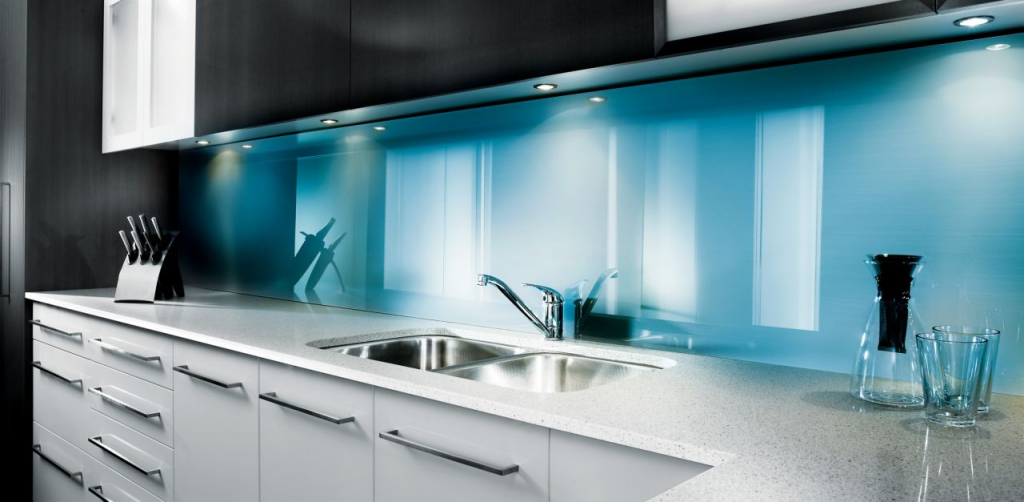
- Glossy (High Sheen): Reflects light, brightens the room, easy to wipe clean, but shows every water spot and streak. Best for dark colors.
- Matte: Hides fingerprints, feels soft, modern, but can absorb oil stains if not sealed. Best for light greys and beiges.
- Satin: The sweet spot between gloss and matte. Minimal glare, easy cleaning. Best for high-traffic stovetop areas.
- Textured (Ribbed, Scalloped): Adds depth and shadow lines. Difficult to degrease. Only use behind a sink (water) not behind a stove (oil).
Part 6: How to Clean Your Kitchen Backsplash
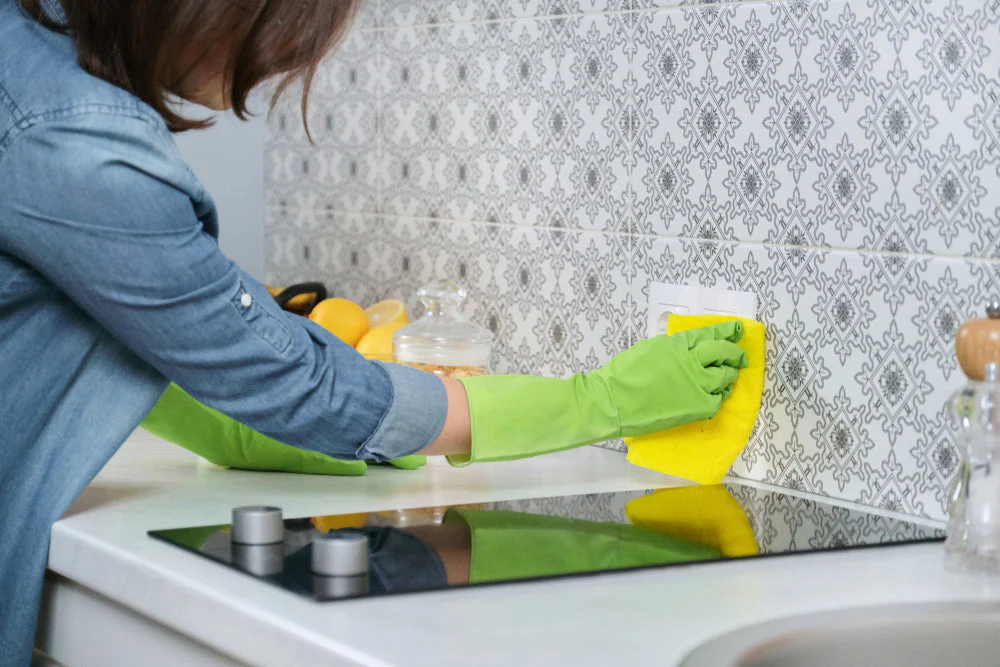
A dirty backsplash ruins the whole kitchen. Here is the material-by-material protocol:
Daily/Weekly (All surfaces):
- General dusting: Microfiber cloth or Swiffer duster.
- Grease splatters: Mix 1 cup warm water, 1 cup white vinegar, 1 teaspoon dish soap in a spray bottle. Spray, wait 1 minute, wipe with a soft sponge.
Specific Materials:
- Ceramic/Porcelain (Glossy): Use Mr. Clean Magic Eraser for scuff marks. Avoid bleach on colored grout.
- Glass: Wipe with a squeegee after cooking to prevent hard water spots. Use a rain-x product for showers on the tile.
- Natural Stone (Marble, Travertine): NEVER use vinegar or lemon (acid etches). Use pH-neutral stone soap (like Granite Gold).
- Cement Tile: Use a mild detergent only. Re-seal every 12 months.
- Painted Drywall: Use a damp cloth only; never soak the wall. Repaint every 2-3 years.
- Stainless Steel: Wipe with the grain using mineral oil or stainless steel spray.
Grout Cleaning:
- White grout turning grey: Make a paste of baking soda and hydrogen peroxide. Scrub with a toothbrush. Rinse.
- Dark grout fading: Use a grout pen or re-stain it.
Part 7: Mistakes to Avoid
- Stopping too short: The backsplash should extend at least 4 inches past the countertop edge on an open peninsula.
- Forgetting the outlet height: Electrical outlets should sit inside the backsplash field, not half on drywall and half on tile. Plan your cuts.
- Using porous stone behind a gas range: The heat opens the pores; oil flies in and stains permanently. Use glazed ceramic or metal behind the stove.
- Matching the counter exactly: Unless using a solid slab (quartz/stone), a matching ceramic tile rarely looks right. The color is never a perfect match. It is better to contrast.
- Tiny tiles + heavy cooking: Penny rounds and 1-inch mosaics have 10x more grout lines. Grout is a magnet for red sauce. If you cook daily, choose larger tiles.
Conclusion
Your kitchen backsplash is a workhorse that also serves as art. Whether you fall in love with the organic variance of Zellige tile, the industrial edge of stainless steel, or the budget-friendly simplicity of high-gloss marine paint, ensure that your choice aligns with your cooking habits.
Remember: The area directly behind the stove demands easy-to-clean, non-porous, heat-resistant materials (glazed ceramic, glass, or metal). The area behind the sink can handle more delicate materials like marble or painted wood, as it sees less grease.
Take your time with samples. Tape them to your wall and look at them at 8 AM, 2 PM, and 7 PM. Light changes everything. With these 30 ideas and technical guidelines, you are now ready to transform your kitchen’s most important vertical surface.