Short hair has long been a practical choice for older women. It dries quickly, requires minimal styling, and keeps the neck cool. But practical does not have to mean boring. Spiky hairstyles take short hair in a completely different direction—away from the soft, rounded, "grandmotherly" cuts of the past and toward something sharper, more confident, and undeniably modern. A spiky style uses texture, height, and definition to create a look that is energetic, youthful, and attention-grabbing. For women over 60, 70, or beyond, spikes are not a rebellion against age—they are an embrace of personality. The key is choosing the right spike: soft and piece-y for a casual day, sharp and dramatic for a night out, or somewhere in between for everyday wear. 11 short spiky hairstyles for older women prove that spikes are not just for punk rockers and teenagers. With the right cut and the right products, women of any age can wear spikes with elegance, edge, and ease. Whether you have fine hair that needs volume, thick hair that needs shaping, or gray hair that deserves to be shown off, these 11 styles deliver attitude without sacrificing sophistication.
Why Short Spiky Hairstyles for Older Women Work
Spiky hairstyles are often misunderstood. Many women over 60 assume spikes are too young, too harsh, or too difficult to maintain. The opposite is true. Spikes are actually one of the most flattering and practical options for mature hair.
First, spikes create immediate volume. By lifting hair away from the scalp and directing it upward or outward, you visually double the density of your hair. This is especially valuable for women with fine or thinning hair. Second, spikes draw the eye upward. A vertical line of spikes at the crown elongates the face and minimizes the appearance of jowls or a less-defined jawline. Third, spiky styles are incredibly low-maintenance once cut correctly. The texture hides uneven gray regrowth, and the style often looks better on second-day hair than on freshly washed hair. Finally, spikes project confidence. A woman who wears spikes is a woman who has stopped trying to blend in. That confidence is itself beautiful.
The following 11 short spiky hairstyles range from soft and subtle to bold and dramatic. There is a spike for every comfort level.
1. The Soft Piece-y Pixie with Wispy Spikes
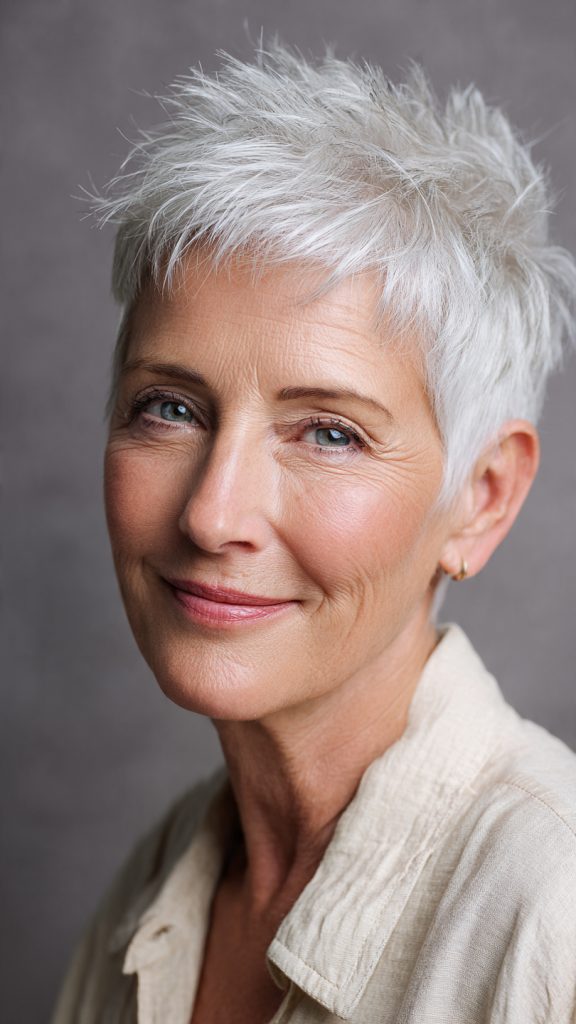
This is the most approachable spiky style. The hair is cut into a short pixie (one to two inches on top, shorter on the sides and back). The spikes are created not by aggressive styling but by using a texturizing product to separate the top layers into soft, piece-y sections that stand up slightly.
Why it works: The soft spikes add volume without looking harsh or punk. The wispy texture is forgiving for women with fine or thin hair because the separated pieces create the illusion of density. This style works on straight, wavy, or slightly curly hair.
Styling tip: Apply a lightweight texturizing paste or wax to dry hair. Warm a pea-sized amount between your fingers, then pinch small sections of the top and pull upward. Do not overdo it—the spikes should look casual, not crunchy. A light spritz of flexible-hold hairspray will keep them in place.
2. The Dramatic Crown Spike (Mohawk-Inspired)
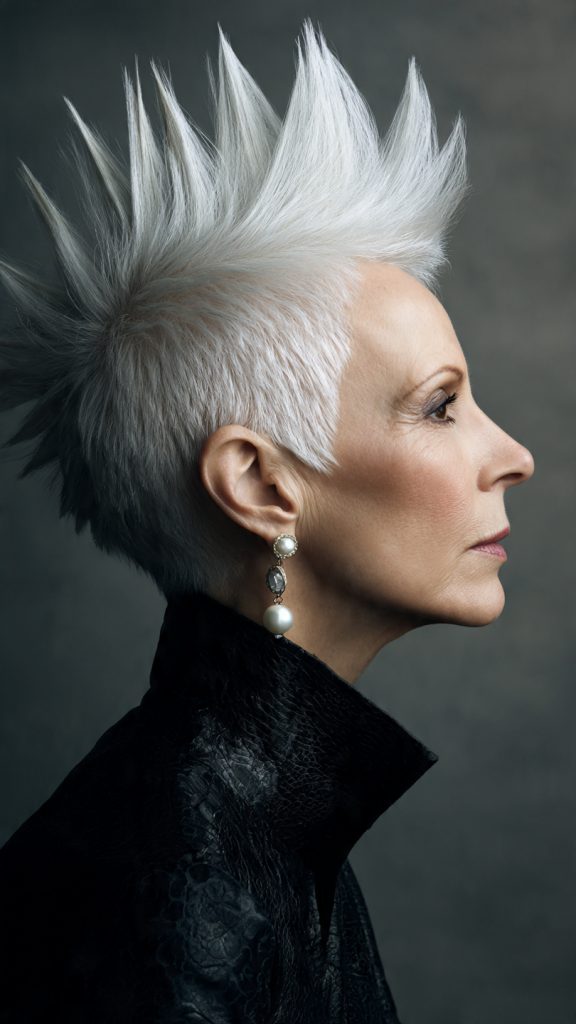
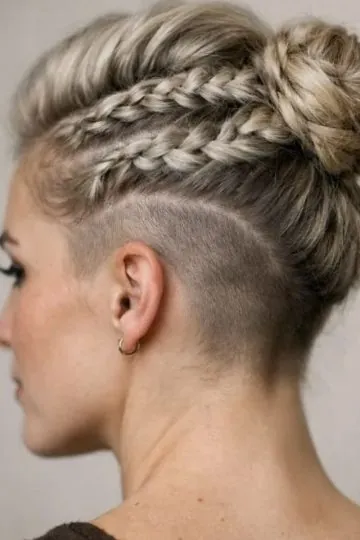
This style concentrates all the height and spikes at the very top of the head, in a strip running from the forehead to the crown. The sides are cut very short (clippered to a quarter inch or less) or even shaved. The top strip is left longer (two to three inches) and styled straight up into defined spikes.
Why it works: The dramatic crown spike is for women who want to make a statement. The contrast between the short sides and the tall spikes is striking and modern. The vertical line of spikes elongates the face and draws attention upward. This style works best on straight hair that holds product well.
Styling tip: Use a strong-hold gel or spiking glue. Apply to damp hair on the top strip only. Use a fine-tooth comb to lift sections straight up, then allow to air-dry or use a blow-dryer on low heat. Do not touch until completely dry. The sides require no styling.
3. The Textured Crop with Short, Blunt Spikes
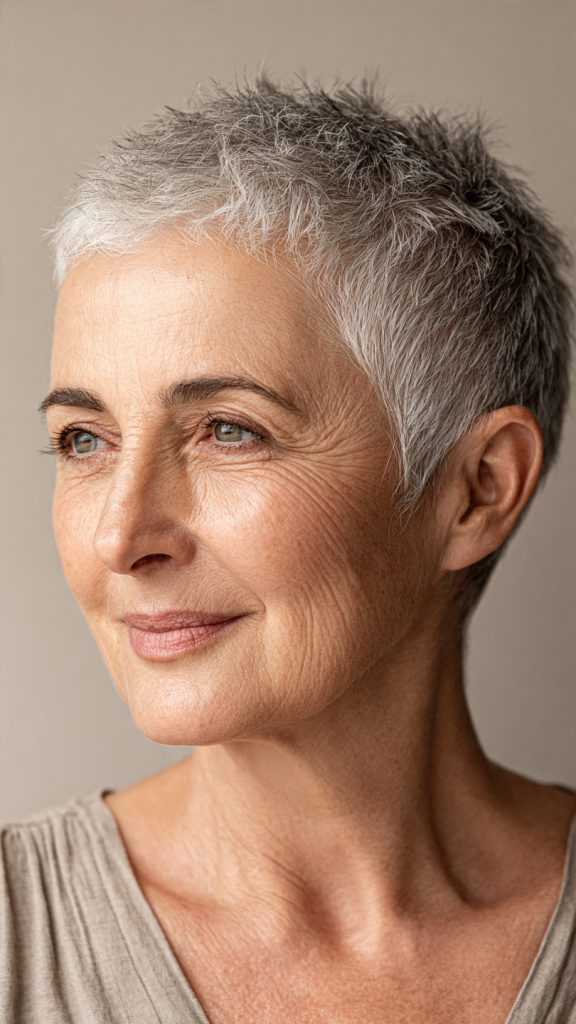
This cut is a short crop (one to one and a half inches all over) with blunt, uniform spikes created by cutting the ends straight across rather than point-cutting. The spikes are short, dense, and uniform—like a hedgehog.
Why it works: Short, blunt spikes are excellent for women with very fine or thin hair because the blunt ends reflect light and create visual density. The uniform length also makes styling foolproof—every spike is the same, so you cannot make a mistake. This cut is also incredibly low-maintenance, often requiring just a quick rub with a towel and a dab of product.
Styling tip: Rub a small amount of styling wax or pomade between your palms. Then run your hands over your entire head in a upward, scrubbing motion. The hair will naturally stand up into short, blunt spikes. No mirror required.
4. The Asymmetrical Spiky Pixie
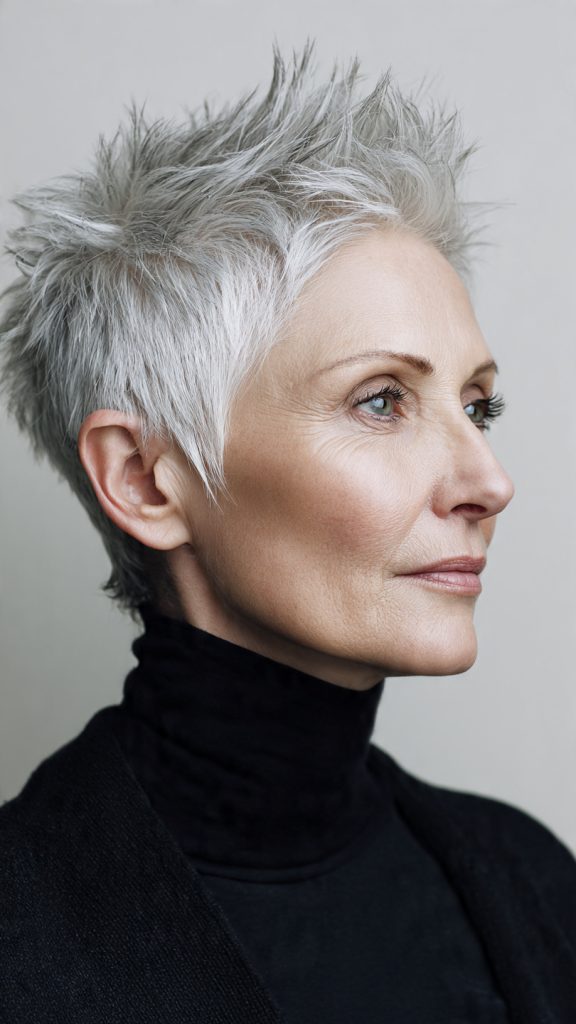
One side of this pixie is cut significantly shorter than the other. The longer side (two to three inches) is styled into spikes that sweep across the crown. The shorter side (one inch or less) is left close to the head. The spikes are concentrated on the longer side.
Why it works: Asymmetry draws the eye diagonally across the face, which is slimming and face-lifting. The spikes on the longer side add volume where you want it, while the shorter side keeps the overall silhouette clean and modern. This cut is particularly flattering for women with round or square faces.
Styling tip: Focus your product on the longer side. Use a texturizing paste to create spikes that sweep from the part line toward the shorter side. The shorter side can be left smooth or given a tiny amount of texture. A deep side part at the far edge of the eyebrow enhances the asymmetry.
5. The Curly Spiky Crop
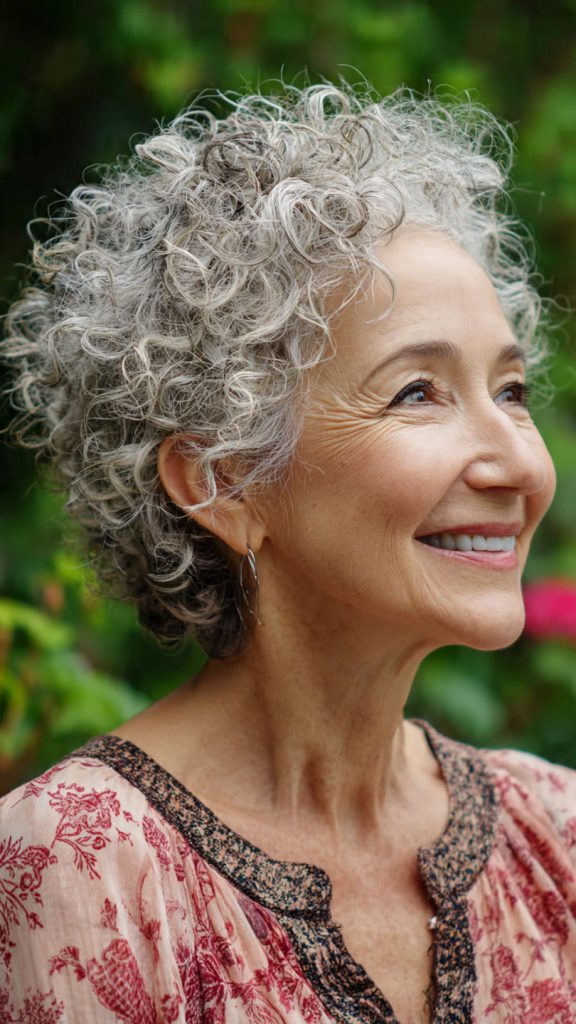
Curly hair can absolutely be spiky—but the technique is different. The hair is cut into a very short crop (one inch or less all over). The natural curl pattern is encouraged to form tight ringlets that stand up rather than lying flat. The "spikes" are actually defined curls.
Why it works: On curly hair, spikes are created by shrinkage. When curly hair is cut very short, the curls have nowhere to go but up. The result is a head full of tight, springy, upright curls that look like soft spikes. This style is playful, youthful, and incredibly easy to maintain. It works best on naturally curly or highly textured hair.
Styling tip: Apply a curl cream or gel to soaking wet hair. Scrunch vigorously with a towel to remove excess water and encourage the curls to spring up. Air-dry or use a diffuser on low heat. Do not touch until dry. Once dry, separate curls with your fingers. The result is a head full of soft, curly spikes.
6. The Long-Top Spiky Pixie (Faux Hawk)
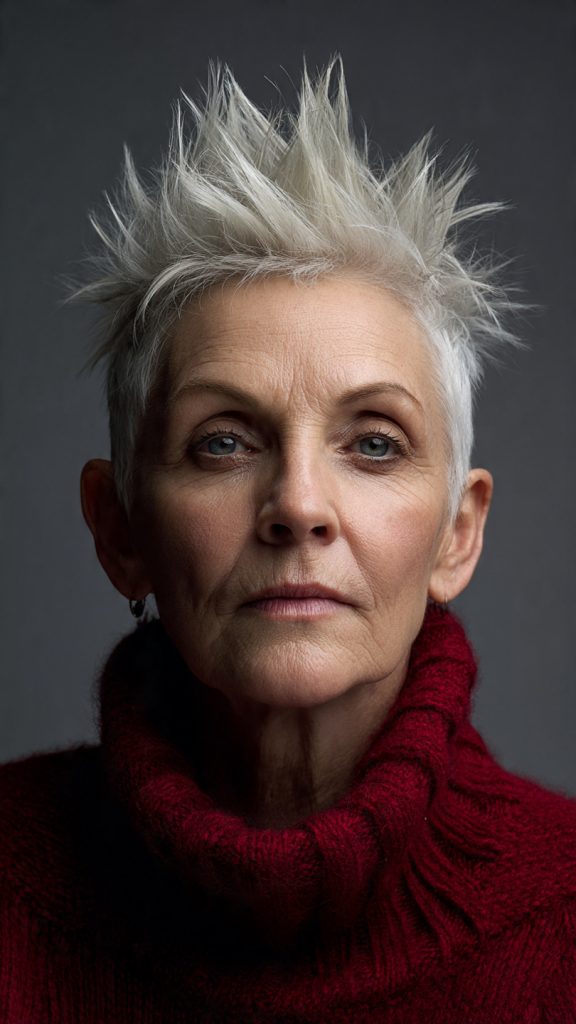
The faux hawk keeps the sides short (clippered to half an inch or less) but leaves the top significantly longer (three to four inches). The long top is styled into a row of spikes that run from the forehead to the crown, creating a mohawk-like silhouette without shaving the sides completely.
Why it works: The faux hawk is a softer, more wearable version of a full mohawk. The long top spikes provide dramatic height and volume, while the short sides keep the look clean and modern. This style is excellent for women with thick hair that can hold significant height. For women with fine hair, the long top can be texturized to create the illusion of density.
Styling tip: Apply a strong-hold gel or mousse to the long top section. Use a blow-dryer and a small round brush to lift the hair straight up. Once dry, use a flat iron to add slight bends that will hold the spikes in place. Finish with a strong-hold hairspray. The sides require no styling beyond a weekly clipper touch-up.
7. The Tapered Nape with Top Spikes
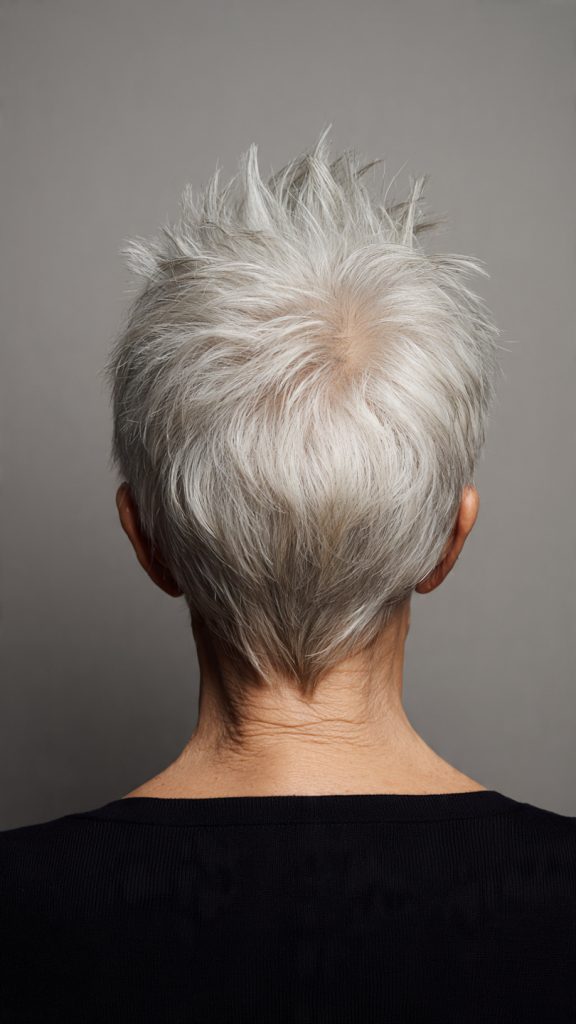
In this style, the back and nape are tapered very short (blended from skin at the very bottom to half an inch higher up). The top is left longer (two to three inches) and styled into soft, piece-y spikes. The sides are kept at a medium length (one inch) to bridge the contrast.
Why it works: The tapered nape removes weight from the heaviest part of the head, which allows the top spikes to lift more easily. The gradual taper also creates a clean, polished look from the back—important for women who do not want a dramatic undercut. This style is a great entry point for women nervous about committing to fully spiky styles.
Styling tip: Focus product on the top section only. Use a texturizing paste to create spikes that are soft and separated, not sharp or rigid. The tapered back can be left smooth or given a light dusting of powder for texture. A handheld mirror will help you check the back.
8. The Choppy Spiky Shag
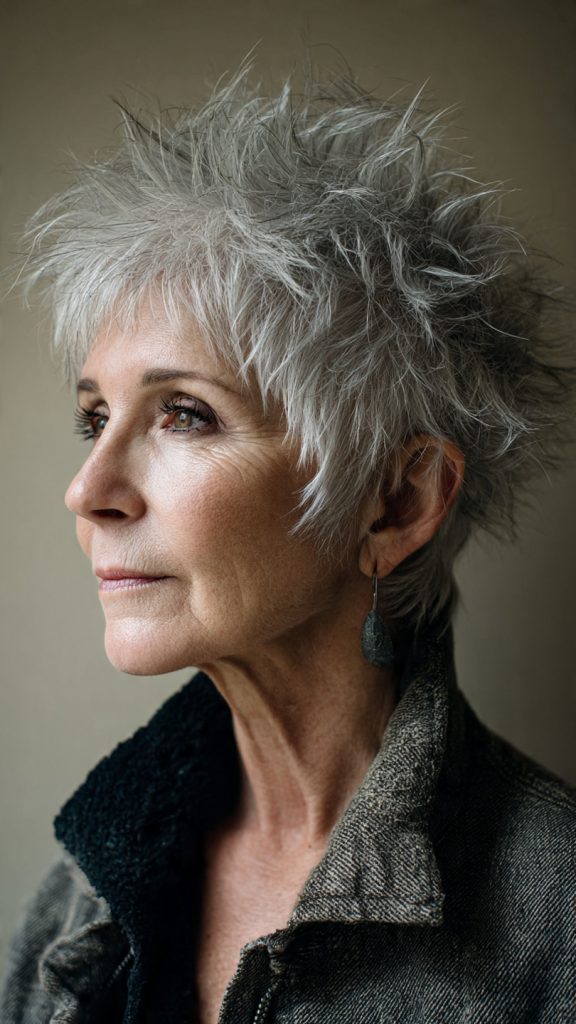
The shag haircut is known for its choppy, textured layers. In this spiky version, the shag is cut very short overall (one to two inches) with aggressive, visible point-cutting throughout. The ends are intentionally uneven and jagged. When styled with product, these jagged ends become natural spikes.
Why it works: The choppy shag creates spikes without requiring precise styling. The jagged ends want to stand up. This cut is ideal for women who want a spiky look but do not want to spend time styling. The choppy texture also hides uneven gray regrowth and changes in hair texture.
Styling tip: Apply a sea salt spray to damp hair and scrunch vigorously. Air-dry or use a diffuser. The choppy ends will naturally separate and stand up. For more definition, rub a small amount of texturizing paste between your palms and run your hands through the hair in an upward motion. Do not comb.
9. The Sleek Sides with Spiky Top
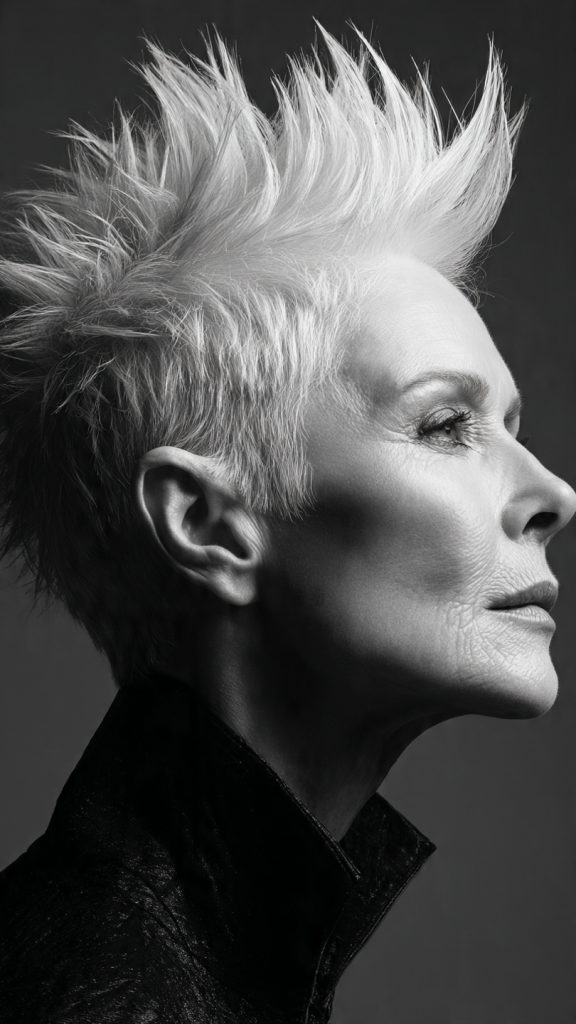
This style keeps the sides and back very short and sleek (clippered to a quarter inch, smoothed down with product). The top is left longer (two to three inches) and styled into dramatic, upright spikes. The contrast between the sleek, close sides and the wild, spiky top is striking.
Why it works: The sleek sides provide a clean, polished frame for the spiky top. This style is more editorial and fashion-forward than other spiky cuts. It works best on straight hair that can be smoothed flat on the sides. For women with gray or white hair, the contrast between the smooth sides and textured top is especially beautiful.
Styling tip: Use a strong-hold gel or pomade on the sides and back to slick them flat. Use a spiking glue or wax on the top to create upright spikes. The two textures should be clearly different. A blow-dryer on low heat will help set the spikes. This style requires precision but lasts for days.
10. The Wispy Spiked Pixie with Baby Bangs
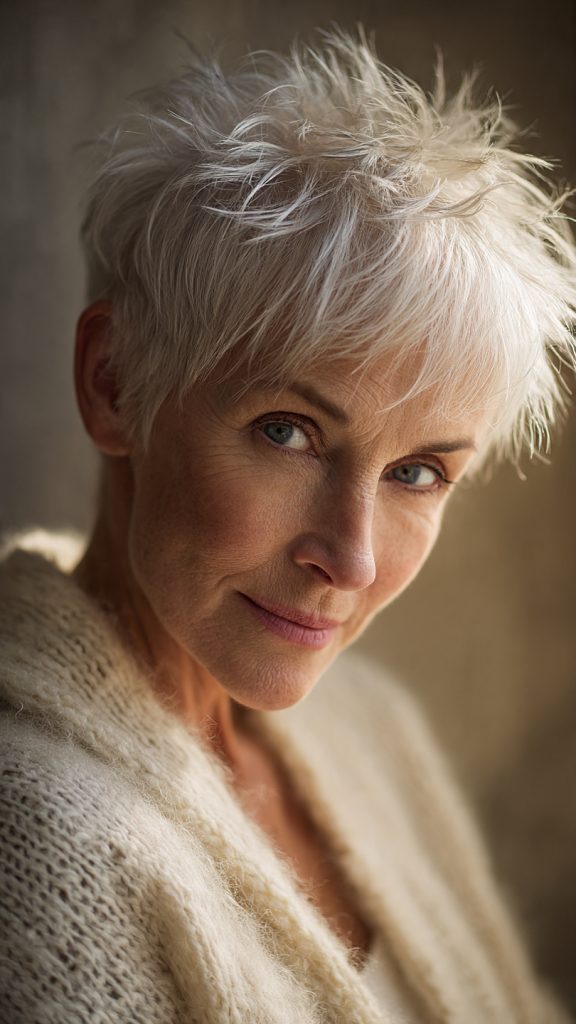
This pixie features a very short, wispy fringe (baby bangs cut well above the eyebrows) and a textured top that is styled into soft, wispy spikes. The overall effect is delicate and airy rather than sharp and aggressive.
Why it works: The wispy spikes and baby bangs create a look that is spiky but still soft and feminine. This is an excellent choice for women who want the volume and attitude of spikes but are worried about looking harsh. The baby bangs add a playful, youthful element. This style works best on fine or thin hair that naturally wants to be wispy.
Styling tip: Use a very lightweight texturizing spray or a dry texture powder on the top section. Do not use heavy waxes or gels—they will weigh down the wispy ends. Use your fingers to lift small sections upward. The baby bangs should be left straight or given a slight bend with a flat iron.
11. The Defined Spikes with Clean Shaved Sides
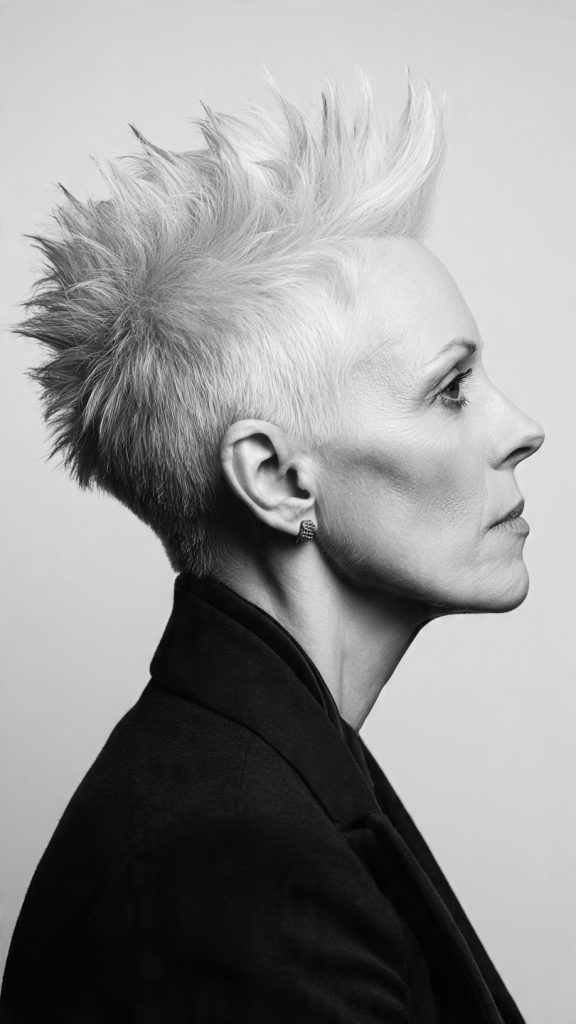
This is the most dramatic style on the list. The sides and back are shaved completely (with a clipper guard of zero or one). The top is left longer (two to three inches) and styled into sharp, defined spikes using strong-hold products. The line between the shaved sides and the spiky top is clean and intentional.
Why it works: The clean shaved sides make the top spikes look even taller and more dramatic. This style is unapologetically bold. For women over 60 who have spent a lifetime playing it safe, this cut can be liberating. It also has practical benefits: the shaved sides require zero styling and keep the head cool in summer.
Styling tip: The shaved sides need to be maintained every one to two weeks with a home clipper or a trip to the barber. For the top spikes, use a spiking glue or a strong-hold gel. Apply to damp hair, lift sections straight up with a fine-tooth comb, and blow-dry on low heat. Once dry, do not touch. The spikes will stay in place all day.
How to Choose the Right Spiky Hairstyle for You
| If you have... | Choose... |
|---|---|
| Fine or thinning hair | Soft piece-y pixie, textured crop with blunt spikes, or wispy spiked pixie |
| Thick, coarse hair | Dramatic crown spike, long-top spiky pixie, or defined spikes with shaved sides |
| Naturally curly hair | Curly spiky crop |
| Straight, slippery hair | Tapered nape with top spikes or sleek sides with spiky top |
| A round face | Asymmetrical spiky pixie or dramatic crown spike (vertical lines elongate) |
| An oval face | Any of the 11 styles will work beautifully |
| A square or angular face | Soft piece-y pixie or wispy spiked pixie with baby bangs (softens angles) |
| A long face | Textured crop with blunt spikes (adds width) |
| Low confidence in bold styles | Soft piece-y pixie or tapered nape with top spikes |
| High confidence in bold styles | Defined spikes with clean shaved sides or dramatic crown spike |
Products for Spiky Hairstyles
The right product makes all the difference. Here is a quick guide:
| Desired Effect | Product Type | Application |
|---|---|---|
| Soft, piece-y, casual spikes | Texturizing paste or wax | Rub between palms, then pinch and lift sections |
| Strong, sharp, all-day spikes | Spiking glue or strong-hold gel | Apply to damp hair, comb into place, blow-dry |
| Light, airy, wispy spikes | Texture spray or dry powder | Spray or sprinkle on dry hair, then scrunch |
| Curly spikes | Curl cream or gel | Apply to wet hair, scrunch, diffuse |
| Sleek sides with spiky top | Pomade (sides) + spiking glue (top) | Apply separately for two different textures |
Maintaining Your Spiky Hairstyle
Spiky cuts require more frequent trims than soft styles because the shape depends on precise lengths. Plan to visit your stylist every three to four weeks. Between salon visits, a small electric trimmer can maintain the sides and nape at home. For the top spikes, let them grow slightly longer before a refresh—the spikes will simply become softer and more piece-y, which is also a good look.
Final Thoughts
Spiky hairstyles for older women are not a trend. They are a statement of confidence, energy, and self-possession. The 11 short spiky hairstyles above range from soft and subtle to bold and dramatic, ensuring there is a spike for every woman, every face shape, and every comfort level.
Whether you choose the soft piece-y pixie for everyday elegance, the dramatic crown spike for special occasions, the curly spiky crop for playful ease, or the defined spikes with shaved sides for unapologetic boldness, you are choosing a haircut that says: I am still here, I am still vibrant, and I am not fading away.
Your spikes are your crown. Wear them proudly.