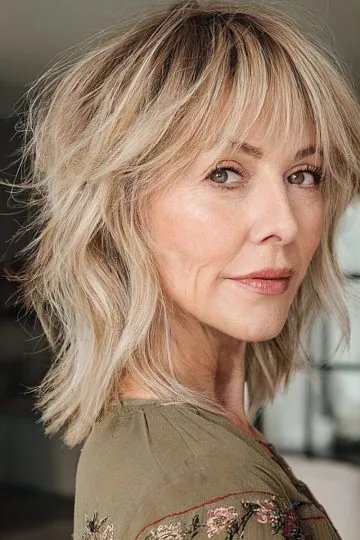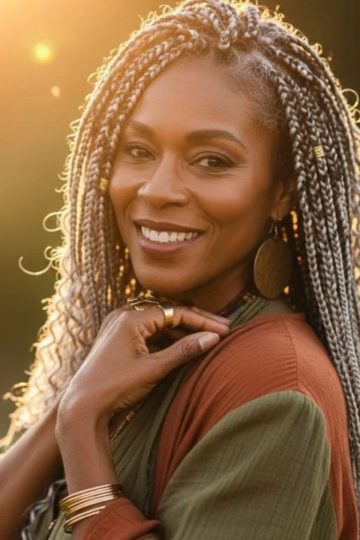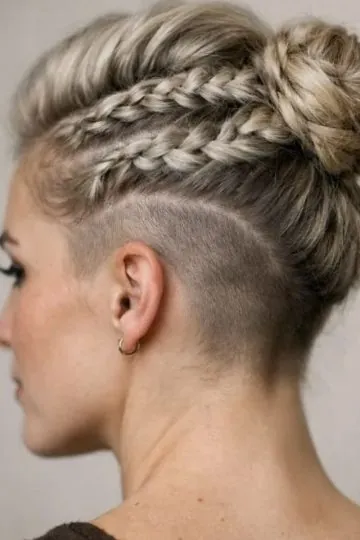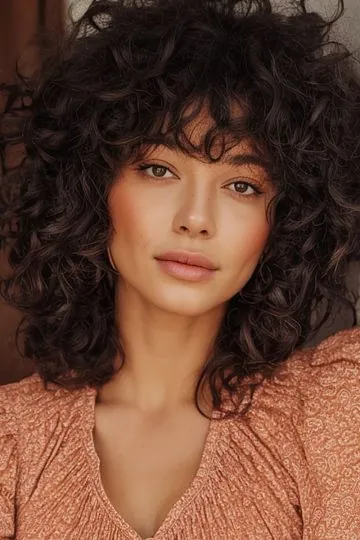
For women over 50 transitioning to gray or looking to enhance their natural silver, the debate between balayage and traditional highlights is an important one. Both techniques can beautifully blend gray hair, but they work very differently and offer distinct advantages depending on your goals, maintenance preferences, and natural gray pattern. Balayage offers a soft, sun-kissed, low-maintenance grow-out, while traditional highlights provide more uniform, consistent coverage. In this guide, you'll discover the key differences between balayage vs highlights for gray hair, along with which technique is better for different situations, maintenance needs, and desired outcomes for women over 50. If you're exploring color options for gray hair, these grey blending highlights in ash blonde offer additional cool-toned inspiration.
Understanding the Basics: What's the Difference?
Before diving into which is "better," it's essential to understand how each technique works.
| Feature | Balayage | Traditional Highlights |
|---|---|---|
| Application method | Hand-painted freehand onto the surface of the hair | Wrapped in foils or using a cap with pulled-through sections |
| Look achieved | Soft, natural, sun-kissed, lived-in | Uniform, consistent, more structured |
| Grow-out | Very soft; no harsh line of demarcation | More noticeable; roots create a defined line |
| Contrast | Low to medium contrast | Can be low, medium, or high contrast |
| Processing | Open-air processing (no heat from foil) | Heat from foil accelerates processing |
| Best for | Women who want low-maintenance color | Women who want uniform coverage |
| Gray coverage | Blends and softens gray | Can cover gray more uniformly |
What Is Balayage?
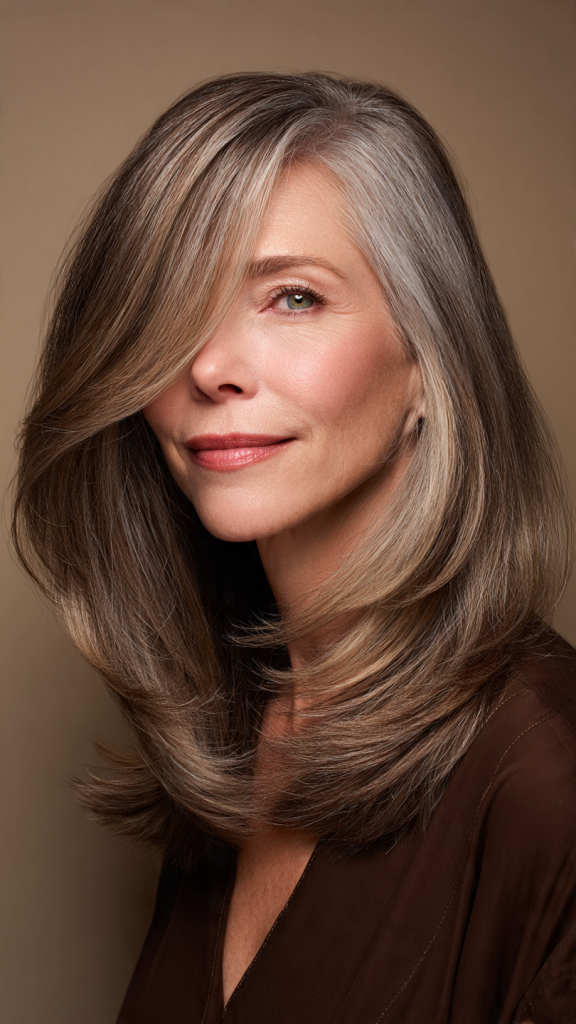
Balayage (pronounced bah-lee-ahge) is a French word meaning "to sweep" or "to paint." The colorist paints lightener directly onto the surface of the hair in a sweeping motion, creating a soft, graduated effect. Because the color is painted on by hand, no two balayage applications are exactly alike—each is customized to your hair and face.
How Balayage Works on Gray Hair
For women with gray hair, balayage works by painting lighter pieces through the mid-lengths and ends, leaving the roots darker or natural. This creates a soft, blended transition between your natural gray roots and the lighter ends. The effect is particularly beautiful on women with 20–60% gray, where the balayage pieces connect with natural silver strands.
Advantages for gray hair:
- Soft grow-out – No harsh line when roots come in
- Low maintenance – Can go 12–16 weeks between appointments
- Customizable – Can be placed strategically where gray is most concentrated
- Adds dimension – Breaks up solid gray or solid dark color
- Works with natural gray pattern – Enhances what you already have
Disadvantages for gray hair:
- Less predictable – Results depend heavily on the colorist's skill
- Not ideal for full gray coverage – Works best for blending, not covering
- Can be more expensive – Requires an experienced colorist
- May need multiple sessions – For dramatic lightening from dark brown
For women with fine hair considering color, these low maintenance haircuts for women over 50 with fine hair pair beautifully with balayage.
What Are Traditional Highlights?
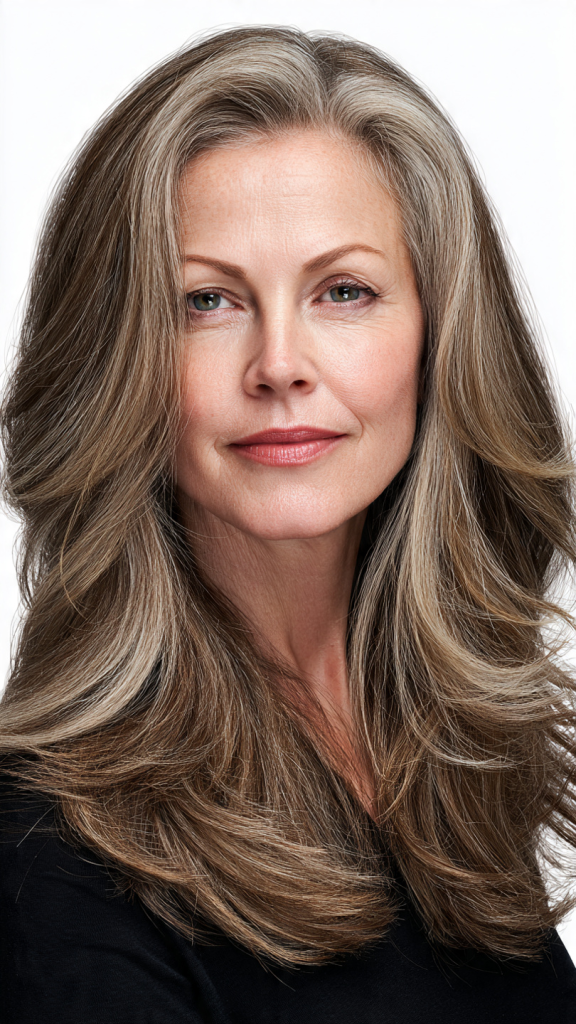
Traditional highlights use foils (or a cap) to isolate sections of hair, which are then saturated with lightener and wrapped in foil. The foil traps heat, accelerating the lightening process and allowing for more predictable, consistent lift. This technique can create anything from subtle babylights to bold, chunky highlights.
How Highlights Work on Gray Hair
For women with gray hair, traditional highlights can be used to either cover gray completely (by using permanent color) or blend gray (by using lightener). Foils allow for precise placement and consistent results, making them ideal for women who want uniform color throughout their hair.
Advantages for gray hair:
- More predictable results – The foil creates consistent lift
- Better gray coverage – When using permanent color, can cover 100% of grays
- Can create uniform color – Ideal for all-over blonde or consistent highlights
- Works for high-contrast looks – Can create dramatic lightening
- Good for resistant gray – The heat in foils helps process stubborn gray strands
Disadvantages for gray hair:
- More noticeable grow-out – Creates a defined line at the roots
- Higher maintenance – Needs touch-ups every 4–8 weeks
- More damage potential – Heat in foils can increase damage risk
- Can look stripy – If not done well, can create harsh lines
Balayage vs. Highlights: Side-by-Side Comparison for Gray Hair
| Factor | Balayage | Traditional Highlights | Winner |
|---|---|---|---|
| Natural look | Soft, sun-kissed, lived-in | Can look natural or structured depending on placement | Balayage |
| Low maintenance | 12–16 weeks between appointments | 4–8 weeks between appointments | Balayage |
| Gray blending | Blends beautifully with 20–60% gray | Blends or covers depending on technique | Tie |
| Full gray coverage | Not ideal | Excellent with permanent color | Highlights |
| Predictability | Depends on colorist skill | Very predictable | Highlights |
| Damage risk | Lower (no foil heat) | Higher (foil heat) | Balayage |
| Cost per appointment | Higher | Lower to moderate | Highlights |
| Cost per year | Lower (fewer appointments) | Higher (more appointments) | Balayage |
| Best for curl/wave | Excellent (painted on) | Good (can create stripes if not careful) | Balayage |
| Best for straight hair | Good (can look subtle) | Excellent (uniform placement) | Highlights |
Which Is Better for Your Gray Hair Pattern?
For 0–20% Gray (Minimal Gray)
Recommendation: Balayage. With minimal gray, balayage can add dimension and brightness while making the few gray strands look intentional. The soft, natural look of balayage complements sparse gray without overwhelming it.
Why: You don't need full coverage; you need blending. Balayage's soft transition is perfect for early gray.
For 20–60% Gray (Moderate Gray)
Recommendation: Either—depending on your goal. If you want to embrace your gray and blend it seamlessly, choose balayage. If you want to cover most of your gray for a more uniform color, choose traditional highlights with permanent color.
Why: This is the gray sweet spot where both techniques work well. Your choice depends on whether you want to highlight your gray (balayage) or hide it (highlights).
For 60–100% Gray (Significant to Full Gray)
Recommendation: Traditional highlights with permanent color. If you have significant gray, you need consistent coverage. Traditional foils with permanent color can cover even resistant grays. However, if you want to embrace your full gray and just add dimension, a silver-enhancing gloss might be better than either technique.
Why: Balayage alone won't provide enough coverage for significant gray. You need the consistency of foils.
For women fully embracing their silver, these silver and gray blending techniques offer additional options.
Combining Both: The Best of Both Worlds
Many colorists now use combined techniques—especially for gray hair. A common approach:
- Base color – Permanent color in foils to cover resistant grays at the roots
- Balayage – Painted highlights through the mid-lengths and ends for softness
- Toner – A gloss to blend everything together
This hybrid approach gives you the gray coverage of traditional highlights with the soft, lived-in finish of balayage. It's more expensive initially but provides beautiful, long-lasting results.
Balayage on Gray Hair: What to Expect
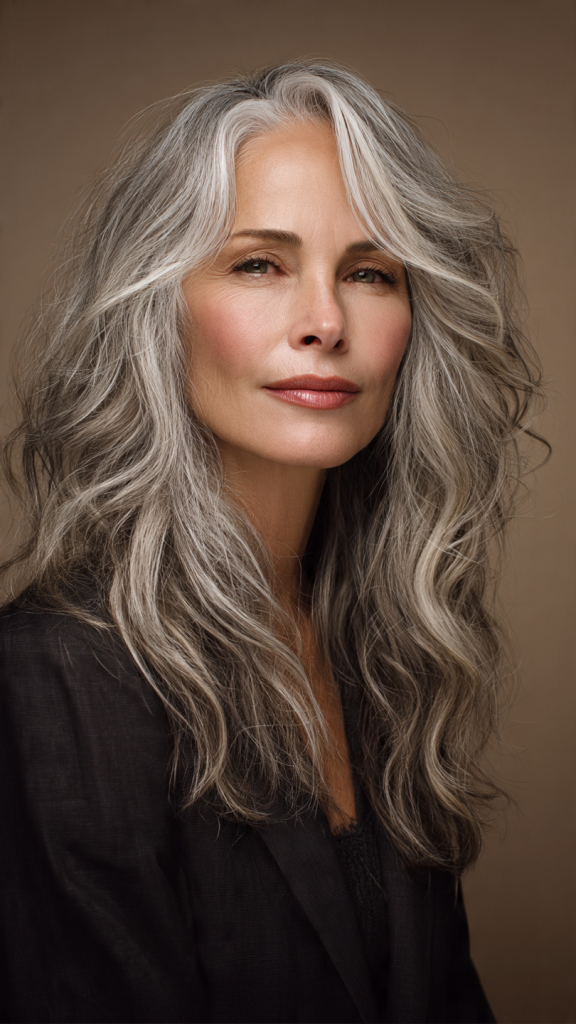
Best Candidates for Balayage on Gray Hair
- Women with 20–60% gray who want to blend, not cover
- Those who want low-maintenance color (appointments every 3–4 months)
- Women with natural waves or curls (balayage looks stunning on texture)
- Those who prefer a soft, natural, sun-kissed look
- Women who want to embrace their gray while adding dimension
What to Ask Your Colorist
- "Can you show me examples of balayage on gray hair you've done?"
- "How will you work with my natural gray pattern?"
- "What toner will you use to prevent brassiness?"
- "How long will this last before I need a touch-up?"
- "Will this work with my percentage of gray?"
Maintenance for Balayage on Gray Hair
- Touch-up frequency: Every 12–16 weeks
- Toning appointments: Every 6–8 weeks (to prevent brassiness)
- Purple shampoo: Use weekly to maintain cool tones
- Gloss treatments: Every 4–6 weeks for shine and tone refresh
Highlights on Gray Hair: What to Expect
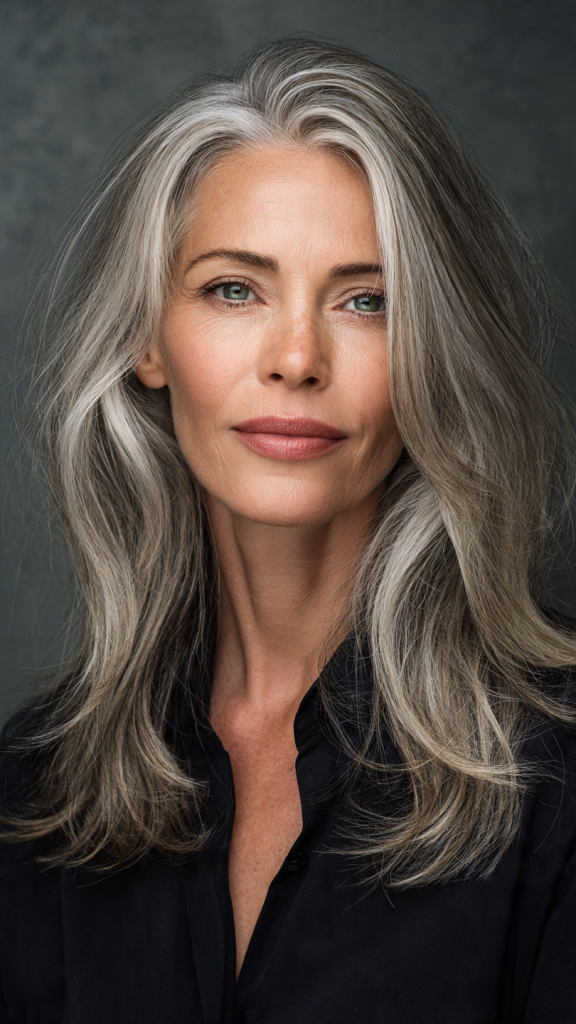
Best Candidates for Highlights on Gray Hair
- Women with 60–100% gray who want consistent coverage
- Those who prefer more uniform, predictable color
- Women with straight hair (highlights show up clearly)
- Those who want higher contrast between light and dark
- Women with resistant gray that needs heat from foils to process
What to Ask Your Colorist
- "What developer volume will you use for my resistant grays?"
- "How will you prevent my gray from looking yellow or brassy?"
- "What's the recommended touch-up schedule for my gray percentage?"
- "Will you use permanent color or lightener?"
- "Can we add lowlights for dimension?"
Maintenance for Highlights on Gray Hair
- Touch-up frequency: Every 6–10 weeks (depending on gray growth)
- Toning appointments: Every 4–6 weeks
- Purple shampoo: Use 2–3 times weekly
- Deep conditioning: Weekly to maintain health
The Brassiness Factor: Gray Hair's Biggest Challenge
Both balayage and traditional highlights on gray hair face the same challenge: brassiness. Gray and silver hair naturally pulls warm tones—yellow, orange, or gold—especially when lightened.
How to Prevent Brassiness
| Method | Balayage | Highlights |
|---|---|---|
| Purple shampoo | Weekly | 2–3 times weekly |
| Toning gloss | Every 6–8 weeks | Every 4–6 weeks |
| Cool-toned toner | Applied at each appointment | Applied at each appointment |
| Avoid warm-toned products | Essential | Essential |
| Cold water rinses | Helps maintain cool tones | Helps maintain cool tones |
Signs Your Gray Hair Is Getting Brassy
- Your silver looks yellowish
- Your highlights have a golden or orange hue
- Your gray looks dull rather than bright
- Your hair has lost its cool, ashy tone
Solution: Use purple shampoo immediately and schedule a toning appointment.
Cost Comparison: Balayage vs. Highlights for Gray Hair
| Factor | Balayage | Traditional Highlights |
|---|---|---|
| Initial appointment | $150–300+ | $100–250 |
| Touch-up appointment | $150–300 (every 12–16 weeks) | $100–250 (every 6–10 weeks) |
| Toner/gloss appointment | $50–80 (every 6–8 weeks) | $50–80 (every 4–6 weeks) |
| Yearly total (approx.) | $800–1,500 | $1,200–2,000 |
Balayage typically costs less per year because you need fewer full color appointments, despite higher per-appointment costs.
Quick Reference: Balayage vs. Highlights for Gray Hair
| If you want... | Choose... |
|---|---|
| Soft, natural, sun-kissed look | Balayage |
| Uniform, consistent color | Highlights |
| Low maintenance (3–4 months between appointments) | Balayage |
| Full gray coverage | Highlights |
| To embrace your gray pattern | Balayage |
| To minimize damage | Balayage |
| Predictable, reliable results | Highlights |
| To spend less per appointment | Highlights |
| To spend less per year | Balayage |
| Wavy or curly hair | Balayage |
| Straight hair | Highlights |
| To blend 20–60% gray | Balayage |
| To cover 60–100% gray | Highlights |
Final Thoughts
Balayage vs. highlights for gray hair isn't about which is objectively "better"—it's about which is better for your specific gray pattern, lifestyle, and aesthetic preferences.
Choose balayage if: You have 20–60% gray, want a soft natural look, prefer low-maintenance color (appointments every 3–4 months), and want to embrace your gray while adding dimension.
Choose traditional highlights if: You have 60–100% gray, want consistent, predictable coverage, don't mind more frequent appointments (every 6–10 weeks), and prefer a more uniform blonde or highlighted look.
Consider a combination if: You want the gray coverage of highlights with the soft grow-out of balayage—many colorists now offer hybrid techniques that give you the best of both worlds.
The most important factor is finding a colorist who specializes in gray hair and understands how to work with your specific texture and gray percentage. Take this guide to your consultation, ask the right questions, and get ready to love your gray—whether highlighted, balayaged, or beautifully natural.