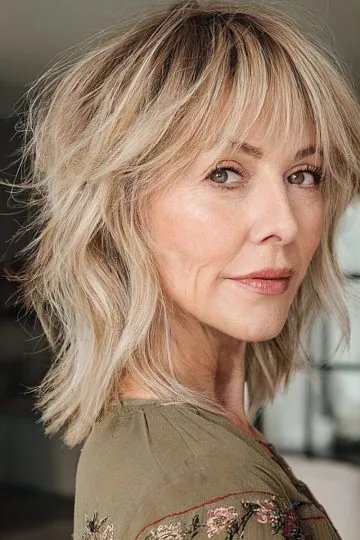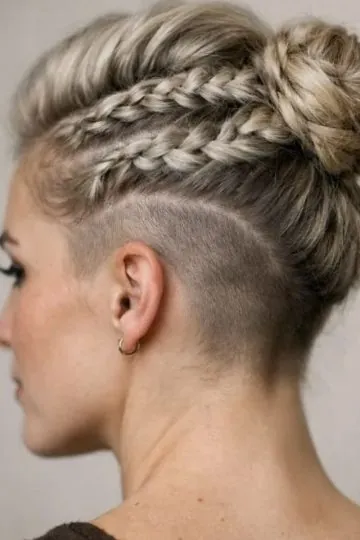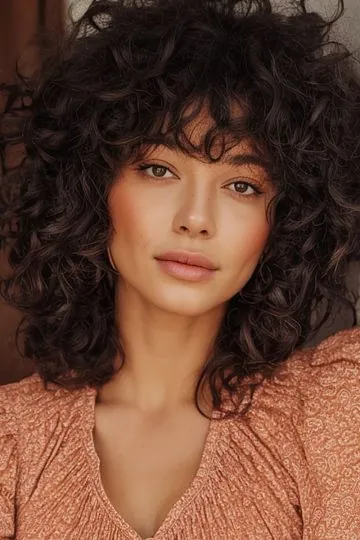
Thin fine hair presents a unique double challenge. Thin hair means fewer strands per square inch on your scalp, making the scalp more visible and ponytails feel sparse. Fine hair means each individual strand has a small diameter, lacking the internal structure to hold volume or shape. When you have both thin and fine hair, many traditional haircuts simply collapse—looking flat, limp, and transparent at the ends. The solution is not to grow your hair longer in hopes of more weight (longer hair actually pulls thin fine hair flatter). The solution is to go shorter. Short hairstyles remove the weight that drags thin fine hair down, while strategic cutting techniques create the illusion of density where none exists. Blunt perimeters, tight stacking, disconnected layers, and strategic texturizing all play a role. 15 short hairstyles for thin fine hair prove that you can have volume, movement, and style even with the most challenging hair type. From cropped pixies to stacked bobs, from textured crops to tapered nape cuts, these 15 styles are engineered to lift at the root, hide the scalp, and make your hair look twice as thick as it actually is.
Why Short Hair Is the Best Choice for Thin Fine Hair
Women with thin fine hair often believe that keeping their hair longer will somehow hide the thinness. The opposite is true. Long hair weighs down fine strands, pulling them flat against the scalp and making every gap visible. The ends become wispy and transparent, and the overall silhouette is stringy and lifeless.
Short hair solves these problems in several ways. First, short hair removes weight. With less length pulling down, the roots can lift naturally. Second, short hair allows for stacking and layering techniques that create internal volume. A stacked nape pushes hair upward; crown layers lift away from the scalp. Third, short hair keeps the ends blunt. When hair is short, the perimeter can be cut straight across, creating a solid visual line that reflects light as density. Finally, short hair is easier to style with volumizing products because there is less hair to weigh down.
The following 15 short hairstyles are specifically designed for thin fine hair. Each one addresses the core problems—visible scalp, flat roots, transparent ends—and turns them into strengths.
1. The Classic Short Pixie (Blunt Perimeter)
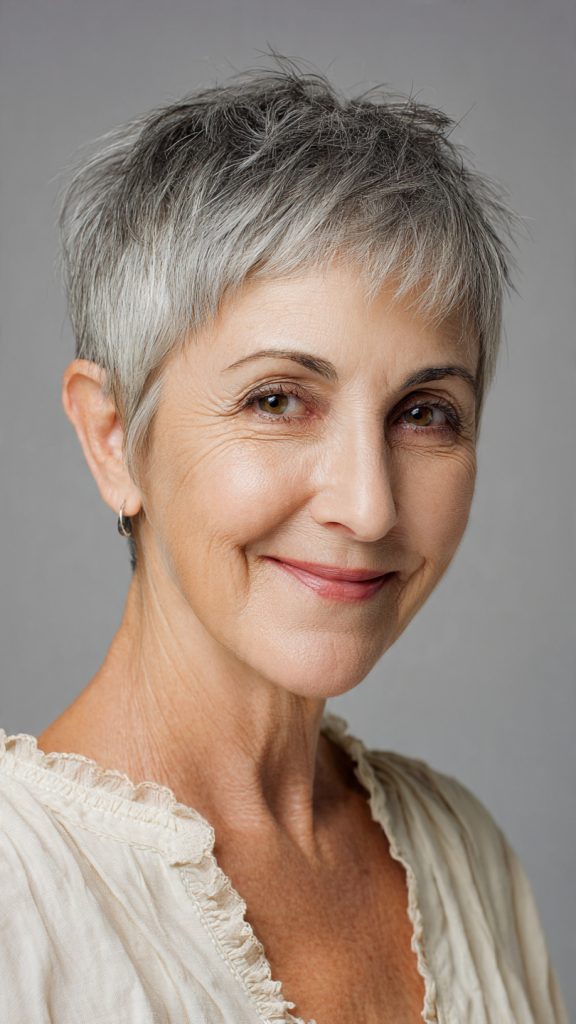
A classic pixie cut with the top at one to two inches, the sides at half an inch to one inch, and the nape tapered very short. The key is a blunt perimeter around the edges—no wispy or feathered ends. The top is left with enough length to style but is cut with a clean line.
Why it works: The blunt perimeter creates a solid visual line that tricks the eye into seeing density. The tapered nape removes weight from the heaviest area, allowing the top to lift. This is the foundational cut for thin fine hair. It works on all face shapes and requires minimal styling.
Styling tip: Apply a volumizing mousse to damp roots. Blow-dry upside down for two minutes, then flip back. Use your fingers to lift the top section. Do not use a brush—it will flatten the volume. A dry shampoo at the roots adds grip and lift.
2. The Stacked Pixie Bob (Short Back, Longer Front)
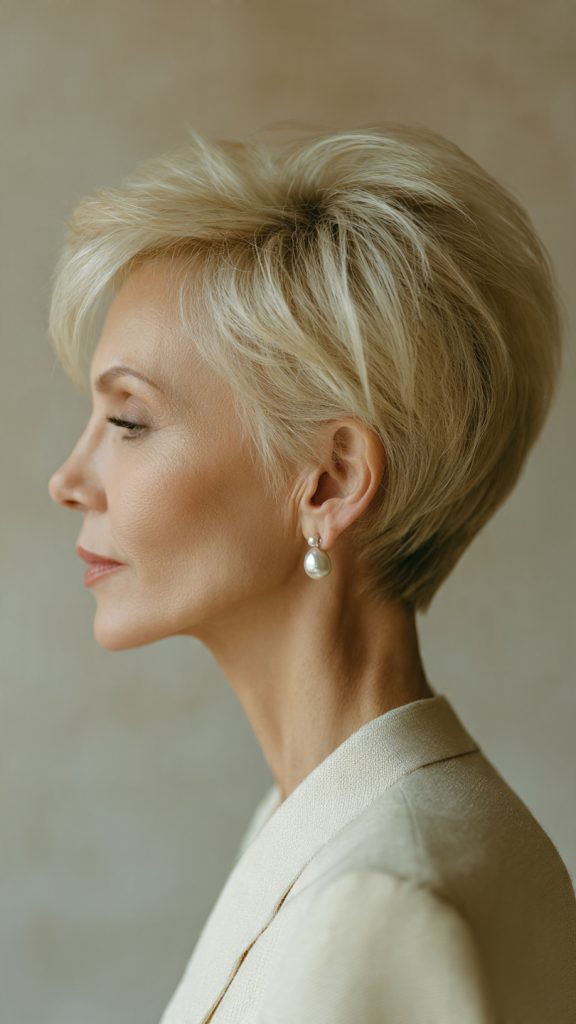
This hybrid cut features a tightly stacked back (layers cut progressively shorter as they go up the nape) and a longer front that reaches the chin or jawline. The top is two to three inches. The stacked back creates dramatic lift at the crown.
Why it works: Stacking is the single best technique for adding volume to thin fine hair. The short, layered nape removes weight, which allows the hair above to literally stand up. The longer front pieces provide face-framing and the illusion of more hair. The angle from back to front also elongates the neck.
Styling tip: Rough-dry the stacked back upside down to maximize lift. Use a small round brush only on the front sections. The stacked back should be left slightly messy—over-brushing will flatten the volume you worked hard to create.
3. The Textured Crop (Short and Uniform)
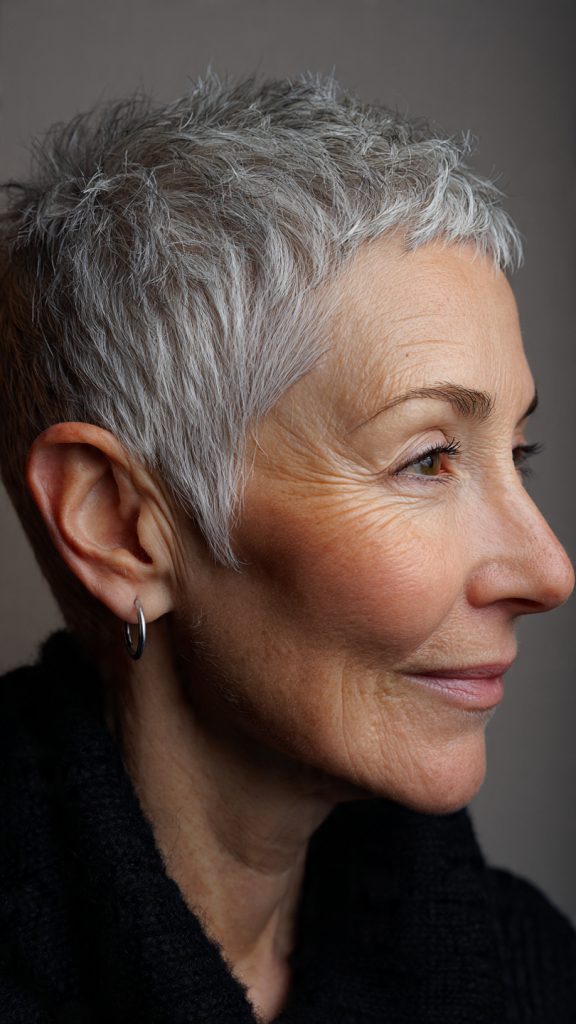
A very short crop with uniform length of one to one and a half inches all over. The ends are point-cut to create soft, piece-y texture rather than a blunt line. The overall silhouette is rounded and compact.
Why it works: The textured crop is the ultimate low-maintenance cut for thin fine hair. The short length prevents any weight-related flatness. The point-cut ends create multiple light-reflecting surfaces, which reads visually as thickness. The uniform length also makes styling foolproof—just rub, scrunch, and go.
Styling tip: Rub a small amount of texturizing paste or wax between your palms. Then run your hands over your entire head in a scrubbing motion. The hair will naturally separate into soft, piece-y texture. A dry shampoo at the roots adds volume and grip.
4. The Asymmetrical Pixie (One Side Longer)
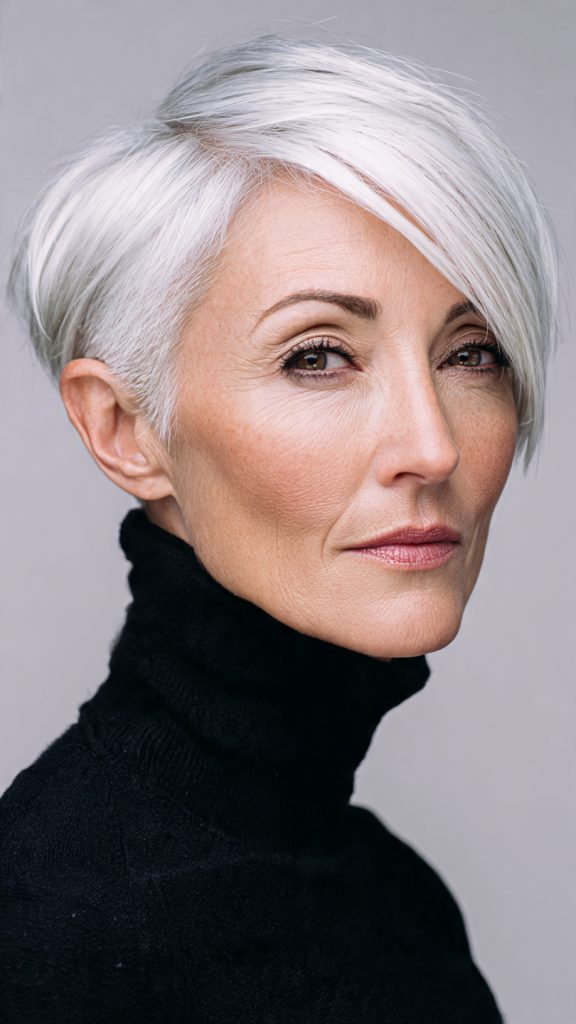
One side of this pixie is cut shorter (half inch to one inch) while the other side is left longer (two to three inches). The longer side is styled to sweep across the crown or tuck behind the ear. The back is tapered or stacked.
Why it works: Asymmetry draws the eye diagonally across the face, which is slimming and face-lifting. The longer side creates the illusion of more hair on one side, while the shorter side keeps the cut lightweight. The diagonal line also distracts from any visible scalp at the part line.
Styling tip: Focus product on the longer side. Use a texturizing paste to create separation and definition. The shorter side can be left smooth or given a tiny amount of texture. A deep side part on the shorter side enhances the asymmetry.
5. The Short Layered Pixie with Crown Focus
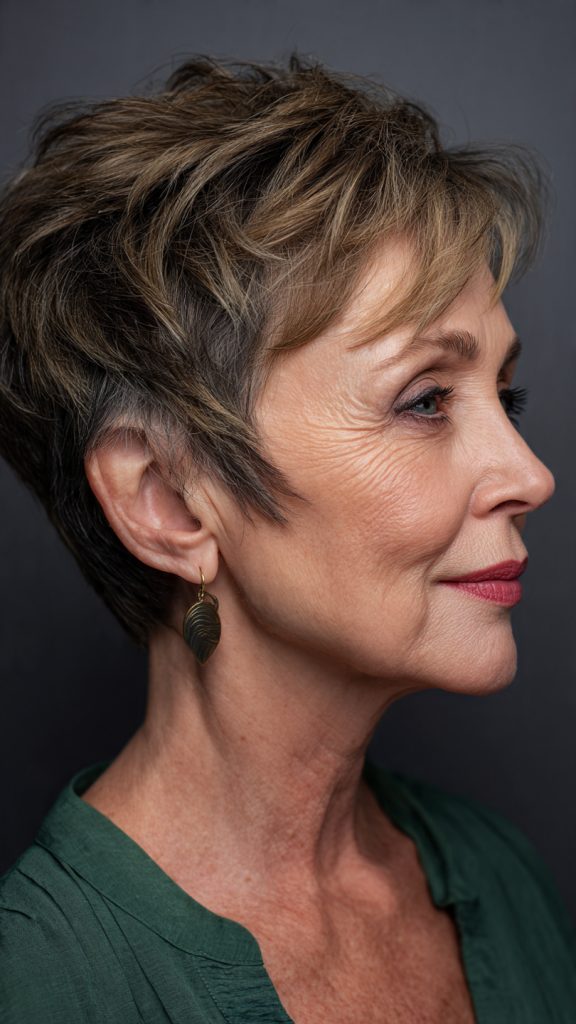
All the layering in this pixie is concentrated at the crown. The sides and back are kept relatively short and uniform (one inch). The crown is aggressively layered to create maximum height and lift. The ends are point-cut for separation.
Why it works: For women with thin fine hair, the crown is where thinning is most visible and most distressing. This cut delivers maximum lift exactly where it is needed. The high crown has a face-lifting effect and draws the eye upward. The shorter sides keep the overall silhouette clean.
Styling tip: Blow-dry the crown section first, using a small round brush and lifting straight up. Pin the dried crown hair in a "Mohawk" clip while you dry the sides. Release at the end. Apply a volumizing powder or dry shampoo to the crown roots for extended hold.
6. The Tapered Nape Pixie (Clean and Lifted)
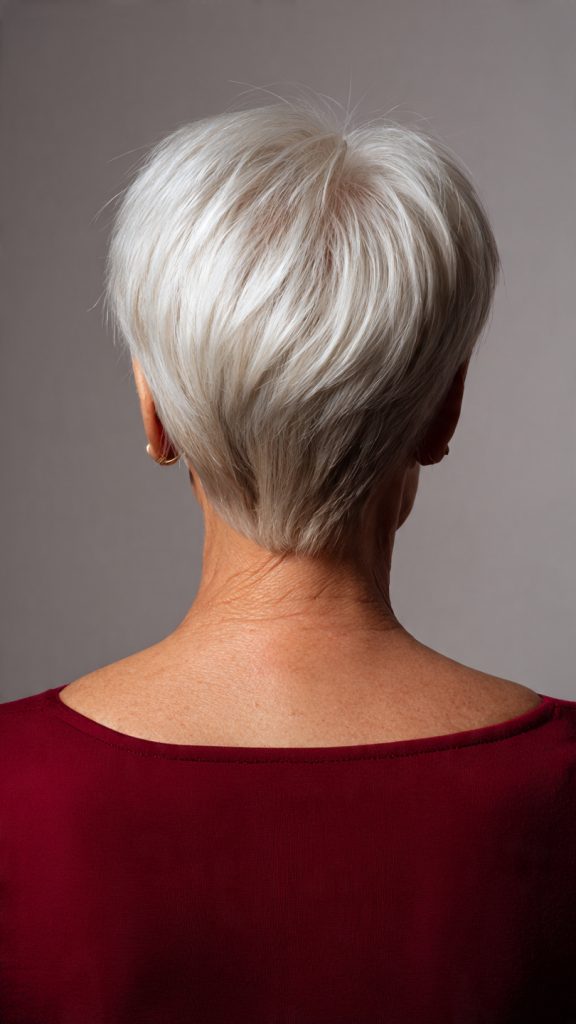
The nape is tapered very short (blended from skin at the very bottom to half an inch higher up). The top is left at one to two inches with soft layers. The sides are kept at a medium short length (half inch to one inch). The overall silhouette is clean from the back with lift on top.
Why it works: The tapered nape removes weight from the heaviest part of the head, which allows the top to lift more easily. The gradual taper creates a clean, polished look from the back—important for women who do not want a dramatic undercut. This style is a great entry point for women nervous about very short cuts.
Styling tip: Focus product on the top section only. Use a lightweight mousse or texturizing spray. The tapered back can be left smooth or given a light dusting of powder for texture. A handheld mirror will help you check the back.
7. The Short French Pixie (Blunt Bangs, Rounded Shape)
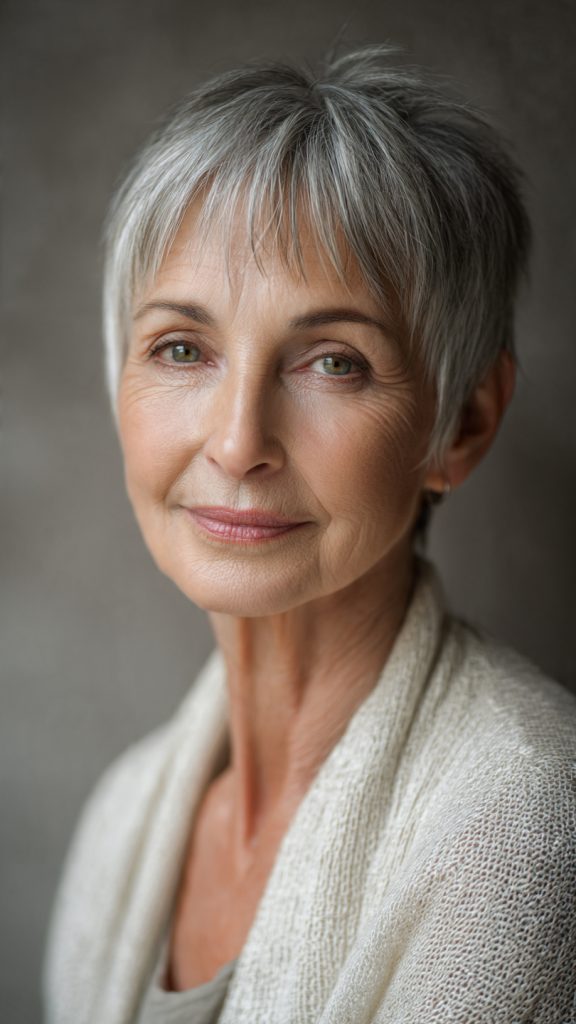
A short pixie with blunt bangs cut straight across at or just above the eyebrows. The sides and back are tapered, and the overall shape is rounded rather than angular. The top is one to two inches with minimal layering.
Why it works: The blunt bangs add a solid block of density across the forehead, which is often the most visible area when hair is thin. The rounded shape mimics the look of naturally thick hair. The short length prevents weight-related flatness. This cut works especially well for women with oval or heart-shaped faces.
Styling tip: The blunt bangs should be kept smooth and straight. Use a flat iron to polish them. The rest of the cut can be textured with a small amount of paste. The bangs require frequent trims (every two to three weeks).
8. The Piece-Y Pixie (Disconnected Texture)
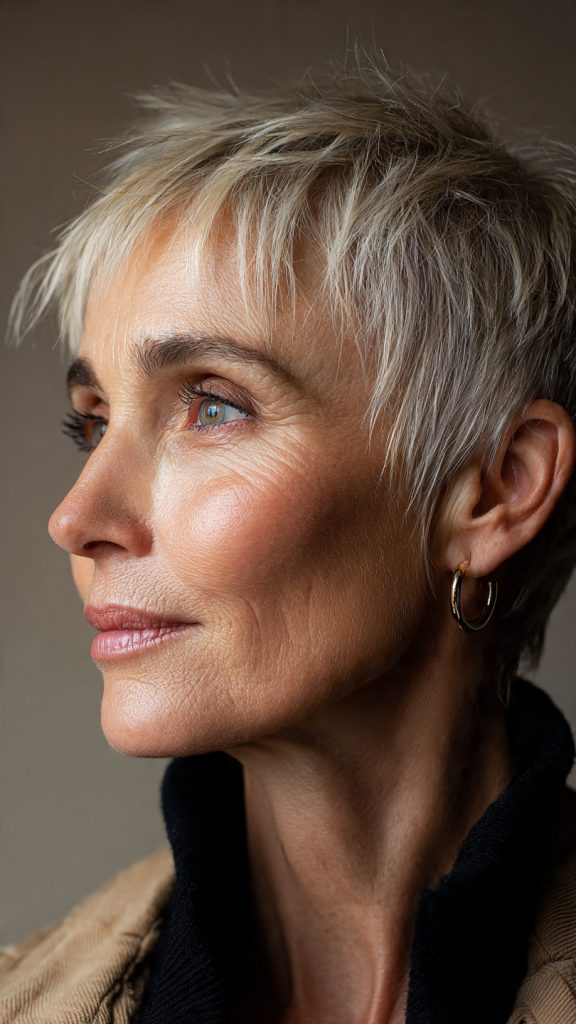
This pixie is cut into distinct "pieces" that range in length from half an inch to two inches. There is no attempt to create a smooth or blended silhouette. The ends are cut bluntly to help each piece stand separately.
Why it works: The piece-y pixie creates visible separation between strands, which prevents thin fine hair from clumping together and exposing the scalp. Each piece reflects light independently, creating the illusion of more hair. This cut works best on straight hair that will hold the separation.
Styling tip: Use a strong-hold texturizing paste or wax. Rub a generous amount between your palms, then grab small sections and twist them into defined pieces. Do not run your hands through the whole head—work section by section. The goal is visible separation.
9. The Short Shag (Soft Choppy Layers)
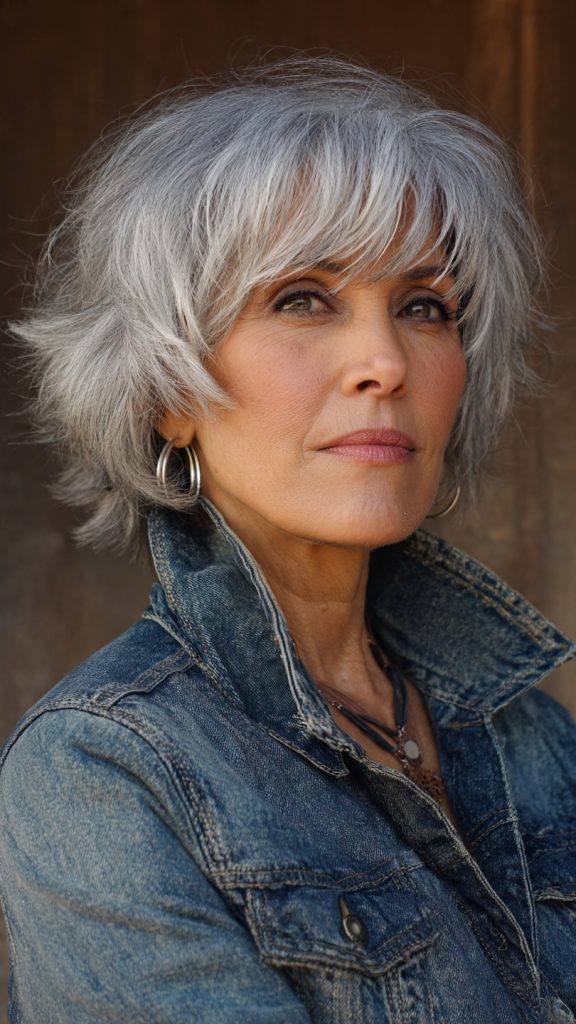
A short shag features choppy layers throughout, with the most texture at the crown and ends. The length is one to two inches all over. The perimeter is soft and feathered rather than blunt. The overall shape is rounded.
Why it works: The short shag's many layers create movement and the illusion of multiple textures. Even thin fine hair looks denser when it is moving in multiple directions. The choppy ends reflect light differently than smooth ends, adding visual interest. This cut is also very forgiving of uneven gray regrowth.
Styling tip: Apply a sea salt spray to damp hair and scrunch vigorously. Air-dry or use a diffuser on low heat. The choppy ends will naturally separate. Do not brush—use your fingers only. A dry shampoo at the roots adds volume.
10. The Undercut Pixie (Hidden Nape Removal)
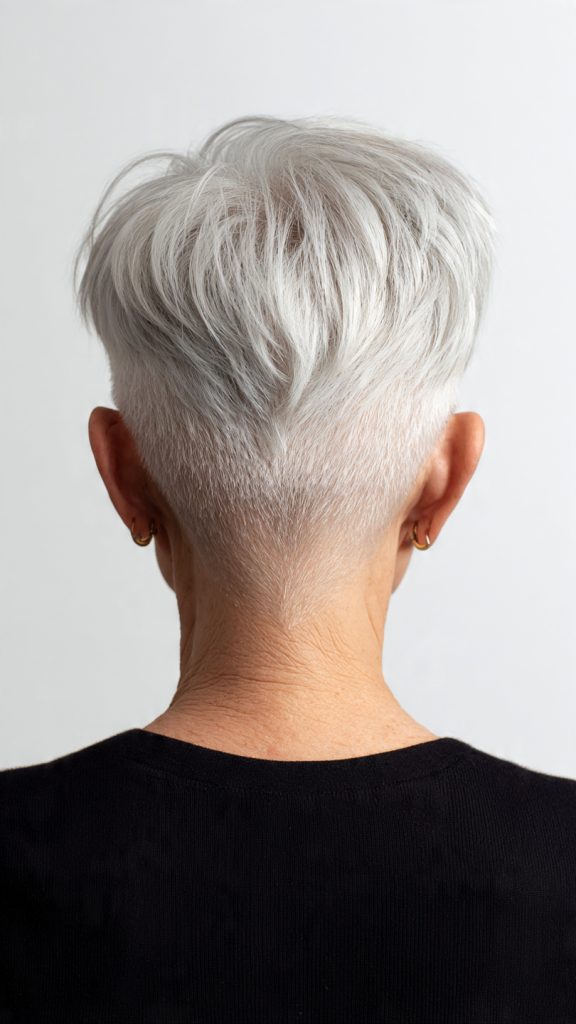
The top and sides are cut into a short pixie (one to two inches), while a small triangle at the nape is shaved or clippered very short (quarter inch or less). The longer top layers fall over the shaved area, hiding it completely.
Why it works: The undercut removes the densest, heaviest part of the hair—the area that contributes most to weighing down the crown. For women with thin fine hair, this can be transformative. The undercut is invisible when the hair is down, but it dramatically increases lift. The shaved nape also keeps the neck cooler.
Styling tip: Style the top layers as usual—blow-dry with a round brush, add a little mousse at the roots. The undercut requires no special attention. To check if it needs a trim, lift the top layers and feel the nape. When the shaved hair reaches one inch, it is time for a touch-up.
11. The Short Curly Pixie (For Naturally Curly Thin Hair)
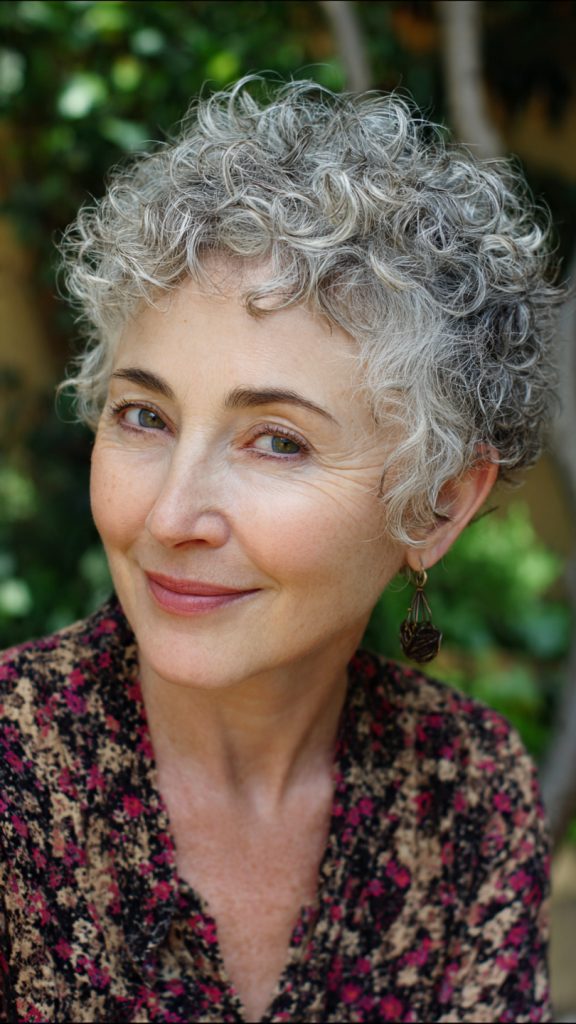
For women with naturally curly hair that is also thin, this cut is a game-changer. The hair is cut very short (one inch or less all over) and dry, curl by curl. The curls are encouraged to form tight ringlets that stand up rather than lying flat.
Why it works: On curly hair, shrinkage is your friend. When curly hair is cut very short, the curls have nowhere to go but up. The result is a head full of tight, springy, upright curls that look like soft volume. The short length also prevents the curls from pulling flat from their own weight.
Styling tip: Apply a curl cream or gel to soaking wet hair. Scrunch vigorously with a microfiber towel to remove excess water and encourage the curls to spring up. Air-dry or use a diffuser on low heat. Do not touch until dry. Once dry, separate curls with your fingers.
12. The Finger-Waved Pixie (Retro Volume)
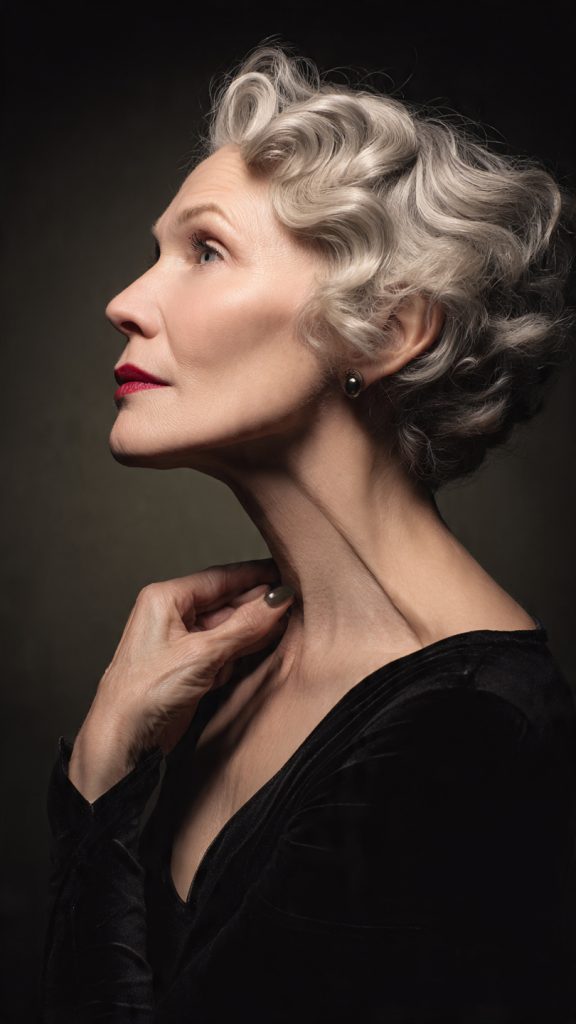
This cut is a short pixie (one to two inches on top, tapered sides and back) that is styled using the finger-waving technique—creating sculpted S-shaped waves that lie close to the head but have significant height at the crown.
Why it works: Finger waves create the illusion of dense, sculpted hair even when very little hair exists. The waves add texture and movement, and the crown height lifts the face. This style is more labor-intensive to set but lasts for days and requires no daily styling once set.
Styling tip: This style is best done by a stylist or learned through practice. Use a strong-hold gel on damp hair. Use your fingers and a comb to create S-shaped waves. Allow to dry completely (under a dryer is best). Once dry, do not brush. The waves will hold for several days with a silk scarf at night.
13. The Cropped Pixie with Side-Swept Fringe
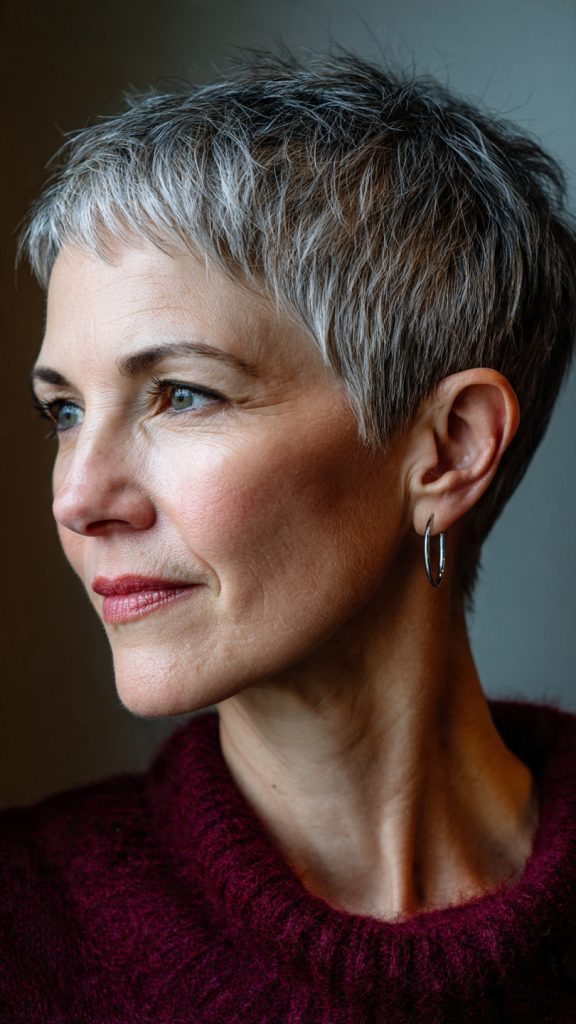
A very short cropped pixie (one inch all over) with a longer section left at the front (two to three inches) that is swept to one side as a fringe. The rest of the cut is uniform and textured.
Why it works: The side-swept fringe adds visual density to the front of the head, which is often the most visible area. The cropped sides and back keep the cut lightweight and easy. The contrast between the longer fringe and the short crop creates interest and draws the eye upward.
Styling tip: Blow-dry the fringe using a small round brush, sweeping it to the preferred side. The rest of the cut can be roughed dry with your fingers. A small amount of texturizing paste on the fringe will keep it in place. The cropped sections need no product.
14. The Short Blunt Bob (Chin Length)
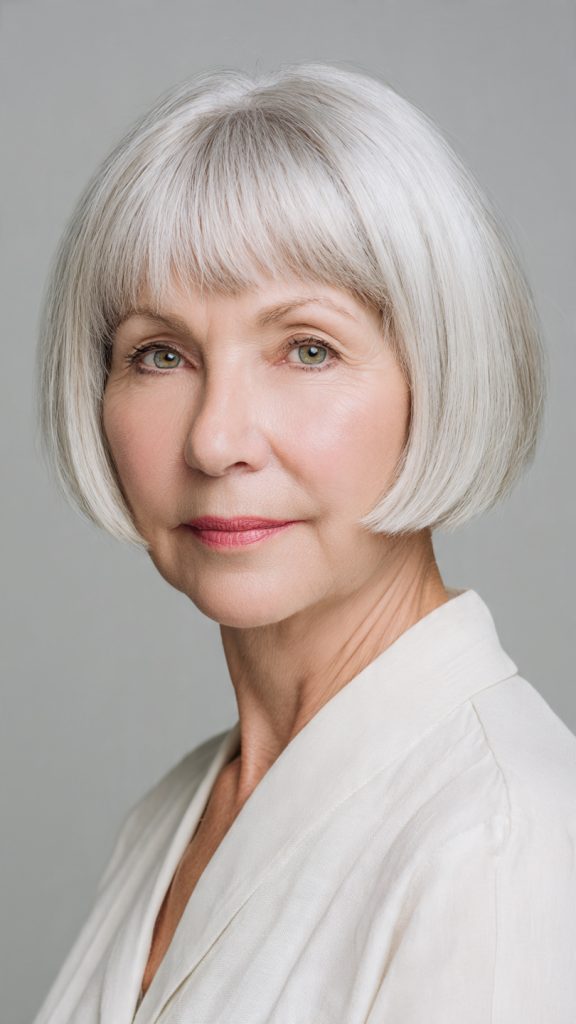
A blunt bob that hits at the chin, with no layers. The perimeter is cut straight across. The back is the same length as the front, or slightly shorter to prevent curling under at the nape. This is a bob, not a pixie—but at chin length, it is short enough for thin fine hair.
Why it works: The blunt perimeter creates the strongest illusion of thickness for thin fine hair. The solid line of the perimeter reflects light as a dense block. Because the length stops at the chin (not below), the weight does not pull the roots flat. This cut works best on straight or slightly wavy hair.
Styling tip: Blow-dry smooth with a flat paddle brush. Use a lightweight volumizing mousse at the roots only. Add a tiny drop of serum to the very ends to keep the blunt line sharp. A center part or a very shallow side part both work well—avoid deep parts that expose too much scalp.
15. The Textured Pixie with Micro-Bangs
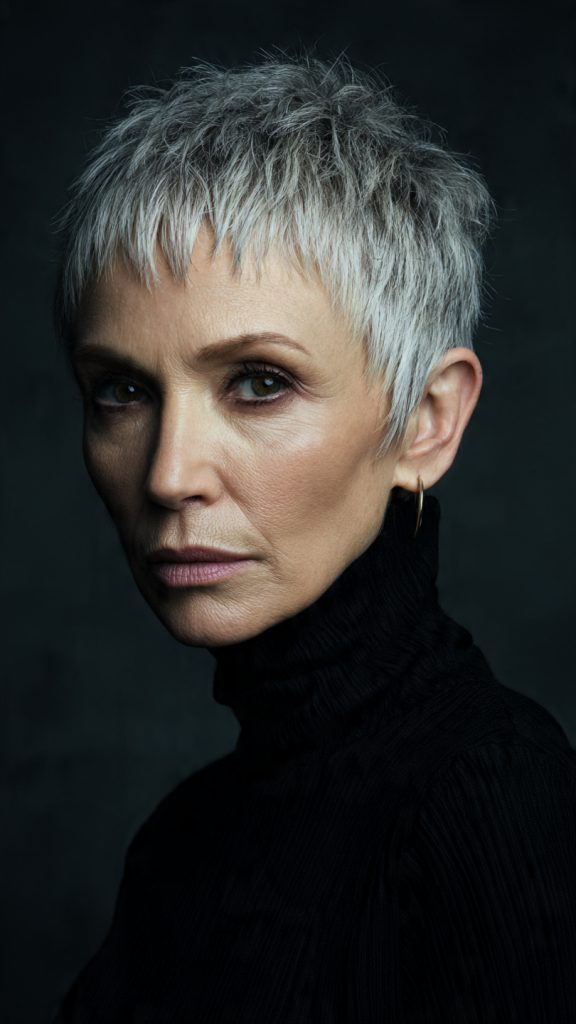
Micro-bangs are very short bangs cut well above the eyebrows—sometimes a full inch above. In this version, the micro-bangs are cut bluntly but with slight texture at the ends. The rest of the pixie is short (one to two inches) with piece-y texture throughout.
Why it works: Micro-bangs draw immediate attention to the eyes and forehead, away from thinning areas at the crown or part line. The short bangs add a solid block of density at the front hairline. The piece-y texture on the rest of the cut prevents thin hair from clumping together. This cut is for women ready to be noticed.
Styling tip: The micro-bangs should be kept straight and smooth. Use a flat iron to polish them. The rest of the cut should be textured and piece-y. The contrast between the two textures is essential. Micro-bangs require frequent trims (every two to three weeks).
How to Choose the Right Short Hairstyle for Thin Fine Hair
| If you have... | Choose... |
|---|---|
| Very thin hair (scalp clearly visible) | Classic short pixie, stacked pixie bob, or undercut pixie |
| Thin fine hair that is also straight | Piece-y pixie, short blunt bob, or cropped pixie with side-swept fringe |
| Thin fine hair with a natural wave | Short shag or textured crop |
| Naturally curly thin hair | Short curly pixie (cut dry) |
| A round face | Asymmetrical pixie or stacked pixie bob (vertical lines elongate) |
| An oval face | Any of the 15 styles will work beautifully |
| A square or angular face | Short French pixie or finger-waved pixie (softens angles) |
| A long face | Textured crop or short shag (adds width) |
| You want maximum volume | Stacked pixie bob, short layered pixie with crown focus, or undercut pixie |
| You want the lowest maintenance | Textured crop or tapered nape pixie |
Daily Care for Short Thin Fine Hair
Short hair requires a different care routine than longer hair. Here are five essential rules:
| Rule | Action |
|---|---|
| Shampoo daily or every other day | Thin fine hair gets oily faster. Use a volumizing shampoo. |
| Condition sparingly | Apply conditioner only to the ends (if any). Never to the roots. |
| Use root lifters | A lightweight root-lifting spray or mousse is essential. Apply to damp roots before blow-drying. |
| Dry shampoo is your best friend | Spray dry shampoo on clean roots to give them grip and texture. It prevents flatness before it starts. |
| Avoid heavy products | No oils, butters, or thick creams. Stick with mousse, texturizing spray, and dry shampoo. |
Final Thoughts
Thin fine hair is not a curse. It is a hair type that requires a specific approach—shorter lengths, blunt perimeters, strategic stacking, and the right products. The 15 short hairstyles for thin fine hair above prove that you can have volume, movement, and style even with the most challenging combination of low density and small strand diameter.
Whether you choose the classic short pixie, the stacked pixie bob, the textured crop, the asymmetrical pixie, the undercut pixie, or the short blunt bob, the key is working with a stylist who understands thin fine hair. Bring photos. Ask for blunt perimeters, tight stacking, and crown volume. And never let anyone tell you that your hair cannot be beautiful.
Your thin fine hair is not a limitation. It is an opportunity to be strategic, intentional, and stylish. Wear your short hair with pride.