When you sit in a barber's chair and ask for a fade, you're opening the door to dozens of variations—each with its own shape, length, and effect. Two of the most popular and frequently confused fade styles are the low taper fade and the drop fade. While they share some similarities, their differences in shape, placement, and overall effect can dramatically change your final look. Understanding the distinction between a low taper fade and a drop fade will help you communicate clearly with your barber and walk out with exactly the haircut you wanted. In this guide, you'll learn everything about low taper fade vs. drop fade, including defining characteristics, which face shapes each suits best, maintenance requirements, and how to choose the right one for your style. If you're exploring other fade options, these men's haircuts for round face over 50 offer additional shaping ideas.
Understanding the Basics: What Is a Fade?
Before diving into the differences, let's establish what a fade actually is.
A fade is a gradual transition from short hair (often down to the skin) at the bottom of the sides and back to longer hair at the top. The "fade" refers to the way the hair length "fades" from short to long. Fades can be classified by:
- How high they start – Low, mid, or high
- How they shape around the ear – Straight vs. curved (drop)
- How they blend – Tapered vs. compressed
| Fade Type | Starting Point | Shape | Best For |
|---|---|---|---|
| Low Taper Fade | Just above the ear | Straight/arched | Conservative, professional looks |
| Drop Fade | High on the sides, drops behind the ear | Curved down toward the nape | Modern, edgy, stylish looks |
What Is a Low Taper Fade?
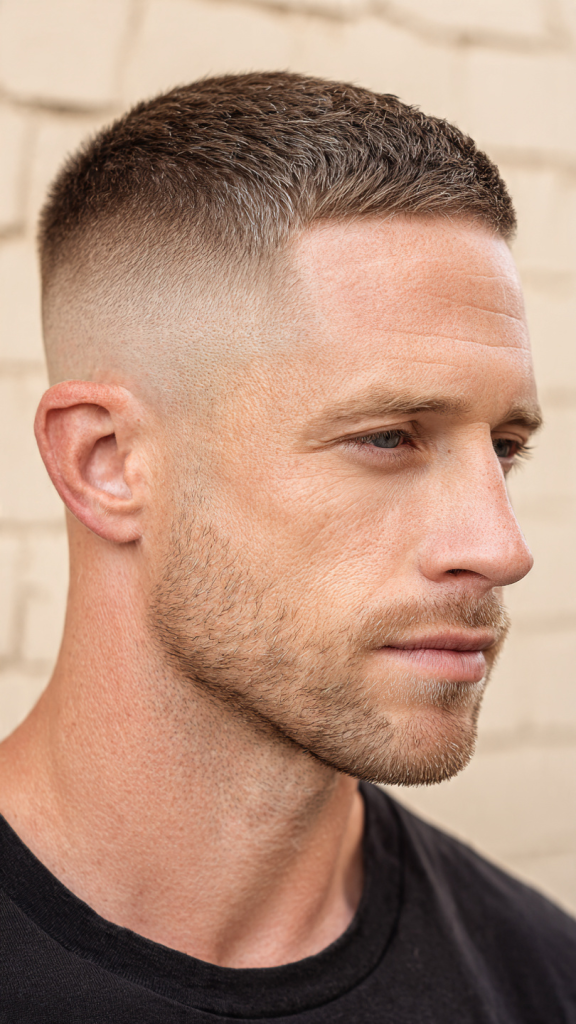
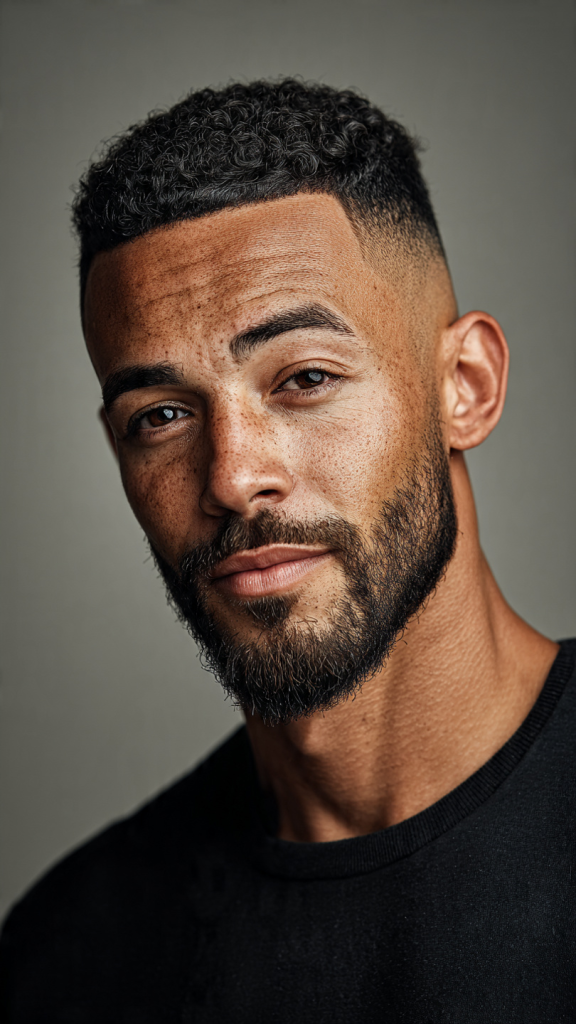
The low taper fade is a classic, conservative fade that starts just above the natural hairline around the ears. The hair is shortest at the very bottom (often faded to skin or a #1 guard) and gradually lengthens as it moves up the head. The "low" refers to how low the fade starts—it doesn't go high up the sides.
Key Characteristics of a Low Taper Fade
| Characteristic | Description |
|---|---|
| Starting point | Just above the ear, following the natural hairline |
| Shape around ear | Straight or slightly arched (not curved down) |
| Height | Low—typically 1–2 inches above the ear |
| Transition | Gradual and subtle |
| Back of head | Tapers down to the nape in a straight or slightly curved line |
| Overall vibe | Professional, clean, conservative |
Who Looks Good with a Low Taper Fade?
The low taper fade is universally flattering because it's subtle. It works particularly well for:
- Professional environments – Conservative enough for suits and ties
- Round faces – The low placement doesn't add extra height that can emphasize roundness
- Older men – A more classic, age-appropriate fade
- Thinning hair – The subtle transition doesn't draw attention to sparse areas
- First-time fade clients – A gentle introduction to faded haircuts
How to Style a Low Taper Fade
The beauty of the low taper fade is that it works with virtually any hairstyle on top:
- Short crops – The fade keeps the sides clean without overwhelming the top
- Pompadours – The low fade provides contrast without competing for attention
- Slicked-back – Clean sides keep the focus on the top
- Textured quiffs – The subtle fade adds polish without being dramatic
- Buzz cuts – A low taper fade adds dimension to a uniform buzz
Maintenance for a Low Taper Fade
- Fade refresh: Every 7–10 days
- Top trim: Every 3–5 weeks
- Difficulty to maintain at home: Moderate (taper lines need precision)
For men with thinning hair, the low taper fade's subtle transition can be especially flattering. These haircuts for thinning hair men over 50 offer additional options.
What Is a Drop Fade?
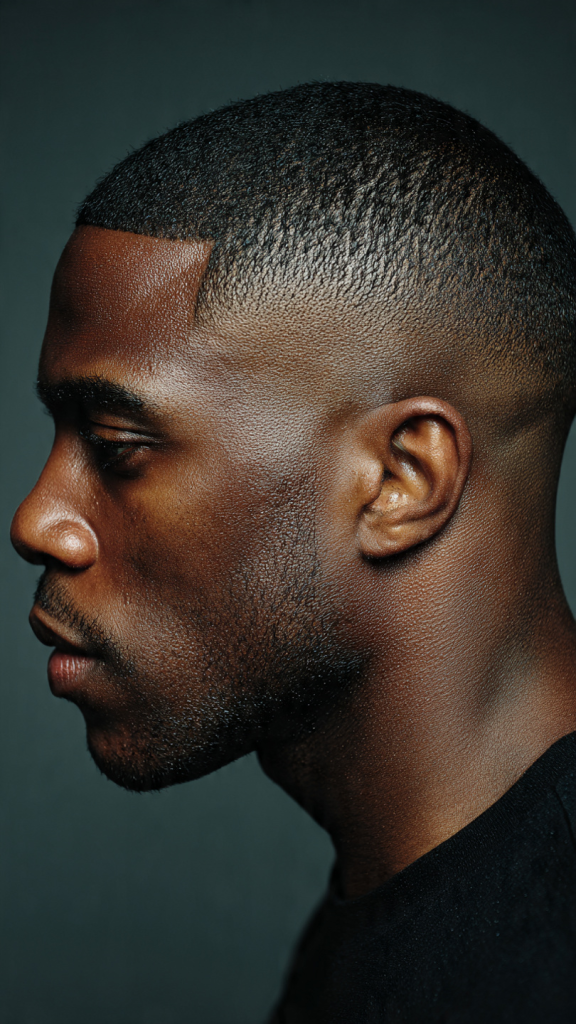
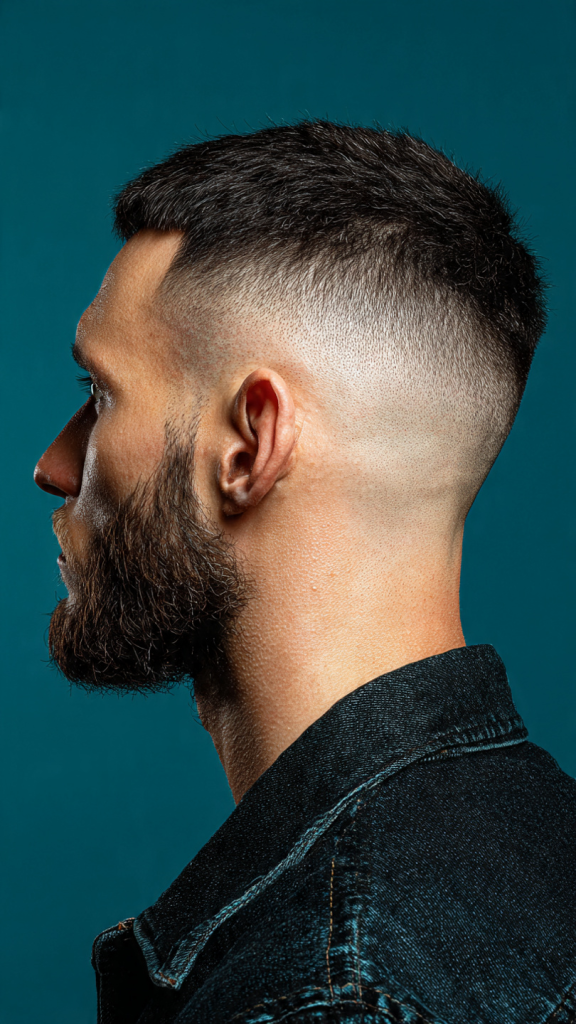
The drop fade is a more modern, dramatic variation. Instead of following a straight or slightly arched line around the ear, the fade "drops" down behind the ear, curving toward the nape of the neck. The result is a fade that sits higher on the sides but drops lower in the back, creating a distinctive curved shape.
Key Characteristics of a Drop Fade
| Characteristic | Description |
|---|---|
| Starting point | High on the sides (mid to high fade) |
| Shape around ear | Curves downward behind the ear |
| Height | Higher on sides, drops lower in back |
| Transition | More dramatic than a low taper |
| Back of head | Curves down to hug the nape |
| Overall vibe | Modern, edgy, stylish |
The "Drop" Explained
The "drop" refers to how the fade line drops down behind the ear. In a standard fade, the fade line continues in a relatively straight line around the head. In a drop fade, the line:
- Sits higher on the sides (mid to high placement)
- Curves down behind the ear
- Drops lower toward the nape of the neck
This creates a more dramatic, sculpted look that emphasizes the shape of the head.
Who Looks Good with a Drop Fade?
The drop fade is more striking and works best for:
- Younger men – The edgy look suits a modern aesthetic
- Square or oval faces – The drop adds shape without over-emphasizing width
- Men with thick hair – The dramatic fade contrasts well with dense top hair
- Those who want attention – Drop fades get noticed
- Creative professionals – Edgy enough for style-forward industries
How to Style a Drop Fade
The drop fade pairs well with bolder styles on top:
- Pompadours – The drop adds drama that complements the height
- Spiky crops – Edgy top + edgy fade = cohesive look
- Curly tops – The drop fade contrasts beautifully with natural texture
- Longer styles – The drop fade keeps sides clean while top stays long
- Hard parts – A shaved part complements the dramatic fade line
Maintenance for a Drop Fade
- Fade refresh: Every 5–7 days (the "drop" shape needs precision)
- Top trim: Every 3–5 weeks
- Difficulty to maintain at home: Difficult (the curved shape requires skill)
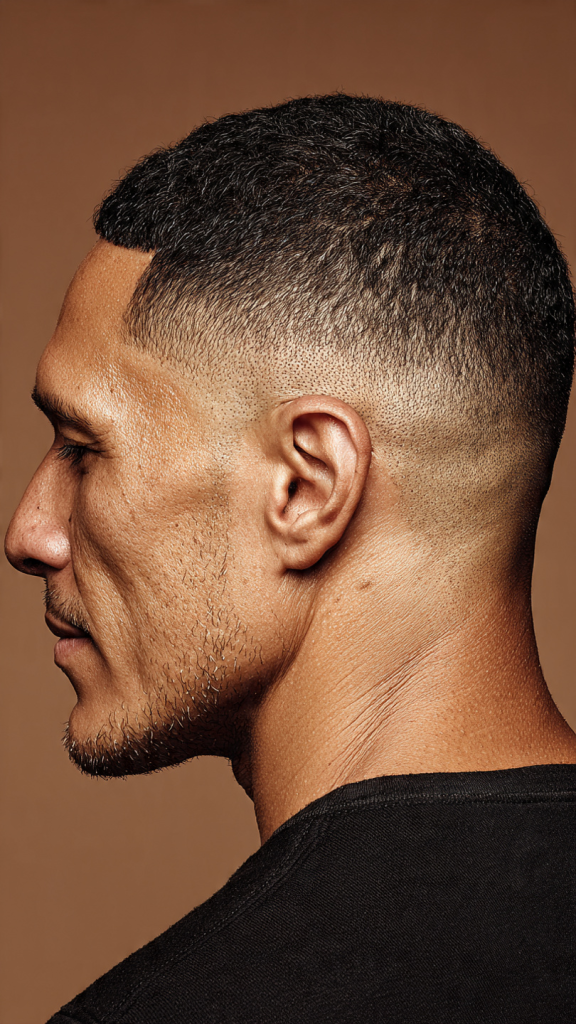
Low Taper Fade vs. Drop Fade: Direct Comparison
| Feature | Low Taper Fade | Drop Fade |
|---|---|---|
| Starting height | Low (just above ear) | Mid to high |
| Shape around ear | Straight or slightly arched | Curved downward |
| Back of head | Straight or slight curve | Drops lower at nape |
| Dramatic effect | Subtle, conservative | Bold, edgy |
| Best for face shape | All, especially round | Oval, square |
| Professional setting | Yes | Maybe (depending on industry) |
| Maintenance frequency | Every 7–10 days | Every 5–7 days |
| Difficulty to execute | Moderate | High (requires skill) |
| Best with | Any top style | Bolder top styles |
Visualizing the Difference
The Fade Line Path
Imagine tracing the line where the fade transitions from short to long:
Low Taper Fade:
- Starts 1 inch above the ear
- Travels in a relatively straight line around the head
- May have a slight arch over the ear
- Stays at a consistent height around the back
Drop Fade:
- Starts higher on the sides (2–3 inches above the ear)
- Curves DOWNWARD behind the ear
- "Drops" to a lower point at the nape
- Creates a U-shaped or horseshoe-like fade line
The Side Profile
Low Taper Fade: The fade line is low and subtle. You notice clean sides but the fade itself doesn't scream for attention.
Drop Fade: The fade line is higher and curves down. The "drop" behind the ear is immediately noticeable and creates a distinctive silhouette.
The Back View
Low Taper Fade: The back tapers down in a straight or slightly curved line to the nape. It looks clean and polished.
Drop Fade: The back has a more dramatic "V" or "U" shape, with the fade dropping lower at the center of the nape.
For men with round faces who want to maximize slimming effects, these men's haircuts for round face over 50 offer additional strategies.
Which Should You Choose?
Choose a Low Taper Fade If:
✅ You work in a conservative professional environment
✅ You have a round face and want to avoid adding height
✅ You're older and prefer a classic, age-appropriate look
✅ You want a subtle fade that doesn't scream for attention
✅ You have thinning hair and don't want to emphasize it
✅ This is your first fade and you want to start subtle
✅ You prefer low-maintenance styles (can go longer between fade touch-ups)
Choose a Drop Fade If:
✅ You want a modern, edgy, stylish look
✅ You have an oval or square face shape
✅ You have thick hair that can support dramatic contrast
✅ You work in a creative or style-forward industry
✅ You're willing to commit to weekly fade touch-ups
✅ You want people to notice your haircut
✅ You're pairing it with a bolder top style (pompadour, spikey crop, curly top)
Fade Variations Within Each Category
Low Taper Fade Variations
| Variation | Description | Best For |
|---|---|---|
| Low skin fade | Fades to bare skin at the bottom | Sharp, clean look |
| Low bald fade | Fades to smooth shaved skin | Most dramatic low fade |
| Low shadow fade | Leaves a #0.5 or #1 shadow at the bottom | Subtle, natural look |
| Low temp fade | A low fade with a sharp, lined-up hairline | Clean, barbered finish |
Drop Fade Variations
| Variation | Description | Best For |
|---|---|---|
| Mid drop fade | Fade starts mid-way, drops behind ear | Balanced, versatile |
| High drop fade | Fade starts high, dramatic drop | Boldest drop fade |
| Skin drop fade | Fades to skin with a visible drop | Maximum contrast |
| Burr drop fade | Leaves short stubble (#1 guard) in the drop | Softer drop effect |
Common Mistakes to Avoid
Low Taper Fade Mistakes
| Mistake | Why It's a Problem | How to Avoid |
|---|---|---|
| Taking it too high | Becomes a mid fade, not low | Specify "low taper" and show a photo |
| Uneven around ears | Looks sloppy | Ask barber to check symmetry |
| Blending too high | Loses the "taper" effect | Ensure the transition is gradual |
Drop Fade Mistakes
| Mistake | Why It's a Problem | How to Avoid |
|---|---|---|
| Drop too shallow | Doesn't look like a drop fade | Ask barber to emphasize the "drop" |
| Drop too extreme | Unnatural, cartoonish | Find a barber who specializes in drop fades |
| Uneven drop on both sides | Visible asymmetry | Check both sides with a mirror |
| Blended poorly | Visible lines in the curve | Only go to experienced barbers |
How to Ask Your Barber for Each Fade
Asking for a Low Taper Fade
*"I'd like a low taper fade. Keep the fade low—just above my ears—and taper down to a [skin/shadow/#1] at the bottom. I want a subtle, clean transition with no harsh lines. The top can stay [state length/style]."*
Key phrases to use:
- "Low taper fade"
- "Just above the ears"
- "Subtle transition"
- "No harsh lines"
Asking for a Drop Fade
"I'd like a drop fade. Start the fade [mid/high] on the sides, and make sure it drops down behind my ears. I want the fade to be visible—a clean, sharp drop to [skin/shadow] at the bottom. Keep the top [state length/style]."
Key phrases to use:
- "Drop fade"
- "Drop behind the ears"
- "Clean, sharp drop"
- "Make sure the drop is visible"
Best Practice for Both
ALWAYS bring a reference photo. Fade terminology varies by region and barber. A photo eliminates any confusion.
Quick Reference Card
| Low Taper Fade | Drop Fade | |
|---|---|---|
| Height | Low (just above ear) | Mid to high |
| Shape | Straight/arched | Curved down |
| Drama | Subtle | Bold |
| Maintenance | Every 7–10 days | Every 5–7 days |
| Professional | Yes | Maybe |
| Best for face | Round, all | Oval, square |
| Best with | Any top style | Bolder top styles |
Final Thoughts
Choosing between a low taper fade and a drop fade comes down to your personal style, face shape, and lifestyle. The low taper fade is classic, conservative, and universally flattering—perfect for professional settings and first-time fade clients. The drop fade is modern, edgy, and attention-grabbing—ideal for those who want their haircut to make a statement. Both require skilled barbers and regular maintenance, but the right choice will leave you looking sharp, confident, and perfectly styled. Take this guide to your next appointment, bring reference photos, and communicate clearly. Your perfect fade is waiting.