The best wood carving glove is a snug, cut-resistant knit glove worn on the hand that holds the wood. It will not stop a hard stab, but it turns most slips of the knife into nothing worse than a fright. Pair it with a leather thumb guard or safety tape on the thumb of your knife hand, which is where paring cuts end. Fit matters more than brand: a loose glove costs you control.
The picks at a glance
| # | Product | Type | Material (as listed) | Grip | Best for |
|---|---|---|---|---|---|
| 1 | NoCry Cut Resistant Gloves | Glove | Cut-resistant knit | Silicone dots | The best all-round carving glove here |
| 2 | DEX FIT Level 5 Cut Resistant Gloves | Glove | UHMWPE, glass fibre, nylon, spandex; nitrile coating | Coated palm | Maximum grip and dexterity |
| 3 | DOWELLIFE Cut Resistant Gloves | Glove | High-elastic nylon blend | None | A light, comfortable basic glove |
| 4 | FORTEM Cut Resistant Gloves | Glove | HPPE and nylon, 13-gauge | None | A snug fit in a range of sizes |
| 5 | Stark Safe Cut Resistant Gloves | Glove | Cut-resistant knit | Light | Lowest-cost option |
| 6 | RingSun Leather Thumb Guard | Thumb guard | Full-grain leather | n/a | Knife-hand thumb, for paring cuts |
| 7 | BeaverCraft Cut Resistant Tape | Tape | Self-adhering wrap, pack of six | n/a | Fingers and thumbs, with full feel |
| 8 | Cut Resistant Finger Sleeves | Sleeves | HPPE | n/a | Individual fingers; layering |
Which hand, and do you need one at all?
- Wear the glove on your holding hand, the one gripping the wood. That is the hand the blade travels towards when it slips. Most carvers leave the knife hand bare for feel and control.
- Protect the knife-hand thumb with a thumb guard or tape. In a paring cut you draw the blade towards that thumb.
- Beginners should wear one. Experienced carvers sometimes go without, relying on technique. A glove costs little and removes most of the risk while you learn.
What cut levels mean
Glove packaging quotes one of two standards, and "Level 5" on its own tells you less than it seems to.
| Standard | Scale | What to look for |
|---|---|---|
| ANSI/ISEA 105 (North America) | A1 to A9 | A4 or above is ample for hand carving |
| EN 388 (Europe), older blade test | 1 to 5 | "Level 5" is the top of this older scale |
| EN 388 (Europe), current test | A to F | Level C or D and above |
Many inexpensive gloves say "Level 5" without naming the standard; it nearly always refers to the older EN 388 scale. Any of these ratings measures resistance to a slicing blade. None measures resistance to a point, so no knit glove is stab-proof. A carving knife pushed tip-first will go through. Treat the glove as a backup to good technique.
What to look for
- Fit. Snug, with no loose fabric at the fingertips. Measure your hand and check the maker's chart; sizing varies widely between brands.
- Cut rating, with the standard named.
- Grip. Silicone dots or a thin coating help you hold a smooth blank. Bare knit can be slippery on sanded wood.
- Dexterity. Thinner 13-gauge knits give more feel than thick ones.
- Washability. Most knit gloves can be machine washed; wood dust and sweat build up quickly.
- Sold singly or in pairs. You need only one for carving, so a pair gives you a spare.
Many of these gloves are sold as kitchen gloves for slicers and oyster knives. That does not matter; the cut-resistant fibre is the same.
The best wood carving gloves
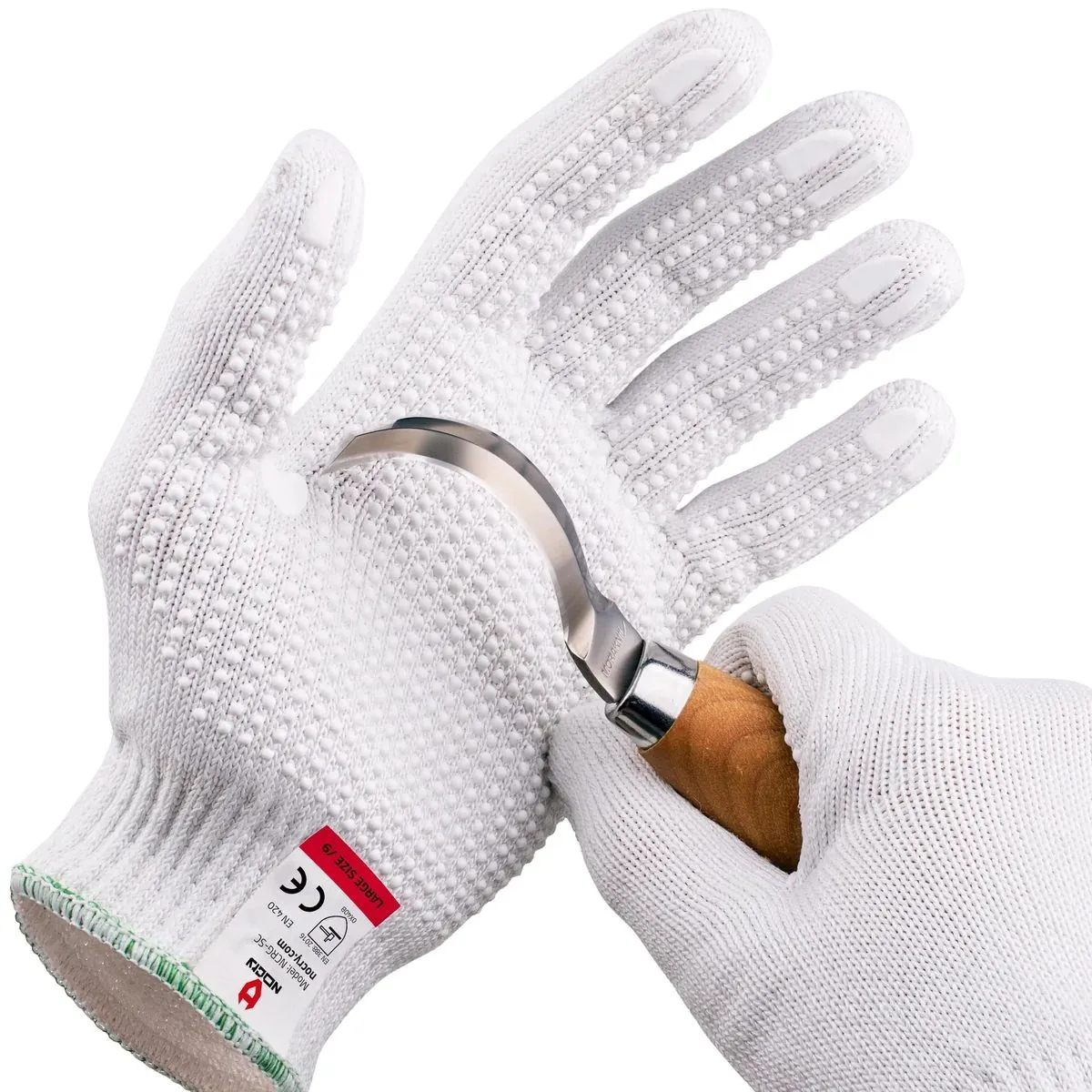
1. NoCry Cut Resistant Gloves
[Keep the existing NoCry image here]
A well-known cut-resistant knit glove with silicone dots across the palm and fingers, which give a secure hold on a smooth block. The knit is breathable and flexible enough for long sessions.
- Good: dependable cut protection; grip dots; comfortable and breathable; good freedom of movement.
- Less good: a little thicker than the thinnest gloves; light colours show dirt; sizes run large, so check the chart.
- Choose it if: you want one glove that does everything well.
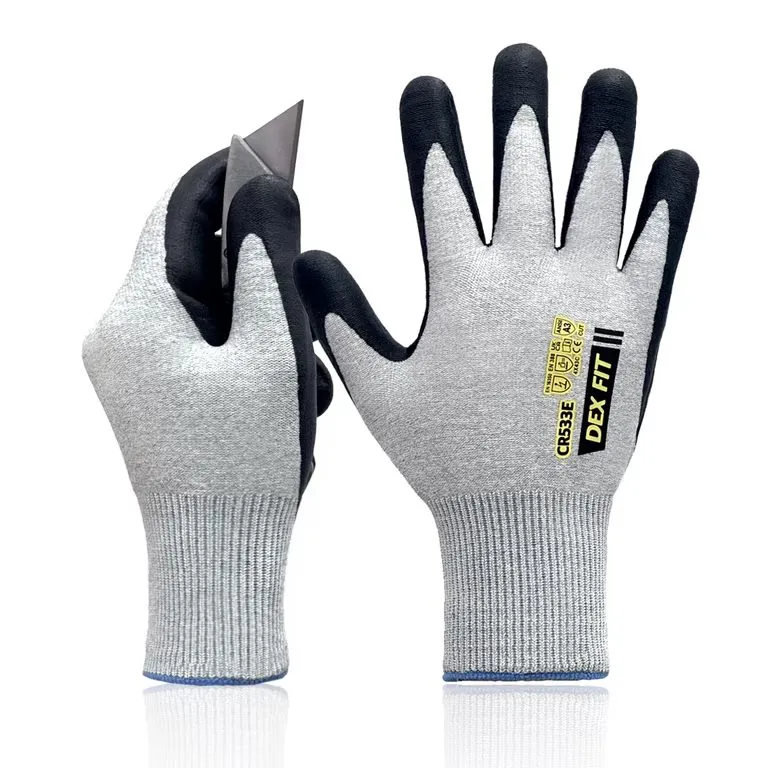
2. DEX FIT Level 5 Cut Resistant Gloves
[Keep the existing DEX FIT image here, with the corrected link and alt text]
A thin 13-gauge glove of UHMWPE, glass fibre, nylon and spandex with a foam nitrile coating on the palm and fingers. The coating gives the best grip of the five and the close fit keeps fingertip feel. The maker lists it as machine washable.
- Good: excellent grip; thin and dexterous; washable; touchscreen-friendly fingertips on many versions.
- Less good: the coating wears with heavy use and makes the palm less breathable.
- Choose it if: grip and fine control matter most to you.
3. DOWELLIFE Cut Resistant Gloves
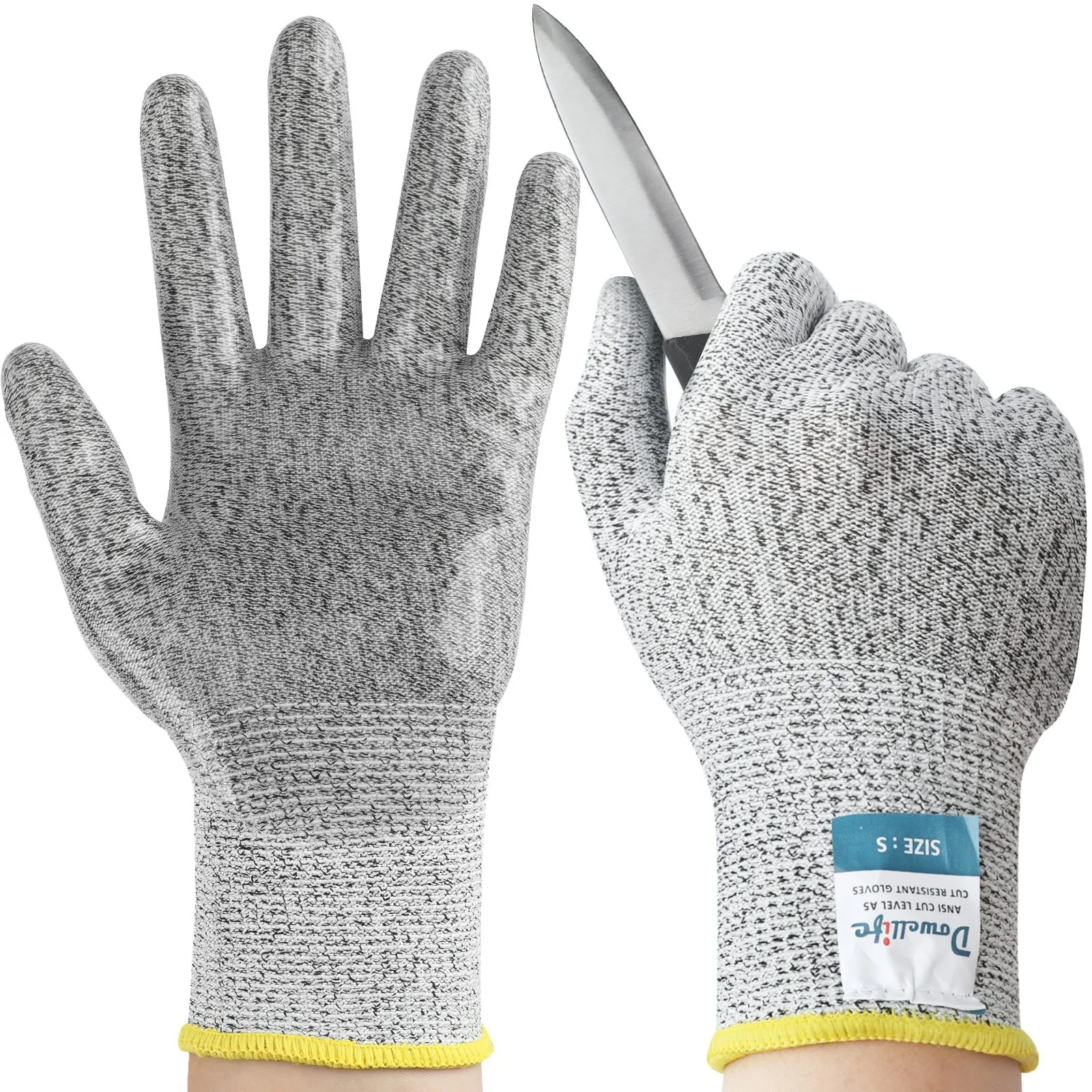
A light, stretchy knit glove that is comfortable and easy to clean. It is sold mainly for kitchen use, which is common for this type of glove.
- Good: light and comfortable; good dexterity; easy to wash and hang dry.
- Less good: no grip dots or coating, so it can slide on smooth wood; the knit can fray with hard use.
- Choose it if: you want a simple, inexpensive glove and mostly carve rough-sawn or textured blanks.
4. FORTEM Cut Resistant Gloves
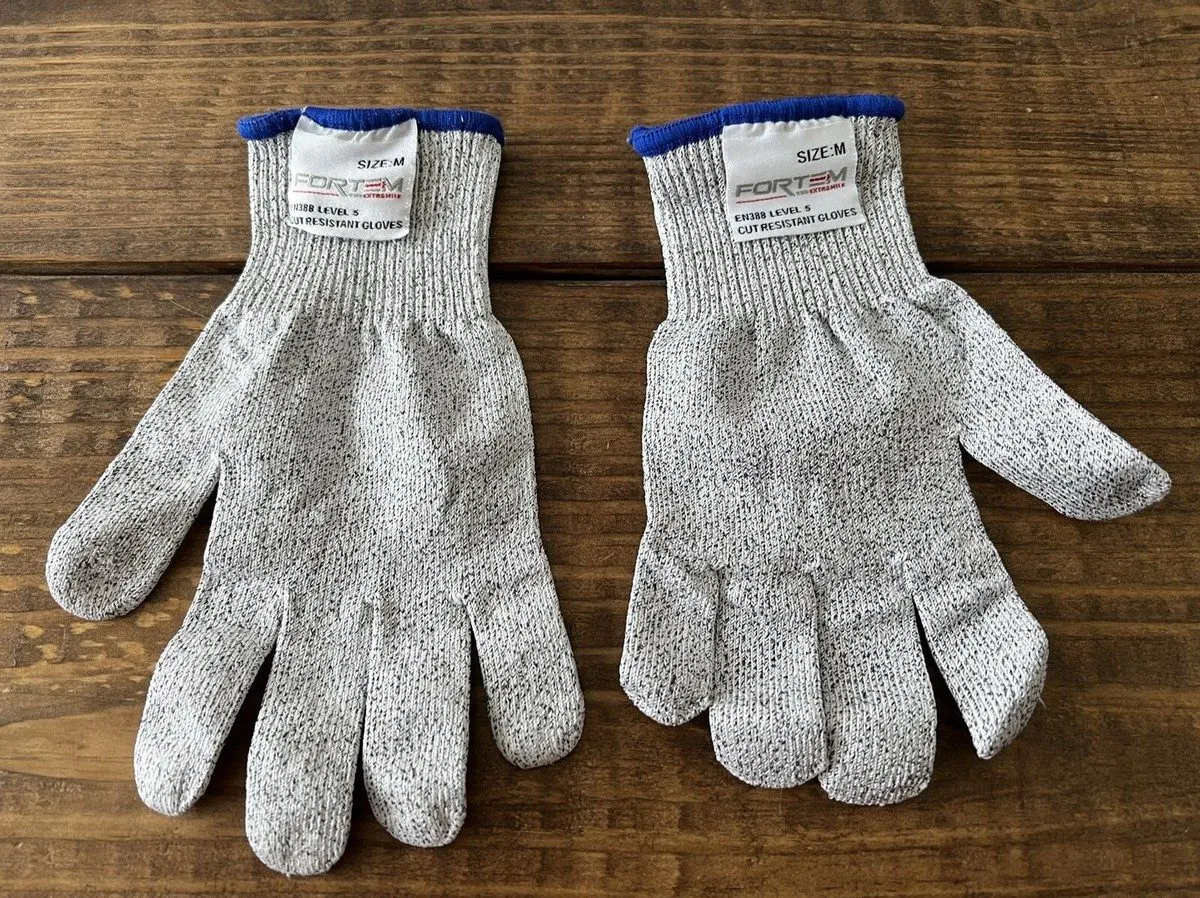
A 13-gauge seamless knit of HPPE and nylon, listed as EN 388 Level 5 and machine washable, in several sizes.
- Good: snug fit; light and breathable; washable; durable for the price.
- Less good: no grip pattern, so slightly slippery; can hold odours if not washed.
- Choose it if: you have found other gloves too loose and want a closer fit.
5. Stark Safe Cut Resistant Gloves
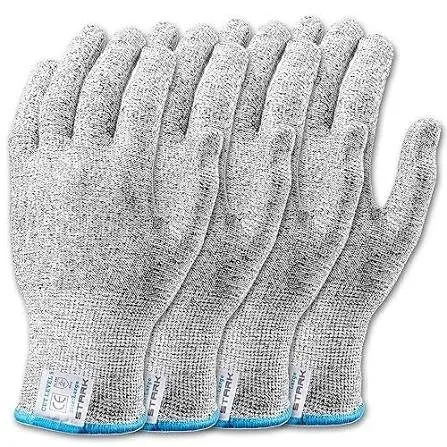
A basic knit glove listed as EN 388 Level 5, usually among the cheapest of its kind.
- Good: low cost; comfortable; adequate protection for hand carving.
- Less good: sizing is inconsistent; many buyers go up a size.
- Choose it if: you want protection for the least money, or a spare for a carving partner.
Thumb guards, tape and finger sleeves
These protect the knife hand, where a full glove gets in the way.
6. RingSun Leather Thumb Guard
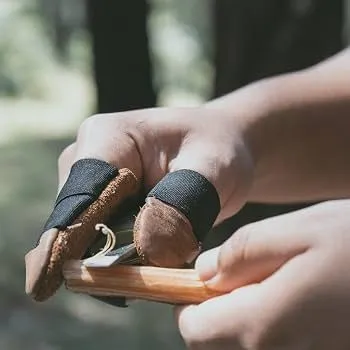
A stitched full-grain leather sleeve for the thumb. Leather is not rated for cut resistance, but it is thick enough to stop the light, controlled contact of a paring cut, and it lasts for years.
- Good: durable; comfortable once broken in; stays in place.
- Less good: not a rated cut-resistant material; reduces feel at the thumb tip; check the size.
- Choose it if: you use paring cuts a lot, which most whittlers do.
7. BeaverCraft Cut Resistant Tape
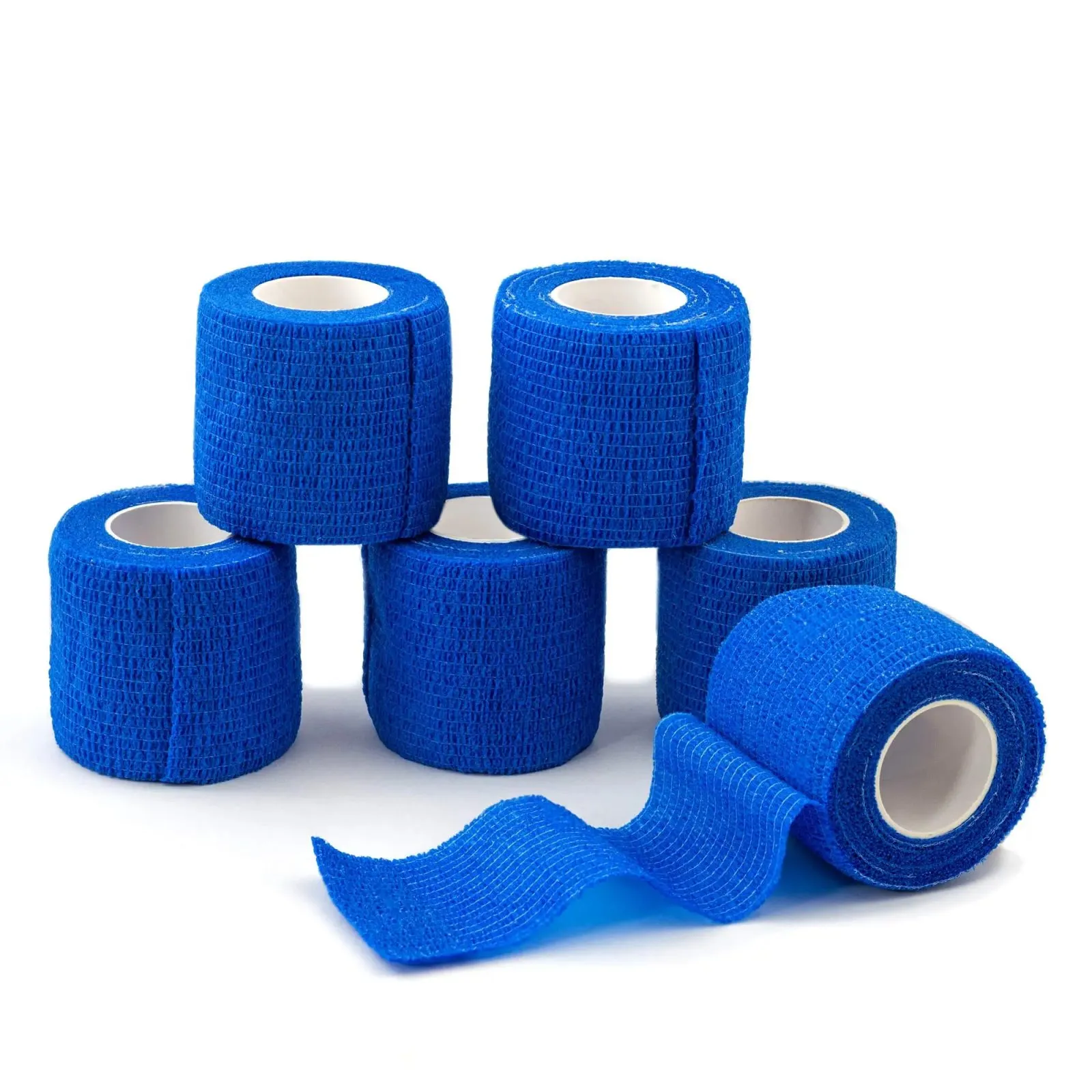
A self-adhering wrap, sold as a pack of six rolls, that you wind around a thumb or finger. It sticks to itself, not to skin, and can be layered where you want more protection.
- Good: fits any finger; keeps almost all your feel; cheap; reusable for a few sessions.
- Less good: thinner protection than a guard or glove; needs re-wrapping.
- Choose it if: you dislike gloves, or want protection on specific fingers.
8. Cut Resistant Finger Sleeves
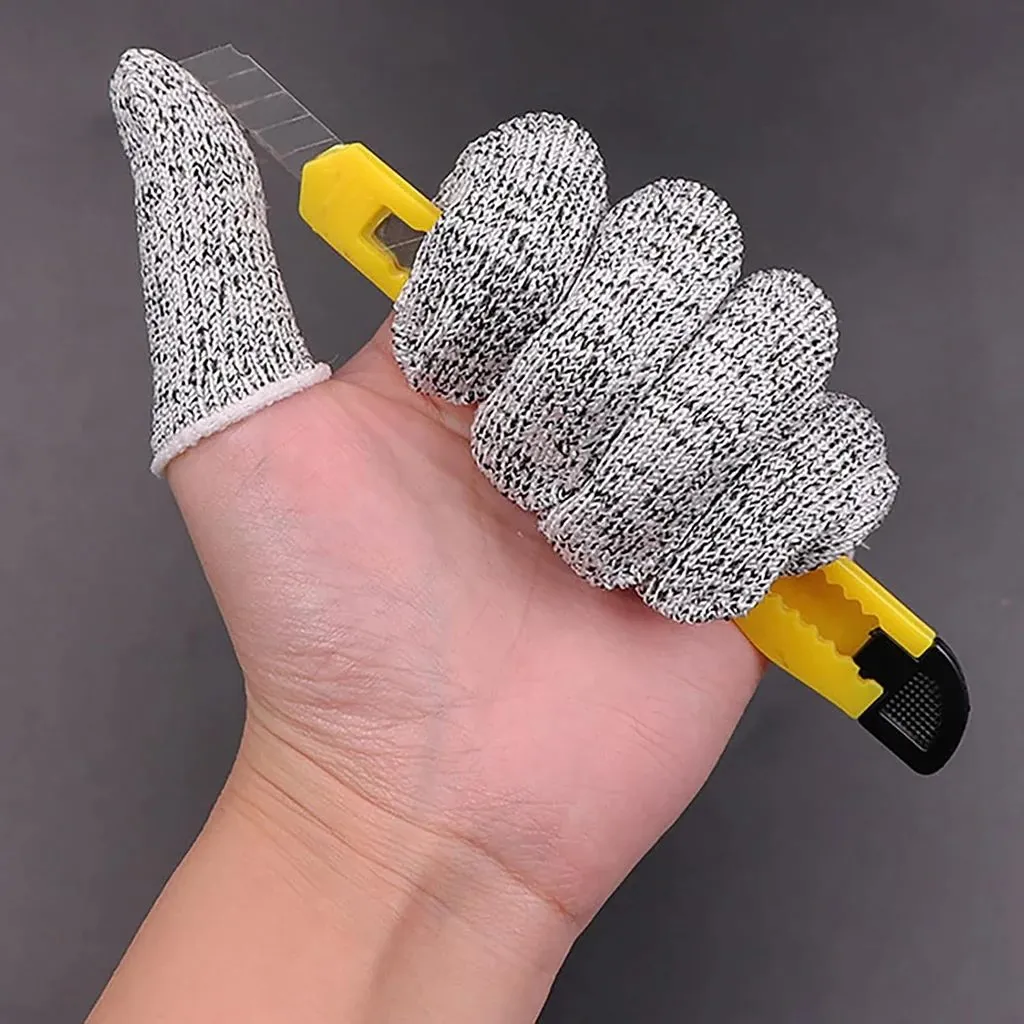
Knit HPPE tubes that slide over individual fingers. They are washable and reusable, and can be doubled up.
- Good: quick to put on; washable; protect only where needed.
- Less good: can slip off during work if loose; fingertip may be open, depending on the version.
- Choose it if: you want something faster than tape for the thumb and forefinger.
Using and caring for carving gloves
- Put the glove on the holding hand and a guard or tape on the knife-hand thumb before the first cut.
- Keep cutting away from the gloved hand where you can. The glove is for the slip you did not plan.
- Wash gloves when they get grimy; dirt and resin stiffen the knit. Air-dry unless the label allows a dryer.
- Replace a glove once it has been cut, has a hole, or the knit is fraying. Damaged fibres no longer protect.
- Do not wear gloves at rotating machines such as lathes, drill presses, bench grinders and table saws. A glove can catch and pull the hand in. Carving gloves are for hand tools only.
What a glove will not do
- Stop a stab from the tip of a knife or gouge.
- Protect against an axe or a mallet-driven chisel.
- Replace sharp tools, thin cuts and attention. Dull knives cause most carving injuries, because they need force.
Safe technique is covered in wood carving for beginners and wood carving tips for beginners.
FAQ
Do I need a glove for whittling?
It is strongly recommended for beginners. A cut-resistant glove on the holding hand prevents most of the common injuries.
Which hand does a carving glove go on?
The hand holding the wood. Protect the thumb of the knife hand with a thumb guard or tape.
Are cut-resistant gloves knife-proof?
No. They resist slicing well and stabbing poorly. A blade tip pushed straight in will pass through the knit.
What cut level do I need for wood carving?
ANSI A4 or higher, or EN 388 Level 5 on the older scale, is ample for hand carving.
Can I use leather work gloves instead?
They are better than nothing, but thick leather reduces your grip and feel, and ordinary leather is not rated for cut resistance. A thin cut-resistant knit protects better and handles better.
Are Kevlar gloves good for carving?
Yes. Kevlar (aramid) and HPPE are the two common cut-resistant fibres. HPPE gloves are usually thinner and cooler; both protect well.
Should carving gloves be tight or loose?
Snug. Loose fabric bunches, dulls your control and can catch the blade.
How long do carving gloves last?
With regular use and washing, many months to a few years. Replace them when cut or frayed.
The bottom line
Buy a snug cut-resistant glove for the holding hand and a thumb guard or tape for the knife hand. The NoCry is the best all-rounder of the five, the DEX FIT has the best grip, and the Stark Safe costs least. None of them makes a slip harmless, so keep the knife sharp and the cuts thin.
Read next
- The Best Woodcarving Knife for Beginners
- Best Whittling Kits
- Best Whittling Pocket Knives
- Storing Wood Carving Tools
- Wood Carving for Beginners
- What Knives Do I Need to Carve a Spoon?