Yes, you can whittle with almost any knife, as long as it is sharp. A plain pocket knife has been the whittler's tool for generations. Some knives make the job much harder, though. Large kitchen knives, serrated blades and thick survival knives are awkward and less safe. A short, thin, sharp blade with a comfortable handle works best, whether it is a pocket knife or a purpose-made whittling knife.
If you would rather buy the right tool from the start, see our guide to the best woodcarving knife.
What makes a knife good for whittling
| Feature | What to look for | Why |
|---|---|---|
| Blade length | Short, roughly 4 to 6 cm (1.5 to 2.5 in) | Your hand stays close to the cut, which gives control |
| Blade thickness | Thin | A thin blade slices. A thick one wedges and splits the wood. |
| Edge | Plain and very sharp, with a low bevel angle | Needs less force and leaves a clean surface |
| Steel | Carbon steel, or a good stainless | Carbon steel sharpens easily and takes a keen edge |
| Handle | Fills the palm, no sharp corners | Reduces fatigue and blisters |
| Lock or fixed blade | A locking folder or a fixed blade | A blade that cannot fold on your fingers |
Sharpness matters most. A cheap knife that is properly sharp will out-carve an expensive one that is dull.
Which knives can you whittle with?
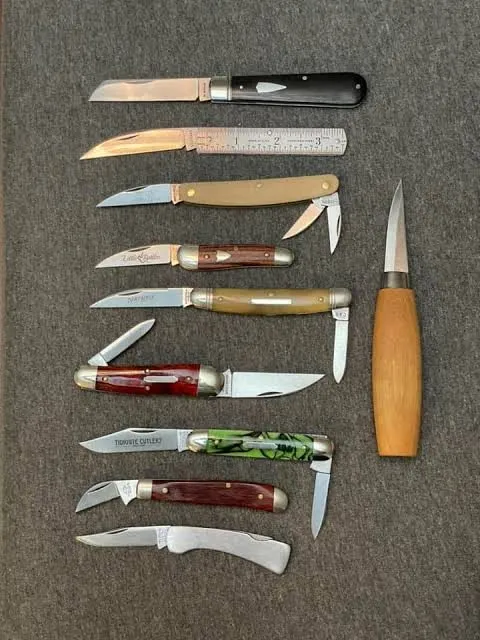
| Knife | Works? | Notes |
|---|---|---|
| Whittling or carving knife | Best | Made for the job |
| Pocket knife | Yes | The classic choice. A locking blade is safer. |
| Swiss Army knife | Yes | The small blade is good for detail. Most models do not lock. |
| Bushcraft knife | For roughing | Good for removing bulk and carving green wood. Too big for detail. |
| Kitchen paring knife | In a pinch | Thin and short, but the handle and steel are not made for it |
| Chef's knife | No | Far too long to control |
| Utility or box knife | Limited | Sharp, but the thin blade can snap. Fine for small, shallow cuts. |
| Craft knife | Limited | Good for fine detail in soft wood. The blades break under pressure. |
| Serrated knife | No | It saws and tears |
| Thick survival or tactical knife | No | The edge is too thick to slice |
Can you whittle with a pocket knife?
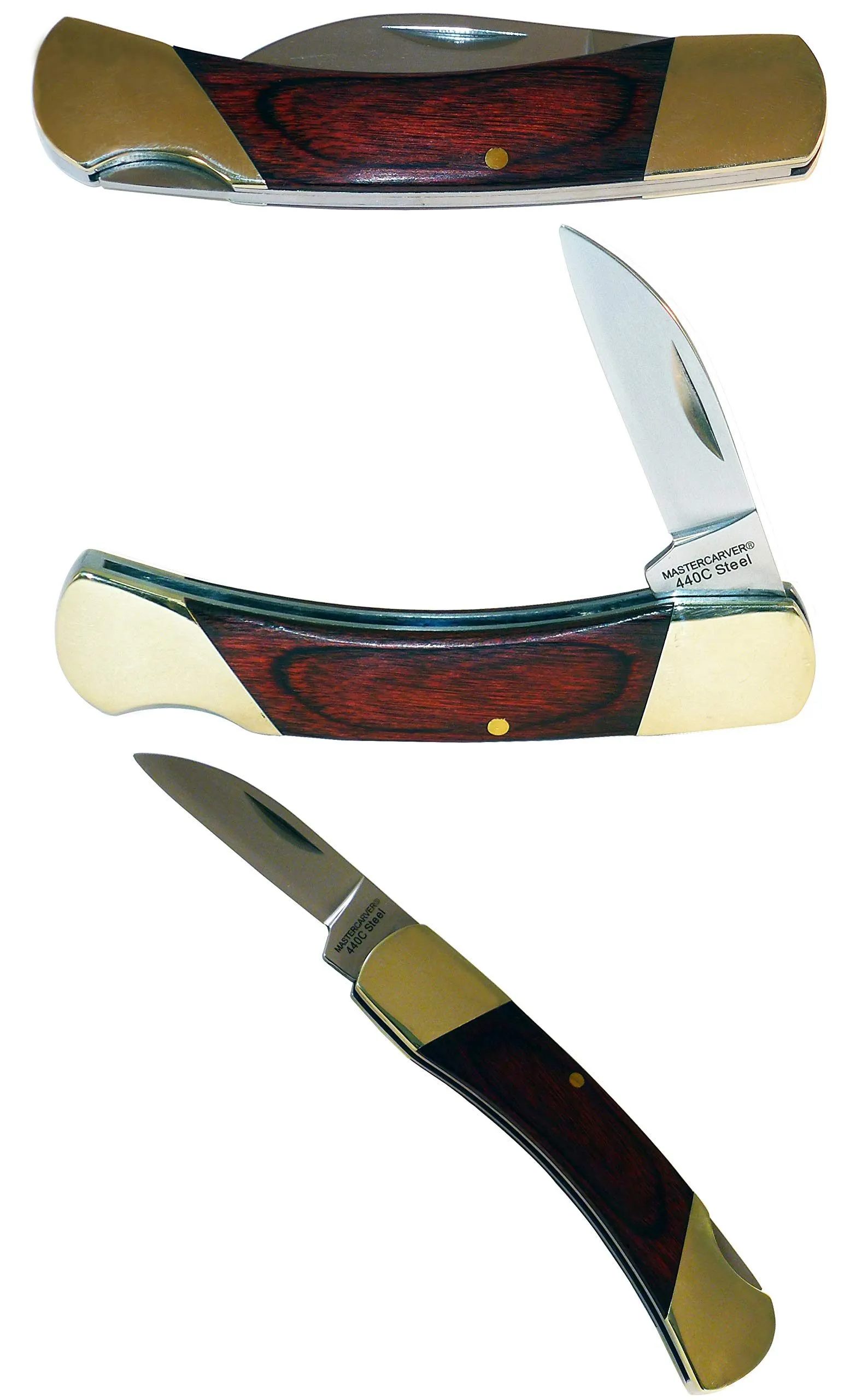
Yes. A pocket knife is the traditional whittling tool, and many experienced whittlers still prefer one. It folds, so you can carry it anywhere and whittle on a walk or at a campsite.
[Keep the existing GEC pocket whittler image here. Alt text: GEC pocket whittler knife]
Look for a knife with two or three blades of different shapes: a larger one for removing wood and a small one for detail. The Flexcut Tri-Jack is a folding knife made for whittling, with three carving blades.
[Keep the existing whittling with a pocket knife image here. Alt text: whittling a piece of wood with a pocket knife]
Pocket knife safety
- Prefer a locking blade. A non-locking blade can fold onto your fingers.
- Do not push the tip straight into the wood with a non-locking knife. That is the motion that closes the blade.
- Open one blade at a time.
- Close it carefully. Hold the handle by its sides, keep fingers out of the slot and fold the blade with your palm.
For specific models, see our guide to whittling pocket knives.
Can you whittle with a kitchen knife?
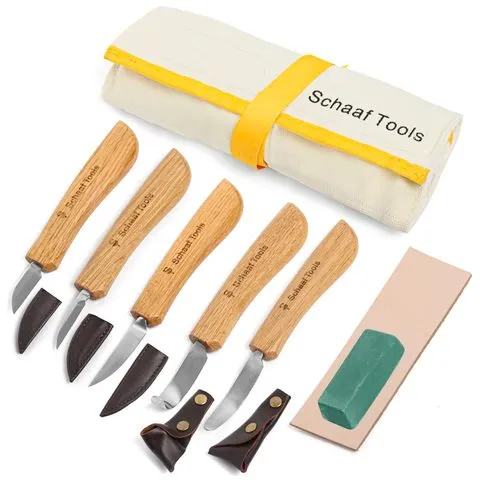
Only just. A small paring knife will shape soft wood, but kitchen knives are built to slice food. The blades are usually too long, the edges are ground for a different job and the handles are not shaped for carving grips. A chef's knife is unsafe for whittling because you cannot control the tip.
If a paring knife is all you have, use it on soft wood for simple shapes, and expect to sharpen it often.
Can you whittle with a utility knife or craft knife?
For light work, yes. Both are very sharp and cheap. The blades are thin and brittle, so they can snap if you twist or lever them. Keep cuts shallow, wear eye protection and use them for detail, not for removing bulk.
Fixed blade or folding knife?
| Fixed blade | Folding knife | |
|---|---|---|
| Safety in use | Cannot fold on your hand | Safe if it locks |
| Comfort | Fuller handle, better for long sessions | Slimmer handle |
| Carrying | Needs a sheath or blade cover | Folds into a pocket |
| Blade choice | One blade per knife | Often two or three |
| Best for | Carving at home or at a bench | Whittling on the go |
Neither is better. Choose a fixed blade if you carve mostly at home, and a folder if you want to carry it.
Should you buy a whittling knife?
If you plan to whittle more than once or twice, yes. A purpose-made knife costs little, comes sharp and is easier to control. That means fewer slips and faster progress.
[Keep the existing Flexcut Carving Knives Starter Set product box here. Update its link to https://www.amazon.com/dp/B003Z7XNUO?tag=borrowedtime-20]
The Flexcut Carving Knives Starter Set has a larger knife for roughing out and two smaller ones for detail.
[Keep the existing Flexcut three-knife set image here. Alt text: Flexcut three-knife starter set with a basswood block]
Three brands are popular with beginners:
- Flexcut: ergonomic handles and blades that arrive ready to use.
- BeaverCraft: low-cost knives and kits aimed at beginners.
- Morakniv: a long-established Swedish maker. The Mora 106 is a classic carving knife.
A kit can be better value than a single knife. See the best whittling kits. For spoons you also need a hook knife. See what knives you need to carve a spoon.
How to make an ordinary knife work
- Sharpen it properly. Hone the edge on a fine stone, then strop it on leather until it shaves a sliver from the end grain of soft wood without crushing it. See how to sharpen your wood carving tools.
- Choose soft wood. Basswood is the standard. See the best wood for carving.
- Take thin cuts. Thin shavings need less force and give more control.
- Strop often. A few strokes every 20 minutes or so keep the edge keen.
- Wear a cut-resistant glove on the hand holding the wood, and consider a thumb guard on the knife hand. See the best wood carving gloves.
Four basic cuts
| Cut | How | Used for |
|---|---|---|
| Push cut | Push the blade away from you with the thumb of your other hand on the back of the blade | Controlled shaping |
| Paring cut | Draw the blade towards your thumb, like peeling an apple, with the thumb braced on the wood below the cut path | Detail and rounding |
| Stop cut | Press the edge straight in to make a line | Stopping a shaving at an exact point |
| V-cut | Two angled cuts that meet | Lines and grooves |
[Keep the existing Pinterest embed here if it still loads.]
Common problems
| Problem | Likely cause | Fix |
|---|---|---|
| Knife crushes or tears the wood | Dull edge | Hone and strop |
| Wood splits ahead of the blade | Blade too thick, or cut too deep | Take thinner cuts or use a thinner blade |
| Blade folds while cutting | Non-locking knife pushed tip-first | Use slicing cuts, or a locking or fixed blade |
| Hand aches or blisters | Thin or angular handle | Take breaks, wear a glove or use a knife with a fuller handle |
| No control over detail | Blade too long | Use a shorter blade and choke up towards the edge |
| Edge chips | Twisting or prying | Cut the chip free. Do not lever it out. |
Mistakes to avoid
- Whittling with a dull knife. It needs more force, and force causes slips.
- Using a long kitchen knife.
- Using a serrated blade.
- Cutting towards the hand that holds the wood.
- Starting on hard wood.
- Prying chips out with the tip.
FAQ
Do you need a special knife to whittle?
No. Any short, sharp, plain-edged knife will work. A purpose-made whittling knife is easier and safer to use.
Can you whittle with a Swiss Army knife?
Yes. The small blade is good for detail. Most models do not lock, so use slicing cuts and avoid pushing the tip into the wood.
Can you whittle with a kitchen knife?
A small paring knife will manage simple shapes in soft wood. Larger kitchen knives are too long to control safely.
Can you whittle with a box cutter?
For small, shallow cuts in soft wood. The blade is thin and can snap, so do not twist it or cut deep.
What is the difference between a whittling knife and a pocket knife?
A whittling knife is usually a fixed blade with a short, thin blade and a full handle. A pocket knife folds and is made for general use. See pocket knife vs whittling knife vs regular knife.
How sharp does a whittling knife need to be?
Sharp enough to slice a thin shaving from the end grain of soft wood without crushing it.
Is stainless or carbon steel better for whittling?
Carbon steel is easier to sharpen and takes a very keen edge, but it rusts if left damp. Good stainless is fine and needs less care.
What is the best wood for a beginner to whittle?
Basswood. It is soft, even-grained and easy to cut in any direction.
The bottom line
You can start whittling today with a sharp pocket knife and a piece of soft wood. If you enjoy it, buy a purpose-made whittling knife. It is a small cost for a tool that is easier to control and safer to use. Whatever knife you choose, keep it sharp.
Read next
- Best Woodcarving Knife
- Best Whittling Pocket Knives
- Best Whittling Kits
- Best Wood Carving Gloves
- How to Sharpen Your Wood Carving Tools
- Carving vs Whittling
- Wood Carving Tips for Beginners
- Best Wood for Carving