
The best Japanese wood carving tools for most beginners are a small set of carving knives and gouges with laminated carbon steel blades, plus a kiridashi knife for marking and trimming. Add one or two nomi (bench chisels) only if you also cut joints or flatten backgrounds with a mallet. You do not need a large or expensive set to start.
This guide explains what the main Japanese carving tools are, lists eight sets and single tools to consider, and shows how to choose and look after them. If you only want one knife to begin with, start with our guide to the best woodcarving knife. For saws, planes and marking tools, see Japanese woodworking hand tools 101.
What makes Japanese carving tools different
Japanese and Western carving tools do the same jobs. The difference is in how they are built.
- Laminated blades. Most traditional Japanese blades are two layers forge-welded together: a thin layer of very hard carbon steel for the edge, backed by softer iron or mild steel. The hard layer takes a fine edge. The soft layer absorbs shock and makes sharpening quicker.
- Hollow backs. Japanese chisels have a shallow hollow ground into the flat back. Only the rim touches the stone, so flattening the back takes far less work.
- Hooped handles. A nomi has a blade, a tapered ferrule, a wooden handle and a steel hoop at the top. The hoop stops the handle splitting when you strike it with a hammer.
- Harder steel. Japanese edge steels are usually harder than Western chisel steels. They hold an edge longer, but the edge is more brittle. Never lever or twist with them.
- Carbon steel rusts. Most are not stainless. They need to be dried and oiled after use.
The main types of Japanese carving tool
| Tool | What it is | Best for |
|---|---|---|
| Chokokuto | Small carving knives and gouges with straight wooden handles, sold in sets of five to twelve | Relief carving, woodblock printing, detail work |
| Hangi-to | Angled knife from a woodblock set | Outlining and stop cuts |
| Maru-to (U-gouge) | Round-profile gouge | Scooping and clearing waste |
| Sankaku-to (V-tool) | V-profile gouge | Lines, lettering, hair and fur |
| Hira-to / aisuki | Flat chisel, square or rounded | Levelling backgrounds |
| Kiridashi | Single-bevel utility knife with no separate handle | Marking, trimming, whittling small details |
| Oire nomi | Hooped bench chisel, struck with a hammer | Joinery, chopping, heavier waste removal |
A chokokuto set covers most hand carving. Nomi are bench chisels first and carving tools second. They earn a place if your carving involves flat work, lettering backgrounds or joints.
Steel names you will see
| Name | What it means |
|---|---|
| White steel (shirogami) | Very pure carbon steel. Takes the keenest edge and is the easiest to sharpen. |
| Blue steel (aogami) | White steel with added tungsten and chromium. Holds its edge longer and is a little harder to sharpen. |
| SK steel (SK2, SK5) | Standard Japanese carbon tool steel. Common in budget and mid-range sets. |
| Damascus or multi-layer | A decorative layered pattern in the soft backing. It affects looks, not cutting. |
For a first set, the steel name matters less than how well you keep the edge sharp.
8 Japanese wood carving tools to consider
| # | Tool | Type | Best for |
|---|---|---|---|
| 1 | KAKURI Woodblock Carving Tool Set, 7 pieces | Carving set | Beginners, woodblock and relief work |
| 2 | Shoto Wood Carving Knives, 7 pieces | Carving set | A step up with a hard case |
| 3 | Bright Hobby Wood Carving Tools, 12 pieces | Carving set | Low-cost starter, soft materials |
| 4 | KAKURI Kiridashi Knife | Knife | Marking, trimming, small whittling |
| 5 | RIGORO Oire Nomi, 12 mm | Single bench chisel | Trying a nomi without buying a set |
| 6 | Grizzly G7095 Japanese Chisel, ½ inch | Single bench chisel | Budget single chisel |
| 7 | KAKURI Chisel Set, 6 pieces | Bench chisel set | Serious joinery and flat work |
| 8 | KAKURI Woodworking Tool Set, 8 pieces | General woodworking kit | Carpentry, not carving |
Product details below come from the makers' listings. Check the listing before you buy, as sets and contents change.
Carving sets
1. KAKURI Japanese Woodblock Carving Tool Set, 7 pieces
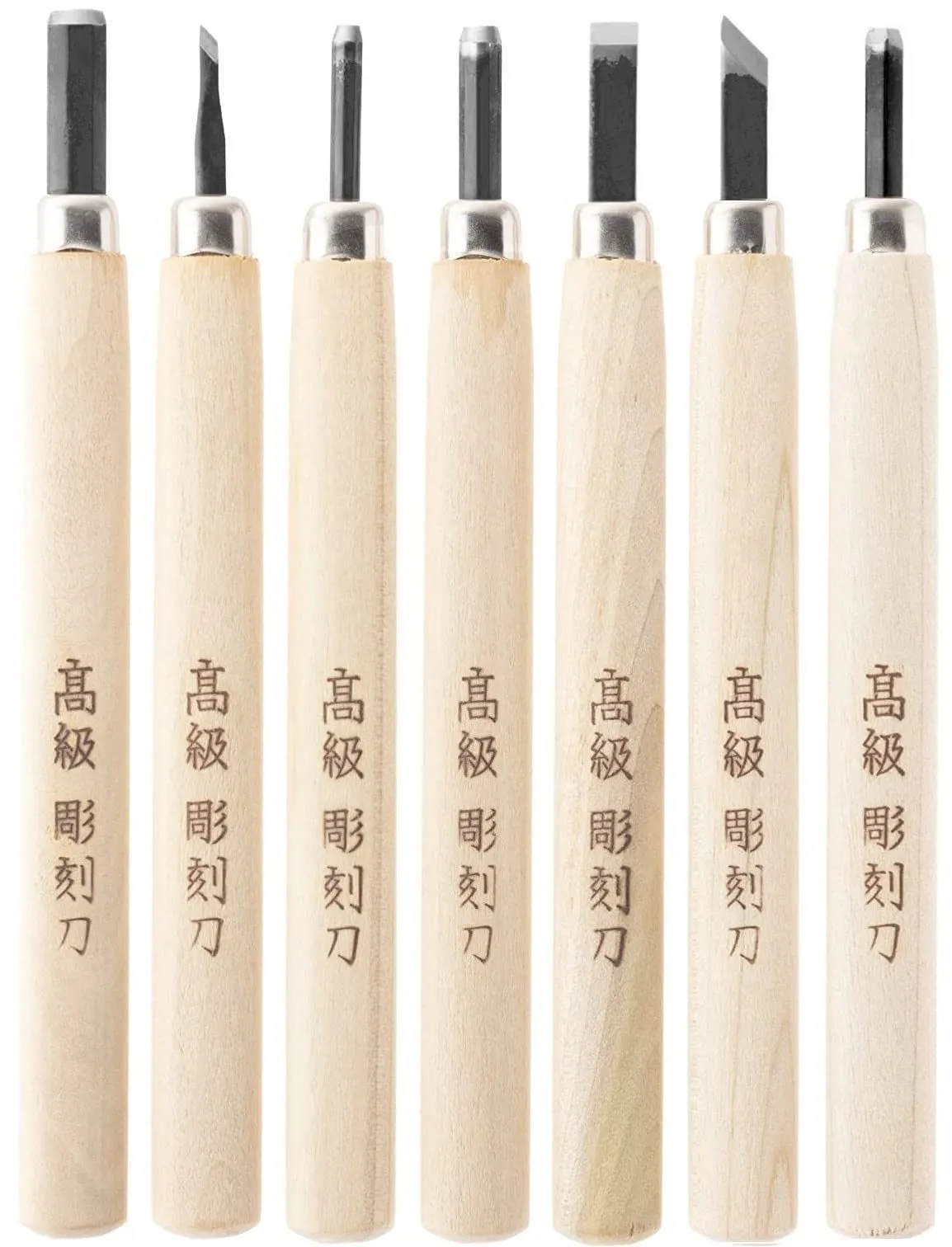
KAKURI Japanese Woodblock Carving Tool Set
[Keep the existing KAKURI woodblock set image here. Alt text: KAKURI seven-piece Japanese woodblock carving tool set]
A traditional woodblock set with seven blade shapes, Japanese carbon steel blades and plain wooden handles. A small whetstone is included.
- Good for: woodblock printing, relief carving and learning what each profile does.
- Watch for: the included whetstone is small. You will want a full-size stone before long.
2. Shoto Wood Carving Knives, 7 pieces
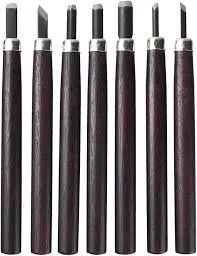
Shoto 7-Piece Wood Carving Knives
[Keep the existing Shoto set image here. Alt text: Shoto seven-piece Japanese wood carving knife set in its case]
Seven carving knives with two-layer steel blades, supplied in a hard case. The laminated blade is the main reason to choose it over a plain single-steel set.
- Good for: carvers who want laminated blades and a case that protects the edges.
- Watch for: like any carbon steel, the blades rust if put away damp.
3. Bright Hobby Wood Carving Tools for Beginners, 12 pieces
Bright Hobby 12-Piece Wood Carving Tools
Twelve gouges, chisels and detail tools with SK2 carbon steel blades, hardwood handles, blade caps and a carrying case. It also works on lino, soapstone and clay.
- Good for: a low-cost first set, and for older children carving under supervision.
- Watch for: expect to hone the blades before first use. The frosted caps hide the tips, so you have to uncap tools to find the one you want. A dot of paint on each handle solves it.
Knife
4. KAKURI Kiridashi Knife
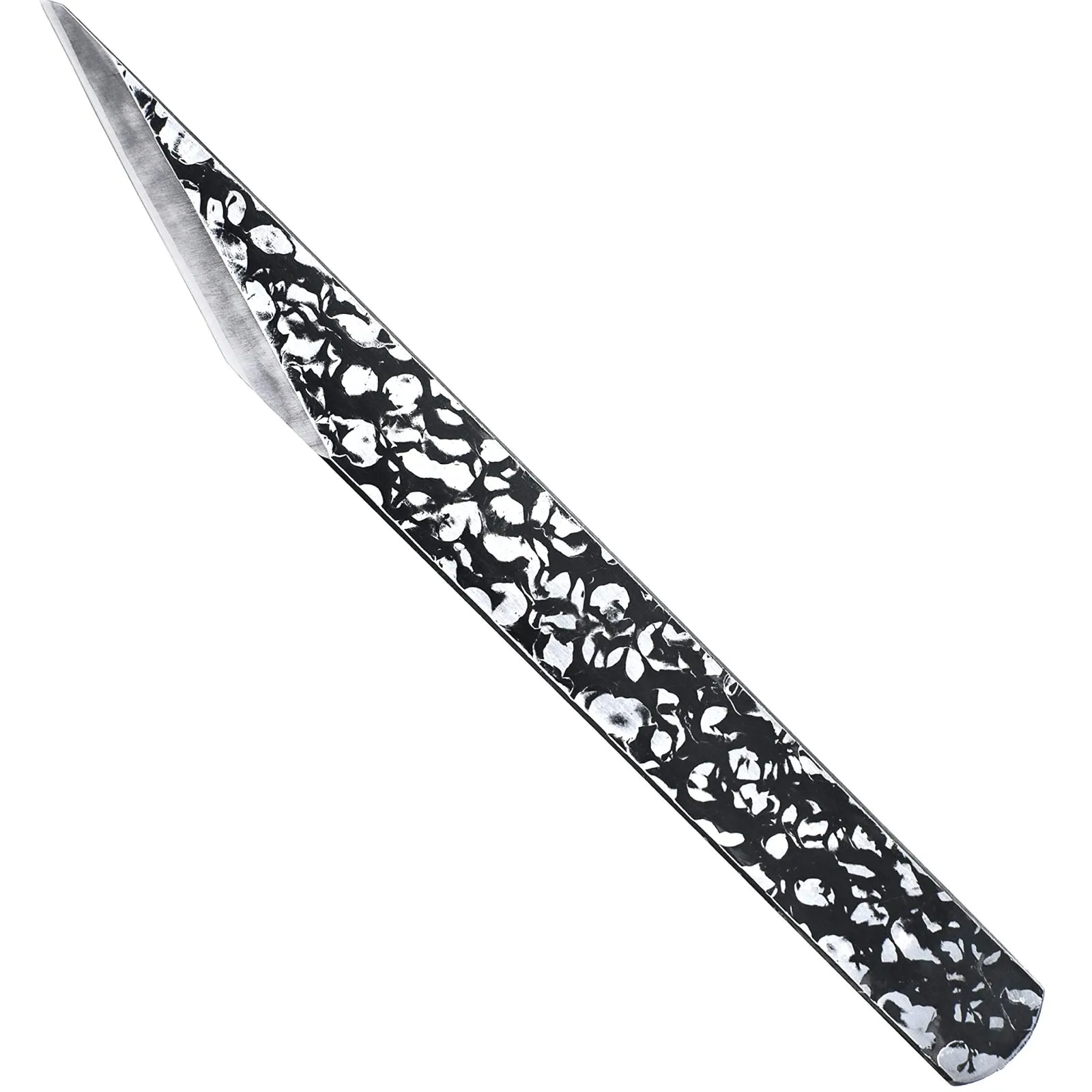
[Keep the existing kiridashi image here. Alt text: KAKURI kiridashi knife with wooden handle and sheath]
A kiridashi is a single-bevel knife used for marking out, trimming and small cuts. This one has a hand-forged high-carbon blade with a wooden handle and a hardwood sheath.
- Good for: scoring layout lines, cleaning corners and whittling fine details.
- Watch for: the sheath can be a tight fit at first. A kiridashi is bevelled on one side only, so check you are buying the right-hand or left-hand version.
Bench chisels (nomi)
5. RIGORO Oire Nomi, 12 mm
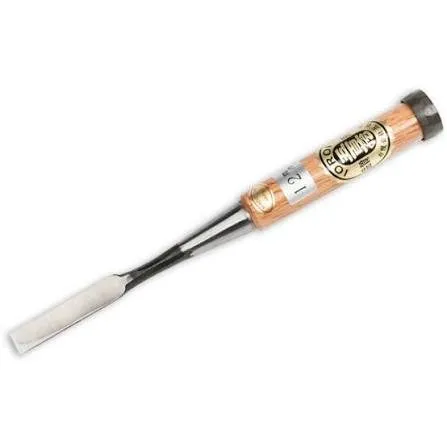
[Keep the existing RIGORO chisel image here. Alt text: RIGORO 12 mm Japanese oire nomi bench chisel]
A single hooped bench chisel in a useful middle width. The listing gives its length as 215 mm.
- Good for: trying a Japanese chisel before committing to a set.
- Watch for: the painted finish on the handle wears off with use. Check the hoop and handle are seated firmly before you strike it.
6. Grizzly Industrial G7095 Japanese Chisel, ½ inch
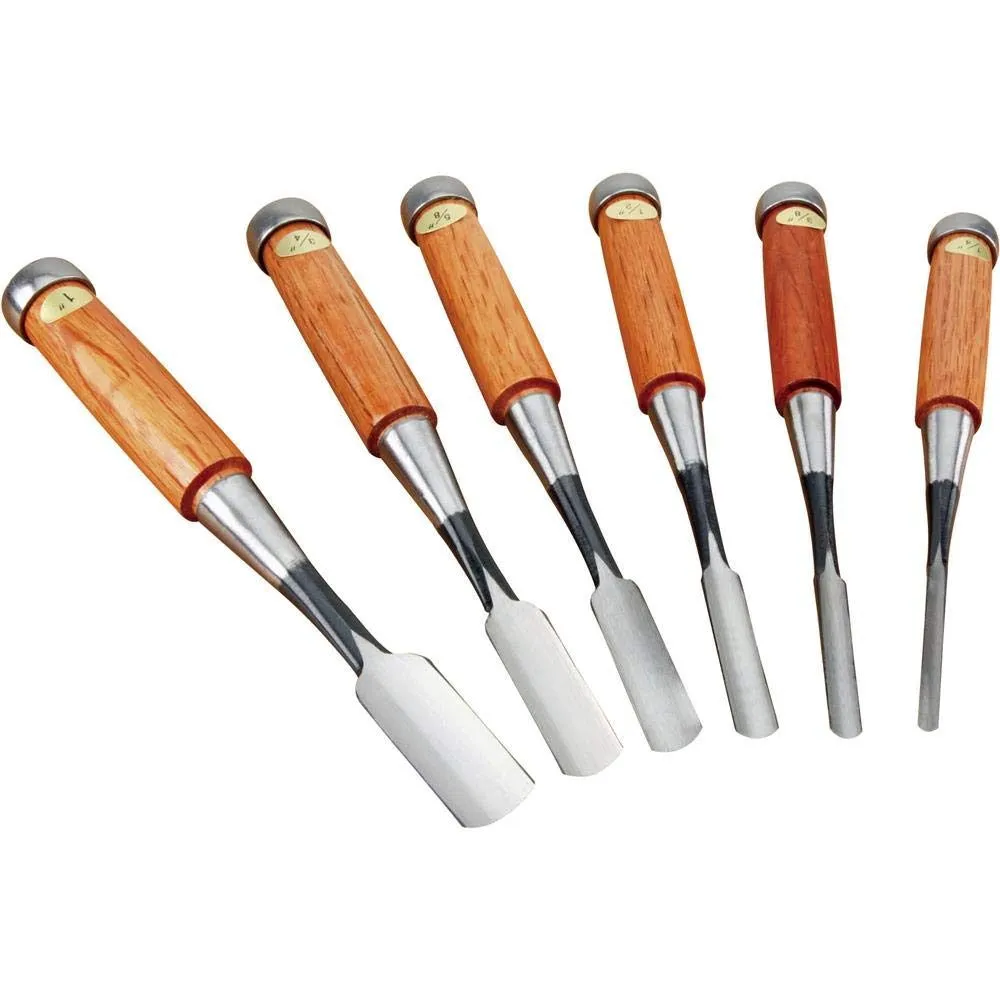
Grizzly G7095 ½ Inch Japanese Chisel
A budget single chisel in the Japanese pattern with a high-carbon blade, honed before shipping.
- Good for: an inexpensive chisel for chopping and paring.
- Watch for: finish quality varies. Expect to flatten the back and hone the edge yourself.
7. KAKURI Japanese Chisel Set, 6 pieces
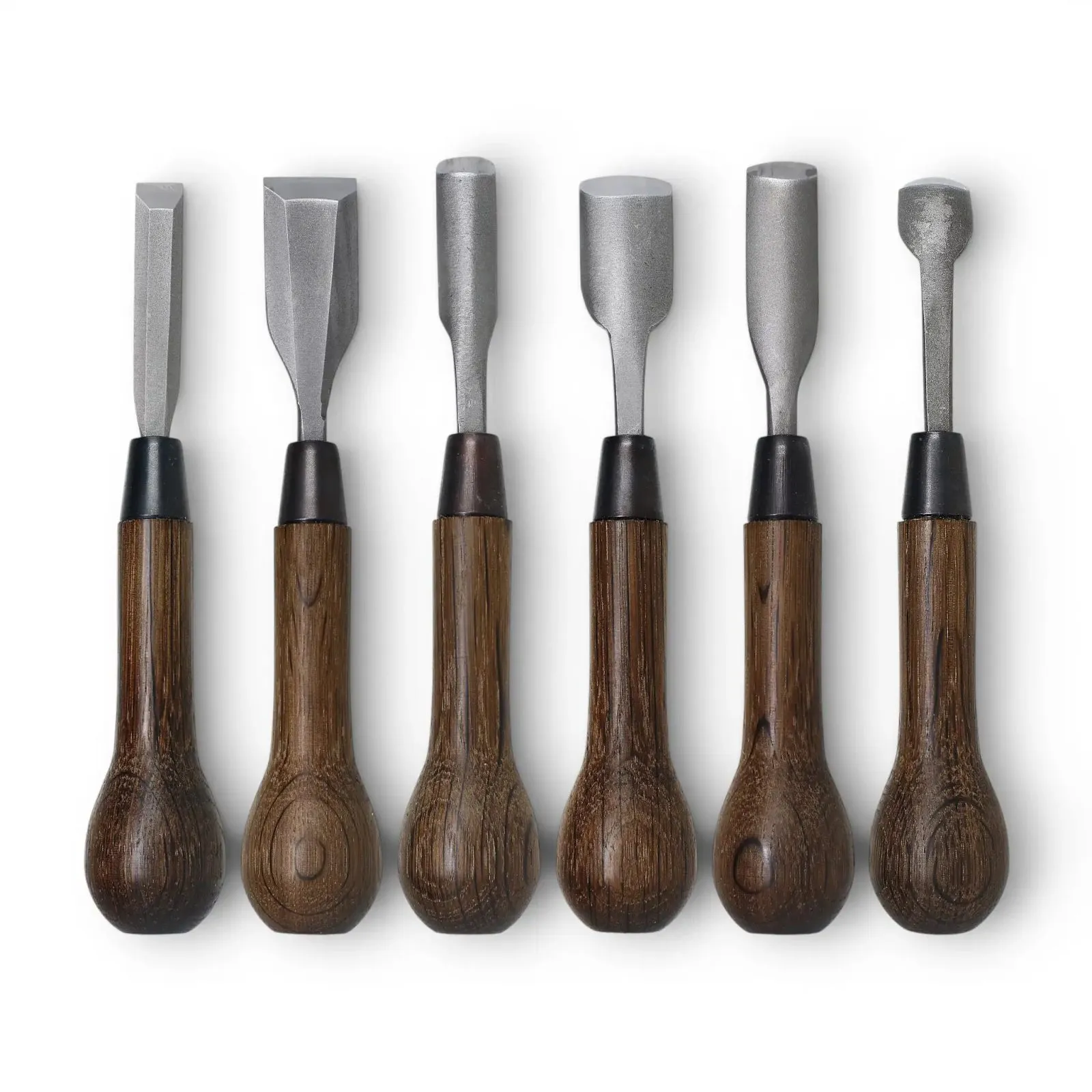
KAKURI 6-Piece Japanese Chisel Set
[Keep the existing KAKURI chisel set image here. Alt text: KAKURI six-piece Japanese chisel set in a paulownia box]
Six bench chisels in a range of widths. The listing describes blue steel (Aogami No. 2) edges with a layered Damascus-pattern backing, red oak handles and a paulownia storage box.
- Good for: woodworkers who already know they like Japanese chisels and want a full set.
- Watch for: this is the premium option on the list, and far more than a beginner carver needs.
General woodworking kit
8. KAKURI Japanese Woodworking Tool Set, 8 pieces
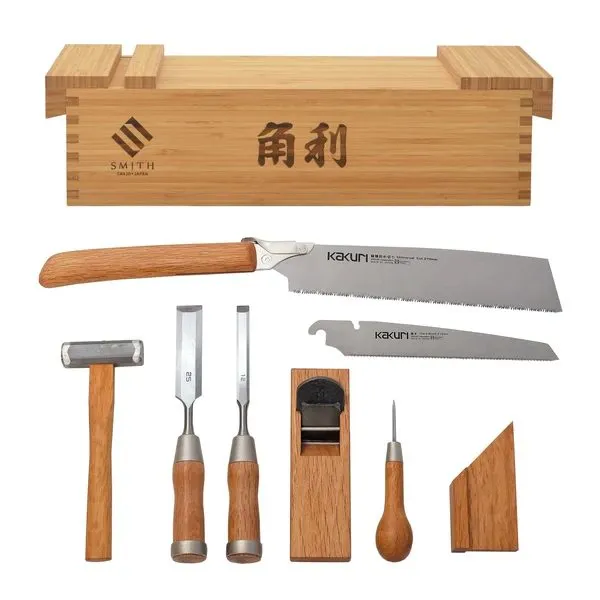
KAKURI 8-Piece Japanese Woodworking Tool Set
This is a carpentry kit, not a carving set. It is included for readers who want to start Japanese woodworking as a whole, with a saw, chisels and a plane in one box. Check the listing for the exact contents.
- Good for: joinery and furniture work.
- Watch for: it is the most expensive item here, and it contains no carving gouges.
How to choose
- Match the tool to the work. Relief carving and woodblock printing need a chokokuto set. Whittling needs a knife. Joinery and flat backgrounds need nomi.
- Start small. A set of five to seven profiles covers most work. You will use three of them most of the time.
- Look for laminated blades. A two-layer blade is the feature that separates a traditional Japanese tool from a tool that is only Japanese in style.
- Buy from a named maker or seller. Copies of well-known brands exist. An unusually low price on a premium name is a warning sign.
- Budget for sharpening. Set aside part of what you spend for a waterstone. A sharp modest tool cuts better than a dull premium one.
Setting up and caring for Japanese tools
Before first use
- Flatten the back. Work the back of each chisel on your finest stone until the rim around the hollow is evenly polished.
- Hone the bevel. Most tools arrive sharp enough to cut but not at their best.
- Set the hoop on a nomi. The hoop should sit just below the top of the handle, with the wood mushroomed slightly over it. If the hoop is loose, tap it down and peen the end grain over it before you use a hammer on the chisel.
Sharpening
- Use waterstones. A medium stone of about 1000 grit for the edge and a finishing stone of about 6000 grit is a common pairing.
- Keep the whole bevel flat on the stone. Japanese tools are normally sharpened with one flat bevel and no secondary bevel.
- Keep the stones flat. A hollow stone rounds the edge.
- Never use a dry grinder. The hard steel overheats quickly and loses its temper.
Our full method is in how to sharpen your wood carving tools.
After use
- Wipe the blade dry and add a thin coat of light oil. Camellia oil is the traditional choice.
- Store tools so the edges cannot touch each other. A tool roll, the maker's box or blade caps all work. See how to store wood carving tools.
Common problems
| Problem | Likely cause | Fix |
|---|---|---|
| Edge chips | Levering or twisting; very hard wood; bevel too thin | Cut straight, take lighter cuts, hone a slightly steeper bevel |
| Rust spots | Put away damp or handled with bare fingers | Remove with a fine abrasive, then dry and oil after each use |
| Hoop comes loose | Handle has dried and shrunk | Reset the hoop and peen the handle end over it |
| Tool tears the wood | Dull edge or cutting against the grain | Hone the edge and reverse the cut direction |
| Back will not flatten | Stone is hollow | Flatten the stone first |
Mistakes to avoid
- Buying the biggest set first. Most of it will sit unused.
- Prying out chips. Hard Japanese steel chips when levered. Cut the chip free instead.
- Hitting an unhooped carving tool with a hammer. Chokokuto are pushed by hand. Only hooped nomi are made to be struck.
- Skipping the oil. Carbon steel can rust overnight in a damp workshop.
- Grinding on a dry wheel. Heat ruins the edge.
- Treating a carpentry kit as a carving set. Saws and planes will not carve a relief.
FAQ
Are Japanese wood carving tools better than Western ones?
They are different, not automatically better. Japanese tools usually have harder edges that stay sharp longer and take a very fine finish. Western tools are tougher and more forgiving of rough use. Many carvers own both.
What is a kiridashi knife used for?
Marking layout lines, trimming, cleaning up corners and small whittling cuts. It has a single bevel, so it cuts tight against a straightedge.
What is a nomi?
Nomi is the Japanese word for chisel. An oire nomi is the standard bench chisel, with a hooped handle made to be struck with a hammer.
Do Japanese carving tools need a special hammer?
A hooped nomi is struck with a steel hammer, traditionally a gennou. Small carving knives and gouges are pushed by hand and need no hammer.
What is the difference between white steel and blue steel?
Both are high-carbon steels. White steel is purer and takes the keenest edge. Blue steel has added alloys and holds its edge longer. Either is good for carving.
Can a beginner use Japanese carving tools?
Yes. A small woodblock-style set is a good first purchase. The only extra demand is care: keep the tools dry, oiled and sharp.
How do I stop Japanese tools rusting?
Wipe them dry after every session, apply a thin coat of light oil and store them somewhere dry.
What wood should I practise on?
A soft, even-grained wood such as basswood. See the best wood for carving.
The bottom line
For carving, buy a small set of Japanese carving knives and gouges first, and add a kiridashi for marking and detail. Buy nomi only if your work includes joinery or flat backgrounds. Whichever you choose, the edge matters more than the brand, so learn to sharpen early.
Read next
- Best Woodcarving Knife
- Woodcarving Gouges
- Best Woodcarving Chisels
- Best Chip Carving Knives
- How to Sharpen Your Wood Carving Tools
- How to Store Wood Carving Tools
- Japanese Woodworking Hand Tools 101
- Best Wood for Carving

Philip Sabwa says
Frank, good day. Thank you very much; we have corrected the descriptions after double-checking them.