
The best power tool for wood carving, for most people, is a variable-speed rotary tool. It is small enough to hold like a pencil, it takes hundreds of different bits, and it handles everything from rough shaping to fine detail on small and medium carvings. Bigger work calls for different tools: a reciprocating carver if you like the look of chisel cuts, or an angle grinder with a carving disc for bowls and sculpture.
This guide explains the four main types, reviews five tools, and covers the bits, safety kit and buying points that matter more than the brand name.
Power carving is one branch of the craft. If you would rather start with a blade, see our guide to the best carving knife, and if you are new to carving altogether, start with wood carving for beginners.
Our picks at a glance
| Pick | Type | Power | Best for |
|---|---|---|---|
| Dremel 8220 | Rotary tool | Cordless, 12V | Best overall |
| WEN 2305 | Rotary tool with flex shaft | Corded | Best value corded kit |
| AUTOMACH Power Carver | Reciprocating carver | Corded | Chisel-style cuts without a mallet |
| GOXAWEE Rotary Tool Kit | Rotary tool with flex shaft | Corded | Largest accessory kit |
| Dremel Lite 7760 | Rotary tool | Cordless, 4V | Light detail work on a budget |
The four types of power carving tool
Before choosing a model, choose a type. They do different jobs.
| Tool type | How it cuts | Best for | Not good for |
|---|---|---|---|
| Rotary tool | A small bit spins at high speed | Small carvings, detail, texturing, sanding in tight spots | Removing a lot of wood quickly |
| Flex shaft tool | A hanging motor drives a slim handpiece through a flexible cable | Long sessions and fine detail, because the handpiece is light | Portability |
| Reciprocating carver | A chisel or gouge blade moves back and forth | Relief carving, tool-mark finishes, hollowing | Very fine detail |
| Angle grinder with carving disc | A toothed or carbide disc spins on a grinder | Bowls, large sculpture, fast roughing | Small work and beginners |
Most carvers who stay with power carving end up owning two: something for roughing out and something for detail. A rotary tool is the right first purchase because it does a bit of both.
The 5 best power carving tools, reviewed
1. Dremel 8220: best overall
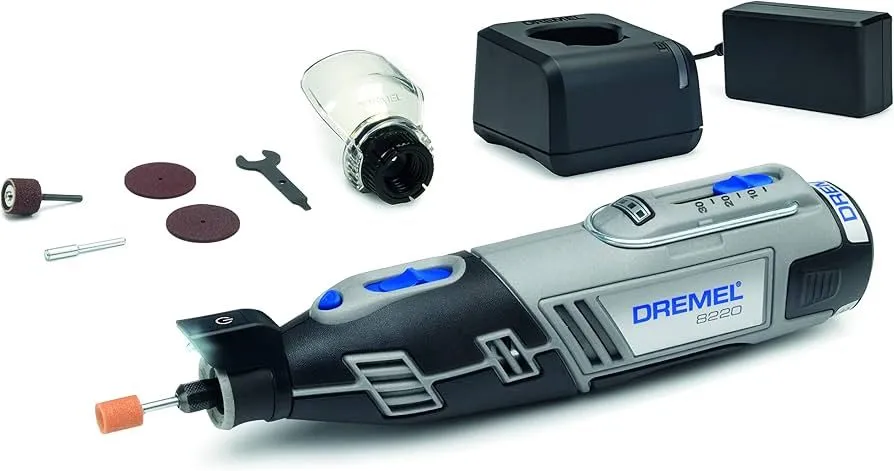
[Keep the existing Dremel 8220 product image here. Alt text: Dremel 8220 cordless rotary tool for wood carving]
The Dremel 8220 is a cordless, variable-speed rotary tool with a 12V lithium-ion battery. It is the pick for carvers who want corded-level performance without a cable dragging across the work.
[Keep the existing Dremel 8220 accessories image here. Alt text: Accessories included with the Dremel 8220 rotary tool kit]
Why it's here
- Cordless, so you can carve outdoors or away from the bench
- Wide speed range, which matters because wood burns at high speed and tears at low speed
- Takes the full range of Dremel bits and attachments, and most third-party bits with the same shank size
Watch for
- Battery runtime drops quickly under heavy load. A second battery is worth having for long sessions
- The kit's included accessories are general purpose. You will want proper carving burrs (see below)
2. WEN 2305: best value corded kit
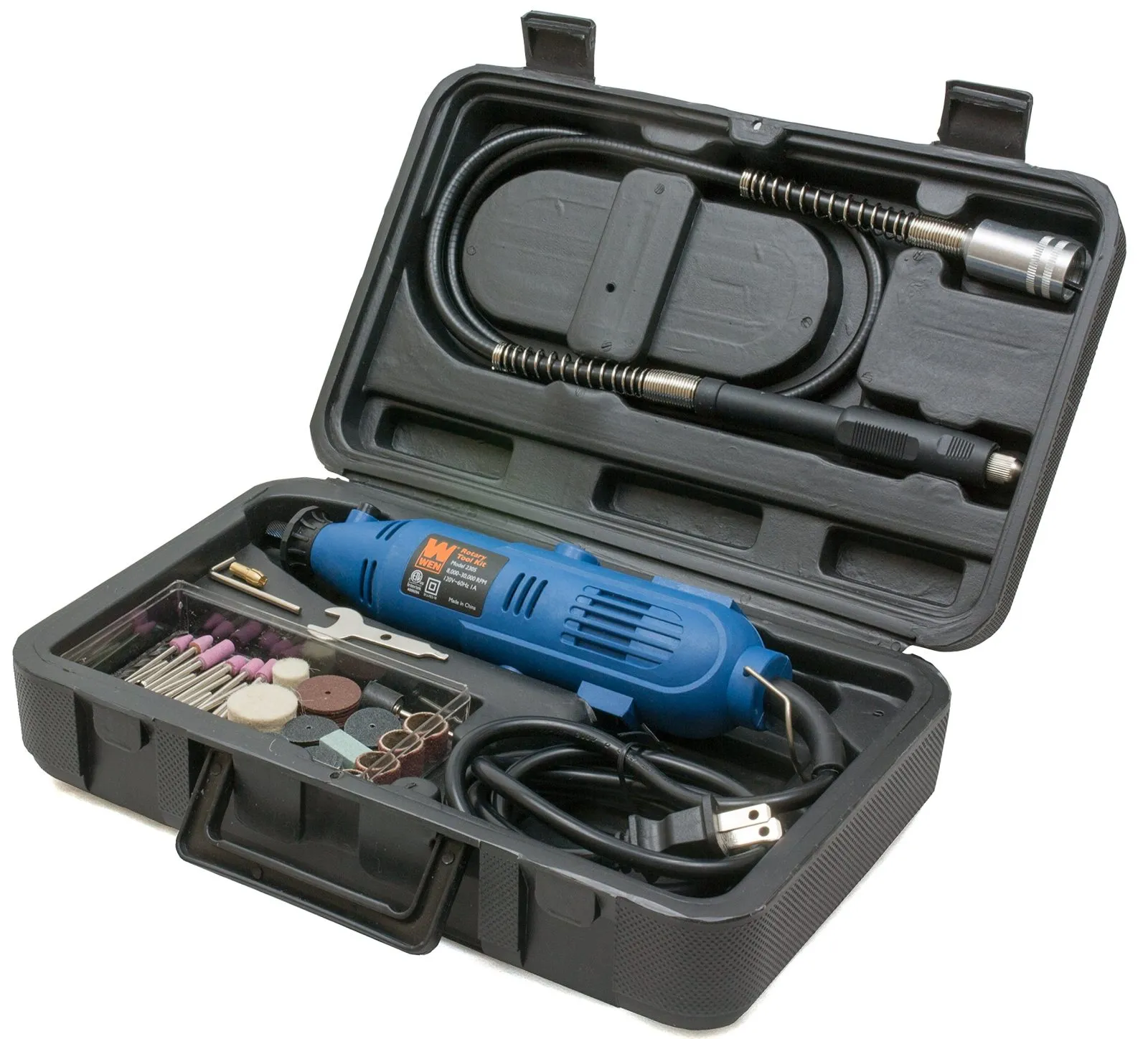
[Keep the existing WEN 2305 image here. Alt text: WEN 2305 rotary tool kit with flex shaft]
The WEN 2305 is a corded, variable-speed rotary tool sold with a flex shaft, a large accessory set and a carrying case. The speed dial sets how fast the bit spins, so you can slow down for softwoods and plastics and speed up for hardwoods.
Why it's here
- Corded, so it runs as long as you do
- The flex shaft is included. That turns a chunky tool into a slim handpiece for detail work
- A low-cost way to find out whether power carving suits you
Watch for
- Some buyers report more vibration than on dearer tools. Vibration tires the hand and blurs fine detail
- Budget accessories wear fast. Treat them as a starter set
3. AUTOMACH Power Carver: chisel-style cuts without a mallet
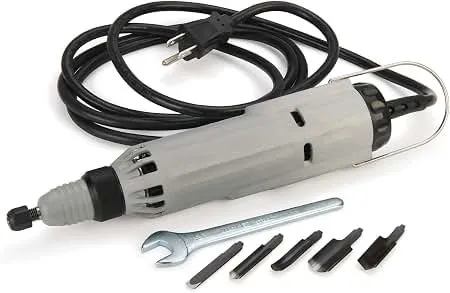
[Keep the existing AUTOMACH image here. Alt text: AUTOMACH reciprocating power carver with chisel blades]
The AUTOMACH Power Carver is a different kind of tool. Instead of spinning a bit, it drives a small chisel or gouge blade back and forth in very short, fast strokes. You steer it like a hand gouge and the motor supplies the push. It comes with a set of blade profiles.
Why it's here
- Leaves clean, faceted tool marks like hand carving, not the sanded look of a burr
- Makes shavings, not fine dust
- Kind to hands and wrists that struggle with a mallet and gouge
Watch for
- It gets warm in long sessions. Work in spells and let it cool
- Blades need sharpening like any chisel. Our guide to woodcarving gouges explains the profiles
- It is the least suited of the five to tiny detail
4. GOXAWEE Rotary Tool Kit: largest accessory kit
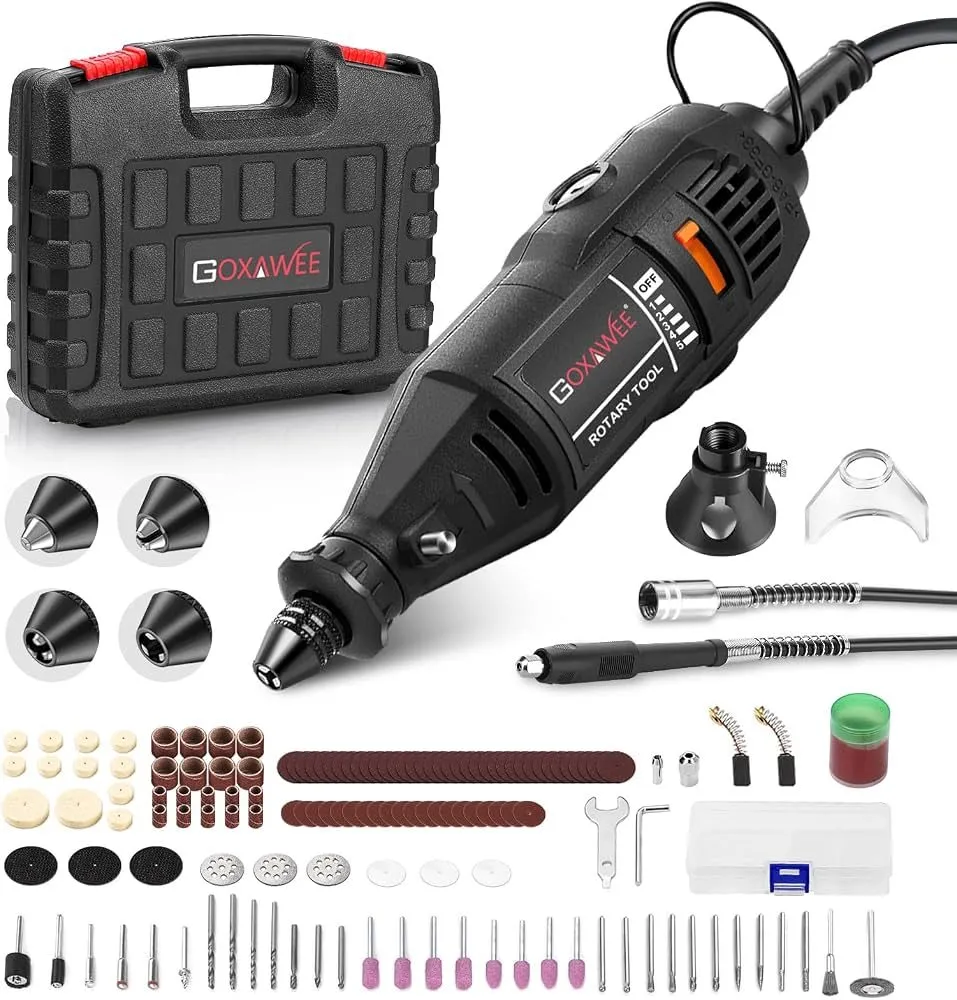
[Keep the existing GOXAWEE image here. Alt text: GOXAWEE rotary tool kit with flex shaft and accessories]
The GOXAWEE kit is a corded rotary tool with stepped speed control, a flex shaft and a very large box of accessories: cutters, sanding drums, grinding stones and polishing wheels.
Why it's here
- A lot of accessories for the money, which lets a beginner try every kind of bit before buying good ones
- Flex shaft included
Watch for
- Some buyers report the flex shaft working loose at the collar. Check it is fully seated and tightened before each session, and return the tool if it will not hold
- As with any budget kit, the motor and bits are not built for daily heavy use
5. Dremel Lite 7760: light detail work on a budget
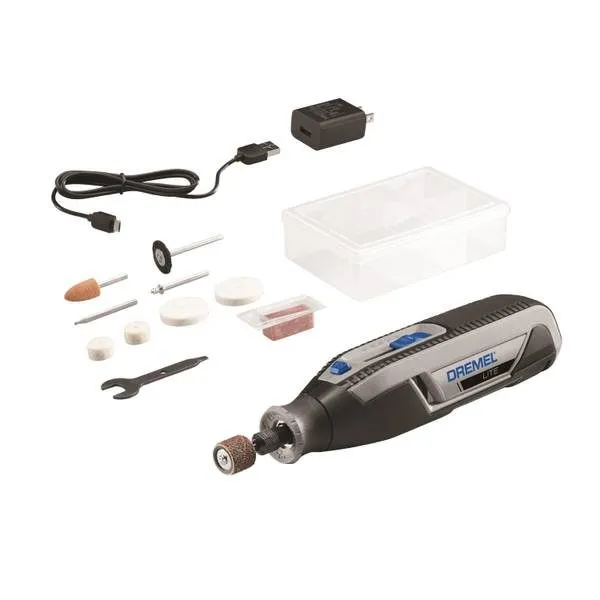
[Keep the existing Dremel Lite 7760 image here. Alt text: Dremel Lite 7760 cordless rotary tool]
The Dremel Lite 7760 is a small, light, cordless rotary tool with a 4V battery that charges by USB. It is the easiest of the five to hold and control.
Why it's here
- Very light, so it suits detail, texturing and small softwood carvings
- Simple to use and inexpensive for a branded tool
Watch for
- Low power. It will stall if you lean on it in hardwood
- Short runtime and a built-in battery, so when it is flat you stop
The bits matter more than the tool
A rotary tool only spins. The bit does the carving, and the general-purpose bits in most kits are not carving bits. Plan to add a few.
| Bit type | What it does | Use it for |
|---|---|---|
| Coarse carbide burr (structured tooth) | Removes wood fast without clogging | Roughing out the shape |
| Fluted carbide or high-speed steel cutter | Cuts cleanly and leaves a smoother surface | Shaping and refining |
| Diamond or ruby burr | Fine abrasion | Feather, fur and hair texture, small details |
| Sanding drum and sleeves | Smooths curves | Blending after shaping |
| Abrasive buffs and bristle brushes | Light smoothing | Cleaning up fuzz before finishing |
Check the shank size before you buy. Most small rotary tools take ⅛ inch (about 3 mm) shanks. Larger burrs on ¼ inch shanks need a bigger tool, such as a flex shaft machine or die grinder.
Match speed to the bit and the wood. Large burrs run slower, small ones faster. If the wood is scorching, slow down or lighten your touch. If the bit is grabbing and chattering, speed up a little and take lighter passes.
Safety: what power carving needs that hand carving doesn't
Power carving swaps the risk of a slipped knife for three others: dust, flying chips and a spinning bit.
- Dust. This is the big one. Rotary tools turn wood into fine dust that hangs in the air. Wear a properly fitted dust mask or respirator rated for fine dust, and use dust extraction or work outdoors where you can. Some woods are irritants.
- Eyes. Wear safety glasses or a face shield every time. Burrs throw chips and occasionally shed.
- Hearing. Wear ear protection for long sessions and always with an angle grinder.
- Hands and clothing. Clamp the work whenever you can so both hands are on the tool. Tie back hair and avoid loose sleeves, cords and jewellery. Do not wear loose gloves near a spinning bit.
- Bits. Check that the collet is tight, never use a bent bit, and stay within the bit's rated speed.
- Angle grinder discs. These are the most dangerous tools on this page. Keep the guard on, use the side handle, and learn on a rotary tool first.
How to choose
Start with the size of your work. Small figures, ornaments and detail: a rotary tool. Relief panels and tool-mark finishes: a reciprocating carver. Bowls, large sculpture and fast roughing: an angle grinder with a carving disc, or a chainsaw for the biggest pieces. Our guide to chainsaw carving for beginners covers that end of the scale.
Corded or cordless. Corded tools run all day and tend to give more power for the money. Cordless tools go anywhere and have no cable to snag on the work, but you carve in battery-length spells. If you carve at a bench for an hour or more at a time, go corded.
Variable speed is essential. A single-speed tool will burn softwood and fine detail. Every tool on this list has adjustable speed.
Power. More power means the bit keeps turning when you press into hardwood. Low-power tools stall and need a lighter touch. For basswood and small work, a light tool is fine. For oak, walnut and larger burrs, buy more motor.
Comfort. You hold this tool for hours. Weight, grip thickness and vibration matter more than a few extra accessories. A flex shaft helps a lot, because the handpiece is far slimmer than the tool body.
Accessories and spares. Big kits look generous, but a small set of good carving burrs beats a hundred general bits. Check that collets, flex shafts and batteries can be bought separately.
Warranty and brand support. A known brand with spare parts usually outlasts a cheaper tool that has to be thrown away when one part fails.
Which wood to use
Power carving is more forgiving of hard and awkward wood than a knife, but beginners still do best in basswood, butternut or another soft, even-grained wood. See our list of the best woods for carving with a Dremel and the wider guide to the best wood for carving.
Common mistakes
- Pressing too hard. Let the bit cut. Pressure causes burning, stalling and slips.
- Running flat out. Top speed scorches wood and wears bits. Start in the middle of the range.
- Using the kit bits for everything. Buy at least one coarse carbide burr and one fine cutter.
- Skipping the dust mask because the tool is small. Small tools make the finest dust.
- Holding the work in your hand while carving towards it. Clamp it.
- Buying an angle grinder disc first. Learn control on a rotary tool.
FAQ
What is the best power tool for a beginner wood carver?
A variable-speed rotary tool with a flex shaft. It is affordable, easy to control and useful for almost every small project.
Can you carve wood with a Dremel?
Yes. With carving burrs fitted, a Dremel or similar rotary tool will shape, detail and texture wood. It is slow at removing large amounts, so rough out big pieces with a saw first. For ideas, see our simple wood carving projects using a Dremel.
Is power carving easier than hand carving?
It is faster and needs less hand strength, and grain direction matters less. It is also dustier and noisier, and it takes practice to control. Many carvers use both: power for roughing, hand tools for the final cuts.
What is the difference between a rotary tool and a reciprocating carver?
A rotary tool spins a bit and grinds or cuts the wood away. A reciprocating carver pushes a chisel blade back and forth and slices it, leaving tool marks like hand carving.
Can I use a drill for wood carving?
Not well. A drill turns too slowly for carving burrs and is awkward to hold sideways. A rotary tool is built for the job.
Do I still need hand tools?
A knife and a couple of gouges are useful for crisp final cuts and for places a burr cannot reach. Our guide to the best wood carving tools for beginners covers a starter set.
How do I stop the wood burning?
Lower the speed, lighten the pressure, keep the bit moving and clean or replace clogged burrs.
The bottom line
Buy a variable-speed rotary tool first, corded with a flex shaft if you carve at a bench, cordless if you move around. Add a few proper carving burrs and a dust mask before anything else. Move on to a reciprocating carver or an angle grinder disc only when your projects outgrow it.
Read next
- Best Carving Knife
- Best Woods for Carving Using a Dremel
- Simple Wood Carving Projects Using a Dremel
- Woodcarving Gouges
- Chainsaw Carving for Beginners
- Wood Carving Tips for Beginners


Kenneth Abrahamsen says
I have been carving for about 6 months & I have learned so much from your discussions on rotary tools. I am about to get better tools becuz several tools from Walmart are worthless & die soon. I am excited to try new things. Happy carving
Mego says
Thank you for sharing your experience, Kenneth! It's great to hear that our discussions on rotary tools have been helpful for your wood carving journey. Investing in high-quality tools can definitely make a big difference in your carving experience, and we're excited for you to try new things with them. Happy carving to you too!