The best wood carving book for most beginners is Chris Pye's Woodcarving Course & Reference Manual, a structured course in traditional carving with gouges, from tools and sharpening through relief work to carving in the round. For an older, broader overview, The Beginner's Handbook of Woodcarving covers every style in one volume. Once you have the basics, Harold Enlow's Carving Faces Workbook is the standard guide to the hardest part of figure carving, and Woodcarving Illustrated magazine supplies new patterns every issue.
A book earns its place beside videos because you can prop it open on the bench, work at your own pace, and trace the patterns.
The picks at a glance
| # | Title | Author | Type | Best for |
|---|---|---|---|---|
| 1 | Chris Pye's Woodcarving Course & Reference Manual | Chris Pye | Course and reference | Learning traditional carving with gouges, step by step |
| 2 | The Beginner's Handbook of Woodcarving | Charles Beiderman and William Johnston | General reference | A broad overview of every carving style |
| 3 | Carving Faces Workbook | Harold Enlow | Single-topic workbook | Faces and expressions on figures and caricatures |
| 4 | Woodcarving Illustrated | Magazine | Quarterly magazine | Fresh projects, patterns and painting guides |
How to choose a carving book
- Match the book to the style you want to learn. Carving with gouges and a mallet, whittling with a knife, chip carving and spoon carving are taught differently. A whittler will get little from a book on relief panels. For knife-only work, see the best whittling books; the difference is explained in carving vs whittling.
- Look for step-by-step photographs. Carving is three-dimensional, and a sequence of clear photos teaches more than paragraphs of description.
- Check for patterns. Full-size or scalable patterns for each project save a great deal of guesswork.
- Reference or project book? A reference book explains tools, wood and technique and is one you return to. A project book gives you things to make. Beginners do best with one of each.
- Mind the date. Hand techniques do not age, so an older book can be excellent. Sections on power tools, suppliers and prices do.
- Print or ebook? Print is easier at the bench and better for tracing patterns. Ebooks are cheaper and searchable. Two of the links below go to Kindle editions; print versions are usually listed on the same page.
Reference books
1. Chris Pye's Woodcarving Course & Reference Manual
[Keep the existing Chris Pye book cover image here]
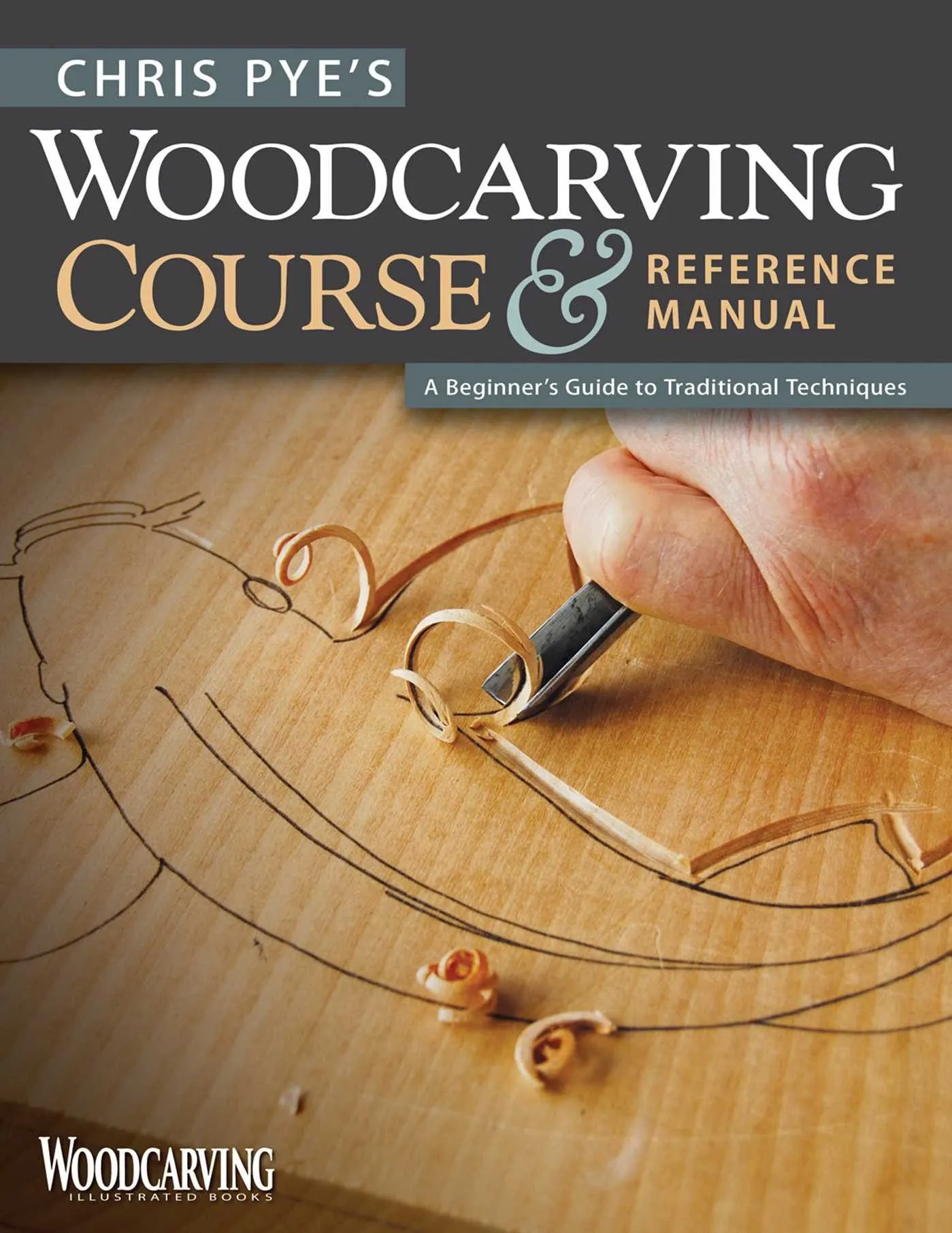
Chris Pye has carved professionally since 1975 and is one of the best-known teachers of traditional woodcarving. This book, published in 2010, is laid out as a course. It starts with tools, sharpening and holding the work, then moves through a series of exercises in low relief, high relief and carving in the round, each shown in step-by-step colour photographs. Templates for the exercises are included and may be photocopied.
- Good: a real course, in a sensible order; clear colour photos; explains why as well as how; templates included.
- Less good: it teaches carving with gouges and chisels, so you need a small set of tools to follow it; it is not a whittling book and has no quick knife projects.
- Choose it if: you want to learn traditional carving properly and are prepared to work through the exercises. Pair it with a beginner's guide to woodcarving gouges and relief carving for beginners.
2. The Beginner's Handbook of Woodcarving
[Keep the existing Beginner's Handbook cover image here]
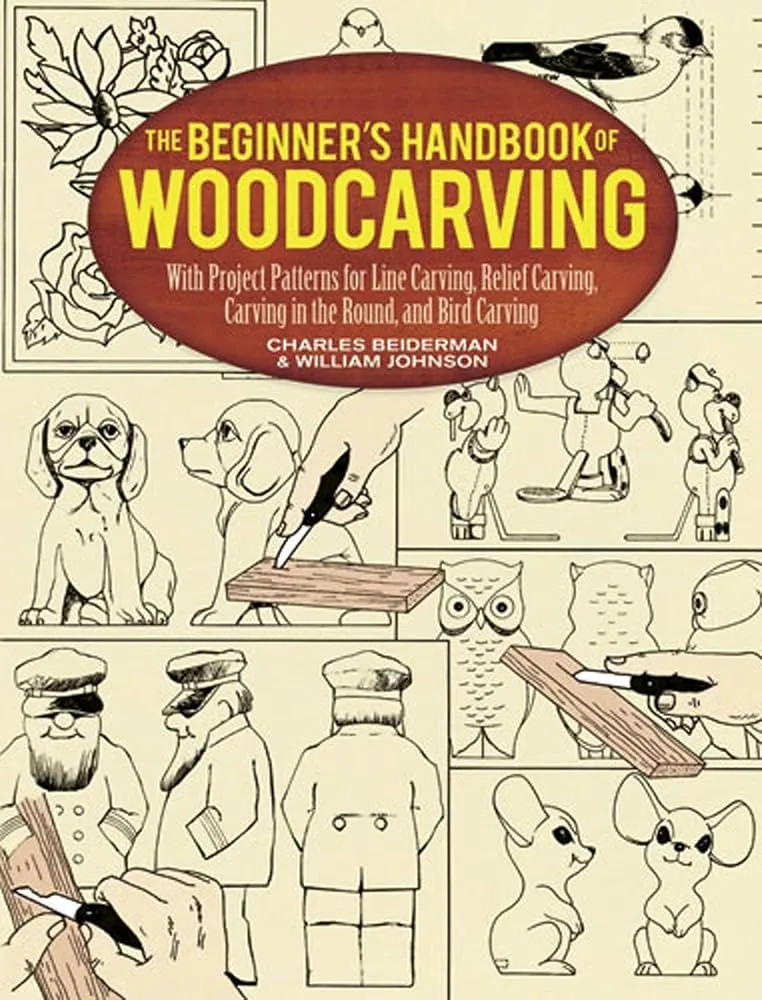
By Charles Beiderman and William Johnston, this is an older general handbook, last reissued in 1993, that surveys the whole craft: tools, wood, safety, the main styles of carving and a set of sample projects. It also has chapters you will not find elsewhere, on selling your work and starting a carving club. The linked edition is the ebook.
- Good: covers every style in one inexpensive volume; sound on hand tools and fundamentals; useful for deciding which kind of carving to pursue.
- Less good: black-and-white photographs; the material on power tools and suppliers is dated.
- Choose it if: you want a broad, low-cost introduction before specialising.
Single-topic book
3. Carving Faces Workbook
[Keep the existing Carving Faces Workbook cover image here]
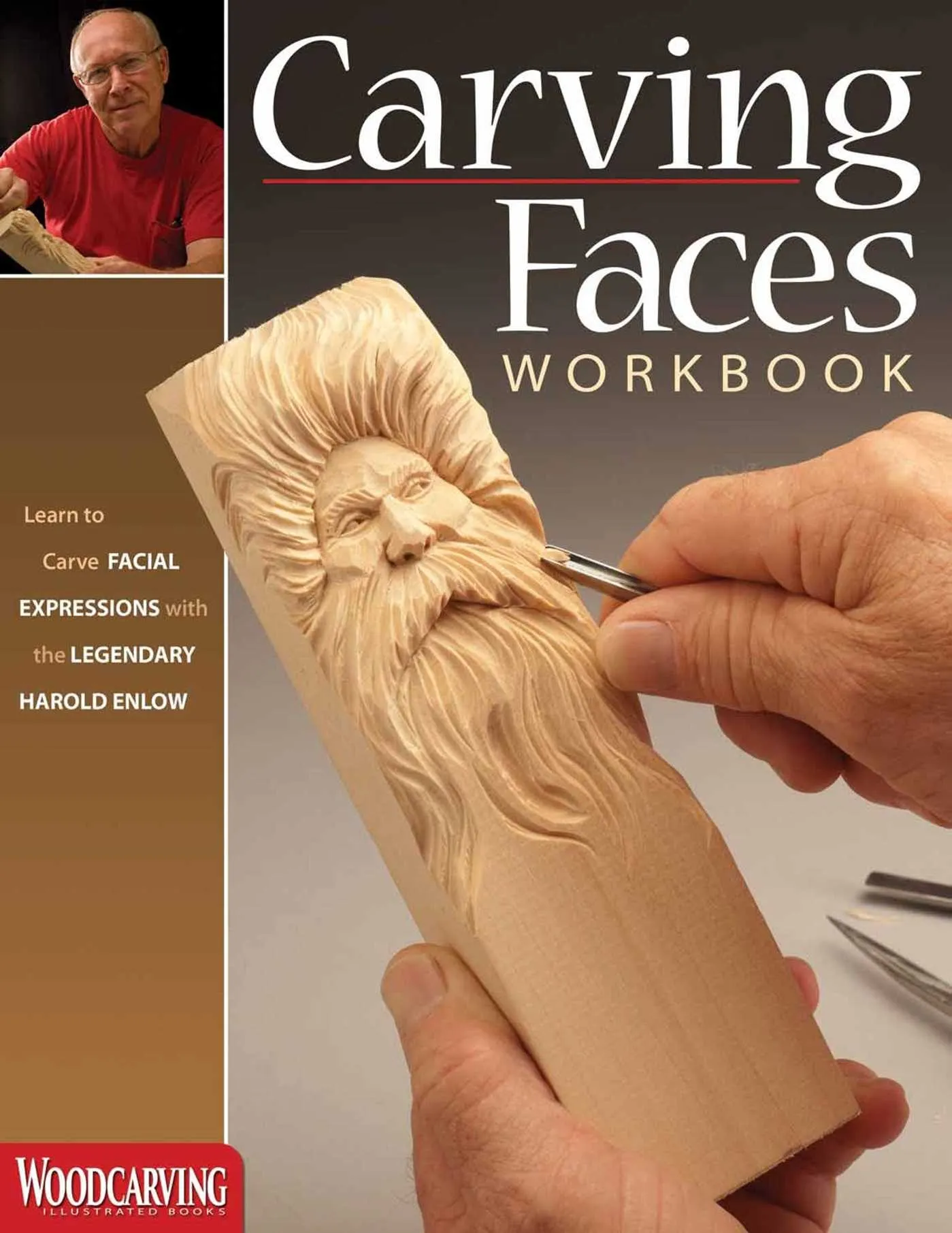
Harold Enlow was a founding member of the Caricature Carvers of America and taught face carving for decades. This workbook breaks the face into parts, eyes, noses, mouths, ears and hair, and shows each one carved step by step in colour, then puts them together into complete faces with different expressions. The linked edition is the ebook.
- Good: the clearest guide available to the part of figure carving people find hardest; plenty of close-up photos; teaches expressions, not just one face.
- Less good: covers faces only; faces are difficult, so it is best as a second book, after you have finished a few simple figures.
- Choose it if: your figures look fine until you reach the face.
Magazine
4. Woodcarving Illustrated
[Keep the existing Woodcarving Illustrated cover image here, with the corrected alt text]
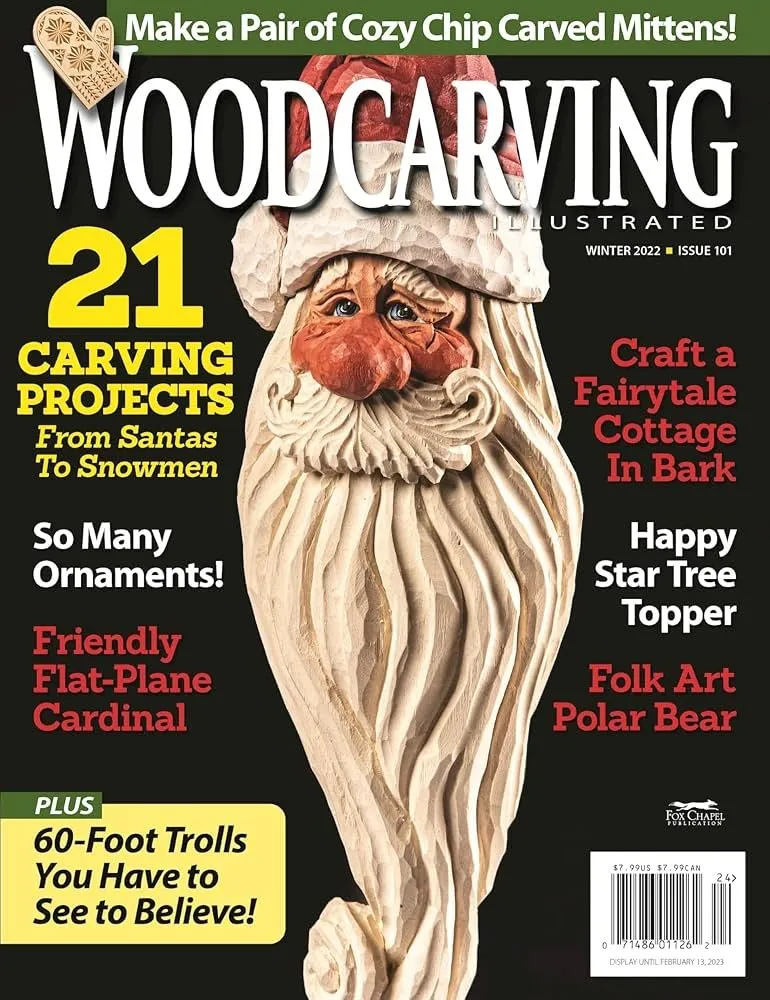
A quarterly magazine, not a book, and a good companion to one. Each issue carries a mix of projects with full patterns, often small caricature figures such as gnomes, Santas and animals, along with painting and finishing guides, tool reviews and work by established carvers. Projects are graded, so beginners can pick out the ones at their level. The link goes to a digital edition.
- Good: new patterns every issue; a range of styles and skill levels; strong on painting and finishing.
- Less good: articles are short and assume you know the basic cuts; it supplements a book and does not replace one.
- Choose it if: you have the basics and want a steady supply of things to carve.
Which should you buy first?
| You want to | Start with |
|---|---|
| Learn carving with gouges, properly | Chris Pye's Woodcarving Course & Reference Manual |
| Survey the craft cheaply before choosing a style | The Beginner's Handbook of Woodcarving |
| Improve the faces on your figures | Carving Faces Workbook |
| Find new projects each season | Woodcarving Illustrated |
| Whittle with just a knife | A whittling book; see the best whittling books |
Getting the most from a carving book
- Read the tool and sharpening chapters first. Dull tools are the main reason beginners struggle, whatever the book.
- Do the exercises in order. Each one builds a cut you need for the next.
- Use the wood the book recommends, usually basswood. See the best wood for carving.
- Copy the patterns at full size and transfer them to the wood with carbon paper.
- Repeat a project. The second attempt at the same piece teaches more than a new one.
- Keep your early carvings. They show your progress better than anything else.
Before you open any book you will need a knife or a few gouges, a strop and a glove; see the best woodcarving knife for beginners and the best whittling kits. The first steps are in wood carving for beginners.
Books or videos?
Both, ideally. Video shows the motion of a cut, which is hard to convey in print. A book gives structure, patterns and a reference you can keep open beside the work without stopping to scrub back through a clip. Many carvers learn a cut from a video and then practise it through a book's projects.
FAQ
What is the best wood carving book for a complete beginner?
For carving with gouges, Chris Pye's Woodcarving Course & Reference Manual. For whittling with a knife, choose a dedicated whittling book.
Can you learn wood carving from a book?
Yes. Many carvers are self-taught from books. Progress is faster if you also watch the basic cuts on video or carve alongside someone once or twice.
Are older carving books still worth buying?
For hand techniques, yes; these have not changed. Ignore outdated sections on power tools, prices and suppliers.
Should I buy the print or the ebook edition?
Print is easier at the bench and for tracing patterns. An ebook is cheaper and handy on a tablet, but check that patterns can be printed at full size.
Is Woodcarving Illustrated good for beginners?
Yes, as a source of projects once you know the basic cuts. It is not a course, so start with a book.
Do I need a different book for whittling?
It helps. Whittling books teach knife-only projects, which is where most beginners start. General carving books assume gouges.
What should I learn first from a carving book?
Sharpening, grain direction and the basic cuts. See wood carving tips for beginners and, if you are wondering how long it takes, is wood carving hard?
The bottom line
Buy one course-style book and work through it. Chris Pye's manual is the best of these for traditional carving, and The Beginner's Handbook of Woodcarving is a cheap way to see the whole craft. Add Harold Enlow's workbook when faces start to frustrate you, and a magazine when you want new projects.
Read next
- Wood Carving for Beginners
- Best Whittling Books
- Wood Carving Tips for Beginners
- Is Wood Carving Hard?
- Relief Carving for Beginners
- Beginner's Guide to Woodcarving Gouges