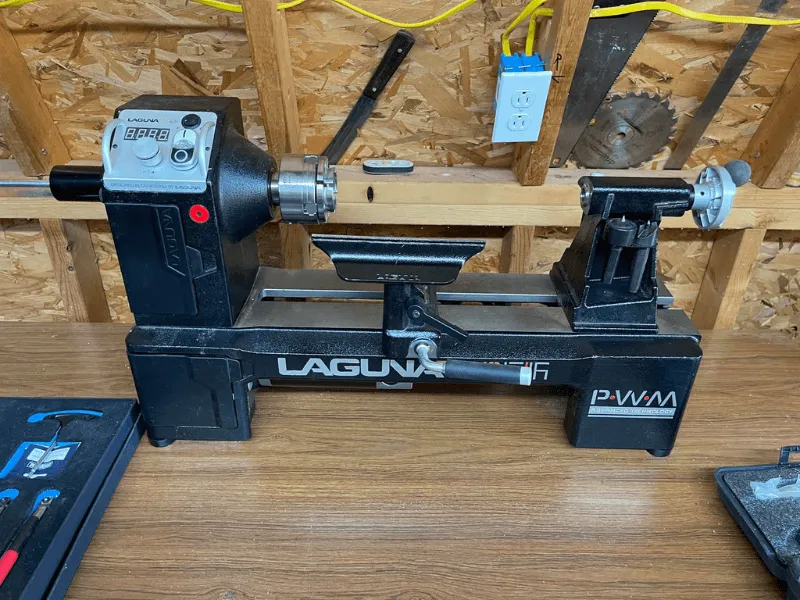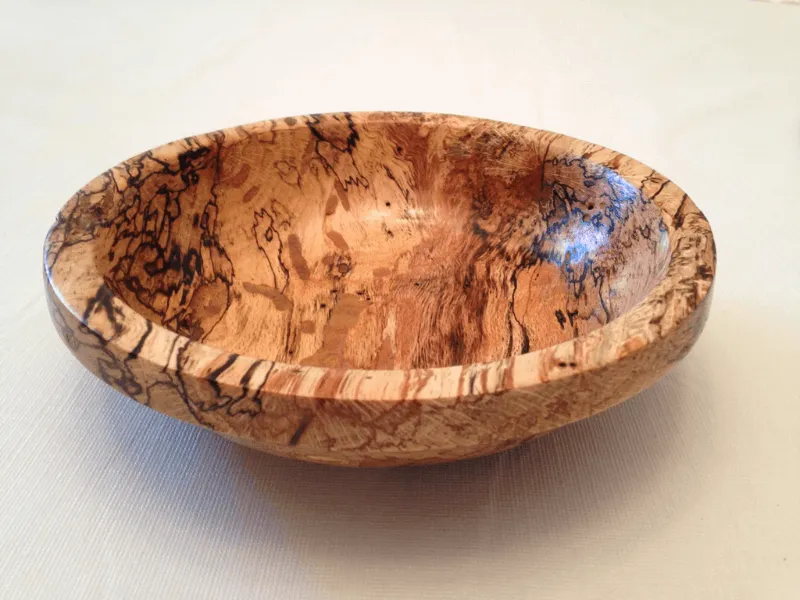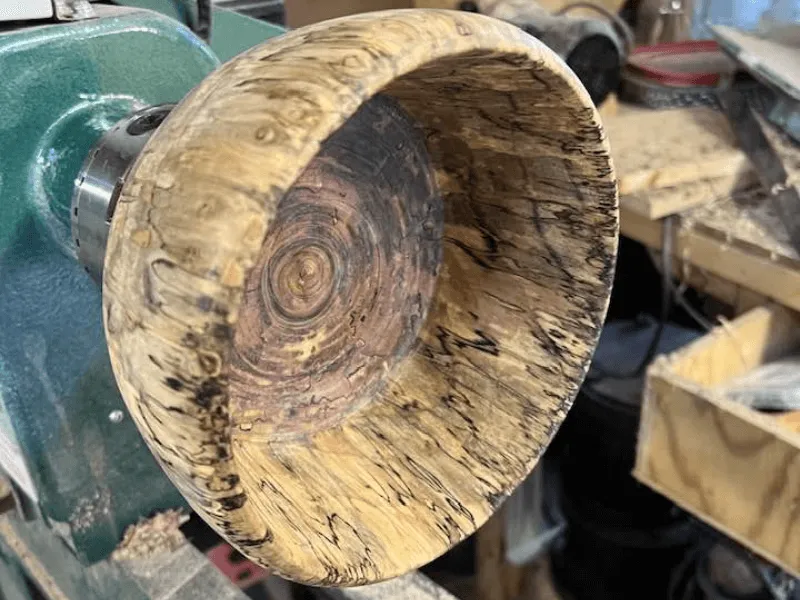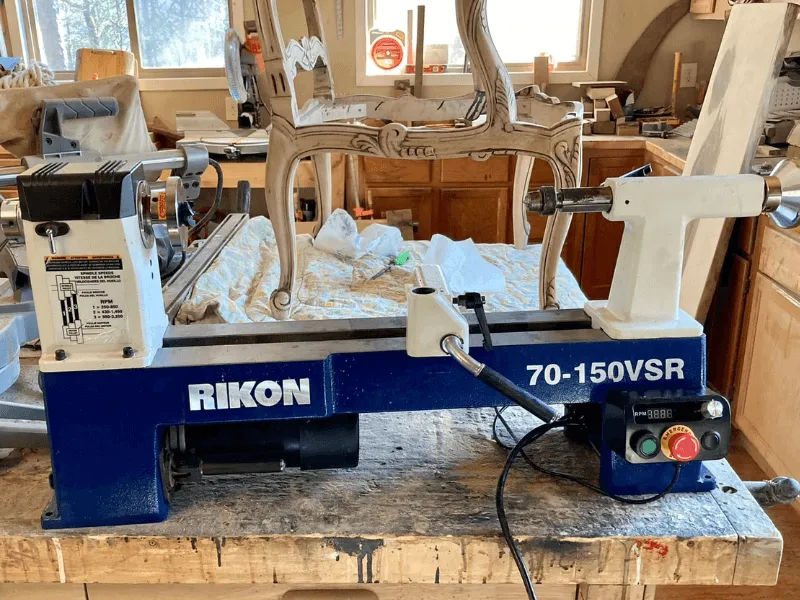
Woodturning is shaping wood while it spins on a lathe. You hold a sharp tool against the turning wood, supported on a tool rest, and cut it into round forms such as pens, bowls, spindles and boxes. To start, you need a lathe, a small set of turning tools, a way to sharpen them, a face shield, and some straight-grained wood. Your first projects should be simple spindles: a tool handle, a honey dipper or a candlestick.
This guide covers choosing a lathe, the tools to buy first, safety, the two main turning methods, the best wood and easy first projects.
What you need to start
| Item | Why | Our guide |
|---|---|---|
| A lathe | Spins the wood | Best mini wood lathe, best lathe under $500 |
| Turning tools | Cut the wood | A guide to wood turning tools |
| A grinder or sharpening system | Turning tools dull quickly | See the tools guide |
| Face shield | Protects against flying chips and blanks | — |
| Dust mask and extraction | Sanding makes fine dust | — |
| Calipers and a ruler | Measuring diameters | — |
| Abrasives and finish | Smoothing and protecting | — |
| Wood | Straight-grained, sound blanks | Best woods for turning |
Choosing a lathe

[Keep the existing lathe photo here, with its credit. Alt text: Wood lathe with tool rest and tailstock]
Lathes are described by two numbers:
- Swing: the largest diameter you can turn. Bowls need swing.
- Distance between centres: the longest piece you can turn. Spindles need length.
| Lathe size | Typical swing | Good for |
|---|---|---|
| Mini | About 8–10 in | Pens, small spindles, small bowls |
| Midi | About 12 in | Bowls and spindles, the most popular step up |
| Full-size | 14 in and up | Large bowls, long spindles |
Most beginners start with a mini or midi lathe. Look for:
- Weight and a solid stand: heavier lathes vibrate less.
- Variable speed: quicker and easier than moving a belt.
- Common spindle thread and Morse taper: so you can add chucks and accessories.
- A bed extension option: for longer work later.
See our lists of the best mini wood lathes, the best wood lathe under $500 and the best wood lathes.
The five tools to buy first
| Tool | Used for |
|---|---|
| Spindle roughing gouge | Turning square stock round. Spindle work only; never on bowls |
| Spindle gouge | Beads, coves and details on spindles |
| Parting tool | Cutting grooves to depth and parting work off |
| Skew chisel | Smooth planing cuts, V-cuts and beads |
| Bowl gouge | Shaping the outside and inside of bowls |
A round-nose scraper is a useful sixth tool. Carbide-tipped tools, which use replaceable cutters instead of sharpening, are another easy way to start. Our guide to wood turning tools explains each, and our beginner's guide to skew chisels covers the trickiest one.
Safety
The lathe is safe when used properly, but spinning wood can throw chips, splinters or a whole blank.
Protective gear
- Wear a full face shield for all turning, not just safety glasses.
- Wear a dust mask or respirator when sanding, and use dust extraction.
- Wear ear protection for long sessions.
- Do not wear gloves at the lathe. They can catch on spinning work and pull your hand in.
- Tie back long hair, roll up sleeves, and remove jewellery, lanyards and loose clothing.
Setup and speed
- Check the workpiece is firmly mounted and the tailstock and tool rest are locked.
- Spin the work by hand before switching on, to make sure it clears the tool rest.
- Start at the lowest speed, especially with large, uneven or unbalanced blanks. Increase speed only once the work is round and balanced.
- Stand to one side of the work when switching on.
While turning
- Keep the tool on the tool rest before it touches the wood.
- Keep the tool rest close to the work.
- Stop the lathe before adjusting the tool rest, measuring or checking the surface.
- Keep tools sharp; dull tools need force and cause catches.
- Never leave a running lathe unattended.
The two main turning methods
Spindle turning
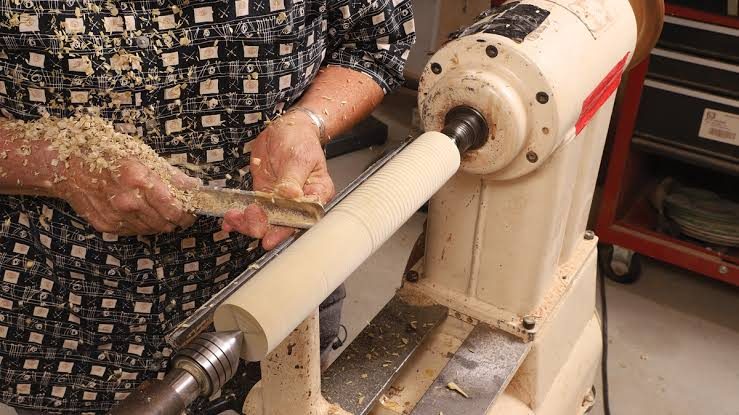
The wood is held between the headstock and tailstock, with the grain running along the lathe. This is how chair legs, table legs, tool handles, pens and candlesticks are made. Start here.
Faceplate (bowl) turning
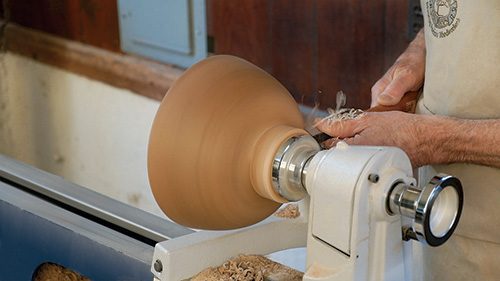
The wood is fixed to a faceplate or held in a chuck on the headstock only, with the grain running across the lathe. This is how bowls and platters are made. The changing grain direction makes it harder, so learn spindle turning first and use a bowl gouge, not a spindle roughing gouge.
Your first spindle, step by step
- Prepare a blank about 2 in square and 8–10 in long, in a straight-grained hardwood.
- Mark the centres on each end by drawing diagonals.
- Mount it between the drive centre and the live centre in the tailstock. Tighten the tailstock firmly.
- Set the tool rest just below centre height and about ¼ in from the corners.
- Spin it by hand, put on your face shield, and start at low speed.
- Rough it round with the spindle roughing gouge, bevel rubbing, working from the middle towards the ends.
- Increase speed once it is round.
- Shape it with the spindle gouge and parting tool: try beads, coves and a few grooves.
- Smooth it with a skew chisel, or sand with the lathe running at low speed, moving from coarse to fine grit.
- Finish with oil or wax while it spins, then part it off or cut the ends with a saw.
Best wood for beginners
Start with straight-grained hardwoods that cut cleanly: maple, cherry, ash, beech, poplar or birch. Avoid knots, cracks and very soft woods such as pine, which tear out. Green (freshly cut) wood turns beautifully and is cheap, but it moves and cracks as it dries.
See our guide to the best woods for turning.
[Keep the existing YouTube video here.]
Preparing wood
- Seal the ends of logs and blanks with end-grain sealer or wax as soon as they are cut, to slow drying and reduce cracking.
- Remove the pith (the centre of the log) from bowl blanks, because it splits.
- Rough-turn green bowls with thick walls, let them dry, then finish-turn them.
- Check blanks for cracks, knots and bark inclusions. These can come apart on the lathe.
See also how to select and store lumber.
Easy first projects
| Project | Skills |
|---|---|
| Tool handle | Roughing, shaping, sizing a tenon |
| Honey dipper or spinning top | Beads, coves, parting off |
| Candlestick | Spindle details, drilling |
| Pen | Mounting on a mandrel, small detail |
| Small bowl | Faceplate or chuck work, bowl gouge |
| Lidded box | Fitting, hollowing |
Finishing on the lathe
- Sand with the lathe running at low speed, working through the grits without skipping. Stop and sand along the grain at the end to remove circular scratches.
- Apply finish while it spins: friction polish, wax or oil, then buff.
- Oily rags are a fire risk. Rags with boiled linseed oil or other drying oils can self-heat and catch fire. Lay them flat outdoors to dry before disposal.
How to improve
- Practise roughing and shaping on cheap or green wood.
- Join a local turning club. Many offer mentoring and lathe time.
- Take a class, even a single day.
- Watch reputable turning demonstrations, and compare your tool angles with theirs.
FAQ
Is woodturning hard to learn?
The basics come quickly. Most beginners turn a usable tool handle or candlestick in their first sessions. Bowls and fine work take longer.
What lathe should a beginner buy?
A mini or midi lathe with variable speed, a solid stand and common accessory threads.
Do I need to sharpen turning tools?
Yes, often. High-speed steel tools need regular sharpening on a grinder. Carbide tools use replaceable cutters.
Should I wear gloves when woodturning?
No. Gloves can catch on spinning work.
What is the easiest thing to turn first?
A simple spindle, such as a tool handle or honey dipper.
What speed should I run the lathe at?
Start slow, especially with large or uneven pieces, and increase only when the work is round and balanced. Small spindles can run faster than bowls.
The bottom line
Start with a mini or midi lathe, five basic tools, a face shield and straight-grained hardwood. Turn spindles first, then move on to bowls with a bowl gouge. Keep tools sharp, start slow, and never wear gloves at the lathe.
Read next
- A Guide to Wood Turning Tools
- A Beginner's Guide to Skew Chisels
- The Best Mini Wood Lathe for Small Projects
- Best Wood Lathe Under $500
- Best Woods for Turning